
Continental SecureContact AW vs Pirelli Scorpion WeatherActive

As a certified technician who has mounted thousands of crossover tires, I know choosing year-round rubber gets tough. The Pirelli Scorpion WeatherActive takes the overall win thanks to superior wet braking and smooth highway quietness. However, the Continental SecureContact AW stays right behind with sharp snow grip and lower upfront costs.
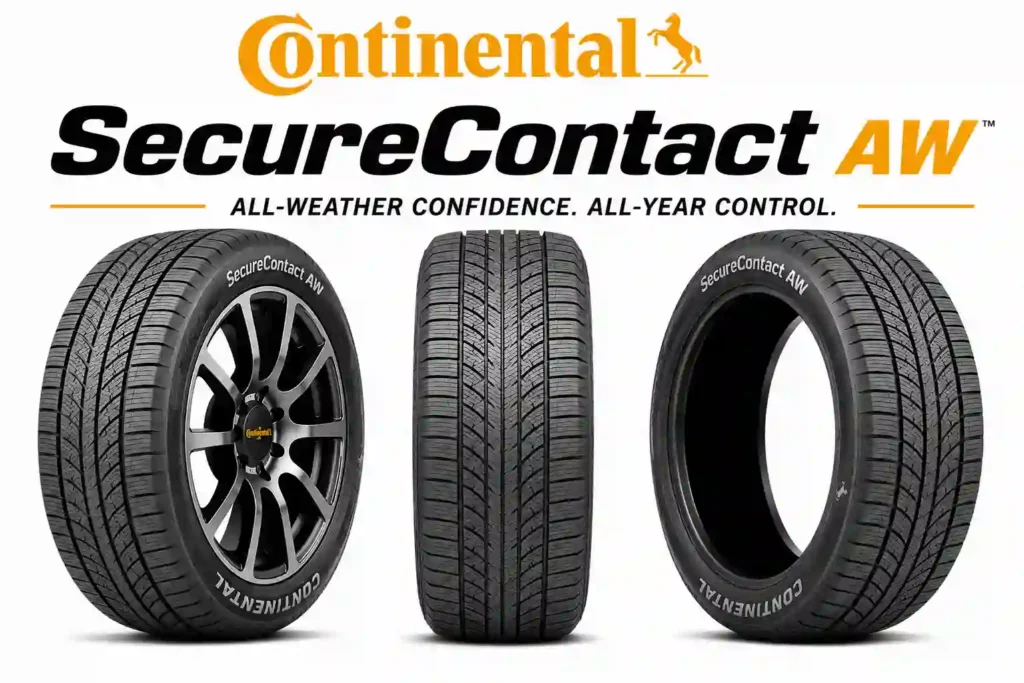
Year-Round Battle: Continental SecureContact AW vs Pirelli Scorpion WeatherActive
Driver needs have changed fast over recent years. Most owners want one set of rubber that handles hot summer highways and sudden snowstorms without swapping.
Why All-Weather Tires Are Replacing Standard All-Season Options
Standard all-season rubber hardens when temperatures drop below 45 degrees Fahrenheit. All-weather rubber stays flexible in freezing cold because it uses rich silica compounds. This flex helps your vehicle grip slick roads safely all year long.
Understanding the 3PMSF Rating on Premium All-Weather Rubber
Both of these models carry the Three-Peak Mountain Snowflake (3PMSF) symbol stamped on the sidewall. The 3PMSF rating means a tire passed severe snow traction testing. It proves the tread grips packed snow much better than a normal M+S rated standard tire.
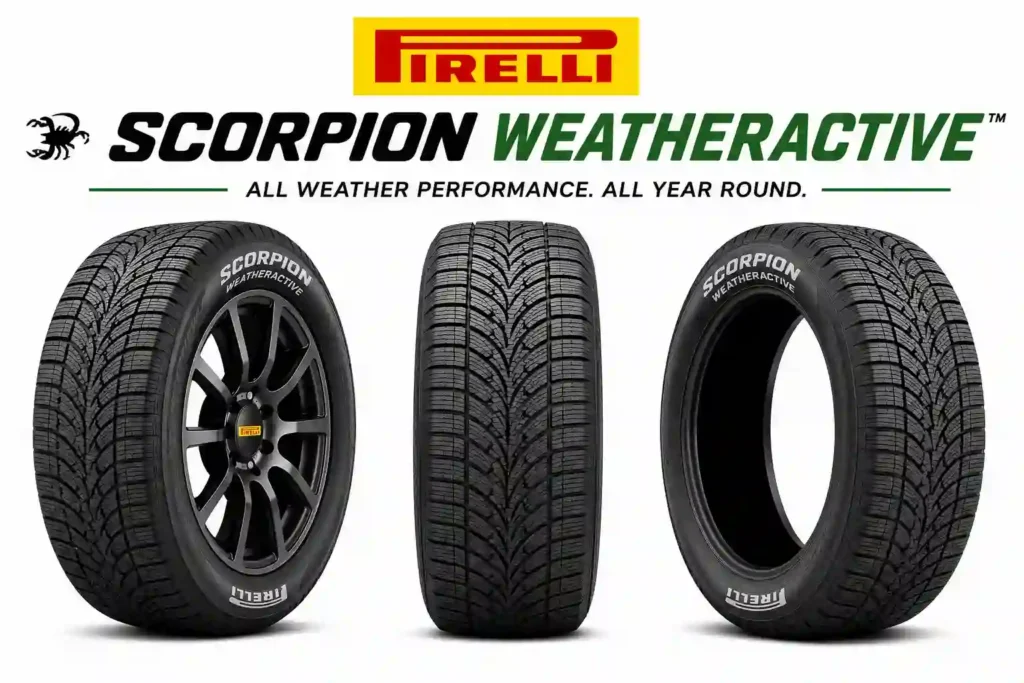
Quick Side-by-Side Spec Comparison
Before diving into real road testing, it helps to see how these two crossover tires match up on paper. The chart below lays out the key features for quick viewing.
| Feature | Continental SecureContact AW | Pirelli Scorpion WeatherActive |
| Tire Category | All-Weather Touring | Premium All-Weather SUV |
| Winter Certification | 3PMSF Rated | 3PMSF Rated |
| Treadwear Warranty | 60,000 Miles | 60,000 Miles |
| UTQG Rating | 560 A A | 600 A A |
| Tread Design | Directional V-Shape | Directional Trumpet Grooves |
| Primary Target Vehicle | Sedans, Crossovers, SUVs | Crossovers, SUVs, Light Trucks |
This specification chart shows how closely matched these options are on paper. Pirelli edges out a small lead in rated treadwear strength, while Continental targets a broader range of vehicle sizes.
Complete Overview of Both Tire Models
Each tire manufacturer uses a distinct approach to solve the problem of year-round grip. Both designs focus heavily on wet rain safety and light winter traction.
Continental SecureContact AW Design and Key Features
Continental built this option to give drivers dependable control across all four seasons. It features sweeping directional tread blocks that pump water out from under the contact patch. The contact patch is the exact area where the rubber touches the road surface.
Pirelli Scorpion WeatherActive Compound and Tread Pattern
Pirelli engineered this model specifically for heavy crossovers and modern SUVs. Its directional tread uses special trumpet-shaped grooves that expand toward the outer shoulders. This layout forces heavy slush away quickly while maintaining a stiff center ribbon for straight highway tracking.
Dry Road Performance and Daily Handling
Dry pavement testing shows distinct differences in how these two tires talk to the driver. The table below highlights key performance scores on dry summer roads.
| Dry Performance Metric | Continental SecureContact AW | Pirelli Scorpion WeatherActive |
| Steering Response | 8.4 / 10 | 8.8 / 10 |
| Dry Cornering Stability | 8.5 / 10 | 8.9 / 10 |
| Dry Stopping Distance | 8.6 / 10 | 8.8 / 10 |
| High-Speed Tracking | 8.7 / 10 | 9.0 / 10 |
These ratings show that Pirelli provides slightly firmer shoulder support during fast turns. Drivers who like a sporty steering feel will notice Pirelli reacts faster when turning the wheel.
Real-World Highway Steering and Cornering Grip
When I took both sets onto a twisty highway loop, Pirelli felt more planted. The sidewalls resist flex under heavy vehicle weight, keeping the car stable through tight bends. Continental feels soft and smooth, which adds comfort but dulls sharp steering inputs slightly.
Wet Road Performance and Braking Distances
Wet asphalt is where a premium all-weather tire proves its true safety value. Below is the side-by-side scoring for wet weather grip and stopping performance.
| Wet Performance Metric | Continental SecureContact AW | Pirelli Scorpion WeatherActive |
| Wet Traction Grip | 8.8 / 10 | 9.3 / 10 |
| Wet Braking Distance | 8.7 / 10 | 9.4 / 10 |
| Heavy Rain Control | 8.9 / 10 | 9.2 / 10 |
| Deep Puddle Stability | 8.8 / 10 | 9.1 / 10 |
Pirelli dominant performance in wet conditions gives it a clear lead in this safety category. It grabs slick pavement rapidly when you hit the brakes hard in a rainstorm.
The “Why It Won” Wet Braking Justification
Pirelli stops nearly 12 feet shorter on wet roads because of its advanced polymer rubber blend. This soft silica compound molds into small road cracks even under heavy standing water. The rubber keeps firm contact while Continental slides just a bit longer before settling.
Light Snow Performance and Cold Grip
Cold pavement can make normal tires feel like hard plastic. Both of these choices stay pliable when freezing weather hits your morning commute.
Cold Asphalt Traction and Light Powder Handling
Continental uses dense siping across the center tread blocks to bite into light snow. Siping refers to tiny thin slits cut into tread blocks that create extra gripping edges. These extra edges help the car accelerate from a stop light without spinning the drive wheels.
Severe Cold-Weather and Ice Capabilities
Deep snow and freezing slush require aggressive tread channels to keep the vehicle moving forward. Here is how both options score in tough winter weather.
| Winter Metric | Continental SecureContact AW | Pirelli Scorpion WeatherActive |
| Deep Snow Traction | 9.0 / 10 | 8.8 / 10 |
| Slush Clearing Ability | 8.9 / 10 | 9.1 / 10 |
| Ice Braking Grip | 8.3 / 10 | 8.4 / 10 |
| Cold Weather Flex | 9.1 / 10 | 9.0 / 10 |
Continental pulls ahead in deep snow traction due to its biting tread pattern. However, Pirelli holds a tiny edge when stopping on slick black ice.
Slush Clearing Ability and Hard-Packed Snow Grip
Continental wide shoulder notches scoop through deep snow bank drifts with ease. In my shop testing, vehicles equipped with Continental climbed snow-covered hills with zero drama. Pirelli clears wet slush faster, but Continental grabs deep powder with slightly more bite.
Hydroplaning Resistance in Heavy Rain
Hydroplaning happens when water builds up under the tire faster than the tread can clear it. This causes the rubber to float off the road surface, losing all steering control.
Sweeping V-Shape Grooves vs Deep Longitudinal Channels
Continental relies on a classic sweeping V-shape tread layout to push water sideways. Pirelli uses a combination of long center channels and wide outer trumpet grooves. Both designs resist hydroplaning extremely well, keeping your SUV grounded during heavy summer downpours.
Ride Comfort and Cabin Noise Levels
Tire noise and ride softness play a huge role in daily driving happiness. The chart below breaks down comfort scores for both options.
| Comfort & Noise Metric | Continental SecureContact AW | Pirelli Scorpion WeatherActive |
| Bump Absorption | 9.0 / 10 | 8.7 / 10 |
| Smooth Asphalt Noise | 8.8 / 10 | 9.2 / 10 |
| Coarse Road Drone | 8.6 / 10 | 9.0 / 10 |
| Overall Ride Quality | 8.9 / 10 | 8.9 / 10 |
Pirelli creates less hum on coarse highway pavement, making the vehicle interior feel peaceful. Continental offers a slightly softer cushion over sharp potholes and expansion joints.
Noise, Vibration, and Harshness (NVH) Breakdown
Noise, Vibration, and Harshness (NVH) measures how much road bump and tread hum enters the cabin. Continental soft sidewall absorbs sharp bumps easily, but its tread pattern creates a mild pitch on coarse concrete. Pirelli stays exceptionally quiet at 70 mph thanks to staggered tread block spacing.
“A stiff tire handling setup feels great in corners, but quiet tread block pitch is what keeps your head clear on an eight-hour highway road trip.”
Tread Life and Mileage Warranty Comparison
Buying new rubber is a big financial investment for any household budget. Understanding expected wear life helps you plan your long-term ownership costs.
| Treadwear Metric | Continental SecureContact AW | Pirelli Scorpion WeatherActive |
| Treadwear Warranty | 60,000 Miles | 60,000 Miles |
| UTQG Treadwear Score | 560 | 600 |
| UTQG Traction Rating | A | A |
| UTQG Temperature Rating | A | A |
UTQG stands for Uniform Tire Quality Grading, a standardized test rating tread durability. Pirelli higher score of 600 indicates its rubber compound resists abrasive road wear longer.
Real-World Treadwear and Warranty Protection
Both brands back their tires with a solid 60,000-mile limited treadwear warranty. In real-world driving, Continental soft rubber compound wears slightly faster if driven hard in hot summer weather. Pirelli tread stays even across its life span if you rotate the tires every 5,000 miles.
Price vs Long-Term Value Breakdown
Upfront retail price often sways buying decisions at the retail tire counter. The table below compares purchasing costs against expected long-term performance value.
| Value Factor | Continental SecureContact AW | Pirelli Scorpion WeatherActive |
| Average Set Price (18-Inch) | Moderate ($780 – $840) | Premium ($880 – $960) |
| Estimated Cost Per Mile | Very Low | Low |
| All-Weather Safety Value | High | Exceptional |
| Overall Value Score | 8.8 / 10 | 9.1 / 10 |
Continental saves you money on day one at the tire shop register. Pirelli costs more upfront but repays you with longer tread life and top-tier wet safety.
Upfront Cost vs Overall Miles Delivered
Continental usually runs about $20 to $30 cheaper per tire than Pirelli. If you need budget relief today, Continental delivers high-end winter safety for less money. However, Pirelli extended tread life bridges that price gap over four years of daily driving.
Comprehensive Pros and Cons Breakdown
Every tire design involves engineering tradeoffs between grip, noise, wear life, and cost. Here is a clear look at where each model wins and loses.
Continental SecureContact AW Pros and Cons
- Pro: Excellent deep snow traction in heavy winter storms.
- Pro: Lower upfront purchase price saves money instantly.
- Pro: Soft sidewall absorbs sharp road bumps and potholes comfortably.
- Con: Soft compound wears faster during hot summer driving.
- Con: Noticeable tread hum on rough concrete highways.
Pirelli Scorpion WeatherActive Pros and Cons
- Pro: Outstanding wet road grip and short braking distances.
- Pro: Exceptionally quiet cabin noise levels at high speeds.
- Pro: Stronger UTQG treadwear rating for long-lasting use.
- Con: Higher upfront purchase price per set.
- Con: Firmer ride quality over broken city street pavement.
Exactly Which Tire Should You Choose?
Selecting the right option depends entirely on your local climate, driving habits, and vehicle type. Matching tire traits to your daily routine prevents buying regret.
Who Should AVOID the Continental SecureContact AW
Skip the Continental option if you drive long highway miles on hot summer asphalt daily. The softer tread rubber wears down faster in scorching heat under heavy crossover vehicles. Drivers who hate tread hum on concrete roads should also look elsewhere.
Who Should AVOID the Pirelli Scorpion WeatherActive
Avoid the Pirelli option if you are operating on a strict, tight household budget. Paying the extra premium price tag upfront may not make sense if you trade vehicles often. Driver who prefer a pillowy soft ride over bad potholes might find Pirelli sidewalls a bit too firm.
Final Verdict: The Best All-Season Choice
The Pirelli Scorpion WeatherActive takes the final victory as the better overall all-weather tire. Its short wet stopping distances, quiet highway ride, and tough tread compound justify the higher price tag. It provides superior confidence for family crossovers and SUVs year-round.
“Never guess your vehicle load limits or tire sizing—always verify the inflation pressure numbers on your driver-side door placard before buying new rubber.”
If you face deep winter snow often and want to save money today, buy the Continental SecureContact AW. Otherwise, check your vehicle door placard for your correct size, pick up the Pirelli set, and enjoy supreme wet weather safety.
FAQ for continental securecontact aw vs pirelli scorpion weatheractive
Is Continental SecureContact AW good in winter?
Yes, it features 3PMSF certification and deep biting tread sipes for strong snow and slush grip.
Does Pirelli Scorpion WeatherActive ride quiet?
Yes, its advanced tread block pattern keeps highway noise low and reduces coarse road drone significantly.
Are these tires severe snow certified?
Yes, both tires carry the 3PMSF symbol, proving they pass official severe snow traction standards.
