Can You Turbocharge and Supercharge a Car?

Contents
- 1 Key Takeaways
- 2 📑 Table of Contents
- 3 Can You Turbocharge and Supercharge a Car?
- 4 Understanding Forced Induction: Turbo vs. Supercharger
- 5 Can You Put Both on the Same Car?
- 6 Lexus and Forced Induction: What You Need to Know
- 7 Installation, Tuning, and Supporting Mods
- 8 Cost Breakdown: What to Expect
- 9 Is It Worth It? Final Thoughts
- 10 Frequently Asked Questions


Yes, you can turbocharge and supercharge a car—including many Lexus models—but it’s not a simple bolt-on upgrade. While both systems force more air into the engine for extra power, they differ in efficiency, complexity, and driving feel. Choosing the right setup depends on your goals, budget, and willingness to modify your vehicle.
Key Takeaways
- Turbocharging uses exhaust gases to spin a turbine, boosting power efficiently but with potential lag. It’s ideal for drivers seeking high horsepower gains without significantly increasing engine size.
- Supercharging is mechanically driven by the engine, delivering instant throttle response and linear power. It’s great for smooth, predictable performance but can reduce fuel economy.
- Combining both—known as twin-charging—is rare but possible, offering the best of both worlds. It’s complex and expensive, typically reserved for high-performance builds.
- Lexus vehicles, known for reliability and refinement, can be modified with forced induction. However, factory warranties may be voided, and supporting mods are often needed.
- Proper tuning, cooling, and fuel system upgrades are essential for safe operation. Skipping these can lead to engine damage, especially in luxury sedans like the Lexus IS or GS.
- Budget matters: turbo kits often cost $5,000–$10,000+, while superchargers range from $6,000–$12,000+. Installation by a qualified tuner is strongly recommended.
- Consider your driving style: turbo for efficiency and top-end power, supercharger for immediate response and daily drivability.
📑 Table of Contents
Can You Turbocharge and Supercharge a Car?
So, you’ve got a sleek Lexus—maybe an IS 350, a GS 450h, or even a sporty RC F—and you’re wondering: *Can I make this thing fly?* You’ve heard about turbocharging and supercharging, and you’re curious if you can slap one (or both) onto your ride. The short answer? Yes, you can turbocharge and supercharge a car. But the real question is: *Should you?* And if so, which one—or both?
Forced induction isn’t just for race cars or tuner builds anymore. With the right knowledge, tools, and budget, even luxury sedans like those from Lexus can benefit from the extra power. But before you start shopping for turbos or blowers, it’s important to understand how these systems work, what they cost, and what kind of commitment they require. This guide will walk you through everything you need to know about adding forced induction to your Lexus—whether you’re aiming for weekend track days or just want a little more punch on the highway.
Understanding Forced Induction: Turbo vs. Supercharger
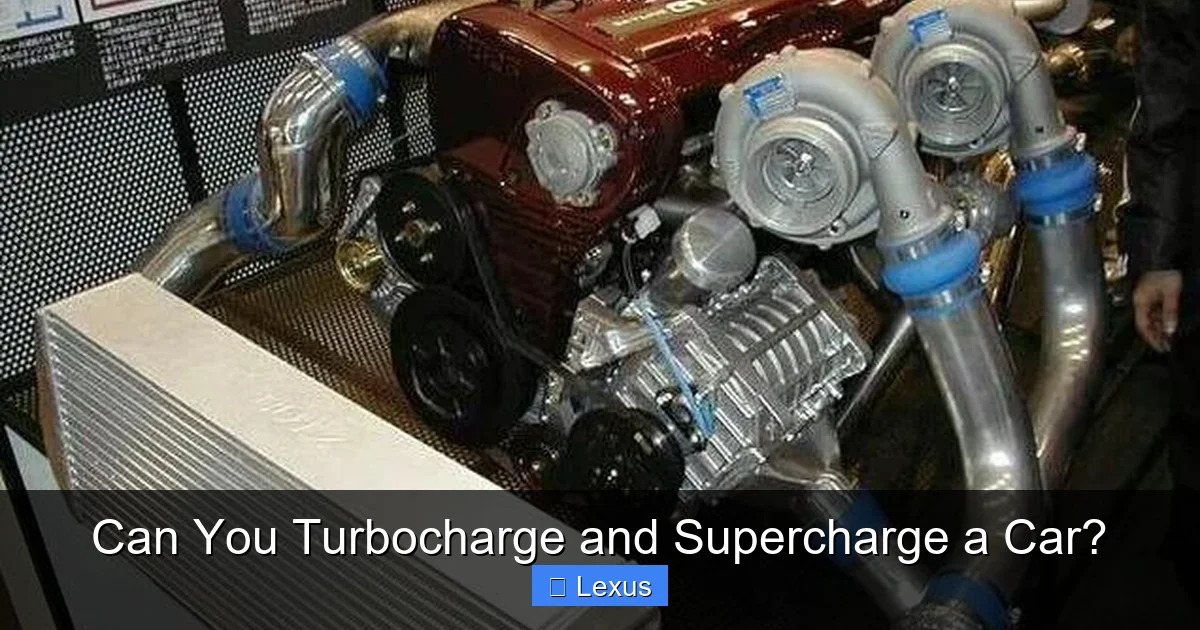
Visual guide about Can You Turbocharge and Supercharge a Car?
Image source: i-club.com
At the heart of the turbo vs. supercharger debate is one simple idea: getting more air into the engine. Internal combustion engines need air and fuel to make power. The more air you can cram in, the more fuel you can burn, and the more power you generate. That’s where forced induction comes in.
Both turbochargers and superchargers do this job—but they go about it in very different ways.
How a Turbocharger Works
A turbocharger uses the engine’s own exhaust gases to spin a turbine. This turbine is connected to a compressor on the intake side, which forces more air into the combustion chamber. Because it’s powered by waste energy (exhaust), it’s highly efficient. That’s why many modern cars—including some Lexus models like the IS 300 or NX 350—come from the factory with turbocharged engines.
The big advantage? Turbochargers can deliver massive power gains without increasing engine displacement. A well-tuned turbo setup can add 30–50% more horsepower, sometimes even more. But there’s a catch: turbo lag. Since the turbo needs exhaust flow to spool up, there’s often a delay between pressing the gas and feeling the boost. Modern twin-scroll and variable-geometry turbos help reduce this, but it’s still a factor.
How a Supercharger Works
A supercharger, on the other hand, is belt-driven directly from the engine’s crankshaft. This means it’s always spinning when the engine is running, delivering instant boost the moment you hit the throttle. No lag. No waiting. Just immediate, linear power delivery.
That responsiveness is why superchargers are popular in muscle cars and high-performance street machines. Lexus doesn’t offer factory supercharged models, but aftermarket kits exist for platforms like the 2UR-GSE (found in the RC F and GS F). The downside? Because the supercharger draws power from the engine to run, it can reduce overall efficiency and fuel economy. You’re trading some MPG for that thrilling, immediate acceleration.
Turbo vs. Supercharger: A Quick Comparison
Let’s break it down side by side:
- Power Delivery: Turbo = delayed but strong; Supercharger = instant and smooth.
- Efficiency: Turbo wins—uses waste energy; Supercharger uses engine power.
- Complexity: Turbo requires exhaust routing and intercooling; Supercharger needs belt drive and mounting.
- Cost: Both are expensive, but turbo setups often require more supporting mods.
- Sound: Turbos have a distinctive whine; Superchargers produce a deep, mechanical roar.
So which is better? It depends on what you want. If you love the thrill of a sudden surge at high RPMs, go turbo. If you want that “always on” power feel—like a jet engine spooling up the moment you touch the pedal—supercharge it.
Can You Put Both on the Same Car?
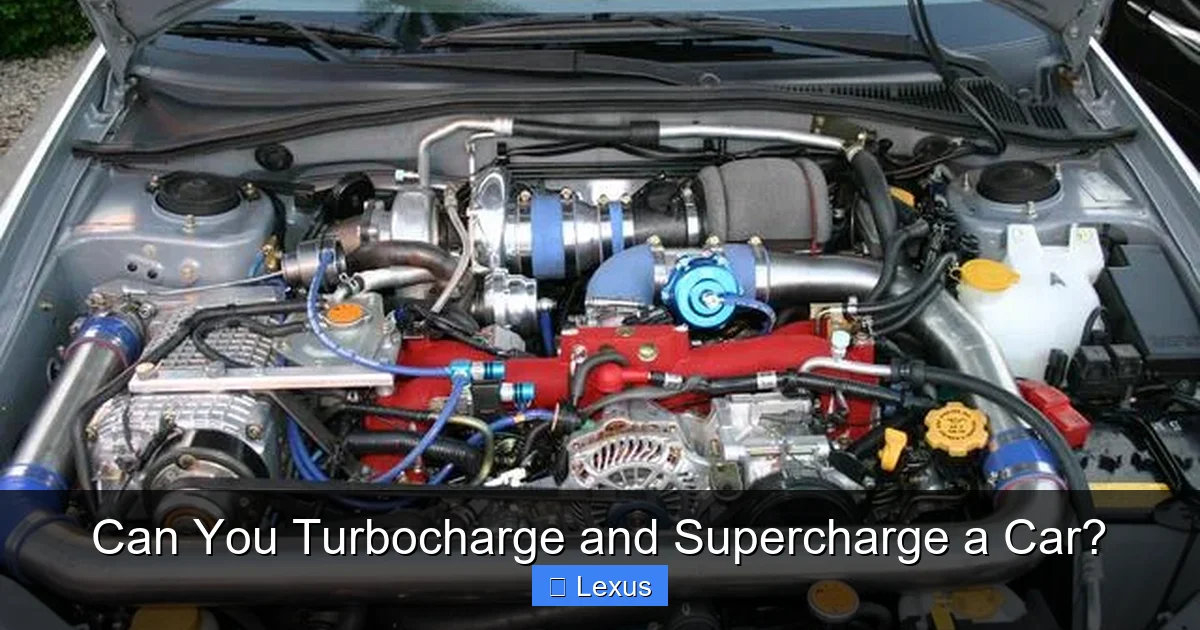
Visual guide about Can You Turbocharge and Supercharge a Car?
Image source: i-club.com
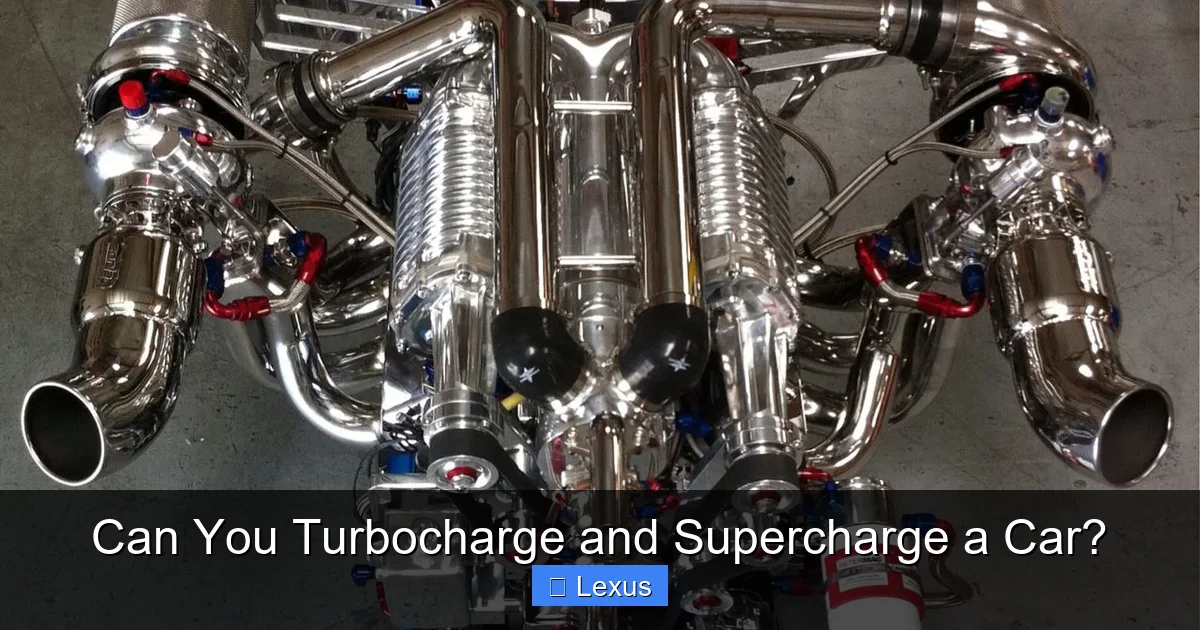
Now for the million-dollar question: *Can you turbocharge and supercharge a car at the same time?* The answer is yes—but it’s not common, and it’s definitely not for beginners.
This setup is called twin-charging, and it’s been used in high-performance applications like the Lancia Delta S4 rally car and some experimental race engines. The idea is simple: use the supercharger to eliminate turbo lag at low RPMs, then let the turbo take over at higher speeds for maximum power.
How Twin-Charging Works
In a twin-charged system, the supercharger provides immediate boost from idle to mid-range RPMs. Once the engine reaches a certain speed, the turbo spools up and takes over, delivering high-end power. A bypass valve or clutch system disengages the supercharger when it’s no longer needed to reduce parasitic loss.
This combo gives you the best of both worlds: instant throttle response and massive top-end power. But it also comes with serious challenges.
Challenges of Twin-Charging
First, packaging. Fitting both a turbo and a supercharger under the hood of a Lexus—especially a compact model like the IS—is extremely difficult. You’ll need custom manifolds, intercoolers, piping, and a reinforced engine bay.
Second, tuning. Managing two different forced induction systems requires advanced engine management. You’ll need a standalone ECU or a highly capable piggyback system to control boost levels, fuel delivery, and timing across the entire RPM range.
Third, cost. A twin-charged setup can easily exceed $15,000–$25,000, including labor. That’s before you factor in upgraded internals, cooling, and fuel systems.
And finally, reliability. More complexity means more potential failure points. If something goes wrong—like a belt snapping or a boost leak—it can lead to catastrophic engine damage.
Is Twin-Charging Worth It?
For most drivers, no. The gains are impressive—some twin-charged builds produce over 800 horsepower—but the cost, complexity, and maintenance make it impractical for daily driving. It’s really only worth considering if you’re building a dedicated track car or a showpiece with extreme performance goals.
That said, if you’re passionate about engineering and have the budget, twin-charging a Lexus could be an incredible project. Just be prepared for a long, expensive journey.
Lexus and Forced Induction: What You Need to Know
Visual guide about Can You Turbocharge and Supercharge a Car?
Image source: los-angeles-county.net
Lexus is known for smooth, reliable, and refined vehicles—not necessarily raw power. But that doesn’t mean you can’t add forced induction. In fact, many Lexus models are excellent candidates for turbo or supercharger upgrades.
Lexus Models That Can Be Modified
Let’s look at some popular platforms:
- Lexus IS 350 (2GR-FSE): A great base for a turbo build. The V6 is strong, and kits from companies like PPE Engineering or TOM’S offer bolt-on turbo solutions. Expect 400–500+ horsepower with proper tuning.
- Lexus GS 450h (2GR-FSE hybrid): The hybrid system complicates things, but it’s possible to turbocharge the gasoline engine. However, the electric motor and battery add weight and complexity.
- Lexus RC F / GS F (2UR-GSE): These already come with high-output V8s. Supercharger kits from Whipple or Magnusson can push them to 600–700+ horsepower. Turbo kits are rarer but do exist.
- Lexus NX 350 (T24A-FTS): This model already has a factory turbo. Upgrading the turbo, intercooler, and tune can yield significant gains without a full rebuild.
Factory Turbocharged Lexus Models
Believe it or not, Lexus has embraced turbocharging in recent years. Models like the IS 300, NX 350, and RX 450h+ use turbocharged engines for better efficiency and performance. If you already own one of these, you’re halfway there. Upgrading the turbo, adding a front-mount intercooler, or tuning the ECU can unlock even more power.
For example, a stock NX 350 makes around 275 horsepower. With a larger turbo, high-flow fuel injectors, and a custom tune, you could easily hit 350–400 horsepower. That’s a huge jump without changing the engine.
Warranty and Reliability Concerns
Here’s the big one: modifying your Lexus with forced induction will almost certainly void your factory warranty. Even if the modification doesn’t directly cause a failure, dealerships can deny coverage if they suspect aftermarket parts were involved.
That’s why it’s crucial to work with a reputable tuner who specializes in Lexus platforms. They’ll ensure the installation is clean, the tune is safe, and the supporting systems (like cooling and fuel) are upgraded to handle the extra stress.
Also, remember that forced induction increases cylinder pressure and heat. Over time, this can wear out components like pistons, rods, and head gaskets—especially if the tune is too aggressive. For long-term reliability, consider forged internals if you’re pushing over 500 horsepower.
Installation, Tuning, and Supporting Mods
Adding a turbo or supercharger isn’t just about bolting on a new part. It’s a full system upgrade. Here’s what you’ll need to consider.
Engine Internals
Stock Lexus engines are built for longevity, not extreme power. If you’re aiming for big horsepower, you may need forged pistons, stronger connecting rods, and a reinforced crankshaft. This is especially true for turbo builds, where boost pressure can spike quickly.
For moderate power gains (under 500 hp), stock internals often hold up—especially in V8s like the 2UR-GSE. But always consult your tuner before pushing limits.
Fuel System Upgrades
More air means more fuel. You’ll likely need larger fuel injectors, a high-flow fuel pump, and possibly a return-style fuel system. Ethanol blends like E85 can also help reduce knock and allow higher boost, but they require even more fuel delivery.
Cooling and Intercooling
Forced induction generates heat. Without proper cooling, you risk detonation and engine damage. A high-efficiency intercooler is a must. For turbo setups, a front-mount intercooler (FMIC) is ideal. For superchargers, a water-methanol injection system can help keep intake temps down.
Also, consider upgrading the radiator, oil cooler, and transmission cooler—especially if you plan to drive hard or in hot climates.
Exhaust and Intake
A turbocharger needs a free-flowing exhaust to spool efficiently. That means upgrading to a 3-inch downpipe and cat-back exhaust. For superchargers, a high-flow air intake and larger throttle body can improve airflow.
Tuning and ECU Management
This is the most critical part. A poorly tuned forced induction system can destroy your engine in seconds. You’ll need a custom dyno tune from a professional who understands Lexus ECUs.
Options include:
- Piggyback systems: Like the Greddy e-Manage or Apexi AFC. They modify signals to the factory ECU. Good for mild builds.
- Standalone ECUs: Like Haltech, Motec, or Link. They replace the factory ECU entirely. Best for high-horsepower or twin-charged setups.
- Flash tuning: Some tuners can reflash the stock ECU with custom maps. This is clean and reversible but may have limitations.
Always dyno test your car after installation. Monitor air/fuel ratios, boost levels, and ignition timing to ensure everything is running safely.
Cost Breakdown: What to Expect
Let’s talk money. Forced induction isn’t cheap—but it’s one of the best ways to add serious power.
Turbocharger Kit Costs
A complete turbo kit for a Lexus V6 might include:
- Turbocharger: $1,500–$3,000
- Manifold and downpipe: $800–$1,500
- Intercooler and piping: $600–$1,200
- Fuel system upgrades: $500–$1,000
- ECU tuning: $800–$1,500
- Installation labor: $2,000–$4,000
Total: $6,000–$12,000+
Supercharger Kit Costs
Supercharger kits are often more expensive due to mechanical complexity:
- Supercharger unit: $3,000–$6,000
- Pulley and drive system: $500–$1,000
- Intercooler and piping: $700–$1,500
- Fuel system upgrades: $600–$1,200
- ECU tuning: $800–$1,500
- Installation labor: $2,500–$5,000
Total: $8,000–$15,000+
Twin-Charging Costs
As mentioned earlier, twin-charging is a beast. You’re essentially combining both systems, so expect to pay $15,000–$25,000 or more. And that’s before any engine internals or custom fabrication.
Is It Worth It? Final Thoughts
So, can you turbocharge and supercharge a car? Absolutely. Should you? That depends.
If you’re looking for a fun project, love tinkering, and have the budget, forced induction can transform your Lexus into a true performance machine. Whether you choose turbo, supercharger, or both, the results can be thrilling.
But remember: this isn’t a weekend DIY job. It requires expertise, planning, and ongoing maintenance. And while the power gains are impressive, they come at the cost of fuel economy, warranty coverage, and potentially, long-term reliability.
For most drivers, a mild turbo upgrade on a factory-turbo Lexus—or a supercharger on a V8 model—offers the best balance of power, drivability, and value. Twin-charging? Save that for your dream build.
At the end of the day, the question isn’t just *can* you turbocharge and supercharge a car. It’s *should* you—and are you ready for what comes next?
Frequently Asked Questions
Can you put a turbo and supercharger on the same car?
Yes, it’s called twin-charging and it’s technically possible. However, it’s extremely complex, expensive, and typically reserved for high-performance race or show cars. Most drivers are better off choosing one system.
Will forced induction void my Lexus warranty?
Yes, adding a turbo or supercharger will likely void your factory warranty. Dealerships can deny claims if they detect aftermarket modifications, even if the issue isn’t directly related to the upgrade.
Which is better for daily driving: turbo or supercharger?
A supercharger is often better for daily driving because it delivers instant power with no lag. Turbos can feel sluggish at low RPMs, though modern designs have reduced this issue.
Can I turbocharge a Lexus IS 350?
Yes, the IS 350’s 2GR-FSE V6 is a popular platform for turbo builds. Kits are available from tuners like PPE Engineering, and with proper tuning, you can achieve 400–500+ horsepower.
Do I need to upgrade my fuel system when adding forced induction?
Yes. More air requires more fuel. You’ll likely need larger injectors, a high-flow fuel pump, and possibly a return-style fuel system to prevent lean conditions and engine damage.
Is twin-charging reliable?
Twin-charging can be reliable if built and tuned properly, but it’s inherently more complex than a single forced induction system. More components mean more potential failure points, so regular maintenance is critical.