
Can You Drive a Car with a Misfire?

Driving a car with a misfire is possible in the short term, but it’s not safe or recommended. A misfire can damage your engine, catalytic converter, and reduce fuel efficiency. Ignoring the problem may lead to costly repairs and unsafe driving conditions.
Key Takeaways
- Yes, you can drive a car with a misfire—but only for a short distance and at low speeds. Pushing your vehicle too far can cause serious engine damage.
- A misfire means one or more cylinders aren’t firing properly. This leads to rough idling, loss of power, and poor fuel economy.
- Common causes include faulty spark plugs, bad ignition coils, fuel system issues, or vacuum leaks. Diagnosing the root cause early prevents bigger problems.
- Driving with a misfire can damage the catalytic converter. Unburned fuel entering the exhaust system can overheat and destroy this expensive component.
- Modern cars have onboard diagnostics (OBD2) that detect misfires. A check engine light often appears with a P0300 code or similar.
- Ignoring a misfire increases emissions and harms the environment. It also puts you at risk of sudden stalling or breakdowns.
- Always get a professional diagnosis and repair as soon as possible. Temporary fixes like resetting the ECU won’t solve the underlying issue.
📑 Table of Contents
Can You Drive a Car with a Misfire?
So your car is shaking, the engine feels rough, and maybe that dreaded check engine light just came on. You suspect a misfire—but can you still drive it? The short answer is: yes, technically, you can drive a car with a misfire, but it’s not a good idea. While your vehicle might still move, doing so comes with serious risks to your engine, safety, and wallet.
A misfire happens when one or more of your engine’s cylinders fail to ignite the air-fuel mixture properly. This disrupts the smooth operation of your engine, causing vibrations, power loss, and poor performance. Think of it like a runner missing a step—your engine is out of sync, and that imbalance can lead to bigger problems down the road.
In this article, we’ll break down what a misfire is, why it happens, the dangers of driving with one, and what you should do if you suspect your car is misfiring. Whether you’re a weekend mechanic or just trying to get to work, understanding this issue can save you time, money, and stress.
What Is a Misfire?
Visual guide about Can You Drive a Car with a Misfire?
Image source: aa1car.com
Before we dive into whether you should drive with a misfire, let’s first understand what it actually is. In a gasoline-powered internal combustion engine, power is generated when the air-fuel mixture in each cylinder is ignited by a spark plug. This controlled explosion pushes the piston down, turning the crankshaft and ultimately moving your car.
A misfire occurs when this ignition process fails in one or more cylinders. Instead of a clean, powerful combustion, the fuel either doesn’t ignite at all or burns unevenly. This results in a loss of power, rough engine operation, and often a noticeable shaking or jerking sensation—especially when idling or accelerating.
There are three main types of misfires:
- Ignition misfire: Caused by problems with spark plugs, ignition coils, or wiring. This is the most common type.
- Fuel misfire: Happens when the fuel system fails to deliver the right amount of fuel, often due to clogged injectors or a faulty fuel pump.
- Mechanical misfire: Results from internal engine issues like low compression, worn piston rings, or valve problems.
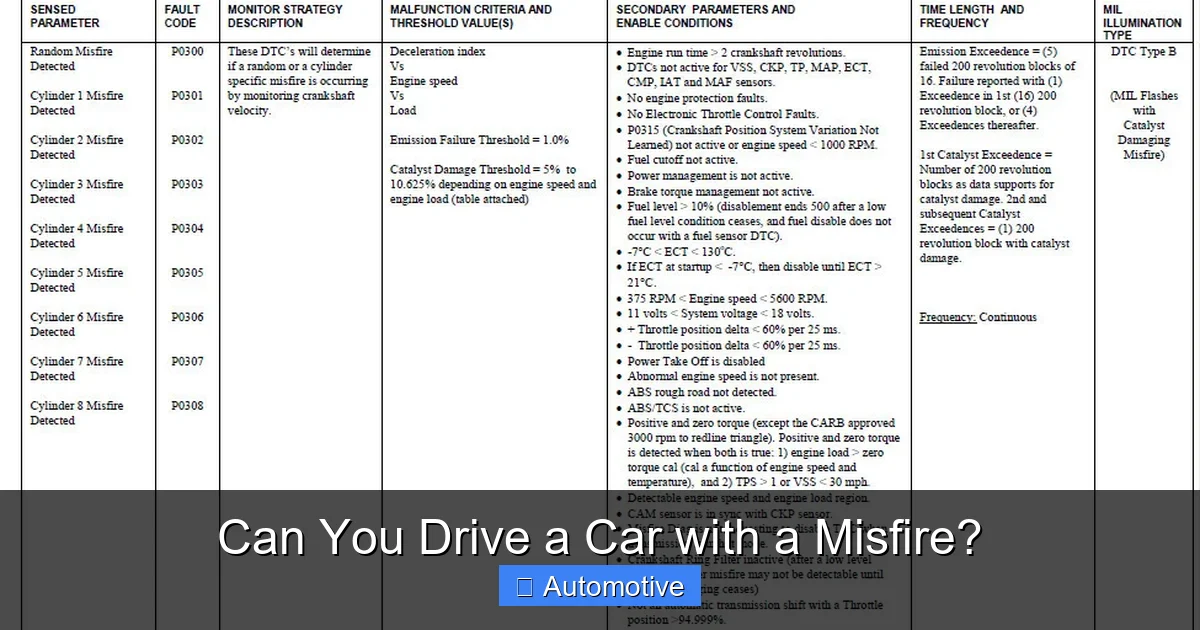
Modern vehicles are equipped with sensors that monitor engine performance. When a misfire is detected, the engine control unit (ECU) logs a diagnostic trouble code (DTC), usually starting with P0300 (random misfire) or P0301–P0308 (indicating a specific cylinder). This triggers the check engine light and helps mechanics pinpoint the issue.
How to Recognize a Misfire
You don’t need a mechanic’s license to spot a misfire. Here are some common signs:
- Rough idling: The engine feels shaky or bouncy when stopped at a red light.
- Loss of power: The car feels sluggish, especially when accelerating or going uphill.
- Engine hesitation: A delay in response when you press the gas pedal.
- Increased fuel consumption: The engine works harder to compensate, burning more fuel.
- Loud exhaust noise: A sputtering or popping sound from the tailpipe.
- Check engine light: Often accompanied by a flashing or steady illumination.
If you notice any of these symptoms, it’s time to take action. Ignoring them won’t make the problem go away—it’ll likely get worse.
Can You Drive with a Misfire? The Risks Explained
Visual guide about Can You Drive a Car with a Misfire?
Image source: cararac.com
Now, let’s get to the heart of the question: can you drive a car with a misfire? Technically, yes—your car will still run, especially if only one cylinder is affected. But just because you *can* doesn’t mean you *should*. Driving with a misfire, even for a short distance, comes with real risks.
Engine Damage
One of the biggest dangers is internal engine damage. When a cylinder misfires, unburned fuel can enter the exhaust system. This fuel can ignite in the catalytic converter, causing it to overheat and potentially melt. The catalytic converter is a critical emissions component that can cost $1,000 or more to replace.
Additionally, repeated misfires can cause stress on engine components like the crankshaft, pistons, and connecting rods. Over time, this can lead to premature wear or even catastrophic failure.
Reduced Fuel Efficiency
A misfiring engine is an inefficient engine. Since one or more cylinders aren’t contributing power, the remaining cylinders have to work harder. This increases fuel consumption and reduces your miles per gallon (MPG). You might notice you’re filling up more often without driving any extra miles.
Safety Hazards
Driving with a misfire can be dangerous, especially in traffic or on highways. The loss of power can make it difficult to merge, pass, or respond quickly to sudden changes in traffic. In extreme cases, a severe misfire can cause the engine to stall completely, leaving you stranded or in a hazardous situation.
Environmental Impact
Misfires increase harmful emissions. Unburned fuel released into the atmosphere contributes to air pollution and smog. Modern vehicles are designed to meet strict emissions standards, and a misfire can cause your car to fail an emissions test.
Diagnostic Challenges
The longer you drive with a misfire, the harder it can be to diagnose the root cause. Other components may begin to fail as a result of the ongoing issue, making it difficult to determine what started the problem in the first place.
Common Causes of Engine Misfires
Visual guide about Can You Drive a Car with a Misfire?
Image source: poweringsolution.com
Understanding why a misfire happens is the first step toward fixing it. While there are many potential causes, most fall into a few common categories. Let’s break them down.
Faulty Spark Plugs
Spark plugs are responsible for igniting the air-fuel mixture in each cylinder. Over time, they wear out and lose their ability to create a strong spark. This is one of the most common causes of misfires, especially in older vehicles or those with high mileage.
Symptoms of bad spark plugs include rough idling, difficulty starting, and reduced acceleration. Replacing spark plugs is relatively inexpensive and straightforward, making it a good first step in troubleshooting.
Ignition Coil Problems
Ignition coils convert low-voltage battery power into the high voltage needed to create a spark. If a coil fails, the corresponding cylinder won’t fire. This often results in a specific cylinder misfire code (e.g., P0303 for cylinder 3).
Ignition coils can fail due to heat, vibration, or age. Some vehicles use a single coil for all cylinders (coil-on-plug), while others have a distributor system. Diagnosing coil issues may require a scan tool or multimeter.
Fuel System Issues
The fuel system must deliver the right amount of fuel at the right time. Problems like clogged fuel injectors, a weak fuel pump, or a dirty fuel filter can disrupt this process.
For example, a clogged injector may not spray enough fuel into a cylinder, causing a lean condition and misfire. A failing fuel pump might not maintain adequate pressure, especially under load.
Vacuum Leaks
A vacuum leak occurs when unmetered air enters the engine through a cracked hose, gasket, or intake manifold. This extra air dilutes the air-fuel mixture, making it too lean to ignite properly.
Vacuum leaks often cause a rough idle and can trigger a P0171 (system too lean) code in addition to misfire codes. They’re common in older vehicles with rubber hoses that degrade over time.
Low Compression
If a cylinder has low compression, it can’t build enough pressure to ignite the fuel. This mechanical issue may be caused by worn piston rings, damaged valves, or a blown head gasket.
Low compression is more serious and often requires engine disassembly to diagnose and repair. A compression test can help identify which cylinder is affected.
Sensor or ECU Problems
Modern engines rely on a network of sensors to monitor performance. If a sensor like the crankshaft position sensor or camshaft position sensor fails, it can send incorrect data to the ECU, leading to misfires.
Similarly, a software glitch or faulty ECU can cause timing issues. These problems may require professional diagnosis and reprogramming.
What to Do If Your Car Is Misfiring
So your car is misfiring—what now? Here’s a step-by-step guide to help you respond safely and effectively.
1. Don’t Panic—But Don’t Ignore It
First, stay calm. A misfire isn’t an immediate emergency, but it’s not something to ignore. Pull over safely if the car is shaking violently or losing power. Turn off the engine and assess the situation.
2. Check the Check Engine Light
If the check engine light is on, use an OBD2 scanner to read the trouble codes. You can buy a basic scanner for under $50 or visit an auto parts store—many offer free code reading.
Look for codes like P0300 (random misfire) or P0301–P0308 (cylinder-specific). This will help narrow down the problem.
3. Inspect Spark Plugs and Ignition Coils
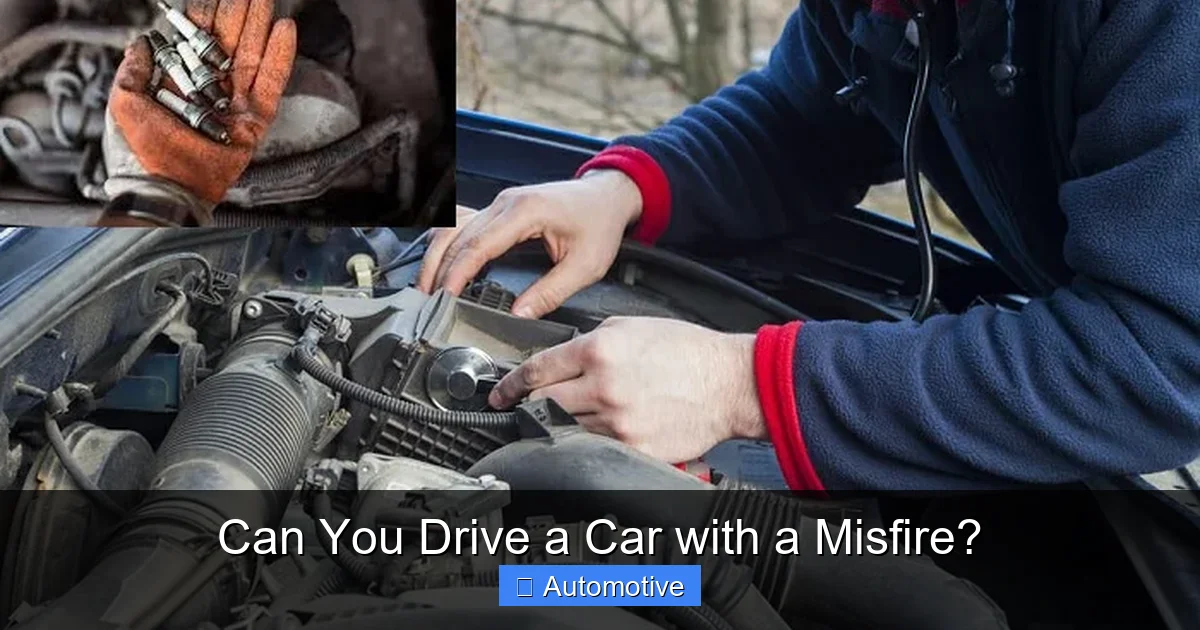
If you’re comfortable working on your car, start by inspecting the spark plugs. Remove each one and check for signs of wear, fouling, or damage. Replace them if necessary.
Also, check the ignition coils for cracks, corrosion, or loose connections. Swap coils between cylinders to see if the misfire follows the coil—this can confirm a faulty unit.
4. Check for Vacuum Leaks
Listen for a hissing sound near the engine, especially around hoses and the intake manifold. You can also use a smoke machine or spray carb cleaner around suspected areas—if the engine RPM changes, you’ve found a leak.
5. Test Fuel Pressure
Use a fuel pressure gauge to check if the fuel system is delivering the correct pressure. Low pressure may indicate a failing fuel pump or clogged filter.
6. Get a Professional Diagnosis
If you’re unsure or the problem persists, take your car to a trusted mechanic. They have the tools and expertise to perform advanced diagnostics, including compression tests and oscilloscope analysis.
7. Avoid Quick Fixes
Don’t rely on “miracle” additives or resetting the ECU to clear codes. These are temporary fixes that won’t address the root cause. Proper diagnosis and repair are essential.
How Long Can You Drive with a Misfire?
This is a common question—and there’s no one-size-fits-all answer. It depends on the severity of the misfire, which cylinder is affected, and the underlying cause.
In general, you should avoid driving more than a few miles with a known misfire. If the check engine light is flashing, that’s a sign of a severe misfire that can damage the catalytic converter within minutes. In this case, pull over and call for a tow.
If the light is steady and the car is running relatively smoothly, you might be able to drive to a repair shop—but do so cautiously. Avoid high speeds, heavy acceleration, and long distances.
Remember: every mile you drive with a misfire increases the risk of damage. It’s better to be safe than sorry.
Preventing Engine Misfires
The best way to deal with a misfire is to prevent it from happening in the first place. Here are some tips to keep your engine running smoothly.
Follow the Maintenance Schedule
Your owner’s manual outlines recommended service intervals for spark plugs, ignition coils, and fuel system components. Stick to this schedule to avoid premature wear.
For example, most spark plugs need replacement every 30,000 to 100,000 miles, depending on the type (copper, platinum, or iridium).
Use Quality Fuel and Additives
Fill up at reputable gas stations and consider using a fuel system cleaner every 3,000 to 5,000 miles. This helps prevent injector clogging and carbon buildup.
Address Warning Signs Early
Don’t wait for the check engine light to come on. If you notice rough idling, hesitation, or poor fuel economy, have your car inspected.
Keep the Air Filter Clean
A dirty air filter restricts airflow, leading to a rich fuel mixture and potential misfires. Replace it according to the manufacturer’s recommendations.
Watch for Recalls or Technical Service Bulletins (TSBs)
Some vehicles have known issues with ignition coils or fuel pumps. Check with your dealer or the NHTSA website for any recalls or updates.
Conclusion
So, can you drive a car with a misfire? Yes—but it’s a risky move that can lead to expensive repairs, safety hazards, and environmental harm. A misfire is your engine’s way of saying something is wrong, and ignoring it won’t make the problem disappear.
The best course of action is to diagnose the issue as soon as possible and get it fixed. Whether it’s a simple spark plug replacement or a more complex mechanical repair, addressing the root cause will save you time, money, and stress in the long run.
Remember: your car is a complex machine that relies on precise timing and balance. When one cylinder misfires, the whole system is affected. Don’t gamble with your engine’s health—take action at the first sign of trouble.
By staying informed and proactive, you can keep your car running smoothly and avoid the headaches that come with engine problems. Safe driving!
Frequently Asked Questions
Can you drive a car with a misfire?
Yes, you can drive a car with a misfire for a short distance, but it’s not recommended. Doing so can damage the engine, catalytic converter, and reduce fuel efficiency.
How long can you drive with a misfiring engine?
You should avoid driving more than a few miles with a misfire. If the check engine light is flashing, stop driving immediately to prevent catalytic converter damage.
What causes a car to misfire?
Common causes include faulty spark plugs, bad ignition coils, clogged fuel injectors, vacuum leaks, low compression, or sensor failures.
Will a misfire damage the catalytic converter?
Yes, unburned fuel from a misfire can overheat and destroy the catalytic converter, leading to a costly replacement.
Can a bad spark plug cause a misfire?
Absolutely. Worn or fouled spark plugs are one of the most common causes of engine misfires, especially in high-mileage vehicles.
How much does it cost to fix a misfire?
Costs vary depending on the cause. Replacing spark plugs may cost $100–$300, while catalytic converter replacement can exceed $1,500.