Can a Nissan Altima Use Unleaded 88 Gas?

Contents
- 1 Key Takeaways
- 2 📑 Table of Contents
- 3 Can a Nissan Altima Use Unleaded 88 Gas?
- 4 What Is Unleaded 88 Gas?
- 5 Nissan Altima Compatibility with Unleaded 88
- 6 Benefits of Using Unleaded 88 in Your Nissan Altima
- 7 Potential Drawbacks and Considerations
- 8 How to Safely Use Unleaded 88 in Your Nissan Altima
- 9 Conclusion
- 10 Frequently Asked Questions



Yes, a Nissan Altima can use Unleaded 88 gas without any issues. This slightly higher-octane fuel offers environmental benefits and can improve engine efficiency when used correctly. Always follow your owner’s manual and avoid mixing fuels unnecessarily.
Key Takeaways
- Unleaded 88 is safe for most Nissan Altimas: Manufactured to meet EPA standards, it’s approved for use in vehicles designed for regular unleaded gasoline.
- Improved fuel efficiency and lower emissions: Unleaded 88 contains 15% ethanol, which can enhance combustion and reduce greenhouse gas output.
- Check your owner’s manual first: While most Altimas are compatible, always verify your specific model year and engine type before switching.
- Avoid using it in older or high-performance models: Some pre-2012 Altimas or turbocharged variants may not benefit and could experience reduced performance.
- No need for engine modifications: Unleaded 88 works in standard fuel systems without requiring changes to injectors, seals, or sensors.
- Cost savings over time: Though priced similarly to regular gas, the improved mileage can lead to long-term savings.
- Use consistently for best results: Switching back and forth between fuel types may reduce the benefits of using Unleaded 88.
📑 Table of Contents
Can a Nissan Altima Use Unleaded 88 Gas?
If you’ve been filling up your Nissan Altima and noticed a new pump labeled “Unleaded 88” at the gas station, you’re not alone. This fuel has been gaining popularity across the U.S., especially in states like Colorado, Utah, and parts of the Midwest. But the big question on many drivers’ minds is: *Can my Nissan Altima safely use Unleaded 88 gas?* The short answer is yes—most modern Nissan Altimas are fully compatible with this fuel. But there’s more to the story than just a simple yes or no.
Unleaded 88 is a blend of 85% regular unleaded gasoline and 15% ethanol, giving it an octane rating of 88—just one point higher than standard 87-octane fuel. It’s designed to burn cleaner, improve engine efficiency, and reduce carbon emissions. The Environmental Protection Agency (EPA) has approved its use in vehicles manufactured from 2001 onward, which includes the vast majority of Nissan Altimas on the road today. So if you drive a 2001 or newer Altima, you’re likely in the clear.
But compatibility isn’t the only factor to consider. You’ll also want to think about performance, fuel economy, maintenance, and long-term engine health. In this guide, we’ll walk you through everything you need to know about using Unleaded 88 in your Nissan Altima—from how it works to real-world benefits and potential drawbacks. Whether you’re trying to save money at the pump or reduce your carbon footprint, this article will help you make an informed decision.
What Is Unleaded 88 Gas?
Visual guide about Can a Nissan Altima Use Unleaded 88 Gas?
Image source: turbochaos.com
Before we dive into whether your Nissan Altima can use Unleaded 88, let’s break down what this fuel actually is. Unleaded 88 is a mid-level ethanol blend that contains 15% ethanol and 85% conventional gasoline. It’s sometimes referred to as E15, and it has an octane rating of 88, which is slightly higher than the standard 87-octane fuel most cars are designed to run on.
Ethanol is a renewable fuel made primarily from corn in the United States. It’s added to gasoline to reduce dependence on fossil fuels and lower tailpipe emissions. The higher ethanol content in Unleaded 88 allows for more complete combustion, which can lead to cleaner exhaust and improved fuel efficiency—especially in engines that are optimized for it.
One of the biggest misconceptions about Unleaded 88 is that it’s the same as E85, the high-ethanol fuel used in flex-fuel vehicles. That’s not true. E85 contains up to 85% ethanol and requires special fuel system components to handle the corrosive nature of high ethanol concentrations. Unleaded 88, on the other hand, is formulated to work in standard gasoline engines without any modifications.
The EPA approved Unleaded 88 for use in vehicles made from 2001 onward after extensive testing showed it was safe for engines, fuel systems, and emissions controls. This means that if your Nissan Altima was manufactured in 2001 or later, it’s officially approved to use this fuel. However, it’s always a good idea to double-check your owner’s manual or consult Nissan’s official guidelines to be 100% sure.
How Is Unleaded 88 Different from Regular Gas?
The main difference between Unleaded 88 and regular 87-octane gas is the ethanol content and octane rating. Regular gasoline typically contains up to 10% ethanol (E10), while Unleaded 88 bumps that up to 15%. The higher octane rating means the fuel is more resistant to premature combustion, or “knocking,” which can damage engines over time.
This increased resistance to knocking allows engines to run more efficiently, especially under load or at higher altitudes. In fact, some drivers report slightly better acceleration and smoother idling when using Unleaded 88. The cleaner burn also means fewer deposits build up in the combustion chamber and on fuel injectors, which can help maintain engine performance over time.
Another key difference is environmental impact. Because ethanol is a renewable resource and burns cleaner than pure gasoline, Unleaded 88 produces fewer greenhouse gases and particulate emissions. According to the U.S. Department of Energy, using E15 can reduce lifecycle carbon emissions by up to 15% compared to regular gasoline.
Is Unleaded 88 Available Everywhere?
Unleaded 88 is not yet available at every gas station, but its availability is growing rapidly. As of 2024, it’s sold in over 3,000 locations across more than 30 states, with the highest concentration in the Midwest and Mountain West regions. Major retailers like Casey’s, Kum & Go, and some Shell stations now offer Unleaded 88 as a regular option.
If you’re unsure whether it’s available near you, you can use online tools like the U.S. Department of Energy’s Alternative Fueling Station Locator or apps like GasBuddy to find stations that carry E15. Keep in mind that not all pumps are labeled clearly—some may simply say “E15” or “Unleaded 88,” so look for the yellow and black label that indicates ethanol content.
Nissan Altima Compatibility with Unleaded 88
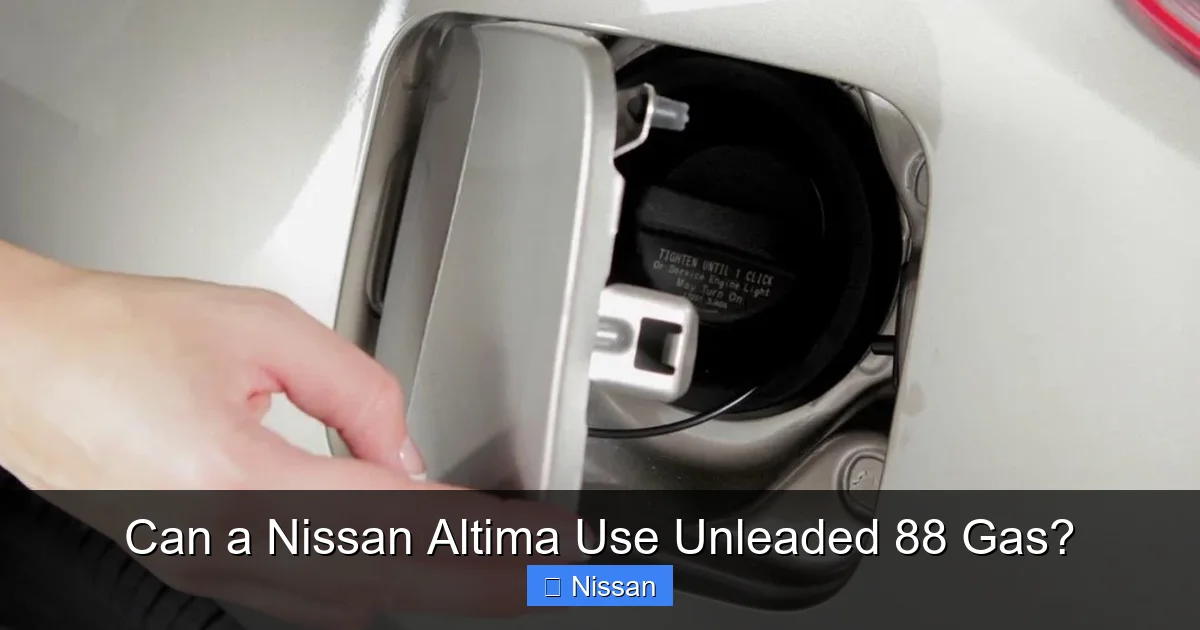
Visual guide about Can a Nissan Altima Use Unleaded 88 Gas?
Image source: turbochaos.com
Now that we understand what Unleaded 88 is, let’s address the core question: *Is it safe for your Nissan Altima?* The answer depends largely on your vehicle’s model year and engine type.
Which Nissan Altimas Can Use Unleaded 88?
Nissan has officially stated that all Altimas manufactured from 2001 onward are compatible with Unleaded 88 (E15). This includes every generation from the third-generation (2002–2006) to the current tenth-generation (2023–2024) models. Whether you drive a base 4-cylinder Altima or a more powerful V6 model, your engine is designed to handle the 15% ethanol blend.
However, there are a few exceptions. Older Altimas—specifically those made before 2001—are not approved for E15 use. These vehicles may have fuel system components (like rubber seals and gaskets) that aren’t compatible with higher ethanol concentrations. Using Unleaded 88 in a pre-2001 Altima could lead to leaks, corrosion, or fuel system damage over time.
Additionally, some high-performance or turbocharged variants, such as the Nissan Altima SR with the 2.0L VC-Turbo engine, may not see significant benefits from Unleaded 88. While they can technically use it, the engine’s advanced combustion system is already optimized for regular 87-octane fuel, so the gains in performance or efficiency may be minimal.
What Does Nissan Say About E15?
Nissan’s official stance is that Unleaded 88 is acceptable for use in all vehicles from model year 2001 and newer, as long as the fuel meets ASTM D4814 specifications. This is the same standard used for regular gasoline, ensuring consistency in quality and performance.
In the owner’s manual for most recent Altima models, you’ll find a section on fuel requirements that states: “Your vehicle is designed to operate on unleaded gasoline with an octane rating of 87 or higher. E15 (containing 15% ethanol) is also acceptable for use.” This gives drivers the flexibility to choose between regular gas and Unleaded 88 based on availability, price, and personal preference.
That said, Nissan does recommend using Top Tier Detergent Gasoline whenever possible. This is a higher-quality fuel that contains additional cleaning agents to prevent carbon buildup in the engine. Both regular 87 and Unleaded 88 can be Top Tier certified, so look for the Top Tier logo on the pump to ensure you’re getting a cleaner-burning fuel.
Real-World Testing and Owner Experiences
Many Nissan Altima owners have reported positive experiences with Unleaded 88. In online forums and owner communities, drivers note improvements in fuel economy—typically in the range of 1–3% better mileage compared to regular gas. Some also mention smoother engine operation and reduced knocking, especially during hot weather or when driving uphill.
For example, a 2018 Altima SV owner in Colorado shared that switching to Unleaded 88 improved their highway mileage from 32 mpg to 33.5 mpg. Another driver with a 2020 Altima SR reported no issues after using E15 for over 10,000 miles, with no changes in engine performance or maintenance needs.
Of course, results can vary based on driving habits, climate, and fuel quality. But overall, the consensus among Altima owners is that Unleaded 88 is a safe and effective alternative to regular gasoline.
Benefits of Using Unleaded 88 in Your Nissan Altima
Visual guide about Can a Nissan Altima Use Unleaded 88 Gas?
Image source: turbochaos.com
Switching to Unleaded 88 isn’t just about compatibility—it’s about the real-world advantages it can offer. From better fuel economy to environmental benefits, here’s why more drivers are making the switch.
Improved Fuel Efficiency
One of the most compelling reasons to use Unleaded 88 is the potential for better fuel economy. Because ethanol has a higher octane rating and burns more completely, it can extract more energy from each gallon of fuel. This means your engine doesn’t have to work as hard to produce the same amount of power, leading to improved mileage.
Studies by the U.S. Department of Energy have shown that vehicles running on E15 can achieve up to 2–4% better fuel economy compared to E10, especially in warmer climates. For a Nissan Altima that averages 30 mpg on the highway, that could mean an extra 0.6 to 1.2 miles per gallon—adding up to significant savings over time.
Lower Emissions and Environmental Impact
Unleaded 88 is better for the environment than regular gasoline. The ethanol in E15 is renewable and produces fewer greenhouse gases when burned. According to the Renewable Fuels Association, using E15 reduces lifecycle carbon emissions by up to 15% compared to pure gasoline.
This makes Unleaded 88 a great choice for eco-conscious drivers who want to reduce their carbon footprint without switching to an electric or hybrid vehicle. It’s also a step toward energy independence, as ethanol is produced domestically from corn and other biomass sources.
Cleaner Engine and Fuel System
Ethanol is a natural solvent, which means it helps keep your fuel system clean. When you use Unleaded 88, the higher ethanol content can help dissolve carbon deposits in the fuel injectors, intake valves, and combustion chamber. This leads to smoother engine operation, fewer misfires, and reduced risk of engine knocking.
Over time, this can extend the life of your engine and reduce the need for expensive cleaning services or repairs. Many mechanics recommend using a higher-ethanol fuel periodically to “flush” the system, and Unleaded 88 does this naturally with every fill-up.
Cost-Effective Option
While Unleaded 88 is often priced similarly to regular 87-octane gas, the improved fuel economy can make it a cost-effective choice in the long run. Even if the price per gallon is the same, getting more miles out of each tank means you’ll visit the pump less frequently.
In some regions, Unleaded 88 is actually cheaper than regular gas due to state incentives and lower distribution costs. For example, in Iowa and Nebraska, E15 is often 5–10 cents per gallon less expensive than E10, making it an even more attractive option.
Support for Domestic Energy Production
By choosing Unleaded 88, you’re supporting American farmers and the domestic ethanol industry. Over 95% of the ethanol used in the U.S. is produced domestically, primarily from corn grown in the Midwest. This reduces reliance on foreign oil and strengthens the national economy.
For many drivers, this is an added benefit that goes beyond personal savings or vehicle performance. It’s about making a choice that aligns with broader environmental and economic values.
Potential Drawbacks and Considerations
While Unleaded 88 offers many benefits, it’s not without its limitations. Before making the switch, it’s important to understand the potential downsides and how they might affect your Nissan Altima.
Reduced Fuel Economy in Cold Weather
One of the main drawbacks of ethanol-blended fuels is their performance in cold temperatures. Ethanol has a lower energy density than gasoline, meaning it contains less energy per gallon. In cold weather, this can lead to slightly reduced fuel economy—especially during the first few minutes of driving when the engine is warming up.
For drivers in northern states or mountainous regions, this could mean a 1–2% drop in mileage during winter months. However, once the engine reaches operating temperature, the difference usually evens out. If you live in a cold climate, you may want to stick with regular gas during the winter and switch to Unleaded 88 in the spring and summer.
Compatibility with Older Vehicles
As mentioned earlier, Unleaded 88 is not approved for use in vehicles made before 2001. If you drive a classic or vintage Nissan Altima, using E15 could damage rubber fuel lines, gaskets, and seals that weren’t designed to handle higher ethanol concentrations.
Even some early 2000s models may have components that are borderline compatible. If you’re unsure, consult your owner’s manual or contact a Nissan dealership for confirmation.
Potential for Phase Separation
Ethanol is hygroscopic, meaning it attracts water. In humid environments or if fuel sits in the tank for long periods (such as in a rarely driven car), water can mix with the ethanol and cause “phase separation.” This is when the ethanol and water separate from the gasoline, forming a layer at the bottom of the tank that can damage the fuel system.
To avoid this, avoid letting your Altima sit unused for more than a few weeks. If you plan to store your vehicle, consider using a fuel stabilizer or filling the tank with regular gasoline.
Not All Gas Stations Offer It
While availability is improving, Unleaded 88 is still not as widely available as regular gas. If you travel frequently or live in a rural area, you may find it difficult to locate E15 stations. This could force you to switch back and forth between fuel types, which may reduce the benefits of using Unleaded 88 consistently.
Minimal Benefits in High-Performance Engines
Some high-performance engines, like the 2.0L VC-Turbo in the Altima SR, are already optimized for 87-octane fuel. In these cases, the higher octane of Unleaded 88 may not provide any noticeable improvement in performance or efficiency. You’re still safe to use it, but you may not see the same benefits as drivers with standard 4-cylinder engines.
How to Safely Use Unleaded 88 in Your Nissan Altima
If you’ve decided to try Unleaded 88, here are some practical tips to ensure a smooth and safe experience.
Check Your Owner’s Manual
Before making any changes to your fuel routine, consult your Nissan Altima’s owner’s manual. Look for the section on fuel requirements, which will confirm whether E15 is approved for your specific model year and engine.
Start Gradually
If you’ve never used Unleaded 88 before, consider starting with one tank to see how your car responds. Monitor your fuel economy, engine performance, and any unusual sounds or vibrations. Most drivers notice no difference, but it’s always better to be cautious.
Use Top Tier Certified Fuel
Look for the Top Tier logo on the pump. This certification ensures the fuel contains extra detergents that keep your engine clean. Both regular and Unleaded 88 can be Top Tier certified, so choose the cleaner option whenever possible.
Avoid Mixing Fuels Unnecessarily
While it’s safe to mix Unleaded 88 with regular gas, doing so frequently can reduce the benefits of using E15. Try to fill up with the same type of fuel consistently to get the best results.
Monitor Your Fuel Economy
Keep track of your mileage over several tanks to see if Unleaded 88 is actually improving your fuel economy. Use a fuel log app or simply note your odometer reading and gallons used at each fill-up.
Store Your Vehicle Properly
If you won’t be driving your Altima for more than a few weeks, consider using a fuel stabilizer or filling the tank with regular gasoline to prevent phase separation.
Conclusion
So, can a Nissan Altima use Unleaded 88 gas? The answer is a resounding yes—for most models. If your Altima was manufactured in 2001 or later, you can safely and effectively use Unleaded 88 without any modifications or risks to your engine. This fuel offers real benefits, including improved fuel economy, lower emissions, and a cleaner-running engine.
While there are some considerations—like cold weather performance and availability—the advantages often outweigh the drawbacks. By following your owner’s manual, using Top Tier fuel, and monitoring your vehicle’s response, you can make the most of this eco-friendly, cost-effective fuel option.
Whether you’re looking to save money at the pump, reduce your environmental impact, or simply try something new, Unleaded 88 is a smart choice for your Nissan Altima. Give it a try on your next fill-up and see how your car responds. You might just find that a little ethanol goes a long way.
Frequently Asked Questions
Is Unleaded 88 the same as E85?
No, Unleaded 88 (E15) contains 15% ethanol, while E85 contains up to 85% ethanol. E85 is only for flex-fuel vehicles and can damage standard engines.
Will using Unleaded 88 void my Nissan Altima’s warranty?
No, using Unleaded 88 will not void your warranty as long as your vehicle is from 2001 or newer and the fuel meets ASTM standards.
Can I mix Unleaded 88 with regular gas?
Yes, you can safely mix Unleaded 88 with regular 87-octane gas. However, consistent use of one fuel type yields better results.
Does Unleaded 88 work in all Nissan Altimas?
It works in all Altimas from 2001 onward. Pre-2001 models are not approved and may suffer fuel system damage.
Will Unleaded 88 improve my Altima’s horsepower?
Unleaded 88 may slightly improve engine efficiency and reduce knocking, but it won’t significantly increase horsepower in most Altimas.
Where can I find Unleaded 88 gas stations?
Use the U.S. Department of Energy’s Alternative Fueling Station Locator or apps like GasBuddy to find E15 stations near you.