
Can a Mitsubishi Outlander Tow

The Mitsubishi Outlander can tow, but its capability depends on the model year, engine type, and drivetrain. With proper equipment, some versions can tow up to 3,500 pounds, making it suitable for small trailers, jet skis, or lightweight campers. Always check your specific model and follow safety guidelines.
Key Takeaways
- Towing capacity varies by model: Most modern Outlanders (2014–2024) can tow between 1,500 and 3,500 pounds, depending on engine and trim.
- Engine matters: The 2.4L four-cylinder typically handles lighter loads, while the 3.0L V6 or turbocharged engines offer better towing power.
- All-wheel drive (AWD) improves stability: AWD models provide better traction and control when towing, especially in wet or uneven terrain.
- Towing package is essential: A factory or aftermarket towing package with hitch, wiring, and transmission cooler is recommended for safe towing.
- Payload and tongue weight limits apply: Don’t exceed the vehicle’s payload capacity or the recommended tongue weight (usually 10–15% of trailer weight).
- Fuel efficiency drops when towing: Expect reduced gas mileage—plan for more frequent stops and higher fuel costs.
- Check owner’s manual: Always consult your specific Outlander’s manual for exact towing specs and safety instructions.
📑 Table of Contents
- Can a Mitsubishi Outlander Tow? The Complete Guide
- Understanding Towing Capacity: What Does It Really Mean?
- Mitsubishi Outlander Towing Capacity by Model Year
- Engine and Drivetrain: The Heart of Towing Power
- Essential Towing Equipment for Your Outlander
- Real-World Towing Scenarios: What Can You Actually Tow?
- Safety Tips and Best Practices for Towing
- Conclusion: Is the Mitsubishi Outlander a Good Towing SUV?
Can a Mitsubishi Outlander Tow? The Complete Guide
So, you’ve got a Mitsubishi Outlander—maybe it’s your daily driver, your family hauler, or your weekend adventure-mobile. But now you’re wondering: Can this SUV actually tow something? Whether you’re eyeing a small camper, a jet ski trailer, or a utility hauler for your lawnmower, the answer isn’t always straightforward. The good news? Yes, the Mitsubishi Outlander can tow—but how much, and under what conditions, depends on several key factors.
Unlike heavy-duty trucks built for serious towing, the Outlander is a midsize crossover designed for comfort, efficiency, and everyday versatility. That doesn’t mean it’s useless when it comes to pulling power, though. With the right setup, many Outlander models can handle light to moderate towing tasks with ease. But you’ve got to know your vehicle’s limits, understand the equipment needed, and plan accordingly. In this guide, we’ll break down everything you need to know about towing with a Mitsubishi Outlander—from capacity and capabilities to real-world tips and common mistakes to avoid.
Understanding Towing Capacity: What Does It Really Mean?
Before you hook up a trailer, it’s crucial to understand what “towing capacity” actually means. Simply put, it’s the maximum weight your vehicle can safely pull behind it. This number isn’t arbitrary—it’s determined by Mitsubishi based on the vehicle’s engine strength, transmission, cooling system, suspension, and overall structural design. Exceeding this limit can lead to dangerous situations like brake failure, transmission overheating, or loss of control.
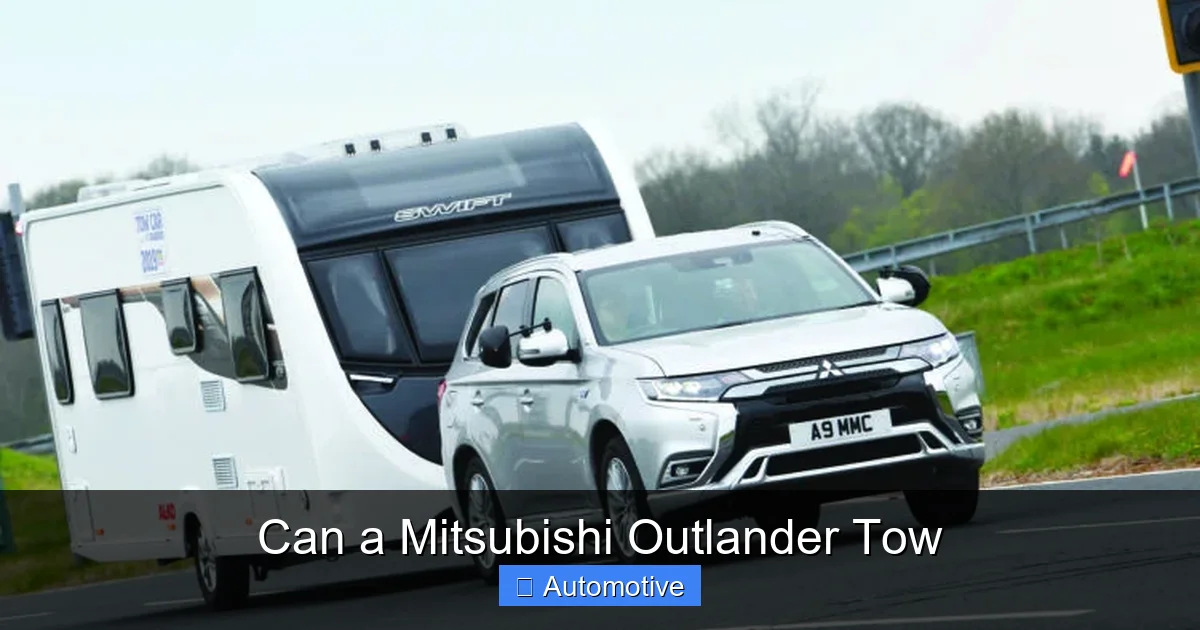
Visual guide about Can a Mitsubishi Outlander Tow
Image source: thetowcarawards.com
How Is Towing Capacity Determined?
Towing capacity isn’t just about horsepower. It’s a combination of factors including the strength of the chassis, the cooling system’s ability to handle added stress, the braking system’s capacity, and the transmission’s durability. For example, a vehicle with a robust cooling system can manage longer towing trips without overheating, while a weaker suspension might struggle with heavy loads.
Mitsubishi engineers test each Outlander model under various conditions to determine a safe towing limit. This number is then published in the owner’s manual and on official spec sheets. It’s not a suggestion—it’s a hard limit you should never exceed.
Why Capacity Varies Between Models
Not all Outlanders are created equal when it comes to towing. A 2015 Outlander with a 2.4L engine might have a lower capacity than a 2023 model with a turbocharged engine and AWD. Even within the same model year, different trims and drivetrains can affect towing ability. For instance, front-wheel drive (FWD) models typically have lower capacities than all-wheel drive (AWD) versions due to better weight distribution and traction.
Additionally, whether your Outlander is equipped with a factory towing package plays a big role. These packages often include upgrades like a heavy-duty radiator, transmission cooler, and reinforced hitch receiver—components that directly impact towing performance.
Mitsubishi Outlander Towing Capacity by Model Year
Let’s get into the numbers. Towing capacity for the Mitsubishi Outlander has evolved over the years, so it’s important to know what your specific model can handle. Here’s a breakdown by generation and key model years.
Visual guide about Can a Mitsubishi Outlander Tow
Image source: thetowcarawards.com
2003–2006 First Generation Outlander
The original Outlander (sold as the Airtrek in some markets) was a compact SUV with modest towing ability. Most models from this era, equipped with a 2.4L four-cylinder engine, could tow up to 1,500 pounds. This is enough for a small utility trailer, a couple of ATVs, or a lightweight popup camper—but not much more. These early models lacked advanced cooling systems and heavy-duty components, so towing was best kept short and light.
2007–2013 Second Generation Outlander
The second-generation Outlander introduced a more robust platform and optional V6 engine. With the 3.0L V6 and AWD, towing capacity increased to 3,500 pounds—a significant jump. The four-cylinder models still maxed out around 1,500 to 2,000 pounds. This generation also saw the introduction of optional towing packages, which included a Class II or Class III hitch and wiring harness.
2014–2023 Third Generation Outlander
The current generation (as of 2024) continues to offer solid towing capability. Most 2014–2023 Outlanders with the 2.4L engine and FWD can tow up to 1,500 pounds. However, models with the optional 3.0L V6 engine and AWD can handle up to 3,500 pounds—matching the previous generation’s peak performance.
It’s worth noting that Mitsubishi introduced a turbocharged 2.4L engine in some markets (like Australia) that offers improved torque and towing potential. These variants may have slightly higher capacities, but U.S. models typically stick to the 1,500–3,500 pound range.
2024 Mitsubishi Outlander: What’s New?
The 2024 Outlander continues the trend, with towing capacity remaining consistent: 1,500 pounds for FWD models and 3,500 pounds for AWD V6 models. However, the 2024 model benefits from improved aerodynamics, better fuel efficiency, and enhanced safety features—all of which contribute to a smoother towing experience.
One key update is the inclusion of standard trailer sway control on higher trims. This system uses the vehicle’s stability control to detect and correct trailer sway, adding an extra layer of safety when towing.
Engine and Drivetrain: The Heart of Towing Power
Your Outlander’s engine and drivetrain are the biggest factors in determining its towing strength. Let’s break down how each component plays a role.
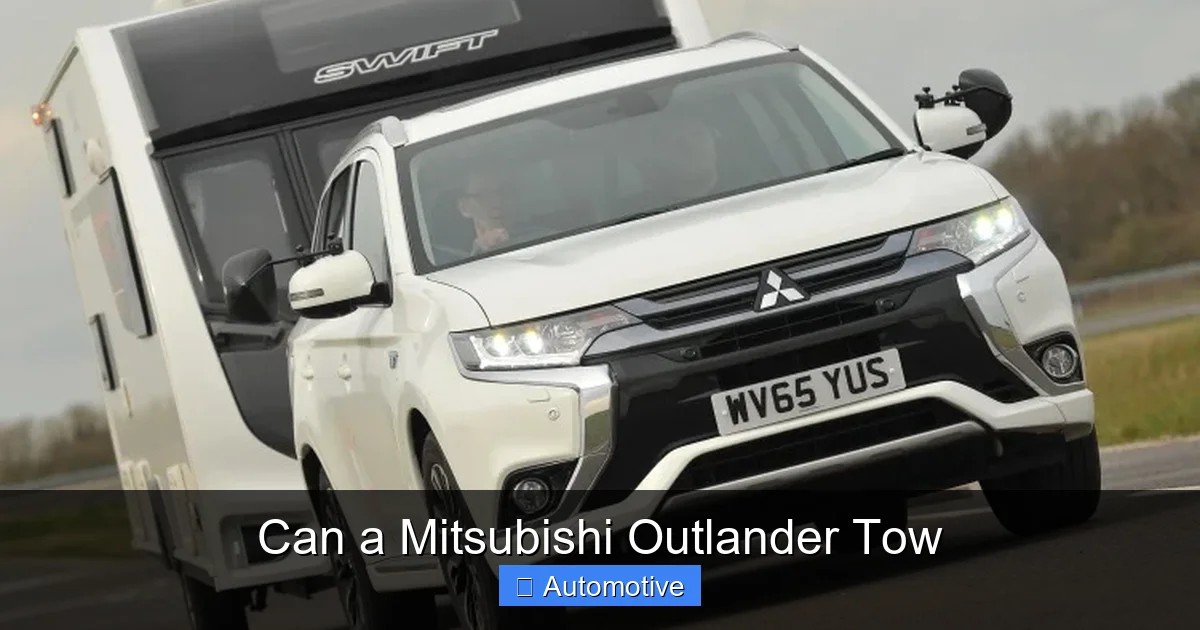
Visual guide about Can a Mitsubishi Outlander Tow
Image source: thetowcarawards.com
Engine Options and Their Towing Impact
The Mitsubishi Outlander has offered several engine options over the years, each with different towing capabilities:
- 2.4L Four-Cylinder (Most Common): This engine is fuel-efficient and reliable but lacks the torque needed for heavy towing. It’s best suited for loads under 2,000 pounds. Ideal for small trailers, bike racks, or lightweight campers.
- 3.0L V6 (Optional on Some Trims): With more horsepower and torque, the V6 significantly boosts towing capacity. It’s the engine you want if you plan to tow regularly or pull heavier loads like a small travel trailer or boat.
- Turbocharged 2.4L (International Models): In markets like Australia and Europe, Mitsubishi offers a turbocharged version of the 2.4L engine. This variant delivers more low-end torque, making it better for towing than the standard four-cylinder—though still not as strong as the V6.
Front-Wheel Drive vs. All-Wheel Drive
Drivetrain choice also affects towing performance. Front-wheel drive (FWD) models are lighter and more fuel-efficient but can struggle with traction when towing, especially on hills or wet roads. All-wheel drive (AWD) models, on the other hand, distribute power to all four wheels, improving grip and stability.
For towing, AWD is almost always the better choice. It helps prevent wheel slip, improves braking control, and reduces strain on the transmission. If you plan to tow frequently or in challenging conditions, opt for an AWD Outlander whenever possible.
Transmission and Cooling Systems
Towing puts extra stress on your vehicle’s transmission and engine. The Outlander’s continuously variable transmission (CVT) in four-cylinder models is efficient but can overheat under heavy load. That’s why a transmission cooler is essential when towing—especially for longer trips.
V6 models typically come with a traditional automatic transmission, which is more robust and better suited for towing. Still, even these benefit from a transmission cooler, particularly in hot climates or when towing near maximum capacity.
Essential Towing Equipment for Your Outlander
Even if your Outlander has the right engine and drivetrain, you still need the proper equipment to tow safely. Here’s what you’ll need.
Towing Hitch and Receiver
The hitch is the physical connection between your vehicle and the trailer. Most Outlanders can be equipped with a Class II or Class III hitch receiver. A Class II hitch supports up to 3,500 pounds, which matches the Outlander’s maximum capacity. Make sure the hitch is rated for your specific model and installed by a professional.
Wiring Harness and Trailer Lights
Your trailer’s brake lights, turn signals, and running lights must sync with your Outlander’s lighting system. A 4-pin or 7-pin wiring harness connects the two. Many Outlanders come pre-wired for towing, but you may need an adapter or aftermarket harness. Always test the lights before hitting the road.
Transmission Cooler
This is a must-have if you plan to tow regularly or in hot weather. The transmission cooler helps dissipate heat generated by the added strain of pulling a trailer. Without it, you risk overheating and transmission damage. Some towing packages include this component; otherwise, it can be added separately.
Brake Controller (For Heavier Loads)
If you’re towing a trailer with electric brakes (common on loads over 1,500 pounds), you’ll need a brake controller. This device allows you to manually adjust brake pressure from inside the vehicle, improving stopping power and safety. It’s especially important when descending hills or making sudden stops.
Weight Distribution Hitch (Optional but Recommended)
For trailers over 3,000 pounds, a weight distribution hitch helps balance the load across all axles. It reduces sagging in the rear of your Outlander and improves steering and braking. While not always necessary, it’s a smart upgrade for frequent or heavy towing.
Real-World Towing Scenarios: What Can You Actually Tow?
Now for the fun part—what can you actually tow with your Outlander? Let’s look at some common examples.
Small Utility Trailers
A standard 4×8 utility trailer weighs around 500–700 pounds empty. Loaded with lawn equipment, furniture, or camping gear, it might reach 1,200–1,500 pounds. This is well within the range of most Outlanders, even FWD models. Perfect for weekend projects or moving day.
Jet Skis or ATVs
A single jet ski with trailer weighs about 800–1,200 pounds. Two jet skis or a couple of ATVs might push it to 1,500–2,000 pounds. Again, easily manageable for an Outlander with a V6 or turbo engine. Just make sure your hitch and brakes are up to the task.
Small Travel Trailers and Popups
Lightweight travel trailers and popup campers can range from 1,500 to 3,500 pounds. A teardrop trailer or small hybrid camper might weigh 2,000–2,800 pounds—ideal for an AWD V6 Outlander. These are great for weekend getaways or family camping trips.
Boats
A small aluminum fishing boat with motor and trailer might weigh 1,800–2,500 pounds. This is within the Outlander’s range, but only if you have the right setup. Larger boats (over 3,000 pounds) are better suited for trucks or larger SUVs.
What You Should Avoid
Don’t attempt to tow large travel trailers, RVs, or heavy equipment trailers. These often exceed 3,500 pounds and can overwhelm the Outlander’s suspension, brakes, and cooling systems. Also, avoid towing in extreme heat or mountainous terrain without proper cooling equipment.
Safety Tips and Best Practices for Towing
Towing safely isn’t just about capacity—it’s about preparation, driving technique, and maintenance.
Pre-Tow Checklist
Before every trip, do a quick inspection:
- Check tire pressure on both vehicle and trailer
- Ensure all lights are working
- Verify hitch is securely locked
- Confirm trailer brakes are functional (if equipped)
- Double-check load distribution
Loading the Trailer Correctly
Proper weight distribution is critical. Place 60% of the weight in the front half of the trailer, near the axle. Avoid overloading the rear, which can cause sway. Also, secure all items to prevent shifting during transit.
Driving with a Trailer
Towing changes how your vehicle handles. Allow extra distance for braking, take turns wider, and avoid sudden maneuvers. Use lower gears when going downhill to reduce brake wear. And always use your mirrors—consider adding extended towing mirrors for better visibility.
Regular Maintenance
Towing increases wear and tear. After heavy use, check your transmission fluid, coolant levels, and brake pads. Consider more frequent oil changes and inspections if you tow often.
Conclusion: Is the Mitsubishi Outlander a Good Towing SUV?
So, can a Mitsubishi Outlander tow? Absolutely—but with caveats. It’s not a heavy-duty towing machine, but for light to moderate loads, it’s more than capable. With the right engine (preferably the V6), AWD, and proper equipment, the Outlander can confidently handle small trailers, campers, boats, and recreational gear.
The key is knowing your model’s limits and respecting them. Don’t push the boundaries—stick to the manufacturer’s guidelines, invest in the right towing gear, and drive safely. When used appropriately, the Outlander proves that you don’t need a truck to enjoy outdoor adventures.
Whether you’re hauling gear to the campsite or pulling a jet ski to the lake, the Mitsubishi Outlander can be a reliable partner—just make sure you’re prepared.
Frequently Asked Questions
Can a Mitsubishi Outlander tow a camper?
Yes, but only lightweight campers. Popup campers and small travel trailers under 3,500 pounds can be towed by an AWD V6 Outlander. Heavier RVs are not recommended.
What is the maximum towing capacity of a Mitsubishi Outlander?
The maximum towing capacity is 3,500 pounds, but only for models with the 3.0L V6 engine and all-wheel drive. Most four-cylinder models are limited to 1,500 pounds.
Do I need a special package to tow with my Outlander?
A towing package is highly recommended. It typically includes a hitch, wiring harness, and transmission cooler—essential for safe and reliable towing.
Can I tow with a front-wheel drive Outlander?
Yes, but with limitations. FWD models have lower towing capacity (usually 1,500 pounds) and less traction. AWD is better for stability and control.
Will towing reduce my Outlander’s fuel economy?
Yes, significantly. Expect a 20–30% drop in fuel efficiency when towing, especially on highways or hills. Plan for more frequent fuel stops.
Can I install a towing hitch myself?
While possible, it’s best to have a professional install the hitch and wiring. Improper installation can lead to safety hazards or damage to your vehicle.