
Can a Mitsubishi Outlander Tow a Camper?

The Mitsubishi Outlander can tow a camper, but only within specific weight limits and configurations. With a maximum towing capacity of up to 3,500 pounds when properly equipped, it’s suitable for lightweight travel trailers and pop-up campers—but not heavier RVs.
Thinking about hitting the open road with your Mitsubishi Outlander and a camper in tow? You’re not alone. More and more drivers are discovering the joy of combining the comfort of a modern SUV with the freedom of a small travel trailer. But before you hitch up and head out, it’s important to ask the right question: *Can a Mitsubishi Outlander tow a camper?*
The short answer is yes—but with important caveats. The Outlander isn’t built to haul massive fifth-wheel RVs or large Class A motorhomes. Instead, it shines as a capable vehicle for lightweight camping adventures. Whether you’re planning a weekend getaway to the mountains or a cross-country trip through national parks, the Outlander can be a solid companion—if you understand its limits and prepare accordingly.
In this guide, we’ll dive deep into what makes the Outlander a viable (or not-so-viable) towing machine. We’ll break down its towing capacity across different model years, explain what equipment you’ll need, and share real-world tips from Outlander owners who’ve successfully towed campers. By the end, you’ll know exactly whether your Outlander is up to the task—and how to do it safely and confidently.
Key Takeaways
- Towing Capacity Varies by Model: The Outlander’s towing capacity ranges from 1,500 to 3,500 pounds depending on the year, engine, drivetrain, and factory tow package.
- Best for Lightweight Campers: It’s ideal for pop-up campers, teardrop trailers, and small travel trailers under 3,000 pounds.
- Requires Proper Equipment: A factory or aftermarket tow hitch, wiring harness, and brake controller (if needed) are essential for safe towing.
- All-Wheel Drive Improves Stability: AWD models offer better traction and control when towing, especially on wet or uneven terrain.
- Fuel Efficiency Drops When Towing: Expect a noticeable decrease in MPG when pulling a camper—plan fuel stops accordingly.
- Check Owner’s Manual and Local Laws: Always verify towing specs and ensure compliance with state or country regulations.
- Regular Maintenance is Crucial: Towing adds strain—keep up with oil changes, brake checks, and cooling system maintenance.
📑 Table of Contents
- Understanding the Mitsubishi Outlander’s Towing Capacity
- What Types of Campers Can the Outlander Tow?
- Essential Towing Equipment for Your Outlander
- Driving Tips for Towing with the Outlander
- Real-World Experiences: Outlander Owners Who Tow
- Maintenance and Safety When Towing
- Conclusion: Is the Outlander Right for Your Camping Adventures?
Understanding the Mitsubishi Outlander’s Towing Capacity
When it comes to towing, the first thing you need to know is the vehicle’s official towing capacity. This number tells you the maximum weight your Outlander can safely pull. But here’s the catch: that number isn’t the same across all models.
The Mitsubishi Outlander’s towing capacity has evolved over the years, largely depending on the engine, drivetrain, and whether it came with a factory tow package. Let’s break it down by generation and key specs.
Towing Capacity by Model Year and Trim
For the 2023 and 2024 Mitsubishi Outlander models, the towing capacity is **3,500 pounds** when equipped with the available tow package. This applies to both the standard 2.5L four-cylinder engine and the plug-in hybrid (PHEV) version, provided they have all-wheel drive (AWD) and the proper towing equipment installed.
Earlier models tell a different story. From 2014 to 2022, most Outlanders with the 2.4L or 3.0L engine and AWD could tow up to **3,500 pounds**—but only if they had the factory tow package. Without it, the towing capacity dropped significantly, often to just **1,500 pounds**. Front-wheel drive (FWD) models, especially in older years, were typically limited to **1,000 to 1,500 pounds**.
For example, a 2018 Outlander SEL with AWD and the tow package can safely pull a 3,000-pound camper. But a base 2016 Outlander ES with FWD and no tow package? It’s best suited for a small utility trailer or bike rack—not a camper.
Why the Tow Package Matters
So what exactly does the “tow package” include? It’s not just a sticker—it’s a suite of upgrades designed to handle the extra stress of towing. A factory tow package typically includes:
– A Class III or Class IV trailer hitch receiver
– Heavy-duty cooling system (transmission and engine)
– Upgraded suspension components
– Wiring harness for trailer lights
– Sometimes, a transmission cooler or brake controller
Without these components, your Outlander may overheat, wear out faster, or struggle to control a loaded trailer—especially on hills or in hot weather.
If your Outlander didn’t come with a tow package, you can often add one aftermarket. But be cautious: not all aftermarket hitches are rated for 3,500 pounds. Always choose a hitch that matches or exceeds your intended towing load.
What Types of Campers Can the Outlander Tow?
Visual guide about Can a Mitsubishi Outlander Tow a Camper?
Image source: rvownerhq.com
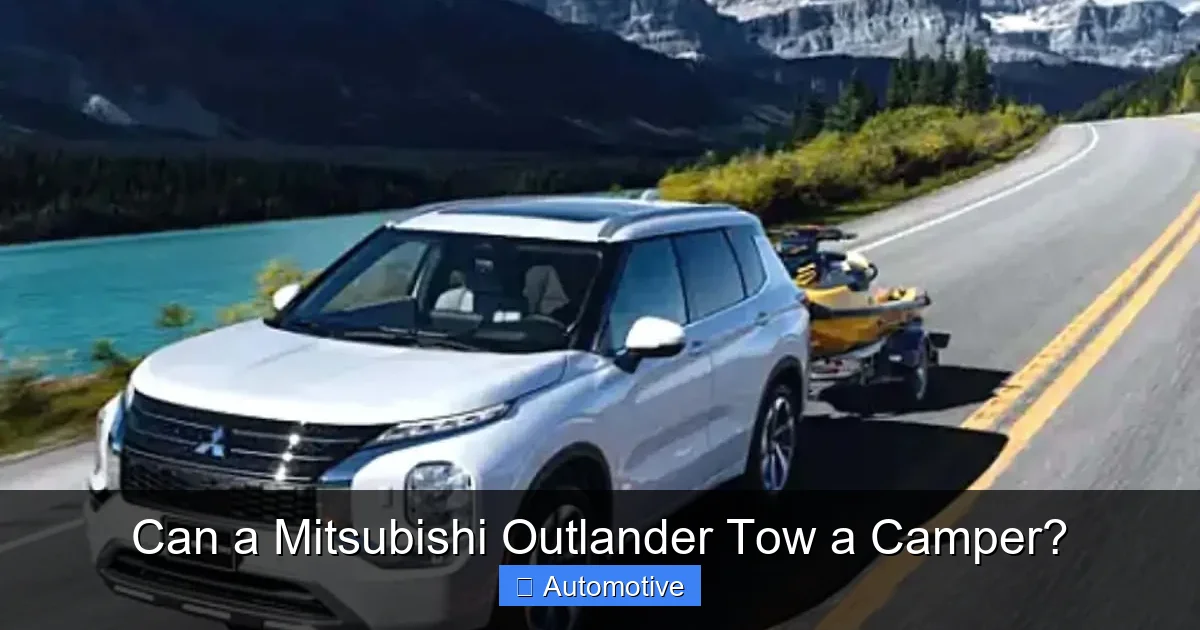
Now that you know the Outlander can handle up to 3,500 pounds (with the right setup), the next question is: *What kind of camper fits within that limit?*
The good news is that many popular lightweight campers fall well within the Outlander’s capabilities. The bad news? You’ll need to leave the big, luxurious travel trailers at home.
Best Campers for the Outlander
Here are some camper types that pair well with the Mitsubishi Outlander:
– **Pop-Up Campers:** These lightweight, foldable trailers typically weigh between 1,500 and 3,000 pounds when loaded. Models like the Jayco Jay Series, Forest River R-Pod, or Airstream Basecamp are excellent matches.
– **Teardrop Trailers:** Compact and aerodynamic, teardrops like the Little Guy Trailers or Happier Camper HC1 usually weigh under 2,500 pounds. They’re perfect for solo travelers or couples.
– **Small Travel Trailers:** Lightweight models such as the Winnebago Micro Minnie, Airstream Bambi, or Casita Spirit offer more space and amenities while staying under 3,500 pounds.
– **Off-Road Campers:** Some rugged, minimalist campers designed for overlanding—like the Opus OP 15 or SylvanSport GO—are built to be light and towable by smaller SUVs.
Campers to Avoid
Steer clear of campers that exceed 3,500 pounds or have a high tongue weight (the downward force on the hitch). Examples include:
– Large travel trailers (e.g., Grand Design Imagine, Keystone Outback)
– Fifth-wheel RVs
– Toy haulers
– Most Class C motorhomes
Even if a camper’s dry weight is under 3,500 pounds, remember that “loaded weight” includes water, gear, propane, and passengers. Always check the camper’s **Gross Vehicle Weight Rating (GVWR)**—that’s the maximum it can weigh when fully loaded.
For example, a camper with a dry weight of 2,800 pounds might have a GVWR of 3,800 pounds. That’s too much for the Outlander, even if it looks light on paper.
Essential Towing Equipment for Your Outlander
Visual guide about Can a Mitsubishi Outlander Tow a Camper?
Image source: thetowcarawards.com
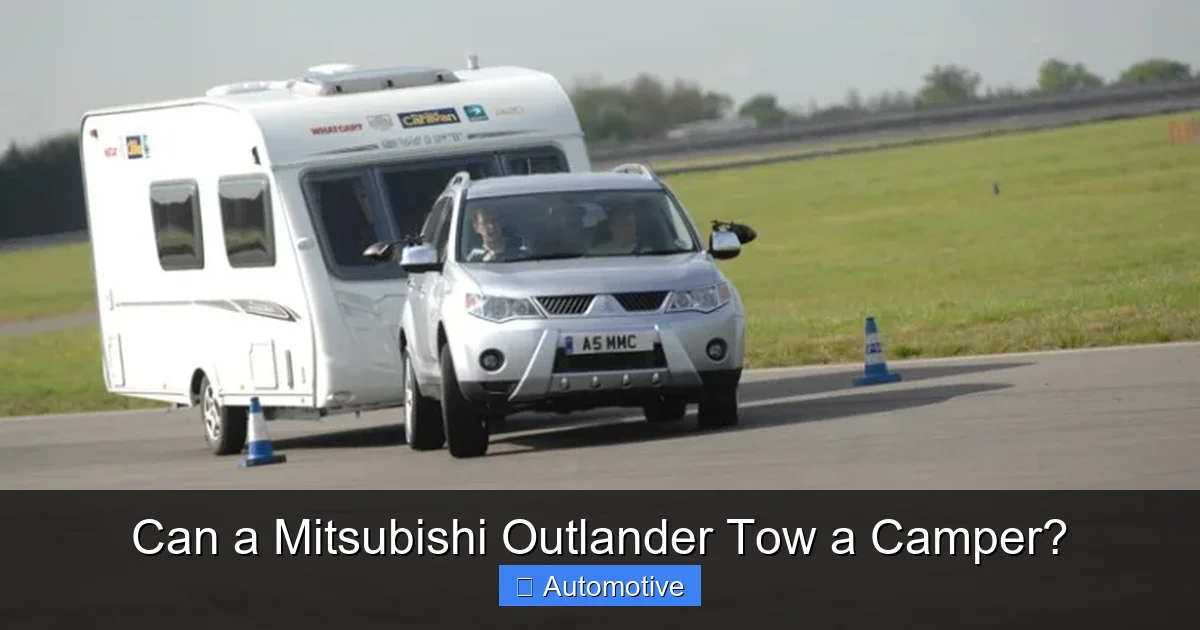
Towing a camper isn’t just about hitching up and driving. You need the right gear to do it safely and legally. Here’s what you’ll need to tow a camper with your Mitsubishi Outlander.
Trailer Hitch and Receiver
The foundation of any towing setup is the hitch. For the Outlander, a **Class III hitch** is standard for 3,500-pound towing. This hitch has a 2-inch receiver and can handle most lightweight campers.
Popular aftermarket brands include:
– Curt Manufacturing
– Draw-Tite
– Reese (by Horizon Global)
Make sure the hitch is specifically designed for your Outlander’s year and model. A universal hitch might not fit properly or meet safety standards.
Wiring Harness and Lights
Your camper’s brake lights, turn signals, and running lights must sync with your Outlander. A **4-pin or 7-pin wiring harness** connects the trailer to the vehicle’s electrical system.
Most Outlanders can use a plug-and-play harness that connects to the factory taillight assembly. No splicing required. If your camper has electric brakes, you’ll need a 7-pin connector and a brake controller.
Brake Controller (If Needed)
If your camper has **electric brakes**, you’ll need a brake controller inside your Outlander. This device lets you adjust brake pressure from the driver’s seat, ensuring the trailer slows down smoothly with the vehicle.
The Outlander doesn’t come with a built-in brake controller, so you’ll need an aftermarket unit like the:
– Tekonsha Prodigy P3
– Redarc Tow-Pro Elite
– Curt Spectrum
Install it under the dashboard, and connect it to the brake pedal and wiring harness.
Weight Distribution and Sway Control
Even lightweight campers can sway in wind or on uneven roads. A **weight distribution hitch** helps balance the load, while **sway control devices** (like friction bars or dual-cam systems) reduce side-to-side movement.
These aren’t always necessary for campers under 2,500 pounds, but they’re highly recommended for longer trailers or windy conditions.
Safety Chains and Breakaway System
Always use **safety chains** crossed under the hitch tongue to catch the trailer if it detaches. Additionally, a **breakaway system**—a battery-powered brake activator triggered if the trailer separates—is required by law in most states.
Driving Tips for Towing with the Outlander

Visual guide about Can a Mitsubishi Outlander Tow a Camper?
Image source: thetowcarawards.com
Towing changes how your Outlander handles. It’s heavier, slower to accelerate, and harder to stop. But with the right techniques, you can drive safely and confidently.
Pre-Trip Inspection
Before every trip, do a quick check:
– Tire pressure (on both vehicle and trailer)
– Hitch and coupler secure
– Lights working
– Brakes functioning
– Safety chains attached
– Load balanced (60% of weight in front of the axle)
An unbalanced load can cause fishtailing or loss of control.
Adjust Your Driving Style
– **Accelerate slowly:** The Outlander’s engine isn’t built for rapid towing acceleration. Give yourself extra time to merge or climb hills.
– **Brake early:** Towing increases stopping distance. Leave more space between you and the car ahead.
– **Take corners wide:** Trailers can swing into other lanes if you turn too sharply.
– **Use lower gears on hills:** Downshift when climbing or descending to reduce strain on the transmission.
Fuel Economy Considerations
Towing reduces fuel efficiency—often by 20–30%. A normally efficient Outlander (around 25–28 MPG) might drop to 18–22 MPG when towing a camper.
Plan your route with fuel stops in mind, especially in remote areas. Consider using cruise control on flat highways to maintain steady speed and save fuel.
Weather and Terrain Awareness
Wind, rain, and mountain roads can make towing more challenging. High winds can push a lightweight trailer sideways. Wet roads reduce traction. Steep grades test your engine and brakes.
If you’re new to towing, practice in an empty parking lot first. Get a feel for how the Outlander responds with a load.
Real-World Experiences: Outlander Owners Who Tow
Still unsure? Let’s hear from real Mitsubishi Outlander owners who’ve hit the road with campers.
Case Study: Sarah and Her Teardrop Trailer
Sarah, a teacher from Colorado, owns a 2021 Outlander SEL AWD with the tow package. She tows a 2,200-pound teardrop trailer to mountain campsites every summer.
“I was nervous at first,” she says. “But the Outlander handles it like a champ. I use a weight distribution hitch and always check my tire pressure. The only downside is gas mileage—it drops to about 19 MPG when I’m loaded up.”
Case Study: Mark and His Pop-Up Camper
Mark, a retiree from Oregon, uses his 2019 Outlander GT to tow a 2,800-pound pop-up camper. He added a brake controller and upgraded his hitch.
“I’ve driven over 10,000 miles with it,” he says. “The AWD helps a lot on gravel roads. Just take your time, and don’t overload. I keep my gear light and use a roof box for extra storage.”
These stories show that with preparation and respect for the vehicle’s limits, the Outlander can be a reliable towing partner.
Maintenance and Safety When Towing
Towing puts extra stress on your Outlander. To keep it running smoothly, follow these maintenance tips.
Regular Service Checks
– **Transmission fluid:** Towing heats up the transmission. Check fluid levels and change it more often if you tow frequently.
– **Coolant system:** Ensure the radiator and coolant are in good condition to prevent overheating.
– **Brakes:** Inspect brake pads and rotors regularly. Towing wears them down faster.
– **Tires:** Rotate and inspect tires for wear. Underinflated tires can overheat and fail.
Monitor Temperatures
Use your dashboard gauges to watch engine and transmission temperatures. If either starts to climb, pull over and let the engine cool. Consider installing an aftermarket temperature monitor for peace of mind.
Insurance and Legal Requirements
Check your auto insurance policy. Some insurers require notification if you’re towing regularly. Also, verify local laws—some states require special licenses or permits for towing over a certain weight.
Conclusion: Is the Outlander Right for Your Camping Adventures?
So, can a Mitsubishi Outlander tow a camper? The answer is a cautious but confident **yes**—if you choose the right camper, equip your vehicle properly, and drive responsibly.
The Outlander isn’t a heavy-duty towing machine, but it’s more than capable of handling lightweight travel trailers, pop-ups, and teardrops. With a towing capacity of up to 3,500 pounds (when equipped), it opens the door to countless camping adventures—without the need for a full-size truck or SUV.
Just remember: know your limits. Check your owner’s manual, invest in quality towing gear, and never exceed the recommended weight. With the right setup, your Outlander can be the perfect companion for weekend escapes, national park tours, and off-grid adventures.
Whether you’re a weekend warrior or a full-time traveler, the Outlander proves that you don’t need a giant vehicle to enjoy the great outdoors. Sometimes, the best journeys start with a small step—and a well-hitched trailer.
Frequently Asked Questions
Can a Mitsubishi Outlander tow a 4,000-pound camper?
No, the Outlander’s maximum towing capacity is 3,500 pounds when properly equipped. Attempting to tow a 4,000-pound camper exceeds its limits and can damage the vehicle or cause unsafe driving conditions.
Do I need a special license to tow a camper with an Outlander?
In most U.S. states, no special license is required to tow a camper under 3,500 pounds with a standard driver’s license. However, check your local regulations, as some states have specific rules for trailers over certain weights.
Can the Outlander PHEV tow a camper?
Yes, the Mitsubishi Outlander Plug-in Hybrid (PHEV) can tow up to 3,500 pounds when equipped with AWD and the tow package. Its electric motor provides extra low-end torque, which can help with initial acceleration when towing.
What happens if I tow more than the Outlander’s capacity?
Towing beyond the rated capacity can lead to overheating, transmission failure, brake wear, and loss of control. It may also void your warranty and insurance coverage in the event of an accident.
Can I add a tow package to an older Outlander?
Yes, many older Outlanders can be retrofitted with aftermarket tow hitches, wiring harnesses, and brake controllers. However, ensure the vehicle’s cooling and suspension systems can handle the added strain.
How do I know if my camper is too heavy for my Outlander?
Check the camper’s Gross Vehicle Weight Rating (GVWR) on its certification label. Compare it to your Outlander’s towing capacity (found in the owner’s manual). Never tow if the GVWR exceeds the vehicle’s limit.