
How Fast Is a Ferrari?

Ferraris are among the fastest production cars on the planet, with top speeds exceeding 200 mph and 0-60 mph times under 3 seconds. From the thunderous V12s to hybrid hypercars, Ferrari blends cutting-edge engineering with Italian passion to deliver jaw-dropping performance.
Key Takeaways
- Top speeds over 200 mph: Many modern Ferraris, like the SF90 Stradale and LaFerrari, exceed 217 mph, placing them in elite hypercar territory.
- 0-60 mph in under 3 seconds: Most current Ferrari models launch from zero to 60 mph in 2.5 to 2.9 seconds, thanks to advanced aerodynamics and powerful engines.
- Hybrid technology boosts performance: Models like the SF90 use electric motors alongside twin-turbo V8s, delivering instant torque and improved acceleration.
- Aerodynamics are key: Active spoilers, diffusers, and underbody airflow management help Ferraris stay glued to the road at high speeds.
- Track-focused variants are even faster: Special editions like the FXX-K and 812 Competizione are built for circuits, with higher top speeds and sharper handling.
- Driving dynamics matter as much as speed: Ferrari balances raw power with precision steering, braking, and suspension for a complete performance experience.
- Real-world speed depends on conditions: Track setup, driver skill, weather, and road surface all affect how fast a Ferrari can safely go.
📑 Table of Contents
- How Fast Is a Ferrari? The Need for Speed, Italian Style
- Understanding Ferrari Performance: Top Speed vs. Acceleration
- Ferrari Engine Technology: The Heart of the Beast
- Aerodynamics and Handling: Staying Fast, Staying Safe
- Iconic Ferrari Models and Their Speed Stats
- Track vs. Road: How Fast Can You Really Go?
- The Future of Ferrari Speed: Electric and Beyond
- Conclusion: More Than Just Speed
How Fast Is a Ferrari? The Need for Speed, Italian Style
When you hear the name Ferrari, what comes to mind? For most, it’s the roar of a high-revving engine, the sleek silhouette of a red sports car, and the thrill of blistering speed. But just how fast is a Ferrari? The answer isn’t just about numbers on a spec sheet—it’s about the marriage of engineering brilliance, aerodynamic mastery, and raw Italian passion.
Ferrari has been pushing the boundaries of automotive performance since Enzo Ferrari founded the company in 1947. From the early days of the 125 S to today’s hybrid hypercars, the brand has consistently delivered vehicles that don’t just go fast—they redefine what fast means. Whether you’re talking about a classic 250 GTO or the futuristic SF90 Stradale, Ferrari’s commitment to speed is unwavering.
But speed isn’t just about top velocity. It’s about how quickly a car can accelerate, how it handles at high speeds, and how it responds to the driver’s inputs. A Ferrari isn’t just a fast car—it’s a precision instrument designed to deliver an emotional, visceral driving experience. And when you’re behind the wheel, every second counts.
Understanding Ferrari Performance: Top Speed vs. Acceleration
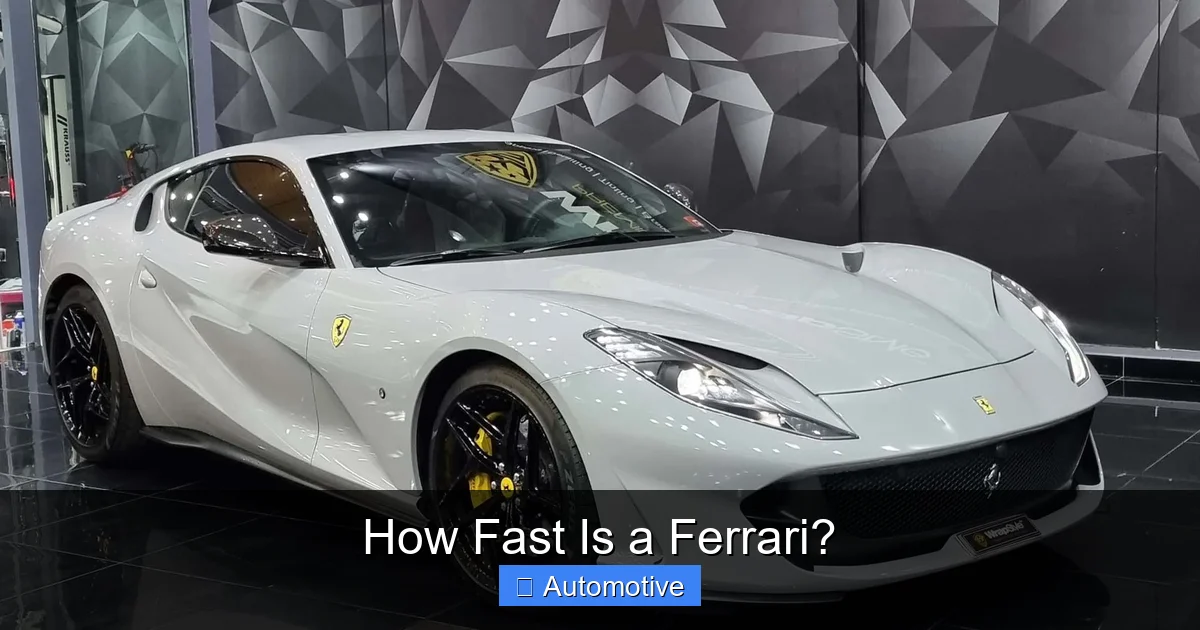
Visual guide about How Fast Is a Ferrari?
Image source: wrapstyle.com
When people ask, “How fast is a Ferrari?” they’re usually thinking about two key metrics: top speed and acceleration. While both are important, they measure different aspects of performance.
Top speed refers to the maximum velocity a car can reach under ideal conditions—usually on a long, straight stretch of road or a test track. Acceleration, on the other hand, is about how quickly a car can reach a certain speed, typically measured as 0 to 60 mph (0 to 97 km/h). For Ferrari, both numbers are impressive, but acceleration often steals the show.
Top Speed: Breaking the 200 mph Barrier
Many modern Ferraris are capable of exceeding 200 mph (322 km/h), a milestone once reserved for only the most exotic supercars. The Ferrari SF90 Stradale, for example, has a top speed of 211 mph (340 km/h), making it one of the fastest production cars ever made. The LaFerrari, a hybrid hypercar from 2013, hits 217 mph (350 km/h), while the 812 Superfast reaches 211 mph as well.
These speeds are achieved through a combination of powerful engines, lightweight materials, and advanced aerodynamics. Ferrari uses carbon fiber extensively in its chassis and body panels to reduce weight without sacrificing strength. This allows the car to maintain stability and control even at extreme velocities.
Acceleration: The Art of the Launch
While top speed is impressive, it’s acceleration that truly defines a Ferrari’s performance character. Most current Ferrari models can sprint from 0 to 60 mph in under 3 seconds. The SF90 Stradale does it in just 2.5 seconds, thanks to its hybrid powertrain that combines a 4.0-liter twin-turbo V8 with three electric motors. The LaFerrari achieves the same feat in 2.4 seconds, making it one of the quickest road-legal cars ever built.
Even non-hybrid models like the F8 Tributo and 812 Superfast deliver sub-3-second times. The F8 Tributo hits 60 mph in 2.9 seconds, while the 812 Superfast—powered by a naturally aspirated 6.5-liter V12—does it in 2.8 seconds. That’s faster than many Formula 1 cars from just a decade ago.
Real-World Performance: More Than Just Numbers
Of course, these numbers are achieved under controlled conditions. In the real world, factors like road surface, weather, and driver skill play a big role. A Ferrari’s performance isn’t just about raw power—it’s about how that power is delivered.
Ferrari engineers spend countless hours tuning the throttle response, gear shifts, and traction control to ensure the car launches smoothly and safely. The dual-clutch automatic transmissions used in most modern Ferraris shift gears in milliseconds, minimizing power loss and maximizing acceleration.
Ferrari Engine Technology: The Heart of the Beast
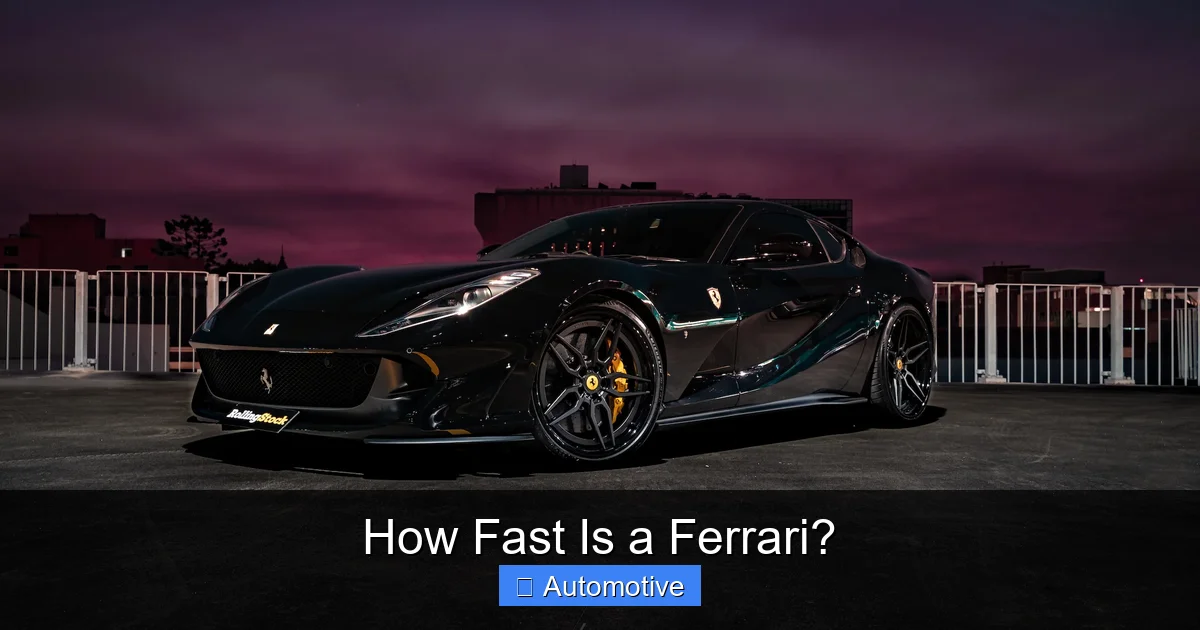
Visual guide about How Fast Is a Ferrari?
Image source: strassewheels.com
At the core of every Ferrari’s speed is its engine. Ferrari has a long history of building some of the most powerful and sonorous engines in the automotive world. From high-revving V12s to turbocharged V8s, the brand’s powerplants are engineering marvels.
V12 Power: The Soul of Ferrari
The V12 engine is synonymous with Ferrari. These naturally aspirated powerhouses are known for their smooth power delivery, linear torque curve, and spine-tingling exhaust note. The 812 Superfast, for example, uses a 6.5-liter V12 that produces 800 horsepower and 530 lb-ft of torque. It revs to 8,900 rpm, delivering a driving experience that’s both visceral and refined.
Ferrari’s V12s are hand-built by master engine builders in Maranello, Italy. Each engine is tested and tuned to ensure it meets the brand’s exacting standards. The result is a motor that not only performs at the highest level but also sounds like music to the ears of any car enthusiast.
Twin-Turbo V8s: Efficiency Meets Performance
While V12s represent Ferrari’s heritage, the brand has embraced turbocharging to meet modern emissions standards without sacrificing performance. The 3.9-liter twin-turbo V8 used in models like the F8 Tributo and SF90 Stradale produces up to 769 horsepower in its most powerful form.
Turbocharging allows Ferrari to extract more power from a smaller engine, improving fuel efficiency and reducing weight. But Ferrari’s turbos are no ordinary forced-induction systems. They’re designed to minimize turbo lag and deliver instant throttle response, ensuring the car feels just as responsive as a naturally aspirated engine.
Hybrid Systems: The Future of Ferrari Speed
The SF90 Stradale marked Ferrari’s first series-production plug-in hybrid. Its powertrain combines the twin-turbo V8 with three electric motors—one on the rear axle and two on the front—delivering a combined 986 horsepower. This setup not only boosts acceleration but also improves efficiency and reduces emissions.
The electric motors provide instant torque, helping the car launch off the line with incredible force. They also allow for all-electric driving at low speeds, making the SF90 surprisingly usable in city traffic. When the V8 kicks in, the experience transforms into a full-throttle assault on the senses.
Aerodynamics and Handling: Staying Fast, Staying Safe

Visual guide about How Fast Is a Ferrari?
Image source: bentleywashingtondc.com
Speed is useless without control. That’s why Ferrari invests heavily in aerodynamics and chassis engineering. A fast car that can’t handle corners or brake effectively is dangerous—and not what Ferrari is about.
Active Aerodynamics: Downforce on Demand
Ferrari uses active aerodynamics to balance downforce and drag. Systems like the Aero Bridge and Side Slip Control adjust the car’s airflow in real time, increasing downforce during high-speed cornering and reducing drag on the straights.
The SF90 Stradale, for example, features an active rear spoiler that deploys automatically at high speeds to increase downforce. It can also tilt to act as an air brake during hard deceleration, helping the car slow down faster and more safely.
Chassis and Suspension: Precision at Every Turn
Ferrari’s chassis are built using a mix of aluminum and carbon fiber, offering the perfect balance of rigidity and lightness. The suspension systems are tuned for both comfort and performance, allowing the car to absorb bumps while maintaining precise handling.
Magnetic dampers, used in models like the F8 Tributo, adjust the suspension stiffness in milliseconds based on road conditions and driving style. This ensures the car remains planted whether you’re cruising on the highway or attacking a mountain road.
Brake Performance: Stopping Power to Match Speed
With great speed comes great responsibility—to stop safely. Ferrari equips its cars with carbon-ceramic brake discs, which offer exceptional stopping power and resist fade even under extreme use. The SF90 Stradale can go from 62 mph to a complete stop in just 30.5 meters (100 feet), thanks to its high-performance braking system.
Ferrari also integrates regenerative braking in its hybrid models, capturing energy during deceleration to recharge the battery. This not only improves efficiency but also enhances brake feel and control.
Iconic Ferrari Models and Their Speed Stats
To truly understand how fast a Ferrari is, it helps to look at specific models and their performance numbers. Here’s a breakdown of some of the most iconic Ferraris and what makes them so quick.
Ferrari LaFerrari (2013–2018)
The LaFerrari was Ferrari’s first hybrid hypercar and a technological tour de force. With a 6.3-liter V12 and an electric motor, it produced 950 horsepower and could reach 60 mph in 2.4 seconds. Its top speed was 217 mph, and it featured advanced aerodynamics and a lightweight carbon fiber chassis.
Ferrari SF90 Stradale (2019–Present)
The SF90 Stradale is Ferrari’s fastest and most powerful production car to date. Its hybrid powertrain delivers 986 horsepower, launching it to 60 mph in 2.5 seconds and a top speed of 211 mph. It’s also the first Ferrari with all-wheel drive, thanks to its front electric motors.
Ferrari 812 Superfast (2017–2023)
The 812 Superfast is the pinnacle of Ferrari’s V12 lineup. Its 6.5-liter engine produces 800 horsepower, pushing the car to 60 mph in 2.8 seconds and a top speed of 211 mph. It’s a grand tourer that blends luxury with blistering performance.
Ferrari F8 Tributo (2019–2023)
The F8 Tributo is a tribute to Ferrari’s most successful V8 engine. With 710 horsepower from its 3.9-liter twin-turbo V8, it hits 60 mph in 2.9 seconds and tops out at 211 mph. It’s lighter and more agile than its predecessor, the 488 GTB.
Ferrari 296 GTB (2021–Present)
The 296 GTB is Ferrari’s first V6 hybrid, marking a new direction for the brand. Its 2.9-liter V6 and electric motor produce 818 horsepower, enabling a 0-60 mph time of 2.9 seconds and a top speed of 205 mph. It’s proof that smaller engines can still deliver Ferrari-level performance.
Track vs. Road: How Fast Can You Really Go?
While Ferraris are designed for the road, many owners take them to the track to unlock their full potential. On a closed circuit, a Ferrari can perform at its absolute best—free from traffic, speed limits, and road imperfections.
Track-Focused Models: Pushing the Limits
Ferrari offers track-only variants like the FXX-K and 812 Competizione. These cars are stripped of road-legal features and equipped with race-derived components. The FXX-K, based on the LaFerrari, produces over 1,000 horsepower and can lap the Fiorano Circuit in under 1 minute and 14 seconds.
Even road-legal models like the 488 Pista and SF90 XX are built with track performance in mind. They feature lighter bodies, stiffer suspensions, and enhanced aerodynamics for maximum grip and speed.
Driver Training: The Human Factor
No matter how fast a Ferrari is, the driver plays a crucial role. Ferrari offers driving courses through its Corse Clienti program, teaching owners how to handle their cars at high speeds. These courses cover everything from braking techniques to cornering lines, helping drivers get the most out of their machines.
Real-World Limitations
On public roads, speed is limited by law and safety. Even the fastest Ferrari can’t legally exceed 70 mph on most highways. That’s why many owners use their cars for weekend drives, track days, or scenic routes where they can enjoy the performance without breaking the law.
The Future of Ferrari Speed: Electric and Beyond
Ferrari is evolving. While the brand remains committed to internal combustion engines, it’s also embracing electrification. The upcoming Ferrari Purosangue SUV and future models will likely feature hybrid or fully electric powertrains.
Electric Ferraris: A New Era?
Ferrari has confirmed it will launch its first fully electric car by 2025. While details are scarce, it’s expected to deliver even faster acceleration and higher top speeds than current models. Electric motors provide instant torque, which could push 0-60 mph times below 2 seconds.
Sustainability and Performance
Ferrari is also investing in sustainable materials and manufacturing processes. The brand aims to be carbon neutral by 2030, proving that high performance and environmental responsibility can coexist.
Conclusion: More Than Just Speed
So, how fast is a Ferrari? The answer is simple: incredibly fast. But speed is only part of the story. A Ferrari is a symphony of engineering, design, and emotion. It’s a car that doesn’t just move you from point A to point B—it makes the journey unforgettable.
From the thunderous roar of a V12 to the silent surge of electric power, Ferrari continues to redefine what’s possible. Whether you’re accelerating from a standstill or carving through a mountain pass, a Ferrari delivers a driving experience like no other.
In the end, the speed of a Ferrari isn’t measured in mph or seconds—it’s measured in heartbeats, adrenaline, and the pure joy of driving.
Frequently Asked Questions
How fast can a Ferrari go from 0 to 60 mph?
Most modern Ferraris can accelerate from 0 to 60 mph in under 3 seconds. The SF90 Stradale does it in 2.5 seconds, while the LaFerrari achieves it in 2.4 seconds.
What is the top speed of a Ferrari?
Many Ferraris exceed 200 mph. The LaFerrari and SF90 Stradale both have top speeds over 217 mph, making them some of the fastest production cars in the world.
Are Ferraris faster than Lamborghinis?
It depends on the model. Some Ferraris, like the SF90 Stradale, are faster in acceleration and top speed than comparable Lamborghinis like the Huracán. However, both brands offer high-performance vehicles with similar capabilities.
Can you drive a Ferrari on the highway?
Yes, Ferraris are road-legal and can be driven on highways. However, speed limits and traffic conditions mean you won’t be able to use their full performance on public roads.
Do Ferraris have good fuel efficiency?
Ferraris are not known for fuel efficiency. Most models get between 12 and 18 mpg combined. Hybrid models like the SF90 Stradale are more efficient, especially in electric mode.
Is a Ferrari worth the money?
For enthusiasts, a Ferrari offers unmatched performance, design, and driving emotion. While expensive, many owners consider it a worthwhile investment in automotive passion and engineering excellence.