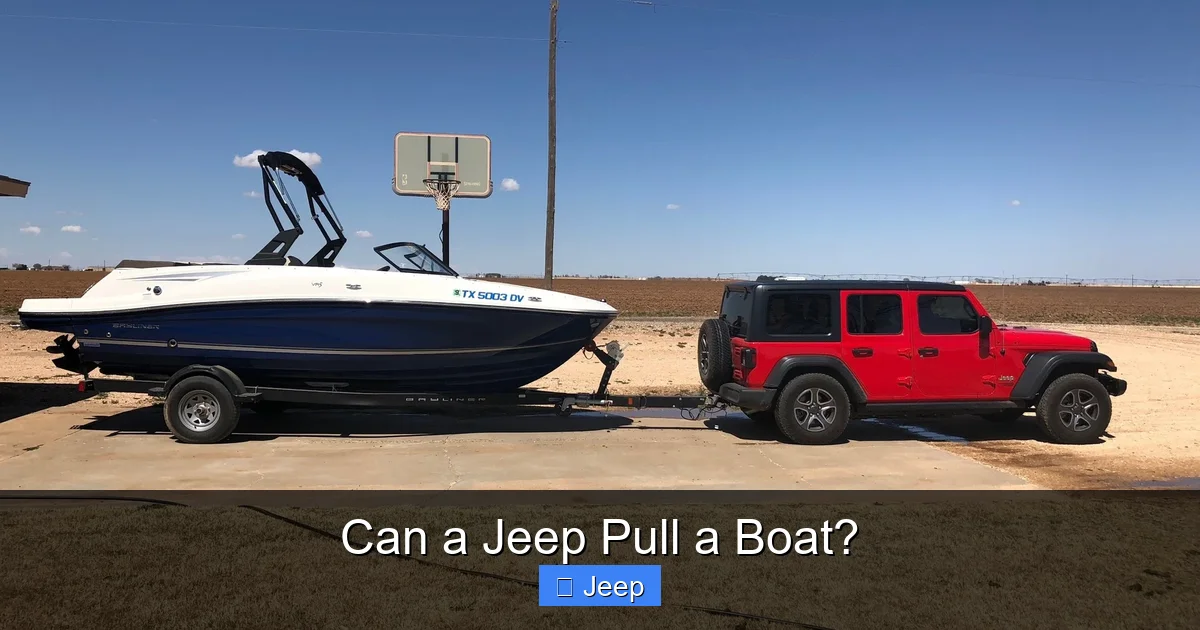
Can a Jeep Pull a Boat?

Contents
- 1 Key Takeaways
- 2 📑 Table of Contents
- 3 Understanding Towing Capacity: The Golden Rule
- 4 Jeep Model by Model: Who Can Tow What?
- 5 The Essential Gear: You Can’t Just Hook Up and Go
- 6 Driving Techniques: It’s Not Like Driving Alone
- 7 Legal Requirements and Pre-Trip Checklist
- 8 Conclusion: The Right Jeep for the Right Boat
- 9 Frequently Asked Questions

Trunk Organizer

Car Storage Net
Car Wash Mitt

Anti-Slip Dashboard Mat
Yes, many Jeeps can pull a boat, but it depends entirely on the specific Jeep model and its factory-rated towing capacity. Full-size SUVs like the Grand Cherokee and the Gladiator truck are built for the task, while smaller models like the Renegade have very limited capacity. Success requires matching your boat and trailer weight to your Jeep’s ratings, using the proper hitch, and understanding safe towing practices.
So, you’ve got a Jeep. Maybe it’s a rugged Wrangler that never backs down from a trail, or a sleek Grand Cherokee that handles the highway with ease. You also have a boat—a shiny new fishing rig, a family ski boat, or a classic runabout. The natural question bubbles up: Can my Jeep pull a boat? The answer isn’t a simple yes or no. It’s a “well, it depends,” followed by a crucial deep dive into numbers, equipment, and safe practices. Pulling a boat is one of the most demanding regular towing tasks, combining weight, wind resistance, and the need for precise control at low speeds. Let’s break down everything you need to know to hitch up with confidence.
First, let’s squash a common myth: “Jeep” is not a single vehicle. A 2024 Jeep Wrangler Sport is a completely different machine from a 2024 Jeep Grand Cherokee Summit Reserve. Their engines, frames, and intended purposes differ vastly. This means their ability to pull a trailer—especially a boat trailer with its wide, flat profile that catches wind like a sail—varies dramatically. The key is to find your specific Jeep’s maximum gross trailer weight rating. This number, found in your owner’s manual or on a sticker inside the driver’s door jamb, is the absolute limit of what your vehicle is engineered and warranted to safely tow.
This article is your complete guide. We’ll explore which Jeep models are up to the task, how to calculate your boat’s real weight, the non-negotiable gear you need, and the driving techniques that make the difference between a smooth launch and a white-knuckle experience. By the end, you’ll know exactly what it takes to get your boat from the garage to the water with your Jeep.
Key Takeaways
- Model Matters Most: A Jeep’s ability to pull a boat is determined by its specific model, engine, and configuration, not the “Jeep” brand alone. The Grand Cherokee and Gladiator are the primary tow-capable models.
- Know Your Numbers: You must calculate the total weight of your boat, trailer, fuel, and gear (Gross Trailer Weight) and ensure it does not exceed your Jeep’s maximum tow rating.
- The Gladiator is a True Tow Truck: The Jeep Gladiator, with its truck-based design, offers the highest towing capacities in the lineup, often exceeding 7,000 lbs when properly equipped.
- Grand Cherokee is the SUV Workhorse: Properly configured Jeep Grand Cherokees, especially those with the V8 or turbocharged I-6 engines, can tow between 5,000 and 7,200 lbs, suitable for many medium-sized boats.
- Small Jeeps Have Severe Limits: Models like the Renegade and Compass have maximum tow ratings typically between 1,500 and 2,000 lbs, only enough for very small Jon boats or personal watercraft on a bare trailer.
- Preparation is Non-Negotiable: Towing safely requires the correct hitch (class III or IV), functioning trailer brakes, proper weight distribution, and a pre-trip inspection of both Jeep and trailer.
- Consider Alternatives: If your Jeep’s capacity is borderline, compare with other mid-size SUVs and trucks. For example, you might find a Toyota Tacoma or Subaru Outback offers a different balance of capacity and efficiency for your needs.
📑 Table of Contents
Understanding Towing Capacity: The Golden Rule
Before we talk Jeeps, we must talk about the one rule that governs all safe towing: your loaded trailer must weigh less than your vehicle’s maximum tow rating. This isn’t a suggestion; it’s the law of physics and your warranty. Exceeding this rating strains your engine, transmission, brakes, and suspension beyond their design limits, leading to premature failure, dangerous sway, and voided warranties.
But here’s the catch: the “boat” weight isn’t just the hull. You need to calculate the Gross Trailer Weight (GTW). This includes:
- The dry weight of the boat (from the manufacturer)
- The weight of the trailer itself
- Fuel in the boat’s tank (gasoline weighs ~6 lbs per gallon)
- All gear: life jackets, anchors, skis, fishing tackle, coolers, etc.
- Any water in live wells or ballast tanks
It’s astonishing how quickly “gear weight” adds up. A family’s weekend kit for a 20-foot bowrider can easily add 300-500 pounds. Always err on the side of overestimating. The safest practice is to take your fully loaded boat and trailer to a public scale (often found at truck stops, gravel pits, or moving companies) to get the exact GTW. Knowledge is power, and in towing, it’s also safety.
Payload vs. Towing Capacity: Don’t Confuse Them!
Another critical distinction is payload capacity. This is the weight your Jeep can carry inside—passengers, cargo in the trunk or cargo area, and the tongue weight of the trailer. Tongue weight is the downward force the trailer exerts on the hitch. It should typically be 10-15% of the total trailer weight. A 5,000 lb trailer should have a 500-750 lb tongue weight. This weight counts against your Jeep’s payload rating. Overloading the cabin or having too much tongue weight can squish your rear suspension, causing poor handling and headlight aim. You must check both ratings: your GTW must be under the tow rating, and your total cabin + tongue weight must be under the payload rating.
Jeep Model by Model: Who Can Tow What?
Now for the fun part. Let’s inventory the current Jeep lineup (focusing on US market models) and their typical towing capabilities. Remember, engine choice, drivetrain (2WD vs. 4WD), and optional trailer tow packages significantly alter these numbers. Always consult the official Jeep website or your owner’s manual for your exact configuration.
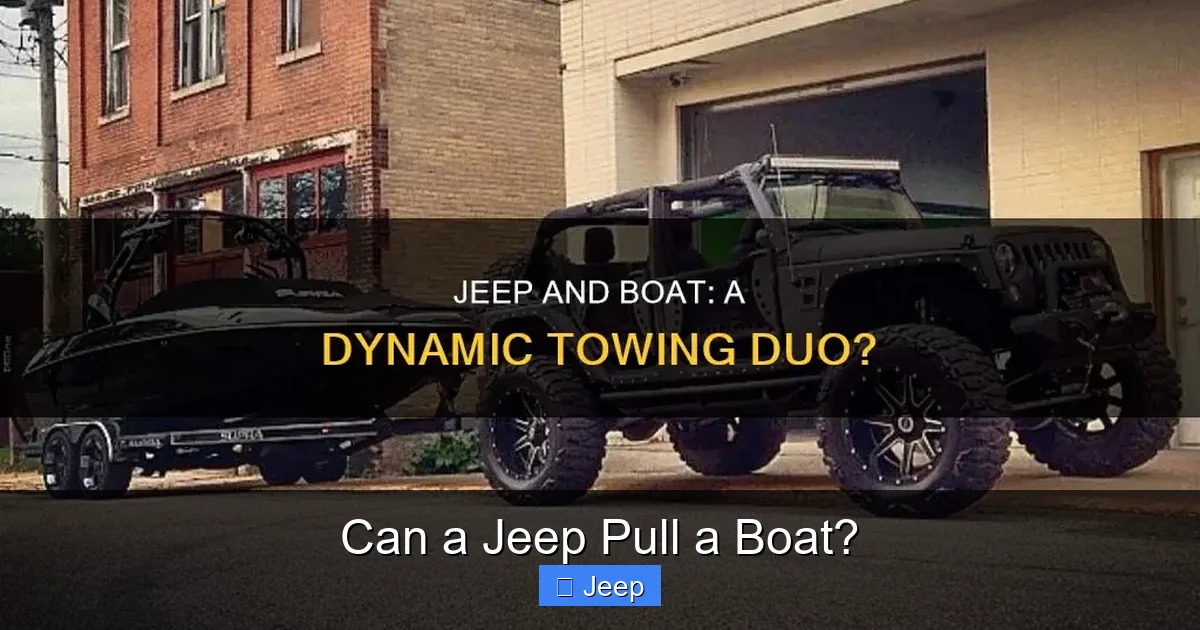
Visual guide about Can a Jeep Pull a Boat?
Image source: shunauto.com
Jeep Grand Cherokee: The SUV Towing Champion
The Jeep Grand Cherokee is Jeep’s premier towing SUV. For years, it’s been the go-to for Jeep owners who need to haul more than a small utility trailer.
- Base 4-Cylinder (e.g., 2.0L Turbo): Towing capacity is usually around 3,500 lbs. This is sufficient only for the smallest of boat trailers (e.g., a lightweight aluminum Jon boat).
- V6 Engines (3.6L Pentastar): With the factory tow package, expect 5,000 to 6,200 lbs. This opens the door to many 16-18 foot runabouts, aluminum fishing boats, and small pontoons.
- V8 or Turbo I-6 (e.g., 5.7L Hemi or 3.0L EcoDiesel): These models, especially with the heavy-duty tow package, can reach the Grand Cherokee’s maximum rating of 7,200 lbs (for certain recent model years). This allows for towing 20-22 foot boats with larger engines, wakeboard boats, or cabin cruisers, provided the trailer weight is managed.
Real-World Example: A popular combination is a 2019-2023 Grand Cherokee with the 3.6L V6 and tow package towing a 1990s 18-foot Sea Ray Sundancer (boat dry weight ~2,800 lbs) on a galvanized tandem-axle trailer (trailer weight ~1,800 lbs). With fuel and gear, the total GTW is about 5,000 lbs—well within the V6’s safe range. You would also need to ensure the tongue weight (~550 lbs) plus passengers and gear stays under the Grand Cherokee’s ~1,100 lb payload capacity.
Jeep Gladiator: The Built-In Tow Truck
The Jeep Gladiator is fundamentally different. It’s a mid-size pickup truck based on the Wrangler platform, and it’s engineered with towing in mind from the ground up.
- Standard Towing: Even the base Sport Gladiator with the 3.6L V6 and standard axle ratio is rated for 4,000 lbs.
- Max Towing: With the optional heavy-duty tow package (which includes a larger alternator, upgraded cooling, and a specific axle ratio), the Gladiator’s maximum tow rating jumps to 7,700 lbs for 4×4 models (slightly less for 4×2). The Rubicon model, due to its heavy off-road equipment, has a slightly lower but still robust rating around 6,500-7,000 lbs.
This makes the Gladiator arguably the most versatile Jeep for boat owners. It can comfortably handle everything from a small aluminum boat to a 23-24 foot bowrider or a modest cabin cruiser. The truck bed also provides unparalleled secure storage for all your boating gear, life jackets, and tackle, keeping it out of the elements and away from the boat’s interior. For many, the Gladiator is the perfect “one vehicle” solution: off-road adventure on the weekend, boat towing on the summer holidays.
Jeep Wrangler: The Surprising (But Limited) Contender
This is where we need to be careful. The iconic Jeep Wrangler is not primarily a tow vehicle. Its short wheelbase and solid axles are designed for articulation, not stability with a long trailer. However, it can tow.
- Standard Rating: Most Wranglers (2-door and 4-door) with the standard 3.6L V6 are rated for 3,500 lbs.
- Heavy-Duty Option: For 2020+ models, the optional “Heavy-Duty” trailer tow package (available on certain Sport S, Sahara, and Rubicon trims) increases the rating to 7,000 lbs for the 4-door (Unlimited) Wrangler. This package includes a heavy-duty rear axle, upgraded cooling, and a factory-installed hitch.
Critical Caveat: Just because a 4-door Wrangler is rated for 7,000 lbs does not mean it’s ideal for towing a large boat. Its short 118-inch wheelbase (vs. ~115 for a 2-door, ~140 for a Gladiator, ~115 for a Grand Cherokee) makes it more susceptible to trailer sway, especially with the broad, wind-catching profile of a boat. Towing near the maximum rating requires extreme caution, excellent weight distribution, and a sway control hitch. For a Wrangler, we strongly recommend staying well below the max rating—think 4,000-5,000 lbs—for a stable, safe, and enjoyable experience. It’s perfect for a small aluminum boat or personal watercraft.
Jeep Renegade & Compass: For Very Light Duty Only
These compact crossovers are fantastic city vehicles but have severely limited towing capacity.
- Jeep Renegade: Maximum tow rating is typically 1,500 lbs (with the 1.3L Turbo) or 2,000 lbs (with the 2.4L engine and factory tow package).
- Jeep Compass: Similar ratings, around 1,500-2,000 lbs.
This capacity is enough for a tiny, ultra-lightweight utility trailer carrying a dirt bike or a very small, single-axle jon boat trailer. A typical 12-foot aluminum boat with a small outboard motor and a basic trailer will likely exceed 1,800 lbs. These models are not suitable for pulling the vast majority of recreational boats. Attempting to do so is dangerous and will cause immense strain on the vehicle’s transmission and engine. If you own one of these, you need to look at a different towing solution, like a dedicated boat hauler or a more capable vehicle. You might find surprising capability in other vehicles in this class; for instance, a Subaru Forester with its standard 1,500 lb rating faces similar limitations.
The Essential Gear: You Can’t Just Hook Up and Go
Assuming your Jeep’s capacity matches your boat’s weight, you now need the right hardware. Using the wrong hitch or neglecting trailer brakes is a recipe for disaster. Here is your mandatory checklist.
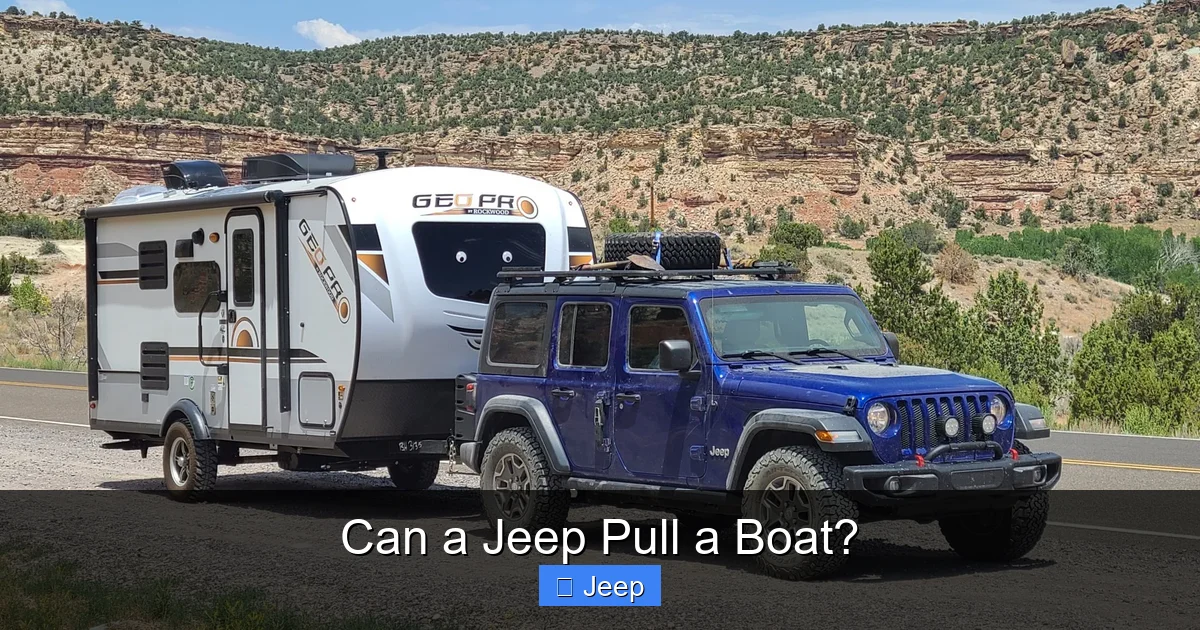
Visual guide about Can a Jeep Pull a Boat?
Image source: adventurejeep.com
The Hitch: Class Matters
The hitch on your Jeep must match the weight you’re towing. Hitches are classified by the Society of Automotive Engineers (SAE) into classes:
- Class I (Up to 2,000 lbs): Light-duty, for small cargo carriers or bike racks. Not for boats.
- Class II (Up to 3,500 lbs): Medium-duty. The minimum for any boat trailer. Often found on Wranglers and Grand Cherokees with smaller engines.
- Class III (Up to 5,000-6,000 lbs): Heavy-duty. The standard for most Grand Cherokees and Gladiators towing medium boats. Features a 2″ receiver tube.
- Class IV (Up to 10,000+ lbs): Extra heavy-duty. Required for the heaviest boat trailers, especially those with multiple axles and brakes. Uses a larger 2.5″ receiver. This is common on the max-tow Gladiator and Grand Cherokee 5.7L/3.0L setups.
Pro Tip: Always use a hitch that is specifically designed for and installed on your Jeep model. A universal “drop-in” hitch from a big-box store is rarely the best choice for heavy, sustained towing. Factory or high-quality aftermarket hitches (from brands like Draw-Tite, Curt, or B&W) that bolt to the vehicle’s frame are the only way to go.
Trailer Brakes: The Law and Lifesaver
In the United States, any trailer over 1,500 lbs must have its own braking system. This is not optional; it’s the law in all 50 states. Boat trailers almost always exceed this weight. The trailer brakes are activated by an electric brake controller mounted inside your Jeep’s cabin.
This controller is a non-negotiable piece of safety equipment. It allows you to manually apply the trailer brakes and, more importantly, automatically proportionally applies them when you press your Jeep’s brake pedal. Without it, your Jeep’s brakes alone must stop the combined weight of the Jeep, boat, and trailer—a task they are not designed for. This leads to severe brake fade, long stopping distances, and potential total brake failure. If your Jeep doesn’t have a built-in controller (many do not), you must have an aftermarket one professionally installed. If you’re looking at a used Jeep, ensure this system is present and functional.
Wiring, Lights, and Safety Chains
Your trailer must have working lights: tail lights, brake lights, and turn signals. Your Jeep needs a 7-pin wiring harness to connect to the trailer. This is usually included with the factory tow package. If not, it’s a critical add-on. You’ll also need:
- Safety Chains: Always cross them under the coupler. They catch the trailer if it becomes disconnected, preventing it from jackknifing into traffic.
- Breakaway Switch: A safety device that applies the trailer brakes if the trailer becomes completely detached from the Jeep.
- Proper Tires: Boat trailer tires are often overlooked. They must be rated for the load, properly inflated (check when cold!), and have adequate tread. Many boat trailer tires are ST (Special Trailer) tires, which are not designed for high-speed highway travel but are fine for the typical launch ramp commute.
Driving Techniques: It’s Not Like Driving Alone
Pulling a boat changes everything about your driving. The momentum is different, turning radius increases, and stopping distances multiply. Unlearning bad habits and adopting new ones is key.

Visual guide about Can a Jeep Pull a Boat?
Image source: cartireinflator.com
Acceleration and Passing
Give yourself much more time and space to accelerate. Your Jeep will feel sluggish. Plan merges and highway on-ramks far in advance. When passing, remember your total length is now Jeep + boat + trailer. You need a clear, long stretch of road. Signal early, move over gradually, and never pass on a hill or in a curve. The extra weight will make your vehicle slower to respond and pass.
Braking and Stopping
This is the most critical skill. Begin braking much earlier and more gently than you would without a trailer. The goal is to activate the trailer brakes first and smoothly. If you slam on the brakes, the Jeep will push the trailer, causing a “push-pull” effect that can lead to sway. Practice slow, steady stops in an empty parking lot. Get a feel for how your brake controller is set. Start with a lower gain setting and adjust up as needed, but never set it so high that the trailer brakes lock up on dry pavement.
Turning and Backing Up
Your turning circle is now huge. Take corners wide, especially right turns from a stop. The trailer will “cut the corner” and potentially hop the curb if you turn too sharply. Backing up a boat trailer is an art form. Go slow. Use your mirrors extensively. Remember: to make the trailer go left, you must turn the steering wheel right (and vice versa). It’s counter-intuitive. Have a spotter if possible. Practice in an empty area with traffic cones.
Managing Sway: The Boogeyman of Boat Towing
Trailer sway is a terrifying, oscillating side-to-side motion that can start at highway speeds. It’s caused by wind, passing trucks, or sudden steering inputs.
- Prevention: Ensure your load is balanced. Too much tongue weight (over 15%) can overload the rear axle. Too little (under 10%) is a primary cause of sway. Use a weight-distributing hitch if your GTW is over 5,000 lbs or if your Jeep’s rear sags significantly.
- If Sway Starts: Do NOT hit the brakes hard. Grip the wheel firmly. Gently apply the brake controller to slow down. Take your foot off the gas. Do not try to “steer out” of the sway. This often makes it worse. Slow down steadily until the sway stops, then pull over to check your load and hitch connection.
- Sway Control: Consider a friction-based sway control device or a weight-distributing hitch with integrated sway control for heavier boats or if you frequently tow in windy conditions.
Legal Requirements and Pre-Trip Checklist
Before you even back the trailer down the ramp, you must be legally and mechanically compliant.
State Regulations and Licensing
Laws vary by state regarding:
- Trailer Brakes: As mentioned, almost universal for >1,500 lbs.
- Trailer Lights: Must be functional and properly wired.
- License Plates: Your trailer must have a valid, visible license plate, often from the state of residence.
- Speed Limits: Some states have lower maximum speeds for vehicles towing trailers.
- Driver’s License: For most recreational boat towing, a standard driver’s license is sufficient. However, if your combined GCWR (Gross Combined Weight Rating) is very high (often over 26,000 lbs) or if you’re towing multiple trailers, special endorsements may be required. Generally, for a Jeep and a single boat trailer, you’re fine. You can learn more about weight thresholds here.
The Pre-Trip Inspection: Your 10-Minute Ritual
Never skip this. Do it every single time you tow.
- Hitch Connection: Is the coupler fully seated and locked? Is the safety latch engaged? Are the safety chains crossed and secure?
- Wiring: Plug in the trailer harness. Walk around and have a helper test all lights: running lights, brake lights (press the pedal), and turn signals.
- Tires: Check Jeep and trailer tire pressure (cold). Inspect for damage, excessive wear, or sidewall cracks.
- Load: Is the boat centered on the trailer? Is the weight balanced? Is the winch strap tight? Are all gear and tie-downs secure?
- Brakes: Test the trailer brake controller manually. The trailer brakes should engage smoothly.
- Mirrors: Adjust your towing mirrors so you can see the entire trailer and at least 200 feet behind you. Consider extended tow mirrors if your stock mirrors don’t provide adequate view.
- Fluids: Check engine oil, transmission fluid, and coolant. Towing is hard work.
Conclusion: The Right Jeep for the Right Boat
So, can a Jeep pull a boat? The definitive answer is: Yes, but with careful selection and preparation. The Jeep brand offers a spectrum of towing capability. At the top, the Grand Cherokee and Gladiator are genuinely capable, factory-engineered tow vehicles that can handle a wide range of boats when configured correctly. The 4-door Wrangler with the heavy-duty package can tow, but it’s best suited for smaller boats and requires vigilant driving habits. The Renegade and Compass are not suitable for conventional boat towing.
The single most important step you can take is to know your numbers. Get your boat and trailer weighed. Find your Jeep’s exact tow and payload ratings. Match them with a margin of safety—aim to be at least 10-15% under your maximum ratings. Invest in the correct hitch, a quality brake controller, and a weight-distributing system if needed. Most importantly, drive with respect for the task. Your patience and preparation will be rewarded with countless days on the water, all powered by your trusty Jeep.
Ultimately, your Jeep isn’t just pulling a boat; it’s pulling your entire aquatic adventure. Make sure it’s up for the journey.
Frequently Asked Questions
What is the maximum boat size a Jeep Grand Cherokee can pull?
It depends on the engine and tow package. A Grand Cherokee with the 3.6L V6 and tow package can typically tow up to 6,200 lbs, suitable for 18-20 foot boats. Models with the 5.7L V8 or 3.0L EcoDiesel can tow up to 7,200 lbs, allowing for 20-22 foot boats. Always calculate the total loaded weight of boat, trailer, and gear.
Can a Jeep Wrangler tow a ski boat?
It depends on the Wrangler and the ski boat. A 4-door Wrangler Unlimited with the factory Heavy-Duty Tow Package is rated for 7,000 lbs. A typical 20-foot ski boat with a trailer, fuel, and gear can weigh 5,500-6,500 lbs, which is within limits. However, due to the Wrangler’s short wheelbase, it’s less stable than a Gladiator or Grand Cherokee. For a heavy ski boat, a Gladiator is a far better and safer choice.
Do I absolutely need trailer brakes for my boat?
Yes. Legally, any trailer over 1,500 lbs requires brakes. Practically, a boat trailer with brakes is a critical safety component. Your Jeep’s brakes cannot safely stop the combined weight alone. An electric brake controller is mandatory equipment that gives you control and prevents dangerous trailer sway or brake failure.
What happens if I exceed my Jeep’s towing capacity?
Exceeding your tow rating is extremely dangerous and damaging. It causes severe strain on your transmission and engine, leading to premature failure. Your braking distance increases dramatically, and the risk of trailer sway skyrockets. It also voids your vehicle’s warranty. You are putting yourself, your passengers, and others on the road at serious risk.
How do I know if my Jeep has a factory tow package?
Check the driver’s side door jamb for a yellow sticker that lists the vehicle’s GVWR, GCWR, and maximum trailer weight. You can also consult your owner’s manual. A factory tow package typically includes a heavy-duty radiator, upgraded cooling system, a transmission oil cooler (on some models), a specific axle ratio, and a pre-wired harness. It may also include a factory-installed hitch on some models.
Is a weight-distributing hitch necessary for a boat trailer?
It depends on the weight. For trailers over 5,000 lbs, or if your Jeep’s rear suspension sags noticeably when hitched (more than 1-2 inches), a weight-distributing hitch is highly recommended. It uses spring bars to distribute the tongue weight across both axles of your Jeep, improving steering, braking, and levelness. For lighter trailers within a Grand Cherokee or Gladiator’s capacity, a standard heavy-duty hitch may suffice, but a weight-distributing system is always the safer, more stable option for heavier loads.