
Can a Subaru Forester Tow

Yes, a Subaru Forester can tow—but not all models are created equal. Depending on the year, engine, and drivetrain, the Forester’s towing capacity ranges from 1,500 to 2,000 pounds. With proper equipment and smart planning, it’s great for small trailers, campers, or jet skis.
Key Takeaways
- Towing capacity varies by model year: Newer Foresters (2014–2024) typically tow up to 1,500–2,000 lbs, while older models may be lower.
- All-wheel drive helps, but doesn’t increase towing: Subaru’s standard AWD improves traction but doesn’t boost the official towing limit.
- Factory towing package is recommended: Includes hitch receiver, wiring harness, and cooling upgrades for safer towing.
- Weight distribution matters: Use a weight-distributing hitch for loads over 1,000 lbs to improve stability.
- Fuel economy drops when towing: Expect 15–20% lower MPG when pulling a trailer or camper.
- Not ideal for heavy loads: Avoid towing boats, RVs, or large campers—consider a larger SUV or truck instead.
- Regular maintenance is key: Check brakes, tires, and transmission fluid before and after towing trips.
📑 Table of Contents
- Can a Subaru Forester Tow? The Short Answer
- Understanding Towing Capacity: What the Numbers Mean
- What Can You Actually Tow with a Forester?
- Essential Towing Equipment for Your Forester
- Driving Tips for Towing with a Forester
- Fuel Economy and Maintenance When Towing
- Real-World Experiences: What Forester Owners Say
- Should You Buy a Forester for Towing?
- Conclusion: Tow Smart, Tow Safe
Can a Subaru Forester Tow? The Short Answer
If you’re eyeing a Subaru Forester and wondering whether it can handle towing a small trailer, camper, or jet ski, the answer is a cautious yes—but with important caveats. The Forester is not built like a heavy-duty truck, and it won’t tow a full-sized travel trailer or a speedboat with ease. However, for light-duty towing tasks, it can be a surprisingly capable companion.
Subaru has long been known for building reliable, all-wheel-drive vehicles that excel in tough weather and off-road conditions. The Forester, in particular, is a favorite among outdoor enthusiasts, families, and weekend adventurers. But when it comes to towing, many buyers are left scratching their heads. Can this compact SUV really pull anything useful? The truth lies in understanding the numbers, the equipment, and the limits.
In this guide, we’ll break down everything you need to know about towing with a Subaru Forester. From towing capacity by model year to essential gear and real-world tips, we’ll help you decide whether the Forester fits your towing needs—and how to do it safely if it does.
Understanding Towing Capacity: What the Numbers Mean
Before you hook up a trailer, it’s crucial to understand what “towing capacity” actually means. This number represents the maximum weight your vehicle can safely pull behind it, including the trailer, cargo, passengers, and gear. Exceeding this limit can lead to dangerous handling, brake failure, transmission damage, and even accidents.
For the Subaru Forester, towing capacity isn’t a one-size-fits-all figure. It varies significantly depending on the model year, engine type, and whether the vehicle is equipped with a factory towing package. Most modern Foresters (2014 and newer) have a towing capacity of either 1,500 or 2,000 pounds. That might not sound like much compared to a Ford F-150 or a Toyota Tacoma, but it’s enough for many common towing tasks.
Let’s look at the breakdown by generation:
2008–2013 Subaru Forester
These earlier models typically have a towing capacity of 1,500 pounds when properly equipped. The 2.5L naturally aspirated engine was standard, and while it’s reliable, it lacks the torque needed for heavier loads. Subaru did not offer a factory towing package on most of these models, so owners often had to rely on aftermarket hitches and wiring kits.
2014–2018 Subaru Forester
This generation introduced a revised 2.5L engine and improved transmission cooling. Towing capacity remained at 1,500 pounds for most trims, but higher-end models like the Limited and Touring could reach 2,000 pounds when equipped with the optional towing package. This package included a Class II hitch receiver, 4-pin wiring harness, and enhanced cooling for the CVT transmission.
2019–2024 Subaru Forester
The current generation continues the trend, with most models rated at 1,500 pounds. However, the top-tier Touring trim with the optional towing package can tow up to 2,000 pounds. Subaru also improved the CVT’s durability and added better thermal management, making towing slightly more reliable than in previous years.
It’s important to note that these numbers are set by Subaru and based on rigorous testing. They assume the vehicle is in good condition, properly maintained, and equipped with the right gear. If you’re unsure about your Forester’s towing capacity, check the owner’s manual or look for a sticker on the driver’s side door jamb.
What Can You Actually Tow with a Forester?
Now that we know the numbers, let’s talk about real-world applications. What kinds of trailers and loads can a Subaru Forester realistically handle?
The good news is that 1,500 to 2,000 pounds opens the door to a variety of light-duty towing options. Here are some common examples:
Small Utility Trailers
A standard 4×8 or 5×8 utility trailer weighs around 500–700 pounds empty. Load it with yard debris, firewood, or camping gear, and you’re still well within the Forester’s range. These trailers are perfect for weekend projects or hauling supplies to a cabin.
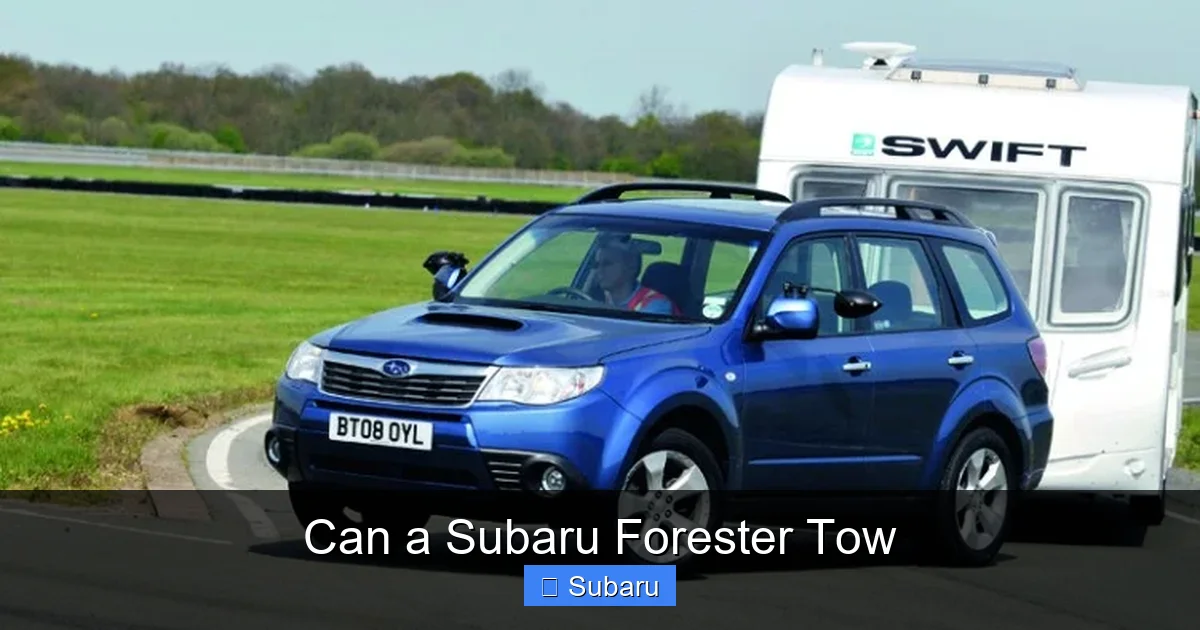
Visual guide about Can a Subaru Forester Tow
Image source: thetowcarawards.com
Pop-Up Campers
Many lightweight pop-up campers weigh between 1,000 and 1,800 pounds when fully loaded. Brands like Jayco, Coleman, and Forest River offer models that are Forester-friendly. Just make sure to check the dry weight and factor in water, gear, and passengers.
Motorcycles and ATVs
A single motorcycle or ATV typically weighs 400–700 pounds. With a small trailer, you can easily tow one or even two machines. This is a popular setup for riders heading to trails or tracks.
Jet Skis and Small Watercraft
Most personal watercraft (PWC) like jet skis weigh 600–900 pounds. A single jet ski on a trailer is well within the Forester’s towing capacity. However, avoid towing multiple PWCs or larger boats—those require a much heavier-duty vehicle.
Small Cargo Trailers
Enclosed cargo trailers under 1,500 pounds are another great match. These are ideal for moving, storage, or hauling gear for events. Just remember that wind resistance increases with enclosed trailers, which can affect handling and fuel economy.
What You Should Avoid Towing
While the Forester is versatile, it’s not built for heavy loads. Avoid towing full-sized travel trailers, large boats, horse trailers, or anything over 2,000 pounds. Even if your Forester is rated for 2,000 pounds, pushing that limit regularly can strain the engine, transmission, and brakes.
A good rule of thumb: if the trailer weighs more than half the weight of your Forester (which is around 3,500–3,800 pounds), it’s probably too much. Also, consider the tongue weight—the downward force on the hitch. Subaru recommends keeping tongue weight between 10% and 15% of the total trailer weight. For a 1,500-pound trailer, that’s 150–225 pounds.
Essential Towing Equipment for Your Forester
Towing safely isn’t just about having the right vehicle—it’s about having the right gear. Even if your Forester is rated for towing, you’ll need several key components to do it properly.
Factory Towing Package
The best way to prepare your Forester for towing is to equip it with Subaru’s factory towing package. This includes a Class II hitch receiver (rated for up to 2,000 pounds), a 4-pin wiring harness for trailer lights, and enhanced cooling for the continuously variable transmission (CVT). The package also often includes a transmission cooler and upgraded radiator fan.
If your Forester didn’t come with the package, you can have it installed by a Subaru dealer. It’s more expensive than aftermarket options, but it’s designed specifically for your vehicle and won’t void your warranty.
Aftermarket Hitches and Wiring
If the factory package isn’t an option, you can install an aftermarket hitch. Brands like Curt, Draw-Tite, and Reese offer Class II hitches compatible with most Forester models. These typically cost $150–$300 for the hitch and another $50–$100 for installation.
For wiring, you’ll need a 4-pin or 7-pin connector depending on your trailer’s lights. A plug-and-play wiring harness that connects to your Forester’s taillights is the easiest option. Avoid splicing wires yourself unless you’re experienced—improper wiring can cause electrical issues or brake light failures.
Weight Distribution Hitch (Optional but Recommended)
For trailers over 1,000 pounds, a weight distribution hitch can improve stability and handling. These systems use spring bars to redistribute the trailer’s weight across all four tires, reducing sway and improving braking. They’re especially helpful on windy roads or when passing large trucks.
While not required for lighter loads, a weight distribution hitch is a smart investment if you plan to tow regularly. Expect to pay $200–$500 for a quality system.
Trailer Brake Controller (If Needed)
Most small trailers don’t require electric brakes, but if your trailer weighs over 1,500 pounds and has brakes, you’ll need a brake controller. This device mounts inside your Forester and allows you to adjust brake pressure from the driver’s seat.
Subaru does not offer a factory brake controller, so you’ll need an aftermarket unit like those from Tekonsha or Redarc. Installation usually requires professional help to ensure proper integration with your vehicle’s electrical system.
Towing Mirrors
Standard side mirrors on the Forester may not provide enough visibility when towing a wide trailer. Consider upgrading to extended towing mirrors. These attach to your existing mirrors and give you a better view of the trailer and blind spots.
Some owners use clip-on mirrors, while others install permanent replacements. Either way, better visibility means safer lane changes and turns.
Driving Tips for Towing with a Forester
Towing changes how your vehicle handles, accelerates, and brakes. Even with a capable SUV like the Forester, you’ll need to adjust your driving habits to stay safe.
Slow Down and Increase Following Distance
When towing, your Forester will take longer to stop. Increase your following distance to at least 4–6 seconds behind the vehicle in front of you. This gives you more time to react and brake safely.
Also, reduce your speed, especially on highways and downhill grades. High speeds increase the risk of trailer sway, which can be dangerous—even deadly—if not corrected quickly.
Watch for Trailer Sway
Trailer sway happens when the trailer begins to oscillate side to side, often due to wind, uneven loads, or passing trucks. If you feel swaying, don’t brake hard—this can make it worse. Instead, gently ease off the accelerator and let the trailer settle.
If sway continues, use your brake controller (if equipped) to apply the trailer brakes slightly. You can also install a sway control device, which attaches to the hitch and dampens movement.
Use Lower Gears on Hills
The Forester’s CVT transmission is designed for efficiency, not heavy towing. When climbing hills, shift into “L” or “Manual” mode (if available) to keep the engine in a lower gear. This reduces strain on the transmission and improves engine braking on descents.
Avoid riding the brakes downhill—this can cause overheating and brake fade. Instead, use engine braking to control your speed.
Check Tire Pressure and Load Distribution
Proper tire pressure is critical when towing. Underinflated tires can overheat and fail, especially under the added weight of a trailer. Check your Forester’s tire pressure before every trip and adjust according to the load.
Also, make sure your trailer is loaded correctly. Heavier items should be placed over the axles, not at the front or back. This helps maintain proper tongue weight and prevents sway.
Plan Your Route
Not all roads are created equal. Avoid narrow, winding mountain passes or roads with low bridges if possible. Use GPS apps that support towing routes, like Google Maps with “avoid highways” or “truck mode” enabled.
Also, be aware of parking limitations. A Forester with a trailer may not fit in standard parking spaces or garages. Plan your stops in advance.
Fuel Economy and Maintenance When Towing
Towing takes a toll on your vehicle—and your wallet. Expect a noticeable drop in fuel economy when pulling a trailer.
Fuel Economy Impact
Under normal conditions, the Subaru Forester gets around 26–33 MPG on the highway. When towing, that number can drop to 18–22 MPG, depending on the load, terrain, and driving style. The added weight and aerodynamic drag significantly reduce efficiency.
To minimize the impact, drive smoothly, avoid rapid acceleration, and maintain a steady speed. Also, remove the trailer when not in use to improve everyday fuel economy.
Transmission and Engine Care
The CVT in the Forester is durable, but towing puts extra stress on it. The transmission fluid can overheat, leading to reduced performance or damage. That’s why Subaru includes a transmission cooler in the factory towing package.
Check your transmission fluid regularly—especially before long trips. If it’s dark or smells burnt, have it changed. Subaru recommends changing CVT fluid every 30,000–60,000 miles, but towing may require more frequent changes.
Brake and Tire Maintenance
Towing increases wear on your brakes and tires. The added weight means your brakes work harder to stop the vehicle. Have your brake pads and rotors inspected before and after towing season.
Tires also take a beating. Rotate them regularly and check for uneven wear, which can indicate alignment or load issues. Consider upgrading to higher-load-rated tires if you tow frequently.
Battery and Electrical System
Towing with trailer lights and a brake controller draws more power from your electrical system. Make sure your battery is in good condition and your alternator is functioning properly. A weak battery can leave you stranded, especially in cold weather.
Real-World Experiences: What Forester Owners Say
To get a better sense of how the Forester performs in real towing scenarios, we looked at owner forums, reviews, and testimonials.
Many owners report success towing pop-up campers, small trailers, and jet skis. One owner from Colorado said, “I’ve towed a 1,400-pound pop-up camper across the Rockies with my 2017 Forester. It handled well, but I had to take it slow on the climbs.”
Another owner from Oregon shared, “I use my 2020 Forester to tow a motorcycle trailer to the track. It’s not fast, but it’s reliable and gets me there safely.”
However, some owners caution against pushing the limits. A 2015 Forester owner noted, “I tried towing a 2,200-pound boat once. The transmission got hot, and I had to stop every 30 minutes to cool down. Never again.”
The consensus? The Forester is great for light towing, but it’s not a workhorse. Respect the limits, use the right gear, and maintain your vehicle.
Should You Buy a Forester for Towing?
So, is the Subaru Forester the right choice if you need to tow occasionally?
If your towing needs are light—think small trailers, campers, or watercraft—the Forester can be a solid option. It offers standard all-wheel drive, excellent safety ratings, and a comfortable ride. Plus, it’s more fuel-efficient than larger SUVs or trucks.
But if you plan to tow frequently or need to pull heavier loads, consider a vehicle with a higher towing capacity. Options like the Subaru Ascent (up to 5,000 lbs), Toyota Highlander, or Ford Explorer might be better suited.
Ultimately, the Forester shines as a versatile, everyday SUV that can handle occasional towing—not as a dedicated tow vehicle.
Conclusion: Tow Smart, Tow Safe
Yes, a Subaru Forester can tow—but only within its limits. With a towing capacity of 1,500 to 2,000 pounds, it’s perfect for small trailers, pop-up campers, motorcycles, and jet skis. Just make sure your Forester is properly equipped, your load is balanced, and you drive with caution.
Remember, towing isn’t just about power—it’s about preparation. Invest in the right gear, maintain your vehicle, and always prioritize safety. Whether you’re heading to the lake, the mountains, or the campsite, your Forester can get you there—just don’t ask it to do more than it’s built for.
With the right approach, your Forester can be a reliable partner for light-duty towing adventures. Just keep it light, drive smart, and enjoy the journey.
Frequently Asked Questions
Can a Subaru Forester tow a camper?
Yes, but only lightweight pop-up campers or small teardrop trailers under 2,000 pounds. Avoid full-sized RVs or travel trailers, as they exceed the Forester’s towing capacity.
Do I need a special hitch to tow with a Forester?
Yes. A Class II hitch receiver is required, preferably from Subaru’s factory towing package. Aftermarket hitches work too, but ensure they’re rated for your Forester’s capacity.
Will towing void my Subaru warranty?
No, as long as you stay within the recommended towing limits and use proper equipment. However, damage caused by overloading or improper towing may not be covered.
Can I tow with a manual transmission Forester?
Most modern Foresters have a CVT, but older models (pre-2014) may have a manual. Manuals can tow, but the capacity is still limited to 1,500–2,000 pounds depending on the model.
How much does it cost to install a towing package on a Forester?
The factory towing package costs $800–$1,200 installed by a dealer. Aftermarket hitches and wiring can be done for $300–$500.
Can I tow in snow or off-road with a Forester?
Yes, but with caution. The Forester’s AWD helps, but towing in snow increases the risk of skidding or getting stuck. Use low gears, drive slowly, and avoid steep or icy terrain.
