California Window Tint Law

Contents
- 1 Key Takeaways
- 2 📑 Table of Contents
- 3 Understanding California’s Strict Stance on Window Tint
- 4 The Current California Window Tint Law: VLT Percentages Explained
- 5 Reflectivity and Other Technical Requirements
- 6 Medical Exemptions: When the Rules Can Be Bent
- 7 Installation, Enforcement, and Penalties
- 8 Practical Tips for the BMW Owner
- 9 Conclusion: Stay Cool, Stay Legal
- 10 Frequently Asked Questions


California has some of the strictest window tint laws in the U.S., with specific Visible Light Transmission (VLT) percentages for each window. The front windshield and front side windows must allow over 70% light, while rear windows have no limit. Violations result in fix-it tickets and fines. Always verify your tint’s compliance before installation.
Key Takeaways
- Front Windshield & Front Sides: Must allow over 70% of light in (VLT > 70%). Only the top 4 inches of the windshield can be tinted.
- Rear Side & Back Glass: No darkness limit (any VLT) is permitted for these windows on sedans, SUVs, and vans.
- Reflectivity Limits: Tint cannot be more reflective than a standard sheet of glass. Front sides are limited to 35% reflectivity.
- Medical Exemptions: Exist for conditions like lupus or melanoma, requiring a signed statement from a licensed physician.
- Enforcement & Penalties: Police use tint meters. First offense is a “fix-it” ticket; subsequent violations carry fines up to $197.
- Factory Tint vs. Aftermarket: Factory-installed tint is legal by default. Aftermarket tint must meet state VLT standards and be certified by the installer.
- No Dual-Rate Tint: The same VLT must apply to the entire window. Graduated or “dual-rate” tint is illegal on the front side windows.
[FEATURED_IMAGE_PLACEHOLDER]
📑 Table of Contents
- Understanding California’s Strict Stance on Window Tint
- The Current California Window Tint Law: VLT Percentages Explained
- Reflectivity and Other Technical Requirements
- Medical Exemptions: When the Rules Can Be Bent
- Installation, Enforcement, and Penalties
- Practical Tips for the BMW Owner
- Conclusion: Stay Cool, Stay Legal
Understanding California’s Strict Stance on Window Tint
So, you just bought your dream BMW—maybe a sleek 3 Series or a powerful X5—and you’re thinking about tinting those windows. It’s a popular mod for a reason! Tint looks cool, cuts glare, and keeps the cabin cooler in that California sun. But before you book that appointment, you need to become an expert on California window tint law. Trust me, getting this wrong can lead to a ticket, a fine, and a big hassle. California isn’t playing around here; its rules are specific and enforced.
Let’s break it down in simple terms. The law is all about VLT, or Visible Light Transmission. That’s the percentage of visible light that can pass through your car’s windows. A 15% VLT tint is very dark (only 15% of light gets through), while a 70% VLT tint is very light (70% of light passes through). California sets clear VLT limits for different windows, and it’s your responsibility to know them. It doesn’t matter if you’re in Los Angeles, San Francisco, or a small town in the Central Valley—the law is statewide.
Why Are the Rules So Specific?
California’s strict tint laws are primarily about safety and law enforcement visibility. Police officers need to be able to see inside a vehicle during a traffic stop for officer safety. Dark tint on front windows can conceal illegal activities, weapons, or a driver’s actions. It also impacts safety by potentially limiting a driver’s own visibility at night or in poor weather. This is why the rules for the front side windows and windshield are much tighter than for the rear.
The Current California Window Tint Law: VLT Percentages Explained
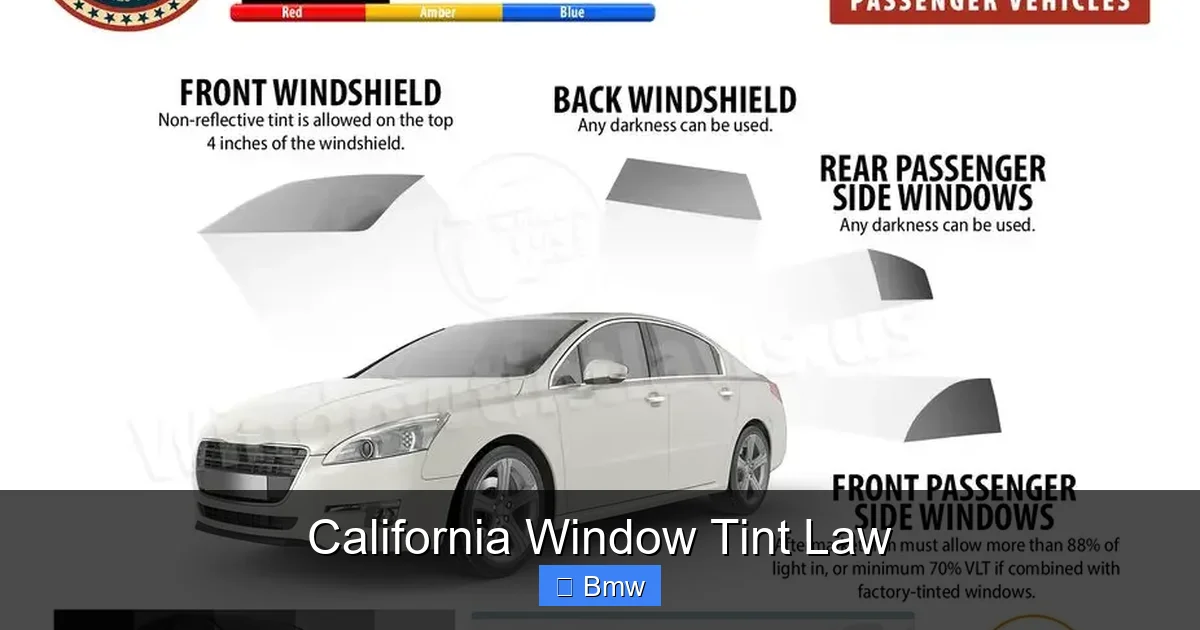
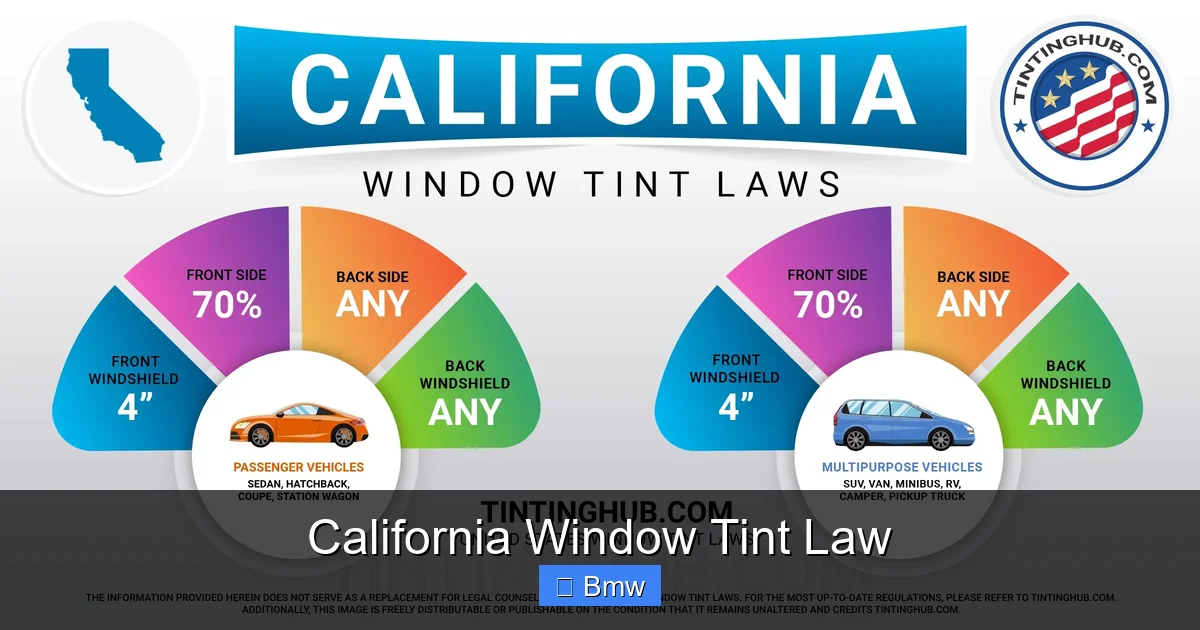
Here is the straightforward breakdown of what is legal as of 2024. Remember, these are the minimum VLT percentages allowed—meaning your tint must let in at least this much light.
Visual guide about California Window Tint Law
Image source: tintinghub.com
Windshield Rules
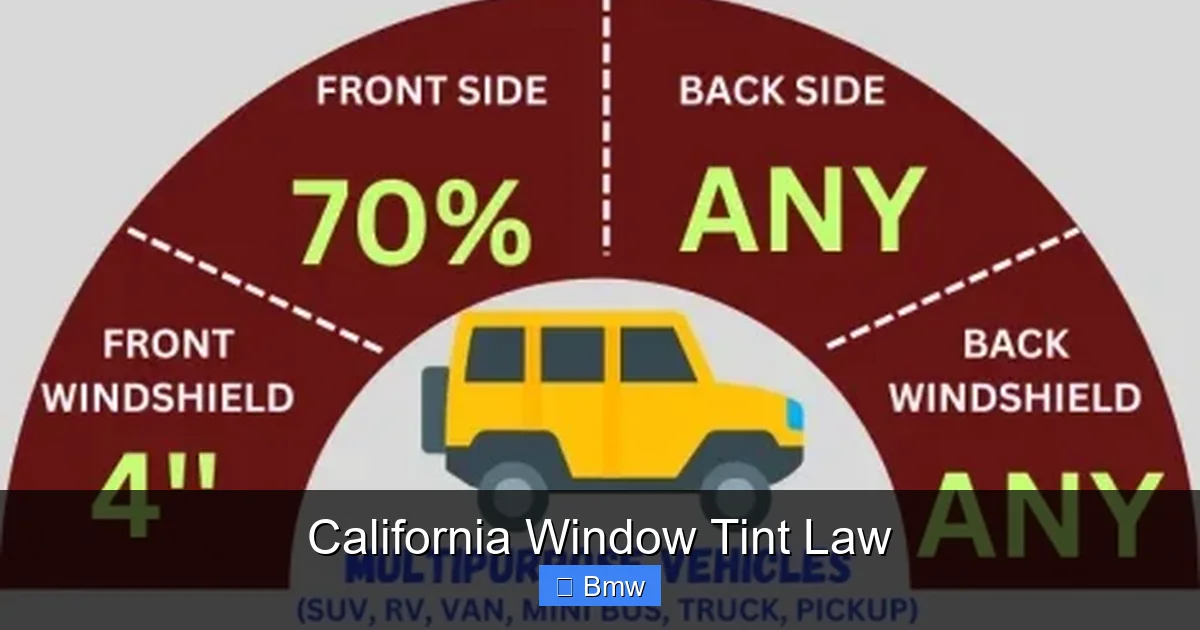
This is non-negotiable and very clear. The windshield must allow over 70% of light to pass through. However, you are permitted to have a non-reflective tint strip at the very top. This strip can be any darkness, but it cannot extend more than 4 inches down from the top of the windshield. This “eyebrow” strip helps reduce glare from the sun or sky without obstructing the driver’s primary view.
Front Side Windows
The front driver and passenger side windows must also have a VLT of over 70%. This is the same standard as the windshield. Many people misunderstand this and think they can go darker on the front sides if they have a light strip on the windshield—that’s not true. The 70%+ rule applies to the entire front side window glass. This is a common reason for tickets, especially on sporty cars like a BMW where owners often want a darker, more aggressive look.
Rear Side Windows and Rear Window
Here’s where you have freedom. California law places no darkness limit on the rear side windows (behind the driver and front passenger) and the rear window (back glass). You can legally install a 5% VLT “limo” tint back there if you want. This is great for privacy, keeping the trunk area out of sight, and further cooling the rear cabin. For an SUV like an BMW X5, this means all rear glass can be as dark as you like.
Special Note for Multi-Purpose Vehicles
The rules above apply to standard passenger vehicles. If your BMW is registered as a “multi-purpose vehicle” (like some larger SUVs or vans primarily used for cargo), the rear window and rear side windows can also have any VLT. The front side window rule (70%+) still always applies.
Reflectivity and Other Technical Requirements
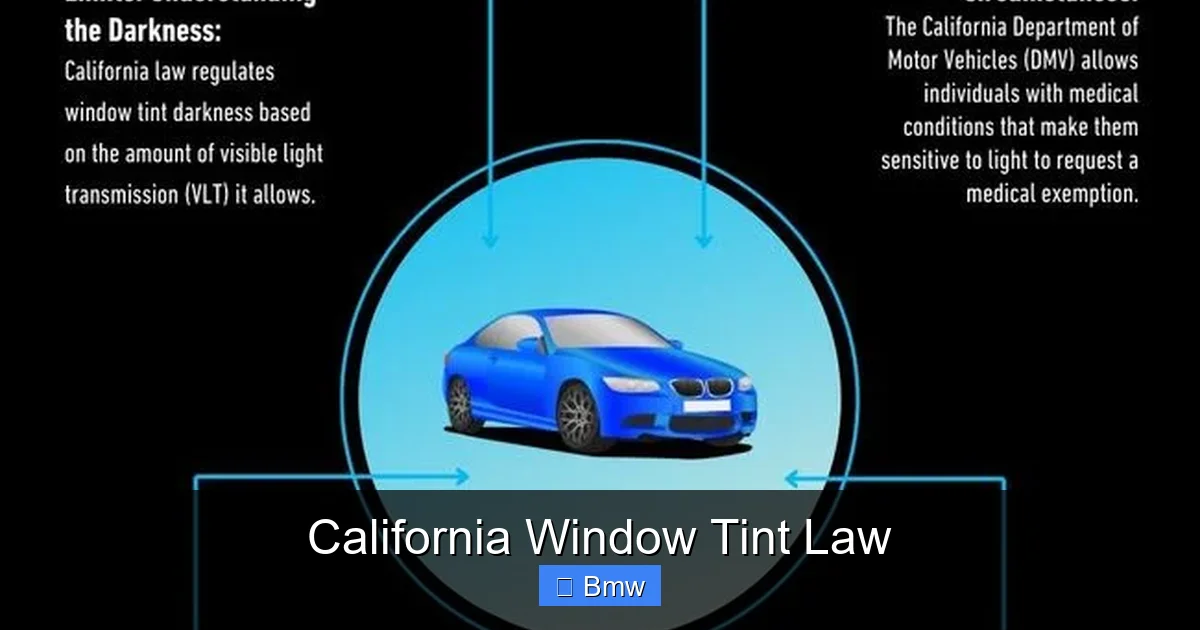
It’s not just about darkness. California also regulates how reflective your tint can be. The law states that window tint film cannot be more reflective than a standard, untinted sheet of glass. For the front side windows, the reflectivity is specifically limited to 35%. This stops people from installing mirror-like or metallic chrome tint on the front, which could blind other drivers. Most high-quality dyed or carbon-based films meet this standard easily, but cheap metallic films might not. Always ask your installer for certification that the film meets California’s reflectivity standards.
Visual guide about California Window Tint Law
Image source: static.mywebsites360.com
Another key rule: the tint must be certified. The installer should provide you with a certificate or sticker that states the film’s VLT and that it meets California law. This sticker is usually placed in the corner of one of the windows. Keep this documentation in your vehicle. If you’re pulled over, showing this certificate can sometimes resolve a misunderstanding if the officer’s meter reading is off.
Factory Tint vs. Aftermarket Tint
This is a crucial distinction. The tint that comes from the factory (Original Equipment Manufacturer or OEM tint) is baked into the glass during manufacturing. It is legal by default because the carmaker has already certified the vehicle for sale in California. You do not need to add anything to factory-tinted glass. If your BMW came with a slight factory tint (common on some models), you cannot apply a darker aftermarket film over it to make it darker. The combined VLT of factory glass plus aftermarket film must still meet the 70%+ rule for the front. You must know your starting point. For example, if your factory front windows are at 80% VLT, you could only add a very light film to reach the 70% minimum—which is pointless. Most BMWs from the factory have very light or no tint on the front sides.
Medical Exemptions: When the Rules Can Be Bent
California does provide a pathway for darker front-side window tint for individuals with certain medical conditions. Conditions like systemic lupus erythematosus, dermatomyositis, xeroderma pigmentosum, porphyria, or severe photosensitivity due to melanoma or other skin cancers may qualify. The exemption is not automatic.
Visual guide about California Window Tint Law
Image source: carglassadvisor.com
To qualify, you must obtain a signed statement on official letterhead from a licensed physician (MD or DO) or a licensed optometrist. This statement must include your name, a description of the medical condition, and a specific recommendation for darker window tint on the front side windows. You must carry this signed statement in your vehicle at all times. The tint installed under this exemption must still comply with the non-reflectivity rule. It’s important to note that this is a personal exemption for the vehicle owner/driver; it does not apply to a car you are merely riding in.
Installation, Enforcement, and Penalties
You might be wondering, “Who actually enforces this?” Any peace officer can use a handheld tint meter to check the VLT of your windows during a traffic stop. It’s a quick, non-invasive check. They’ll place the meter on the window and get a reading. If it’s below the legal limit, you’ll get a ticket.
The penalty for a first offense is typically a “fix-it” ticket, also known as a correctable violation. This means you must get the illegal tint removed or replaced with legal tint, have an authorized person (like the installer or a law enforcement officer) sign off on the ticket, and pay a small administrative fee (around $25) to the court. If you ignore it, the fine can escalate. For subsequent offenses, the base fine is higher, often around $197 or more, plus penalty assessments that can push the total cost well over $500. You’ll also be ordered to correct the violation.
This is where understanding the real cost of non-compliance is key. The initial cost of quality, legal tint is an investment. The cost of a window tint ticket plus the mandatory removal and re-tinting is almost always more than doing it right the first time. Plus, you get the stress and time of dealing with the court.
Choosing a Reputable Installer in California
This is your most important step. A good, reputable installer in California will know the law inside and out. They should offer films that are pre-certified for the state. They should explain the VLT options clearly, telling you what is legal for each window of your specific BMW model. They should provide a written guarantee or certificate of compliance. Beware of shops that say “don’t worry, the cops won’t check” or offer “5% all around” for a BMW without mentioning it’s illegal for the front. Get everything in writing. The cost of auto window tint varies based on film quality (dyed, carbon, ceramic), vehicle size, and number of windows, but legal compliance should be the baseline of any quote.
Also, ask about the film’s longevity. Quality ceramic or carbon films can last 10+ years without significant fading or bubbling. Cheaper films may fade to purple or develop bubbles in a few years, looking terrible and potentially becoming even darker as the dye breaks down, which could push you back into illegal territory. You can read more about how long car window tint lasts to understand the differences in materials and warranties.
Practical Tips for the BMW Owner
Let’s get specific for your Beamer. BMWs often have complex window curves and sometimes rear privacy glass from the factory. Here’s your action plan:
- Know Your Factory Glass: Check your window sticker (Monroney label) or contact a BMW dealer to see if your car has factory tint and what the VLT is. This is your starting point.
- The Safe & Legal Front Combo: For a factory-tint-free BMW, the most common and safe legal setup is: 70%+ VLT on front windshield (with a 4-inch non-reflective strip) and front side windows. For the rear, you can go 20%, 15%, or even 5% for maximum privacy and heat rejection.
- The “Factory Plus” Look: If your BMW has a light factory tint in the rear (often around 20-25%), you can add a matching or slightly darker film to the rear sides and back to create a uniform, darker appearance from the outside while staying 100% legal.
- Rear Window Consideration: If you go very dark on the rear window (back glass), be aware it can reduce visibility for you when reversing or checking your blind spot, especially at night. A 20% or 35% VLT is often a good compromise for the rear window on a sedan.
- Statewide Travel: Remember, these are California laws. If you drive your BMW to neighboring states like Nevada or Arizona, their laws are different (often more permissive). You are still subject to California law when you return. Driving with illegal tint in California is a violation, regardless of where the tint was installed.
Finally, if you’re buying a used BMW in California, always check the tint before you buy! Have the seller roll down all windows and use your phone’s flashlight or a tint meter app (though these are less accurate) to get a rough idea. A pre-purchase inspection by a mechanic can also catch illegal tint, saving you from inheriting a fix-it ticket.
Conclusion: Stay Cool, Stay Legal
California window tint law is designed to balance personal preference with public safety. For BMW owners, it means you can absolutely customize your car’s look and comfort, but you must do so within the 70% front-side window rule. The rear is your playground for darkness. By understanding VLT, working with a knowledgeable, certified installer, and keeping your certificate of compliance, you can enjoy your tinted BMW with peace of mind. It’s an investment in your vehicle’s aesthetics, your comfort, and your clean driving record. Don’t cut corners—know the law, tint smart, and hit the California roads with confidence and style.
Frequently Asked Questions
Can I have 20% tint on my front windows in California?
No. California law requires front side windows to have a VLT of over 70%. A 20% tint is far too dark and illegal for the front. You can use 20% tint on the rear side and rear windows only.
Is the tint that comes from the factory on my BMW legal?
Yes. Factory-installed tint (OEM tint) is legal because it was certified by the manufacturer for sale in California. The issue arises when you add aftermarket tint over factory glass, as the combined VLT must still meet the 70%+ rule for the front windows.
What is the penalty for a first-time window tint violation?
For a first offense, you will typically receive a “fix-it” ticket. You must get the illegal tint removed or corrected, have it signed off by an authorized person, and pay a small court fee (around $25). The goal is compliance, not just a fine.
How do police measure window tint?
Officers use a handheld device called a tint meter. It attaches to the window and gives a digital VLT reading. They can check all windows quickly during a routine traffic stop.
Do I need a medical exemption for darker front tint if I have sensitive skin?
Only if you have a diagnosed medical condition listed in the law (like lupus or severe photosensitivity). You must have a signed statement from your physician. Simple sensitivity to the sun does not automatically qualify you for an exemption.
My car is from out of state with darker tint. Is that legal in California?
No. California law applies to all vehicles operating within the state, regardless of where they are registered. If your out-of-state car has tint darker than 70% VLT on the front sides, it is illegal in California and you can be ticketed. You would need to correct it to comply.