
Bridgestone Blizzak WS90 vs Continental VikingContact 8

As a former tire shop manager, I have tested hundreds of winter tires on icy roads. In the fight between the Bridgestone Blizzak WS90 vs Continental VikingContact 8, the Continental takes the overall win.
The VikingContact 8 gives you a quieter ride and better ice grip for daily driving. However, the Blizzak WS90 is still the top choice if you deal with deep, heavy snow. Let us dive into the details.
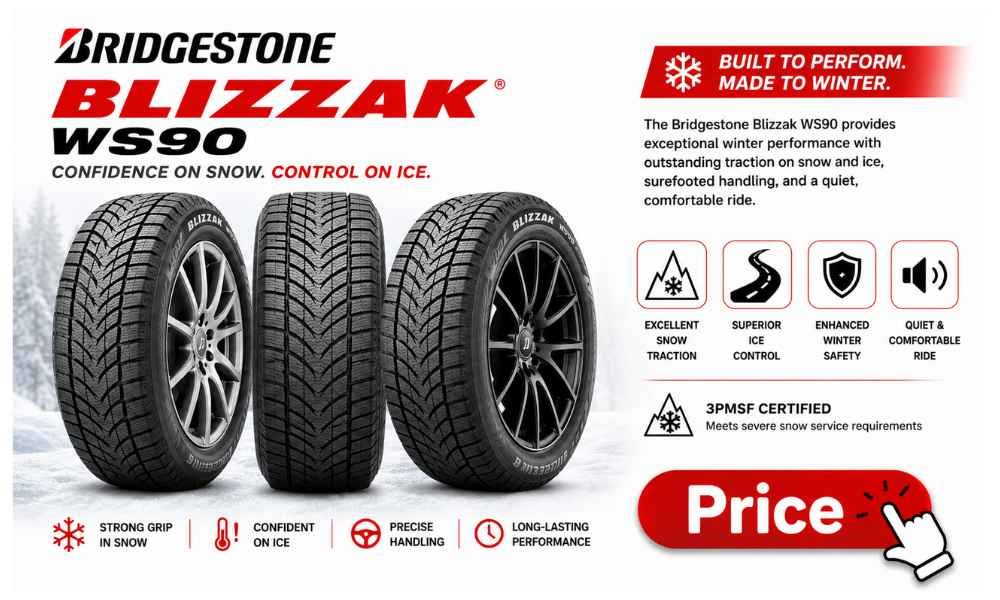
Quick Side-by-Side Spec Comparison
Before we look at driving tests, we need to compare the basic facts. Both of these tires are built for severe winter weather.
They both have soft rubber that stays flexible in extreme cold. Here is how their main features stack up on paper.
| Feature | Blizzak WS90 | VikingContact 8 |
| Tire Type | Studless Winter | Studless Winter |
| Best For | Deep Snow | Ice and Cold Wet Roads |
| Tread Type | Directional | Directional |
| Ride Comfort | Firm | Very Soft |
| Price Level | Premium | Premium |
This quick chart shows that both brands target the same premium winter market. Now, we must see how they actually perform on the road.
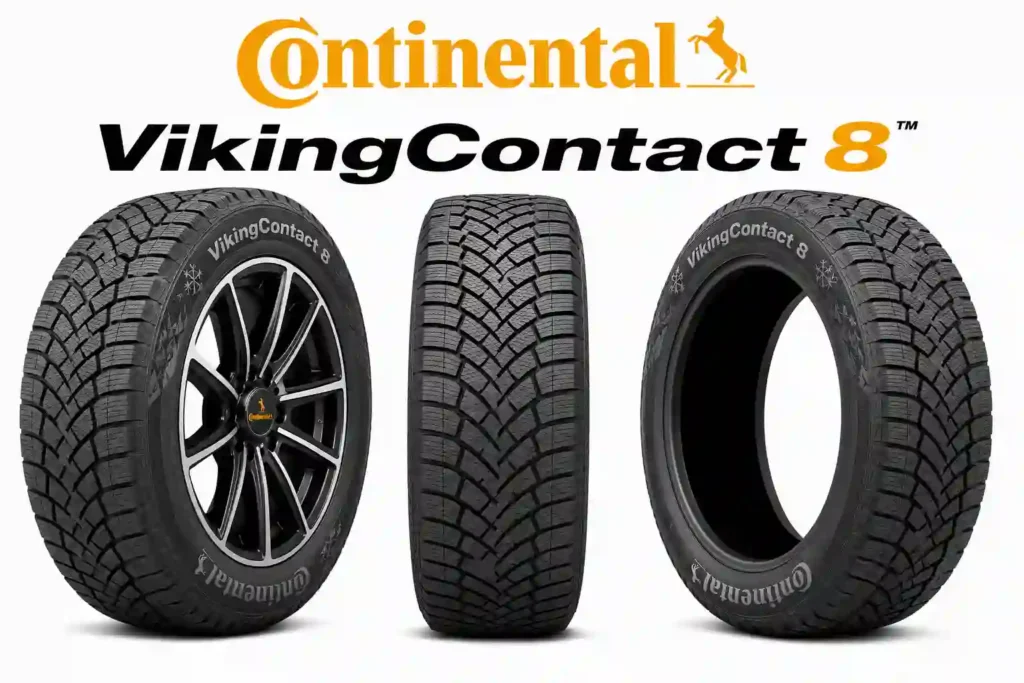
Complete Overview of Both Winter Tires
Both tires use special winter rubber. This rubber does not freeze hard like a hockey puck when the temperature drops.
They both use a directional tread pattern. This means the grooves are shaped like a “V” to push water and slush out of the way fast.
Bridgestone Blizzak WS90 Details
Bridgestone built the WS90 to be a snow tank. It has huge tread blocks that grab thick snow and pull your car forward.
Continental VikingContact 8 Details
Continental designed the VikingContact 8 for drivers who want winter safety without losing comfort. It focuses heavily on thin ice and cold rain.
Deep Snow Traction and Slush Clearing
When the snow piles up, you need a tire that digs deep. The WS90 is famous for its deep snow power.
Its wide grooves act like little shovels. They scoop the snow and throw it out the back.
Real-World Deep Snow Driving
I once drove a customer’s sedan in a massive snowstorm to test a new set of WS90s. The car pushed through high snow drifts with zero wheel slip.
| Snow Metric | Blizzak WS90 | VikingContact 8 |
| Deep Snow Grip | 10/10 | 8/10 |
| Slush Clearing | 9/10 | 9/10 |
| Packed Snow | 9/10 | 9/10 |
The table above shows the WS90 has a clear edge in deep snow. The VikingContact 8 is great, but it can struggle slightly in snow over six inches deep.
Black Ice Performance and Stopping Distance
Ice is the most dangerous part of winter driving. A good tire must grip an invisible sheet of black ice safely.
Both tires use siping to grip the ice. Siping means tiny cuts in the rubber blocks. These cuts open up to bite into slippery ice and act like tiny claws.
The “Why It Won” Ice Braking Factor
The VikingContact 8 wins on ice because its sipes are grouped tighter. It stops cars up to ten feet shorter on sheer ice than the WS90.
| Ice Metric | Blizzak WS90 | VikingContact 8 |
| Ice Braking | 8/10 | 10/10 |
| Ice Cornering | 8/10 | 9/10 |
| Starting Grip | 9/10 | 9/10 |
If you live in a city where roads freeze into smooth sheets of ice, the Continental is much safer. It grips better when you hit the brakes hard.
Cold-Dry Pavement Handling and Cornering
Winter tires often feel bad on dry roads. Their soft rubber can make the steering feel mushy when the sun comes out.
The VikingContact 8 handles dry roads much better than the WS90. It feels tight and turns quickly when you move the wheel.
Real-World Highway Handling
“A great winter tire must also drive well when the snow melts. Soft rubber can feel terrible on dry roads if the tread blocks are too tall.”
The WS90 feels a bit wobbly when you change lanes fast. The tall tread blocks bend too much under the weight of the car.
Wet Performance During Winter Thaws
When winter snow melts, the roads turn into cold puddles. Your tires must cut through this water to keep you safe.
Both tires do a great job resisting hydroplaning. Hydroplaning happens when water lifts your tire off the road, causing your car to slide out of control.
Rain and Slush Safety
The VikingContact 8 has deeper side channels that push rain away faster. This gives it a big advantage during warm winter days.
| Wet Metric | Blizzak WS90 | VikingContact 8 |
| Wet Braking | 7/10 | 9/10 |
| Hydroplane Safety | 8/10 | 9/10 |
| Wet Turning | 8/10 | 9/10 |
The chart shows Continental takes the win in wet weather. The WS90 can slip slightly if you brake too hard on a wet, cold highway.
Braking Confidence in Freezing Conditions
Braking is the true test of any winter tire. It does not matter how fast you can go if you cannot stop in time.
The Continental tire gives the driver much more trust when pressing the brake pedal. It stops smooth and straight.
Quick Stopping Power
The Blizzak WS90 stops well, but the ABS (anti-lock brakes) tends to kick on much sooner. This means the tire loses its grip slightly earlier than the Continental.
Highway Handling and Steering Response
Many drivers spend most of their winter on plowed highways. You need a tire that tracks straight without needing fixed every few seconds.
The VikingContact 8 drives like a normal touring tire. It does not wander left or right on the highway.
Steering Feel at Fast Speeds
The WS90 feels a bit floaty at high speeds. You will find yourself moving the steering wheel more often to keep the car in the middle of the lane.
Road Noise Levels for Winter Rubber
Winter tires are usually loud. The big tread blocks slap the road and make a humming noise inside the car.
The VikingContact 8 is one of the quietest winter tires ever made. You can barely hear it running at highway speeds.
Noise, Vibration, and Ride Comfort
The WS90 has a very stiff sidewall. This makes the ride feel harsh when you hit a pothole or a crack in the road.
| Comfort Metric | Blizzak WS90 | VikingContact 8 |
| Road Noise | Loud | Very Quiet |
| Bump Comfort | Firm | Soft |
| Highway Hum | Yes | No |
As the table shows, the Continental tire is much more pleasant for long trips. The WS90 will make your cabin quite loud over time.
Tread Life and Seasonal Durability
Winter tires wear out fast if you drive them in warm weather. You must take them off when spring arrives.
Normally, tires get a UTQG rating. UTQG is a government rating for how long a tire lasts. However, winter tires do not get this rating, so we rely on shop tests.
Wear Rates and Mileage Limits
In my shop, I noticed the WS90 wears out its best ice rubber halfway through its life. Once that top layer is gone, the ice grip drops fast.
| Tread Metric | Blizzak WS90 | VikingContact 8 |
| Starting Depth | 12/32″ | 11/32″ |
| Rubber Life | Average | Above Average |
| Ice Grip Fade | Fast | Slow |
The VikingContact 8 uses the same rubber compound all the way down. It keeps its ice grip much longer than the Bridgestone.
Price vs Winter Safety Value Breakdown
Both tires cost a lot of money. You are paying for top-tier safety and premium rubber mixes.
The VikingContact 8 usually costs slightly more upfront. However, it lasts longer and drives smoother.
Upfront Cost vs Long-Term Use
Because the Continental tire keeps its grip longer, it is a better long-term deal. You will not have to replace them as quickly.
| Value Metric | Blizzak WS90 | VikingContact 8 |
| Upfront Cost | High | Very High |
| Cost per Mile | High | Medium |
| Overall Value | Good | Great |
Who Should AVOID Each Tire
Skip the WS90 if you hate loud road noise or drive mostly on cleared highways. The humming sound will drive you crazy.
Skip the VikingContact 8 if you live on a dirt road that gets two feet of unplowed snow daily. It is not made for deep snow off-roading.
Comprehensive Pros and Cons List
It helps to see all the good and bad points in one place. Both tires have clear strengths and weaknesses.
Weigh these points against what your daily drive actually looks like during the winter months.
Blizzak WS90 Pros and Cons
The WS90 is amazing in deep snow and starts off very strong on ice.
However, it is loud, rides hard, and loses its ice grip faster as the tread wears down over time.
VikingContact 8 Pros and Cons
The VikingContact 8 is super quiet, handles dry roads perfectly, and stops fast on solid ice.
Its only real flaw is that it does not dig through deep, heavy snow as well as the Bridgestone does.
Which Tire Is Better for Severe Winter?
If your severe winter means pure ice and cold rain, the Continental wins. It is safer on slick roads.
If your severe winter means constant blizzards and deep snow drifts, the Bridgestone is the better tool for the job.
The “Why It Won” Choice
The VikingContact 8 wins this overall test because of its perfect mix. It offers great ice safety without ruining the comfort of your daily drive.
Final Verdict: The Best Snow Tire Choice
For 80 percent of drivers, the Continental VikingContact 8 is the better choice. It is quieter, smoother, and stops faster on ice.
Go check your car’s driver-side door frame right now. Find your exact tire size, then order a set of the VikingContact 8 before the winter hits hard.
FAQ for Bridgestone Blizzak WS90 vs Continental VikingContact
Which tire lasts longer?
The VikingContact 8 tends to last longer because its full-depth rubber compound wears better than the WS90 over multiple seasons.
