
Best Solution for Car Cover Problems: Complete 2026 Guide

Quick Answer
The best solution for car cover problems is to start with a clean, completely dry vehicle and a clean cover that fits correctly. Most scratches, condensation, mildew, leaks, and wind damage come from contamination, trapped moisture, poor fit, or worn material rather than from car covers alone. Good general vehicle maintenance practices also help protect the finish while the vehicle is stored.
Check these first
- Clean the paint: Never trap sand, pollen, road dust, or grit beneath the cover.
- Dry everything: Let both the vehicle and cover dry before covering the car.
- Check the fit: The cover should stay snug without stretching hard over mirrors or bumpers.
- Control movement: Use the intended straps or retention system outdoors so wind cannot make the fabric flap.
- Inspect the fabric: Replace a cover with rough lining, failed seams, holes, weak elastic, or badly deteriorated material.
- Match the environment: Indoor dust protection and year-round outdoor exposure usually require different cover designs.
My simplest rule
- If the car, the cover, or the surface between them is dirty or damp, I fix that condition before installing the cover.
Car covers look simple until one starts scratching paint, collecting condensation, leaking, flapping in the wind, or refusing to fit. I troubleshoot them the same way I troubleshoot most everyday car-care problems: find the condition causing the damage before buying another product.
This 2026 guide covers the most common car cover problems, what causes them, and the safest practical fixes. You can use it for indoor storage, driveway parking, seasonal storage, or a daily-driven vehicle.
In This Guide
- What Are the Most Common Car Cover Problems?
- How Do You Stop a Car Cover From Scratching Paint?
- How Do You Fix Moisture and Condensation Under a Car Cover?
- What Should You Do When a Car Cover Is Loose, Tight, or Blowing Off?
- Why Is a Car Cover Leaking, Fading, or Wearing Out?
- What Is the Best Car Cover Routine for Storage?
- Frequently Asked Questions
What Are the Most Common Car Cover Problems?
Most car cover trouble comes from four things: dirt, moisture, movement, and incorrect fit. Identify which one is present before replacing the cover.
A car cover is a removable fabric barrier placed over a parked vehicle to reduce exposure to dust, sunlight, precipitation, pollen, bird droppings, and other contaminants. It protects best when the cover and the surface underneath stay clean and stable.
Definition: A car cover problem is any condition where the cover fails to protect the vehicle or contributes to scratching, trapped moisture, staining, poor fit, material damage, or security trouble.
Start with the symptom, not the product label
I first look at what the vehicle is telling me. The location and pattern of the problem often narrow the cause quickly.
| What You Notice | Likely Cause | Best First Move |
|---|---|---|
| Fine scratches or haze | Grit plus cover movement | Clean both surfaces and improve fit |
| Water droplets underneath | Condensation, wet vehicle, or water entry | Uncover, dry, then find the moisture source |
| Cover balloons or flaps | Oversized cover or weak retention | Re-center and secure approved straps |
| Bumper will not stay covered | Wrong size, orientation, or shape | Confirm size and installation direction |
| Musty smell | Cover stored or used while damp | Clean and completely dry the cover |
| Rain appears underneath | Seepage, seams, wind entry, or condensation | Determine whether water came through or formed underneath |
| Fabric tears near mirrors | Excess tension or shape mismatch | Stop stretching and reassess fit |
One problem can create another
A loose cover may first look like a fit issue. Once wind moves it across dusty paint, it can become a scratching problem too.
Moisture behaves the same way. A damp cover can develop odor, keep paint wet, and create conditions where exposed metal deteriorates faster.
- Dirt plus movement increases abrasion risk.
- Moisture plus poor airflow slows drying.
- Wrong size plus wind increases flapping and seam stress.
- Old fabric plus weather exposure increases leakage and tearing.
- Dirty storage habits transfer contamination back to the vehicle.
That is why I rarely recommend solving these issues by adding more straps, plastic sheets, or improvised layers without finding the cause. An extra layer can sometimes make moisture or rubbing worse.
Section Takeaway: Diagnose the symptom first. Most car cover problems trace back to contamination, moisture, movement, fit, or deteriorated material.
How Do You Stop a Car Cover From Scratching Paint?
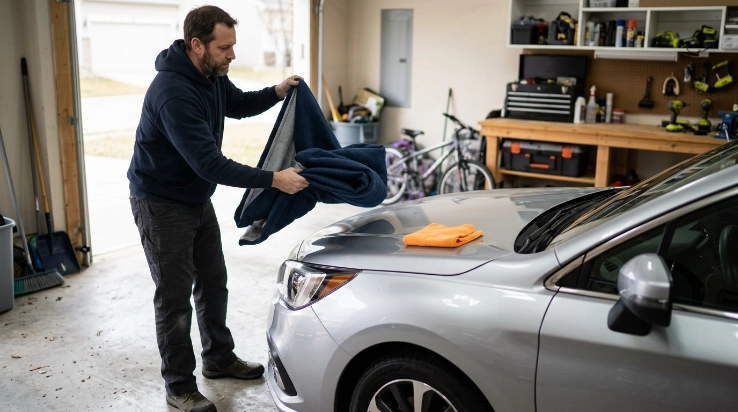
Stop scratching by preventing abrasive dirt from becoming trapped between the paint and moving fabric. Cleanliness and movement control matter more than simply buying the softest-looking cover.
The clear coat on a car is designed to protect the color coat beneath it, but it can still develop fine scratches. Sand, road grit, dried mud, and contaminated cover fabric can create marks when rubbed across the finish.
Never cover a gritty vehicle
A freshly driven vehicle may look clean from several feet away while still holding road dust. I check the hood, roof, rear bumper, rocker panels, and lower doors before installing a cover.
If I can see or feel obvious contamination, I clean the vehicle first. I do not use the cover as a substitute for washing.
- Remove loose dust and grit safely.
- Wash the vehicle when road film is present.
- Dry paint, glass, trim, wheels, and crevices.
- Inspect the inside surface of the cover.
- Keep the cover from touching the garage or driveway floor.
Install and remove it without dragging
Dragging a bundled cover from one bumper to the other can grind whatever is on the surface into the paint. A controlled fold-and-unfold method reduces unnecessary contact.
- Confirm which end is the front.
- Place the folded cover on a clean central area.
- Unroll or unfold it along the vehicle.
- Position mirror pockets without pulling sideways.
- Seat the front and rear hems gently.
- Attach only the retention points designed for the cover.
Removal should reverse that process. Lift and fold sections instead of pulling the entire cover across the roof, hood, or trunk.
Pay attention to wind-contact zones
Mirrors, fender peaks, spoilers, roof edges, and bumper corners often become rubbing points. They concentrate tension and movement in a small area.
If new marks appear in the same locations, stop using the cover until you correct the fit. Continuing to cover the vehicle can turn minor hazing into more visible finish damage.
General paint and maintenance guidance from Kelley Blue Book’s car maintenance resources can also help you build a safer exterior-care routine.
What about ceramic coating or wax?
Wax, paint sealant, and ceramic coating can help protect the finish, but none makes paint scratch-proof. Abrasive contamination can still create marks when pressure or repeated movement is added.
Follow the specific product maker’s cure instructions before covering freshly treated paint. Do not assume one waiting period works for every wax, sealant, or coating.
Garage Tip: If I would not safely wipe the surface with a clean microfiber towel in its current condition, I would not put a cover over it.
Section Takeaway: A soft cover can still scratch dirty paint. Keep the car and lining clean, reduce wind movement, and lift the cover instead of dragging it.
How Do You Fix Moisture and Condensation Under a Car Cover?
Remove the cover and let both the vehicle and cover dry completely. Then determine whether the moisture came from rain, washing, condensation, wet ground, or a damp storage area.
Finding water underneath does not automatically mean the cover leaked. Humid air can condense when temperatures change, especially around cool metal and glass.
Look for the moisture source
- Wet vehicle: Wash water or rain was trapped before installation.
- Damp cover: The cover was folded or reused before drying.
- Condensation: Humid air cooled against vehicle surfaces.
- Ground moisture: Damp grass, soil, or a wet garage floor raised local humidity.
- Rain entry: Water entered around loose edges or damaged seams.
- Poor drying: Low airflow kept existing moisture from escaping.
The solution depends on which one you find. Simply switching to a heavier cover may not help if the car is being covered while wet.
Breathability matters
A suitable cover needs to manage water without keeping the vehicle damp for extended periods. Outdoor covers often balance weather resistance with the ability to release moisture vapor.
That is different from wrapping a car in an airtight plastic sheet. An improvised non-breathable barrier can hold humidity against the vehicle.
What should you do if the garage is humid?
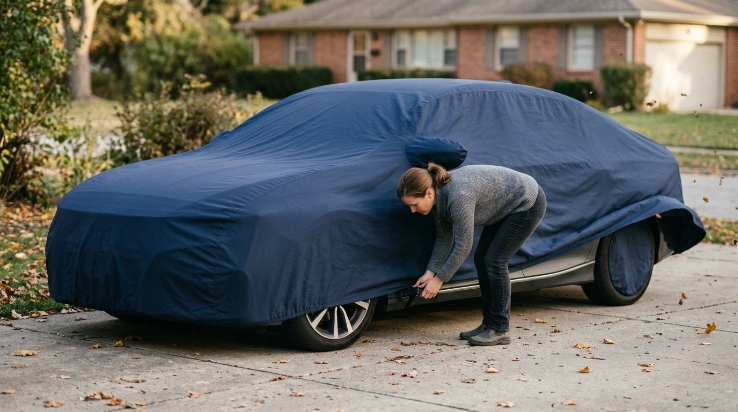
Check the room before blaming the cover. Damp concrete, roof leaks, poor drainage, and weak airflow can keep humidity high around a stored vehicle.
- Repair obvious water entry.
- Improve ventilation when practical.
- Keep the vehicle away from recurring puddles.
- Use a dehumidifier when the garage stays persistently humid.
- Check beneath the cover periodically during long storage.
A cover cannot correct a building moisture problem. It can only manage the conditions immediately around the car.
Watch for corrosion and mildew clues
A musty smell usually tells me something remained damp too long. Surface corrosion deserves even more attention, especially where paint is chipped or bare metal is exposed.
Road salt is another concern on winter-driven vehicles. Clean contamination from the body and underbody before putting the car into extended storage.
Mechanic Alert: If you find spreading corrosion, bubbling paint, damaged electrical connections, or structural rust, have the vehicle inspected by a qualified repair or body professional.
Dry-storage rule: Never intentionally trap moisture because you expect the cover to make it disappear. Dry the source first.
Section Takeaway: Moisture underneath a cover may come from condensation, rain, a wet car, or the storage environment. Dry everything first, then fix the source.
What Should You Do When a Car Cover Is Loose, Tight, or Blowing Off?
A correctly fitted car cover should sit securely without large loose panels or excessive stretching. If it flaps, balloons, exposes a bumper, or strains around mirrors, diagnose the fit before forcing it.
Length alone does not determine whether a cover fits. Roof height, body width, mirrors, spoilers, antennas, racks, and bumper shape all affect the way fabric sits.
If the cover is too loose
Re-center it before assuming the size is wrong. An incorrectly positioned cover can leave excess fabric on one end and excessive tension on the other.
- Locate the front and rear labels.
- Center the roof section.
- Seat the mirror pockets if equipped.
- Pull the intended hems around both bumpers.
- Secure the manufacturer’s straps or buckles.
- Check for large unsupported folds.
If the cover still balloons after correct installation, it may be oversized or the wrong body shape. Repeated outdoor flapping can also wear seams and contact points.
If the cover is too tight
Do not keep pulling harder. Excess tension around mirrors, antennas, spoilers, and trim can damage the cover or put unnecessary stress on exterior parts.
Check whether the vehicle has an accessory that changes its dimensions. An aftermarket wing, roof rack, large mirrors, or body kit can make a nominally correct cover fit badly.
If the cover keeps blowing off
Use the retention system that was designed for it. Belly straps, front and rear buckles, elastic hems, or approved gust straps can limit movement when used correctly.
Do not route a cable or strap across hot exhaust parts, sharp edges, brake components, or painted surfaces. Avoid creating a trip hazard around the parked vehicle.
| Fit Problem | Do This | Avoid This |
|---|---|---|
| Loose sides | Re-center and secure approved straps | Tying random cords against paint |
| Tight mirror area | Check orientation and cover shape | Forcing the fabric |
| Cover lifts in gusts | Use intended retention points | Adding abrasive makeshift weights |
A cover lock is not a vehicle security system
A cable or lock may discourage quick removal of the cover, but it does not replace locking the car itself. Continue using the vehicle’s normal security features.
NHTSA vehicle theft prevention guidance recommends basic precautions such as locking doors, removing keys, hiding valuables, and choosing well-lit parking when possible.
Section Takeaway: A car cover should be snug, centered, and stable. Fix sizing or retention problems instead of stretching the cover harder or improvising unsafe tie-downs.
Why Is a Car Cover Leaking, Fading, or Wearing Out?
A cover that once worked well can eventually lose performance because of ultraviolet exposure, repeated folding, dirt, weather, seam wear, and normal material aging. First confirm whether the problem is actual fabric failure.
Water underneath can be misleading. Condensation may look exactly like leakage until you compare the inside and outside surfaces after rain.
How to tell whether a cover is leaking
- Start with a completely dry car and cover.
- Install the cover correctly.
- Inspect after rainfall without immediately moving it.
- Check seams, worn panels, and exposed edges.
- Compare damp areas inside with the wettest areas outside.
- Consider condensation if moisture appears without a clear entry path.
A small amount of moisture does not prove the entire material failed. Water can enter through wind-lifted edges or worn stitching.
Watch for signs the material is aging
- Fabric becomes brittle or unusually thin.
- Seams start separating.
- Elastic hems stop gripping.
- Straps fray or buckles fail.
- The inner lining becomes rough.
- Small holes appear around high-tension areas.
- Water management becomes noticeably worse.
Fading alone is not always a reason to replace a cover. Structural deterioration, poor fit, rough lining, or failed retention matter more.
Clean the cover according to its instructions
There is no single washing method that is safe for every car cover. Fabric layers, coatings, waterproof treatments, and liners vary between manufacturers.
Check the care label before machine washing, applying detergent, using heat, or treating the material. Harsh cleaning products can damage coatings or leave residue.
I also keep the cover away from the driveway while folding it. One drop onto gritty concrete can contaminate the inside surface that later touches the paint.
When should you replace it?
Replace a cover when repair no longer restores safe fit, clean contact, weather management, or secure retention. Do not keep using a deteriorated cover simply because it still reaches both bumpers.
For broader ownership and maintenance information, Edmunds’ car maintenance section provides current vehicle-care guidance across many common maintenance topics.
Replacement check: I would retire a cover if its inner surface has become abrasive, major seams are failing, or it cannot stay secure without improvised repairs.
Section Takeaway: Diagnose leakage before replacing the cover, but retire material that has become rough, weak, badly torn, or impossible to secure correctly.
What Is the Best Car Cover Routine for Storage?
The safest routine is simple: prepare the car, install a suitable clean cover, check the vehicle periodically, and store the cover dry when it comes off. Consistency prevents more problems than complicated accessories.
The exact routine changes depending on whether the car sits indoors, outside overnight, or remains parked for weeks.
Before covering the car
- Inspect the paint for dust, sand, leaves, and bird droppings.
- Clean the vehicle when contamination could rub against the finish.
- Let the vehicle dry fully.
- Check that hot exhaust components have cooled.
- Inspect the cover lining for dirt or grit.
- Confirm the cover itself is dry.
For indoor storage
An indoor cover mainly needs to manage dust, accidental contact, and the garage environment. Heavy outdoor weather protection may not be necessary in a clean, dry garage.
- Keep the garage floor reasonably clean.
- Control persistent moisture.
- Avoid dragging the cover against walls or floors.
- Check beneath it during extended storage.
- Watch for rodents or insects around seldom-used vehicles.
For outdoor storage
Outdoor use adds wind, sunlight, rain, pollen, dust, and airborne debris. Secure fit becomes much more important.
- Choose a cover intended for outdoor exposure.
- Use its built-in retention system.
- Inspect after strong wind or storms.
- Remove leaves and debris instead of letting them accumulate.
- Check periodically for moisture underneath.
- Do not allow torn fabric to flap against paint.
For long-term storage
A car cover is only one part of storing a vehicle. Tires, battery condition, fluids, pests, brakes, and the storage environment may also need attention.
Consumer Reports has separate guidance on maintaining a car that is not driven much, which is useful when the vehicle will remain parked for an extended period.
Do not assume a covered vehicle can be ignored for months. Periodic inspection can reveal condensation, pests, a loose cover, low tire pressure, or developing corrosion before the problem grows.
How to store the cover when it comes off
Let it dry before folding or bagging it. Trapped moisture between folded layers can encourage odor, mildew, and staining.
- Remove loose dirt.
- Clean it according to the manufacturer’s directions when needed.
- Dry both surfaces completely.
- Fold with the clean inner surface protected.
- Keep it away from oil, chemicals, sharp tools, and floor dirt.
- Store it in a dry location until the next use.
A dirty cover can transfer contamination to a freshly washed vehicle. That is why I treat cover maintenance as part of car maintenance rather than as a separate chore.
Section Takeaway: Cover a clean, dry vehicle with a clean, dry, correctly fitted cover. Inspect long-term storage periodically and never fold the cover away while damp.
Frequently Asked Questions
Can a car cover damage paint?
Yes, but usually because dirt is trapped beneath the cover or the fabric moves repeatedly against the finish. A clean, paint-safe cover on a clean vehicle is less likely to create problems than a loose or contaminated cover.
Should I put a car cover on a dirty car?
No if the vehicle has visible dust, grit, sand, mud, or road film that could rub against the paint. Clean and dry the surface first rather than trapping abrasive contamination underneath.
Why is my car wet under the cover?
The moisture may come from condensation, rain entry, a wet vehicle, a damp cover, or humid surroundings. Remove the cover, dry both surfaces, then identify the source before reinstalling it.
Is a waterproof car cover always better?
Not automatically. Outdoor protection needs to manage rain while also allowing trapped moisture to escape appropriately. Fit, breathability, durability, storage conditions, and manufacturer instructions are all important.
How tight should a car cover be?
It should be snug enough to stay stable without excessive loose fabric. It should not require hard pulling around mirrors, bumpers, spoilers, or other exterior parts.
Can I leave a car covered outside all the time?
You can use an outdoor-rated cover for extended parking, but the vehicle still needs periodic inspection. Check for moisture, wind movement, contamination, damaged straps, worn seams, and debris collecting on or beneath the cover.
What is the best solution if my car cover keeps causing problems?
Stop using it temporarily and identify whether the cause is dirt, moisture, incorrect sizing, wind movement, damaged material, or the wrong cover type. Replace the cover if it cannot provide a clean, stable, safe fit after those issues are corrected.
Final Takeaway: The best solution for car cover problems is not one special fabric or accessory. Keep the vehicle and cover clean and dry, control movement, use the correct fit for the parking environment, and replace worn material before it starts creating new problems.
If your current cover scratches, leaks, traps moisture, or constantly moves in the wind, remove it and work through those four checks first. A few minutes of diagnosis can protect the paint far better than continuing to use a cover that is not working correctly.