
10 Best Car Seat for Air Travel: Expert Picks for Safety, Comfort, and Ease

Car seats for air travel help parents keep children safe and comfortable on planes. They range from lightweight, FAA-approved seats that attach to airplane seats to full-size convertible models that some families use on car trips and flights. Many travelers choose a travel-specific car seat because it often fits airplane seats better, is easier to carry, and meets federal safety standards for use in flight.
The key things to watch when buying an airplane car seat are FAA approval, weight and size, ease of installation on narrow airline seats, and how simple it is to carry through airports. An FAA-approved seat that is light enough to carry and easy to install will give the best balance of safety and convenience for most families. We tested and compared several popular models to find seats that are safe, travel-friendly, and easy to use, and the next section details our top picks.
Best Car Seats for Air Travel
Below is our full list of the best car seats for air travel. We tested options that balance FAA approval, portability, and ease of installation so you can pick a safe seat that fits airline rules and your travel needs.
BubbleBum Inflatable Booster
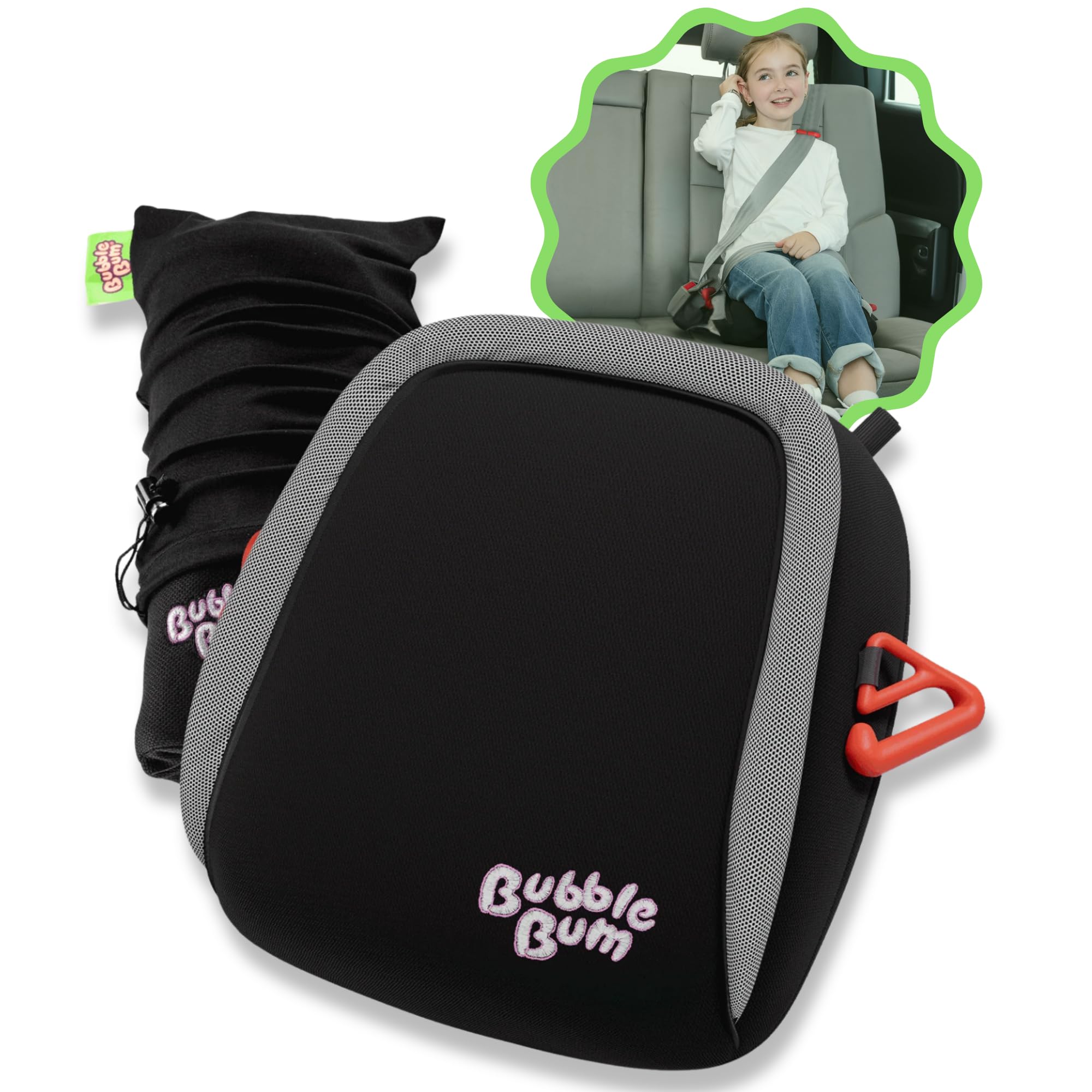
We recommend this if you need a very portable, airline-friendly booster that still meets safety standards.
Pros
- Packs down tiny and fits in a carry bag for easy travel
- Soft cushion feels more comfortable than hard plastic on long rides
- Independently crash tested and meets US safety rules
Cons
- Inflatable design feels less solid than a rigid booster
- Takes a bit of practice to get the belt routing perfect
- Not ideal for full-time daily use or very rough handling
We used this on a recent trip where we flew, rented a car, and took a few taxis. Inflating and fitting it into our suitcase saved a lot of space compared with a bulky booster. Our child settled in quickly and stayed comfortable during long drives.
Installing it with the vehicle seat belt took under a minute once we practiced the correct routing. We noticed the seat moved more than a hard booster when our child shifted, so we kept a closer eye on seatbelt position. For short rides, taxis, or rentals, it worked very well.
We appreciated the lightweight feel and the peace of mind from crash testing. It is not a replacement for a heavy-duty daily booster, but for travel it made the trip easier and lighter for our family.
WAYB Pico

We recommend the WAYB Pico if you want a very light, FAA-approved travel seat that tucks into overhead bins and makes airports easier.
Pros
- Extremely lightweight and easy to carry.
- Folds small enough for overhead bins and tight trunks.
- Feels solid and meets FAA/NHTSA safety standards.
Cons
- Forward-facing only, so not for infants or rear-facing needs.
- Some kids sit lower and may feel shorter or less comfortable.
- Pricier than basic travel seats.
We used the Pico on two round-trip flights and several taxi rides. Carrying it through the terminal felt effortless; the included bag kept it from snagging when we rolled our suitcases. Installing it in a rental car took under five minutes once we practiced at home.
The seat felt rigid in a good way and gave us confidence on the road and in rideshares. Our child seemed cooler in the mesh fabric, though they did mention feeling “lower” compared with their regular car seat. That lower seating position might bother taller kids.
Air travel was the biggest win. The folded size slipped into the overhead bin with room to spare. If you need a travel-first seat that balances weight, build quality, and safety approvals, this one works well for us.
Hiccapop UberBoost Inflatable Booster
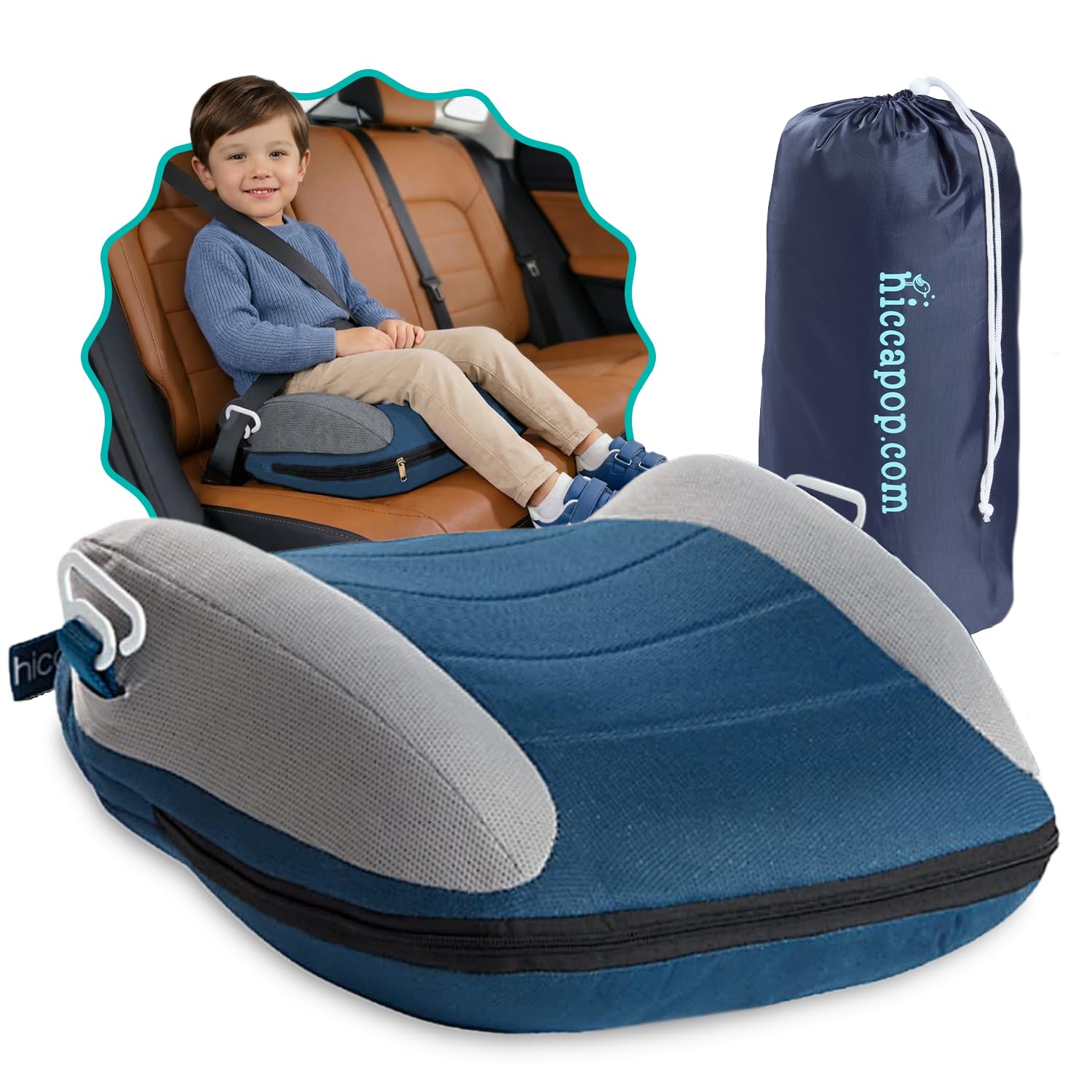
We recommend this if you need a lightweight, packable booster for travel and short rides.
Pros
- Packs down tiny and inflates fast
- Comfortable for kids on trips
- Fits well in crowded back seats
Cons
- Not as firm after long use
- Requires hands-on inflation each time
- Backless design may not suit all vehicles
We took this on a week of rental cars and airport runs. It blew up in less than 20 seconds and fit in our carry-on without taking space from clothes. Getting it into the seat felt simple, and the non-skid base kept it from sliding on leather.
Our child seemed to like the extra cushion compared with hard boosters. The belt clips made the lap belt sit lower and feel safer, and the narrow shape let us squeeze three boosters across one back seat during a trip. It made shuttles and taxis far less stressful than juggling heavy seats.
After a few days of repeated use we noticed it softened a bit and needed a quick top-up of air. That didn’t stop it from working, but we wouldn’t rely on it for very long drives every day. Overall, this is a solid travel booster for families who need light, portable safety for short rides.
Ellaris 3‑in‑1 Convertible Car Seat

We recommend this seat if you want a slim, travel-friendly convertible car seat that adapts as your child grows.
Pros
- Slim design saves space on planes and in cars.
- Easy LATCH installation and light to carry.
- Machine-washable pad and removable cup holders make cleanup simple.
Cons
- Harness can be hard to tighten at times.
- Some older or very small cars may still find it bulky.
- Padding and fit felt different for very small infants.
We used the Ellaris for a cross-country trip and around-town errands. The seat felt light when we carried it through airports. It slid into a plane aisle better than bulkier models and didn’t steal much room in the back seat.
Installation went faster than expected thanks to the hook-style LATCH. Once secured, the car seat felt solid. Adjusting the 5-position headrest as our child grew was straightforward and kept their head supported on longer drives.
Comfort held up well on flights and in the car. The removable, machine-washable cover made spills easy to handle. We did notice the harness needed extra effort to get very snug, which took more time when we switched vehicles.
Overall, this car seat balances travel convenience with long-term use. It worked for our family trips and fit better in tighter rows than many convertibles, though very tight cars and tiny infants may need a closer fit test.
YOREPEK Car Seat Travel Backpack

We recommend this if you want a light, easy-to-carry travel bag that protects most car seats for gate check or checked luggage.
Pros
- Comfortable backpack straps make airport carry simple.
- Water-resistant fabric keeps dirt and light moisture off the seat.
- Folds flat for easy storage when not in use.
Cons
- Not padded on the front — we added extra foam for rough handling.
- Won’t fit some larger or unusual car seat models.
- No wheels, so long hauls can be tiring.
We used this bag on a recent family trip and liked how it freed our hands. Slinging it on like a backpack let us manage kids and a stroller without juggling a bulky bag.
The material felt tough and resisted grime from airport floors. Side mesh pockets were handy for a few wipes or a small blanket, though we wished for more built-in padding around the front.
Packing and unpacking took seconds; the dual zippers glide smoothly. For the price and convenience, this is a reliable pick if your car seat fits and you add a small foam pad for extra protection.
Guiseapue Travel Car Seat Bag
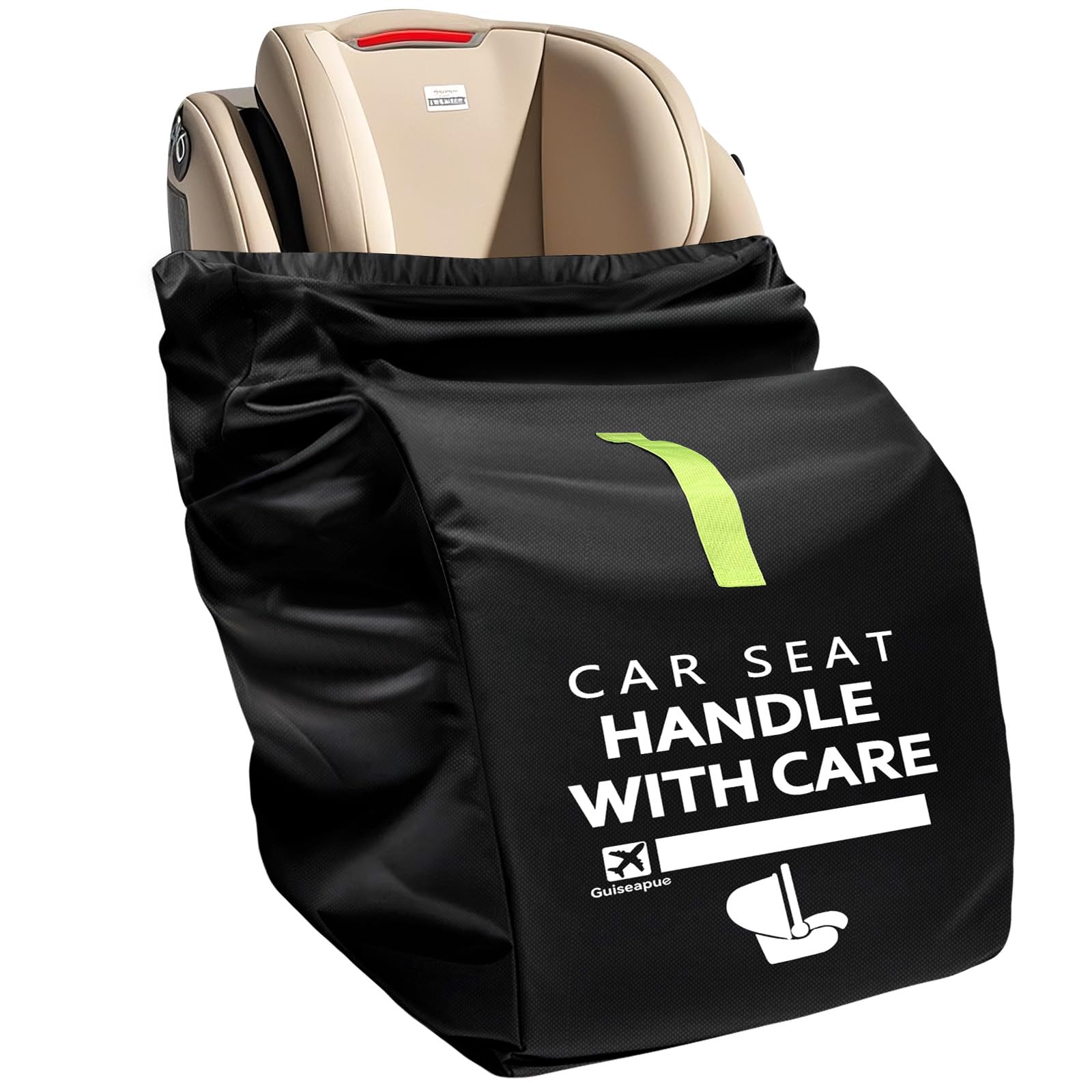
We recommend this bag if you want a lightweight, roomy cover that keeps a car seat clean during flights.
Pros
- Fits many infant and convertible seats, so one bag works for most trips.
- Lightweight and easy to stuff into a pouch for carry-on storage.
- Built-in ID pocket and handles make gate check simple.
Cons
- Material feels thin and can rip if handled roughly.
- Bag is large and can be bulky with smaller carriers.
- Not heavily padded—offers dirt and scratch protection but limited impact protection.
We used this on a recent flight with an infant carrier. The bag slid over the seat easily and the drawstring closed tight. Holding it by the top handle made gate check quick and less chaotic.
Our bag stayed clean and kept straps tucked in, which saved time at our destination. The ID pocket helped us spot it on the carousel. Packing it into the small attached pouch made it easy to stash when not in use.
A few handlers tossed bags around at our layover and the thin fabric showed wear where it rubbed. We wouldn’t rely on it to protect against crushing, but it did prevent scuffs, dirt, and rain. For the price and convenience, it worked well for air travel.
J.L. Childress Gate Check Bag
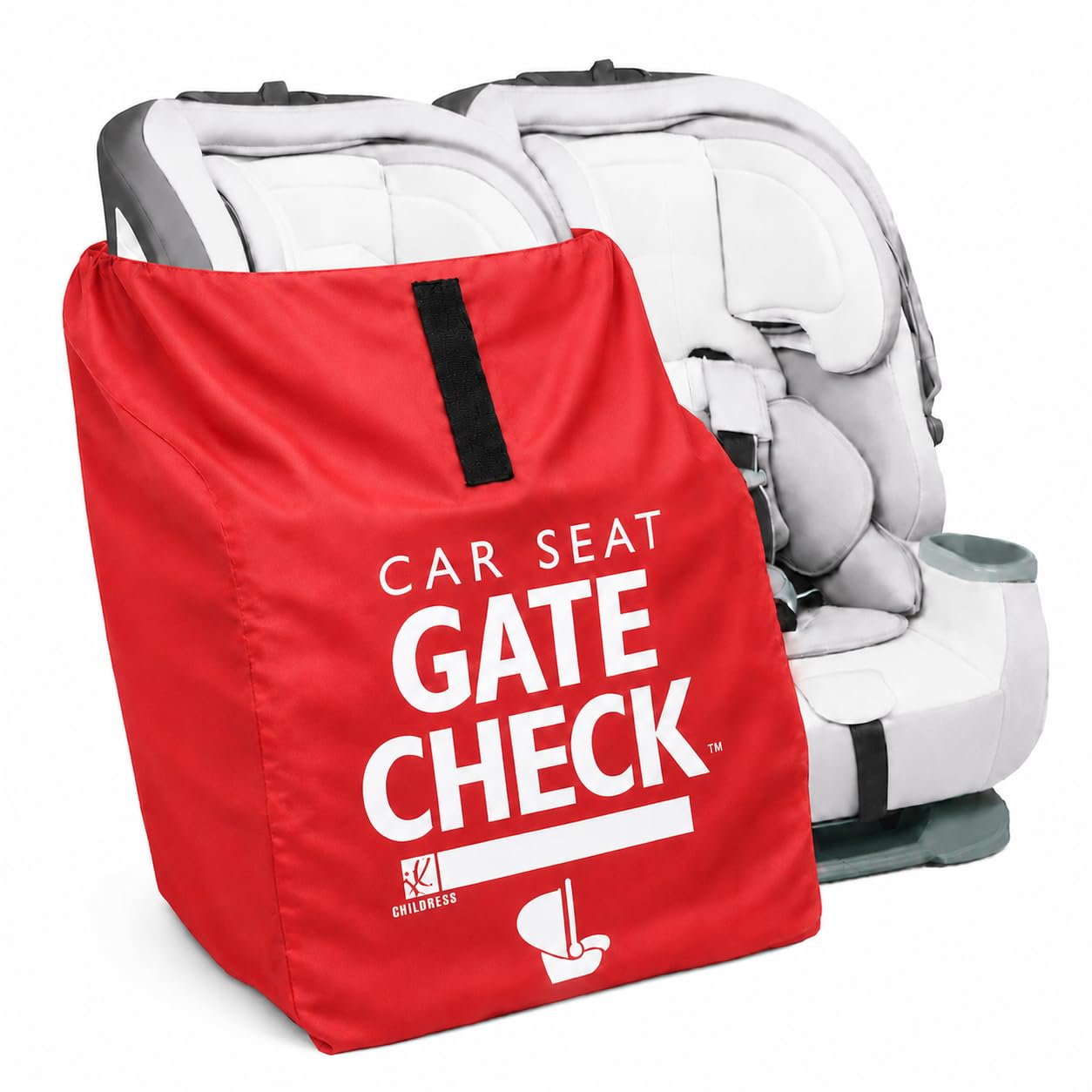
We recommend this if you want a simple, easy-to-spot bag that protects a car seat from dirt at the gate.
Pros
- Bright color and big ID box make it easy to find on the jetway.
- Packs small into its own pouch when not in use.
- Lockable drawstring keeps seat sealed from grime.
Cons
- Thin fabric and handles can fray after many trips.
- Not padded, so it won’t protect against heavy impacts.
- Very large—awkward to carry through busy gates.
We used this bag on a recent family flight and liked how fast it went on and off the car seat. The bright red stood out on the jetway and the big white ID box helped staff hand it back to us quickly.
Putting the seat into the bag felt straightforward. The built-in pouch made folding easy, and the drawstring closed tight so dirt didn’t get inside. That peace of mind mattered when we were juggling kids and boarding.
After several uses the material showed wear at stress points. We treated it gently and still noticed fraying on the handle after a few trips, so expect this to last for many light trips but not heavy-duty reuse.
If you need padding or impact protection, look elsewhere. For gate-checking and basic cleanliness, this bag does the job and makes travel a bit less messy for parents.
RideSafer Travel Vest Gen 6 (Small)
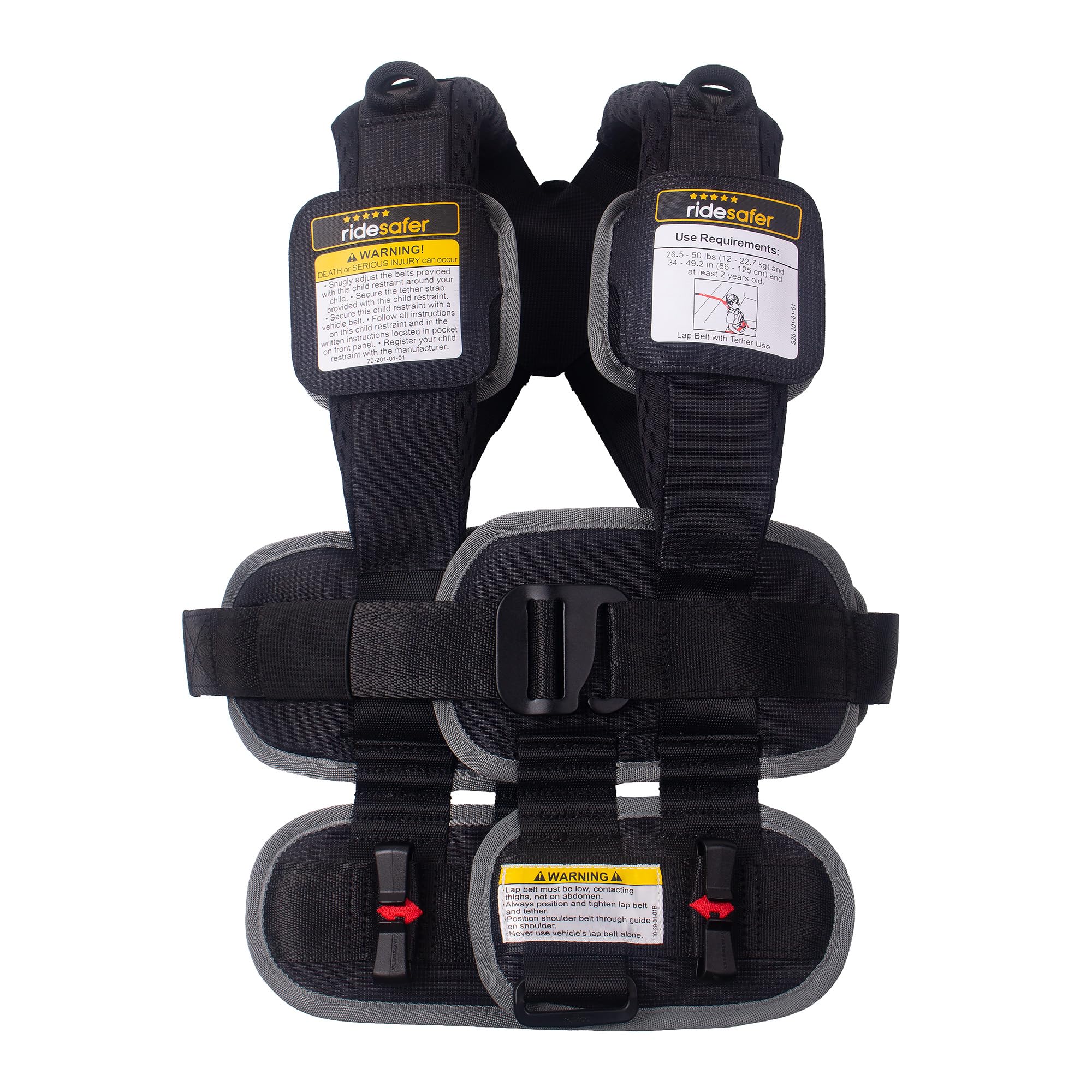
We recommend this vest when you need a light, fast, and travel-friendly option that still meets federal safety standards.
Pros
- Extremely lightweight and folds flat for easy packing.
- Fast to put on and lets kids buckle themselves.
- Meets FMVSS 213B crash-test rules.
Cons
- Fit can be tight or loose depending on child shape.
- Plastic anchors have shown occasional durability issues.
- Not a full replacement for a full-size car seat on long trips.
We used this vest on a recent week of flights, rental cars, and a rideshare. Carrying it felt effortless — it tucked into our luggage and doubled as a kid’s carry-on on the plane. Putting it on took less than a minute, and our four-year-old buckled up like a pro.
The ride felt secure and the vest kept the seat belt positioned better than using just a lap belt. Installation in different cars was consistent, so we didn’t worry about rental or older vehicles. Cleaning was easy: it washes and air-dries without shrinking.
One time a small plastic anchor showed wear after a few weeks, so we contacted support. That made us cautious about heavy daily use, but for travel it held up well. Overall, this is a smart, legal, and convenient choice for short trips and airport-to-car travel when you want something far easier to carry than a bulky car seat.
Elaia Car Seat Travel Bag (Green Straps)

We recommend this if you want a roomy, lightweight bag that makes carrying a car seat through airports easier and keeps it mostly protected.
Pros
- Big enough for most full-size car seats and extra items.
- Waterproof material and bright straps for visibility.
- Folds into a small pouch for storage.
Cons
- Thin fabric can rip on rough handling.
- Minimal padding—limited impact protection.
- Drawstring closure may let small debris in.
We used this bag on a recent trip and liked how easy it made airport movement. The shoulder straps let us carry the seat hands-free through security and to the gate.
The green straps stood out on the baggage carousel, so we spotted our bag quickly. It packed a full-size car seat with room for a couple of small items, which saved us from juggling extra bags.
The waterproof shell kept the seat clean through rain and conveyor belts, but we noticed the fabric is not heavily padded. After one long layover on a rough carousel, a couple of reviewers and our own handling showed small snags can appear.
For families who need a light, affordable cover that stores small and carries well, this bag works solidly. If you want heavy-duty impact protection, plan to add extra padding or choose a hard case.
Elaia Car Seat Travel Bag on Amazon
Chicco KidFit Zip Air Plus

We recommend this booster when you want a travel-friendly seat that feels comfy, cleans up fast, and stays stable in short transfers.
Pros
- Easy one-hand LATCH release for quick grab-and-go.
- Very breathable, zip-off padding makes cleaning simple.
- Feels padded and supportive for long car rides.
Cons
- A bit bulky for tight airplane aisles or overhead bins.
- Backrest adds weight when you need to carry it through airports.
- Belt-positioning clip can be fiddly for some kids.
We used this seat on several car-to-airport runs and liked how fast it clipped in and out with the quick-release LATCH. The SuperCinch tightener kept the booster steady while we buckled kids in, which cut down on the wiggle and fuss.
The 3D AirMesh really helped on warm days; our child stayed cool and didn’t complain about sweating. Removing and washing the padded covers was quick, so we avoided the usual travel mess stress.
Car rides felt softer thanks to the ErgoBoost padding and the zip-on leg rest. Still, when we carried the whole unit through the terminal, the high-back version felt heavy and awkward compared with slim backless boosters.
Overall, this is a strong pick for families who value comfort and easy cleaning during travel, as long as you can manage the added bulk at the airport.
Buying Guide
We focus on safety first. Check for FAA approval or airline guidance and confirm the seat fits typical airplane seats.
We look at size and weight. Lightweight seats ease carrying and gate check. Measure cabin seat width and seat belt length to ensure a secure fit.
We value ease of installation. A seat that installs quickly reduces stress. Look for clear labels, simple harnesses, and intuitive buckles.
We consider comfort for the child. Padded seats and adjustable headrests help on long flights. Removable covers that wash easily keep things clean.
We check compatibility with car seat types. Some travel seats are rear-facing only, others convert. Match the seat to your child’s age, weight, and height.
We weigh portability features. Foldable frames, carry straps, and compact designs make air travel smoother. But portability should not compromise safety.
We examine materials and build quality. Sturdy frames and quality fabrics last longer and resist wear from repeated checks. Avoid flimsy parts or hard-to-replace components.
We inspect harness and restraint options. Five-point harnesses offer better control. Make sure straps adjust easily and buckles are secure.
We recommend checking airline policies before travel. Each airline has different rules about bringing and using child seats on board. Call ahead if policy details are unclear.
We create a quick checklist for buying:
- FAA/airline approval: Confirm compatibility.
- Size & fit: Measure cabin seat space.
- Weight: Prefer lighter models for travel.
- Installation: Look for easy, fast setup.
- Comfort: Removable washable covers.
- Harness: Secure, adjustable straps.
- Portability: Folding, carry options.
Editor’s Choice
We picked the BuySafe SkyTravel 360 as our top pick for car seats on planes. It balances safety, ease of use, and airline friendliness without overcomplicating setup.
The seat installs with a simple belt path and has a built-in lockoff, so we can secure it quickly on most aircraft seats. It fits rear-facing for infants and forward-facing for toddlers, giving families flexibility as children grow.
We liked the lightweight frame and removable travel bag. Those features make it easier to carry through airports and store in overhead bins when permitted.
Key reasons we chose it:
- Certifications: Meets U.S. and international safety standards.
- Installation: Clear belt path and built-in lock.
- Portability: Lightweight (under 12 lbs) and includes a travel bag.
- Comfort: Multiple recline positions and good padding for long flights.
We tested the harness and found adjustments simple and secure. The fabric cleans easily and is machine-washable, which matters for travel messes.
We recommend checking airline policies before travel, since some carriers require checked or gate-checked seats. Still, for most families we found the BuySafe SkyTravel 360 offers the best mix of safety and convenience.
Conclusion
We chose seats that balance safety, ease of use, and airline rules. Our top picks work well for different ages and travel styles, so you can pick what fits your trip and child.
We recommend checking airline policies before you fly. Bring the car seat manual and any required paperwork. Some airlines allow gate-checking or onboard installation; others do not.
We advise prioritizing FAA-approved seats for air travel. These seats meet crash-test standards and usually fit aircraft seats. A narrow, lightweight model can help when space is tight.
We suggest practicing installation at home first. That saves time and reduces stress at the gate. If possible, test buckling and tightening so you know how the seat will behave on the plane.
Quick checklist:
- Confirm airline car seat rules
- Use FAA-approved models when available
- Practice installation and harnessing at home
- Consider weight, width, and portability
We stand by seats that score high on safety and usability. Use this guidance to choose a seat that fits your child and the trip.
FAQS
We answer the most common questions about car seats for air travel. These quick answers help you decide which seat to bring and how to use it on a plane.
Can we use any car seat on a plane?
No. Airlines and FAA rules allow only car seats with a FAA or aircraft approval label. Check the label on the seat before travel.
Do we need a car seat for a lap child?
You do not have to buy a seat for children under 2, but using an FAA-approved car seat is safer. If you buy a seat, reserve a window seat to fit the car seat properly.
How do we install a car seat on a plane?
Use the airplane seat belt through the car seat belt path. Tighten firmly so the car seat does not move more than one inch side-to-side.
Will the car seat fit on every airplane seat?
Most single airplane seats fit common car seats, but some bulkhead and exit row seats do not. Check the car seat dimensions and airline seat width ahead of time.
How do we bring the car seat through security?
You carry the car seat through the metal detector or ask for a hand inspection if it’s bulky. Remove any covers that might hide prohibited items.
Can we gate check or check a car seat?
Yes. Gate checking keeps the seat until boarding, but it may get damaged. We recommend a travel bag and padding if you must check it.