
10 Best Car Seat Leather Repair Kit: Top-Rated Solutions to Restore and Protect Your Seats

Leather car seats look and feel great, but they wear, crack, and stain over time. Car seat leather repair kits let us fix scratches, holes, and color loss without replacing upholstery. These kits usually include compounds to fill cracks, colorants to match the leather, and tools to texture and seal repairs so the seat looks consistent and lasts longer.
Choosing the right kit means focusing on compatibility, ease of use, and finish. We check whether the products work on your leather type (aniline, semi-aniline, or coated), how well the color match system performs, and whether the repair compounds flex with the leather instead of cracking again. A good kit should match your seat color closely, bond securely, and stay flexible under heat and movement. We tested several kits to find the ones that make small leather repairs durable and nearly invisible.
Best Car Seat Leather Repair Kits
We tested and compared top leather repair kits to find the best options for restoring car seats. Below is our list of the best kits that balance ease of use, color match, and long-lasting results.
Coconix Leather Care PRO (Black)

We recommend this kit if you want a simple, all-in-one fix for small tears, cracks, or faded black car seats without hiring a pro.
Pros
- Easy to use — the tools and step guide made the job straightforward.
- Color options and mixing guide helped match black tones well.
- Flexible finish that stayed soft instead of cracking after drying.
Cons
- Filler requires patience and light sanding for a smooth result.
- Small holes need extra layers; not a single-step cure.
- Strong smell during application — ventilate the car.
We used the kit on worn black leatherette seats and found the instructions clear and the included spatulas handy. Mixing to match the exact black took a few tries, but the guide made it manageable.
Applying the repair compound filled cracks and improved the look quickly. The texture blended well after light sanding and the finish dried supple, so it didn’t feel stiff under our weight.
For bigger tears or severe wear, expect to repeat layers and spend more time on prep. Overall, this kit works well for moderate seat damage and saves the cost of professional repair.
ARCSSAI Leather Repair Kit
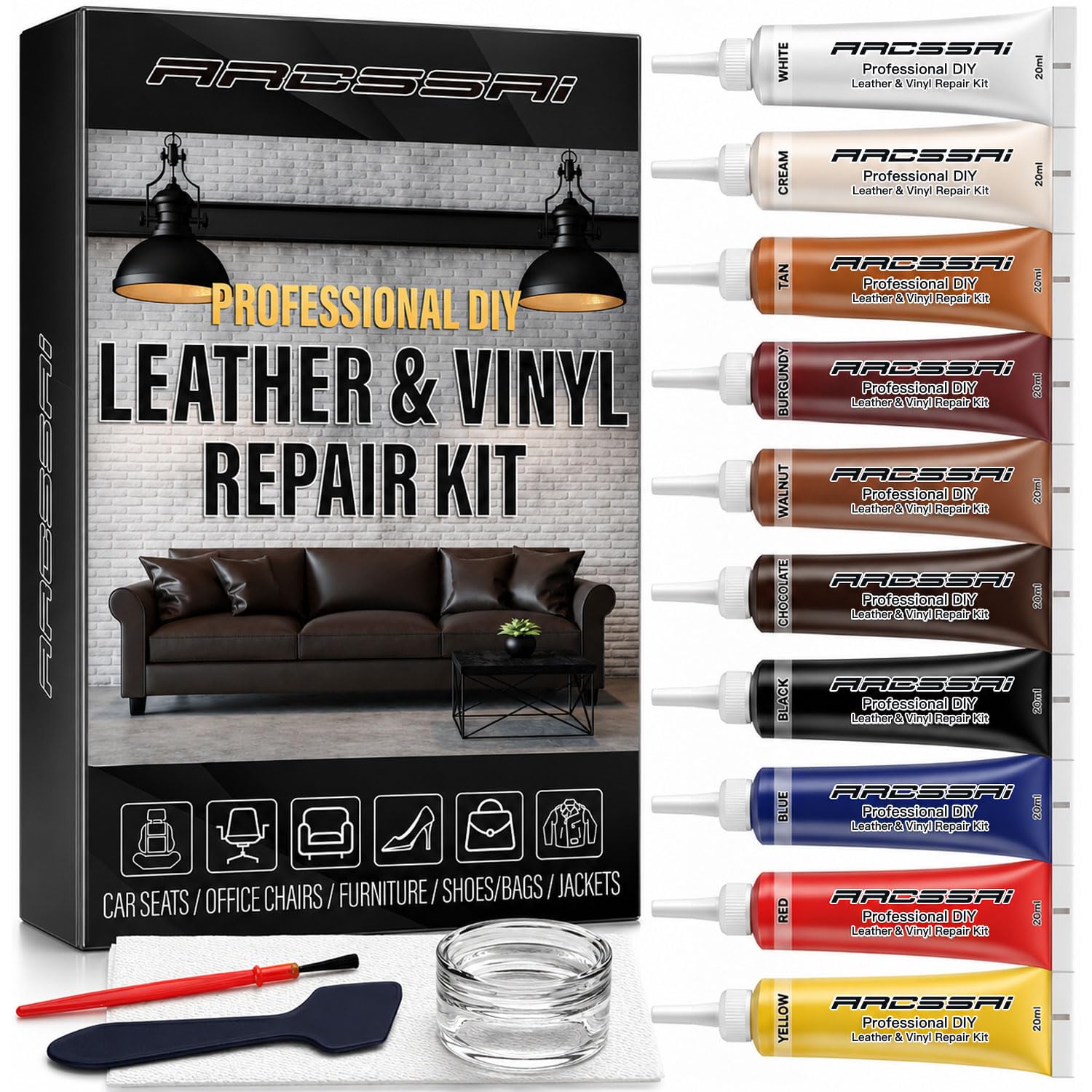
We recommend this kit if you want a budget-friendly, easy way to fix small tears and cracks on car seats without professional help.
Pros
- Simple, step-by-step instructions that anyone can follow.
- Ten color compounds let us mix a close match for most seats.
- Fast-drying formula that bonds well to vinyl and faux leather.
Cons
- Color match can take a few tries to get perfect.
- Repair texture can feel slightly different than original leather.
- Larger holes need extra filler work for a smooth finish.
We used this kit on a worn driver seat and found the process straightforward. The tools and color pots were well organized, and the instructions guided us through mixing and applying the compound.
The matching step took patience. A few thin layers built up the repair nicely, but we had to blend colors to get a believable shade. Drying was quick between coats, which sped things up.
The repaired spot looks much better up close, though you can feel a slight difference in texture. For everyday wear and small damage, this saved us time and money versus reupholstery.
Coconix Leather & Vinyl Repair Kit

We recommend this kit for most light-to-medium car seat repairs because it’s easy to use and includes many color options to match upholstery.
Pros
- Comes with many color mixes for a closer match.
- Simple tools and quick-dry formula make repairs fast.
- Flexible finish that won’t feel stiff after drying.
Cons
- Color matching can take a few tries for exact shades.
- Not ideal for very large tears without extra patch material.
- Requires careful prep to avoid visible edges.
We used this kit on two car seats with small cracks and a shallow tear. Mixing colors followed the included guide and gave a near match after two test mixes. The edges blended well when we sanded lightly and layered thin coats.
Application felt straightforward. The spatula, filler, and grain paper worked together to rebuild texture. Dry time was quick; we could handle the seat within a few hours, though we waited overnight before heavy use.
One spot that challenged us was a deeper hole—filling required patience and thin layers to avoid lumps. For surface scratches and peeling, the kit performed very well and the finish stayed flexible after weeks of use. Overall, this is a solid, user-friendly choice for do-it-yourself leather and vinyl seat fixes.
ARCSSAI Leather & Vinyl Repair Kit
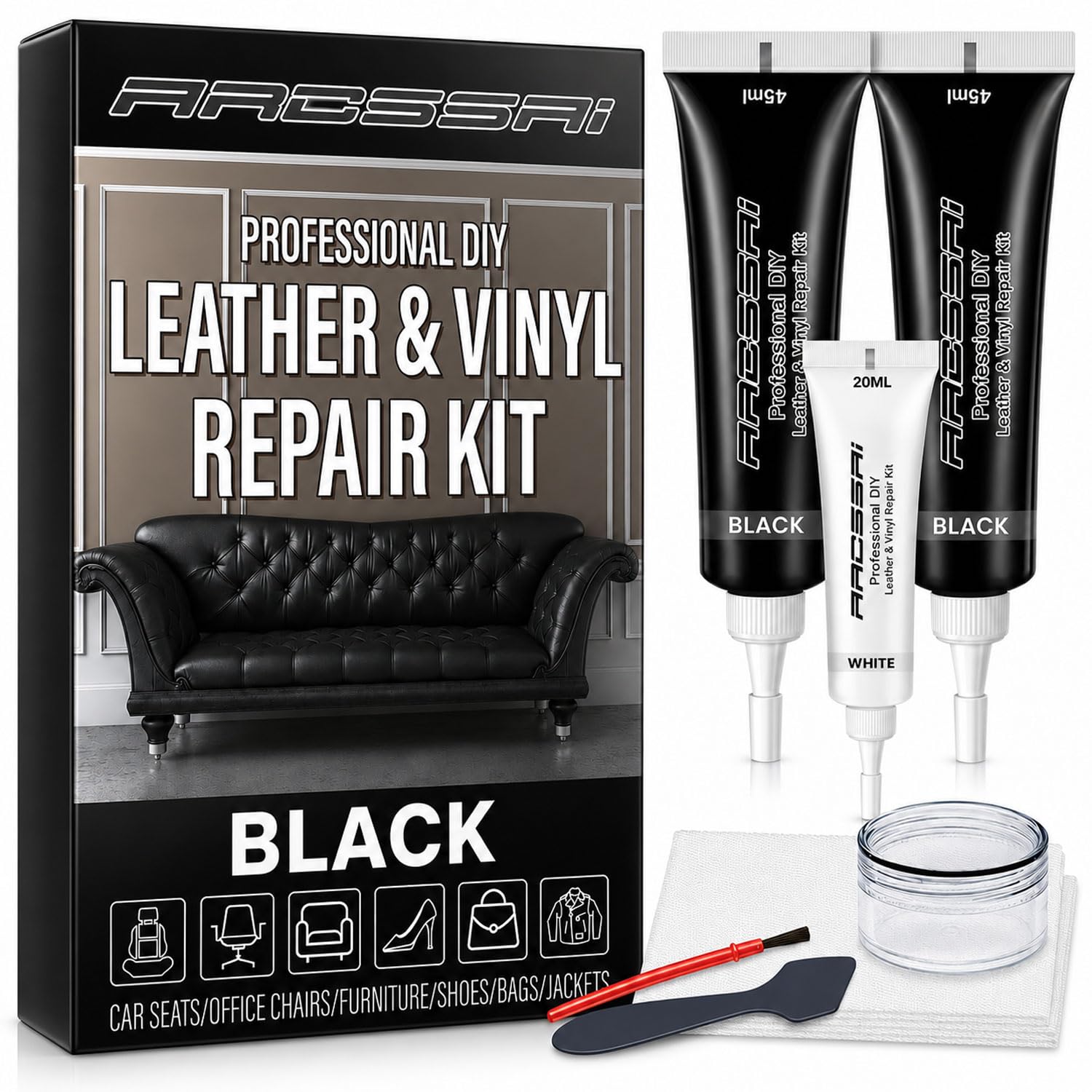
We recommend this kit if you want a simple, quick fix that blends well for small rips and cracks.
Pros
- Easy steps let us get good results fast.
- Color options match black and gray surfaces reasonably well.
- Works on many materials: leather, vinyl, faux leather.
Cons
- Not perfect for large tears or deep padding damage.
- Color match sometimes needs extra mixing to look natural.
- Curing time and finish can feel slightly plastic on close inspection.
We used this kit on a worn car seat edge and found it handled scuffs and small cracks cleanly. The instructions guided us through color mixing and application, and the tools included made the patching quick.
Matching dark tones took a couple of tries, but we got an acceptable blend after testing on a hidden spot. The filled areas dried fast and resisted normal wear, though you can notice a slight texture difference up close.
For small cuts, scratches, and peeling areas, this kit saved us from replacing upholstery. Larger holes or shredded foam still need professional repair, but for touch-ups this kit gives solid value.
Besezx Leather Repair Patch Tape Kit
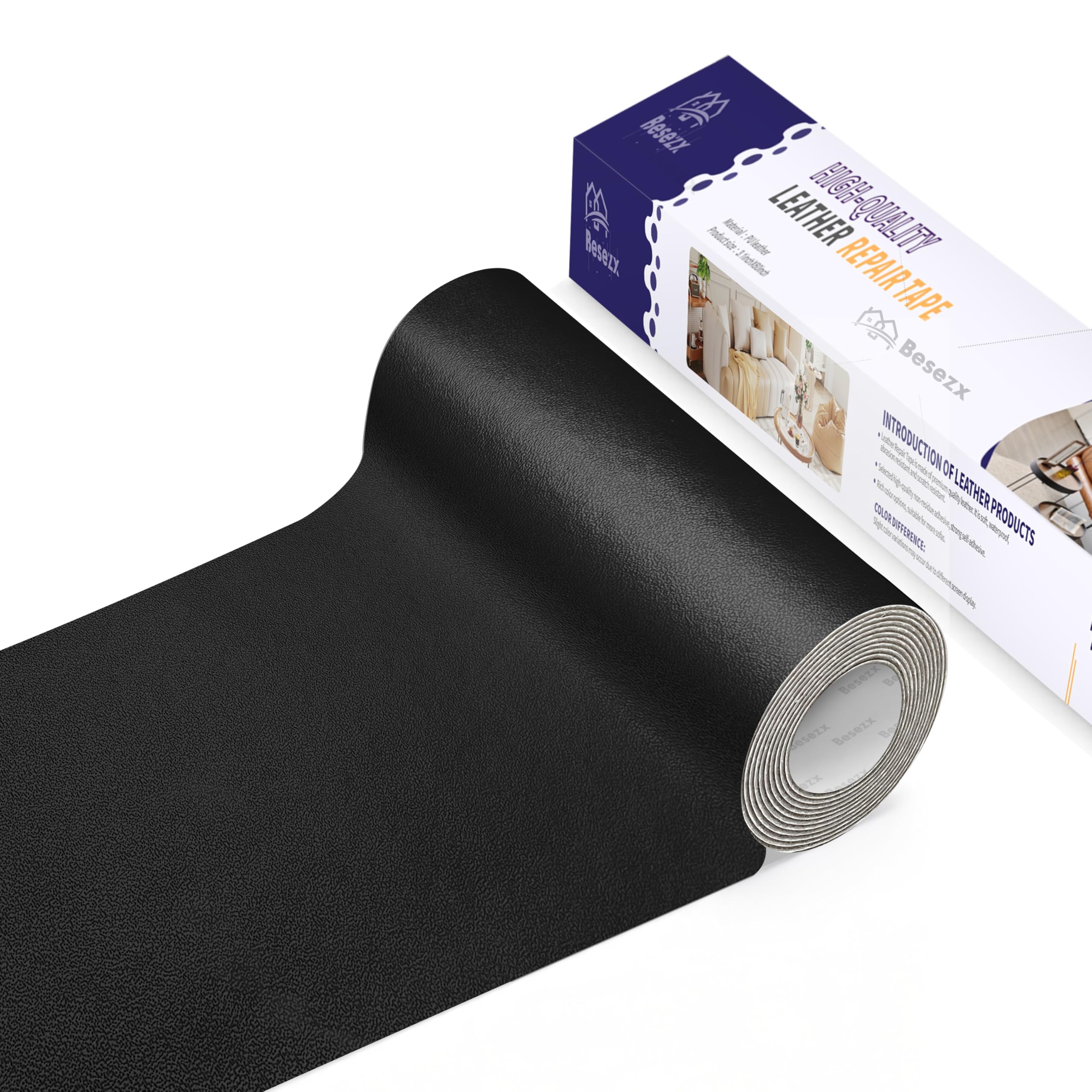
We recommend this kit for quick, low-cost fixes when you want an easy vinyl or faux-leather patch that looks decent from a short distance.
Pros
- Sticks strong with no ironing or glue mess.
- Cuts to size and hides rips and scratches well.
- Comes in many colors to match different seats.
Cons
- Texture can look slightly different from real leather.
- Edges may show up on close inspection.
- Not ideal for large or structural seat damage.
We used the tape on a cracked car seat corner and liked how fast it covered the damage. Application felt simple — clean, cut, press — and there was no heat or sewing needed.
The adhesive held through a week of daily use and resisted spills. Color match was close, but under bright light the patch surface read a bit shinier than the original seat.
For small tears and scuffs this saved us time and money. Avoid it for big tears or places that flex a lot, since the patch itself doesn’t restore padding or stitching.
ONine Leather Repair Tape
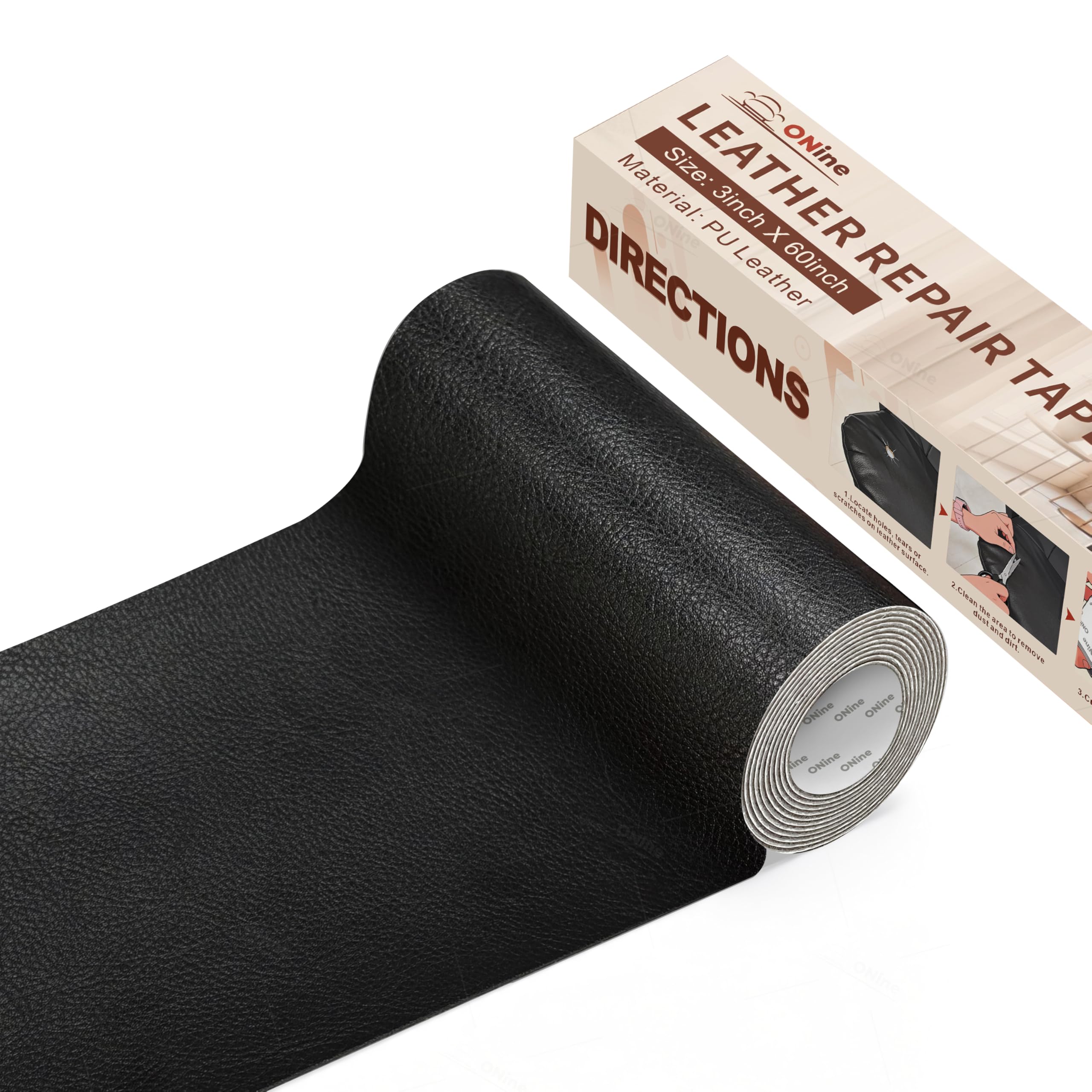
We recommend this when you want a quick, tool-free fix for small tears or scuffs on car seats and upholstery.
Pros
- Sticks firmly without heat or glue.
- Waterproof and wear-resistant for daily use.
- Easy to cut and apply for quick repairs.
Cons
- Texture and color can look slightly different from real leather.
- Patch edges can show on close inspection.
- Limited for large or deep damage.
We used this tape on a cracked driver seat seam and it bonded quickly. The self-adhesive roll let us trim a close-fitting piece and press it down in minutes. It felt durable when we rubbed it and survived a rainstorm without peeling.
Applying went smoothly with no tools. We cleaned the area first, cut the patch to shape, and smoothed it flat. The finish matched well from a few feet, though under bright light the repair stood out a bit.
For small rips, pet scratches, or burn marks this saved us a reupholstery bill. Avoid it for big holes or high-stress seams — those need stronger repair or professional work.
Vigorder Black Leather Repair Kit
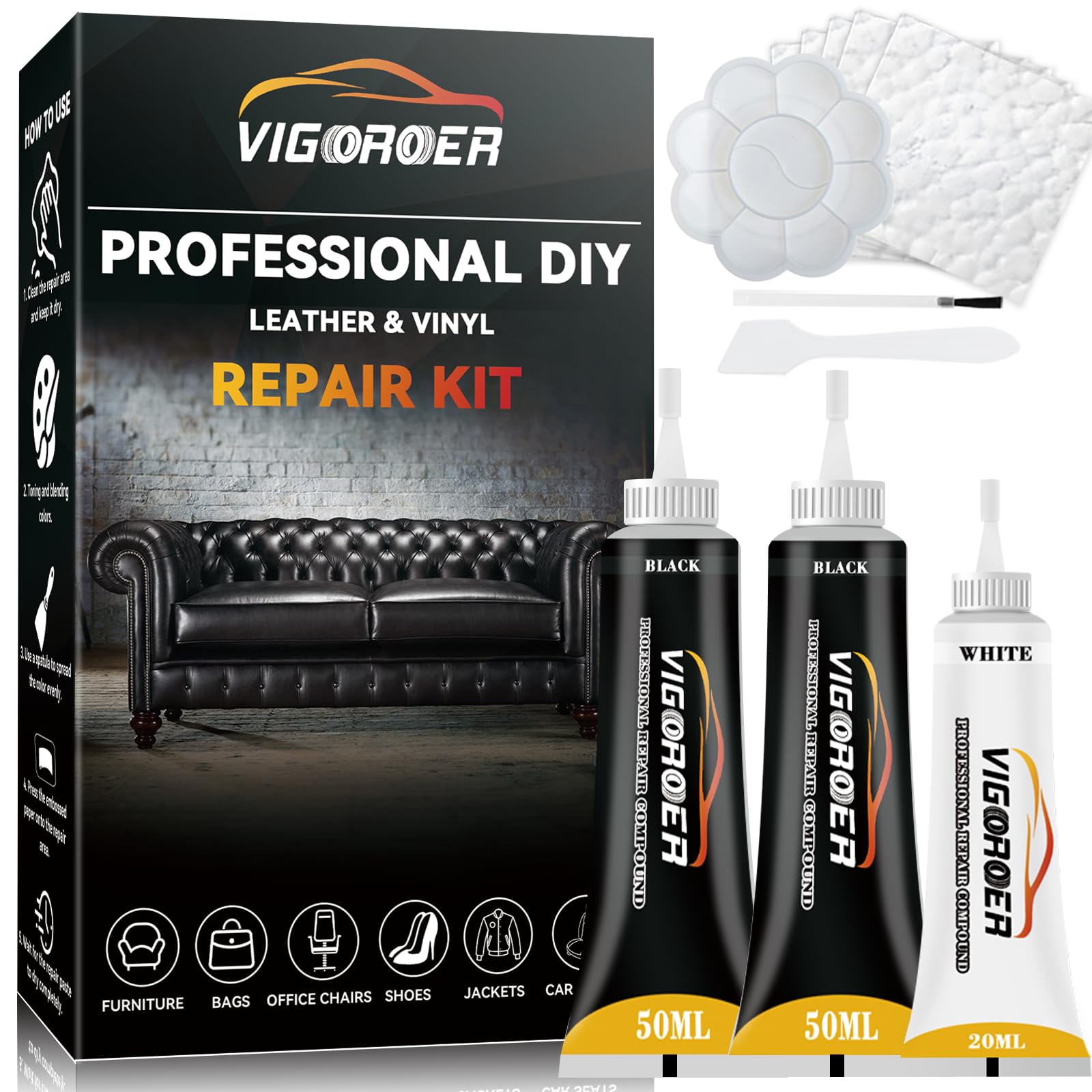
We recommend this kit if you need a quick, budget-friendly fix for black leather scratches and small cuts on car seats and furniture.
Pros
- Easy to use even for first timers
- Good color match for black leather
- Fast drying and feels durable after curing
Cons
- Not water resistant after repair
- Best for small to medium damage only
- Requires careful blending for seamless finish
We used the Vigorder kit on a worn black seat corner and found the instructions clear and tools handy. The repair liquid spread smoothly and dried fast, so we could see progress within an hour.
Color matching worked well for my car’s black tone, though minor blending took patience. The repaired spot looked natural under normal light, but felt slightly stiffer than the surrounding leather.
Application went faster than expected, but we noticed the fix isn’t ideal for large rips or heavy wear. For small tears, scuffs, and pet scratches it saves time and money compared with replacing upholstery.
Vigorder Cream Leather Repair Kit
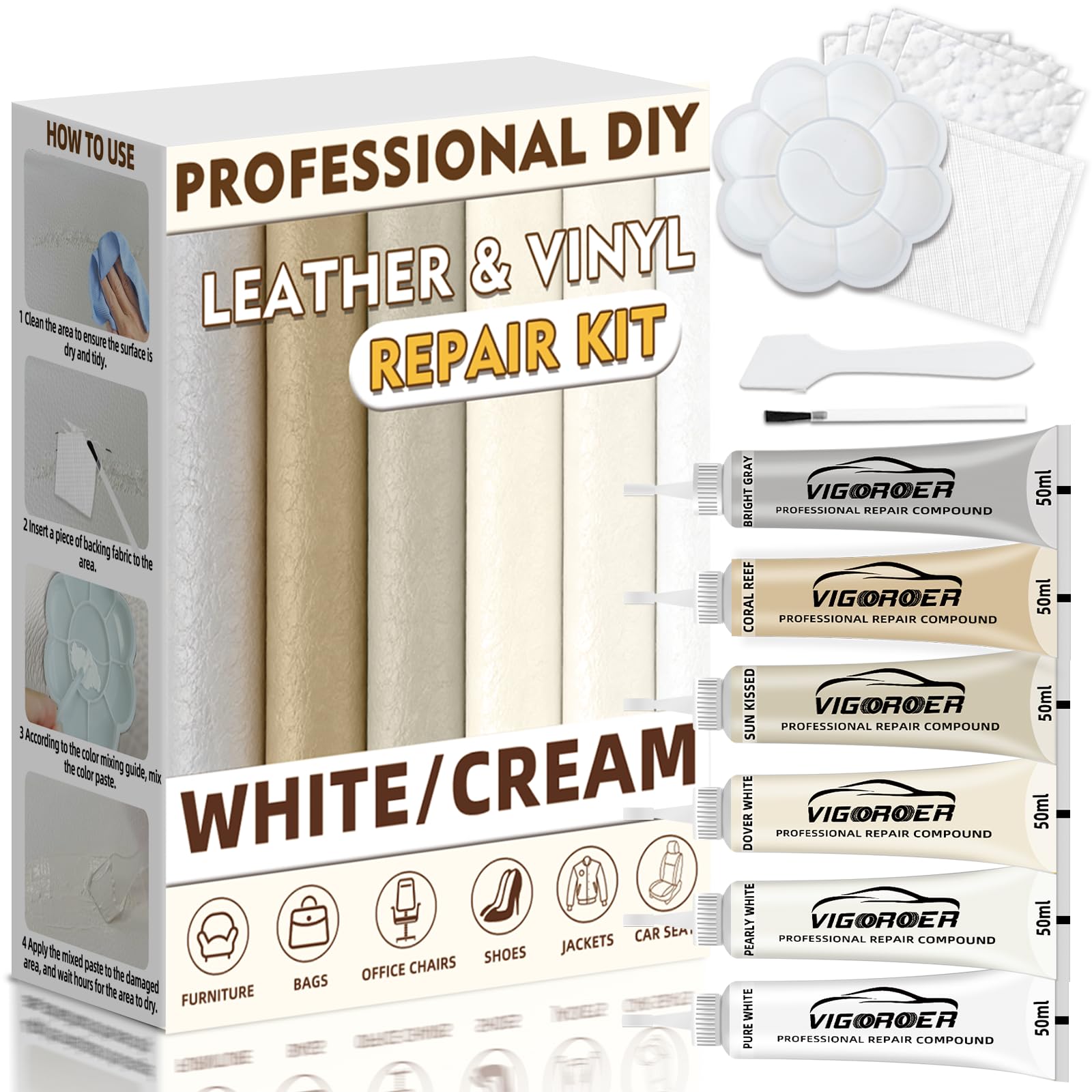
We recommend this kit if you want an easy, durable fix for light to moderate leather damage that blends well with beige and cream tones.
Pros
- Easy to follow and quick to use.
- Flexible, waterproof finish that holds up to daily wear.
- Comes with multiple color tubes for better matching.
Cons
- Color range favors light, natural shades.
- Small tubes mean multiple repairs may need more product.
- Best for surface damage, not large structural tears.
We tested this on two car seats with pet scratches and a small tear. Mixing the colors to match the cream leather took a little trial, but the included guide helped us get very close.
Application felt straightforward. The liquid compounds flowed smoothly, filled scratches well, and dried faster than we expected. Sanding and blending afterward gave a near-seamless look.
After curing, the repaired spots stayed flexible and resisted water during a quick wipe test. It won’t replace full upholstery work on major damage, but it saved us time and money on small repairs.
AAROVIBE Black Leather Repair Kit
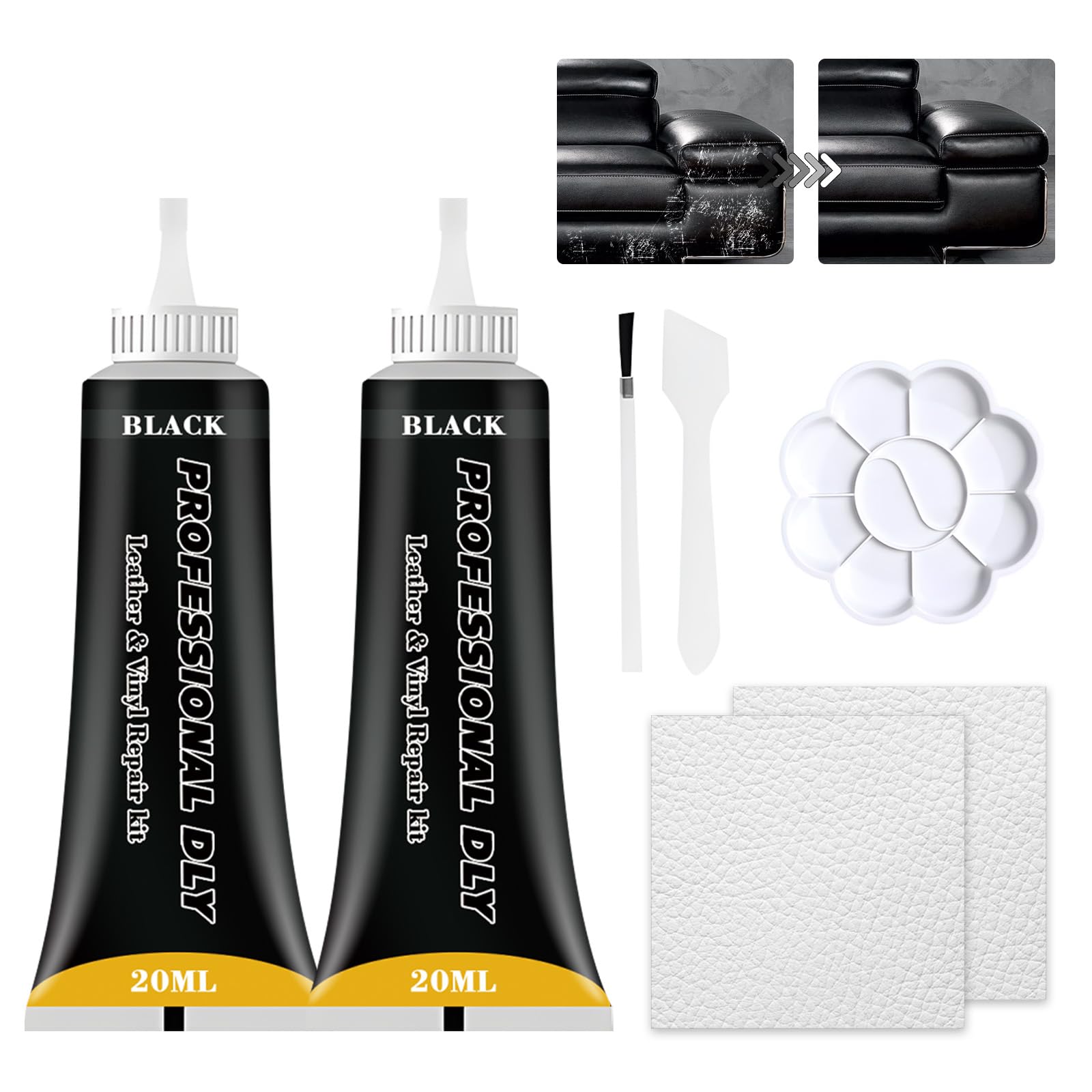
We recommend this kit if you want a simple, no-heat fix for small rips and scratches on black leather or vinyl.
Pros
- Easy to use for quick touch-ups.
- Good color match on black surfaces.
- Includes tools needed for small repairs.
Cons
- Best for small damage, not large tears.
- Texture blending takes practice.
- Two small filler tubes may run out on bigger jobs.
We used this kit on a worn car seat armrest and steering wheel trim. The instructions were clear and the kit had everything in the box. Mixing and applying the filler felt straightforward.
The black color matched well after drying, and the finish stayed flexible when we moved the seat. Repairs became less visible at normal viewing distance, but close inspection still shows slight texture differences.
Patience helped—thin layers and light sanding worked better than one thick coat. For big holes or deep burns, this kit felt undersized, but it performed well for everyday scuffs and pet scratches.
Bellemora Leather Repair Kit
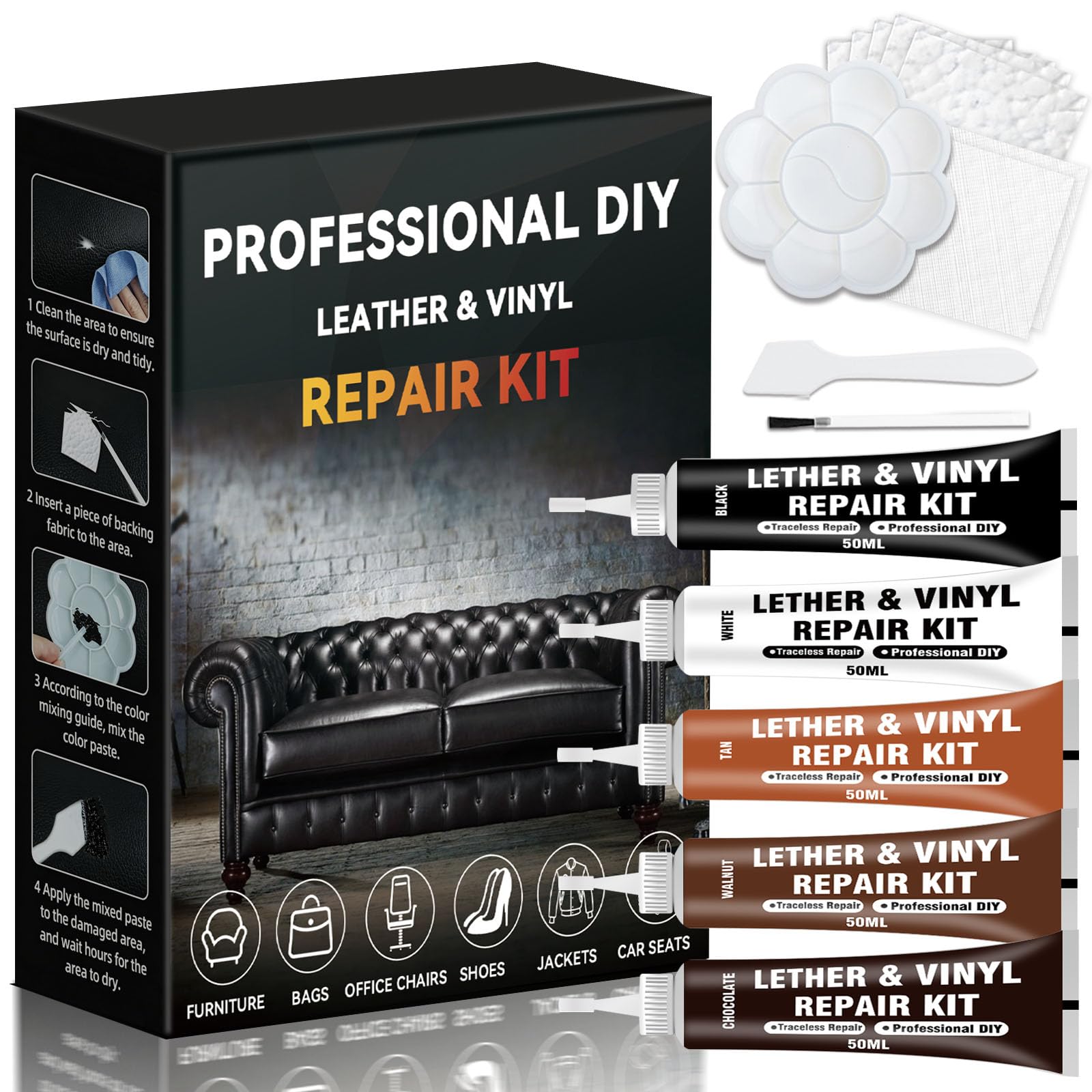
We would buy this kit for quick, neat leather fixes because it blends well and feels durable after curing.
Pros
- Easy to follow steps, even for first-timers.
- Good color matching that blends into car seats.
- Works on many materials—real leather and vinyl alike.
Cons
- Small mixing area can be fiddly for large repairs.
- Texture pad needs practice to match embossed grain.
- Takes time to fully cure for flexible areas.
We used the kit on a worn driver seat corner and found the instructions simple. The backing fabric and paste set up cleanly, and the included spatula made filling holes straightforward.
Color mixing matched our tan seat closely after a couple of trial blends. The paste sank in and stayed flexible; after drying it did not flake when we sat down.
Applying the texture layer takes patience. We had to practice on scrap material to get the grain right, but the embossed paper helped once we got the hang of it.
Overall, the kit feels like a solid home fix option for small to medium damage and lived up to its promise of a near-invisible repair on our car seat.
Buying Guide
We look for kits that match the leather type in our car. Check the label for compatibility with automotive leather, vinyl, or synthetic blends. Using the wrong kit can leave a poor repair.
We focus on ease of use. Kits with clear instructions, color samples, and simple tools help us get a neat result fast. Patch size and shape options matter for larger tears.
We value color matching options. Adjustable dyes or many color swatches let us blend repairs into the seat. A small test area helps us avoid visible color errors.
We inspect included tools and materials. Essential items are filler, adhesive, grain paper, applicators, and finish sealer. High-quality filler and a durable topcoat extend repair life.
We check curing time and durability claims. Faster drying is convenient, but it must not sacrifice strength. Look for products that state resistance to wear, UV light, and regular cleaning.
We consider safety and cleanup. Low-odor, low-VOC formulas are better for indoor use. Also note whether solvents or special cleaners are needed.
We compare value, not just price. A complete kit that produces a lasting, blended repair can save money over time. Read real user feedback and look for clear instructions when making our choice.
Editor’s Choice
We picked a kit that balances ease of use, repair quality, and value. It fixes small tears, scuffs, and color wear well without needing professional tools.
The kit includes color-matching compounds, adhesive, filler, and clear finish. We found the color guides accurate and the compounds blend smoothly into most leather surfaces.
We liked the simple instructions and the included applicators. A few practice patches help build confidence before working on a seat.
Pros:
- Good color match for common leather shades.
- All-in-one kit with filler, adhesive, and finish.
- Simple tools that let nonprofessionals get solid results.
Cons:
- Some very deep tears may need a backing patch or pro help.
- Not every rare leather color will match perfectly.
We recommend this kit for routine car-seat repairs and small damage. It saves money versus reupholstery and makes seats look much better when used carefully.
Conclusion
We chose kits that balance ease of use, lasting results, and safety for car interiors. Our picks fit common needs: small tears, color restoration, and routine maintenance.
We recommend matching the kit to the leather type and damage size. Test color on a hidden spot first to avoid mismatches.
We prefer kits with clear instructions, refillable dye, and flexible filler. These features save money and make future touch-ups easier.
If a seat has deep cuts, failed stitching, or structural damage, we advise professional repair. DIY kits work best for surface scratches, faded color, and minor splits.
We kept price, materials, and user feedback in mind. Choose a kit that matches your skill level and the job’s complexity to get good results with minimal effort.
FAQS
What does a leather repair kit fix?
We can fix small tears, scratches, scuffs, and color wear on car seats. Bigger rips or missing foam may need professional help.
How long does a repair last?
A proper repair can last years with normal use. Lifespan depends on how well we prepare the surface and match the color.
Is it hard to use a kit?
Most kits are simple. We follow the instructions: clean, sand lightly, apply filler, then color and seal.
Do kits work on all leather types?
Kits work best on finished leather and vinyl. Suede, nubuck, and unprocessed leather need special products.
What tools come in a typical kit?
- Cleaner and prep solution
- Filler and spreader
- Color compounds and mixer
- Sealant and applicators
How do we match seat color?
We mix small amounts of color until it matches. Some kits include color guides or samples to speed this up.
Can we repair a tear without sewing?
Small tears can be repaired with adhesive and backing fabric included in many kits. Long or structural tears usually need stitching.
Any safety tips?
We use gloves and work in a ventilated area. We avoid heat sources while the repair cures.
