
At What Speed Do Toyota Hybrids Switch from Electric to Gas

There is no single, universal speed at which all Toyota hybrids switch from electric to gasoline power. The transition is a complex, real-time decision made by the vehicle’s computer based on a combination of factors including acceleration demand, battery charge, and driving conditions, not just a speedometer reading. Understanding this helps you drive more efficiently and get the most from your hybrid’s fuel-saving technology.
One of the most common questions new Toyota hybrid owners ask is, “At what speed does it switch to gas?” It’s a fantastic question because it gets to the heart of what makes these cars so special. You’re sitting in traffic, watching the dash indicator show you’re running on pure electric power, and you wonder, “How long can this last? When will the engine kick in?” The answer might surprise you: there is no magic number on your speedometer. The switch from electric to gasoline power isn’t governed by a simple speed threshold. Instead, it’s a sophisticated, continuous calculation performed by your hybrid’s computer thousands of times per second. Let’s dive deep into the real science behind that seamless transition.
Key Takeaways
- No Fixed Speed: Toyota hybrids do not have a predetermined speed (like 45 mph) to switch from electric to gas. The switch is dynamic and situational.
- Demand is Key: The primary trigger is driver demand for power (pressing the accelerator pedal), not the vehicle’s speed. Gentle acceleration can keep you in EV mode at highway speeds.
- Battery State is Crucial: A depleted or very cold battery will force the gasoline engine to start immediately to recharge and provide heat.
- Models Vary: Different Toyota hybrid systems (e.g., Prius vs. RAV4 Hybrid) have different electric motor power and battery sizes, leading to different behavioral characteristics.
- You Can Influence It: Smooth, predictable driving, using ECO mode, and maintaining proper tire pressure maximizes electric-only driving range and delays the switch to gas.
- It’s About Efficiency, Not Just Speed: The system’s goal is optimal fuel economy. Sometimes it will use the gas engine at low speeds if it’s more efficient, or run on electricity at high speeds during light-load cruising.
📑 Table of Contents
Understanding the Toyota Hybrid Synergy Drive System
Before we talk about *when* the switch happens, we need to understand *how* it happens. Toyota calls its system Hybrid Synergy Drive. It’s a clever, series-parallel hybrid design. This means it can power the wheels in several ways: solely by the electric motor (EV mode), solely by the gasoline engine, or by a combination of both working together. The star of the show is the Power Split Device, a planetary gear set that acts like a continuously variable transmission (CVT) but also allows the engine and motor-generators to spin independently.
The Cast of Characters: Engine, Motors, and Battery
Your Toyota hybrid has a few key components working in harmony:
- Gasoline Engine: A highly efficient Atkinson-cycle engine. It’s optimized for efficiency, not raw power, and runs at its most efficient RPM range when engaged.
- Motor Generator 1 (MG1): Primarily acts as a starter for the gas engine and regulates the engine’s speed. It can also generate electricity.
- Motor Generator 2 (MG2): This is the main drive motor. It provides the torque for acceleration and can also act as a generator during braking (regenerative braking) to recharge the battery.
- High-Voltage Battery Pack: A sealed nickel-metal hydride (NiMH) or, in newer models, lithium-ion (Li-ion) battery. It stores the electricity for the motors. Its state of charge (SOC) is a critical factor in all decisions.
The vehicle’s Hybrid Vehicle Control Unit (HVCPU) is the brain. It constantly monitors driver input (pedal position), vehicle speed, battery SOC, engine temperature, and outside air temperature. It then decides the most efficient way to propel the car at that exact moment.
The Real Triggers: Why the Engine Actually Starts
So, if not speed, what does tell the computer to fire up the gasoline engine? Think of it as a series of priorities. The system will try to run on electricity alone as much as possible, but it will seamlessly start the gas engine when one or more of these conditions are met:
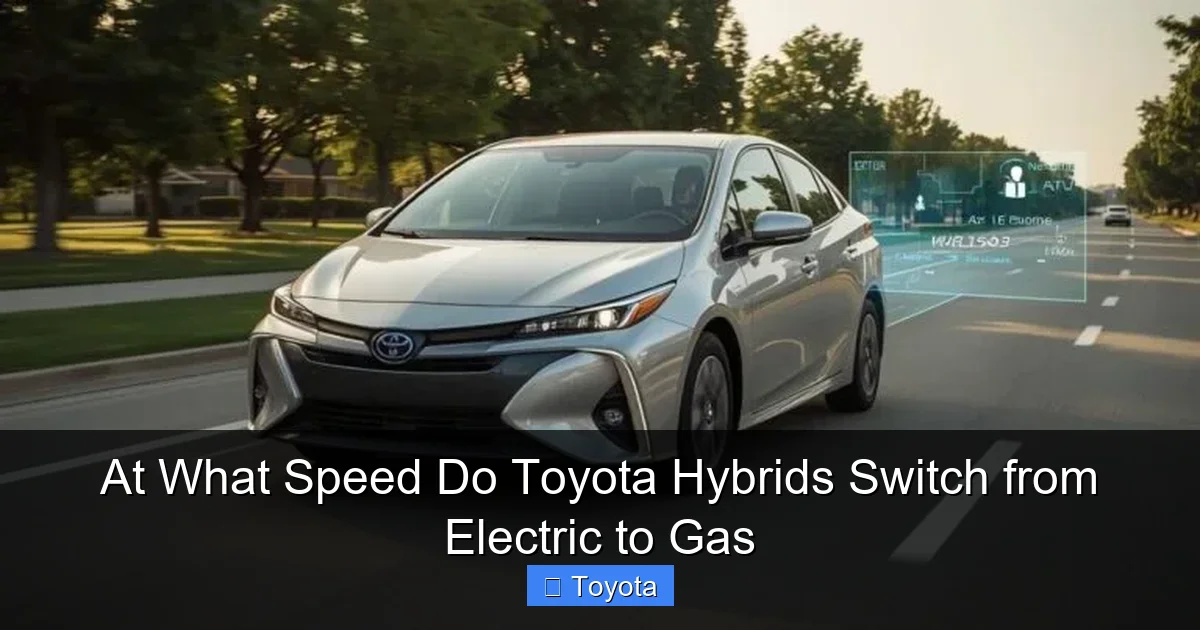
Visual guide about At What Speed Do Toyota Hybrids Switch from Electric to Gas
Image source: vinnolookup.com
1. Driver Demand for Power (The Biggest Factor)
This is the most common and intuitive reason. When you press the accelerator pedal beyond a certain, very light threshold, the system determines that MG2 alone cannot provide the requested torque without drawing excessive current from the battery (which would be inefficient and drain it quickly). It then calls in the gasoline engine to share the load. This can happen at 20 mph or 70 mph. If you ask for gentle, steady acceleration on a flat road, you might stay in EV mode to 45 mph or higher. But if you need to pass someone on the highway and slam the pedal, the engine will roar to life instantly, even at 65 mph, to give you the combined power you demanded.
2. Low Battery State of Charge
The high-voltage battery has a narrow optimal charge window, typically between 40% and 80%. If the SOC drops too low (from prolonged EV driving or using electrical accessories), the computer will start the gas engine not to drive the wheels directly, but to act as a generator (using MG1) to recharge the battery. You’ll feel the engine run, but it might not be directly powering the car; it’s playing the role of a power plant.
3. Extreme Temperatures
In very cold weather, the battery’s performance drops. The system will often start the gas engine immediately to provide cabin heat (the engine’s coolant is the heat source) and to keep the battery in its optimal temperature range. Similarly, in extreme heat, the engine may run to power the air conditioning compressor more efficiently than the electric motor could. You might notice your hybrid runs on gas more in winter mornings—this is normal and necessary.
4. High-speed Cruising
At very steady, high-speed cruising (like on a long, flat highway), the Atkinson-cycle gasoline engine is often at its peak efficiency. The computer may decide it’s more efficient to disconnect the electric motors and let the engine drive the wheels directly, using its most efficient RPM band. Conversely, on a downhill grade, it might shut off the engine entirely and use regenerative braking to recharge the battery, even at 70 mph.
5. Cold Engine Start
When you first start a cold hybrid, the gasoline engine will run for a minute or two to warm up to operating temperature, regardless of speed. It’s not moving the wheels much initially; it’s just warming up the catalytic converter and engine oil. Once warm, it can be turned off and on as needed.
Model-Specific Behaviors and Electric-Only Ranges
While the core logic is the same, different Toyota hybrids exhibit different personalities based on their motor power and battery size.
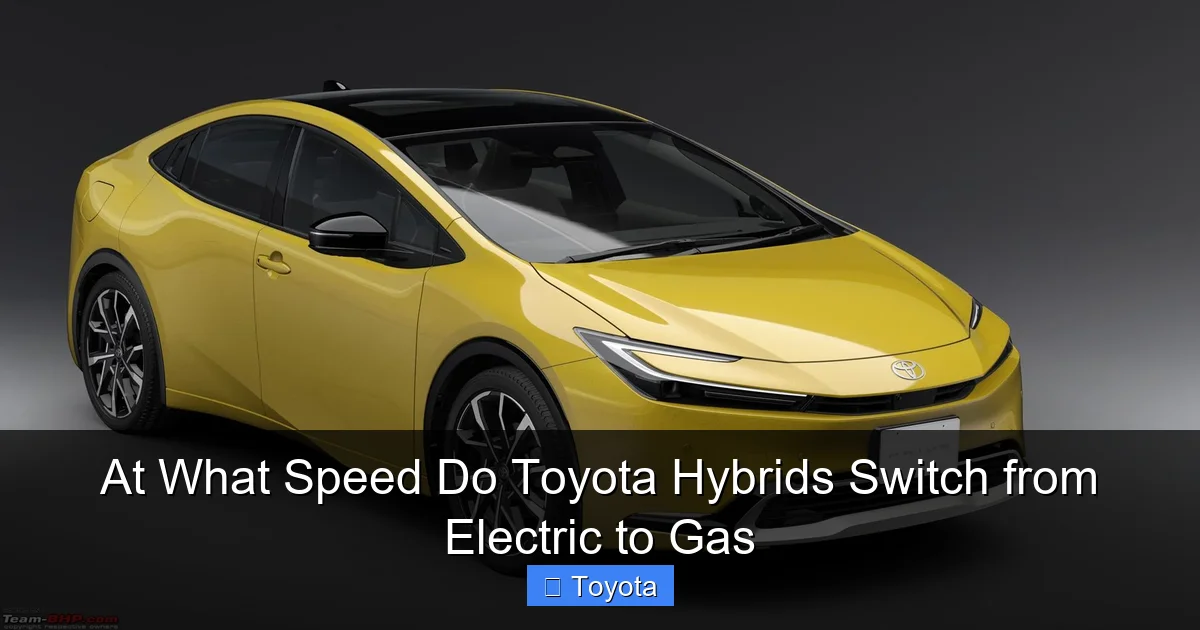
Visual guide about At What Speed Do Toyota Hybrids Switch from Electric to Gas
Image source: team-bhp.com
The Prius: The EV Mode Specialist
The iconic Prius has a relatively small battery, so its pure electric driving is typically limited to low speeds (up to about 25-30 mph) and very light acceleration. You’ll see the “EV” indicator light up in stop-and-go traffic. The system aggressively tries to keep the engine off here. For the plug-in hybrid Prius Prime, the all-electric range is much higher (up to 44 miles) because of its larger battery, and it can maintain higher speeds in EV mode for longer stretches.
The RAV4 Hybrid: Power and Efficiency Balance
The RAV4 Hybrid uses a more powerful electric motor system to complement its 2.5L engine. You’ll often find it can creep in EV mode at low speeds in parking lots. On the highway, due to its larger battery and more powerful motors, it can occasionally stay in a blended electric-gas mode at steady speeds before the engine takes full load for passing. When you’re researching the RAV4 Hybrid, you’ll often come across questions about its fuel requirements. Like most modern Toyotas, it’s designed to run optimally on regular unleaded gasoline with an 87 octane rating. Using the correct fuel is part of ensuring the hybrid system operates as intended.
The Camry Hybrid: Smooth and Silent
The Camry Hybrid, with its refined 2.5L engine and electric drive, is exceptionally smooth. It can often drive on electricity alone at moderate highway speeds (50-60 mph) on flat terrain if you’re gentle with the throttle. The transition is almost imperceptible, a testament to the system’s tuning for a luxury sedan feel.
Older vs. Newer Models
Battery technology and control software have improved dramatically. A 2023 RAV4 Hybrid will hold an electric-only charge better and manage the engine start/stop more smoothly than a 2015 model. If you own an older hybrid, you might notice the engine starts more frequently, which could be due to natural battery capacity degradation. Understanding common issues with specific model years can help set realistic expectations for your vehicle’s hybrid system behavior.
Maximizing Your Electric-Only Driving: Practical Tips
Since the switch is demand-based, your driving style is the most powerful tool you have to keep the engine off. Here’s how to drive like a hybrid efficiency pro:
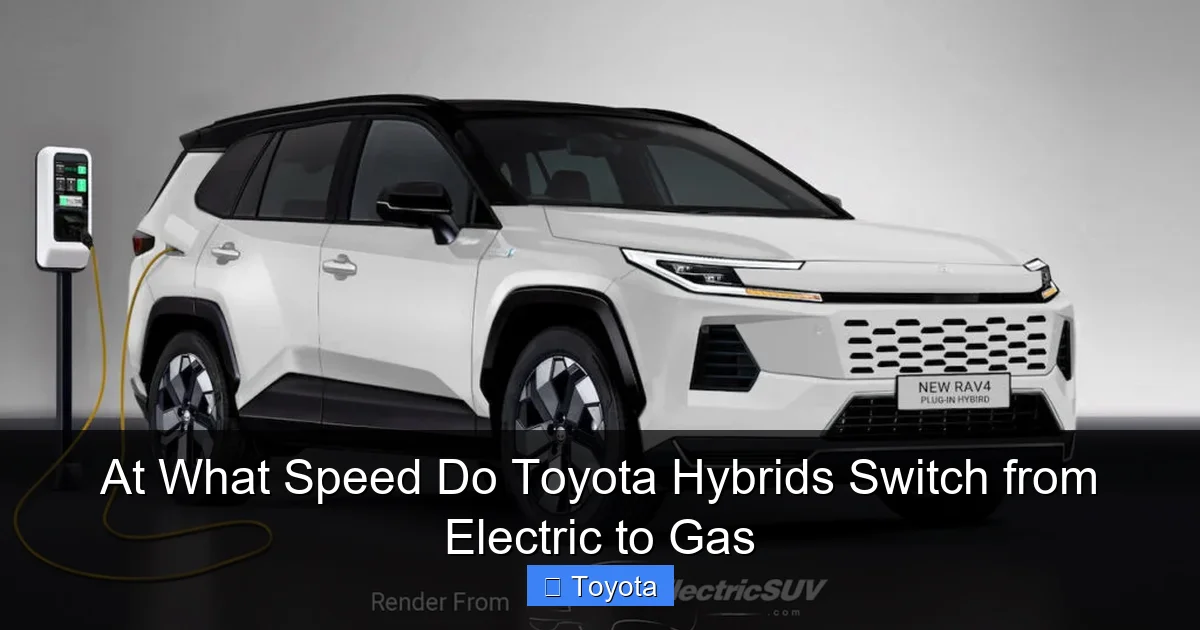
Visual guide about At What Speed Do Toyota Hybrids Switch from Electric to Gas
Image source: topelectricsuv.com
The Art of the “Glide”
This is the holy grail of hybrid driving. When approaching a stop sign or red light, lift off the accelerator early and let the car slow down using regenerative braking (you’ll see the battery charge indicator go up). This recharges the battery and allows you to come to a complete stop without ever needing the friction brakes or the gas engine. Then, when the light turns green, accelerate gently and smoothly. This technique can keep you in EV mode for the entire sequence, even at speeds up to 40 mph.
Use the ECO Mode Button
Pressing the ECO mode button (usually on the center console or steering wheel) remaps the throttle response. It makes the accelerator pedal less sensitive, so you have to press it further to get the same acceleration. This naturally encourages the gentle driving style that keeps the engine off. The climate control system may also adjust to be more efficient.
Plan Your Merges and Passes
Know that hard acceleration will always bring the engine in. If you need to pass on a two-lane road, plan for it. Press the pedal firmly, let the engine provide its extra power, and then return to gentle throttle once you’ve completed the maneuver. The engine will shut off again as soon as the demand drops and the battery has enough charge.
Maintenance Matters
A well-maintained hybrid performs better. Keep your tires properly inflated—under-inflated tires create more rolling resistance, forcing the system to work harder and start the engine sooner. Regular oil changes with the correct oil for your specific Toyota model ensure the gasoline engine is primed to start and stop efficiently when called upon. Also, a healthy 12-volt battery is essential; a weak 12V battery can cause the hybrid system to behave erratically, including running the gas engine more often to keep itself charged.
The Future: Even Smarter Switching
As technology advances, the line between electric and gas driving blurs further. Newer Toyota hybrids feature more powerful electric motors and larger batteries. The next generation of systems, potentially paired with more powerful lithium-ion batteries, will allow for even longer and faster EV-mode driving. The ultimate goal is a system so predictive that it knows your route, traffic conditions, and battery state to optimize engine usage before you even touch the pedal. Plug-in hybrids (PHEVs) like the RAV4 Prime are the current bridge, offering significant all-electric range for daily commutes, only using gas for longer trips. The philosophy remains the same: use electricity where it’s most efficient and gasoline where it’s needed, seamlessly and without driver intervention.
Conclusion: It’s All About the Blend
So, to answer the original question directly: There is no specific speed. Your Toyota hybrid is not thinking, “I am now 47 mph, time to start the engine.” It is thinking, “The driver is asking for 20% more power than the electric motor can efficiently provide, and the battery is at 60% charge. I will start the gasoline engine and blend its power with the electric motor’s to meet the demand smoothly.” This intelligent, demand-based approach is why Toyota hybrids consistently achieve such impressive real-world fuel economy. The magic isn’t in a number on the speedometer; it’s in the car’s ability to be a master of blend, constantly choosing the perfect power source for every micro-moment of your drive. Your job is to drive smoothly, maintain your vehicle, and enjoy the incredibly refined and efficient experience that only a Toyota hybrid can deliver.
Frequently Asked Questions
Is there a specific speedometer reading where my Toyota hybrid will always switch to gas?
No. There is no universal speed like 45 or 55 mph. The switch is based on driver demand (how far you press the accelerator), battery charge, and other conditions. You can stay in electric mode at 50 mph with very gentle acceleration, or the engine can kick in at 25 mph if you need quick power.
Why does my hybrid’s engine run when I’m stopped at a red light?
The engine may start for several reasons while stopped: to recharge a low battery, to provide cabin heat or air conditioning (especially in extreme temperatures), or because the engine is cold and needs to warm up. It will automatically shut off again when you begin to move gently and conditions allow.
Can I force my hybrid to stay in electric-only mode?
You can encourage it by driving very gently, using ECO mode, and ensuring your battery has a good charge. However, you cannot override the computer’s safety and efficiency logic. If the battery is low, it’s very cold, or you demand hard acceleration, the engine will start regardless.
Do all Toyota hybrid models behave the same way?
The core logic is identical, but the experience differs. Models with more powerful electric motors (like the RAV4 Hybrid) can stay in EV mode at higher speeds and under more load than models with smaller motors (like the base Prius). Battery size also plays a major role in how long and how fast EV mode can be maintained.
Does using the air conditioning make the gas engine turn on more often?
Yes, especially in older hybrid models. The air conditioning compressor is typically powered by the gasoline engine. In very hot weather, the system may run the engine more frequently to power the A/C, even if you’re at a stop. Newer systems are better at managing this with electric compressors.
Is it bad for the hybrid system if the engine starts and stops frequently?
p>No, it is designed for this. The engine start is smooth and quiet, executed by an electric motor (MG1). Frequent starting and stopping is a normal part of its efficient operation and is not harmful when the vehicle is properly maintained.