Are Toyota Oil Filters Good

Contents
- 1 Key Takeaways
- 2 📑 Table of Contents
- 3 Why the Oil Filter Matters More Than You Think
- 4 Toyota Oil Filters: Built to OEM Standards
- 5 Advanced Features That Set Toyota Filters Apart
- 6 Toyota vs. Aftermarket: A Head-to-Head Comparison
- 7 Real-World Performance and Owner Experiences
- 8 How to Identify a Genuine Toyota Oil Filter
- 9 Tips for Getting the Most Out of Your Toyota Oil Filter
- 10 Conclusion: Are Toyota Oil Filters Worth It?
- 11 Frequently Asked Questions

Radiator Coolant

Torque Wrench Set

Car Dent Repair Kit

Windshield Cleaning Tool
Are Toyota oil filters good? The short answer is yes—Toyota oil filters are engineered to meet strict OEM standards, offering excellent filtration, durability, and compatibility with Toyota engines. While aftermarket options exist, genuine Toyota filters provide peace of mind and long-term engine protection, especially for high-mileage or performance-driven vehicles.
When it comes to maintaining your Toyota, few decisions are as important as choosing the right oil filter. You might think, “It’s just a filter—how much difference can it really make?” But the truth is, the oil filter plays a vital role in keeping your engine running smoothly, efficiently, and for as long as possible. And if you’re driving a Toyota—whether it’s a trusty Camry, a rugged Tacoma, or a fuel-efficient Prius—you’ll want to make sure you’re using a filter that’s up to the task.
So, are Toyota oil filters good? In a word: absolutely. Toyota designs its oil filters with the same precision and attention to detail that goes into building its vehicles. These aren’t generic parts slapped together in a factory overseas. They’re engineered specifically for Toyota engines, tested under real-world conditions, and built to meet or exceed OEM (Original Equipment Manufacturer) standards. That means you’re getting a product that’s been fine-tuned to work seamlessly with your car’s oil system, from the first mile to the 200,000-mile mark.
But don’t just take our word for it. Let’s dive into the details—what makes Toyota oil filters stand out, how they compare to aftermarket alternatives, and why choosing the right one could save you money, stress, and engine trouble down the road.
Key Takeaways
- OEM Quality Assurance: Toyota oil filters are built to exact factory specifications, ensuring optimal fit and performance in every Toyota model.
- Advanced Filtration Technology: They use high-grade media to trap contaminants as small as 20 microns, protecting critical engine components.
- Reliable Build Quality: Constructed with durable materials and anti-drain back valves to prevent dry starts and oil leaks.
- Engine Longevity Support: Regular use helps maintain clean oil, reducing wear and extending engine life.
- Warranty and Compatibility: Using genuine filters preserves your vehicle’s warranty and ensures compatibility with Toyota’s oil change intervals.
- Cost vs. Value: Though slightly pricier than some aftermarket brands, the long-term value and reliability justify the investment.
- Easy Identification: Genuine Toyota filters have clear part numbers and branding, making verification simple at purchase or installation.
📑 Table of Contents
- Why the Oil Filter Matters More Than You Think
- Toyota Oil Filters: Built to OEM Standards
- Advanced Features That Set Toyota Filters Apart
- Toyota vs. Aftermarket: A Head-to-Head Comparison
- Real-World Performance and Owner Experiences
- How to Identify a Genuine Toyota Oil Filter
- Tips for Getting the Most Out of Your Toyota Oil Filter
- Conclusion: Are Toyota Oil Filters Worth It?
Why the Oil Filter Matters More Than You Think
You might not think about your oil filter often—after all, it’s hidden under the engine, doing its job quietly. But this small, cylindrical component is one of the unsung heroes of your vehicle’s health. Its job is simple in theory: remove contaminants from the engine oil as it circulates. But in practice, it’s a high-stakes balancing act.
Engine oil picks up dirt, metal shavings, carbon deposits, and other debris as it flows through the engine. Without a good filter, these particles can circulate freely, causing abrasion, clogging oil passages, and accelerating wear on critical components like bearings, camshafts, and pistons. Over time, this can lead to reduced performance, increased fuel consumption, and even catastrophic engine failure.
A quality oil filter does more than just trap dirt. It maintains proper oil flow, resists pressure spikes, and prevents oil from draining back into the pan when the engine is off—ensuring your engine gets lubrication the moment you turn the key. That’s why choosing the right filter isn’t just a maintenance detail—it’s a protection strategy.
The Science Behind Filtration
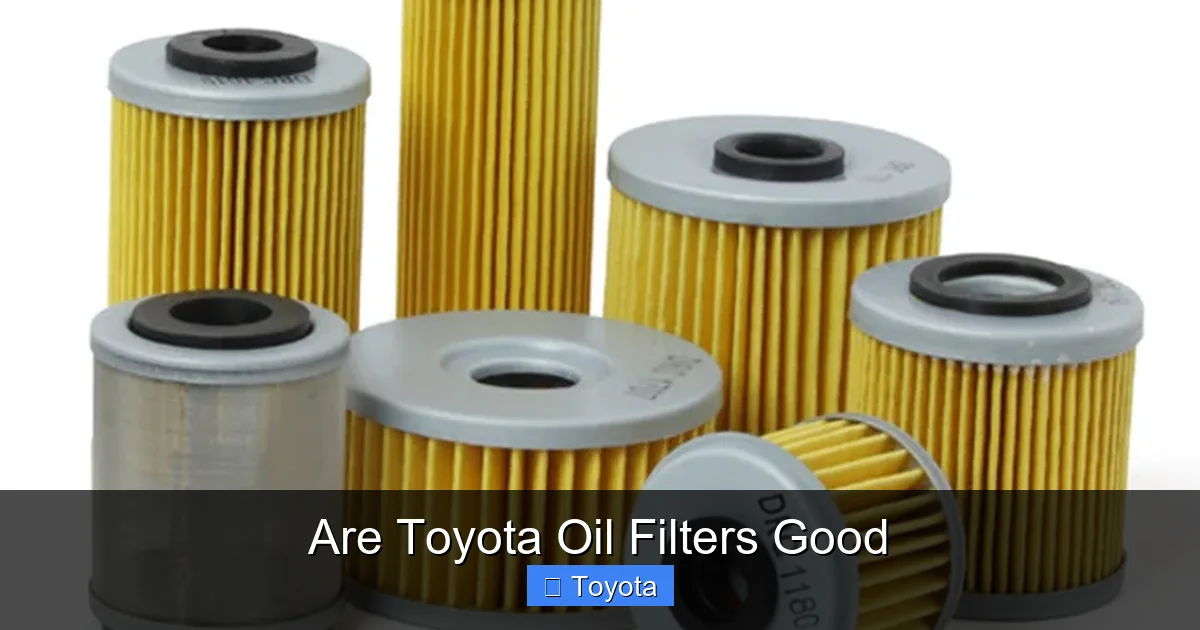
Modern oil filters use a multi-layered filtration media, often made from synthetic fibers or cellulose blends, designed to capture particles of varying sizes. Toyota oil filters typically feature a high-efficiency media that can trap particles as small as 20 microns—about one-third the width of a human hair. That might not sound impressive, but consider this: engine wear often begins with microscopic metal fragments from normal operation. Catching these early can make a huge difference in long-term durability.
Additionally, Toyota filters are designed with a high dirt-holding capacity. This means they can absorb a significant amount of contaminants before becoming clogged, allowing them to perform effectively over the full oil change interval—usually 5,000 to 10,000 miles, depending on driving conditions and oil type.
Real-World Impact on Engine Health
Let’s look at a practical example. Imagine two identical Toyota Corollas—same model year, same mileage, same driving habits. One uses a genuine Toyota oil filter with every oil change. The other uses a cheap aftermarket filter that looks similar but has lower-quality media and a weaker housing.
After 50,000 miles, the difference becomes clear. The car with the Toyota filter shows minimal sludge buildup, clean oil galleries, and consistent oil pressure. The other? It may start showing signs of reduced performance, oil leaks, or even a check engine light due to restricted oil flow. In extreme cases, the filter could even collapse under pressure, sending unfiltered oil through the engine.
This isn’t hypothetical. Mechanics and Toyota technicians regularly report seeing the effects of poor-quality filters during engine inspections. It’s a reminder that cutting corners on something as small as an oil filter can have big consequences.
Toyota Oil Filters: Built to OEM Standards

Visual guide about Are Toyota Oil Filters Good
Image source: toyota.com.kh
One of the biggest advantages of using a Toyota oil filter is that it’s designed specifically for Toyota engines. Unlike generic aftermarket filters that claim to fit multiple brands, Toyota filters are engineered with your vehicle’s exact specifications in mind.
Precision Engineering for Perfect Fit
Every Toyota oil filter is built to match the dimensions, thread size, gasket diameter, and bypass valve pressure of the original equipment. This ensures a leak-free seal and proper oil flow from the moment it’s installed. Even a minor mismatch—like a slightly thicker gasket or incorrect thread pitch—can lead to oil leaks, reduced pressure, or even filter blow-off under high RPMs.
For example, the Toyota oil filter for a 2020 RAV4 (part number 90915-YZZF1) has a specific anti-drain back valve designed to prevent oil from draining into the pan when the engine is off. This means your engine gets instant lubrication on startup, reducing wear during those critical first seconds.
Rigorous Testing and Quality Control
Toyota doesn’t just design its filters—it tests them extensively. Each filter undergoes pressure testing, flow rate analysis, and durability trials to ensure it can handle extreme conditions, from sub-zero temperatures to desert heat. They’re also tested for compatibility with Toyota’s recommended oils, including synthetic blends and full synthetics like Toyota Genuine Motor Oil.
This level of testing isn’t common among aftermarket brands, many of which prioritize cost over performance. While some aftermarket filters meet basic standards, few match the consistency and reliability of a genuine Toyota part.
Consistency Across the Lineup
Another benefit is consistency. Whether you drive a compact Yaris or a full-size Tundra, Toyota uses a standardized approach to filter design. This means that if you’ve used a Toyota filter in one vehicle, you know what to expect in another. There’s no guesswork, no “will this fit?” anxiety—just reliable performance you can count on.
Advanced Features That Set Toyota Filters Apart

Visual guide about Are Toyota Oil Filters Good
Image source: i.ytimg.com
Toyota oil filters aren’t just about basic filtration. They come packed with features that enhance performance, safety, and longevity.
High-Efficiency Filtration Media
As mentioned earlier, Toyota filters use advanced media that captures fine particles without restricting oil flow. This is crucial because a filter that’s too restrictive can trigger the bypass valve prematurely, allowing unfiltered oil to circulate. Toyota’s design strikes the perfect balance—maximum filtration with minimal flow resistance.
Some models even use a synthetic blend media that resists breakdown over time, maintaining effectiveness throughout the oil change interval. This is especially important for drivers who follow extended oil change schedules or use synthetic oil.
Anti-Drain Back Valve
One of the most important features in any oil filter is the anti-drain back valve. This small but critical component prevents oil from draining out of the filter when the engine is off. Why does this matter? Because when you start your car, there’s a brief moment—usually 1 to 3 seconds—before oil pressure builds up and lubrication reaches critical components.
Without an anti-drain back valve, oil sits in the pan, and the filter is empty. This leads to a “dry start,” which causes increased wear on bearings, camshafts, and cylinder walls. Toyota filters are equipped with high-quality silicone or nitrile valves that seal tightly, keeping oil in the filter and ready to flow the moment the engine starts.
Relief Valve for Pressure Protection
Every Toyota oil filter includes a relief (or bypass) valve. This safety feature opens if the filter becomes clogged or if oil is too thick (such as in cold weather), allowing oil to bypass the filter media and continue circulating. While this means unfiltered oil is flowing, it’s better than no oil at all—which could cause immediate engine damage.
The relief valve is calibrated to open at a specific pressure, usually around 10–15 psi above normal operating pressure. This ensures it only activates when necessary, maintaining filtration under normal conditions.
Durable Housing and Seal Design
Toyota filters are built with a robust steel housing that resists corrosion and deformation. The sealing gasket is made from high-temperature rubber that maintains its shape and elasticity over time, preventing leaks even after multiple heat cycles.
This is especially important in modern engines, where oil filters are often mounted in tight, hard-to-reach spaces. A poorly designed gasket can twist or compress unevenly during installation, leading to leaks that are hard to detect until it’s too late.
Toyota vs. Aftermarket: A Head-to-Head Comparison
Visual guide about Are Toyota Oil Filters Good
Image source: bryansgarage.com
Now that we’ve covered what makes Toyota oil filters great, let’s compare them to aftermarket alternatives. There’s no shortage of brands claiming to offer “OEM-quality” filters at a lower price. But are they really the same?
Price vs. Performance
It’s true—Toyota oil filters are usually more expensive than many aftermarket options. A genuine Toyota filter might cost $8–$12, while a generic brand could be as low as $3–$5. But price isn’t the only factor to consider.
Cheaper filters often use lower-grade materials. The media may be thinner, the housing flimsier, and the gasket less durable. Some aftermarket filters have been found to collapse under pressure or leak after just a few thousand miles. In extreme cases, poor-quality filters have even caused engine damage due to inadequate filtration or oil starvation.
Compatibility and Fit Issues
Even if an aftermarket filter claims to fit your Toyota, there’s no guarantee it will perform as well as the original. Differences in thread pitch, gasket thickness, or bypass valve pressure can lead to leaks, reduced oil pressure, or premature bypass activation.
For example, a filter with a weaker bypass valve might open too early, allowing dirty oil to circulate. Or a gasket that’s too thick might not seat properly, causing oil to seep out over time.
Warranty and Resale Value
Using non-genuine parts can also affect your vehicle’s warranty. While the Magnuson-Moss Warranty Act protects consumers from blanket warranty denials, manufacturers can refuse coverage if they prove a non-OEM part caused the damage. If an aftermarket filter fails and leads to engine issues, Toyota could deny your claim—even if the filter wasn’t the direct cause.
Additionally, using genuine parts can boost resale value. Buyers often look for maintenance records showing OEM parts were used, especially on higher-mileage vehicles.
When Aftermarket Might Make Sense
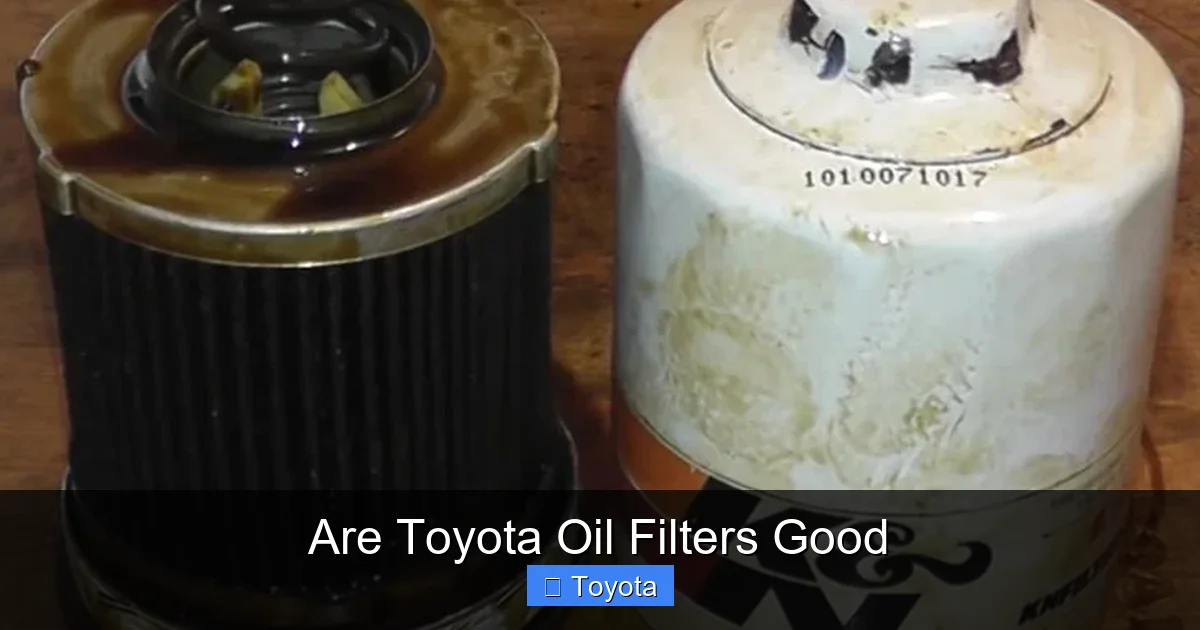
That said, not all aftermarket filters are bad. Some premium brands—like WIX, K&N, or Mobil 1—offer high-quality filters that meet or exceed OEM standards. These can be a good option if you’re on a tight budget or prefer a specific feature (like a reusable design or higher flow rate).
But even then, it’s important to do your research. Look for filters with ISO/TS 16949 certification, positive reviews from Toyota owners, and compatibility with your specific model and year.
Real-World Performance and Owner Experiences
Don’t just take our word for it—let’s look at what real Toyota owners and mechanics have to say about Toyota oil filters.
Long-Term Reliability
Many Toyota owners report using genuine filters for hundreds of thousands of miles without issues. For example, a 2012 Highlander with over 250,000 miles has used nothing but Toyota filters and synthetic oil. The owner says the engine still runs quietly, with no signs of sludge or wear.
Mechanics also praise Toyota filters for their consistency. “I’ve seen filters from other brands fail within 3,000 miles,” says one Toyota-certified technician. “But Toyota filters? They last the full interval, every time.”
Performance in Extreme Conditions
Toyota filters perform well in harsh environments. Whether you’re driving in Arizona’s desert heat or Minnesota’s freezing winters, the filter maintains proper flow and filtration. The anti-drain back valve ensures quick lubrication on cold starts, while the relief valve protects against clogging in dusty or dirty conditions.
Ease of Installation
Another plus? Toyota filters are easy to install. The design allows for hand-tightening with a wrench, and the gasket provides a clear “seating” feel when properly installed. This reduces the risk of over-tightening, which can damage the filter or oil pan threads.
How to Identify a Genuine Toyota Oil Filter
With so many counterfeit parts on the market, it’s important to know how to spot a real Toyota oil filter.
Check the Packaging
Genuine Toyota filters come in branded packaging with the Toyota logo, part number, and vehicle compatibility information. The box should feel sturdy, with clear printing and no spelling errors.
Look for the Part Number
Every Toyota filter has a unique part number, such as 90915-YZZF1 or 90915-20005. You can verify this number on Toyota’s official parts website or by calling a dealership.
Inspect the Filter Itself
Real Toyota filters have crisp, clean markings, including the Toyota logo, part number, and manufacturing code. The housing should feel solid, and the gasket should be smooth and evenly shaped.
Avoid filters with blurry text, loose gaskets, or flimsy housings—these are red flags for counterfeits.
Tips for Getting the Most Out of Your Toyota Oil Filter
Using a quality filter is just the first step. Here’s how to maximize its performance and protect your engine.
Follow the Recommended Oil Change Interval
Even the best filter can’t last forever. Stick to Toyota’s recommended oil change schedule—usually every 5,000 to 10,000 miles, depending on driving conditions. Severe driving (short trips, towing, extreme temperatures) may require more frequent changes.
Use Toyota-Recommended Oil
Pair your filter with the right oil. Toyota recommends synthetic or synthetic blend oils for most modern vehicles. Using the correct viscosity (like 0W-20 or 5W-30) ensures optimal flow and protection.
Inspect During Changes
When changing your oil, take a moment to inspect the old filter. Cut it open (carefully!) and check the media for excessive sludge or metal particles. This can give you insight into your engine’s health.
Store Spares Properly
If you keep spare filters, store them in a cool, dry place away from direct sunlight. Exposure to heat and moisture can degrade the gasket and media over time.
Conclusion: Are Toyota Oil Filters Worth It?
So, are Toyota oil filters good? The evidence is clear: yes, they are. They offer superior filtration, reliable construction, and peace of mind that comes from using a part designed specifically for your vehicle. While aftermarket options may save you a few dollars upfront, the long-term benefits of using a genuine Toyota filter—engine protection, warranty compliance, and resale value—far outweigh the cost difference.
Whether you’re a weekend mechanic or a daily commuter, investing in a quality oil filter is one of the smartest decisions you can make for your Toyota. It’s a small part with a big impact—keeping your engine clean, efficient, and running strong for years to come.
Frequently Asked Questions
Are Toyota oil filters better than aftermarket brands?
Generally, yes. Toyota oil filters are engineered to exact OEM specifications, offering superior fit, filtration, and durability compared to many aftermarket options. While some premium aftermarket brands perform well, Toyota filters provide consistent quality and compatibility.
Can I use a different brand oil filter in my Toyota?
You can, but it’s not recommended. Aftermarket filters may not meet Toyota’s standards for filtration, pressure resistance, or seal integrity, potentially leading to leaks, reduced performance, or engine damage.
How often should I change my Toyota oil filter?
Replace the oil filter with every oil change, typically every 5,000 to 10,000 miles. Follow your owner’s manual for specific intervals based on your driving conditions and oil type.
Do Toyota oil filters work with synthetic oil?
Yes. Toyota oil filters are designed to work with both conventional and synthetic oils, including Toyota Genuine Motor Oil and other approved synthetic blends.
Where can I buy genuine Toyota oil filters?
You can purchase genuine Toyota oil filters at authorized dealerships, Toyota parts websites, or certified online retailers. Always verify the part number and packaging to avoid counterfeits.
What happens if I don’t change my oil filter?
A clogged or old filter can restrict oil flow, reduce engine lubrication, and allow contaminants to circulate. This can lead to increased wear, sludge buildup, and potentially serious engine damage over time.