
How Much Does an Indycar Driver Make?

IndyCar driver salaries vary widely—from $200,000 for rookies to over $5 million for top stars like Josef Newgarden. Earnings come from base pay, race winnings, and massive sponsorship deals, making it a high-risk, high-reward career.
Key Takeaways
- Salaries range dramatically: Entry-level drivers earn around $200,000, while top-tier drivers can make $5 million or more annually.
- Bonuses boost income: Race wins, podiums, and championship titles add significant extra cash—sometimes over $1 million per season.
- Sponsorships are crucial: Most drivers earn more from endorsements and brand deals than from their team salary.
- Team affiliation matters: Drivers with top teams like Team Penske or Chip Ganassi Racing earn far more than those with smaller outfits.
- Experience pays off: Veterans with strong records command higher salaries and better sponsorship opportunities.
- No guaranteed contracts: Many IndyCar contracts are performance-based, adding financial pressure.
- Off-season income varies: Some drivers race in other series (like IMSA or Formula E) to supplement earnings.
📑 Table of Contents
- How Much Does an IndyCar Driver Make?
- Understanding IndyCar Driver Salaries
- The Role of Bonuses and Performance Incentives
- Sponsorships: The Real Money Maker
- Team Affiliation and Its Impact on Earnings
- Additional Income Streams and Off-Season Opportunities
- The Hidden Costs of Being an IndyCar Driver
- Conclusion: The Real Cost of Speed
How Much Does an IndyCar Driver Make?
If you’ve ever watched an IndyCar race—whipping around the Indianapolis Motor Speedway at 230 mph or navigating tight street circuits like Long Beach—you might have wondered: how much do these drivers actually earn? It’s not just about speed and skill. Behind every lap is a complex financial world where salaries, bonuses, sponsorships, and team budgets all play a role.
The truth is, there’s no single answer to “how much does an IndyCar driver make?” The range is huge. A rookie stepping into the cockpit for the first time might earn a base salary of $200,000. Meanwhile, a champion like Josef Newgarden or Scott Dixon could pull in over $5 million in a single year. That’s a gap of more than 25 times—and it reflects the high stakes, intense competition, and commercial value of open-wheel racing in America.
But it’s not just about the paycheck from the team. In fact, for many drivers, the real money comes from outside the garage. Sponsorships, appearance fees, merchandise, and performance bonuses often make up the bulk of their income. And because IndyCar doesn’t have the global TV deals or massive prize pools of Formula 1, drivers must hustle to build their personal brands and attract sponsors.
So, let’s break it down. From base salaries to sponsorship deals, from team dynamics to the cost of staying competitive, this guide will give you a full picture of what it really means to earn a living as an IndyCar driver in 2024.
Understanding IndyCar Driver Salaries
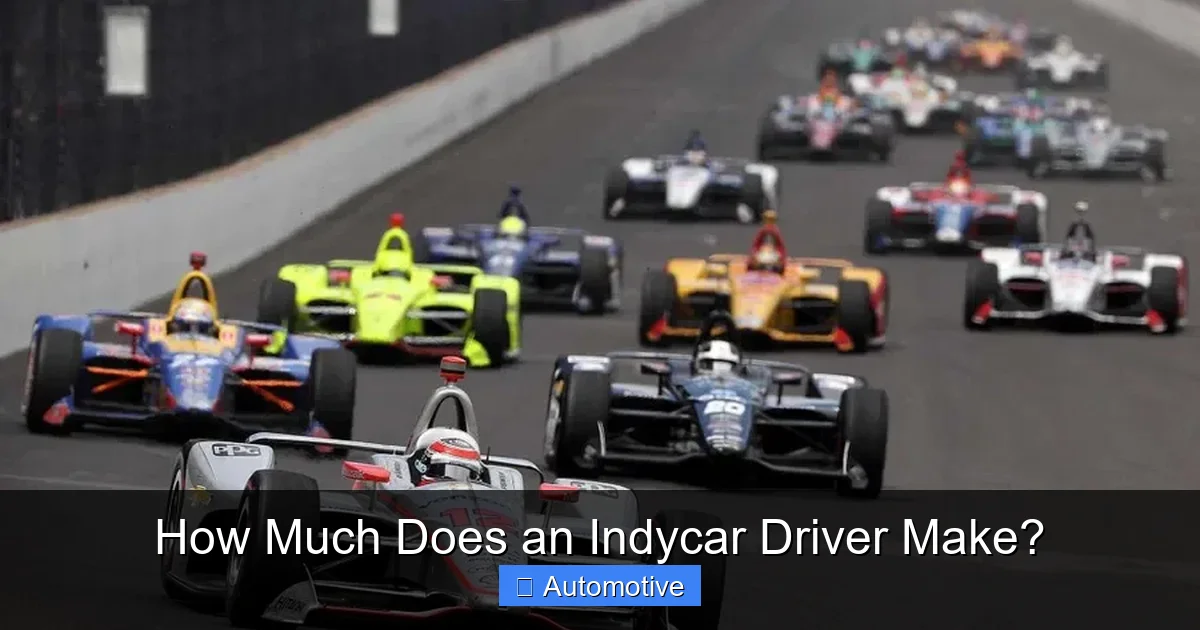
Visual guide about How Much Does an Indycar Driver Make?
Image source: image-cdn.essentiallysports.com
When people ask, “How much does an IndyCar driver make?” they’re usually thinking about the base salary—the amount a team pays a driver for showing up, testing, and racing. But that’s only part of the story.
IndyCar driver salaries aren’t standardized like in some other sports. There’s no league-wide minimum or maximum. Instead, pay is negotiated between the driver (or their agent) and the team. This means salaries can vary wildly based on experience, past performance, marketability, and team budget.
Entry-Level and Rookie Salaries
New drivers entering the NTT IndyCar Series typically earn between $200,000 and $500,000 per year. This includes rookies like Linus Lundqvist or David Malukas, who joined the series with strong backgrounds in junior formulas but limited IndyCar experience.
These salaries often come with performance incentives. For example, a rookie might get a $50,000 bonus for finishing in the top 10 at the Indianapolis 500 or earning a podium in their first season. Teams use these incentives to attract talent while managing risk—after all, a new driver might not deliver immediate results.
It’s also common for rookies to accept lower base pay in exchange for more seat time, development opportunities, or a longer-term contract. Some even race for minimal salary if they bring their own sponsorship funding—a practice known as “paying to play.”
Mid-Tier and Veteran Driver Earnings
Once a driver proves themselves—say, with a few top-10 finishes or a strong qualifying record—their value increases. Mid-tier drivers with 3–7 years of experience can earn between $750,000 and $2 million annually.
Take someone like Romain Grosjean. When he joined Andretti Autosport in 2022 after a controversial exit from Formula 1, his reported salary was around $1.5 million. That’s not just for driving—it’s also for his name recognition, fan base, and ability to attract sponsors.
Veterans with consistent results, like Alexander Rossi or Marcus Ericsson, often command salaries in the $2–3 million range. These drivers aren’t just fast; they’re reliable, media-savvy, and bring stability to a team. They also have leverage in negotiations because teams know they can count on them to score points and avoid costly mistakes.
Top-Tier and Championship-Caliber Drivers
At the top of the pyramid are the elite drivers—those who win races, compete for championships, and have global appeal. These are the names you see on billboards, in commercials, and on social media.
Josef Newgarden, the 2023 IndyCar Series champion and a two-time winner of the Indianapolis 500, is believed to earn over $5 million per year. That includes his base salary from Team Penske, performance bonuses, and a massive sponsorship portfolio.
Similarly, Scott Dixon, a six-time series champion, likely earns in the $4–5 million range. His longevity, consistency, and reputation make him one of the most valuable drivers in the sport.
These top earners don’t just get paid for racing. They’re brand ambassadors. They appear in ads, do media tours, and help teams secure multi-million-dollar sponsorship deals. In many ways, they’re not just drivers—they’re business partners.
The Role of Bonuses and Performance Incentives
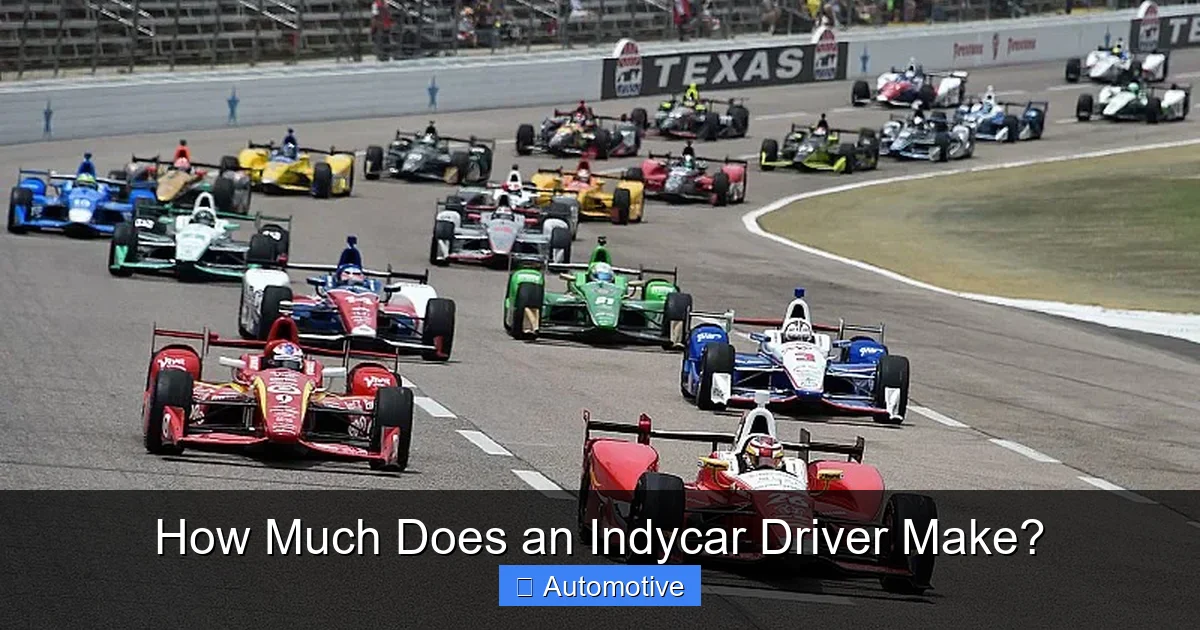
Visual guide about How Much Does an Indycar Driver Make?
Image source: essentiallysports.com
While base salaries are important, bonuses can dramatically increase a driver’s total earnings. In fact, for many IndyCar drivers, bonuses make up 20–50% of their annual income.
Race Win and Podium Bonuses
Most teams offer cash bonuses for race wins, podium finishes, and strong qualifying results. A win at a standard IndyCar race might come with a $100,000 bonus. But at marquee events like the Indianapolis 500, that number can skyrocket.
For example, the winner of the Indy 500 receives a prize purse of over $3 million—but that goes to the team, not the driver. However, top teams often share a portion of that with their drivers. It’s not uncommon for a winning driver to receive a $500,000 to $1 million bonus from their team after the 500.
Podium finishes (2nd or 3rd) might earn $250,000 to $500,000 in combined prize money and team bonuses. And even top-10 finishes can come with smaller payouts—say, $25,000 to $50,000—especially for drivers on performance-based contracts.
Championship and Season-Long Incentives
Winning the IndyCar Series championship is one of the biggest financial milestones. The series awards a $1 million bonus to the champion, but teams often add their own incentives.
For instance, Team Penske is known to reward championship-winning drivers with six-figure bonuses. Combined with race win bonuses and sponsorship activations, a title-winning season can easily add $2–3 million to a driver’s income.
Even making the top 5 in the final standings can trigger bonuses. Some contracts include “points thresholds”—if a driver finishes in the top 5, they get an extra $250,000. Top 3? Another $500,000. These incentives push drivers to perform at their peak all season long.
Qualifying and Pole Position Payouts
Qualifying well is more than just bragging rights—it can mean extra cash. Many teams pay bonuses for pole positions, especially at high-profile races.
At the Indianapolis 500, the pole winner receives a $100,000 bonus from the series, and teams often match or exceed that. In 2023, pole winner Kyle Kirkwood reportedly earned over $200,000 just for qualifying first.
Other races offer smaller pole bonuses—$10,000 to $25,000—but they add up over a 17-race season. For a driver like Pato O’Ward, who frequently qualifies in the top 5, these bonuses can total $100,000 or more annually.
Sponsorships: The Real Money Maker
Visual guide about How Much Does an Indycar Driver Make?
Image source: madeinglitch.com
If you want to understand how much an IndyCar driver makes, you can’t ignore sponsorships. In fact, for most drivers, endorsements and brand deals are the largest source of income.
How Sponsorships Work in IndyCar
Unlike Formula 1, where drivers often have personal sponsorships separate from their team, IndyCar drivers usually integrate their sponsors into the car’s livery. This means the sponsor’s logo appears on the car, helmet, firesuit, and other gear.
Sponsorship deals can range from $500,000 to $10 million per year, depending on the brand, visibility, and driver’s marketability.
For example, Arrow Electronics sponsors Josef Newgarden and has its logo prominently displayed on his car. That deal is estimated to be worth $5–7 million annually. In return, Newgarden appears in Arrow’s marketing campaigns, attends corporate events, and promotes the brand on social media.
Driver Marketability and Brand Fit
Not all drivers attract the same level of sponsorship. Brands look for drivers who align with their image—whether that’s innovation, performance, youth, or reliability.
Young, exciting drivers like Colton Herta or David Malukas appeal to tech and lifestyle brands. Veterans like Scott Dixon attract engineering and automotive companies. International drivers like Romain Grosjean or Marcus Ericsson bring global appeal, which is valuable for brands looking to expand overseas.
Social media presence also matters. Drivers with strong Instagram, Twitter, and TikTok followings can command higher sponsorship fees. A driver with 500,000 followers might earn $50,000 per sponsored post, while someone with 1 million+ followers could charge $100,000 or more.
Personal vs. Team Sponsors
Some sponsors are tied to the team (like NTT with Penske or Honda with multiple teams), while others are personal to the driver. Personal sponsors often pay the driver directly, while team sponsors may share revenue or provide bonuses.
For example, when Alexander Rossi joined Arrow McLaren, he brought his long-time sponsor, Gainbridge, with him. That deal reportedly pays him $3–4 million per year—more than his base salary.
In some cases, drivers negotiate a percentage of team sponsorship revenue. If a team secures a $10 million deal, the driver might get 10–20% as a bonus, depending on their role in attracting the sponsor.
Team Affiliation and Its Impact on Earnings
Not all IndyCar teams are created equal—and neither are their driver salaries. The team a driver races for can make a huge difference in how much they earn.
Top-Tier Teams: Penske, Ganassi, and Andretti
The “Big Three” teams—Team Penske, Chip Ganassi Racing, and Andretti Autosport—pay the highest salaries and attract the most sponsors.
Team Penske, for example, has a reputation for paying top dollar to keep its stars. Drivers like Josef Newgarden and Will Power earn well over $4 million annually, thanks to generous salaries and performance bonuses.
Chip Ganassi Racing pays Scott Dixon and Alex Palou salaries in the $3–4 million range. Andretti Autosport, while slightly smaller, still offers competitive pay—especially for drivers like Colton Herta, who reportedly earns $2.5–3 million per year.
These teams also have better resources—faster cars, more engineers, and stronger pit crews—which increases a driver’s chances of winning and earning bonuses.
Mid-Tier and Independent Teams
Teams like Meyer Shank Racing, Rahal Letterman Lanigan, and Dale Coyne Racing operate on tighter budgets. Their drivers earn less—typically $500,000 to $1.5 million—even if they’re talented.
For example, Felix Rosenqvist, when he raced for Meyer Shank, earned around $1 million. That’s solid money, but far less than what he might have made at Penske or Ganassi.
These teams often rely on drivers who bring their own sponsorship. A driver like Ed Carpenter, who owns his team, might race for a lower salary but retain more control and a share of team profits.
The Pay-to-Play Phenomenon
In IndyCar, it’s not uncommon for drivers to “pay to play”—meaning they bring sponsorship money to the team in exchange for a seat.
This is especially true for younger drivers or those from wealthy families. A driver might secure a $1–2 million sponsorship deal and use it to fund their season, effectively racing for free or even getting a small salary on top.
While this helps drivers get on the grid, it can create inequality. Talented drivers without financial backing may struggle to find seats, while less experienced drivers with money can secure rides.
Additional Income Streams and Off-Season Opportunities
IndyCar’s season runs from March to September, leaving drivers with a long off-season. Smart drivers use this time to earn extra income.
Racing in Other Series
Many IndyCar drivers compete in other racing series during the off-season. For example:
– Josef Newgarden races in the IMSA WeatherTech SportsCar Championship.
– Scott McLaughlin has participated in NASCAR Xfinity Series races.
– Romain Grosjean has tested in Formula E and raced in endurance events.
These races come with their own prize money and appearance fees. A win at the 24 Hours of Daytona can earn a driver $100,000 or more, plus bonuses from their team.
Appearances, Media, and Endorsements
Top drivers are in demand for appearances, autograph sessions, and corporate events. A single appearance at a car dealership or tech conference can pay $10,000 to $50,000.
They also appear in TV commercials, video games (like IndyCar 23), and documentaries. For example, when “Drive to Survive” featured IndyCar in 2023, several drivers saw a spike in sponsorship interest.
Merchandise and Licensing
Drivers with strong fan bases sell merchandise—hats, shirts, die-cast cars, and signed memorabilia. While this doesn’t make millions, it can add $50,000 to $200,000 per year for popular drivers.
Licensing deals for video games or sim racing platforms (like iRacing) also provide steady income. Some drivers earn royalties every time their likeness is used.
The Hidden Costs of Being an IndyCar Driver
While the earnings sound impressive, being an IndyCar driver isn’t all glamour and paychecks. There are significant costs involved.
Personal Investment and Risk
Many drivers invest their own money into their careers—especially early on. They pay for simulator time, physical training, travel, and even contribute to team budgets.
Injuries are also a risk. A crash at 200 mph can end a season—or a career. Medical bills, lost income, and rehabilitation can be devastating, especially without long-term contracts.
Limited Job Security
Most IndyCar contracts are for one or two years. There’s no guarantee of renewal. A bad season, a few crashes, or a sponsor pulling out can mean losing your seat.
This pressure forces drivers to perform constantly. There’s no “off” year. Every race matters—not just for points, but for paychecks.
The Grind of Travel and Training
IndyCar drivers travel constantly—17 races across the U.S., plus testing, sponsor events, and media appearances. The physical and mental toll is high.
They also spend hours in the gym, simulator, and with engineers. It’s a full-time job that requires peak fitness and focus.
Conclusion: The Real Cost of Speed
So, how much does an IndyCar driver make? The answer isn’t simple. It depends on talent, team, sponsors, and luck.
For rookies, it might be $200,000. For champions, it can exceed $5 million. But behind every dollar is risk, effort, and sacrifice.
The real story isn’t just about money—it’s about passion. These drivers race not just for paychecks, but for the love of speed, competition, and the roar of 2.2-liter V6 engines.
If you dream of becoming an IndyCar driver, know this: the road is tough, the competition is fierce, and the financial rewards are never guaranteed. But for those who make it, the thrill of victory—and the paycheck that comes with it—is unlike anything else.
Frequently Asked Questions
Do IndyCar drivers get paid if they don’t win?
Yes, drivers receive a base salary from their team regardless of race results. However, bonuses for wins, podiums, and top finishes can significantly increase total earnings.
Can a rookie IndyCar driver make a good living?
Rookies typically earn $200,000 to $500,000, which is a solid income. But without strong sponsorships or bonuses, it may not be enough to cover career costs and living expenses.
Do IndyCar drivers earn more from sponsorships than salaries?
For most top drivers, yes. Sponsorships often make up 50–70% of total income, especially for marketable drivers with strong brands and social media followings.
Is there a minimum salary for IndyCar drivers?
No, there’s no league-mandated minimum. Salaries are negotiated between drivers and teams, which can lead to wide disparities.
Do IndyCar drivers get a share of the Indianapolis 500 prize money?
The $3+ million winner’s purse goes to the team, but top teams often share a portion with their drivers as a bonus, sometimes $500,000 or more.
Can IndyCar drivers race in other series to earn more?
Yes, many drivers compete in IMSA, NASCAR, or endurance races during the off-season to supplement their income and stay sharp.
