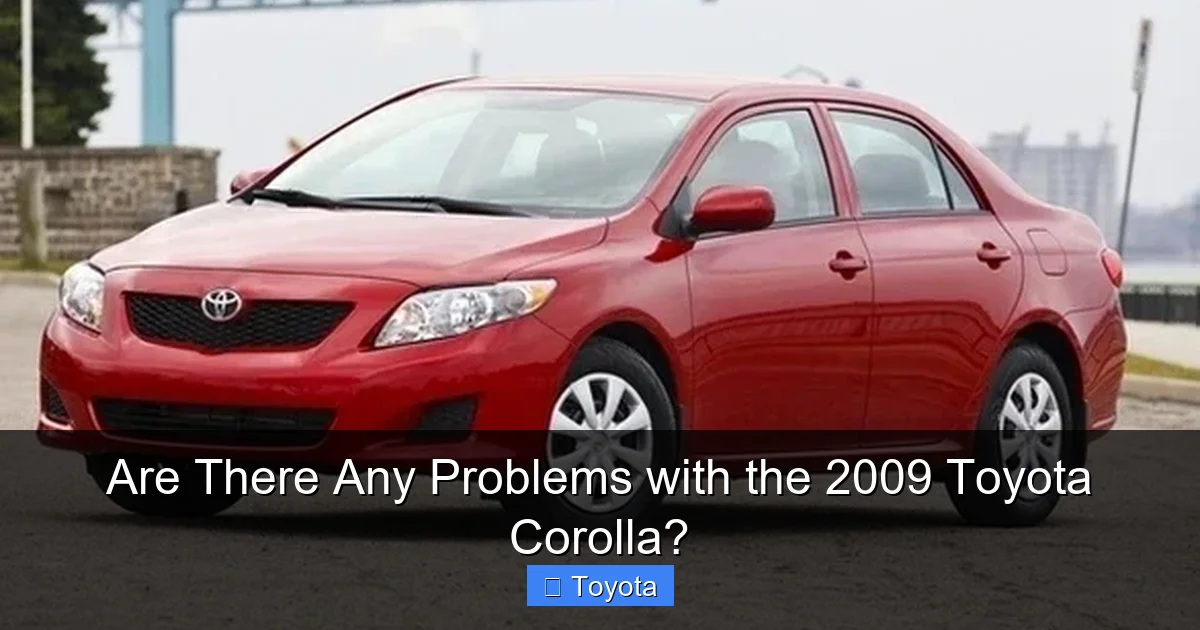
Are There Any Problems with the 2009 Toyota Corolla?

Contents
- 1 Key Takeaways
- 2 📑 Table of Contents
- 3 Introduction: The Legendary Corolla Meets Reality
- 4 Engine & Drivetrain: The Stalwart 1.8-Liter
- 5 Electrical & Comfort Systems: The Age of Gremlins
- 6 Suspension, Brakes & Steering: Wear Items Take Their Toll
- 7 Body, Rust & Interior: The Real Enemy
- 8 The Verdict: Should You Buy a 2009 Toyota Corolla?
- 9 Conclusion: A Proven Platform with Known Quirks
- 10 Frequently Asked Questions

Car Seat Organizer
Interior Cleaner Spray

Tire Shine Spray

Car Body Cover
The 2009 Toyota Corolla is renowned for its exceptional reliability and low cost of ownership, but like any 15-year-old vehicle, it has age-related issues. The most frequent concerns involve minor engine oil consumption, occasional transmission hesitation, and aging electrical components like the multifunction display and power windows. Rust on rear wheel arches can be a problem in snowy climates. Overall, with proper maintenance, these are manageable nuisances rather than catastrophic failures, making the 2009 Corolla a solid used car choice if inspected thoroughly.
Key Takeaways
- Overall Reliability: The 2009 Corolla remains one of the most reliable compact cars of its era, with a strong reputation for longevity when serviced properly.
- Engine Issues: The 1.8L 1ZZ-FE engine is robust but can develop minor oil consumption over high mileage; regular oil checks are crucial.
- Transmission Quirks: The 4-speed automatic can exhibit hesitant shifts when cold; the manual is generally trouble-free.
- Electrical Gremlins: Common failures include the multifunction display (MFD) going dark and power window regulators wearing out.
- Rust Concerns: In areas with road salt, inspect rear wheel arches and lower door edges for corrosion.
- Cost of Ownership: Repairs are typically inexpensive and parts are widely available, keeping long-term costs very low.
- Pre-Purchase Priority: A thorough pre-purchase inspection focusing on rust, engine compression, and electronics is non-negotiable.
📑 Table of Contents
- Introduction: The Legendary Corolla Meets Reality
- Engine & Drivetrain: The Stalwart 1.8-Liter
- Electrical & Comfort Systems: The Age of Gremlins
- Suspension, Brakes & Steering: Wear Items Take Their Toll
- Body, Rust & Interior: The Real Enemy
- The Verdict: Should You Buy a 2009 Toyota Corolla?
- Conclusion: A Proven Platform with Known Quirks
Introduction: The Legendary Corolla Meets Reality
When you think of a no-nonsense, point-A-to-point-B vehicle that simply refuses to die, the Toyota Corolla immediately comes to mind. The 2009 model year sits at the end of a long generation (2007-2013) that perfected the formula of affordable, efficient, and boringly reliable transportation. For over a decade, it has been a top choice for first cars, commuters, and budget-conscious buyers. But “reliable” doesn’t mean “perfect,” and no vehicle escapes the relentless march of time and mileage without developing a few quirks.
This article isn’t about trashing a legend. It’s a realistic, owner-focused look at the common problems with the 2009 Toyota Corolla. We’ll separate the minor annoyances from the serious red flags, backed by owner forums, technician reports, and long-term reliability data. Our goal is to give you the knowledge to confidently buy a used 2009 Corolla or maintain the one you already own, understanding its strengths and its predictable weaknesses.
Engine & Drivetrain: The Stalwart 1.8-Liter
The heart of every 2009 Corolla is the 1.8-liter 1ZZ-FE inline-four engine, paired with either a 5-speed manual or a 4-speed automatic transmission. This powertrain combo is Toyota’s workhorse, known for simplicity and durability. However, age and design limitations reveal some patterns.
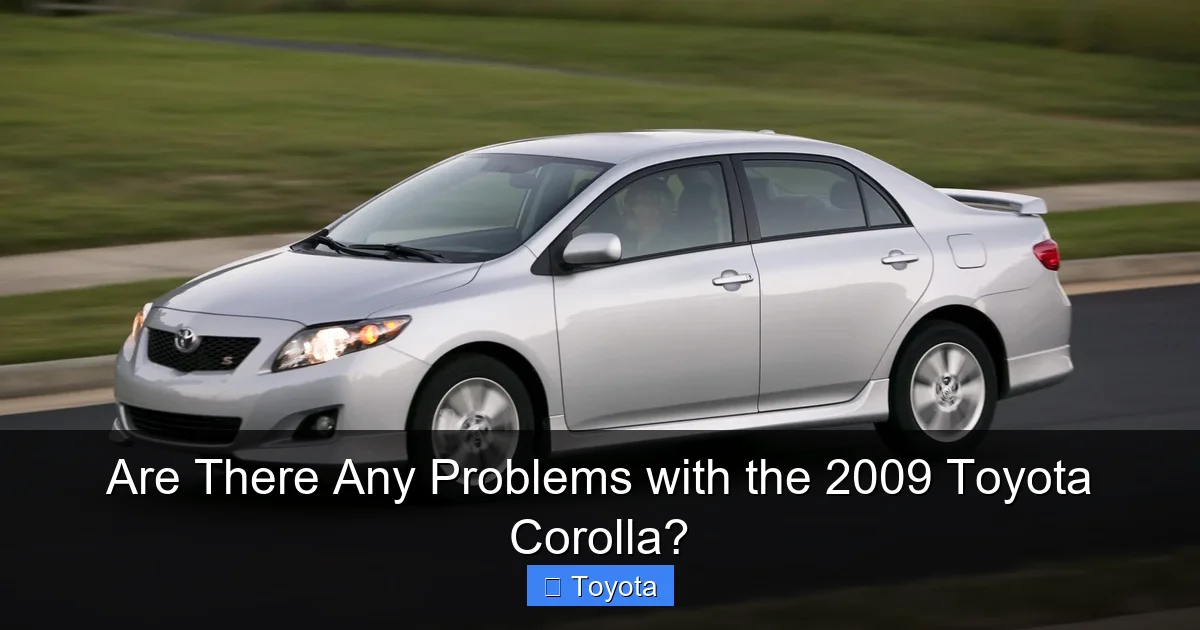
Visual guide about Are There Any Problems with the 2009 Toyota Corolla?
Image source: motordesktop.com
Oil Consumption: The “Sealed” Engine Myth
The 1ZZ-FE engine uses piston rings that, over time and with high mileage (often past 120,000 miles), can become less effective at scraping oil from the cylinder walls. This leads to a well-documented issue: burning oil. You might not see puddles under the car, but the oil level will drop noticeably between changes. For a car this age, it’s less a “defect” and more an expected wear item. The fix, if severe, involves a costly piston ring replacement. The practical tip? Check the oil level every 1,000 miles. If it’s using a quart or more every 3,000 miles, budget for a rebuild or consider another vehicle. Keeping up with high-quality oil changes with the correct viscosity can slow this process.
Transmission Hesitation: The 4-Speed “Slushbox”
The 4-speed automatic transmission (A245E) is the weak link in an otherwise bulletproof chain. Its primary complaint is harsh or hesitant shifts when cold. On a frosty morning, you’ll feel a clunk or delay as it shifts from 1st to 2nd gear. This is often due to worn valve body components or outdated transmission fluid that has lost its frictional properties. The solution is a transmission service—a drain and fill of the fluid (not just a flush)—which can dramatically improve behavior. If the shudder is severe or happens when hot, the internal clutches may be worn, signaling a more involved repair. The manual transmission version avoids this issue almost entirely and is highly recommended if you enjoy driving.
Exhaust Manifold Cracks
A less common but notable issue is a cracked exhaust manifold. The cast-iron manifold can develop cracks near the cylinder head, causing a distinct ticking or popping noise, especially on cold starts. It can also trigger a check engine light with an oxygen sensor or catalyst efficiency code. Replacement is the only fix, and while the part isn’t expensive, labor can be involved due to rusted bolts. Listen carefully during a test drive on a cold engine.
Electrical & Comfort Systems: The Age of Gremlins
As electronics age, they fail. The 2009 Corolla is spartan by modern standards, but its simplicity also means fewer complex systems to break. The few electronic components it does have are, unfortunately, known failure points.

Visual guide about Are There Any Problems with the 2009 Toyota Corolla?
Image source: cdn.dealeraccelerate.com
The Infamous Multifunction Display (MFD)
The small LCD screen in the gauge cluster that shows trip meters, fuel economy, and outside temperature is notorious for going completely dark or displaying garbled characters. This is almost always caused by failing capacitors on the circuit board. The official dealer solution is replacing the entire instrument cluster, costing several hundred dollars. A much cheaper fix is a capacitor replacement, which a skilled electronics hobbyist or independent shop can do for under $100 in parts. If your display is fading, this is likely the culprit.
Power Window Regulators & Switches
Especially on sedans, the driver’s window switch and the window regulator motors are common failure points. The plastic gears in the regulator strip, causing the window to drop into the door. The switches themselves become unresponsive or work intermittently. These are inexpensive parts and relatively easy DIY repairs. Listen for grinding noises or slow operation.
Climate Control & Heater Core
The heater core can develop small leaks over time, leading to a sweet smell (antifreeze) inside the car and fogging of the windshield. This is a moderate-to-difficult repair as it requires disassembly of the dashboard. Also, the blower motor resistors fail, causing loss of certain fan speeds. Both are known issues in this generation.
Suspension, Brakes & Steering: Wear Items Take Their Toll
The Corolla’s suspension is basic and effective. On a 15-year-old car, you are not looking for design flaws; you are looking for the natural wear and tear that any vehicle accumulates.

Visual guide about Are There Any Problems with the 2009 Toyota Corolla?
Image source: images.opinautos.com
Strut Mounts & Bushings
The front strut mounts (which also serve as the upper steering pivot) are a wear item. A clunking or popping noise over bumps, especially when turning, is the classic symptom. Replacement is straightforward. Similarly, various rubber bushings (control arm, trailing arm) will dry out and crack. A thorough inspection during a pre-purchase evaluation will reveal these. These are inexpensive, routine maintenance items for a car this age.
Brake Rotor Warping
Given the Corolla’s light weight, its brakes are adequate but not overbuilt. The front rotors can warp, causing a pulsation in the brake pedal when stopping from highway speeds. This is often exacerbated by aggressive braking or towing. Machining or replacing the rotors is a standard brake job item. Also, the rear brake shoes (on some models) may need adjustment if they squeak.
Body, Rust & Interior: The Real Enemy
Mechanical issues can be fixed. Structural rust is the one problem that can end a car’s life. For the 2009 Corolla, rust is a geographic issue.
Rust Hotspots: The Wheel Arches
In states that use heavy road salt (the “Salt Belt”: Northeast, Midwest, etc.), inspect the rear wheel arches and the lower section of the rear doors behind the rear tires. This is where the factory applied rust-proofing was thinnest, and debris from the tires constantly chips the paint. Small bubbles are normal; large, spreading scale rust is a major concern. Also check the spare tire well in the trunk for water intrusion and rust. In dry, southern states, this is rarely an issue.
Interior Wear & Tear
The cloth seats hold up well, but the driver’s seat bolster will likely be worn and saggy. The headliner can sag at the rear. Plastic trim pieces become brittle and can break. These are cosmetic issues that affect enjoyment but not safety. The good news is that seat covers and careful handling can mitigate much of this.
The Verdict: Should You Buy a 2009 Toyota Corolla?
Let’s be clear: the 2009 Toyota Corolla’s problems are overwhelmingly minor, predictable, and cheap to fix compared to its peers. It does not have widespread catastrophic engine failures, transmission grenades, or complex electrical nightmares. Its reputation is earned.
You should BUY a 2009 Corolla if: You need an affordable, fuel-efficient, and dependable commuter. The car has a clean title, no major rust, and a service history. You are prepared to address the age-related items listed above as they arise (e.g., a $500 timing belt/water pump service, a $300 transmission fluid change, a $200 strut mount job).
You should AVOID a 2009 Corolla if: It has extensive, bubbling rust on the structure. It burns more than a quart of oil per 1,000 miles. The transmission is slipping, making grinding noises, or refusing to shift properly. The MFD is dead AND the seller has no idea (or care) about the capacitor fix. It has a check engine light with multiple codes related to the engine or transmission.
Your most important step is a pre-purchase inspection (PPI) by a trusted, independent mechanic. For $150, they will put the car on a lift, check for rust, compression, transmission health, and scan for codes. This is non-negotiable. For a car this old and this cheap, it’s the best insurance policy you can buy.
Conclusion: A Proven Platform with Known Quirks
The 2009 Toyota Corolla is not a new car. It is a veteran. And like a reliable veteran, it has earned its scars. The problems we’ve outlined are not secrets; they are well-known traits of a simple, high-mileage vehicle. The genius of the Corolla is that when these parts wear out, they are not expensive or complicated to replace. A new battery, a set of spark plugs, a transmission fluid service, and a repaired window regulator are all within the reach of a shade-tree mechanic or a reasonable shop bill.
So, are there problems? Yes. But they are the problems of age and use, not of poor design or shoddy manufacturing. If you find a well-maintained example and address its needs proactively, the 2009 Corolla will likely continue its legendary service for another 100,000 miles. It remains one of the smartest, most logical used car purchases on the market today, provided you go in with your eyes wide open and a budget for its inevitable, minor repairs.
Frequently Asked Questions
Is the 2009 Toyota Corolla a good car?
Yes, it is an excellent used car. It ranks among the most reliable compact sedans of its time, praised for its durability, fuel efficiency, and low repair costs. Its main drawbacks are its aging design, basic features, and age-related wear items.
What is the most common problem with a 2009 Toyota Corolla?
The most frequently reported issues are minor oil consumption from the 1.8L engine, transmission hesitation when cold (in automatics), and failure of the multifunction display (MFD) in the instrument cluster. Rust on rear wheel arches in snowy regions is also a significant concern.
How many miles can a 2009 Toyota Corolla last?
With regular maintenance and timely repairs for wear items, a 2009 Corolla can easily surpass 250,000 miles. Many owners report 300,000+ miles. The limiting factor is often rust in harsh climates or the cost of repairing multiple age-related components versus the car’s value.
Does the 2009 Toyota Corolla have timing belt or chain?
The 2009 Corolla’s 1.8L engine has a timing chain. This is a major reliability plus, as it does not require the expensive, scheduled replacement that a timing belt does. However, the chain tensioner and guides can wear out at very high mileage (200k+), potentially leading to noise or failure.
What are the bad years for Toyota Corolla?
The 2009 model is not considered a “bad” year. It is part of a very reliable generation (2007-2013). The 2003-2008 models with the 1ZZ-FE engine had more pronounced oil consumption issues. The 2014+ models with the new design are also highly reliable. The 2009 sits comfortably in the middle of a very solid run.
How much does it cost to maintain a 2009 Toyota Corolla?
Very little compared to most cars. Annual maintenance costs, excluding tires and major services, are typically under $500. Major services like a timing chain inspection/water pump, transmission service, or strut replacement will cost $500-$1,000 but are needed infrequently (every 60k-100k miles). Its parts are common and inexpensive.