Are Jeep Keys Waterproof?

Contents
- 1 Key Takeaways
- 2 📑 Table of Contents
- 3 So, Are Jeep Keys Waterproof? The Straight Answer
- 4 Understanding Water Resistance: What Do IP Ratings Mean for Your Key Fob?
- 5 Real-World Jeep Adventures: Where Your Key Gets Exposed
- 6 Protecting Your Investment: Practical Tips for Jeep Owners
- 7 What to Do If Your Jeep Key Gets Soaked: Emergency Steps
- 8 The Cost of Water Damage: Replacement and Reprogramming
- 9 Conclusion: Stay Adventurous, Stay Prepared
- 10 Frequently Asked Questions

Microfiber Car Cleaning Cloth

Car Dent Repair Kit

Car Battery Charger

Radiator Coolant
Most Jeep key fobs are not fully waterproof—they offer limited water resistance. While minor splashes or rain are usually fine, submerging them or prolonged exposure can cause damage. Understanding IP ratings and taking simple protective steps can save you from costly replacements and lockouts.
Key Takeaways
- Limited Resistance: Jeep key fobs typically have an IP rating (like IP67) meaning they resist brief immersion but are not designed for constant water exposure.
- Battery & Circuit Risk: Water can corrode the battery contacts and internal circuits, leading to failure or erratic behavior.
- Immediate Action Required: If your key gets soaked, dry it thoroughly (do NOT use heat) and remove the battery if possible.
- Not All Keys Equal: Newer smart keys may have different seals than older fobs; always check your owner’s manual for specifics.
- Prevention is Key: Use a protective key fob case, avoid leaving keys in wet gear, and keep them away from washing machines.
- Replacement Costs: A new Jeep key fob can cost $200–$600+ depending on the model and programming requirements.
- Aftermarket Gear Matters: Storing keys near aftermarket speakers or electronics can expose them to moisture if not secured properly.
📑 Table of Contents
- So, Are Jeep Keys Waterproof? The Straight Answer
- Understanding Water Resistance: What Do IP Ratings Mean for Your Key Fob?
- Real-World Jeep Adventures: Where Your Key Gets Exposed
- Protecting Your Investment: Practical Tips for Jeep Owners
- What to Do If Your Jeep Key Gets Soaked: Emergency Steps
- The Cost of Water Damage: Replacement and Reprogramming
- Conclusion: Stay Adventurous, Stay Prepared
So, Are Jeep Keys Waterproof? The Straight Answer
Let’s cut to the chase: no, Jeep keys are not fully waterproof. That might surprise you, especially if you love taking your Wrangler through mud, rivers, or sudden mountain storms. Most factory Jeep key fobs are designed with some level of water resistance, but they are not dive watches. They can handle a splash, a sudden rain shower, or even a quick drop in a puddle. But they are not built to survive being submerged in water for any length of time, nor can they withstand the pressure and chemicals found in a washing machine or deep water fording.
Why does this matter? Because a dead key fob in the middle of nowhere can turn a fun adventure into a major headache. Imagine finishing a great off-road run, only to find your key won’t unlock the door because the battery inside corroded from moisture. It happens more often than you’d think. Understanding exactly what your key can and cannot handle is the first step to avoiding that situation.
Understanding Water Resistance: What Do IP Ratings Mean for Your Key Fob?
When you hear terms like “waterproof” or “water-resistant,” they are often tied to an IP (Ingress Protection) rating. This is a standardized code that tells you how well a device is sealed against solid particles (like dust) and liquids (like water). For Jeep key fobs, you’ll usually see something like IP67 or IP68.

Visual guide about Are Jeep Keys Waterproof?
Image source: vehq.com
Decoding the IP Code
- The First Digit (Solid Protection): The “6” means it’s dust-tight. No fine dust can get inside. That’s great for trails, but not the main concern here.
- The Second Digit (Liquid Protection): This is the crucial one. “7” means the device can withstand immersion in water up to 1 meter for 30 minutes. “8” means it can handle continuous immersion beyond 1 meter, under conditions specified by the manufacturer.
So, an IP67 key fob *should* survive a brief drop in a puddle or being caught in a downpour. But here’s the catch: IP ratings are tested in pristine, fresh water under laboratory conditions. They do not account for:
- Water Pressure: Driving through deep water creates pressure against seals.
- Water Chemistry: Salt water, pool chlorine, or mud are far more corrosive than fresh water.
- Seal Degradation: Over time, the rubber seals that provide this protection wear out from use, temperature changes, and exposure to UV rays. A key that was IP67 new might offer much less protection after a year of being dropped on rocks and baked in a hot Jeep.
- Battery Compartment: The area where you replace the battery is often a weak point. If the cover isn’t sealed perfectly, that’s an easy entry point for moisture.
In short, the IP rating is a guideline for new, undamaged units. It’s not a guarantee of lifelong waterproofing.
Real-World Jeep Adventures: Where Your Key Gets Exposed
Jeep owners don’t just drive on paved roads. Your key fob faces a gauntlet of potential water threats. Let’s break down common scenarios.
Visual guide about Are Jeep Keys Waterproof?
Image source: waterproofwiki.com
The Daily Grind: Rain, Snow, and Spills
This is the most common exposure. A sudden rainstorm with the top off, melting snow on your boots, or a coffee cup tipping over in the cabin. For most modern Jeep keys with at least an IP67 rating, these brief contacts are usually survivable. The real issue is prolonged dampness. If your key spends days in a wet pair of cargo shorts left in the Jeep, that’s a problem. Humidity inside a closed-up vehicle on a hot day can also encourage condensation inside the fob.
The Off-Road Gauntlet: Mud, Fords, and High-Pressure Washes
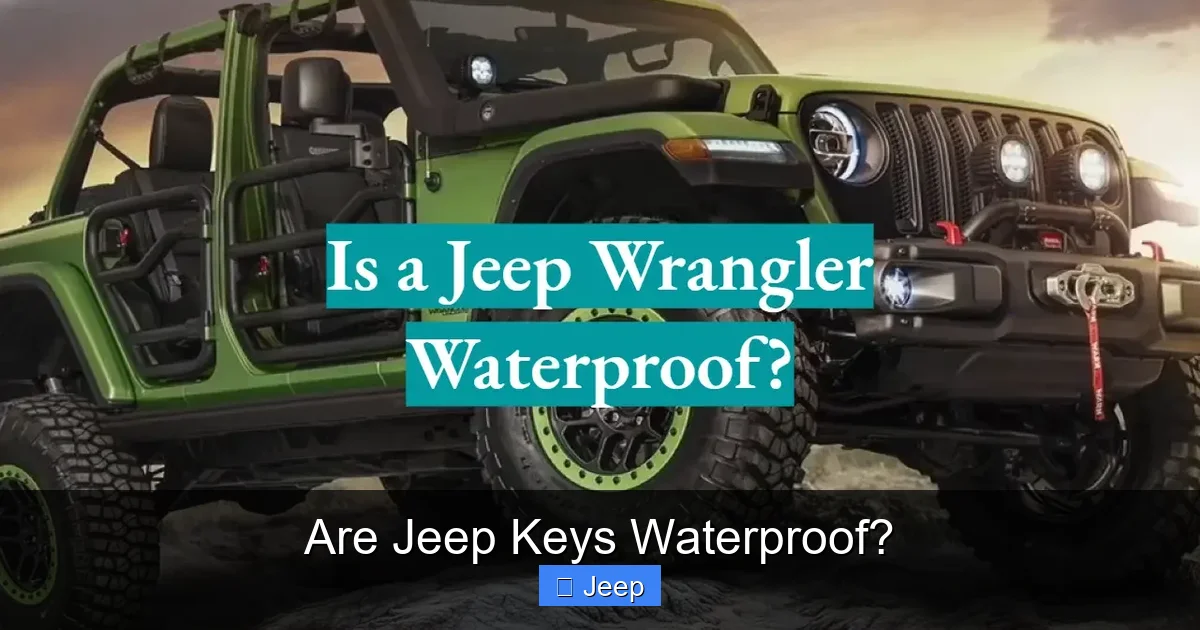
Here’s where trouble starts. Mud and water fording are core Jeep experiences, but they are brutal on electronics. Mud is abrasive and can work its way into seams. When you emerge from a stream, you’re often covered in water, and the key fob in your pocket is soaked. If you then toss your keys onto a wet seat or a damp dashboard, they stay wet longer. Even worse is the post-adventure pressure wash. Many owners blast their Jeeps clean, and that high-pressure water stream can penetrate seals that a simple dip would not. It’s a leading cause of key fob failure after a day on the trails.
The Household Hazards: Washing Machines and Disasters
This might sound obvious, but it happens all the time: keys left in pants pockets that go through the wash. A washing machine is a key fob’s worst nightmare—hot water, detergent, and prolonged agitation. It will almost certainly destroy the fob. Similarly, leaving keys on a wet boat deck, at the edge of a pool, or in a damp beach bag creates a slow, corrosive soak that can kill the electronics over hours or days.
Protecting Your Investment: Practical Tips for Jeep Owners
You don’t need to panic every time it rains. A few simple habits and accessories can dramatically extend your key fob’s life and keep you from getting stranded.
Visual guide about Are Jeep Keys Waterproof?
Image source: carkeyguru.co.nz
1. Adopt a “Dry Home” Habit
The single best thing you can do is store your key fob in a dry place inside the Jeep when not in use. Get in the habit of putting it in a dedicated cup holder, a glove box (if it’s not too humid in there), or a sealed storage bin. Never leave it loose on the floor, under a seat, or in a door pocket where it can get wet from tracked-in snow or a spilled drink. This is especially critical for Jeep Wrangler owners who frequently drive with doors off. A sudden splash from another vehicle or a rogue wave from a lake crossing can instantly soak everything inside.
2. Use a Protective Key Fob Case
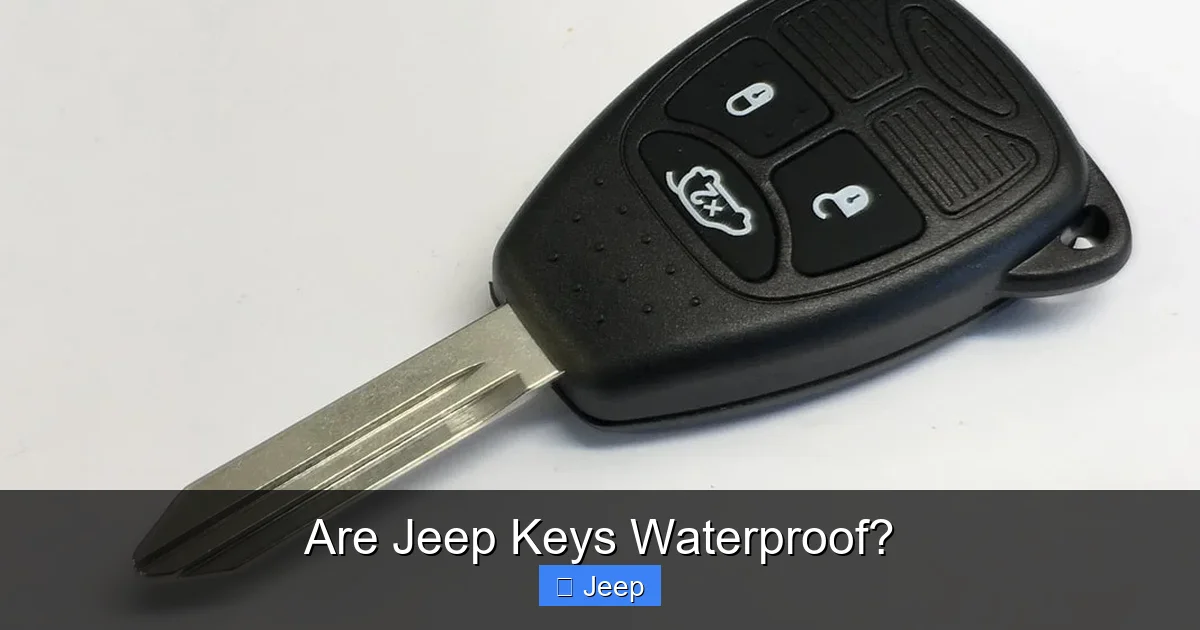
These are inexpensive silicone or rubber covers that slip over your key fob. They provide an extra layer of protection against minor splashes, drops, and even a bit of mud. More importantly, they make the fob easier to grip when your hands are wet or muddy. Look for cases that cover the entire fob, including the buttons and the battery cover seam. Some even float, which is a nice bonus if you drop it in deep water.
3. Be Mindful of Aftermarket Gear Placement
If you’ve upgraded your Jeep with aftermarket speakers, a subwoofer, or other electronics, think about where you’re mounting them. Don’t mount components in locations that might trap water near your usual key storage spot. Also, ensure any new wiring or drilling is properly sealed to prevent water leaks into the cabin that could reach your key fob.
4. Keep a Spare Key Safe and Dry
Always have a spare key, and store that spare in a completely dry, secure location—preferably at home, not in the Jeep. If your primary fob fails due to water damage, that spare will be your ticket out. For extra security, consider a traditional metal “emergency key” (if your Jeep model has a hidden mechanical key slot) and keep it on a separate keyring in your wallet or glove box.
5. Post-Adventure Care
After a day of serious wheeling, take a moment. If your key fob is wet, wipe it down with a dry towel. Open the battery cover (if your model allows) and gently dry the interior and battery contacts with a cotton swab. Let it air out completely before placing it back in its dry spot. Don’t immediately toss a wet fob into a hot glove box; the heat can trap moisture inside.
What to Do If Your Jeep Key Gets Soaked: Emergency Steps
Okay, disaster strikes. Your key took a dive. Here’s your action plan, in order of importance.
Step 1: Retrieve and Power Down (If Possible)
Get the key out of the water immediately. If it’s fully submerged, try to open the battery compartment and remove the battery right away. This stops power flow and prevents short circuits that can cause permanent damage. For keys with non-removable batteries (many newer smart keys), you can’t do this. Proceed to step 2.
Step 2: Dry the Exterior Gently
Pat the key dry with a lint-free cloth. Do not shake it vigorously, as that can splash water deeper inside. Avoid using a hair dryer, heat gun, or oven. High heat can warp the plastic casing and damage sensitive components. Do NOT use rice—it’s ineffective and the starch can get inside.
Step 3: The Desiccant Method (For Non-Removable Battery Keys)
Place the key in an airtight container or zip-lock bag with a strong desiccant packet. The little silica gel packets that come with shoes or electronics are perfect. You need a lot of them to surround the key. Seal the container and leave it for at least 48–72 hours. The desiccant will pull moisture from the tiny crevices. You can also use uncooked rice as a last resort, but silica gel is far superior.
Step 4: Test and Hope
After the drying period, reassemble the key (if you removed the battery), insert a fresh battery (corrosion can ruin your old one), and test all functions: lock, unlock, trunk, and panic button. If it works erratically or not at all, the internal circuitry may be corroded. At this point, your only options are professional repair (rare and often not cost-effective) or replacement.
The Cost of Water Damage: Replacement and Reprogramming
If your key fob is truly dead, you face a replacement. This is where Jeep ownership can get expensive. A factory replacement key fob from the dealership can range from $200 to $600 or more, depending on the Jeep model and year. This price usually includes the physical fob but does not always include programming. Programming a new key to your Jeep’s security system often requires a dealer visit or a locksmith with the proper equipment, adding another $50–$150 to the bill.
Aftermarket keys are cheaper but come with risks. Quality varies wildly, and some may have poor range or durability. They still need to be programmed to your specific vehicle. If you have a Jeep Gladiator or a newer Wrangler JL/JT with complex security, expect to pay a premium. For older TJ or JK models, the process and cost might be slightly lower.
This cost is why prevention is so critical. A $10 silicone case and a habit of keeping keys dry can save you hundreds.
Conclusion: Stay Adventurous, Stay Prepared
So, are Jeep keys waterproof? The definitive answer is no—they are water-resistant to a degree, but they are not invincible. Your Jeep key fob is a sophisticated, battery-powered electronic device that needs care. The ruggedness of your Wrangler or Gladiator doesn’t automatically transfer to the small plastic fob in your pocket.
The takeaway is simple: respect the limits of your key’s IP rating, assume seals degrade over time, and make “dry storage” a non-negotiable habit. Invest in a cheap protective case. After exposure to water, dry it thoroughly. Keep a spare. These small actions ensure that your key is as reliable as your Jeep, rain or shine, mud or river. You’ve invested in a vehicle that can go anywhere—don’t let a $300 key fob be the thing that holds you back. Stay aware, stay dry, and keep exploring.
Frequently Asked Questions
Can a Jeep key fob survive being washed in a washing machine?
Almost never. The combination of hot water, detergent, and prolonged agitation will almost certainly destroy the internal circuitry and battery. If this happens, immediately remove the battery (if possible) and follow the desiccant drying method, but replacement is highly likely.
What is the typical IP rating for a Jeep key fob?
Most modern Jeep key fobs, especially for Wrangler JL, Gladiator, and Grand Cherokee, carry an IP67 rating. This means they are dust-tight and can handle immersion in 1 meter of fresh water for 30 minutes. Always verify your specific model’s rating in the owner’s manual.
How can I tell if water has damaged my Jeep key?
Signs include: buttons not responding, intermittent function, the key not being recognized by the vehicle, visible corrosion on battery terminals, or a foggy/cracked display (on smart keys). If the key works sometimes but not others, moisture inside is a likely culprit.
Should I use a hair dryer to dry my wet key fob?
No. Do not use heat. High temperatures can warp the plastic casing and damage sensitive electronic components. The safest method is gentle wiping, then placing it in a sealed container with silica gel desiccant packets for 2–3 days.
Is it worth getting a waterproof key fob case?
Yes. A good silicone or rubber key fob case is a very inexpensive form of insurance. It provides an extra seal against splashes, makes the fob easier to handle with wet/muddy hands, and can protect against minor drops. It’s a small price to pay for potentially avoiding a $300+ replacement.
Can I program a new Jeep key fob myself?
Sometimes, for older models. Many Jeep TJ and JK owners can program a basic replacement fob with a sequence of ignition and door lock actions. However, for most newer models (JL, Gladiator, recent Grand Cherokee), you need a dealer or a professional locksmith with proprietary diagnostic software. Check your owner’s manual for a “Key Programming” section first.