Alaska Window Tint Law Guide

Contents
- 1 Key Takeaways
- 2 📑 Table of Contents
- 3 What Are Alaska’s Window Tint Laws?
- 4 Detailed VLT Requirements for Each Window
- 5 Medical Exemptions and Special Provisions
- 6 How to Stay Compliant: Tips and Best Practices
- 7 Penalties for Violating Alaska Tint Laws
- 8 Comparing Alaska Tint Laws to Neighboring States
- 9 Conclusion
- 10 Frequently Asked Questions
Waterless Car Wash Spray

Car Scratch Remover

Car Battery Charger

Trunk Organizer
This Alaska Window Tint Law Guide explains the state’s regulations on window tint darkness, including VLT percentages for different windows, medical exemptions, penalties for non-compliance, and tips to ensure your tint complies with state regulations. Stay informed to avoid tickets and fines.
Alaska Window Tint Law Guide
Hey there, fellow Alaskan driver! If you’re reading this, chances are you’re wondering about window tint laws in our great state. Maybe you’re thinking of tinting your car to block that intense summer sun or to add some privacy. Or perhaps you already have tint and want to make sure you’re not breaking any rules. Whatever your reason, you’ve come to the right place. This Alaska Window Tint Law Guide is here to break down everything in simple, easy-to-understand terms. No legal jargon, just the facts you need to stay compliant and enjoy your tint without worry.
Alaska is known for its stunning landscapes and challenging weather. From the midnight sun in summer to the low-angle glare in winter, our driving conditions are unique. Window tint can be a real game-changer, reducing eye strain, protecting your skin from UV rays, and keeping your car cooler in summer and warmer in winter. But with great tint comes great responsibility—you need to follow the law. Alaska has specific regulations that dictate how dark your windows can be. These laws are in place for safety reasons, ensuring that law enforcement officers can see inside vehicles during traffic stops and that drivers have adequate visibility.
In this guide, we’ll cover the nitty-gritty details: what VLT means, the exact percentages allowed for each window, medical exemptions if you have a health condition, penalties for violations, and practical tips to keep you legal. We’ll also compare Alaska’s laws to other states, so you know what to expect if you’re driving out of state. By the end, you’ll be a tint law expert, ready to make informed decisions about your vehicle. So, let’s get started!
Key Takeaways
- Alaska’s VLT Requirements: Front side windows must allow at least 70% light transmission, while rear and back side windows have no specific darkness limit.
- Medical Exemptions Available: Individuals with certain medical conditions can apply for exemptions to have darker tint, but must carry documentation.
- Penalties for Violations: Non-compliance can result in fines, fix-it tickets, and mandatory tint removal.
- No Windshield Tint Allowed: Tinting on the windshield is prohibited except for the top 5 inches, which must be non-reflective.
- Stay Updated: Laws can change, so always verify current regulations before tinting your vehicle.
- Professional Installation Recommended: Hiring a certified installer helps ensure your tint meets Alaska’s legal standards.
- Compare State Laws: Alaska’s tint laws are more lenient than some states but stricter than others; check comparisons for context.
📑 Table of Contents
What Are Alaska’s Window Tint Laws?
Alaska’s window tint laws are established under Alaska Statute 28.35.040, which governs vehicle equipment standards. The key concept here is Visible Light Transmission, or VLT. VLT is the percentage of visible light that passes through your window glass and tint. For example, a window with 70% VLT allows 70% of light to enter, blocking 30%. The lower the VLT number, the darker the tint.
In Alaska, the laws are pretty straightforward but vary by window location. For front side windows—the driver and passenger windows—the law requires a minimum VLT of 70%. This means your tint must be light enough to allow at least 70% of light through. You cannot have tint that makes these windows darker than 30% blockage. This rule is critical for safety: it allows police officers to see inside the vehicle during traffic stops, which is important for officer safety. It also ensures that drivers have clear visibility, especially at night or in low-light conditions.
Now, for the rear side windows and the rear window, Alaska is much more lenient. There is no specific VLT limit. You can tint these windows as dark as you want—even 5% VLT or lower. This gives you complete freedom to choose the level of privacy and sun protection you desire for rear passengers and cargo. In a state with long, dark winters, some people also prefer darker rear windows for added warmth and reduced glare from headlights at night.
However, there’s a catch: if your rear window is tinted, your vehicle must have side mirrors that provide an unobstructed view to the rear. This is standard on most cars, but if you have a very dark rear tint, make sure your mirrors are properly adjusted and functional.
Windshield tint is another story entirely. Alaska law permits tint only on the top 5 inches of the windshield. This strip, often called a “shade band,” must be non-reflective. Its purpose is to reduce glare from the sun without blocking the driver’s view. You cannot tint any part of the windshield below this 5-inch line. So, no full windshield tinting or decorative designs beyond the top strip. Violating this can lead to an immediate ticket.
It’s worth noting that Alaska does not require a special sticker or certificate for tinted windows. Unlike some states that mandate approval before tinting, Alaska operates on a compliance basis. You are responsible for ensuring your tint meets legal standards. However, it’s smart to keep documentation from your installer, such as a receipt or certificate stating the VLT percentages. If you’re ever pulled over, this paperwork can prove your tint is legal and save you from a headache.
For those with medical needs, there is a pathway to darker tint on front windows. We’ll cover that in detail later. Also, remember that these laws apply to all passenger vehicles, including cars, trucks, SUVs, and vans. Commercial vehicles may have additional rules, so check if you drive a commercial vehicle.
If you’re comparing Alaska to other states, you’ll find it’s moderately strict on front windows but relaxed on rear windows. For a comprehensive look at how Alaska stacks up against every state, check out our Window Tint Laws By State Updated 2026 guide. It’s a great resource for travelers or those who move states frequently.
Now that you have the overview, let’s dive deeper into each window’s requirements.
Detailed VLT Requirements for Each Window
Understanding the VLT requirements for each window is essential for making the right tint choices. Let’s break it down window by window, with practical examples to illustrate what’s legal and what’s not.

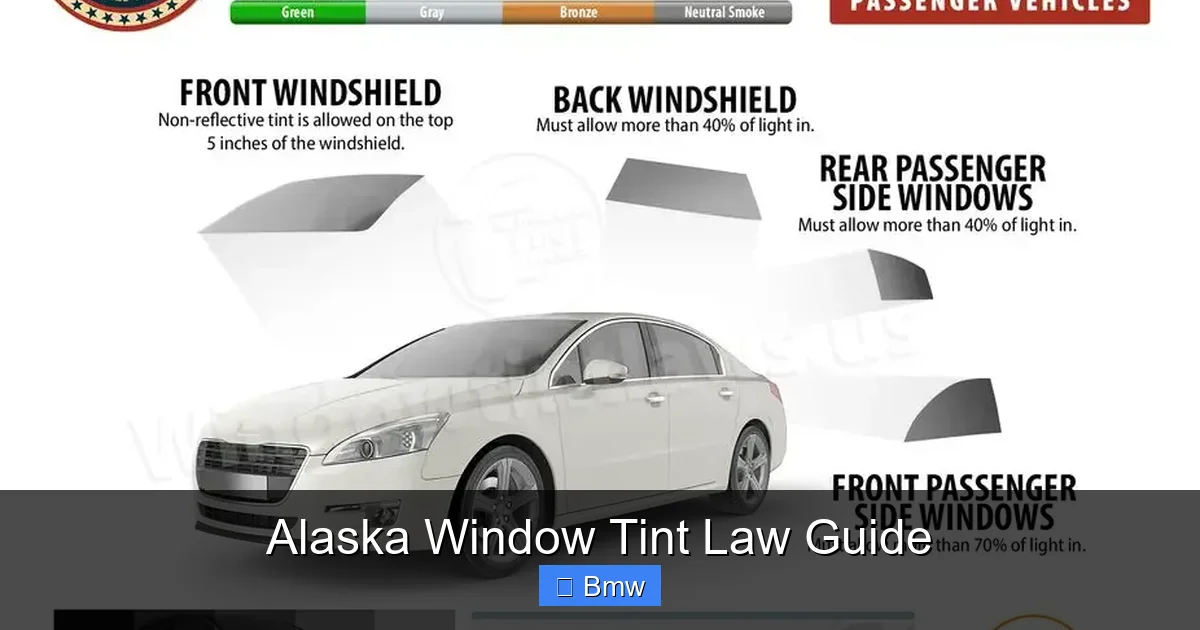
Visual guide about Alaska Window Tint Law Guide
Image source: windowtintlaws.us
Front Side Windows
The front side windows are the most regulated in Alaska. As mentioned, they must have a VLT of at least 70%. This means the tint must allow 70% or more of visible light to pass through. To put this in perspective, factory-tinted windows on many cars are around 70-80% VLT. So, if your car came with factory tint, you might already be close to the limit. Adding aftermarket tint could push you over the edge if not careful.
For example, if your front windows have 75% VLT from the factory, and you add a 20% VLT tint (which blocks 80% light), the combined VLT would be much lower than 70%. Calculating combined VLT is complex because it’s multiplicative, but as a rule of thumb, the total VLT should be at least 70%. If you’re unsure, consult with a professional installer who can measure the existing VLT and recommend appropriate aftermarket tint.
What if you want darker front windows for privacy or style? In Alaska, you cannot legally go darker than 70% VLT on front sides. Even if you have a medical exemption, there are limits, but we’ll get to that. So, when shopping for tint, look for products labeled “70% VLT” or higher for front windows. Avoid terms like “limo tint” (which is typically 5% VLT) for front windows—that’s a surefire way to get a ticket.
Enforcement: Police officers often use tint meters to check VLT during traffic stops. If your front windows measure below 70%, you’ll likely be cited. It’s not worth the risk, so always verify your tint’s VLT before hitting the road.
Rear Side Windows
Here’s where Alaska gets generous. Rear side windows have no VLT limit. You can install tint with 50% VLT, 20% VLT, or even 5% VLT—whatever floats your boat. This is great for passengers who want privacy, for keeping pets out of sight, or for protecting cargo from prying eyes. In a state with long, dark winters, some people also prefer darker rear windows for added warmth and reduced glare from headlights at night.
However, safety comes first. If you tint your rear windows very dark, ensure your side mirrors are adjusted to give you a clear view behind you. Alaska law requires that if the rear window is tinted, the vehicle must have side mirrors that provide an unobstructed view to the rear. Most cars have this, but if you have a van or SUV with a large rear window, double-check that your mirrors are adequate. Also, be mindful when driving at night—very dark rear tint can make it harder to see out, but since you’re using mirrors, it’s generally okay.
Many Alaskans choose to match rear tint to their front tint for a uniform look, but since front has a limit, rear can be darker. For example, you might have 70% VLT on front and 30% VLT on rear. That’s perfectly legal.
Rear Window
The rear window follows the same rule as rear side windows: no VLT limit. You can tint it as dark as you like. This includes the glass on the tailgate for hatchbacks and SUVs. If your vehicle has a rear window that is part of the trunk or tailgate, you can tint that area without restrictions.
But remember the side mirror rule: if your rear window is tinted, you must have functional side mirrors. This is to compensate for reduced visibility through the rear window. In practice, most vehicles already have side mirrors, so this isn’t an issue. Just ensure they’re clean and properly adjusted.
For those with rear window wipers or defrosters, tinting shouldn’t interfere with their operation. Choose a tint that doesn’t obstruct these features.
Windshield
Windshield tint is strictly regulated. Only the top 5 inches of the windshield can be tinted. This strip is usually at the top, behind the rearview mirror. The tint must be non-reflective, meaning it shouldn’t act like a mirror. Its purpose is to block direct sunlight from your eyes without reducing visibility.
You cannot tint below this 5-inch line. So, no tint across the entire windshield, no decorative borders beyond the top strip, and no tint on the driver’s line of sight. Even a small amount of tint below the 5-inch mark can be illegal. Some tint shops offer “windshield tint” that is actually a clear or very light film for UV protection—this might be allowed if it doesn’t darken the glass, but check with local authorities.
Also, note that any windshield tint must not impair the driver’s vision. So, keep it clean and free of bubbles or peeling. If you have a medical exemption, you might be able to have more windshield tint, but that’s rare and typically not granted.
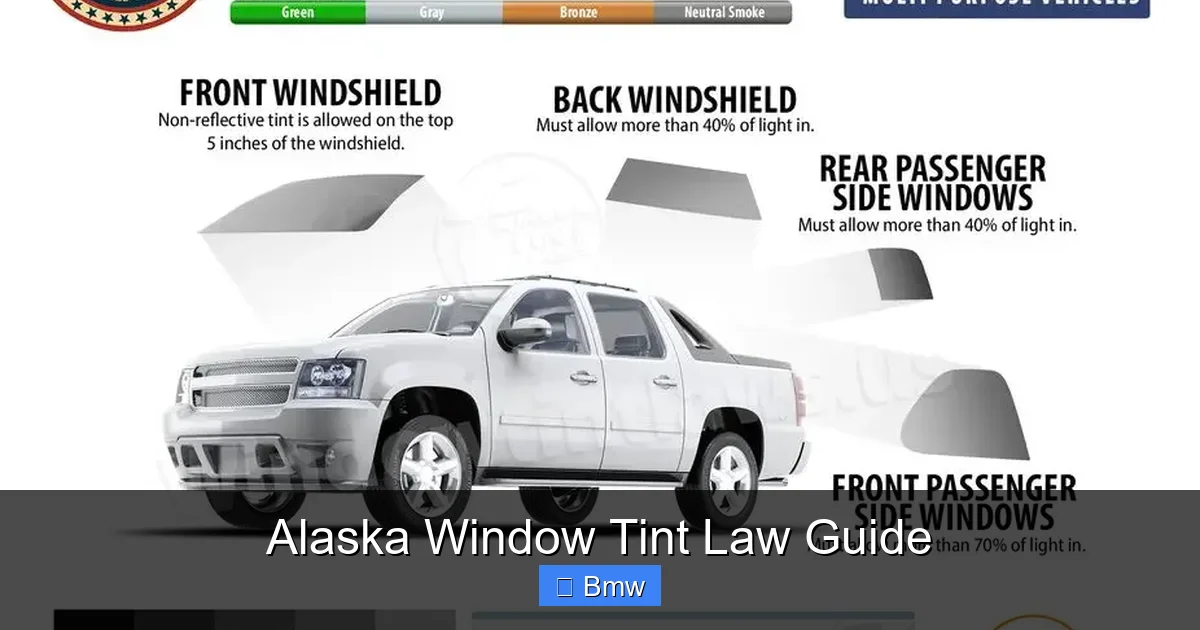
To summarize Alaska’s VLT requirements:
- Front side windows: Minimum 70% VLT (no darker than 30% blockage).
- Rear side windows: No limit.
- Rear window: No limit, but side mirrors required if tinted.
- Windshield: Only top 5 inches, non-reflective.
Keep these numbers in mind when choosing your tint. And always measure after installation to confirm compliance.
Medical Exemptions and Special Provisions
Not everyone can tolerate sunlight equally. For Alaskans with certain medical conditions, window tint isn’t just a luxury—it’s a necessity. Alaska law provides for medical exemptions to allow darker tint on front side windows when medically required.
Visual guide about Alaska Window Tint Law Guide
Image source: windowtintlaws.us
Qualifying conditions include, but are not limited to:
- Lupus or other autoimmune disorders that cause photosensitivity
- Melanoma or history of skin cancer
- Porphyria
- Chronic actinic dermatitis
- Other light-sensitive diseases as determined by a physician
To apply for a medical exemption, you need a written statement from a licensed physician. This statement must include:
- Your full name and date of birth
- A clear diagnosis of your condition
- Explanation of why darker tint is medically necessary
- Recommended VLT level or degree of darkness
- Physician’s signature and contact information
There is no formal application with the DMV; instead, you carry this statement in your vehicle at all times. If stopped by law enforcement, you must present it upon request. The exemption is specific to you and your vehicle. If you drive multiple vehicles, each might need its own exemption, but typically the statement covers you as a driver.
It’s important to understand that medical exemptions do not override all tint laws. For example, the windshield restriction still applies—only the top 5 inches can be tinted, even with an exemption. Also, the exemption might specify the maximum darkness allowed, so you must adhere to the physician’s recommendation. If your doctor recommends 50% VLT for front windows, you cannot go darker than that.
The process is relatively simple, but you should keep your physician’s statement up to date. If your condition changes, you may need a new statement. There are no fees for the exemption itself, but you might pay for the doctor’s visit.
If you think you qualify, talk to your healthcare provider. They can assess your condition and provide the necessary documentation. For more on health-related vehicle modifications, you might find our article on how much does it cost to repair a car window useful, though it’s not directly related.
Remember, medical exemptions are granted on a case-by-case basis. Law enforcement officers have discretion, but having valid documentation should protect you from tickets if your tint is darker than standard limits but within the exemption.
If you’re pulled over and have an exemption, politely show the officer the statement. They may verify with your doctor, but generally, it’s accepted. If you encounter issues, you can contact the DMV or seek legal advice. Keep copies of the statement in your vehicle and with your personal records.
How to Stay Compliant: Tips and Best Practices
Staying within Alaska’s window tint laws is all about being proactive. Here are actionable tips to help you tint your vehicle legally and avoid common pitfalls.
Visual guide about Alaska Window Tint Law Guide
Image source: windowtintlaws.us
Know Your VLT Before You Tint
The first step is understanding what VLT you need. For front windows, stick to 70% or higher. For rear, you have flexibility. When shopping for tint, ask for the exact VLT percentage. Reputable brands will list this clearly. Avoid vague terms like “dark” or “light”—insist on numbers. If you’re replacing factory tint, measure the existing VLT first. You can use a tint meter, which is a handheld device that reads light transmission. Some auto shops or tint installers offer this service for free or a small fee.
For example, if your front windows are already at 75% VLT from the factory, adding a 50% VLT tint would likely bring you below 70%. Instead, opt for a 90% VLT or higher film to stay compliant. It’s better to err on the side of caution.
Choose Professional Installation
While DIY tint kits are available, professional installation is highly recommended. Certified installers have experience with state laws and can apply tint smoothly without bubbles, wrinkles, or peeling. They also ensure the tint is cut correctly for your windows, avoiding gaps that might affect VLT measurement. Many shops offer warranties on their work and materials, giving you peace of mind.
Professional installation typically costs between $100 and $400 for a full car, depending on the vehicle size and tint quality. To get an idea of costs, check out our guide on how much does auto window tint cost. It breaks down pricing factors and helps you budget.
When choosing an installer, ask if they are familiar with Alaska’s tint laws. A good installer will advise you on legal options and provide documentation of the VLT. They might also offer a VLT certificate after installation.
Keep All Documentation
After tinting, get a written receipt or certificate from the installer that specifies the VLT percentages for each window. Keep this in your glove compartment. If you’re ever stopped by police, you can show this to prove compliance. For medical exemptions, carry the physician’s statement separately but in the vehicle.
Documentation is especially important if you tinted your car out of state or used aftermarket parts. It serves as evidence that you followed the law.
Regularly Inspect Your Tint
Tint can degrade over time due to sun exposure, cleaning chemicals, or age. Faded tint might have a higher VLT than when new, but sometimes it can darken or peel. Periodically check your tint with a tint meter or have it inspected. If you notice bubbling, peeling, or discoloration, consider repair or replacement. Damaged tint might not meet legal standards and can be unsightly.
Also, clean your tinted windows properly. Use ammonia-free cleaners and soft cloths to avoid damaging the film. Harsh chemicals can break down the tint over time.
Stay Updated on Law Changes
Laws can change, so it’s wise to stay informed. The Alaska DMV or state legislature may update tint regulations. Check their website annually or sign up for notifications. For a national perspective, refer to our Window Tint Laws By State Updated 2026 page, which tracks changes across the country.
If you’re planning to tint your car, do it right the first time. Cutting corners can lead to costly tickets and removal expenses.
Consider Your Climate and Needs
Alaska’s climate varies from temperate rainforests to Arctic conditions. Think about your specific needs. If you live in a sunny area like Southcentral Alaska, UV protection and heat rejection might be priorities. If you’re in interior Alaska with extreme cold, insulation might be more important. Ceramic tints offer excellent UV and heat rejection without interfering with signals, while dyed tints are more affordable but may fade over time. Metallic tints can block signals for radios and GPS, so consider that if you use those devices.
For windshields, remember only the top 5 inches can be tinted. Some people opt for a clear UV-blocking film that doesn’t darken but still protects. This is usually legal as long as it doesn’t reduce visibility.
By following these tips, you can enjoy your tint while staying within Alaska’s laws. It’s all about making informed choices.
Penalties for Violating Alaska Tint Laws
So, what happens if your window tint doesn’t comply with Alaska’s laws? It’s not the end of the world, but it can be a hassle and cost you money. Let’s break down the potential penalties and what to do if you’re cited.
In Alaska, tint violations are typically considered traffic infractions. Law enforcement officers can stop your vehicle if they suspect illegal tint, often using a tint meter to measure VLT. If your windows are below the legal limit, you’ll likely receive a citation. The severity of the penalty depends on the jurisdiction and whether it’s a first or repeat offense.
Common penalties include:
- Fines: For a first offense, fines usually range from $50 to $200. In some cities like Anchorage or Fairbanks, the exact amount may vary. Repeat offenses can incur higher fines, sometimes up to $500 or more.
- Fix-It Tickets: Often, for minor violations, officers issue a “fix-it” ticket. This gives you a specified period, usually 30 days, to correct the issue—such as removing the illegal tint or replacing it with compliant film. Once corrected, you may need to show proof to the court or police department to dismiss the ticket.
- Court Appearance: If you contest the ticket or have multiple violations, you might be required to appear in court. This can involve additional fees and time off work.
- Vehicle Inspection Failures: During annual vehicle inspections or when registering your car, illegal tint can cause your vehicle to fail. You’ll need to remove or replace the tint to pass inspection, delaying your registration.
- Points on Driving Record: In some cases, tint violations may add points to your driving record, which can increase insurance premiums. However, in Alaska, tint tickets are often non-moving violations, so points might not apply. Check with local authorities.
The process after receiving a ticket: You’ll have a court date or a deadline to respond. You can pay the fine, which admits guilt, or contest it if you believe your tint is legal. If you choose to fix the tint, gather evidence like receipts and VLT certificates. Some courts allow you to show proof of correction to reduce or dismiss the fine.
For a detailed look at potential costs, our article on how much does a window tint ticket cost provides examples from various states, including Alaska. It’s a helpful resource to understand the financial impact.
To avoid penalties, always ensure your tint is legal before driving. If you’re unsure, have it checked by a professional. Remember, ignorance of the law is not an excuse, so stay informed.
In summary, while tint violations are usually minor, they can add up. It’s cheaper and easier to comply from the start than to deal with tickets and removal costs.
Comparing Alaska Tint Laws to Neighboring States
Alaska’s window tint laws aren’t made in a vacuum. They interact with laws from other states, especially if you travel or relocate. How does Alaska compare to its neighbors and other popular destinations? Let’s take a look.
First, Alaska is unique in many ways due to its geography and climate. But when it comes to tint, it shares similarities with some states and differs from others. Here’s a comparison with key states:
- Washington: Washington requires front side windows to have at least 70% VLT, similar to Alaska. However, rear side windows must allow at least 24% VLT in Washington, whereas Alaska has no limit. So, if you’re driving from Alaska to Washington, your dark rear tint might be illegal there. Washington also requires side mirrors if rear window is tinted, like Alaska.
- Oregon: Oregon allows 35% VLT on front side windows, which is darker than Alaska’s 70%. Rear windows can be any darkness. So, Oregon is more lenient on front windows but similar on rear. If you have 70% front tint in Alaska, it’s legal in Oregon too, but you could go darker there.
- Idaho: Idaho mandates 35% VLT on front side windows and no limit on rear. Again, Alaska is stricter on front but same on rear. Idaho also allows windshield tint on the top 6 inches, compared to Alaska’s 5 inches.
- Montana: Montana requires 70% VLT on front side windows, matching Alaska. Rear windows have no limit. Windshield tint allowed on top 6 inches. So very similar to Alaska.
- Canada: If you drive to Canada, note that Canadian provinces have their own laws. For example, British Columbia requires 70% VLT on front windows and 35% on rear, while Alberta has no rear limit but 70% front. Always check provincial laws before crossing the border.
What about states with stricter laws? States like New Jersey and Illinois are notoriously strict, often requiring 70% VLT on all windows, including rear. In New Jersey, rear windows must also allow at least 70% light, so your dark Alaska-style rear tint would be illegal there. Similarly, states like New York have different rules for limousines and taxis.
If you’re moving to or from Alaska, be sure to adjust your tint accordingly. When selling a car, disclose the tint levels. When buying a used car from out of state, have the tint inspected to ensure it meets Alaska standards.
In summary, Alaska is moderate: strict on front windows (70% VLT), relaxed on rear (no limit), and conservative on windshields (5-inch strip). Compare this to your home state to avoid surprises.
Conclusion
We’ve covered a lot of ground in this Alaska Window Tint Law Guide. From the nitty-gritty VLT percentages to medical exemptions and penalties, you’re now equipped with the knowledge to tint your vehicle legally and confidently. Remember the key points: front side windows need at least 70% light transmission, rear windows can be as dark as you like, and windshield tint is limited to the top 5 inches. Medical exemptions are available for those who need them, and documentation is your best friend if questioned by police.
Staying compliant isn’t just about avoiding tickets—it’s about safety and respect for the law. Properly tinted windows reduce glare, protect against UV rays, and enhance privacy without compromising visibility or law enforcement duties. In Alaska’s challenging driving conditions, that’s a big win.
Here’s a quick checklist to keep you on track:
- Before tinting, know the legal VLT for each window.
- Choose a reputable installer who understands Alaska laws.
- Get written documentation of your tint’s VLT.
- If you have a medical condition, obtain a physician’s statement and carry it.
- Regularly inspect your tint for damage or fading.
- Stay updated on any law changes through the Alaska DMV or trusted resources.
If you’re considering tinting your BMW or any other vehicle, apply these principles. The laws are the same regardless of make or model. And if you’re budgeting for tint, don’t forget to factor in the cost of quality materials and professional installation. Our guide on how much does auto window tint cost can help you plan.
Finally, share this Alaska Window Tint Law Guide with friends and family who might need it. Spreading knowledge helps keep our roads safe and legal. If you have more questions, check our FAQs below or reach out to local authorities. Safe driving, and enjoy your tinted windows the legal way!
Frequently Asked Questions
What is the legal window tint percentage in Alaska?
In Alaska, front side windows must allow at least 70% of light to pass through (VLT 70% or higher). Rear side windows and the rear window have no specific darkness limit. Windshield tint is only allowed on the top 5 inches and must be non-reflective.
Can I tint my entire windshield in Alaska?
No, Alaska law prohibits tinting the entire windshield. Only the top 5 inches can be tinted, and it must be non-reflective. Tinting below this line is illegal and can result in a ticket.
Are medical exemptions available for darker window tint in Alaska?
Yes, individuals with certain medical conditions like lupus or photosensitivity can apply for a medical exemption. You need a physician’s statement and must carry it in your vehicle. The exemption allows darker tint on front windows but does not typically remove windshield restrictions.
What are the penalties for having illegal window tint in Alaska?
Penalties include fines, usually between $50 and $200 for a first offense. You may receive a fix-it ticket requiring you to remove or correct the tint. Repeat offenses can lead to higher fines and court appearances.
How can I check if my window tint is legal in Alaska?
Use a tint meter to measure the VLT of your windows. You can purchase one or have it checked at a professional tint shop. Keep documentation from your installer proving compliance. If in doubt, consult with local law enforcement or the DMV.
Do Alaska window tint laws apply to out-of-state vehicles?
Yes, if you’re driving in Alaska, your vehicle must comply with Alaska’s tint laws, regardless of where it’s registered. This applies to all vehicles on Alaska roads. Similarly, when traveling to other states, you must follow their laws.