
How Far Can a Toyota 4runner Go on a Full Tank of Gas

The distance a Toyota 4Runner can travel on a full tank depends heavily on its specific model year, engine, and drivetrain. With a fuel tank capacity typically ranging from 23 to 24.6 gallons and EPA fuel economy estimates between 16-20 MPG, the theoretical maximum range falls between approximately 368 and 492 miles. However, real-world driving conditions, habits, and vehicle load often reduce this range significantly, making it crucial for owners to understand their vehicle’s actual capabilities for trip planning and safety.
So, you’re planning a road trip in your trusty Toyota 4Runner, or maybe you’re just curious about its capabilities for that upcoming adventure. One of the most practical questions an owner or potential buyer can ask is: “How far can a Toyota 4Runner go on a full tank of gas?” It’s a simple question with a nuanced answer, because the iconic SUV’s range isn’t a single number. It’s a calculation influenced by decades of engineering changes, model-specific hardware, and, most importantly, how you drive it. This guide will break down everything you need to know, from the raw specs in the owner’s manual to the gritty realities of real-world driving, ensuring you never find yourself stranded with a surprising “E” on the gauge.
Key Takeaways
- Fuel Tank Size Varies: Modern 4Runners (2014+) have a 23-gallon tank, while some older models and trims (like the Limited) may have a slightly larger 24.6-gallon tank, directly impacting total range.
- MPG is Not Static: EPA ratings range from 16-20 MPG combined, but 4WD models, V8 engines, and aggressive driving can lower real-world fuel efficiency by 2-4 MPG or more compared to estimates.
- Real-World Range is Lower: Expect 300-400 miles on a full tank in mixed driving. Highway cruising at steady speeds may approach the upper estimate, while city traffic or off-road use will lower it substantially.
- The Gas Light is a Warning, Not a Reserve Gauge: The low fuel indicator typically illuminates with 2-3 gallons remaining, offering a limited buffer. How many miles you can drive after it comes on varies but is not a reliable planning metric.
- Driving Style is Everything: Smooth acceleration, maintaining proper tire pressure, and reducing excess weight are the most effective ways to maximize the distance your Toyota 4Runner can go on a full tank of gas.
- Maintenance is Key: A well-maintained engine with clean air filters, fresh spark plugs, and correct oil will achieve closer to EPA estimates. Neglected maintenance can severely hurt fuel economy.
- It’s a SUV, Not a Hybrid: Manage expectations. While the 4Runner is renowned for durability and off-road prowess, its body-on-frame design and 4×4 capability prioritize capability over maximum fuel efficiency and range.
📑 Table of Contents
- Understanding the Fuel Tank: Capacity Across Generations
- Fuel Economy (MPG): The Other Half of the Equation
- Real-World Range Estimates: What to Actually Expect
- Factors That Significantly Affect Your Range
- Maximizing Your Fuel Efficiency and Range
- The Gas Light and Fuel Reserve: How Much is Left?
- Conclusion: Your 4Runner’s Range is What You Make It
Understanding the Fuel Tank: Capacity Across Generations
Before we can calculate distance, we must know the starting quantity. The fuel tank is the 4Runner’s gas reservoir, and its size has been a fairly consistent but not identical feature throughout the model’s long history. Knowing your specific tank capacity is the first and most critical step in determining your maximum potential range.
Modern 4Runners (2014-Present)
For the vast majority of current owners, the fifth-generation 4Runner (model years 2014-2025) comes equipped with a fuel tank that holds 23 gallons of gasoline. This applies to nearly all trims, from the base SR5 to the off-road-focused TRD Pro. This 23-gallon figure is the standard you’ll use for your calculations. It’s a sensible size, balancing the vehicle’s size, weight, and intended use as a capable, go-anywhere family hauler. When you fill up from the “E” on the gauge to the first click-off at the pump, you’re putting approximately 23 gallons of fuel into the tank, assuming you’re in a climate where fuel expansion isn’t a major factor.
Older Models and Special Trims
If you own or are looking at a pre-2014 4Runner, the tank capacity can differ. Some fourth-generation models (2003-2009) also used a 23-gallon tank. However, certain trims, particularly the V8-powered Limited editions from various years, sometimes featured a slightly larger tank. For example, some Limited models from the early 2000s had a 24.6-gallon tank. This extra 1.6 gallons can add roughly 25-32 miles to your potential range, depending on your fuel economy. Always check your specific owner’s manual or a reliable source like a Toyota dealership for your exact Vehicle Identification Number (VIN) to confirm your tank’s precise capacity. It’s a small detail that makes a big difference in the final math.
Now, you have your starting number: either 23 or 24.6 gallons. But a full tank is only half the equation. The other half is how efficiently the engine turns that gasoline into miles traveled.
Fuel Economy (MPG): The Other Half of the Equation
Miles Per Gallon (MPG) is the variable that turns gallons into miles. The Toyota 4Runner’s MPG is not a single figure; it’s a range that changes dramatically based on the engine under the hood and whether you’re in two-wheel drive or four-wheel drive. The Environmental Protection Agency (EPA) provides official estimates, but these are best-case, controlled-scenario numbers. Your real-world MPG will tell the true story of how far your 4Runner can go.
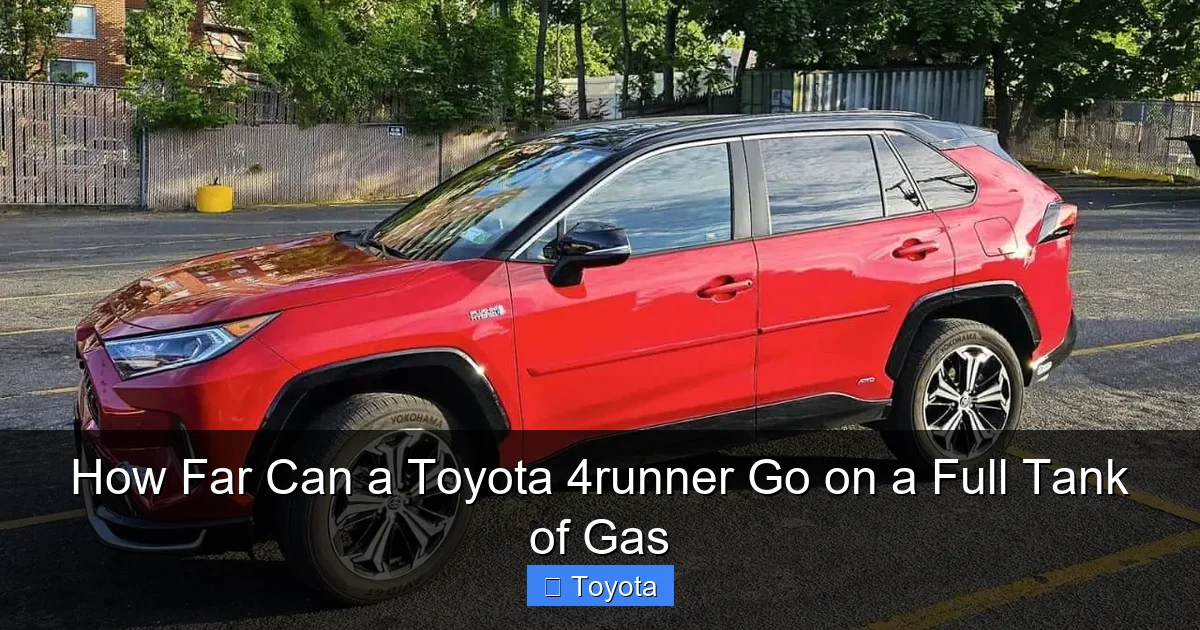
Visual guide about How Far Can a Toyota 4runner Go on a Full Tank of Gas
Image source: autocarresource.com
EPA Estimates by Engine and Drivetrain
For the current fifth-generation 4Runners (2014+), there are two primary powertrains, each with distinct fuel economy profiles:
- 4.0L V6 Engine (2014-2019): This proven workhorse is paired with a 5-speed automatic. The EPA estimates are 17 MPG city / 21 MPG highway / 19 MPG combined for 2WD models. For 4WD models, the estimates drop slightly to 17/20/18. The extra weight and drivetrain drag of 4WD inherently reduce efficiency.
- 4.0L V6 Engine (2020-2023) & 2.4L Turbo 4-Cylinder (2025+): For 2020-2023, the V6 remained but with a revised 5-speed, keeping similar estimates (~17/20/18). The major change comes for the 2025 model year with the introduction of a hybrid-assisted 2.4L turbo 4-cylinder. Early estimates suggest a significant jump to up to 23 MPG combined, which will dramatically increase range on a full tank.
- V8 Engine (Discontinued after 2012): The legendary 4.7L and later 5.7L V8s of the fourth generation offered more power but at a fuel cost. EPA estimates for the V8 4WD were typically around 13-15 MPG combined. This significantly reduces range compared to the V6, despite sometimes having the larger 24.6-gallon tank.
For a quick, practical range estimate using EPA combined MPG:
- 23-gallon tank / 18 MPG (typical V6 4WD) = ~414 miles
- 23-gallon tank / 20 MPG (V6 2WD) = ~460 miles
- 24.6-gallon tank / 14 MPG (V8 4WD) = ~344 miles
- 23-gallon tank / 23 MPG (new hybrid 4cyl est.) = ~529 miles
Real-World MPG: The Crucial Difference
Here is where optimism meets reality. The EPA’s city cycle involves a lot of idling and low-speed acceleration, which is actually somewhat kinder to a heavy SUV than real stop-and-go traffic. Most owners of V6 4Runners report real-world combined MPG in the 15-17 MPG range for mixed driving. Aggressive drivers, those who frequently engage 4WD, or who carry heavy rooftop loads can see it drop into the low 14s. Conversely, a gentle, highway-focused driver might eke out 18-19 MPG. The V8 owners consistently report 12-14 MPG in real-world use. Your personal driving style is the single biggest factor determining your actual miles per gallon, and thus, your total range on a full tank.
To get a true sense of your vehicle’s capability, reset your trip meter at each fill-up and track the gallons used. After 3-5 fill-ups, you’ll have a highly accurate personal MPG average. This is the only number that matters for your specific 4Runner and driving habits.
Real-World Range Estimates: What to Actually Expect
Armed with your tank capacity and a realistic MPG figure, you can now calculate a dependable range. Let’s break it down by common driving scenarios. Remember, these are estimates based on average real-world reports.
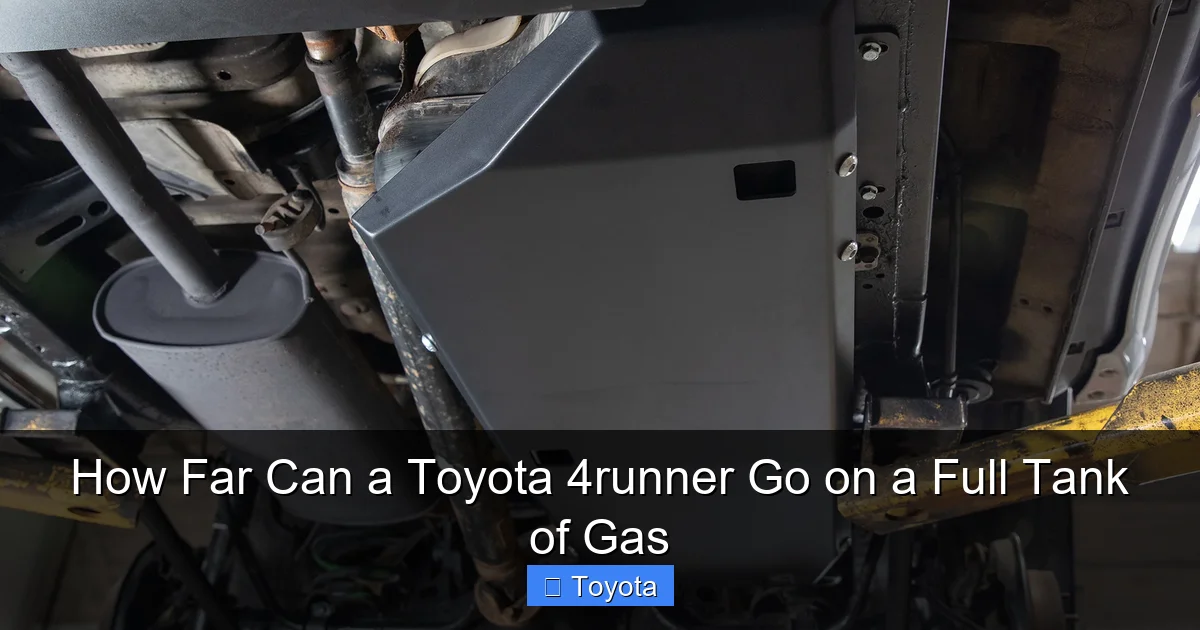
Visual guide about How Far Can a Toyota 4runner Go on a Full Tank of Gas
Image source: victory4x4.com
Mixed Driving (The Most Common Scenario)
This is a blend of city streets and highway miles, with normal acceleration and occasional use of 4WD for rain or light duty. For a typical V6 4Runner with a 23-gallon tank and a real-world MPG of 16:
23 gallons x 16 MPG = 368 miles
This is a safe, conservative estimate for daily driving and general trips. You should plan your fuel stops accordingly, not pushing much beyond 350 miles on a single tank in this scenario. For a V8 4Runner with a 24.6-gallon tank at 13 MPG real-world:
24.6 gallons x 13 MPG = ~320 miles
This highlights the significant range penalty of the larger, less efficient engine.
Pure Highway Cruising
If you’re setting off on a long, cross-country drive on flat interstates, maintaining a steady 65-70 mph, your fuel economy will improve. Aerodynamic drag is lower at consistent speeds compared to city driving. You might see 18-19 MPG in a V6. The calculation becomes:
23 gallons x 18.5 MPG = ~426 miles
This is the upper limit of what you can expect from a non-hybrid 4Runner. However, factors like headwinds, elevation changes, and traffic will quickly erode this ideal number. It’s unwise to plan a trip assuming this maximum, but it’s good to know it’s possible under perfect conditions.
Off-Road and Severe Conditions
This is where range plummets. Engaging low-range 4WD, spinning tires on mud or sand, and crawling over rocks at slow speeds can drop MPG into the single digits. For every hour of serious off-roading, you might use 1.5-2 gallons of fuel. A day on the trails could easily consume 4-6 gallons for just 50-80 miles of actual trail distance. Always fill up before and after any dedicated off-road excursion. Your tank’s range is for getting you to and from the trailhead, not for exploring the backcountry itself.
Factors That Significantly Affect Your Range
Beyond the engine and tank size, a host of variables will influence how many miles you actually squeeze out of your full tank. Understanding these helps you manage expectations and drive more efficiently.
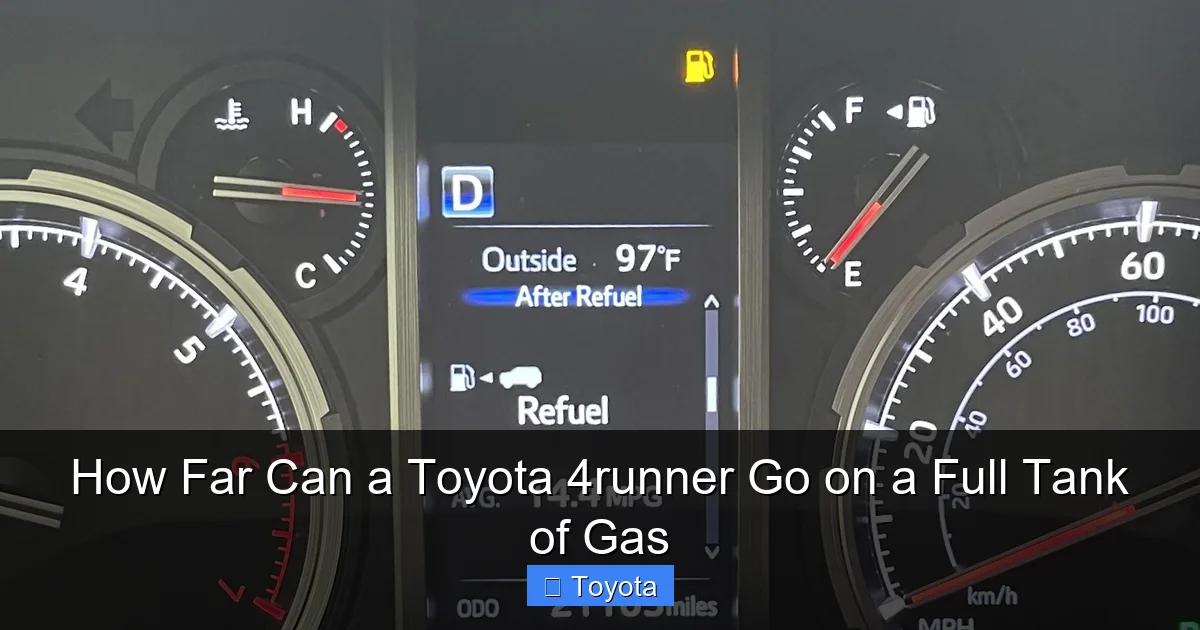
Visual guide about How Far Can a Toyota 4runner Go on a Full Tank of Gas
Image source: diycarexpert.com
Driving Habits and Terrain
This cannot be overstated. Jackrabbit starts and hard braking are the enemies of fuel economy. Smooth, gradual acceleration and anticipating stops can improve your MPG by 10-15%. Hills and mountains are the other great range-killer. Climbing grades forces your engine to work much harder, consuming more fuel per mile. The subsequent downhill does little to recover that lost efficiency. If your route involves significant elevation change, add a 10-20% buffer to your estimated fuel needs.
Vehicle Load and Aerodynamics
The 4Runner is built to carry gear, but every 100 pounds of extra weight reduces fuel economy by about 1-2%. A fully loaded family with luggage, a roof rack, and a cargo carrier can easily add 300-500 pounds. That roof rack and carrier also create significant aerodynamic drag, especially at highway speeds, potentially costing another 2-5 MPG. For maximum range, travel light and remove the roof rack when not in use. It’s also worth noting that the 4Runner’s boxy shape is inherently less aerodynamic than a car or crossover, which is a fundamental design trade-off for its utility and off-road capability.
Vehicle Health and Maintenance
A neglected 4Runner is an inefficient 4Runner. Proper maintenance is non-negotiable for optimal range. Clogged air filters restrict airflow, forcing the engine to work harder. Old, worn spark plugs cause incomplete combustion. Incorrect tire pressure increases rolling resistance dramatically—under-inflated tires can lower MPG by 0.3% for every 1 PSI drop. Using the recommended grade of motor oil (often 0W-20 for newer models) also matters. Sticking to your service schedule isn’t just about longevity; it’s directly tied to how many miles you get from each gallon.
Fuel Type and Quality
For the vast majority of 4Runners, Toyota recommends “Regular Unleaded” gasoline with an 87 octane rating. Using a higher octane (91 or 93) in an engine not designed for it provides no benefit and is a waste of money. However, using a lower octane than required (if you have a model that calls for premium, which is rare for 4Runners) can cause engine knock and damage. Always use Top Tier-rated detergent gasoline when available. These fuels contain superior detergent additives that help keep your engine’s fuel injectors and intake valves clean, which is crucial for maintaining good fuel economy over the long term. You might consider occasionally using a fuel system cleaner if you notice a drop in MPG, as this can sometimes restore lost performance.
Maximizing Your Fuel Efficiency and Range
Now that we know what hurts range, let’s focus on practical steps you can take to maximize the miles you get from every fill-up. These are habits and checks you can incorporate into your routine.
Driving Techniques for Better MPG
The most powerful tool is your right foot. Practice “hypermiling” techniques in a safe, legal manner:
- Use Cruise Control on Flat Highways: Maintaining a constant speed is far more efficient than constant acceleration and deceleration.
- Accelerate Gradually: Pretend there’s an egg under your pedal. Get up to speed smoothly.
- Coast to Stops: When you see a red light or stopped traffic ahead, take your foot off the gas early and let the vehicle’s momentum carry you. This saves fuel you’d otherwise waste braking.
- Limit Idling: Modern engines don’t need warm-up. Idling gets 0 MPG. If you’re stopped for more than 60 seconds, turn the engine off.
- Plan Your Routes: Use GPS apps that offer “eco-friendly” or “fuel-efficient” routing options that minimize stops and idling, even if the distance is slightly longer.
Pre-Trip and Regular Checks
Make these part of your maintenance ritual:
- Check Tire Pressure Monthly: Inflate to the pressure listed on the driver’s door jamb sticker, not the tire sidewall. Cold weather can drop pressure, so check more often in winter.
- Use the Correct Oil: As mentioned, stick to the 0W-20 or specified viscosity. Thicker oil increases internal engine friction.
- Replace Air Filters Promptly: A simple, cheap fix that has a real impact.
- Remove Unnecessary Cargo: Clean out the back. Don’t carry around 50 pounds of golf clubs or tools if you don’t need them that day.
- Consider Aerodynamics: If you have a roof rack, take it off for long highway trips. Close windows at high speeds; the drag from open windows can be similar to using the AC at lower speeds.
For more specific maintenance tips on your Toyota, including how to program TPMS sensors after a tire rotation, you can find detailed guides on our site that cover these essential upkeep tasks.
The Gas Light and Fuel Reserve: How Much is Left?
This is a point of major anxiety and confusion for many drivers. When that low fuel warning light (often a yellow gas pump icon) illuminates on your 4Runner’s dashboard, how many miles can you realistically still drive? The answer is: not as many as you might hope, and you shouldn’t rely on it.
What the Light Actually Means
The low fuel light is triggered by a float sensor in the gas tank. When the fuel level drops below a certain point (usually when about 2-3 gallons remain), the sensor completes a circuit and the light comes on. The exact trigger point can vary slightly by model year. The primary purpose is to get your attention so you can find a station *soon*, not to indicate a large reserve. The “distance to empty” display on your multi-information display (if equipped) is a calculated estimate based on your recent MPG. This estimate becomes increasingly inaccurate as the fuel level drops and is best used as a very rough, conservative guide.
Real-World “Miles After Light”
Based on owner reports and careful testing, a Toyota 4Runner with a 23-gallon tank and the light on (with ~2.5 gallons left) at a real-world MPG of 16 will have approximately 40-50 miles of range remaining. This is a dangerous buffer to push. Factors like driving on hilly terrain, in stop-and-go traffic, or using 4WD can consume that reserve in 30 miles or less. The only safe practice is to treat the gas light as an urgent signal to refuel at the next available opportunity, not as a challenge to see how far you can go. Pushing it risks running the fuel pump dry (which is cooled by gasoline and can fail) or sediment from the tank bottom being sucked into the fuel system. For perspective on how other Toyota models behave when the light comes on, such as a Camry or Sienna, the reserve distances differ based on their tank size and efficiency.
Conclusion: Your 4Runner’s Range is What You Make It
So, how far can a Toyota 4Runner go on a full tank of gas? The definitive, technical answer is: Between 300 and 460 miles for most V6 models under mixed real-world conditions, with the potential for up to 500+ miles in the new hybrid variant or under ideal highway cruising. The theoretical maximum based on EPA estimates and a full 23-gallon tank is higher, but it’s a best-case scenario, not a promise.
Your 4Runner’s true range is a living number, shaped by your specific model year, engine, and most critically, your driving habits. It’s a capable, rugged SUV built for adventure, not for hypermiling. By understanding your tank capacity, tracking your real MPG, practicing efficient driving techniques, and heeding the gas light warning, you can confidently plan trips, avoid stress, and keep your 4Runner running strong for years to come. Remember, when in doubt, fill up. There’s no substitute for peace of mind when you’re behind the wheel of this legendary SUV.
Frequently Asked Questions
Does using 4-wheel drive (4WD) reduce the Toyota 4Runner’s range on a full tank?
Yes, significantly. Engaging 4WD adds substantial drivetrain drag and weight, increasing fuel consumption. Expect a 1-3 MPG drop in real-world driving when 4WD is active compared to 2WD, which directly reduces your total miles per tank. It should be used for traction, not for normal dry-pavement driving.
How does off-roading impact how far I can go on a full tank?
Off-roading has an extreme impact on range. Low-speed crawling in 4Low, momentum rock climbs, and spinning tires can lower MPG to 5-8 or even less. A full day of aggressive trail use can consume a gallon or more per hour. Always plan to refuel before and after off-road trips; your tank’s rated range is for getting to the trail, not for exploring it.
Is the “miles to empty” display on my 4Runner’s dash accurate?
It’s a useful estimate but not infallible. It’s calculated based on your recent average MPG. If you’ve been driving on the highway, it will overestimate range for upcoming city driving. As your fuel level gets very low, the estimate becomes less reliable. Use it as a general guide, but always refuel when the low fuel light comes on, with a 40-50 mile buffer at most.
Will aftermarket accessories like larger tires or a lift kit affect my range?
Absolutely. Larger, heavier all-terrain tires increase rolling resistance and unsprung weight, often lowering MPG by 1-3. A lift kit increases aerodynamic drag. These modifications, while great for capability, come at a direct cost to fuel efficiency and the distance you can travel on a full tank.
How much does towing a trailer or boat reduce my 4Runner’s range?
Towing dramatically increases fuel consumption. The added weight and aerodynamic drag can cut your MPG in half or more. A 4Runner getting 16 MPG unloaded might drop to 8-10 MPG while towing a moderate-sized trailer. You must calculate your range based on this new, much lower MPG and plan fuel stops much more frequently.
How does the 4Runner’s range compare to other SUVs like the Toyota Highlander or RAV4?
The 4Runner prioritizes off-road durability over fuel efficiency. A similarly sized crossover like the Toyota Highlander (with a similar 17-20 MPG rating but often a slightly larger tank) may have a comparable or slightly higher highway range, but it lacks the 4Runner’s serious off-road hardware. The smaller, more efficient RAV4 (up to 40 MPG hybrid) has a much longer range on a full tank but is a fundamentally different vehicle with far less towing and off-road capability. The 4Runner’s range is a trade-off for its unmatched toughness.