
How to Lock a Bmw X5

Locking your BMW X5 is simple once you know the methods. You can use the key fob, door handles, or the BMW app. If electronics fail, a hidden manual key saves the day. Always double-check the locks for peace of mind.
So, you’re standing next to your BMW X5, groceries in hand, and you just want to lock it and go. It should be the simplest thing in the world, right? Yet, with all the advanced tech packed into a modern X5, sometimes that simple action feels a little confusing. Maybe the key fob button didn’t work, or you’re not sure if the car locked. Don’t worry. Locking your BMW X5 is designed to be intuitive, and once you understand the “why” behind the “how,” it becomes second nature. This guide will walk you through every single method, from the standard press of a button to the hidden manual backup, ensuring you can always secure your luxury SUV with confidence.
We’ll start with the everyday methods you’ll use 99% of the time. Then, we’ll dive into the tech that makes it work, what to do when it fails, and the best habits to keep your X5—and its contents—safe. Think of this as your complete owner’s manual for the act of locking the door. By the end, you’ll not only know how to do it, but you’ll understand the sophisticated security system you’re activating with each click or touch.
Key Takeaways
- Multiple Methods: Your BMW X5 offers key fob, proximity handle, app, and manual locking options for flexibility.
- Key Fob is Primary: The remote key fob is the most common and reliable way to lock all doors and the tailgate instantly.
- Touchless Entry Works: With Comfort Access, simply touching the door handle sensor locks the vehicle when your key is nearby.
- Manual Backup Exists: A hidden mechanical key inside the fob allows you to lock the driver’s door manually if the battery dies.
- Security is Multi-Layered: The X5 uses encrypted signals and an immobilizer to prevent theft, but you must still lock it properly.
- Troubleshooting is Straightforward: Most locking issues are fixed by replacing the key fob battery or resetting the system.
- Always Verify: Visually confirm the mirrors fold and the lock mechanism engages; listen for the double-chime confirmation.
📑 Table of Contents
Understanding Your BMW X5’s Locking System
Before we jump into button-pressing, it helps to know what you’re talking to. Your BMW X5’s locking system isn’t just a simple mechanical linkage like in cars from decades past. It’s a networked computer system with several components working together. Knowing these parts helps you diagnose problems and use the features more effectively.
The Key Players: Fob, Handles, and Control Modules
The star of the show is your key fob. It’s a small, battery-powered radio transmitter. When you press the lock button, it sends a unique, encrypted signal to a receiver module in your car. This isn’t just an “on/off” signal; it’s a secure conversation that verifies the fob is paired with your specific vehicle. This prevents someone with a generic remote from unlocking your X5.
Next, you have the door handle sensors. On models with Comfort Access (a common feature on X5s), the handles contain touch-sensitive capacitors. When you grasp the handle, it senses your hand’s proximity and checks if your paired key fob is nearby. If it is, it electronically unlocks that door. The reverse is true for locking—a specific touch pattern on the handle sensor sends the lock command.
Finally, there are the door lock actuators and the Central Locking Module (ZVM). These are the little motors inside the doors and the brain that controls them. The ZVM receives the signal from the fob or handle sensor and commands each door’s actuator to move the lock mechanism. It also controls the tailgate lock and often triggers the folding of the side mirrors.
How the Signal Travels: Encryption and Range
Modern BMWs use rolling code encryption. Every time you lock or unlock, the fob and the car’s receiver generate a new, unique code. This prevents “code-grabbing” replay attacks where a thief records your signal and replays it later. The typical effective range for the key fob is about 20-30 feet in an open area, but walls, weather, and even your body can block the signal. That’s why sometimes you have to be closer for it to work.
Understanding this network is key. If the door doesn’t lock, the failure could be in the fob (dead battery), the car’s receiver (module fault), the actuator (jammed mechanism), or even a blown fuse. We’ll cover troubleshooting later.
Standard Locking Methods with the Key Fob
This is your bread and butter. The physical key fob with buttons is the most direct and universally reliable method across all X5 generations. Let’s break down the exact button presses and what they do.
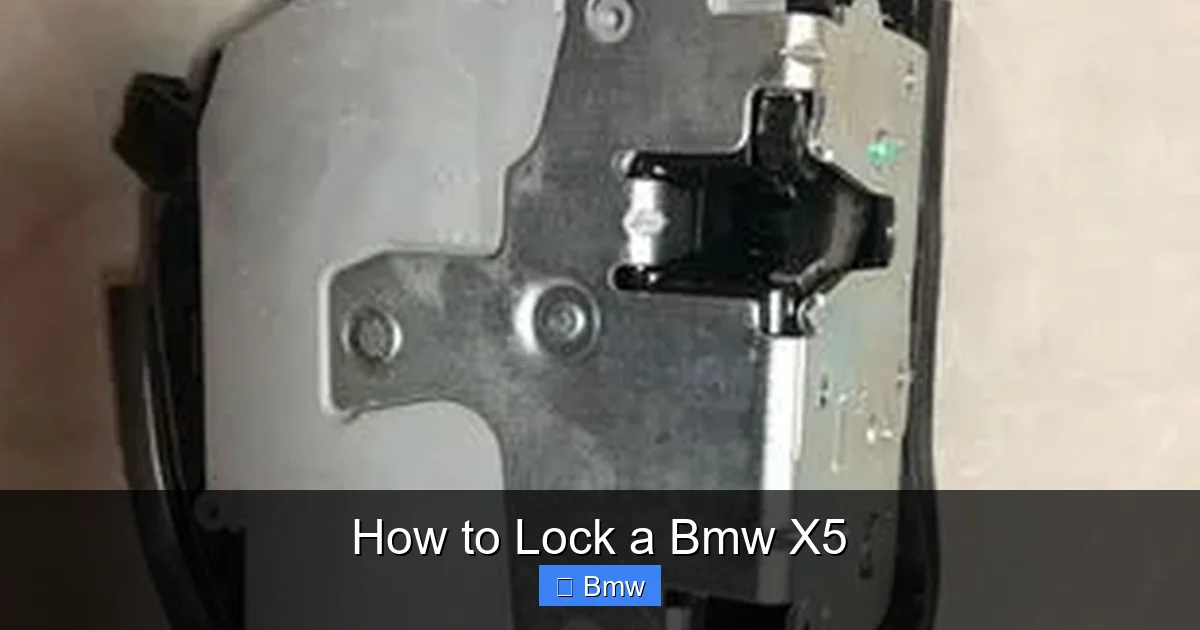
Visual guide about How to Lock a Bmw X5
Image source: images.ovoko.com
The Classic Press-and-Hold Technique
Grab your key fob. You’ll see at least three buttons: an open padlock (unlock), a closed padlock (lock), and a trunk icon. To lock your entire X5, simply press the closed padlock button once. You should hear a series of quick beeps from the car and see the side mirrors automatically fold in (if configured to do so in the iDrive settings). The tailgate will also lock. This single press locks all doors and the tailgate simultaneously. It’s fast and definitive.
Pro Tip: After pressing the button, always do a quick visual check. Look for the red LED indicator on the door handles (if equipped) or watch the mirrors fold. You’ll also hear a distinct double-chime from the car if you’re within range, confirming the lock cycle is complete. If you only hear one chime or none at all, the signal may not have been received—try again closer to the vehicle.
One-Touch Locking from Inside
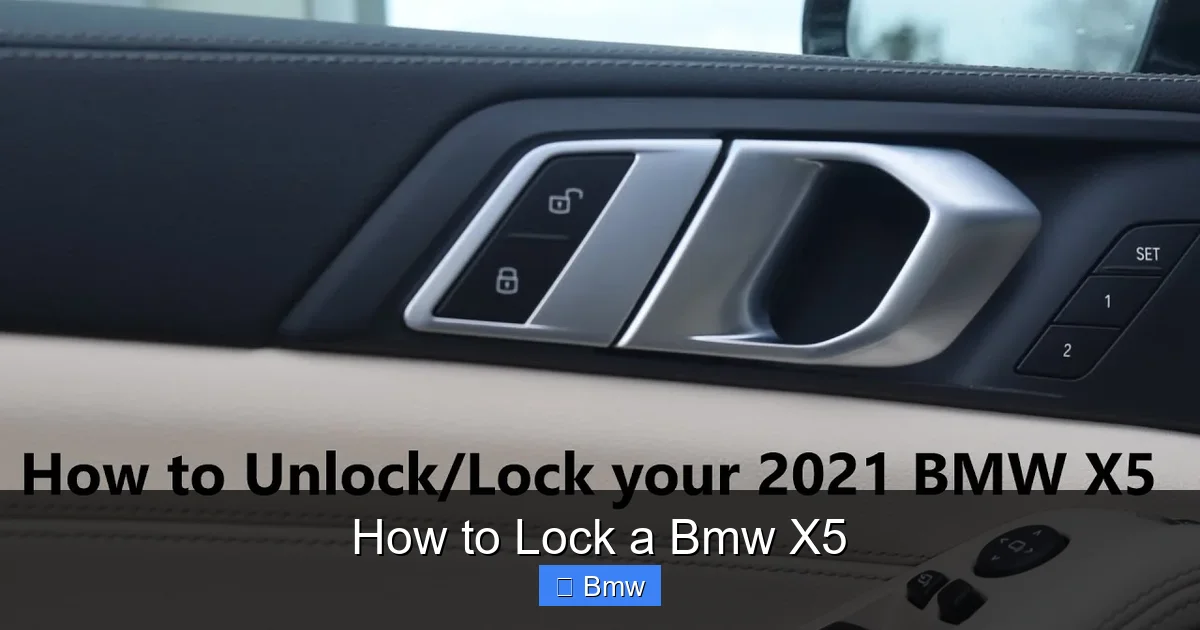
Once you’re inside the X5, you don’t need the fob. All doors have a traditional lock switch or button. On newer models with iDrive, there’s often a central lock button on the center console or door panel. Pressing any of these will lock all doors. However, be aware: locking the doors from the inside with the engine running is a different scenario. Many modern cars, including BMWs, have a safety feature that prevents you from accidentally locking the key inside. If your X5 is running and you try to lock from the inside using the door switch, it may only lock the other doors, not the driver’s door. This is a critical safety feature to avoid being locked out with a running engine. For more on locking a car while running, our guide on how to lock a Toyota Highlander with the engine running explains the general safety principles that apply across brands.
Locking from the Trunk
If you’re loading the trunk and your hands are full, you can lock the X5 from the tailgate button. Inside the trunk lid, there’s a button (often near the license light or trunk release). Pressing this will lock all doors. It’s a great convenience feature. Just be sure not to accidentally press it while closing the trunk, which could lock you out if your keys are inside.
Touchless and Advanced Locking Features
This is where BMW’s engineering shines. If your X5 has Comfort Access (almost all post-2012 models have it), you can lock the car without ever touching the key fob. It’s all about proximity and touch.
Visual guide about How to Lock a Bmw X5
Image source: i.ytimg.com
Comfort Access: The Grasp-and-Lock Method
With the key fob in your pocket or bag, simply approach the X5. When you’re within about 3 feet of a door handle, the system wakes up. To lock, place your entire hand on the top surface of the door handle and cover it for a second. You’ll feel a slight vibration or hear a click from the handle, and then the car will lock. Do this on any door handle, and all doors and the tailgate will secure. It’s incredibly intuitive. The same principle works for unlocking—just grasp the handle normally.
Important Note: This feature can be accidentally triggered. If you lean against the car while carrying the key, you might accidentally lock it. Also, if the key fob battery is very low, the car may not detect it for touchless entry, forcing you to use the physical buttons.
Using the BMW ConnectedDrive App
If your X5 is equipped with BMW ConnectedDrive services (usually a subscription-based feature), you can lock and unlock your car from your smartphone. Open the BMW Connected app, ensure your phone has an internet connection, and navigate to the vehicle controls. You’ll see a lock/unlock toggle. Tapping it sends a command through the cellular network to your car’s telematics module. This method works from virtually anywhere, making it perfect if you’re already blocks away and can’t remember if you locked it. However, it relies on cellular service and a valid subscription, so it’s best used as a supplement to, not a replacement for, your key fob.
Manual Locking Procedures (When Electronics Fail)
What happens when the key fob battery is dead, the car’s battery is disconnected, or the electronic system has a glitch? You need a backup plan. BMW provides a clever, hidden manual system.

Visual guide about How to Lock a Bmw X5
Image source: i.ytimg.com
Unfolding the Hidden Mechanical Key
Look at your key fob. On the side opposite the BMW logo, there’s a small, flush button or slider. Press or slide it, and a traditional metal key blade will pop out. This is your ultimate backup. Now, look at the driver’s door handle. You’ll see a small, rectangular cover on the side of the handle (the part facing the front of the car). Use the metal key to gently pry this plastic cover off. Underneath is a traditional key cylinder.
Insert the key, turn it to the left (unlock), and then you can open the door. To lock the car manually, you must get inside first. Once inside, you can use the manual door lock switch (usually a small knob or lever on the door panel that you push down or pull up) to lock the driver’s door. However, this only locks the driver’s door. To lock the other doors and the tailgate manually, you would need to get out and use the key in each individual door’s cylinder—a tedious process. Therefore, the manual key is primarily for gaining entry when the fob fails, not for routine locking.
Locking from Inside with the Manual Switch
Even with a working fob, it’s good to know the manual door lock. It’s a physical override. If the electronic central locking fails, you can push down the lock knob on each door panel to secure that door individually. Remember, this won’t activate the tailgate lock or the alarm system’s full arming sequence. For complete security, you want the central locking to function.
Troubleshooting Common Locking Issues
So your X5 isn’t responding. Before you panic, work through this simple checklist. Most problems are minor and fixable in minutes.
Key Fob Battery Replacement
This is the #1 cause of locking failures. The key fob uses a standard CR2032 coin cell battery. You’ll notice reduced range, intermittent operation, or the need to press buttons multiple times. Replacing it is easy. Use a small flat-head screwdriver to gently pry open the fob along the seam. Remove the old battery, insert the new one with the positive (+) side facing up, and snap the fob back together. After replacing the battery, you may need to resynchronize the fob. Simply place it in the cup holder (or near the key slot if your X5 has one) and press the lock and unlock buttons simultaneously for about 10 seconds. The car should respond with a confirmation chime.
Resetting the Key Fob
Sometimes, the fob’s internal memory gets corrupted. A reset can help. With the car locked and the fob outside, press and hold the unlock button on the fob. While holding it, press the lock button three times in quick succession (within about 10 seconds). Release both buttons. The fob’s LED should flash, indicating a reset. Try locking the car. If this doesn’t work, the fob may need to be reprogrammed by a BMW dealer or a specialist with the proper diagnostic tools, as it’s paired to your vehicle’s security system.
When to Seek Professional Help
If you’ve replaced the battery and reset the fob with no luck, the issue is likely with the car. This could be a blown fuse for the central locking system, a faulty door lock actuator, a malfunctioning ZVM module, or a problem with the antenna that receives the fob signal. Diagnosing this requires a BMW-specific scan tool like ISTA. At this point, it’s time to call your dealer or a trusted independent BMW mechanic. Also, if you’ve lost all keys, you’ll need a professional to cut and program a new one, which is a security-sensitive process.
Security Features and Best Practices
Locking your X5 is the first line of defense, but modern luxury SUVs are targets for sophisticated thieves. Understanding the security layers helps you use them effectively.
Understanding the Immobilizer System
The moment you lock your X5, the immobilizer is armed. This is an electronic system in the engine control unit (ECU) that prevents the engine from starting without the correct, coded key fob being present in the car. Even if a thief breaks a window and hot-wires the ignition, the immobilizer will shut the engine down almost immediately. Locking your car activates this vital system. It’s why you should never leave the key fob inside the vehicle—even if it’s locked, a thief could break in, have the key, and drive away. The immobilizer only works if the key is present but not recognized as valid for starting.
Protecting Against Relay Attacks
A common theft method for keyless entry cars is a “relay attack.” Thieves use devices to amplify your key fob’s signal from inside your house to your car in the driveway, tricking it into thinking the key is present. They then open and drive the car. To combat this, BMWs often have a feature that disables the key fob’s signal when it’s stationary for a period (like overnight on your nightstand). You can also store your key fob in a signal-blocking pouch (Faraday bag) or a metal cookie tin when not in use. This completely prevents its signal from being amplified. It’s a simple, effective habit. For more on securing your BMW, our article on how to disable a BMW car alarm discusses the interplay between the alarm and immobilizer systems, which are part of the same security network.
Safe Locking Habits for Urban Areas
In a city, your locking routine should be deliberate. Always perform the “double-check”: press the fob button, watch the mirrors fold, and listen for the double-chime. If you’re in a crowded area, be aware of your surroundings when using the key fob—someone could be watching you press the button and note the location of your car. Consider using the touchless handle method instead, as it’s less obvious. Also, never leave valuables visible inside the locked X5. The locked door deters casual theft, but a determined thief with a glass-breaking tool can still get in quickly. Store laptops, bags, and electronics in the trunk or take them with you. Maintaining your car’s security features is also good for its long-term value; when you’re ready to sell, a fully functional security system is a major plus for buyers. Our guide on how to sell a BMW highlights how all systems, including locks and alarms, impact resale value.
Conclusion: Confidence in Every Click
Locking your BMW X5 is more than a simple action; it’s engaging a sophisticated security network designed to protect your investment. You now have the full toolkit: the primary key fob method, the elegant touchless handle option, the remote app control, and the essential manual backup. Remember the golden rules: always verify the lock engagement, replace the key fob battery proactively (every 2-3 years), and use a Faraday bag to prevent relay attacks.
Your X5 is a remarkable machine, and its locking system is a testament to BMW’s blend of convenience and security. By understanding these methods and troubleshooting steps, you eliminate the uncertainty. You’ll never again stand there wondering, “Did it lock?” You’ll know. So go ahead, press that button, hear that satisfying chime, and walk away with complete peace of mind. Your BMW X5 is secure.
Frequently Asked Questions
Can I lock my BMW X5 if the key fob battery is completely dead?
No, you cannot lock it using the wireless fob button or touchless handle if the battery is dead. However, you can use the hidden mechanical key blade to unlock the driver’s door from the outside. Once inside, you can lock the driver’s door manually, but this will not lock the other doors or the tailgate centrally. The best solution is to replace the key fob battery immediately.
Why do my BMW X5’s side mirrors not fold when I lock the car?
The mirror folding feature is adjustable through the iDrive system. Go to My Vehicle > Vehicle Settings > Central Locks and ensure “Fold mirrors when locking” is enabled. If the setting is on but mirrors still don’t fold, it could indicate a fault in the mirror module or a blown fuse specific to the mirror motors.
Is it normal for the key fob to have a limited range in a parking garage?
Yes, this is normal. Concrete, metal structures, and other vehicles block the radio signal. In an open area, your range is about 20-30 feet. In a parking garage, it can drop to 5-10 feet or less. If you find the range is drastically shorter than before (even in open spaces), it’s likely a weakening key fob battery that needs replacement.
What does the double-chime mean when I lock my X5?
The double-chime is the standard audible confirmation that the central locking cycle has completed successfully. It means all doors, the tailgate, and the fuel filler flap are securely locked, and the immobilizer is armed. A single chime or no chime indicates the signal was not received or the lock cycle was interrupted (e.g., a door is ajar).
Can I lock my BMW X5 with the engine running using the key fob?
Yes, you can. Pressing the lock button on the key fob will lock all doors and the tailgate even if the engine is running. This is different from using the interior door switch, which often has a safety lockout for the driver’s door to prevent accidental lockouts. Locking a running car is generally safe in an X5 due to its keyless start system, but always ensure you have the key fob with you before exiting.
Why does my BMW X5 beep repeatedly when I try to lock it?
A repeated, rapid beeping (often accompanied by the lights flashing) is a warning that a door, the hood, or the tailgate is not fully closed. The car’s sensors detect an open panel and prevent the central lock from engaging to avoid locking something open. Check all doors, the trunk, and the hood to ensure they are firmly latched. If everything is closed and it still beeps, a door ajar sensor may be faulty.