
Where Is the Mazda 3 Made

The Mazda 3 is not made in just one place. For the 2026 model year, this popular compact car is produced across a strategic global footprint, with primary factories in Japan, Mexico, and Thailand. While each plant adheres to Mazda’s renowned “Monotsukuri” manufacturing philosophy, subtle differences in specifications and features can exist based on the vehicle’s final market. Understanding its origin can provide insights into potential regional pricing, available trims, and even the nuances of its build quality.
Have you ever looked at your Mazda 3—or the one you’re dreaming of buying—and wondered, “Where in the world did this come from?” It’s a fascinating question that goes beyond simple trivia. The answer tells a story of global commerce, engineering excellence, and strategic market planning. For the 2026 model year, the Mazda 3 continues a tradition of being a truly global car, built on multiple continents to serve a worldwide audience. This isn’t about cutting corners; it’s about Mazda’s smart, efficient approach to getting its award-winning compact to customers everywhere, from the streets of Tokyo to the highways of Texas, without compromising the driving joy it’s famous for. Let’s pull back the curtain and explore the factories that bring the Mazda 3 to life.
Key Takeaways
- Global Manufacturing Footprint: The Mazda 3 is primarily built in three key locations: Hofu, Japan; Salamanca, Mexico; and Rayong, Thailand, serving different world markets.
- Home Market Production: Vehicles destined for Japan and many global exports (like Europe) are still predominantly built in Japan, maintaining the brand’s traditional engineering heartland.
- North American Supply: Mazda 3 models sold in the United States and Canada are manufactured at the state-of-the-art Mazda de México Vehicle Operation (MMVO) plant in Salamanca.
- Regional Variants Exist: While the core platform is identical, factories produce models with specific engine calibrations, feature sets, and safety equipment to meet local regulations and consumer preferences.
- Uniform Quality Standards: Despite geographic separation, all Mazda plants follow identical “Monotsukuri” quality control processes, ensuring a consistent ownership experience worldwide.
- VIN is the Decoder: The 10th digit of the Vehicle Identification Number (VIN) definitively identifies the specific plant where any individual Mazda 3 was assembled.
📑 Table of Contents
- The Strategic “Why”: Understanding Mazda’s Global Production Philosophy
- Powering the Americas: The Salamanca, Mexico Plant
- The Rising Hub: Rayong, Thailand
- Decoding Your Mazda 3: How to Find Its Birthplace
- The Future: Electrification and the Mazda 3’s Production Path
- Conclusion: A Global Car, A Mazda Soul
The Strategic “Why”: Understanding Mazda’s Global Production Philosophy
Before we dive into the “where,” it’s crucial to understand the “why.” Mazda is a relatively small automaker by global standards, but it punches far above its weight. Its manufacturing strategy is a masterclass in efficiency and market responsiveness. Building cars closer to their intended markets reduces shipping costs and times, helps avoid certain import tariffs, and allows for quicker adaptation to local tastes and regulations. This approach is common among major automakers; for instance, you can see a similar strategy with brands like Audi, which produces the Q5 in multiple locations including Mexico and Germany to serve different regions effectively.
Central to Mazda’s production ethos is “Monotsukuri,” a Japanese concept meaning “the art of making things.” It’s a holistic philosophy that permeates every factory, emphasizing continuous improvement (Kaizen), quality at the source, and respect for craftsmanship. Whether a Mazda 3 rolls off the line in Hiroshima or Hidalgo, the fundamental standards are identical. The goal is that a customer in Vancouver should feel no discernible difference in fit, finish, or driving character compared to a customer in Kyoto. This unwavering commitment to quality is what allows Mazda to confidently operate a global production network without diluting its brand reputation.
A Legacy Forged in Japan: The Hofu Plants
For decades, the name “Hofu” was synonymous with the Mazda 3 (formerly the Mazda Familia/323). Located in Yamaguchi Prefecture, Japan, the Hofu complex is one of Mazda’s most historic and significant manufacturing sites. It consists of two main plants: Hofu Plant No. 1 and the newer, more advanced Hofu Plant No. 2. These facilities have been the primary source for Mazda 3s bound for Japan, Europe, Australia, and many other markets.
The Hofu plants represent the pinnacle of Mazda’s engineering and production integration. They are often the first to implement new manufacturing technologies and processes for the model. If you purchase a Mazda 3 in Europe or Japan in 2026, there is an extremely high probability it was built at Hofu. The plant is deeply integrated with Mazda’s R&D centers, allowing for a seamless feedback loop between designers, engineers, and assembly line technicians. This proximity is a key advantage for complex model launches and quality fine-tuning.
Powering the Americas: The Salamanca, Mexico Plant
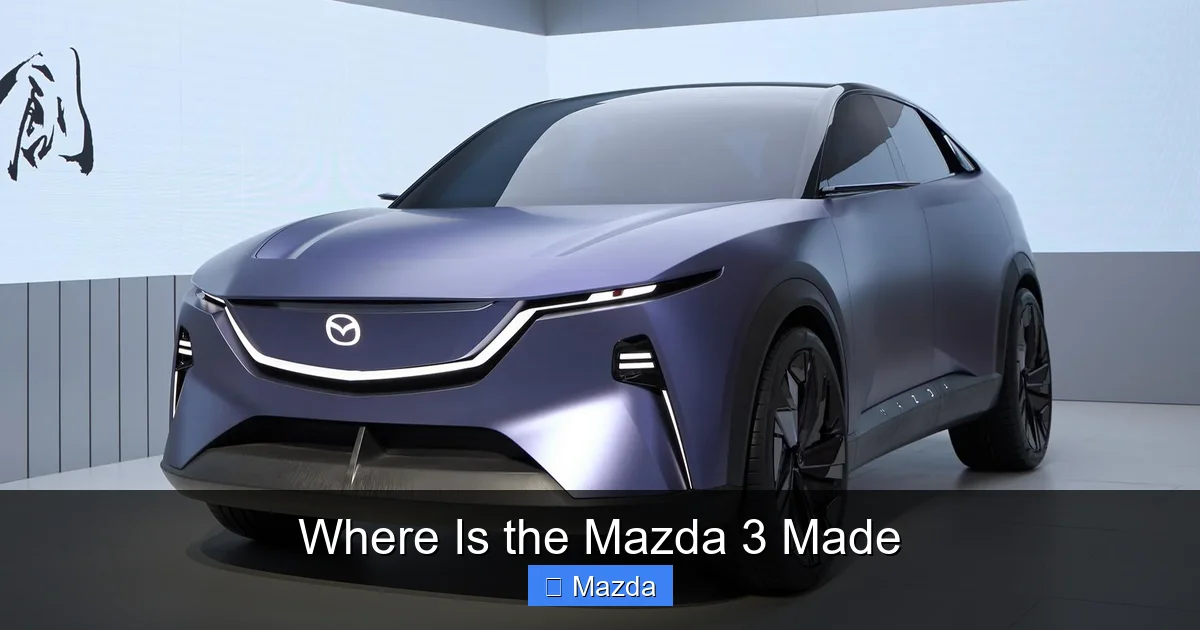
The story of Mazda’s North American manufacturing is dominated by the Mazda de México Vehicle Operation (MMVO) in Salamanca, Guanajuato. This state-of-the-art facility, which began production of the third-generation Mazda 3 in 2014, is a cornerstone of Mazda’s strategy for the Western Hemisphere. For the 2026 Mazda 3 sold in the United States and Canada, your vehicle was almost certainly built in Mexico.
Visual guide about Where Is the Mazda 3 Made
Image source: images.carexpert.com.au
The decision to build in Mexico was a strategic landmark. It allowed Mazda to serve the massive North American market with locally produced vehicles, mitigating currency fluctuations and long-distance logistics. The Salamanca plant is a showcase of modern automotive manufacturing, featuring high levels of automation alongside skilled human workers. It has consistently earned awards for its quality, often matching or exceeding benchmarks set by plants in Japan. The plant not only builds the Mazda 3 but also the Mazda CX-30 and has previously produced the Mazda 2 and Mazda CX-5. Its flexibility allows it to adapt production volumes to market demand swiftly.
What Does “Made in Mexico” Mean for the North American Mazda 3?
For the U.S. and Canadian buyer, the Mexican assembly has several practical implications. Firstly, it generally contributes to a more competitive price point compared to a direct import from Japan, as it avoids certain import fees and reduces transportation costs. Secondly, the specification is meticulously tailored to North American demands. This means the standard engine is the 2.5-liter Skyactiv-G petrol engine (not the smaller 2.0L commonly found in other markets), and the feature set emphasizes popular local amenities. Safety equipment, infotainment systems, and even lighting regulations are all configured specifically for the U.S. and Canadian markets. The build quality, however, is held to the exact same rigorous Monotsukuri standards as any Japanese plant. In fact, quality audits from both the company and third-party firms consistently rank the Salamanca plant among the best in the world.
The Rising Hub: Rayong, Thailand
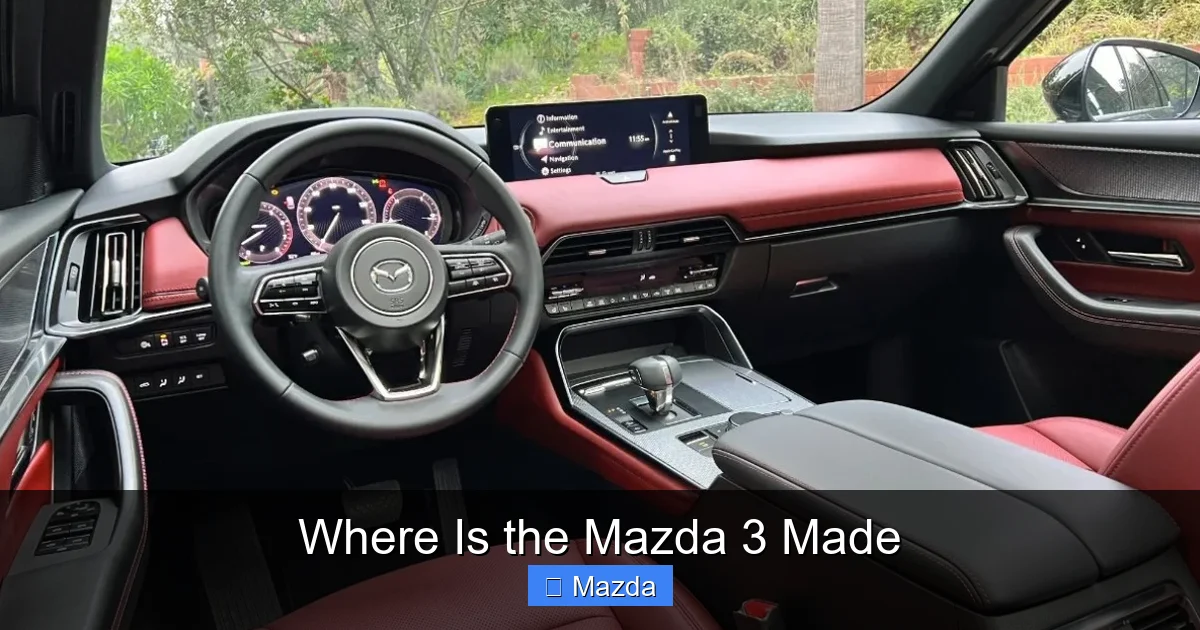
The third pillar in the Mazda 3’s global production triangle is the AutoAlliance Thailand (AAT) plant in Rayong. This is a joint venture between Mazda and Ford (though Ford has since divested its stake, Mazda continues operations). The Rayong facility serves as the primary production center for Mazda vehicles in Southeast Asia, Australia, and increasingly, for exports to other regions including the Middle East and parts of South America.
Visual guide about Where Is the Mazda 3 Made
Image source: newmazdamodels.com
The Thai-built Mazda 3 is the variant most commonly found in Australia, New Zealand, and across Asia. Its production is heavily influenced by the needs of these right-hand drive markets and the specific preferences of Southeast Asian consumers. This might include different standard equipment packages, engine tuning for local fuel qualities, and climate-specific adjustments. The Rayong plant is also a critical export hub, demonstrating Mazda’s ability to use a single facility to supply a vast and diverse region efficiently. It underscores Mazda’s long-term commitment to the Asian market, which is a vital growth area for the brand.
Comparing the Plants: Subtle Differences in a Global Product
So, is a Japanese Mazda 3 “better” than a Mexican or Thai one? The short, definitive answer is no. Mazda’s global quality assurance systems are designed to eliminate meaningful disparities in core build quality, panel gaps, paint finish, and long-term durability. The differences that do exist are almost entirely related to market-specific specifications, not manufacturing prowess.
Think of it like this: the engineering blueprint is the same, but the parts list (the “Bill of Materials”) can vary slightly by region. A Mexican-built Mazda 3 for the U.S. will have a different audio system, seat fabric options, and wheel designs than a Japanese-built one for Europe, even if the underlying chassis, engine, and transmission are identical. These differences are driven by what customers in each region are willing to pay for and what regulations mandate. For example, a European-spec model might have a more efficient particulate filter (GPF) on its petrol engine or different lighting assemblies to meet ECE regulations. An Australian model will have specific right-hand drive switchgear and dashboard calibration. The “soul” of the car—its steering feel, suspension tuning, and overall dynamic character—is engineered at Mazda’s headquarters and replicated with extreme precision at all plants.
Decoding Your Mazda 3: How to Find Its Birthplace
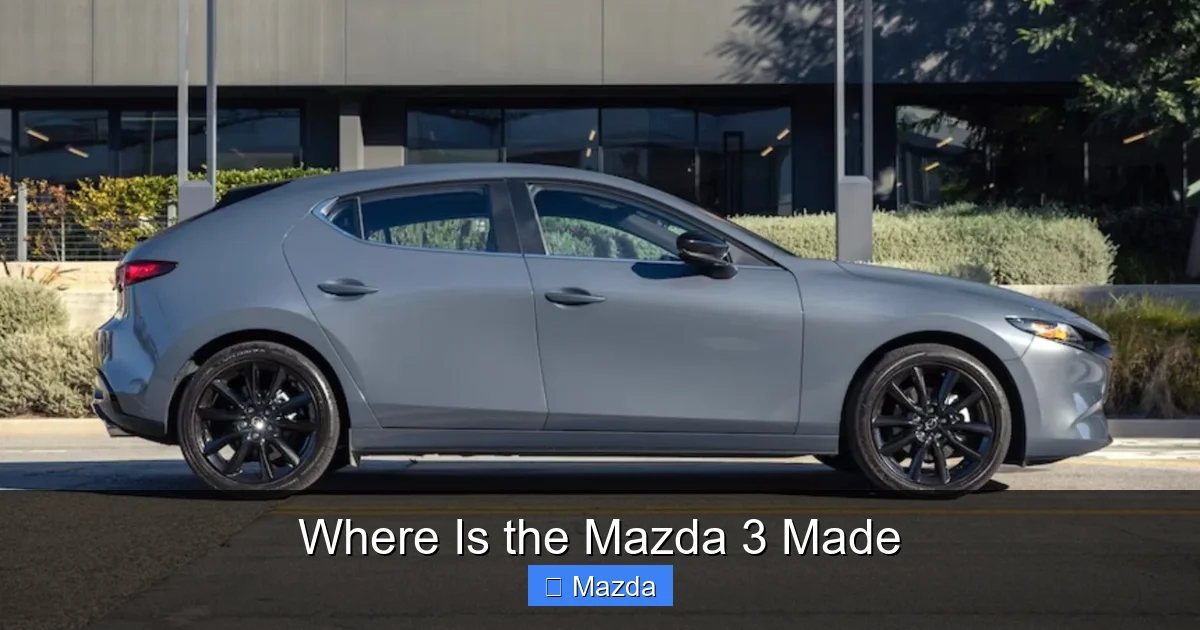
Curiosity satisfied? You can find out exactly where your Mazda 3 was built using its Vehicle Identification Number (VIN). This 17-digit code is the car’s global fingerprint. The 10th character is the “model year” digit, but more importantly for our purposes, the 1st character (the World Manufacturer Identifier) and the 11th-17th characters (the sequential production number) are used in conjunction with plant codes. However, the most direct method is often the 10th digit in combination with specific plant codes within the VIN’s structure.
Visual guide about Where Is the Mazda 3 Made
Image source: insidethehood.com
Here is a general guide for recent model years (always verify with a Mazda dealer for absolute certainty):
- Japan (Hofu): VINs typically start with “JM” (for Japan, Mazda). The 10th digit will correspond to the specific model year, but the plant identifier is embedded in the 11th position for some markets.
- Mexico (Salamanca): VINs for North American-market cars start with “3M” (3 = Mexico, M = Mazda). This is the most straightforward identifier. If your U.S. or Canadian 2026 Mazda 3’s VIN begins with “3M1” or similar, it’s from Salamanca.
- Thailand (Rayong): VINs for vehicles from Thailand typically start with “MM” (M = Mazda, M = Thailand). You’ll see this on Australian and Asian-market models.
You can enter your full VIN into various online “VIN decoders” or, for the most accurate information, contact a Mazda dealership with the number. They have access to the precise manufacturing database.
The Future: Electrification and the Mazda 3’s Production Path
Looking ahead to 2026 and beyond, Mazda’s production strategy for the Mazda 3 will inevitably evolve with the brand’s electrification goals. Mazda has announced plans for battery-electric vehicles (BEVs) and plug-in hybrids (PHEVs). While the current-generation Mazda 3 is offered with a mild-hybrid system in some markets, a full BEV version is anticipated within the next few product cycles.
This shift raises questions about where future electric Mazda 3s will be built. Automakers are often locating EV production at existing, highly flexible plants or at new, dedicated “EV gigafactories.” Mazda has stated it will leverage its existing global manufacturing network for its EVs, retrofitting lines as needed. It’s highly likely that the plants in Salamanca and Hofu, both of which are modern and adaptable, will be configured to produce future electric variants of the Mazda 3. The strategy will again be about producing EVs as close to their key markets as possible. The core principle remains: building the right car, in the right place, for the right customer, with unwavering quality.
Conclusion: A Global Car, A Mazda Soul
So, where is the Mazda 3 made? The beautiful, and perhaps surprising, answer is: it depends. It’s made in the historic factories of Hofu, Japan. It’s made in the award-winning, modern facility of Salamanca, Mexico. And it’s made in the bustling export hub of Rayong, Thailand. This global footprint is not a sign of dilution but a testament to Mazda’s sophisticated understanding of the modern automotive world.
It allows the company to be resilient, responsive, and competitive. No matter which plant bestowed its final bolts and paint upon your specific 2026 Mazda 3, you are getting a vehicle that has passed through the same exacting “Monotsukuri” philosophy. You’re getting the same soulful driving dynamics, the same stunning Kodo design language, and the same commitment to driver engagement. The next time you slide behind the wheel, you can appreciate not just the engineering under the hood, but the global journey that brought that car to your driveway—a journey completed with precision, passion, and a relentless focus on quality, no matter the continent.
Frequently Asked Questions
Does it matter where my Mazda 3 was built?
For most owners, the difference is negligible. Mazda enforces identical global quality standards. The primary impact is on the specific features, engine, and equipment your model has, which are determined by the market it was built for (e.g., U.S. vs. Japan), not the plant’s inherent quality.
How can I check the manufacture location of a specific used Mazda 3?
The most reliable method is to decode the Vehicle Identification Number (VIN). The first three characters indicate the country and manufacturer. “JM1” or “JMZ” indicates Japan, “3M1” indicates Mexico (for North America), and “MMM” or “MMY” indicates Thailand. You can use online VIN decoders or ask a Mazda dealer.
Are Mexican-built Mazda 3s as reliable as Japanese-built ones?
Yes. Extensive quality data and awards, such as those from J.D. Power and internal Mazda audits, show that the Salamanca, Mexico plant produces vehicles with quality ratings on par with, and sometimes exceeding, those of the Japanese plants. The manufacturing processes and training are standardized globally.
Why does Mazda build the same car in different countries?
It’s a strategic business decision. Building closer to major markets (like Mexico for North America) reduces shipping costs and time, helps navigate trade agreements and tariffs, and allows for faster adaptation to local consumer preferences and regulatory requirements.
Will future electric Mazda 3s be built in the same plants?
Mazda has indicated it will use its existing flexible manufacturing network to produce its future electric vehicles. It’s highly probable that plants in Mexico, Japan, and potentially Thailand will be retooled to produce battery-electric or plug-in hybrid versions of the Mazda 3 when they launch.
Are there any performance differences between Mazda 3s from different plants?
No. The core engineering—engine tuning, transmission mapping, suspension calibration—is centrally controlled by Mazda’s global engineering team. Any minor differences in driving feel would be attributable to specific market-spec tires or minor suspension tuning for local road conditions, not the factory of assembly.
