
How to Reset Brake Light on Ford F150

Resetting the brake light on your Ford F150 is a simple process, but it’s critical to diagnose the underlying cause first. The light indicates a potential issue with your braking system, from low fluid to worn pads. You can often reset it manually via the battery or fuse box, or by using an OBD2 scanner. Always prioritize safety—if the light returns or you suspect a serious problem, consult a professional mechanic immediately.
Key Takeaways
- Safety First: Never ignore a brake light. It’s a critical warning that your braking system needs attention before attempting any reset.
- Diagnose the Cause: Common triggers include low brake fluid, worn brake pads, a faulty sensor, or an ABS issue. Fix the problem, then reset the light.
- Two Main Reset Methods: You can perform a manual reset (battery disconnect or fuse pull) or use an OBD2 scanner for a computer-based reset.
- Model Year Matters: Procedures differ between pre-2015 and post-2015 F150s due to changes in electrical systems and computer modules.
- OBD2 Scanners Are Effective: A basic OBD2 tool can read and clear brake system codes on most modern F150s, making it the most reliable method.
- Know When to Seek Help: If the brake light persists after a reset, or if you lack the tools/expertise, a professional mechanic should diagnose the system.
- Preventive Maintenance is Key: Regularly check brake fluid levels, inspect brake pads, and service your brakes to avoid recurring warning lights.
📑 Table of Contents
- Understanding Your Ford F150’s Brake Light: More Than Just an Annoyance
- Common Reasons Your Ford F150 Brake Light Illuminates
- Methods to Reset the Brake Light on a Ford F150
- Step-by-Step Reset Procedures for Different F150 Model Years
- When to Consult a Professional Instead of Resetting
- Proactive Maintenance to Keep Your Brake System Healthy and Lights Off
- Conclusion: A Reset is the Final Step, Not the First
Understanding Your Ford F150’s Brake Light: More Than Just an Annoyance
That bright red brake light on your Ford F150’s dashboard isn’t just a suggestion—it’s your truck’s way of shouting that something in your braking system needs immediate attention. It’s a critical safety indicator, part of a complex network of sensors and computers designed to keep you and your family safe on the road. Many F150 owners mistakenly see it as a minor inconvenience to be “reset” and forgotten, but this approach can be dangerously shortsighted. The light is a symptom, not the problem itself. Before you learn how to reset the brake light on a Ford F150, you must understand what it means and why it’s illuminated.
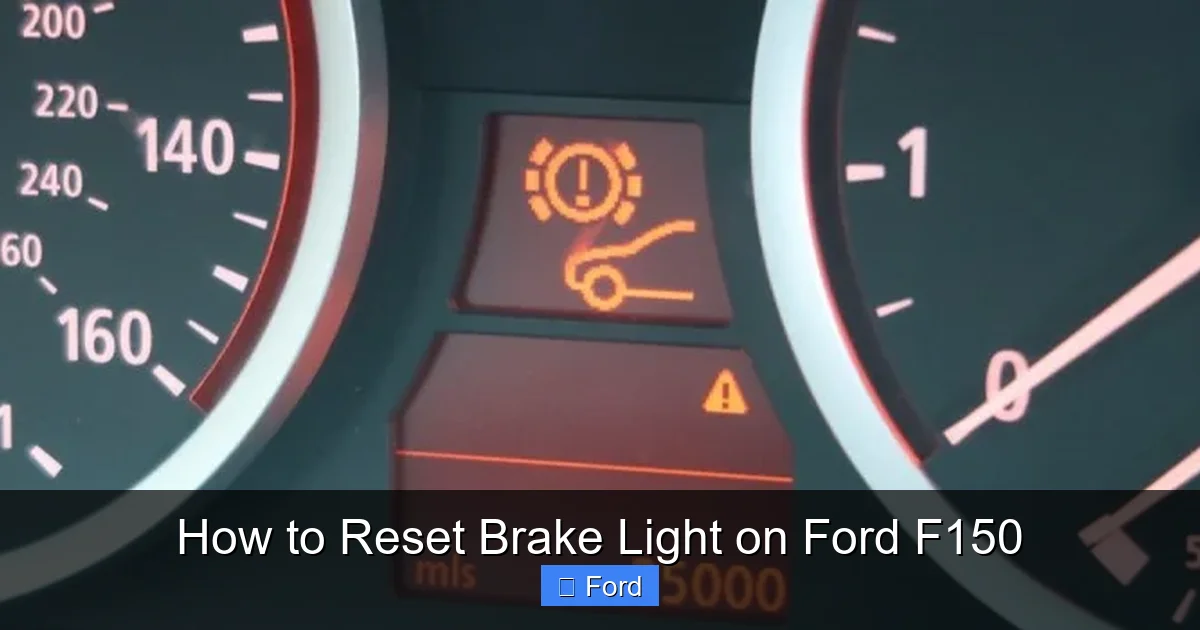
The brake light system in your F150 can encompass two primary warnings: the standard brake system warning light (often an exclamation point in a circle or the word “BRAKE”) and the separate ABS (Anti-lock Braking System) light. Sometimes, they illuminate together. The standard brake light typically indicates issues like critically low brake fluid, a problem with the parking brake, or a failure in the brake hydraulic system. The ABS light points to a fault in the wheel speed sensors, ABS module, or related circuits. On newer F150s (especially 2015+ models with advanced safety features), the light can also be triggered by issues with the brake booster or electronic brake control systems. Resetting the light without addressing the root cause is like turning off a smoke alarm without putting out the fire—it’s ineffective and risky.
Why a Simple Reset Isn’t Always the Full Solution
We’ve all been there: a light pops on, we fiddle with something, it goes away, and we move on. But with brakes, complacency is the enemy. A temporary reset might clear the computer’s memory, but if the underlying fault—like a leaking brake line or a completely worn pad—remains, the light will return, sometimes within minutes or days. Worse, you’re driving without a functional warning system. The proper sequence is always: Diagnose → Repair → Reset. This guide will walk you through that entire process, from initial checks to the final reset procedure.
Common Reasons Your Ford F150 Brake Light Illuminates
Before grabbing tools, a quick visual and tactile inspection can often reveal the culprit. Identifying the cause saves you from a pointless reset attempt and points you to the necessary repair. Here are the most frequent reasons your F150’s brake light will come on, ranging from simple fixes to serious mechanical failures.
Visual guide about How to Reset Brake Light on Ford F150
Image source: youcanic.com
Low Brake Fluid: The Most Common Culprit
Brake fluid is the lifeblood of your hydraulic braking system. The reservoir has a sensor that triggers the warning light when levels drop below a minimum threshold. This is often due to normal brake pad wear (as the caliper pistons extend to compensate, fluid is drawn from the reservoir) or, more worryingly, a leak in the lines, hoses, calipers, or master cylinder. Check your fluid level first. Open the hood, locate the master cylinder reservoir (usually on the driver’s side firewall), and check the “MIN” and “MAX” lines. If it’s low, top it up with the correct DOT fluid (DOT 3, 4, or 5.1 as specified in your owner’s manual). If the level drops again quickly, you have a leak and must repair it immediately—do not drive the truck.
Worn Brake Pads or Shoes
Many modern vehicles, including the F150, have a mechanical wear sensor on the front brake pads (and sometimes rear). As the pad material wears down to a critical thickness (usually 3mm or less), a metal tab contacts the rotor, creating a squealing noise. On some models, this sensor is also electrical and will complete a circuit to illuminate the brake warning light. If your pads are worn, replace them. The light should go out on its own after the new pads are installed and the system re-centers, but often a reset is needed.
Faulty Brake Light Switch or Parking Brake Issues
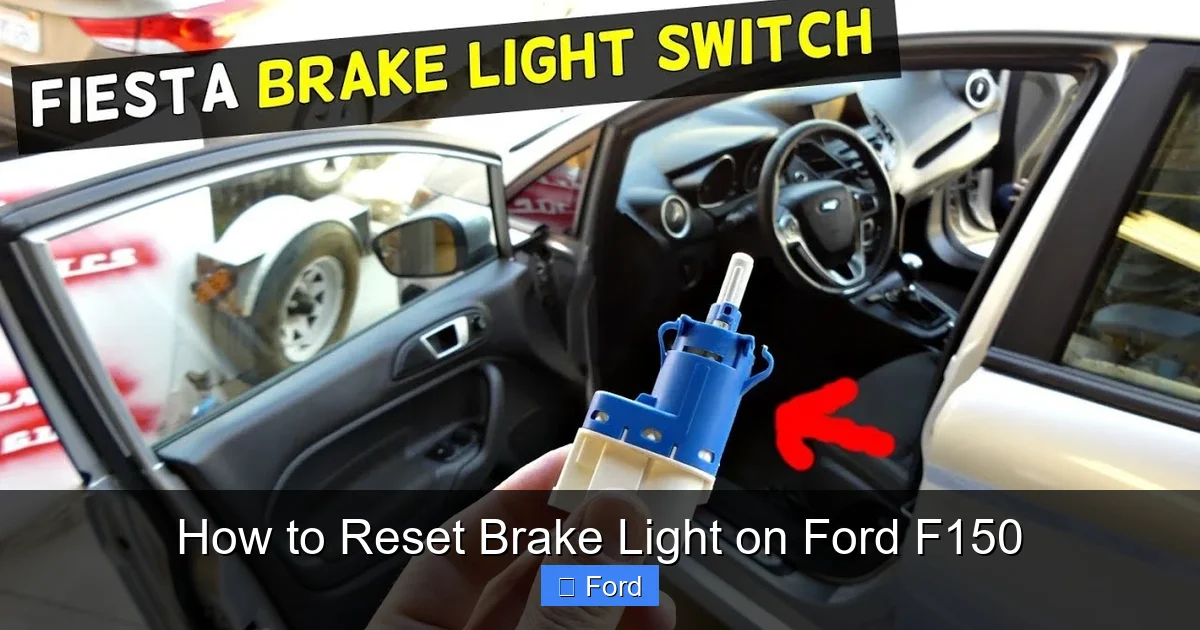
The brake light switch, located on the brake pedal assembly, tells your truck when you’re pressing the brake pedal. If it fails or becomes misadjusted, it can send a constant “brake applied” signal, triggering the warning light. Similarly, if your electronic parking brake fails to fully disengage or its switch malfunctions, the brake light will stay on. Listen for a faint clicking sound from the switch area when you press and release the pedal; no sound could indicate a problem.
ABS Wheel Speed Sensor Malfunction
Your F150’s ABS system relies on sensors at each wheel to monitor speed. If one becomes dirty, damaged, or fails, it sends erroneous data to the ABS module. This often triggers the separate ABS light, but on many models, it also illuminates the main brake warning light. A common symptom is intermittent light activation during turns or on slippery surfaces. These sensors are exposed to the elements and can be damaged by road debris or corrosion.
Problem with the Brake Booster or Master Cylinder
The brake booster uses engine vacuum to assist your braking effort. If it fails, you’ll notice a very hard brake pedal and the warning light will activate. A failing master cylinder can cause internal leaks, leading to a spongy pedal and low fluid pressure, which also triggers the light. These are serious, safety-critical failures that require immediate professional repair. Driving with a compromised master cylinder or booster is extremely dangerous.
Aftermarket Modifications or Recent Service
Did you recently have brake work done? A mechanic might have disconnected a sensor or left a connector loose. Aftermarket modifications, like installing different wheels/tires that trigger ABS sensor errors or messing with the wiring, can also cause the light. Always consider recent work as a potential source.
Methods to Reset the Brake Light on a Ford F150
Once you’ve inspected and repaired any obvious issues (topped fluid, replaced pads, fixed leaks), you can proceed to reset the light. There are two primary paths: a manual, tool-free reset and a scan-tool reset. The method you choose depends on your F150’s model year and the nature of the fault.
Visual guide about How to Reset Brake Light on Ford F150
Image source: i.ytimg.com
Method 1: The Manual Reset (Battery Disconnect)
This is the old-school method that works on many older vehicles (typically pre-2015 models) by briefly clearing the ECU’s memory. It’s free and requires no special tools, but it’s less reliable on modern, complex computer systems and will reset other settings (radio presets, clock, idle adaptation).
- Step 1: Ensure the truck is off, keys removed, and parked safely with the parking brake set.
- Step 2: Open the hood and locate the negative battery terminal (black cable, minus sign).
- Step 3: Using a 10mm socket or wrench, loosen the nut and carefully remove the negative cable. Tuck it away so it can’t touch the terminal.
- Step 4: Wait 10-15 minutes. This allows residual power in the system ( capacitors) to drain fully, ensuring a complete reset.
- Step 5: Reconnect the negative cable, tighten the nut securely, and close the hood.
- Step 6: Start the truck. The brake light should be off. If it comes back on immediately or after a short drive, the fault is still present and needs diagnosis.
Important Note: On some F150s, disconnecting the battery may require a radio code to reactivate the stereo. Have this code ready (often in the owner’s manual or glove box).
Method 2: The Fuse Pull Method
Similar to the battery disconnect, this targets the specific fuse for the brake system module. It’s slightly more precise but can be tricky to identify the correct fuse. Consult your owner’s manual’s fuse box diagram (located under the dash or in the engine compartment). Look for fuses labeled “BRAKE,” “ABS,” “HCM” (Hydraulic Control Module), or “BCM” (Body Control Module).
- Step 1: Turn off the ignition and all accessories.
- Step 2: Using a fuse puller or needle-nose pliers, remove the identified fuse(s).
- Step 3: Wait 5-10 minutes.
- Step 4: Reinsert the fuse(s) firmly.
- Step 5: Start the truck and check if the light is extinguished.
This method is less likely to erase radio settings but still resets other module adaptations.
Method 3: The OBD2 Scanner Reset (Most Reliable for Modern F150s)
For 2015 and newer Ford F150s, and really for any post-1996 vehicle, an OBD2 (On-Board Diagnostics) scanner is the professional and most effective way to reset brake lights. These tools communicate directly with your truck’s computer, read stored diagnostic trouble codes (DTCs), and allow you to clear them after repairs. This method does not reset other vehicle systems like the radio.
- Tools Needed: A basic OBD2 scanner that supports “ABS/SRS” or “Brake System” systems. Not all cheap scanners do this; you may need a mid-level tool (like an Autel, Launch, or professional-grade Ford IDS). For Ford-specific systems, a simple OBD2 adapter with a smartphone app (e.g., FORScan) can be powerful but requires more technical knowledge.
- Step 1: Locate the OBD2 port under your F150’s dashboard, just below the steering column.
- Step 2: Plug the scanner into the port. Turn the ignition to “ON” (do not start the engine).
- Step 3: Follow the scanner’s menu. Navigate to “ABS” or “Brake System.” Select “Read Codes” first. This is crucial. Note any codes (e.g., C0035 for Left Front Wheel Speed Sensor). These codes tell you why the light is on. Address the issue indicated by the code before proceeding.
- Step 4: After repairs, return to the scanner menu and select “Clear Codes” or “Reset Brake Light.” Confirm the action.
- Step 5: The scanner should confirm the codes are cleared. Turn the ignition off, then back on. The light should be off.
- Step 6: Test drive the truck gently. The light should remain off. If it returns, the fault either wasn’t fixed or a new one has occurred.
Pro Tip: If you don’t own a scanner, many auto parts stores (like AutoZone, Advance Auto Parts) offer free code reading services. You can often borrow a basic scanner from them too. However, for ABS/brake system resets, you may need a more advanced tool. In such cases, a quick search for how to reset Ford F150 check engine light can provide guidance, as the process for accessing the vehicle’s computer systems is similar.
Step-by-Step Reset Procedures for Different F150 Model Years
Ford made significant changes to the F150’s electronics across generations. The reset procedure can vary, especially between the older “PN-96” platform (2009-2014) and the current aluminum-body generation (2015-present). Here’s a breakdown.
Visual guide about How to Reset Brake Light on Ford F150
Image source: fordmasterx.com
For 2009-2014 Ford F150 (Pre-2015)
These models have a simpler computer architecture. The manual battery disconnect method is often successful after addressing the cause. However, they also have a specific pedal-based reset procedure for the brake warning light that can work if the issue is resolved.
- Pedal Reset Sequence: With the truck OFF, press and hold the brake pedal. While holding it, turn the ignition to the “ON” position (dashboard lights on, engine off). Hold the pedal for 30 seconds. Release the pedal, turn the ignition off, wait 10 seconds, then restart. This can sometimes reset the brake switch circuit and the warning light.
- If the Light Persists: Use an OBD2 scanner. Even basic scanners can often clear general codes on these models, but for ABS-specific codes, a more advanced tool might be needed.
For 2015-2024 Ford F150 (Current Generation)
These trucks feature highly integrated modules (BCM, ABS module, PCM). The brake light is often tied into multiple systems. A simple battery disconnect may not clear the fault; the modules retain memory. An OBD2 scanner is highly recommended and is the standard professional method.
- Standard OBD2 Procedure: As detailed in Method 3, connect a scanner that explicitly states it supports “Ford ABS” or “Brake System.” Navigate to the correct module (often called “ABS” or “RCM” for Restraints Control Module if related to brake/airbag integration). Clear the codes. Some advanced scanners (like FORScan with an OBD2 adapter) allow you to perform specific service functions, including brake system resets and bleed procedures for the hydraulic system if air has entered.
- Note on Service Brake Boost: On some 2021+ F150s, a “Service Brake Boost” message can accompany the brake light. This is a serious issue with the electronic brake booster and requires a dealer-level diagnostic tool (Ford IDS) to diagnose and reset. Do not attempt to clear this without repair.
If you’re working on a different Ford truck and encounter similar systems, the procedures for a Dodge Ram 1500 can offer a comparative perspective, as modern full-size trucks share many electronic architecture concepts.
When to Consult a Professional Instead of Resetting
Your ability and willingness to perform DIY maintenance is commendable. However, there are definitive lines where a professional mechanic or dealership technician is not just recommended but necessary. Knowing these boundaries protects your safety and prevents costly damage.
The Light Returns Immediately or Repeatedly
If you’ve diagnosed and repaired what you believed was the cause (e.g., topped fluid, replaced a sensor) and the brake light comes back on during your first drive or within a day, the repair was either incomplete or incorrect. There could be a hidden leak, a sensor that wasn’t seated properly, or a deeper electrical short. A professional has advanced diagnostics (like factory scan tools, multimeters, and pressure testers) to trace intermittent faults.
ABS and Traction Control Lights Are Also On
When the brake light is accompanied by the ABS light and/or a traction control/stability control light (a car with squiggly lines), it indicates a fault in the entire electronic stability system. This often points to a failed wheel speed sensor, a damaged tone ring, or a problem with the ABS hydraulic control unit. These systems are complex and interdependent. A professional can perform a “live data” scan to see sensor readings while driving to pinpoint the bad component.
You Notice Changes in Brake Pedal Feel
Is your brake pedal now soft, spongy, or sinking to the floor? Does it feel extremely hard? These are symptoms of a failing master cylinder, brake booster, or a severe leak. These are not DIY repairs for the average person. A compromised hydraulic system means you may not have full braking power. Do not drive the vehicle. Have it towed to a shop.
Diagnostic Codes Point to Complex Components
If your scan reveals codes for the “Brake Booster Pressure Sensor,” “Hydraulic Pump Motor,” or “Module Internal Failure,” these are not parts you can replace or reset yourself. They require specialized knowledge, calibration procedures, and often proprietary tools. For example, resetting a brake service light on a high-tech vehicle like a BMW often requires a dealer-level system, highlighting the complexity of modern brake electronics.
You Are Uncomfortarable or Lack Tools
If any step in the diagnostic or reset process feels beyond your skill level, stop. There’s no shame in calling a pro. The cost of a proper diagnosis is minimal compared to the risk of brake failure or causing additional damage.
Proactive Maintenance to Keep Your Brake System Healthy and Lights Off
The best way to deal with a brake warning light is to ensure it never comes on in the first place. A consistent maintenance schedule for your F150’s braking system is an investment in safety and longevity.
- Regular Fluid Checks: Check your brake fluid level at least once every three months. Top it up with the correct DOT specification if it’s low. Also, have the fluid tested for moisture content every two years. Brake fluid is hygroscopic (absorbs water), which lowers its boiling point and can cause internal corrosion. A brake fluid flush is recommended every 2-3 years.
- Brake Pad and Rotor Inspection: During every oil change, have your mechanic visually inspect the brake pads and rotors. Worn pads (less than 3mm) should be replaced. Rotors should be measured for thickness and run-out. Replacing pads on time prevents the wear sensor from triggering the light and saves you from costly rotor damage.
- Wheel Speed Sensor Care: When rotating tires or doing any work near the wheels, be mindful of the ABS sensors and their wiring. Ensure they are clean, undamaged, and properly seated. A buildup of brake dust and road grime can sometimes interfere with sensor operation; a gentle clean during washes can help.
- Listen and Feel: Pay attention to your brakes. Squealing, grinding, pulsating in the pedal, or a pulling sensation when braking are all early warning signs. Addressing these early often prevents the dashboard light from ever illuminating.
- Use Quality Parts: When replacing brake components, use reputable brands. Cheap pads can wear unevenly or create excessive dust that coats sensors. Quality rotors and hardware ensure even wear and proper sensor function.
- Professional Service for Complex Jobs: For any brake work involving the hydraulic system (calipers, lines, master cylinder) or ABS module, professional service is advised. These systems require proper bleeding procedures to remove air, which, if done incorrectly, will trigger the brake light and lead to a spongy pedal.
Conclusion: A Reset is the Final Step, Not the First
Resetting the brake light on your Ford F150 is a straightforward final step in a maintenance or repair process. It’s the computer’s way of saying “all clear” after you’ve fixed the problem. The real work lies in the diagnosis and repair that must precede the reset. Always start with the simplest checks: brake fluid level and visible leaks. Then, use an OBD2 scanner to read the specific fault code—this is your roadmap. Remember that the procedure differs between older and newer F150s, with OBD2 being the gold standard for 2015 and up models. Your safety, and the safety of others on the road, depends on a fully functional brake system. Never gamble with a persistent brake warning light. If you cannot confidently identify and fix the cause, seek help from a qualified mechanic. A properly maintained brake system will provide reliable stopping power for years and keep that unwelcome dashboard light firmly in the off position.
Frequently Asked Questions
Can I just disconnect the battery to reset the brake light on my Ford F150?
Yes, disconnecting the negative battery terminal for 10-15 minutes will often reset the light on older F150s (pre-2015). However, this is a blunt tool that may not work on newer models and will also reset your radio and clock. Crucially, it only works if the underlying problem has already been fixed; the light will return if the issue persists.
My brake light came on after I recently had my brakes serviced. What should I do?
This is a common issue. The brake light may be on because a sensor was not properly reconnected, a pad wear sensor was damaged during installation, or air entered the hydraulic system. First, check the brake fluid level. Then, return to the shop that performed the work and inform them. They should diagnose and correct the problem at no charge, as it’s likely related to their service.
Do I need a special scanner to reset the brake light on a 2020 Ford F150?
For a 2015 or newer F150, a basic OBD2 scanner that only reads engine codes will not be able to access the ABS or brake system modules. You need a scanner that explicitly lists “ABS/SRS” or “Brake System” in its capabilities. Mid-range scanners from brands like Autel, Launch, or Innova often include this. For the most comprehensive access, a professional tool like the Ford IDS or a FORScan-compatible adapter is used by dealers and advanced DIYers.
Is it safe to drive my F150 with the brake light on?
It is not safe and is strongly discouraged. The brake light indicates a potentially serious problem with your primary stopping system. While you may have some braking power, you cannot know the full extent of the failure. It could be a minor sensor issue or a major hydraulic leak. The only safe course is to diagnose the cause immediately. If the pedal feels soft, spongy, or sinks, or if you hear grinding, do not drive the truck—have it towed.
Why does my brake light come on when it’s raining or after washing my truck?
This symptom strongly suggests a problem with an ABS wheel speed sensor or its wiring. These sensors are magnetic and can be temporarily disrupted by large amounts of water or mud, especially if the sensor is failing or the wiring harness has a crack that allows moisture ingress. The intermittent nature points to a failing sensor that needs replacement.
How often should I expect to need a brake light reset on my F150?
If your brake system is properly maintained, you should never need to manually reset the brake light. It is a warning indicator, not a maintenance reminder like an oil change light. The light should only illuminate when there is an actual fault. If you find yourself resetting it regularly (e.g., every few months), you have an underlying, unresolved problem that needs serious diagnosis—likely a slow leak, a constantly failing sensor, or a module issue.
