
Does Hyundai Warranty Transfer to a New Owner?

Yes, Hyundai’s new vehicle limited warranty is fully transferable to subsequent private owners during its original term. This is a major selling point that can increase your vehicle’s resale value. However, the powertrain warranty has specific transfer rules, and any remaining coverage is based on the original in-service date, not the sale date. Always get the warranty transfer in writing from the dealer and review the official paperwork for your specific vehicle.
Key Takeaways
- Hyundai’s New Vehicle Limited Warranty (Bumper-to-Bumper) is fully transferable to the next private owner for the remainder of its original term (typically 5 years/60,000 miles).
- The Powertrain Limited Warranty is also transferable, but its 10-year/100,000-mile term is only fully available to the original owner. Subsequent owners receive a prorated portion.
- Warranty coverage is based on the vehicle’s original in-service date, not the date you buy it used. This means a used Hyundai could have very little or a lot of warranty left.
- You must formally notify Hyundai of the sale and ownership change to activate the transfer process. The dealer handling the sale typically assists with this.
- Transferability is a significant value-add that makes Hyundai vehicles more attractive on the used market compared to brands with non-transferable warranties.
- Commercial use or salvage/total loss titles will void the warranty, preventing any transfer to a new owner.
- Always get written confirmation of the transferred warranty from Hyundai or the selling dealer for your records.
📑 Table of Contents
- Your Hyundai’s Warranty: A Valuable Asset That Moves With the Car
- The Two-Tier Warranty System: What Transfers and How
- The Critical Step: How to Actually Transfer the Warranty
- What Can Void the Warranty and Prevent Transfer?
- How Transferability Boosts Your Resale Value (With Real Numbers)
- Smart Tips for Buyers and Sellers: Navigating the Transfer
- The Big Picture: Hyundai vs. The Competition
- Conclusion: A Clear, Valuable Benefit
Your Hyundai’s Warranty: A Valuable Asset That Moves With the Car
You’ve loved your Hyundai. It’s been reliable, economical, and covered by one of the best warranties in the business. Now, you’re thinking about selling it or maybe you’ve just bought a used one. A huge question pops up: “Does the Hyundai warranty transfer to a new owner?” This isn’t just a detail—it’s a major factor that can make or break a deal and significantly impact your car’s value. The short, wonderful answer is yes, Hyundai’s warranties are designed to transfer. But the “how” and “how much” are where the important details live. Let’s break it down in plain language so you know exactly what you’re getting or giving.
Think of your Hyundai’s warranty not as a personal gift from the company to you, but as a built-in feature of the car itself, much like its engine or infotainment system. It’s part of the vehicle’s promise of quality. Because of this, Hyundai has structured its warranties to be a powerful selling tool. For a buyer, a used car with a chunk of factory warranty still intact is a massive peace-of-mind purchase. It means covered repairs won’t come out of their pocket for years. For a seller, it means you can command a higher price and find a buyer faster. This policy sets Hyundai apart in the competitive automotive market.
The Two-Tier Warranty System: What Transfers and How
To understand transferability, you first need to know what warranties your Hyundai actually has. Hyundai offers two primary warranties that matter for transfer: the New Vehicle Limited Warranty (often called bumper-to-bumper) and the Powertrain Limited Warranty. They have different rules and durations, and both transfer differently.
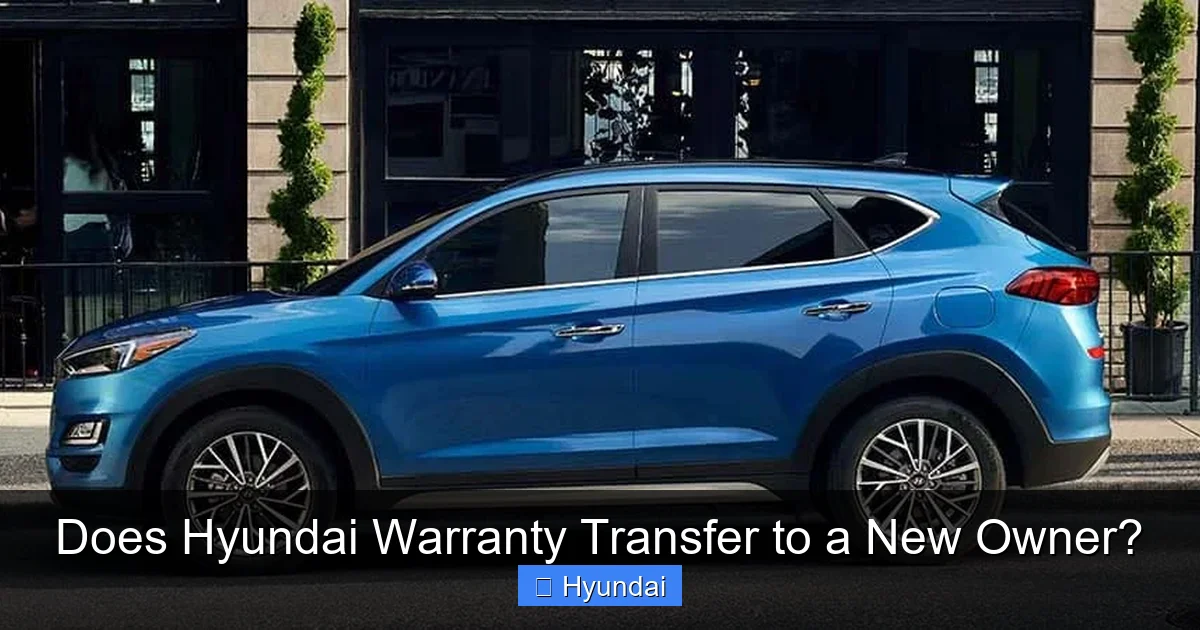
Visual guide about Does Hyundai Warranty Transfer to a New Owner?
Image source: carnewsbox.com
The New Vehicle Limited Warranty: Fully Yours (and Theirs)
This is the comprehensive warranty that covers most parts and components against defects in materials or workmanship. For model years 2020 and newer, it’s 5 years or 60,000 miles, whichever comes first. For 2019 and older models, it’s typically 5 years/60,000 miles as well, but always check your owner’s manual. The golden rule here is: this warranty transfers completely and automatically to any subsequent private owner for the full remaining term. If you sell your 2022 Hyundai Sonata with 20,000 miles on it, the new owner gets the remaining warranty coverage up to 60,000 miles. There’s no extra fee for you or them. It’s a seamless handoff.
The Powertrain Limited Warranty: The Prorated Puzzle
This warranty covers the engine, transmission, and other critical drivetrain components. Hyundai’s famous 10-year/100,000-mile powertrain warranty is a headline grabber. But here’s the crucial catch: that 10-year term is a benefit reserved almost exclusively for the original owner. When the car is sold, the powertrain warranty for the second (and third, etc.) owner is not 10 years. Instead, it becomes a prorated warranty that lasts for 5 years/60,000 miles from the vehicle’s original in-service date.
Let’s use an example. You buy a new 2023 Hyundai Tucson as the first owner. Your powertrain warranty is 10 years/100,000 miles. You drive it for 3 years and 40,000 miles, then sell it. The new owner does not get a fresh 10-year warranty. Their powertrain coverage is now whatever is left of the original 5-year/60,000-mile *basic* powertrain term that started on the day you first drove the car off the lot. If your car’s original in-service date was January 1, 2023, the basic powertrain term for the new owner expires on January 1, 2028, or at 60,000 miles, whichever comes first. They likely have about 2 years and 20,000 miles left on that specific prorated term. The “extra” 5 years/40,000 miles from the original 10-year promise was a loyalty bonus to you, the first owner.
The Critical Step: How to Actually Transfer the Warranty
Knowing it transfers isn’t enough. You have to make it happen. The process isn’t automatic like magic. It requires action from you, the selling owner. Here is the step-by-step reality of transferring a Hyundai warranty.
Visual guide about Does Hyundai Warranty Transfer to a New Owner?
Image source: driverlessrevolutions.com
Step 1: Gather Your Paperwork
Before you even list the car, find your original window sticker (or a copy) and your owner’s manual. The window sticker explicitly states the warranty coverage. Your owner’s manual has the full details and conditions. You’ll also need your vehicle identification number (VIN). This information is your proof of the original warranty terms.
Step 2: Notify Hyundai Customer Service
This is the most important step. You must formally notify Hyundai of the change in ownership. You can do this by calling Hyundai Customer Service (the number is in your owner’s manual) or, more commonly, by working with the dealer who sells the car. The selling dealer is usually your best ally here. They have direct access to Hyundai’s systems and can submit the ownership change electronically. They will need the new owner’s full name, address, phone number, and a copy of the new title or bill of sale. Ask for a confirmation number or a written document from the dealer stating the warranty has been successfully transferred.
Step 3: Provide Documentation to the Buyer
Don’t just tell the buyer the warranty transfers—prove it. Give them a copy of the notification you sent to Hyundai, the dealer’s confirmation, and a printout of their remaining warranty coverage from the Hyundai website (they can often look it up by VIN). This transparency builds immense trust and justifies your asking price. If you skip this, the buyer may have to call Hyundai themselves to verify, which can delay or kill the sale.
What Can Void the Warranty and Prevent Transfer?
Not all Hyundais are created equal in the eyes of the warranty. Certain conditions can completely void the entire factory warranty, making transfer impossible. It’s vital to know these deal-breakers.
Visual guide about Does Hyundai Warranty Transfer to a New Owner?
Image source: driverlessrevolutions.com
Salvage, Flood, or Rebuilt Titles
This is non-negotiable. If your Hyundai has ever been declared a total loss by an insurance company and issued a salvage, flood, or rebuilt title, its factory warranty is permanently void. The vehicle is considered damaged beyond the scope of the original warranty’s intent. A buyer should always run a vehicle history report (like Carfax or AutoCheck) to check for these title brands.
Commercial Use or Abuse
The warranty is for vehicles used for personal, family, or household purposes. If the car was used as a taxi, delivery vehicle, rideshare (Uber/Lyft), or for any commercial purpose, the warranty is void. Similarly, obvious abuse—like severe off-roading in a non-SUV, racing, or neglecting basic maintenance—can be grounds for a warranty claim denial and voiding.
Failure to Maintain the Vehicle
Hyundai requires you to follow the recommended maintenance schedule in your owner’s manual. Keep all your service records! If you cannot prove the car was properly oil-changed, inspected, and serviced at the correct intervals, Hyundai can deny a warranty repair and potentially void the remaining coverage. This is a huge reason to keep meticulous records, which also helps you sell the car.
How Transferability Boosts Your Resale Value (With Real Numbers)
Let’s talk money. A transferable warranty isn’t just a nice feature; it’s cold, hard cash in your pocket when you sell. Compare these two identical used Hyundais on a dealership lot:
- Car A: 2019 Hyundai Elantra, 50,000 miles. Original bumper-to-bumper warranty expired at 60k. Powertrain warranty has about 10,000 miles left on its prorated 5-year term. Total remaining factory coverage: minimal.
- Car B: 2019 Hyundai Elantra, 50,000 miles. Same everything, but it’s still under its original 5-year/60,000-mile bumper-to-bumper warranty with 10,000 miles to go. Powertrain has the same prorated term.
Which car sells faster and for more? Car B, every time. That remaining bumper-to-bumper coverage is gold. It tells a buyer, “For the next year or so, any unexpected repair (except wear-and-tear items) is on Hyundai.” That security is worth a premium, often $1,000 to $2,500 or more depending on the model and market. You can see this price difference clearly when comparing listings. For a practical example, the cost to maintain a Hyundai Elantra over those first 60,000 miles is largely covered, making the “with warranty” version a smarter buy. This is why you should always check the remaining Hyundai warranty by VIN before buying or selling.
Armed with knowledge, you can now navigate the used Hyundai market like a pro. Here are actionable tips for both sides of the transaction.
For the Seller: Your Pre-Sale Checklist
1. Verify Your Exact Coverage: Go to the Hyundai warranty website, enter your VIN, and print the official remaining coverage report. This is your bible.
2. Gather EVERY Service Record: Organize oil changes, tire rotations, and any warranty work. A complete history proves you maintained the car.
3. Contact Your Dealer NOW: Don’t wait for a buyer. Call the service department at the Hyundai dealership where you bought the car (or any authorized dealer). Explain you’re selling and need to initiate the ownership transfer. Ask what specific forms they need.
4. Advertise the Warranty Prominently: In your ad, state: “Fully transferable Hyundai factory warranty remaining: X months and Y miles on bumper-to-bumper.” This is your #1 selling point.
5. Get Transfer Confirmation in Writing: After the sale, work with the buyer and the dealer to ensure the transfer is complete. Get a signed document or email from the dealer confirming the new owner is on file with Hyundai.
For the Buyer: Your Due Diligence Checklist
1. NEVER Trust “It Transfers” Verbally: Always get the VIN from the seller and independently check the remaining warranty on Hyundai’s official website before you buy.
2. Demand Proof of Transfer: The seller should provide the dealer’s transfer confirmation. If they haven’t done it yet, make it a condition of sale that they complete the transfer at a dealership before final payment, and you accompany them to get the written proof.
3. Understand the Prorated Powertrain: Ask the seller for the car’s original in-service date (found on the door jamb sticker or first service record). Use this date to calculate the exact end date of the prorated powertrain warranty. Don’t assume it’s 10 years from the sale date.
4. Check for Title Brands: Run a vehicle history report. A salvage title voids everything.
5. Review the Warranty Brochure: Ask the seller for the owner’s manual warranty section or find it online. Read the exclusions. Know what’s not covered (like tires, brakes, batteries, and damage from accidents or misuse).
The Big Picture: Hyundai vs. The Competition
Hyundai’s transferable warranty is a strategic differentiator. Many competitors have non-transferable power-train warranties. For example, Kia (Hyundai’s sister company) has a very similar transferable warranty policy. However, brands like Toyota and Honda have smaller standard bumper-to-bumper warranties (3 years/36,000 miles) that are transferable, but their power-train warranties are also transferable on a prorated basis similar to Hyundai’s model. The key is always to read the specific fine print for the brand and model year.
Some luxury brands offer longer transferable warranties (like Lexus with 4 years/50,000 miles transferable), but they start from a shorter base term. Hyundai’s 5-year/60,000-mile bumper-to-bumper is class-leading in its segment and its full transferability is a huge advantage for the used buyer. It effectively extends the “new car feeling” of security into the used car market. When you consider the cost to lease a Honda Civic versus buying a slightly used Hyundai with warranty, the long-term value proposition of the Hyundai becomes very compelling for budget-conscious buyers.
Conclusion: A Clear, Valuable Benefit
So, does Hyundai warranty transfer to a new owner? The definitive answer is yes, and it’s one of the smartest features in the industry. The New Vehicle Limited Warranty transfers in full. The Powertrain Warranty transfers on a prorated basis based on the original in-service date. This policy is not a hidden secret; it’s a advertised selling point that adds tangible, measurable value to every Hyundai on the used market.
For sellers, it means you can recoup more of your investment. For buyers, it means a used Hyundai can offer years of worry-free, covered driving that a non-transferable warranty simply cannot match. The process requires proactivity—notifying Hyundai through a dealer and getting written confirmation—but it’s straightforward. The most important takeaway is to always, always verify the remaining warranty coverage yourself using the VIN and to get the transfer documented in writing. In a world of used car uncertainty, a transferable Hyundai factory warranty is a rare and valuable anchor of confidence. Treat it as the asset it is, and it will pay you back when it’s time to sell or give you peace of mind when you buy.
Frequently Asked Questions
Does Hyundai’s 10-year warranty fully transfer to a second owner?
No. The 10-year/100,000-mile powertrain warranty is only for the original owner. A second owner receives a prorated powertrain warranty that lasts for 5 years/60,000 miles from the vehicle’s original in-service date, not from the date of purchase.
Is there a fee to transfer a Hyundai warranty to a new owner?
No. Hyundai does not charge a fee to transfer the New Vehicle Limited Warranty or the prorated Powertrain Warranty to a new private owner. The process is a administrative update handled by a dealer, but there is no cost for the warranty transfer itself.
How do I check the remaining warranty on a used Hyundai I want to buy?
Go to the official Hyundai warranty website (hyundaiusa.com) and use their “Check Warranty Coverage” tool. You will need the vehicle’s 17-digit VIN, which the seller must provide. This tool will show you the exact remaining miles and dates for both the bumper-to-bumper and powertrain warranties.
What voids a Hyundai warranty and makes it non-transferable?
A warranty is voided and cannot be transferred if the vehicle has a salvage, flood, or rebuilt title. It is also voided if the car has been used for commercial purposes (like as a taxi or delivery vehicle) or if there is evidence of severe abuse or a complete failure to follow the recommended maintenance schedule.
Can I transfer my Hyundai warranty if I sell the car to a family member?
Yes. The warranty transfers to any new private owner, including family members, as long as the vehicle retains a clean title and has not been used commercially. The same notification process with a Hyundai dealer must be followed to update the ownership records.
What happens if the dealer doesn’t process the warranty transfer after I sell my Hyundai?
The warranty is technically still in effect, but Hyundai’s system will still show you as the owner. This can cause problems if the new owner needs a repair, as the dealer may need to verify the ownership change. It is your responsibility as the seller to ensure the dealer submits the change. Get written confirmation that it’s done to protect both yourself and the buyer.
