
Which Year of Toyota Highlander Is the Most Reliable

Based on extensive data from Consumer Reports, J.D. Power, and long-term owner surveys, the 2014-2019 fourth-generation Toyota Highlander emerges as the most reliable model year range. These years benefit from a refined powertrain (especially the 3.5L V6), proven hybrid system, and minimal major design flaws. The 2020+ fifth generation is also very promising but has less long-term data. Avoid early first-generation models (2000-2003) and some second-generation years (2004-2007) due to known engine and transmission issues.
So, you’re in the market for a used Toyota Highlander. Smart move. It’s consistently one of the best-selling three-row SUVs for a reason: it’s practical, comfortable, and holds its value incredibly well. But the big question on your mind isn’t just “which Highlander?” It’s “which year of Toyota Highlander is the most reliable?” You want the one that will start every morning, get the kids to soccer practice, and not nickel-and-dime you with expensive repairs. You want the model year that represents the pinnacle of Toyota’s SUV engineering. You’ve come to the right place. We’re diving deep into two decades of Highlander history, sifting through repair databases, owner forums, and professional reliability studies to give you a clear, definitive answer.
Think of this guide as your friendly neighborhood mechanic’s advice, backed by mountains of data. We’ll break down each generation, highlight the standout years, warn you about the problem-plagued ones, and give you the exact questions to ask a seller. By the end, you’ll know exactly which Highlander badge to look for in the used lot. Forget guessing games; let’s talk facts and figures.
Key Takeaways
- The 2014-2019 Highlander is the reliability sweet spot: This fourth-generation model offers the best balance of proven technology, refined powertrains, and minimal widespread defects reported over a decade of ownership.
- Hybrid models are exceptionally reliable: The Highlander Hybrid, particularly from 2014 onward, has a stellar reputation for durability and low cost of ownership due to its simple, robust electric-hybrid system.
- Engine choice matters: The 3.5L V6 (2GR-FE/FKS) is a legendary workhorse with a long history of reliability. The 3.5L V6 in the 2014-2019 models is arguably the best engine ever offered.
- Avoid the earliest model years: First-gen (2000-2003) and early second-gen (2004-2007) models have documented issues with 4-cylinder head gaskets, automatic transmission failures, and oil consumption.
- Maintenance history is everything: A well-maintained Highlander from any generation can surprise you. Always prioritize a comprehensive pre-purchase inspection and a full service history.
- Fifth-generation (2020+) looks strong but is too new: Early reports and predicted reliability scores are excellent, but a 10-15 year track record doesn’t exist yet, placing it behind the proven fourth-gen for now.
- Toyota’s overall reliability philosophy wins: The Highlander’s consistency stems from Toyota’s conservative engineering, high-quality materials, and a focus on long-term durability over short-term tech trends. This is the same philosophy that makes Toyota vehicles so reliable across the board.
📑 Table of Contents
- Understanding Reliability: How We Judge a Highlander Year
- Generation One (2000-2003): The Pioneer with Flaws
- Generation Two (2004-2007): Incremental Improvement, Lingering Issues
- Generation Three (2008-2013): The Turning Point
- Generation Four (2014-2019): The Reliability Sweet Spot
- Generation Five (2020-Present): Promising, But Too New
- What About the Highlander Hybrid? A Special Case
- Your Action Plan: Finding & Buying the Most Reliable Highlander
Understanding Reliability: How We Judge a Highlander Year
Before we name names, let’s establish our criteria. “Reliability” isn’t just a buzzword. It’s a measurable combination of factors:
- Frequency of Repairs: How often does something break? A car that needs a minor fix every 50,000 miles is more reliable than one needing major work every 80,000.
- Cost of Repairs: A $200 thermostat replacement is different from a $3,000 transmission rebuild. We weigh severity.
- Severity of Issues: Does the problem leave you stranded (engine, transmission, electrical gremlins) or is it an annoying but safe inconvenience (window motor, sensor)?
- Owner Satisfaction & Long-Term Surveys: Thousands of real owners reporting their experiences over 5-10 years is the most powerful data source. We rely heavily on Consumer Reports’ Annual Auto Surveys and J.D. Power’s Vehicle Dependability Studies.
- Recalls & Technical Service Bulletins (TSBs): A high number of manufacturer-mandated recalls or internal TSBs for a specific year/engine combo is a major red flag for potential design or manufacturing flaws.
We combine all this data to separate the legendary from the merely average. Now, let’s meet the contenders.
Generation One (2000-2003): The Pioneer with Flaws
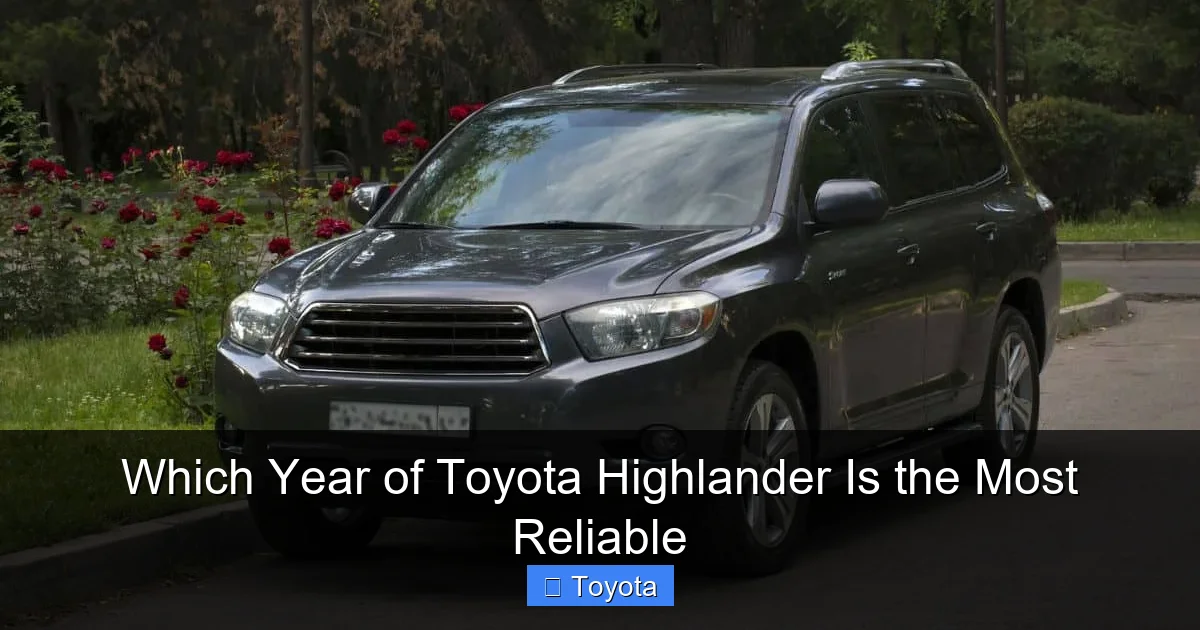
The original Highlander (ACV10/20 series) was a groundbreaking vehicle for Toyota—their first unibody SUV, riding on a Camry platform. It was comfortable, car-like, and popular. But early adoption of new platforms often comes with teething problems, and this generation is a classic case. It’s the reason you often hear old-timers warn about early Highlanders.
Visual guide about Which Year of Toyota Highlander Is the Most Reliable
Image source: fourwheeltrends.com
Common Problem Areas (2000-2003)
This is the “proceed with extreme caution” zone. The primary issues are severe and costly:
- 2.4L 4-Cylinder (2AZ-FE) Head Gasket Failure: This is the #1, most infamous problem. The head gaskets are prone to failure, leading to coolant leaks, overheating, and potentially catastrophic engine damage. Repair costs often exceed the car’s value. It’s a widespread, well-documented issue.
- Automatic Transmission (U250E) Failure: The 4-speed automatic, especially in V6 models, is known for premature wear, harsh shifting, and complete failure. Symptoms include slipping, delayed engagement, and check engine lights.
- Excessive Oil Consumption: Many 4-cylinder models burn oil at an alarming rate between changes, leading to low oil levels and engine wear if not monitored constantly.
- Electrical Gremlins: Faulty power window regulators, dashboard cluster failures, and problematic stereo systems are common annoyances.
Verdict: These are not the most reliable years. While some survived without major issues, the statistical probability of encountering a $3,000+ repair is far too high. They are cheap to buy for a reason. We cannot recommend any year from this generation for a reliability-focused buyer.
Generation Two (2004-2007): Incremental Improvement, Lingering Issues
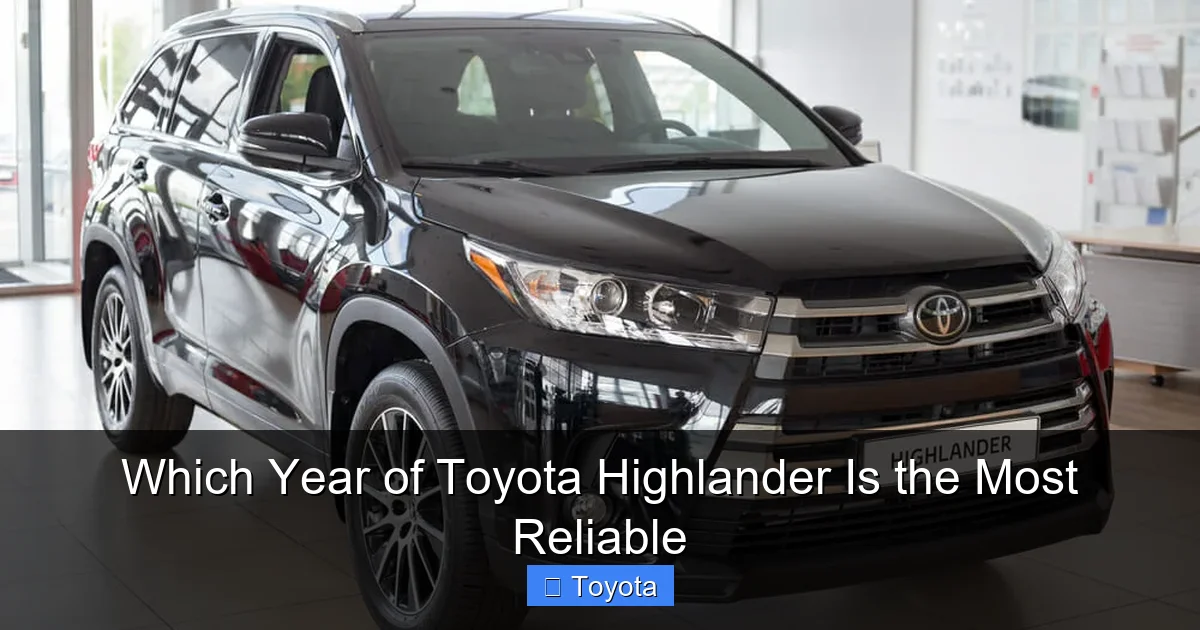
The 2004 redesign brought a more rugged, SUV-like appearance and a new 3.3L V6. Mechanically, it was an evolution, not a revolution. This meant some problems from Gen 1 carried over, while new ones emerged.
Visual guide about Which Year of Toyota Highlander Is the Most Reliable
Image source: miramarspeedcircuit.com
The Mixed Bag (2004-2007)
Reliability here is a roll of the dice, heavily dependent on the engine:
- 3.3L V6 (MGR-FE) is Generally Solid: This engine is a workhorse. Outside of some reports of oil leaks from the valve cover gaskets (a relatively cheap and easy fix), it’s robust and durable. The 5-speed automatic paired with it is also much more reliable than the 4-speed in the previous gen.
- 2.4L 4-Cylinder (2AZ-FE) Persists: Unfortunately, the problematic 4-cylinder from Gen 1 carried over largely unchanged. The head gasket issue remains a significant concern for any 4-cylinder Highlander from this era.
- New Problems: Some owners report premature failure of the rear differential (especially in AWD models), costly air conditioning compressor failures, and continued electrical quirks. The 2007 model year saw a minor refresh and some software updates that may have addressed a few teething issues.
Verdict: If you must look at this generation, your search is simple: only consider 2004-2007 models with the 3.3L V6 engine. Even then, a meticulous pre-purchase inspection is non-negotiable. The 4-cylinder models are absolute landmines for reliability. This generation is a step forward but not a recommendation.
Generation Three (2008-2013): The Turning Point
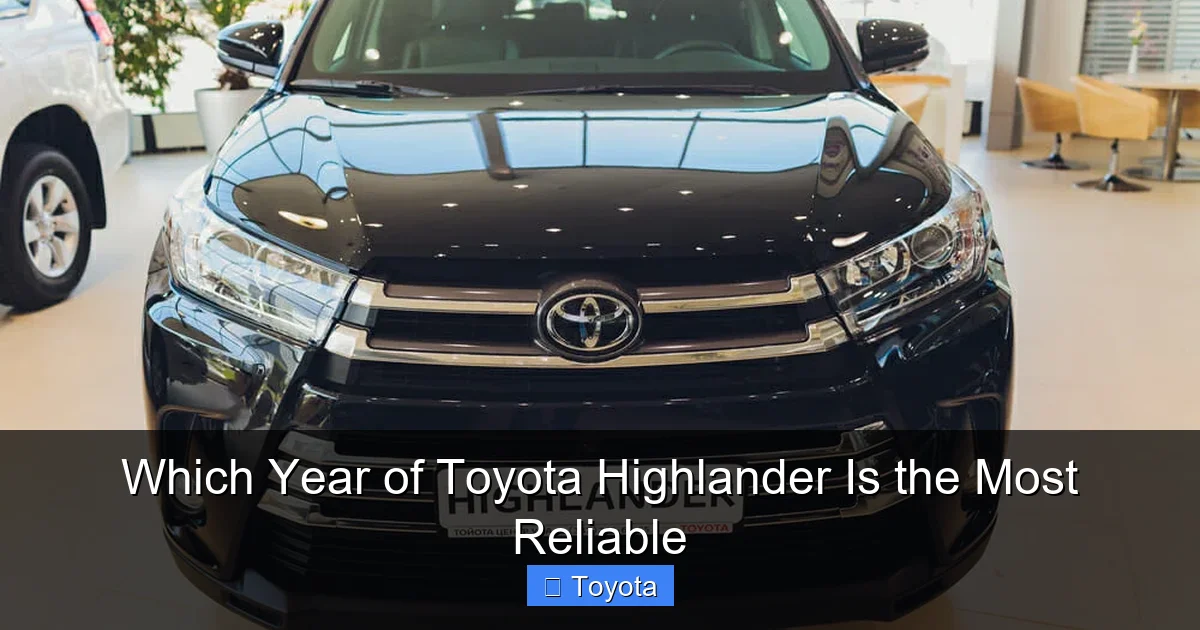
The 2008 redesign was massive. It grew in size, adopted a more sophisticated FWD platform (shared with the Camry and RAV4), and introduced an all-new 3.5L V6 (2GR-FE). This generation marks the true beginning of the Highlander we know and love today—a comfortable, quiet, and competent family hauler. Reliability took a noticeable, positive leap forward.
Visual guide about Which Year of Toyota Highlander Is the Most Reliable
Image source: miramarspeedcircuit.com
A Major Step Up (2008-2013)
This is the first generation where we can say “reliable” with a straight face for most models:
- The 3.5L V6 (2GR-FE) Engine: This is a cornerstone of Toyota’s reliability reputation. It’s a DOHC, dual VVT-i engine found in countless Toyota and Lexus models. It’s exceptionally smooth, powerful, and known for easily surpassing 300,000 miles with basic maintenance. Oil consumption issues are minimal.
- 6-Speed Automatic Transmission: The new 6-speed (U660E) is a vast improvement. It’s smooth, responsive, and holds up very well over time. There are no widespread catastrophic failure reports like with earlier transmissions.
- Hybrid System (2006-2013):strong>: The Highlander Hybrid used a similar system to the Camry Hybrid. It’s very robust. The main long-term concern is the hybrid battery pack, but failures are rare before 150,000+ miles, and aftermarket rebuilds are available.
- Remaining Quirks: No model is perfect. Some early 2008-2009 models had issues with the electronic power steering (EPS) motor/controller, leading to intermittent loss of power assist. This was largely addressed by a TSB and later redesign. Suspension components (control arm bushings, struts) can wear out on higher-mileage examples, as with any SUV.
Verdict: The 2010-2013 model years are the standout picks within this generation. By 2010, any early 2008-2009 EPS bugs were likely sorted, and you get a fully matured, excellent powertrain. A 2012 or 2013 V6 or Hybrid Highlander is a fantastic, reliable choice that can still be found at reasonable prices today. This generation is “very good,” but the next one is “great.”
Generation Four (2014-2019): The Reliability Sweet Spot
Here it is. The undisputed champion for the title of most reliable Toyota Highlander year. The 2014 redesign was comprehensive: new body, new interior, new infotainment, and significant powertrain refinements. Toyota took the excellent 2GR-FE V6 and made it better, and they completely redesigned the hybrid system for even greater efficiency and smoothness. The build quality and materials took a noticeable jump.
The Gold Standard (2014-2019)
This six-year run represents the peak of Highlander reliability for several key reasons:
- Refined 3.5L V6 (2GR-FKS): An evolution of the 2GR-FE, the FKS engine added Toyota’s D-4S fuel injection (both port and direct). This means more power, better fuel economy, and crucially, even fewer carbon deposit issues than its predecessor. It’s arguably the most bulletproof V6 Toyota ever put in a family SUV.
- 8-Speed Automatic Transmission: Paired with the V6, the new 8-speed (UA80E/F) is a masterpiece. It’s incredibly smooth, quick to shift, and has an outstanding reliability record. There are no widespread failure reports.
- Redesigned Hybrid System (2014-2019): This is a big deal. Toyota moved to a more powerful, efficient “Hybrid Synergy Drive” system with a larger electric motor and a revised battery pack. The system is incredibly seamless and, most importantly, the hybrid battery has an 8-year/100,000-mile warranty (in most states). Real-world failure rates are exceptionally low, making the Highlander Hybrid one of the most reliable hybrid SUVs on the planet. For the ultimate in reliability and low running costs, a 2014-2019 Highlander Hybrid is almost unbeatable.
-
Build Quality & Interior: Panel gaps are tight, interior plastics are higher grade, and long-term squeak/rattle complaints are far lower than in previous gens.
- Minimal Widespread Defects: There are no “Achilles’ heel” components for this generation. The most common issues are minor: occasional infotainment system glitches (solvable with updates), normal wear items (brakes, tires, wipers), and some early 2014 models had a TSB for a rare evaporative emissions system (EVAP) concern. These are not major, expensive, or common.
Verdict: This is our top recommendation. You cannot go wrong with a well-cared-for 2014, 2015, 2016, 2017, 2018, or 2019 Toyota Highlander. The V6 model is a tank. The Hybrid model is a efficiency and reliability marvel. The 2019 model year is particularly nice as it received a minor facelift and some standard safety tech updates. Focus your search here first.
Generation Five (2020-Present): Promising, But Too New
The 2020 redesign brought a controversial new nose, a completely new platform (TNGA-K), standard Toyota Safety Sense 2.5+, and a major change: the end of the V6. For 2020-2023, the only gas engine is a 2.4L turbocharged 4-cylinder (T24A-FTS). The V6 returns for the 2024 refresh, but the turbo 4-cylinder is the engine of record for this generation so far.
Excellent Early Reports, But Time Will Tell
We’re in a tricky spot. The early data is glowing, but we lack the 10-year perspective.
- TNGA Platform is a Winner: The new platform is stiffer, improves handling, and is designed for better long-term durability. Early crash test scores are stellar.
- 2.4L Turbo 4-Cylinder (T24A-FTS): This is a new engine for the Highlander. It’s powerful, efficient, and uses a timing chain (good). Early reliability reports from other models (like the Tacoma) are positive, but it hasn’t yet proven itself over 200,000+ miles in the heavy Highlander. Some early adopters report minor oil consumption—something to monitor.
- 8-Speed Direct-Shift Automatic: This transmission is new and paired specifically with the turbo engine. It has received some complaints about being hesitant or “rubber-band-ish” in low-speed driving, but no major mechanical failures reported yet.
- Hybrid System: The hybrid for 2020-2023 uses a similar, proven system to the previous gen but with a 2.5L 4-cylinder. It’s expected to be very reliable, but again, the long-term data isn’t in.
Verdict: These are promising years, not yet proven years. A 2020-2023 Highlander will likely be very reliable, but it’s a calculated risk compared to the bulletproof fourth-gen. The return of the V6 in 2024 is exciting for traditionalists, but it’s a completely new version of the 2GR-FKS, so its long-term reliability is also unproven in this new chassis. If you want the absolute safest, most data-backed bet, stick with 2014-2019.
What About the Highlander Hybrid? A Special Case
We need to call out the hybrid separately because its reliability profile is so unique. The electric-hybrid system adds complexity, but Toyota has mastered it. The fear is always the hybrid battery pack.
- Gen 3 Hybrid (2006-2013): Reliable, but the nickel-metal hydride (NiMH) batteries are aging. Replacement costs can be high ($2,500-$4,000), though used/refurbished options are common. A low-mileage, well-maintained example can still be a great buy if the price reflects the eventual battery cost.
- Gen 4 Hybrid (2014-2019): This is the king of reliable hybrids. The system is more powerful, efficient, and the lithium-ion battery packs are more robust. With the 8-year/100k warranty, the risk is dramatically lowered. These models have shown almost no widespread hybrid battery failures. This is the hybrid benchmark.
- Gen 5 Hybrid (2020-2023): Uses a 2.5L system similar to the RAV4 Hybrid. Early reports are excellent, but it’s too new to crown it. The warranty is the same.
Bottom line: If you want a hybrid, your target is unmistakably the 2014-2019 Highlander Hybrid. It offers the best blend of proven technology, warranty coverage, and real-world longevity.
Your Action Plan: Finding & Buying the Most Reliable Highlander
Okay, you’re sold on the 2014-2019 model years. Now what? Here’s your step-by-step guide to securing the best example.
1. Target the Sweet Spot: 2016-2018 Model Years
While the entire 2014-2019 range is excellent, the 2016-2018 model years hit the perfect balance. They have all the proven powertrain refinements, are past any early-production quirks, and are less expensive than a low-mileage 2019. You get 95% of the reliability for less money.
2. The Pre-Purchase Inspection (PPI) is Non-Negotiable
Never buy a used Highlander (or any used car) without a third-party, independent mechanic performing a comprehensive PPI. Cost: $150-$250. It’s the best insurance policy you can buy. Tell the mechanic: “I’m buying this for long-term reliability. Please check for any signs of neglect, accident damage, and the health of the engine, transmission, and hybrid system (if applicable).” They will put it on a lift, scan for codes, and check everything.
3. What to Look For in the Service History
An ideal history includes:
- Regular oil changes (every 5,000-7,500 miles).
- Timing belt/water pump service records (on V6 models; the 2GR-FE/FKS uses a timing chain, so no belt, but water pump service at 90k-120k is good).
- Transmission fluid services (not always required, but evidence of it is a plus).
- Coolant flushes.
- Brake fluid changes.
Gaps in service are a yellow flag. A single-owner vehicle with a complete dealership or shop history is the holy grail.
4. Hybrid-Specific Checks
If looking at a hybrid, the PPI must include a hybrid battery health check. Most good independent shops or dealerships can read the battery’s state of health via the OBD2 port. Look for a state of health above 70-75% for a high-mileage example. Also, check that all hybrid system warning lights are off and the engine starts and stops seamlessly.
5. Test Drive Like a Skeptic
During your test drive:
- Does the engine rev smoothly? Any tapping, knocking, or excessive noise?
- Does the transmission shift seamlessly, especially from 1st to 2nd gear? Any harsh clunks or delays?
- For hybrids: Listen for the engine start/stop. It should be almost imperceptible. Feel for any vibration or roughness when the electric motor cuts in/out.
- Test all windows, locks, sunroof, and infotainment. Electrical gremlins can be a sign of bigger issues.
- Check for any smells (sweet smell = coolant leak; burning oil = engine issue).
6. Know Your Trims & Packages
The Highlander comes in L, LE, XLE, Limited, and Platinum trims. Reliability is consistent across trims—it’s all the same core mechanicals. Focus on condition and history, not the badge. However, be aware that higher trims have more features (sunroofs, advanced audio, air suspension) which can be costly to repair if they fail. A base LE is often the most cost-effective long-term choice. Also, understanding features like the Snow Button can help you assess if a vehicle has been used appropriately in harsh climates.
Frequently Asked Questions
Is the 2014-2019 Toyota Highlander the most reliable year overall?
Yes, based on a decade of owner feedback and professional studies, the 2014-2019 fourth-generation Highlander, especially with the 3.5L V6 or Hybrid powertrain, represents the peak of reliability for this model. It has no widespread, catastrophic mechanical failures and features bulletproof engines and transmissions.
Should I buy a Highlander Hybrid for maximum reliability?
Absolutely, but target the 2014-2019 generation. The Highlander Hybrid has an exceptional reliability record, often matching or exceeding its gas-only sibling in long-term durability due to the robust hybrid system and reduced engine wear. The 2014-2019 models have the most proven hybrid battery technology with warranty coverage.
What engine is best for reliability in a used Highlander?
The undisputed champion is the 3.5L V6 (2GR-FE/FKS) found in 2008-2023 models (except 2020-2023 gas models). This engine is legendary for its durability and ability to last 300,000+ miles with proper care. Avoid the 2.4L 4-cylinder in models before 2014 due to head gasket issues.
Are there any major problems with the 2014-2019 Highlander I should worry about?
There are no “major” widespread problems. The most common issues are minor: infotainment system glitches (often fixed with updates), normal wear items like brakes and suspension components at high mileage, and occasional EVAP system codes on early 2014 models. These are inexpensive compared to engine or transmission failures.
How many miles is too many for a Highlander?
With proper maintenance, Highlanders—especially V6 models from 2008 onward—can easily surpass 300,000 miles. A well-maintained example with 200,000+ miles can be a superb value. The key is the service history, not just the odometer reading. A 150,000-mile car with perfect records is a better bet than a 100,000-mile car with none.
What about the new 2024 Highlander with the returned V6? Is it reliable?
The 2024 V6 is an all-new version of the 2GR-FKS engine, so it has no long-term track record yet. While Toyota’s engineering suggests it will be reliable, it doesn’t have the proven 10-year history of the 2014-2019 V6. If you want the absolute safest, most data-backed choice, stick with the previous generation. The 2024 is a “wait-and-see” for reliability rankings.
