
What Is the Actual Cash Value of a 2009 Toyota Corolla?

The Actual Cash Value (ACV) of a 2009 Toyota Corolla is its fair market value at the time of a loss, considering its age, mileage, condition, and local demand. It’s not the replacement cost or the trade-in price. For a typical 2009 Corolla in good condition with average mileage (120k-150k), ACV generally ranges from $3,000 to $6,000, but your specific vehicle’s value can vary significantly based on its unique history and upkeep.
Key Takeaways
- ACV is Fair Market Value: It’s what a willing buyer would pay a willing seller for your specific 2009 Corolla, with no pressure to buy or sell, accounting for depreciation.
- Mileage is the Biggest Factor: Higher mileage drastically reduces a 2009 Corolla’s ACV. A well-maintained model with 100k miles is worth substantially more than one with 200k miles.
- Condition Trumps All: A flawless interior, no rust, all maintenance records, and original paint can push ACV to the top of the range, while accidents or neglect can halve its value.
- ACV vs. Trade-In Value: ACV is a theoretical market value. Trade-in value is what a dealership offers, which is always lower because they must recondition and profit on the resale.
- Insurance Companies Use Their Own Formulas: They typically rely on databases like CCC Information Services or Mitchell, not public sites like Kelley Blue Book, to determine a “comparative” ACV, which can be lower than private party estimates.
- Documentation is Your Best Friend: Keeping all repair receipts, maintenance logs, and a vehicle history report is critical to proving your Corolla’s true condition and disputing a low ACV offer.
- Trim and Options Add Modest Value: A 2009 Corolla LE with features like a sunroof, alloy wheels, and upgraded audio will have a slightly higher ACV than a base model CE.
📑 Table of Contents
- What Exactly Is Actual Cash Value (ACV)?
- Key Factors That Influence a 2009 Toyota Corolla’s ACV
- How to Calculate the Actual Cash Value Yourself
- Where to Find Reliable ACV Estimates
- Using ACV in Real-Life Scenarios
- Pro Tips to Maintain or Increase Your Corolla’s ACV
- Conclusion: Your 2009 Corolla’s True Worth
What Exactly Is Actual Cash Value (ACV)?
Let’s start with the heart of the matter. “Actual Cash Value” sounds like it should be simple, but it’s a term that causes a lot of confusion, especially when it comes to a car like a 2009 Toyota Corolla. In the world of insurance and finance, ACV is not the price you bought the car for. It’s not the price you could sell it for today on a perfect day. It’s a very specific calculation: the fair market value of your vehicle at the exact moment a loss occurs (like an accident or theft), minus any applicable deductible.
Think of it as the “as-is” price in a normal, non-emergency sale between two private parties. It accounts for one giant, inescapable fact: depreciation. That brand-new 2009 Corolla you drove off the lot is now a 15-year-old used car. Its value has declined every single month due to age, wear and tear, and the introduction of newer models. The ACV is the snapshot of that depreciated value. It’s the number your insurance company would use to determine a payout if your Corolla was totaled. They are essentially buying your damaged car from you at its pre-loss market worth.
Why ACV Matters More Than You Think
Understanding ACV isn’t just for insurance claims after a crash. It’s the foundational number for several key financial decisions. If you’re selling your 2009 Corolla privately, knowing its true ACV gives you a realistic price floor. If you’re canceling comprehensive coverage on an older car, you need to know if the car’s ACV still justifies the premium. Even for estate planning or divorce settlements, the ACV is the standard measure of the asset. For a ubiquitous, reliable car like the 2009 Corolla, its ACV is a benchmark for its remaining useful life and economic utility.
Key Factors That Influence a 2009 Toyota Corolla’s ACV
Okay, so we know ACV is the fair market value. But what makes one 2009 Corolla worth $4,000 and another one worth $6,500? It all comes down to a combination of objective data and subjective condition. The insurance adjuster or a savvy buyer will look at a checklist. Let’s break down the most critical factors for your specific model year.
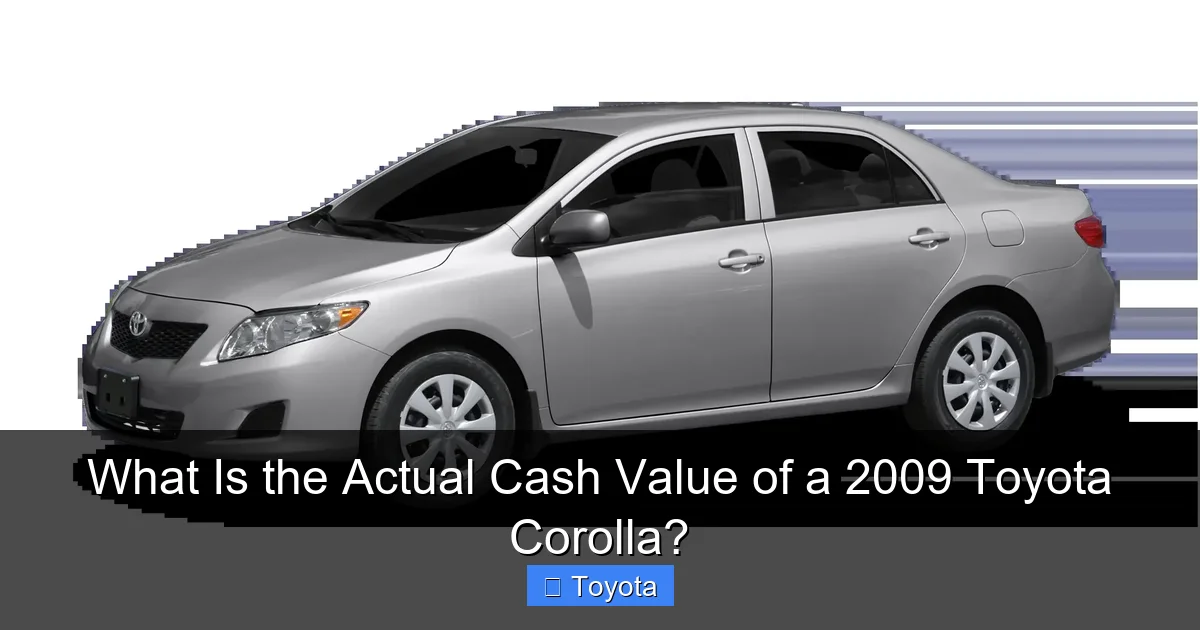
Visual guide about What Is the Actual Cash Value of a 2009 Toyota Corolla?
Image source: platform.cstatic-images.com
Mileage Matters Most (The 120k-150k Sweet Spot)
For a 2009 model, mileage is the single largest value driver. The average American drives about 12,000 miles per year. A 2009 Corolla with 120,000 miles is right at that average and will command the highest possible ACV for its age. Once you start seeing 150,000+ miles, the value drops more steeply. A car with 200,000 miles, even if it’s a Toyota, is in a different value bracket entirely. High mileage suggests more wear on the engine, transmission, suspension, and interior, which means higher潜在 costs for a new owner. This is where meticulous service records become golden—they can offset mileage concerns by proving proactive care.
Condition Is King: The “As-Is” Reality
Two 2009 Corollas with 130,000 miles can have thousands of dollars difference in ACV based on condition. This is broken down into:
- Mechanical: Does the engine run smoothly? Is the transmission shifting correctly? Are there any warning lights? Has the timing belt/water pump been replaced (a major service for this era)? A clean, documented service history is worth money.
- Exterior: Original paint with no rust or major dents is ideal. Any paint mismatch, significant hail damage, or rust around the wheel wells or rocker panels will deduct value. Aftermarket modifications can be a plus or minus depending on quality and buyer preference.
- Interior: Is the cloth seats torn or heavily stained? Is the dashboard cracked? Does the air conditioning blow cold? Are all electronics—power windows, locks, radio, cruise control—working perfectly? A pristine, odor-free interior signals a caring owner.
Trim Level and Optional Features
The 2009 Corolla came in primarily two trims: the base CE and the better-equipped LE. The LE added standard features like power windows/locks, keyless entry, cruise control, and often alloy wheels. Optional packages could add a sunroof, upgraded JBL audio system, and leather-wrapped steering wheel. While these don’t add luxury-car value, they do create a price spread. A fully loaded LE will have a higher ACV than a bare-bones CE with the same miles and condition. Features like the Hold button on the transmission or advanced climate control are part of this feature set that can nudge the value up.
Regional Demand and Seasonality
Where you live matters. A 2009 Corolla in excellent condition will fetch a higher price in a major metropolitan area with high used car demand (like Los Angeles or Miami) than in a rural farming community. Also, convertibles and AWD vehicles command seasonal premiums. For a standard sedan like the Corolla, this effect is smaller but present. A car with a great tire pressure monitoring system and good tires might be more valuable in a snowy region.
The Unseen Factor: Vehicle History
A clean title with no accidents is worth more than one with a reported collision. A single-car accident that was properly repaired might only slightly dent the value. A major structural repair or salvage title destroys it. A vehicle history report from Carfax or AutoCheck is a standard tool for buyers and adjusters. It verifies mileage, ownership chronology, and accident reports. A “clean” report supports a higher ACV.
How to Calculate the Actual Cash Value Yourself
You don’t have to be an insurance adjuster to get a solid estimate of your 2009 Corolla’s ACV. It’s a mix of using reputable pricing guides and honest self-assessment. Here’s a practical, step-by-step method.
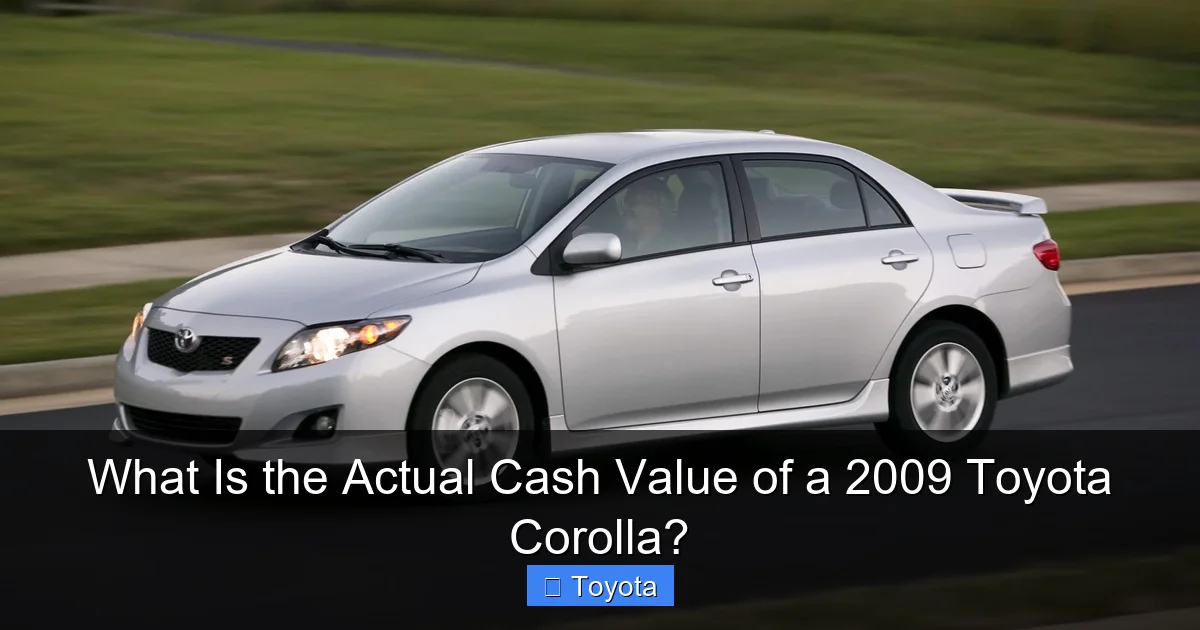
Visual guide about What Is the Actual Cash Value of a 2009 Toyota Corolla?
Image source: motordesktop.com
The Formula Breakdown: It’s Not a Math Equation
There’s no single public formula like “Original MSRP – (15% x years)”. ACV is determined by comparing your car to hundreds of similar, currently available listings. The process is: Find comparable vehicles, adjust for differences, and arrive at a median price. Your goal is to find the “Private Party” or “Fair Market Range” value, not the dealer trade-in or retail price.
A Real-World Example Calculation
Let’s take a hypothetical but common 2009 Toyota Corolla. It’s an LE trim, 4-door sedan, automatic transmission, with 135,000 miles. It has a clean title, no accidents reported, and is in “Good” condition (meaning it runs well, has normal wear for the mileage, and needs no immediate repairs).
Step 1: Research on KBB and NADA. You input these exact details into Kelley Blue Book (KBB) and the NADA Guides website. For a 2009 Corolla LE in good condition with 135k miles, you might see a Private Party value range of $3,800 – $5,200. The NADA “Clean Retail” might be a bit higher, but for ACV, we focus on the private party/wholesale range.
Step 2: Check Local Listings (The Most Important Step). Go to Facebook Marketplace, Craigslist, or Autotrader. Search for “2009 Toyota Corolla” within 100 miles of your zip code. Filter for similar mileage (120k-150k) and trim (LE). Don’t look at the cheapest and most expensive outliers. Look at the 5-10 listings in the middle. What are they asking? If most are priced between $4,500 and $5,500, that’s your real-world market.
Step 3: Adjust for Your Car’s Exact Condition. Is your Corolla’s interior immaculate while most listed ones have stained seats? Add $200-$300. Does it have brand new tires and a recent major service? Add $150-$400. Does it have a small dent on the fender that others don’t? Subtract $100-$200. Be brutally honest.
Step 4: Arrive at Your ACV. Based on our example, after adjusting, a realistic ACV for this specific 2009 Corolla would be around $4,800 – $5,100. This is the number you would present to an insurance company as the fair market value, supported by your local listing comps.
Tools and Resources at Your Fingertips
Beyond KBB and NADA, use Edmunds.com’s True Market Value (TMV) tool, which is also excellent. For a professional-grade, insurance-industry standard estimate, you can sometimes get access to CCC One or Mitchell valuations through a local body shop or independent insurance agent, but these are usually for their internal use. Remember, the goal is to establish a well-researched, defensible number based on current, local sales data.
Where to Find Reliable ACV Estimates
You’ve done your homework on KBB and scanned local listings. But where else can you turn for a authoritative, third-party opinion on your 2009 Corolla’s worth?
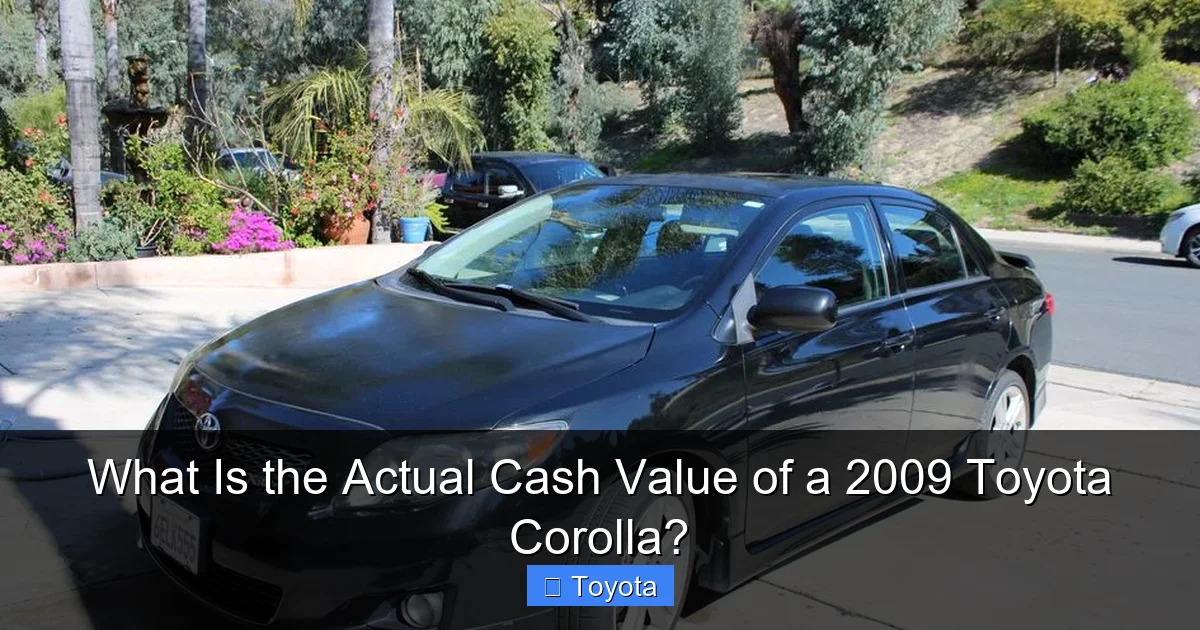
Visual guide about What Is the Actual Cash Value of a 2009 Toyota Corolla?
Image source: images.autotrader.com
Online Valuation Tools: The Starting Point
We already mentioned the big three: Kelley Blue Book (KBB), NADA Guides, and Edmunds. Use all three. They use different algorithms and data sets. KBB is very consumer-friendly and accounts for local market adjustments. NADA is often used by banks and dealers, so its values can be slightly higher for clean cars. Edmunds’ TMV is based on recent actual sales transactions. The consensus between the three is your strongest baseline. Always select the “Private Party” sale option for ACV purposes.
Professional Appraisals: For High-Stakes Situations
If you’re disputing a low insurance settlement or need a court-ordered valuation, a paid professional appraisal from a certified appraiser (look for designations like CPE from the American Society of Appraisers) carries legal weight. They will inspect the car in person, review all records, and produce a formal report with a stated ACV. This costs $200-$500 but can be worth it if thousands are at stake. For most 2009 Corolla owners, this is overkill, but it’s an option.
The Local Dealership’s “Trade-In” Quote
Here’s a crucial distinction. When you ask a dealership “what’s my car worth?” they are giving you a trade-in value. This is always 10-25% lower than the true private party ACV because the dealer must recondition the car, provide a warranty, and make a profit on the resale. You can use the dealership’s lowball offer as a worst-case scenario floor, but never as your ACV. Your ACV is what you could sell it for yourself, not what a middleman will pay you for it.
Using ACV in Real-Life Scenarios
Knowing the number is one thing. Knowing how to use it is what really matters. Here’s how ACV directly impacts two of the most common situations for a 2009 Corolla owner.
Filing an Insurance Claim for a Total Loss
This is the #1 reason people learn about ACV. If your 2009 Corolla is damaged in an accident and the repair estimate exceeds a certain percentage (usually 70-80%) of its ACV, the insurer will “total” it. They will send you a settlement check for the ACV minus your deductible. For example, if your ACV is $5,000 and you have a $500 deductible, you get $4,500. Their first offer is often based on a proprietary database and may be low. Your counteroffer must be backed by evidence: printouts of comparable local sales, a recent appraisal, and a detailed list of upgrades and maintenance that add value. Disputing a low ACV offer is a common and often successful process if you have the paperwork.
Selling Your Car Privately or Trading It In
When selling privately, your asking price should be at or slightly above your researched ACV. You can justify a higher price with extra features or recent major work. When trading in, the dealer will start with their wholesale/auction value, which is below ACV. Knowing your car’s true ACV gives you the power to negotiate. You can say, “I know the private party value is $5,000, so I’m looking for at least $4,200 on a trade-in.” That’s a reasonable gap. If they offer $3,500, you know they’re lowballing you. Remember, negotiating a trade-in is separate from negotiating the new car price.
Pro Tips to Maintain or Increase Your Corolla’s ACV
The best way to deal with depreciation is to slow it down. For a long-lived, practical car like the 2009 Corolla, preserving its value is about consistent, documented care.
Service Records Are Currency
Keep every single receipt. Oil changes, tire rotations, brake jobs, timing belt/water pump replacement (critical for the 1ZZ-FE engine around 90k-120k miles), and any other maintenance. A complete binder of records tells a buyer (or an insurance adjuster) that the car has been cared for proactively, not just repaired when it broke. This directly translates to a higher ACV. It reduces the perceived risk of hidden problems.
Address the “Deferred Maintenance” List
Be honest. Does it need new struts? Are the original spark plugs still in it? Is the transmission fluid dark and burnt? Spending $500-$1,000 to address these common wear items on a 15-year-old car can increase its sale price by $1,500 or more. It transforms the car from a “mechanic’s special” to a “well-maintained used car.” Fix the check engine light if it’s on—that’s an instant red flag.
Cosmetic Care: Cleanliness and Originality
A thorough detail—inside and out—is the cheapest way to add perceived value. Clean the engine bay, shampoo the carpets and seats, polish the headlights. Remove all personal items. A car that looks and smells clean feels more valuable. Avoid cheap, non-original modifications. Keep the car as close to stock as possible. If you have the original wheels instead of cheap aftermarkets, put them back on. Originality appeals to the broadest buyer base.
Document Everything for Future Claims
Take time-stamped photos of your Corolla from all angles, including the odometer. Save the photos with your service records. In the event of a claim, this visual proof of its pre-loss condition is powerful evidence to support your ACV estimate, especially if there’s a dispute about prior damage.
Know When to Let Go
There’s a point where the cost of major repairs (engine, transmission) exceeds the car’s ACV. A 2009 Corolla with a blown head gasket might have an ACV of $2,500, but the repair costs $2,000. It’s often not worth fixing. At that point, selling it “as-is” for its salvage/parts value or accepting a low insurance payout is the logical financial decision. The ACV helps you make that call.
Conclusion: Your 2009 Corolla’s True Worth
The actual cash value of a 2009 Toyota Corolla is not a mystery number; it’s a researched, evidence-based estimate of what your specific vehicle is worth in today’s used car market. It sits somewhere between the dealer’s lowest trade-in offer and the highest private party listing, heavily weighted by mileage, mechanical integrity, and cosmetic condition. For the vast majority of these reliable sedans still on the road, you’re looking at an ACV in the neighborhood of $3,000 to $6,000.
The real power comes from using this knowledge proactively. Before an accident happens, know your car’s ACV. Keep every piece of paperwork. Treat your Corolla with consistent care. Then, if you need to file an insurance claim or decide to sell, you walk into the negotiation with facts, not feelings. You can confidently say, “Based on the current market for similarly equipped, well-maintained 2009 Toyota Corollas in my area, the actual cash value is $X.” That is how you ensure you receive the fair compensation you deserve for a car that has, for over a decade, been one of the most practical and dependable choices on the road.
Frequently Asked Questions
What’s the difference between ACV and trade-in value?
ACV (Actual Cash Value) is the fair market price your 2009 Corolla would sell for between private parties. Trade-in value is what a dealership will offer you, which is always lower because they must recondition the car, provide a warranty, and make a profit when they resell it. ACV is typically 10-25% higher than a trade-in offer.
How does mileage affect a 2009 Corolla’s ACV?
Mileage is the most significant factor. A 2009 Corolla with around 120,000 miles (average for its age) will have the highest ACV. Value declines as mileage increases past this point. A car with 200,000+ miles will have a substantially lower ACV, even if it’s in good condition, due to perceived increased wear and shorter remaining lifespan.
Can I negotiate the ACV with my insurance company if my Corolla is totaled?
Yes, absolutely. The insurer’s first ACV offer is often a low, database-generated number. You have the right to dispute it. To negotiate successfully, you must provide evidence: printouts of comparable 2009 Corolla listings from your local area, a professional appraisal, and documentation of all maintenance, repairs, and upgrades that add value. A well-documented case often results in a higher settlement.
Does a car’s accident history lower its ACV?
Yes, a reported accident on a vehicle history report will lower a 2009 Corolla’s ACV. The amount depends on the severity. A minor fender-bender with proper repair might only reduce value by a few hundred dollars. A major structural collision can reduce it by 15-30% or more, as it raises concerns about long-term safety and reliability.
How often should I check my car’s ACV?
It’s wise to check your 2009 Corolla’s ACV annually, or before any major financial decision like dropping comprehensive insurance coverage, refinancing a car loan, or if you suspect its value has changed significantly due to local market shifts. The used car market can fluctuate, so a value from two years ago is no longer accurate.
What’s the average ACV for a 2009 Toyota Corolla in good condition?
Based on current market data (as of late 2023/early 2024), a 2009 Toyota Corolla LE in “Good” condition with average mileage (120k-150k) and a clean title typically has an ACV ranging from $3,800 to $5,500. A base model CE will be at the lower end, while a pristine, low-mileage example with all maintenance records could approach $6,000 or slightly more. Always verify with current local listings.