
Can You Put a Trailer Hitch on a Bmw X3?

Yes, you can install a trailer hitch on a BMW X3, but it’s not a simple one-size-fits-all project. The possibility and required hardware depend heavily on your specific model year and engine. Factory-installed hitches are available on certain models, while aftermarket kits are necessary for others. Crucially, you must never exceed the manufacturer’s stated maximum towing capacity, which is often lower than you might expect for an SUV. Professional installation is strongly recommended to ensure safety, maintain your vehicle’s warranty, and properly integrate the vehicle’s electrical system for trailer lights.
So, you’ve got a BMW X3. It’s a fantastic blend of luxury, performance, and practicality. It handles winding roads with the grace of a sports sedan and has enough cargo space for a family getaway. But then you have a jet ski, a small camper, or a utility trailer you need to move. The question inevitably pops up: Can you put a trailer hitch on a BMW X3? The answer, like most things in the world of premium German engineering, is a nuanced “yes, but…” This comprehensive guide will walk you through everything you need to know, from model-year specifics to installation tips and safe towing practices.
Key Takeaways
- Model Year is Critical: Not all BMW X3 models can be equipped with a hitch. Later models (typically F97 generation from 2018+) have more factory options, while some earlier models may lack the structural or electrical provisions.
- Factory vs. Aftermarket: A genuine BMW accessory hitch is the cleanest, most integrated option but is only available for specific model years. For others, high-quality aftermarket hitches from brands like Curt or Draw-Tite are the solution.
- Towing Capacity is Non-Negotiable: The maximum rated towing capacity for a BMW X3 ranges from 3,500 lbs to 4,400 lbs, depending on the engine and whether it has the factory trailer hitch prep. Exceeding this is dangerous and voids warranty.
- Professional Installation is Key: Due to complex bodywork, wiring integration, and potential warranty implications, having the hitch installed by BMW-certified technicians or a reputable specialty shop is highly advised.
- Warranty Considerations: Improper installation or using an unapproved hitch can void related portions of your vehicle’s warranty, particularly for electrical and drivetrain components. Always check with your dealer first.
- You Need More Than a Ball: A complete towing setup includes the hitch receiver, ball mount, trailer ball, wiring harness for lights, and often a transmission cooler or brake controller for heavier loads.
- Driving Dynamics Change: Adding a hitch and trailer significantly impacts handling, braking distance, and fuel economy. You must adjust your driving style and be aware of the added length and weight.
[FEATURED_IMAGE_PLACEHOLDER]
📑 Table of Contents
- Understanding Your X3’s Towing DNA: It Starts with the VIN
- Factory vs. Aftermarket: Which Hitch is Right for Your X3?
- The Installation Journey: Why You Should Probably Call a Pro
- Legal, Warranty, and Insurance Realities
- Towing Best Practices for Your BMW X3
- Conclusion: A Capable Companion with Clear Limits
Understanding Your X3’s Towing DNA: It Starts with the VIN
Before you even shop for a hitch, you must understand your specific BMW X3’s capabilities. BMW doesn’t apply a blanket “can tow” sticker to the entire X3 lineup. Towing capacity is a calculated figure based on the engine, transmission, cooling system, and chassis components. The first and most important step is to decode your vehicle’s towing eligibility by checking its factory specifications.
The Generation Gap: E83, F97, and Beyond
The BMW X3 has evolved through two main modern generations for our discussion:
- First Generation (E83: 2003-2010): These early models were more rudimentary in their factory support for towing. Some 3.0i and 3.0si models with the inline-6 engine received a factory trailer hitch option from BMW, but it was not universally available. Finding a compatible new old stock (NOS) or OEM hitch for these is now a hunt for specialists.
- Second Generation (F97/F98: 2018-Present): This is where BMW became more systematic. For the current X3, BMW offers a factory-installed trailer hitch as a genuine accessory on most models when ordered new from the factory. However, it’s typically only approved for models with the more powerful engines (like the xDrive30i and M40i) and often requires the optional “Trailer Hitch Prep” package, which includes enhanced cooling components. The sDrive18i and early xDrive20i models in some markets may not be approved for towing at all from the factory.
Practical Tip: Your definitive source is your vehicle’s Window Sticker (if you have it) or, more reliably, your BMW dealer’s parts department. Provide them with your 17-digit VIN. They can look up the exact factory build sheet and tell you if your X3 was “hitch-ready” or if it has a maximum tow rating. Don’t guess—this information is critical.
Factory vs. Aftermarket: Which Hitch is Right for Your X3?
Assuming your VIN check confirms your X3 is eligible for towing, you now face the fork in the road: genuine BMW or aftermarket. Each has its pros and cons.
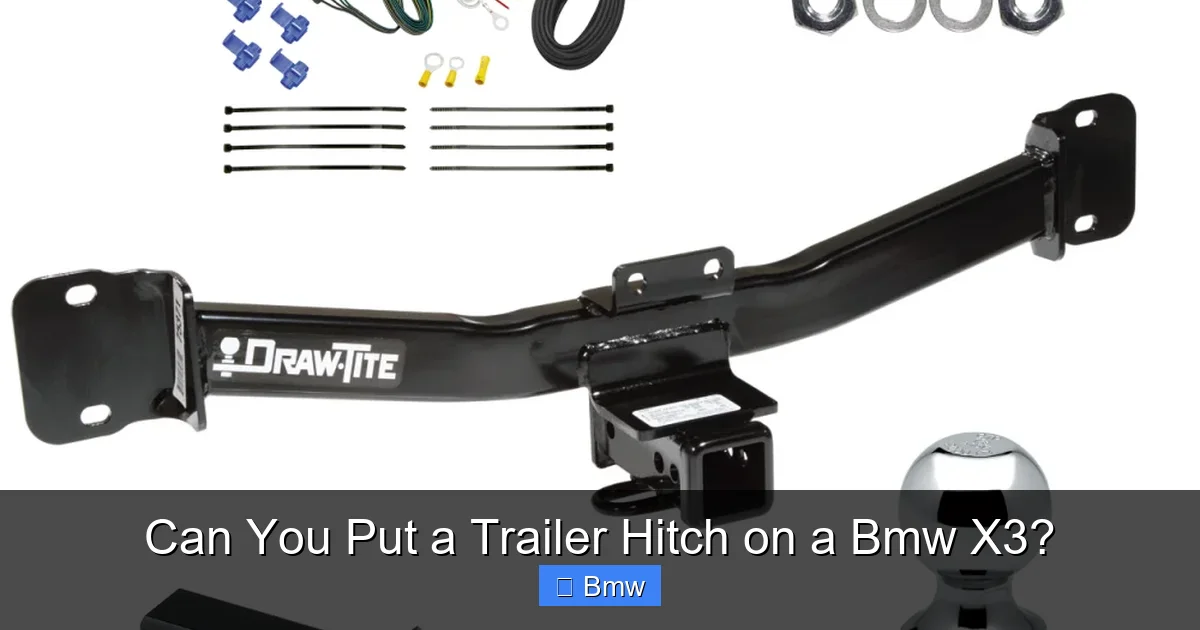
Visual guide about Can You Put a Trailer Hitch on a Bmw X3?
Image source: trailerjacks.com
The OEM (Original Equipment Manufacturer) Route
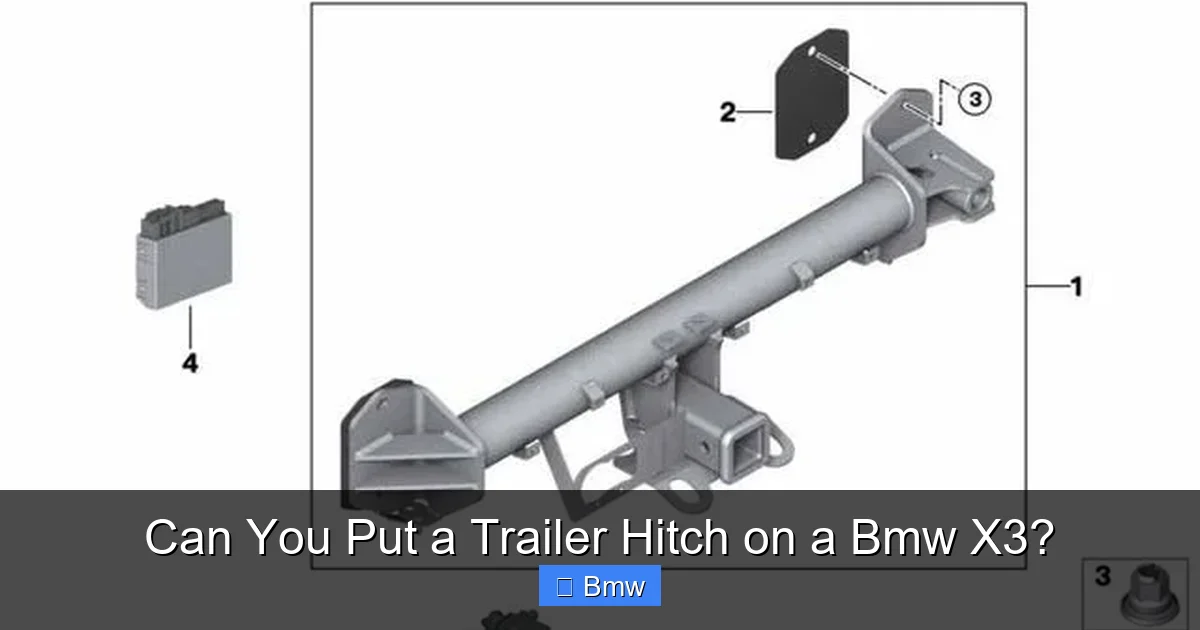
If your X3’s factory build sheet includes the trailer hitch prep, you can often purchase and install the genuine BMW hitch. This is a hidden, framerail-mounted system that integrates seamlessly. The ball mount folds up and stows completely out of sight behind the rear bumper when not in use, preserving the X3’s clean, premium aesthetic. The wiring is a simple plug-and-play module that connects to the vehicle’s existing CAN bus system without any splicing. For owners who value originality and a flawless look, this is the gold standard. However, it is almost always the more expensive option, and for models not originally equipped with the prep, it may not be available or could require additional, expensive cooling upgrades to be certified.
The Aftermarket Route: A Viable and Often Necessary Path
For the vast majority of used X3s that didn’t come with the factory prep, a high-quality aftermarket hitch is the answer. Brands like Curt Manufacturing, Draw-Tite, and Reese are leaders in this space. These hitches are engineered specifically for your X3’s chassis year and model. They typically bolt directly to the vehicle’s existing frame rails or reinforced points in the underbody, just like the OEM unit. Most modern aftermarket hitches also feature a similar hidden or low-profile design. The key is to ensure you buy a hitch that is certified to meet or exceed your X3’s specific towing capacity rating. A cheap, uncertified “universal” hitch is a recipe for disaster. You can find excellent guides comparing these brands, but for a luxury vehicle like the X3, sticking with the top-tier names is a smart safety move. Interestingly, you’ll find that owners of other vehicles like the Subaru Forester also often turn to these same aftermarket brands to unlock their vehicle’s towing potential when factory options are limited.
The Installation Journey: Why You Should Probably Call a Pro
This is the section where many DIY enthusiasts hit a wall. While the physical bolting of a hitch to the frame might seem straightforward on some vehicles, the BMW X3 complicates things.
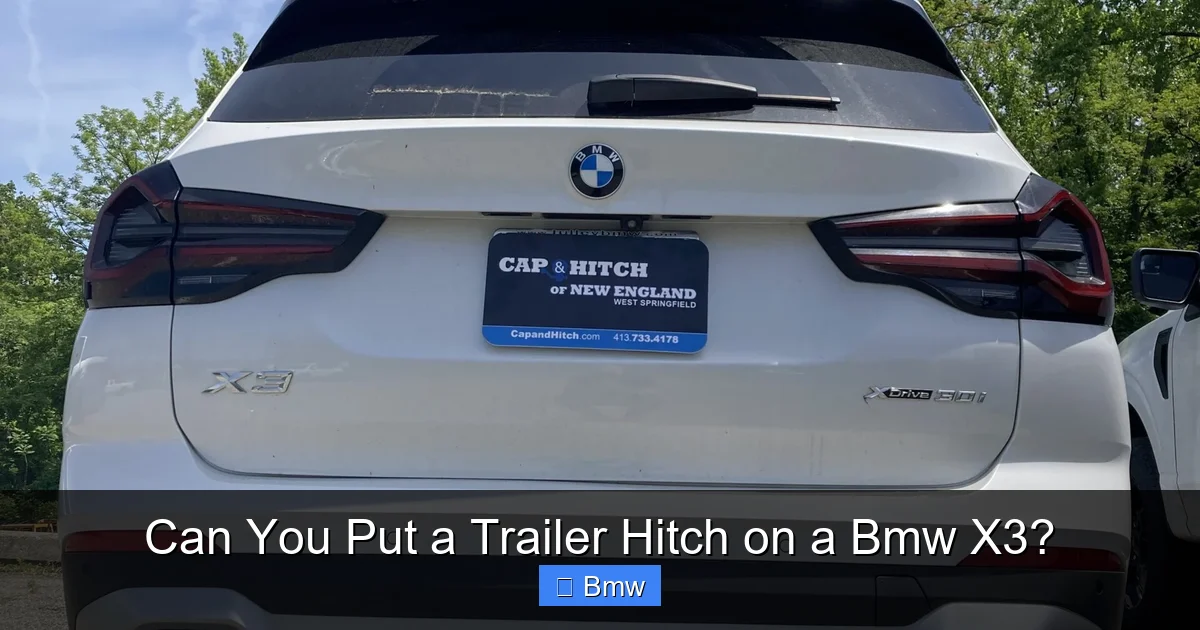
Visual guide about Can You Put a Trailer Hitch on a Bmw X3?
Image source: capandhitch.com
Bodywork and Bumper Modification
To install the hitch, the rear bumper assembly often needs to be partially removed or at least carefully lowered. This involves disconnecting wiring harnesses, sensors (like the parking sensors and backup camera), and potentially the exhaust hangers. It’s delicate work. One wrong move can crack a premium plastic bumper cover, damage a sensor, or create an unsightly gap. A professional installer has the specific tools, trim removal tools, and experience to do this without marring your X3’s pristine rear end.
The Electrical Labyrinth: Wiring is Everything
Getting the trailer lights to work is arguably the most critical part. Modern vehicles like the X3 use complex multiplexed electrical systems. You cannot simply tap into the tail light wires. You must use a vehicle-specific wiring harness that plugs into the factory harness behind the trunk lining. This harness is designed to “talk” to the car’s computer, telling it that a trailer is connected so it can adjust the tail light logic (e.g., disabling the trunk light to prevent a “burnt out” bulb warning). Splicing wires is not only unreliable but can cause fault codes, disable safety systems, and lead to erratic light behavior. This is a job for someone who knows the X3’s wiring diagram intimately.
The Professional Verdict
Given the bodywork and electrical complexity, professional installation is the overwhelming recommendation. A BMW dealer will install the OEM hitch with factory-trained technicians, guaranteeing perfect integration and preserving your warranty. A reputable trailer hitch specialty shop that frequently works on European vehicles is also an excellent, often more cost-effective choice. They have the jigs, knowledge, and experience to do it right the first time. When you consider the cost of repairing a botched bumper or troubleshooting a gremlin-filled wiring job, the professional fee is cheap insurance. For context, even something as seemingly simple as knowing the correct speed for a spare tire is a critical safety detail—imagine the complexity of integrating a trailer’s entire electrical system into a luxury car.
Legal, Warranty, and Insurance Realities
Putting a hitch on your X3 isn’t just a mechanical decision; it’s a contractual and legal one.
Visual guide about Can You Put a Trailer Hitch on a Bmw X3?
Image source: s3.amazonaws.com
Warranty: The Fine Print
This is a major concern. BMW’s New Vehicle Limited Warranty could be impacted. If an issue arises with the rear axle, suspension, transmission, or electrical systems and BMW can prove it was caused or contributed to by an improperly installed or non-approved hitch, they can deny coverage for that specific repair. The safest path is to use a hitch that BMW approves for your specific model year and VIN, installed by a BMW-certified shop. Always get this approval in writing from the dealer’s service department before proceeding. For used cars, check if any extended warranty you have has specific clauses about aftermarket accessories.
Weight Distribution and Brake Controllers
Your X3’s towing capacity assumes a properly loaded trailer. For anything approaching that 4,400 lb limit (like a small camper), you will likely need a weight distribution hitch. This system uses spring bars to distribute the trailer’s tongue weight across both the X3’s front and rear axles, preventing the rear from sagging and the front from becoming light, which wrecks steering and braking. Furthermore, many states require a separate trailer brake controller for trailers over a certain weight (often 1,500 or 3,000 lbs). The BMW X3 does not have a built-in controller; you must purchase and have one installed. This controller activates the trailer’s electric brakes when you press your brake pedal. It’s a non-negotiable safety device for heavier loads. Planning for these accessories is part of the total cost and complexity of towing with your X3.
Insurance and Licensing
Inform your auto insurance company that you will be towing. While personal auto policies typically cover liability when towing, it’s good to confirm. Also, be aware of your state’s requirements for trailer licensing, lighting, and brakes. These rules vary and are your responsibility as the tow vehicle operator.
Towing Best Practices for Your BMW X3
You’ve got the hitch, it’s installed perfectly, and you know your max weight. Now, how do you tow safely and preserve your X3?
Pre-Trip Inspection is Sacred
Before every trip, perform a ritual check. Ensure the hitch is locked, the safety chains are crossed and have proper tension, the wiring connector is secure and all lights (brake, turn, running) work on the trailer, the load is balanced with 10-15% tongue weight, and the trailer brakes are functional. Check your X3’s tire pressures, especially the rear, as they will be under more load. A quick visual of the hitch and connections every 50 miles on a long trip is wise.
Driving Dynamics: You Are Not in a Sports Car Anymore
With a trailer attached, your X3’s acceleration will be sluggish. Passing requires much more room and time. Your braking distance will increase dramatically—think double or more. The trailer will push the rear of your X3 around in crosswinds and during sudden maneuvers. You must drive defensively, anticipate stops far in advance, and take corners wider to avoid the trailer’s “off-tracking” where the trailer’s path is tighter than the tow vehicle’s. The steering will feel heavier and less direct. If you have an X3 with the adaptive suspension, see if there is a “towing” or “eco” mode that softens the response and helps manage the load.
Maintenance: What Changes When You Tow
Towing is hard on a vehicle. The transmission works harder, especially in hilly terrain. The engine runs hotter. The brakes wear faster. You must be more diligent with maintenance. Use high-quality, full-synthetic oil rated for your engine and consider more frequent changes (e.g., every 5,000 miles instead of 7,500-10,000). Have your transmission fluid inspected and potentially changed sooner. Inspect your brake pads and rotors regularly. Ensure your coolant system is in perfect health. Think of towing as adding significant stress cycles to your powertrain. For general maintenance queries, like whether you can mix different oils, the answer is usually no—consistency and manufacturer specification are paramount, especially under load.
Conclusion: A Capable Companion with Clear Limits
So, can you put a trailer hitch on a BMW X3? The definitive answer is yes, for many model years, but it is a modification that demands respect and careful planning. It is not a casual add-on. Your journey begins with a VIN check to confirm your X3’s factory towing eligibility and capacity. From there, you choose between the seamless but potentially costly OEM option and the proven reliability of a certified aftermarket hitch from a top brand. Whichever you choose, professional installation is the only sensible path to protect your investment, your safety, and your vehicle’s warranty.
Once installed, you must become a student of safe towing. Understand weight distribution, use a brake controller for heavier loads, and radically adjust your driving habits. Your BMW X3 is a sophisticated machine, and towing adds a layer of complexity it wasn’t primarily designed for as a daily driver. But within its carefully defined limits—respecting that 3,500 to 4,400 lb maximum—it can be a perfectly capable and luxurious tow vehicle for a small boat, a teardrop camper, or a utility trailer. The key is knowledge, the right equipment, and a commitment to doing it correctly. Your X3’s performance and your safety depend on it.
Frequently Asked Questions
What is the maximum towing capacity for a BMW X3?
It varies by model year and engine. For the current F97 generation (2018+), models with the trailer hitch prep and a suitable engine (like the xDrive30i or M40i) are typically rated for 4,400 lbs. Models without the prep or with base engines may be rated for only 3,500 lbs or may not be approved for towing at all. Always verify your specific VIN.
Can I install a trailer hitch myself on my X3?
While technically possible for an advanced DIYer with the right tools, it is strongly discouraged. The process involves complex bumper removal, precise frame drilling or bolt access, and intricate, splice-free electrical integration. Improper installation can damage body panels, cause persistent electrical faults, and void your warranty. Professional installation is the recommended and safest choice.
Will adding a hitch void my BMW’s warranty?
Not automatically, but it can. If BMW determines that a problem with your vehicle’s drivetrain, suspension, or electrical system was caused by an improperly installed or non-approved hitch, they can deny warranty coverage for that specific repair. Using a hitch approved for your specific VIN and having it installed by a BMW-certified or reputable specialty shop is the best way to protect your warranty.
Do I need a special wiring kit for my X3?
Yes, absolutely. You cannot use a generic “t-tail” wire tap kit. You must use a vehicle-specific, plug-and-play wiring harness that connects to the factory harness behind the trunk liner. This ensures the trailer lights function correctly and communicate with the X3’s computer without causing error codes. This harness is specific to your X3’s model year and trim level.
What is tongue weight and why is it important for my X3?
Tongue weight is the downward force the trailer exerts on the hitch ball. For safe towing, it should be 10-15% of the trailer’s total loaded weight. Too little tongue weight can cause trailer sway. Too much (over 200 lbs for an X3) can overload the rear axle, sag the suspension, and lighten the front axle, destroying steering and braking stability. A weight distribution hitch is often needed for heavier trailers to manage this force.
Do I need a brake controller for my X3?
Most likely, yes. While the X3 may have a factory wiring provision, it does not come with an integrated brake controller. For any trailer with electric brakes (typically required over 1,500-3,000 lbs depending on state law), you must purchase and have a separate brake controller installed. This device mounts in the cabin and activates the trailer brakes in proportion to your brake pedal application. It is a critical safety component for heavier loads.
