
Are Ford and Dodge 5-lug Bolt Patterns the Same?

Ford and Dodge 5-lug bolt patterns are generally NOT the same and are not directly interchangeable. The most common Ford 5-lug pattern is 5×135, while Dodge (and Ram) typically uses 5×139.7 (5×5.5). However, there are important exceptions based on model, year, and vehicle type. Always verify your specific vehicle’s bolt pattern before attempting to swap wheels to avoid dangerous fitment issues.
Key Takeaways
- Common Patterns Differ: The standard 5-lug bolt pattern for most modern Ford trucks (F-150, Ranger) is 5x135mm, while most Dodge/Ram trucks (Ram 1500) use 5×139.7mm (5×5.5 inches).
- Direct Interchange is Rare: A wheel from a typical Dodge Ram 1500 will NOT bolt directly onto a Ford F-150, and vice-versa, due to the different bolt circle diameters.
- Model & Year Matter: Exceptions exist, particularly with older vehicles, specific car models (like Mustang vs. Charger), and some commercial vans. Never assume compatibility based on the number of lugs alone.
- Center Bore is Also Critical: Even if the bolt pattern matched, the center bore (the hole in the wheel) must match or be compatible with the vehicle’s hub. This is a separate, equally important measurement.
- Always Measure Yourself: The only surefire way to know is to measure your vehicle’s bolt pattern or consult the official manufacturer specifications for your exact year, make, and model.
- Wheel Adapters Exist (With Caveats): Bolt pattern adapters can change the pattern, but they add cost, weight, and potential safety considerations. They are not a casual solution.
- Safety is Paramount: Incorrect wheel fitment can lead to vibration, premature bearing wear, stud failure, and potentially dangerous wheel loss. When in doubt, consult a professional.
📑 Table of Contents
- The Great Wheel Swap Mystery: Unlocking Bolt Pattern Truths
- Decoding the Code: What “5-Lug” and Bolt Pattern Really Mean
- Ford’s 5-Lug Bolt Pattern Fortress: The Dominant 5×135
- Dodge and Ram’s 5-Lug Legacy: The Ubiquitous 5×139.7 (5×5.5)
- Head-to-Head: The 135 vs. 139.7 Showdown
- Important Exceptions and Curveballs You Must Know
- How to Be 100% Sure: Your Action Plan
- The Bottom Line: Safety Over Convenience
The Great Wheel Swap Mystery: Unlocking Bolt Pattern Truths
So, you’re staring at a set of awesome used wheels from a friend’s Dodge Ram, and your trusty Ford F-150 is in need of a refresh. The wheels are the same size, the same 5-lug design… they should just bolt right on, right? This is one of the most common questions in the automotive world, and the answer is a crucial one for any DIY enthusiast or truck owner. The short, blunt answer is: no, Ford and Dodge 5-lug bolt patterns are almost never the same. But the full story is filled with important details, exceptions, and critical safety information that every vehicle owner must understand.
Let’s break it down in simple terms. A wheel’s bolt pattern is defined by two numbers: the number of lug holes (in this case, 5) and the diameter of the imaginary circle those holes sit on. This is measured in millimeters for most modern vehicles (e.g., 5×135) or sometimes in inches (e.g., 5×5.5). It’s like a specific lock and key. The wheel is the key with holes in a precise circle, and your vehicle’s hub studs are the lock pegs. If the circle is a different size, the key won’t fit. Ford and Dodge (under the Ram brand for trucks) have historically used different “circle sizes” for their 5-lug applications, making a direct swap impossible. But why? And where do the exceptions lie? We’re going to dive deep into the specifics for Ford and Dodge, so you never have to guess again.
Decoding the Code: What “5-Lug” and Bolt Pattern Really Mean
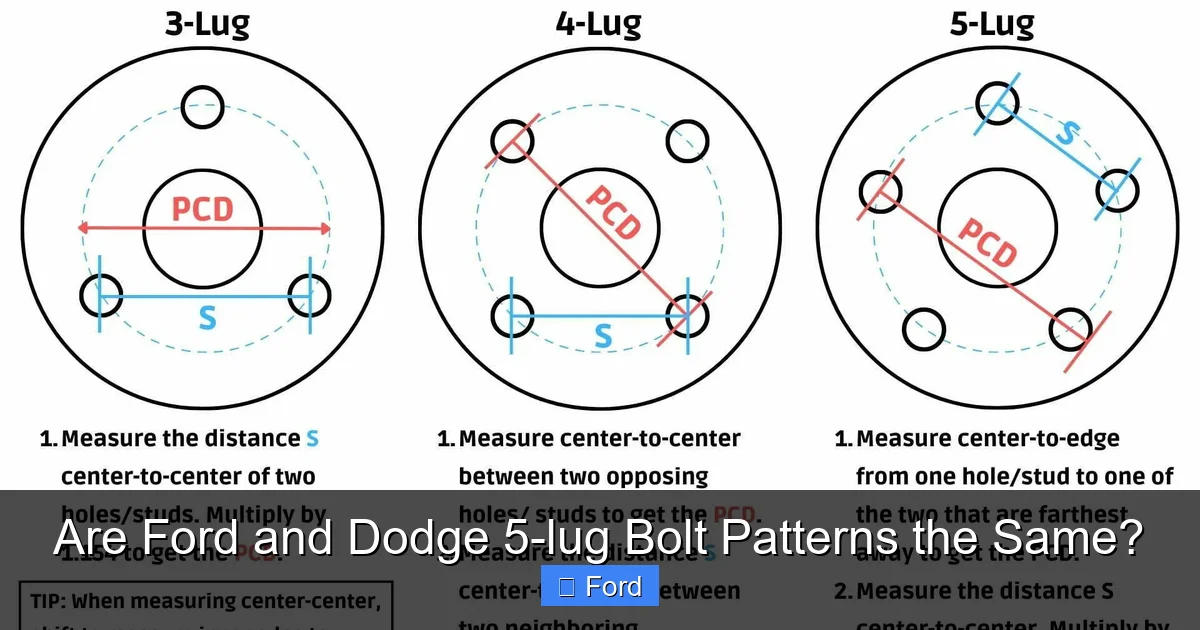
Before we compare brands, let’s make sure we’re all speaking the same language. A “5-lug” wheel simply means it has five mounting holes. This is common for many light-duty trucks, SUVs, and some cars. But the critical measurement is the bolt pattern, often written as “5x” followed by a number. That number is the bolt circle diameter (BCD). For example, 5×135 means five lugs on a 135mm diameter circle.
Visual guide about Are Ford and Dodge 5-lug Bolt Patterns the Same?
Image source: boostatv.com
How to Measure It Yourself (The Simple Way)
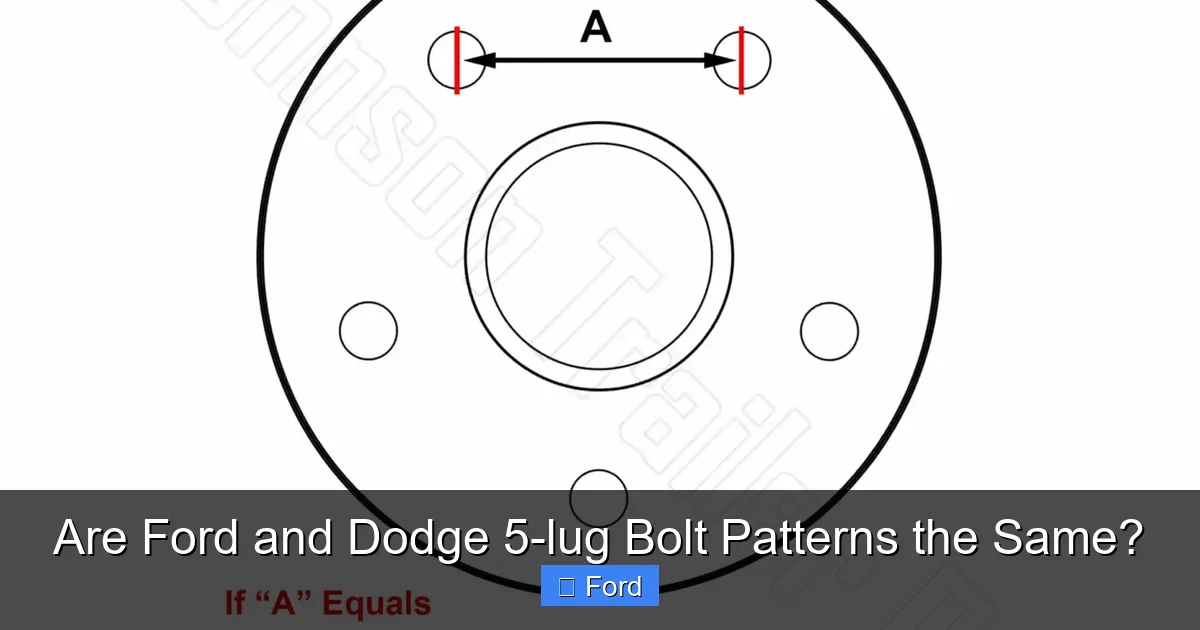
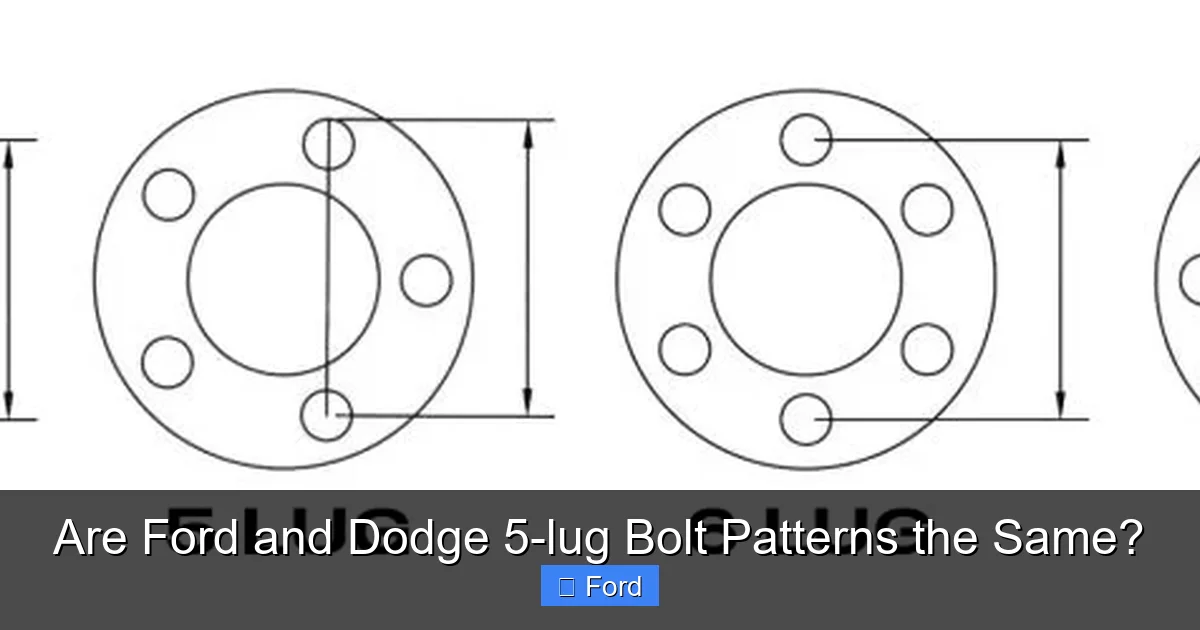
You don’t need to be a mechanic to find this out. Here’s a foolproof method: Measure the distance from the center of one lug hole to the center of the lug hole farthest from it, but skipping one lug hole in between. On a 5-lug wheel, you measure from one lug to the one two away (skip one). This gives you the diameter. You can use a ruler or caliper for accuracy. Alternatively, countless online databases and your vehicle’s owner’s manual or driver’s side door jamb sticker will list the factory specification. This step is non-negotiable before any wheel purchase or swap.
Ford’s 5-Lug Bolt Pattern Fortress: The Dominant 5×135
Ford has been remarkably consistent with its primary 5-lug pattern for decades, especially in its most popular trucks and SUVs. If you own a modern Ford F-150, Ranger, Expedition, or Explorer (from the late 1990s/early 2000s onward), your bolt pattern is almost certainly 5x135mm.
- Ford F-150: From the 1997 model year (the first of the “PN-96” generation) through today’s 2024 models, the F-150 has used 5×135. This includes all variants: XL, XLT, Lariat, King Ranch, Platinum, Raptor, and the heavy-duty F-250/F-350 with single rear wheels. It’s Ford’s flagship 5-lug pattern.
- Ford Ranger: The modern Ranger (2019+) uses 5×135. Many older Rangers (1993-2011) also used this pattern, making it a consistent thread through Ford’s midsize truck lineage.
- Ford Expedition & Navigator: These full-size SUVs, based on the F-150 platform, share the 5×135 pattern.
- Ford Explorer: Most models from the early 2000s (U2 platform) onward use 5×135.
There are niche exceptions. Some very old Ford trucks (pre-1997) used different patterns, and some commercial vans like the E-Series have used other measurements. But for the vast majority of Ford’s popular 5-lug vehicles you see on the road, 5×135 is the rule. This consistency is a blessing for Ford owners looking for aftermarket or used wheels within the brand ecosystem.
Dodge and Ram’s 5-Lug Legacy: The Ubiquitous 5×139.7 (5×5.5)
Meanwhile, at the other American automaker, Stellantis (formerly Chrysler, Dodge, Ram) has its own standard. For Dodge trucks and the Ram brand, the dominant 5-lug pattern is 5×139.7mm, which is also written as 5×5.5 inches (since 139.7mm equals 5.5 inches). This pattern is a cornerstone of their truck and SUV lineup.
Visual guide about Are Ford and Dodge 5-lug Bolt Patterns the Same?
Image source: i0.wp.com
- Dodge Ram 1500 / Ram 1500: This is the big one. From the 1994 “Big Horn” generation through the current 2024 models, the half-ton Ram 1500 has used 5×139.7. This includes all cab styles, bed lengths, and trim levels (Tradesman, Big Horn, Laramie, Rebel, TRX, etc.). The heavy-duty Ram 2500/3500 with single rear wheels also typically use this same 5×139.7 pattern for the front wheels.
- Dodge Dakota: The Dakota midsize truck (1997-2011) also used the 5×139.7 pattern, aligning it with its larger Ram sibling.
- Dodge Durango & Jeep Grand Cherokee: On the SUV side, many models of the Dodge Durango and its platform sibling, the Jeep Grand Cherokee (especially the 1999-2004 WJ, 2005-2010 WK, and 2011-2022 WK2/WL generations with 5-lug configurations) use the 5×139.7 pattern. This is a key point of potential confusion, as many people don’t realize some Jeeps share this pattern with Dodge/Ram trucks.
So, the pattern is clear: Dodge and Ram’s 5-lug world is dominated by 5×139.7 (5×5.5). This includes the vast majority of their popular trucks and many SUVs. There are exceptions, particularly in older cars (like certain Dodge Chargers or Challengers with 5-lug options, which may use different patterns like 5×114.3) and some commercial vans, but the truck/SUV standard is firmly 5×139.7.
Head-to-Head: The 135 vs. 139.7 Showdown
Now, let’s put the two giants side by side. The difference between 135mm and 139.7mm is 4.7mm, or about 3/16 of an inch. On paper, that seems tiny. In the real world of wheel fitment, it’s an insurmountable chasm.
Visual guide about Are Ford and Dodge 5-lug Bolt Patterns the Same?
Image source: crawlpedia.com
- The Numbers: Ford = 5x135mm. Dodge/Ram = 5×139.7mm (5×5.5″).
- The Reality: The lug holes on a 5×135 wheel will not align with the studs on a 5×139.7 hub. The wheel’s holes are too close together. You physically cannot bolt a 5×135 wheel onto a 5×139.7 vehicle, and vice-versa. The studs would either miss the holes entirely or be forced into them, causing catastrophic failure.
This is the fundamental, unchangeable rule. A Ford wheel and a Dodge/Ram wheel from these standard patterns are not compatible. This is why you’ll often hear the phrase “Ford and Dodge wheels don’t interchange.” It’s based on this core mechanical difference. If you were hoping to mix and match wheels between, say, a 2018 Ford F-150 and a 2018 Ram 1500, you will need to use wheel adapters or find wheels specifically made for each vehicle’s pattern. To understand the specific pattern for a Ram truck, it’s essential to consult the exact specifications, which you can find in our detailed guide on what is the lug pattern on a Dodge Ram 1500.
Important Exceptions and Curveballs You Must Know
Life in the automotive world is rarely absolute. While the Ford 5×135 vs. Dodge 5×139.7 rule covers 90% of the popular truck/SUV cases, there are notable exceptions that can trip people up.
Older Vehicles and Different Lineages
Before the late 1990s, patterns were less standardized. Some older Ford trucks (like the 1980-1996 F-150) actually used a 5×139.7 pattern! This means a wheel from a mid-90s Ford might fit a mid-90s Dodge Ram, but it’s a coincidence of that specific era, not a brand-wide rule. Always measure the old wheel or check the old vehicle’s specs. Similarly, some very old Dodge cars or trucks used other patterns. The takeaway: year is as important as make and model.
The Car Segment: Mustang vs. Charger/Challenger
Here’s a major point of confusion. The Ford Mustang (GT, EcoBoost, etc.) uses a 5×114.3mm pattern. Many Dodge Charger and Challenger models (V6 and some V8 trims) also use a 5×114.3mm pattern. So, a Dodge Charger wheel might fit a Ford Mustang, and vice-versa, because they share a common car pattern. This is a completely different pattern than their truck patterns. This is why the question “Are Ford and Dodge 5-lug bolt patterns the same?” must be answered with “It depends entirely on the specific vehicle models.” A Ford Explorer (5×135) and a Dodge Charger (5×114.3) both have 5 lugs but are utterly incompatible.
The Jeep Factor: A Dodge Ally?
As mentioned, many Jeep Wranglers (JK, JL) and Jeep Grand Cherokees use 5×139.7. This means a wheel from a Jeep Wrangler will bolt directly onto a Dodge Ram 1500 without any adapter, as they share the same bolt pattern and often a similar center bore. This creates a huge aftermarket wheel compatibility pool for Ram owners. Conversely, a Jeep Wrangler wheel will not fit a Ford F-150. This cross-compatibility within the Stellantis family (Dodge, Ram, Jeep) is a key strategic advantage for those brands. You can learn more about this specific interchange in our article on will Jeep 5-lug wheels fit a Dodge Ram 1500.
How to Be 100% Sure: Your Action Plan
Given the exceptions and the serious safety implications, how do you proceed with confidence? Follow this checklist every single time.
Step 1: Identify Your Exact Vehicle
Note the Year, Make, Model, and Trim. “2015 Ford F-150 XLT” is specific. “Ford truck” is not. This information is your starting point for any research.
Step 2: Find Your Factory Bolt Pattern
Use one of these methods:
- Owner’s Manual: Almost always lists it in the tire/wheel specifications section.
- Door Jamb Sticker: Check the driver’s side door pillar. It may list tire size and sometimes pressure, but bolt pattern is less common there.
- Online Look-Up: Reputable wheel and tire retailers have fitment databases. Enter your exact vehicle.
- Measure It: As described earlier, physically measure the bolt circle on your vehicle’s hub or on a wheel you know fits. This is the most reliable method if you have the wheel.
Step 3: Check the Wheel’s Markings
Many aftermarket wheels have the bolt pattern stamped into the rim, often near the valve stem hole. Look for something like “5×135” or “5×5.5”.
Step 4: Consider the Center Bore
This is the hole in the center of the wheel that slides over your vehicle’s hub. It must be equal to or larger than your hub’s diameter. If it’s larger, you need hub-centric rings. If it’s smaller, the wheel won’t fit on the hub at all. Common Ford truck center bore is 91.5mm. Common Dodge/Ram truck center bore is 77.8mm. This is another major incompatibility layer.
Step 5: When in Doubt, Ask or Consult a Pro
Pose your question—with the full vehicle details and wheel details—on a trusted forum for your specific vehicle brand. Or, take your wheel and vehicle to a reputable tire shop. A few minutes of research can save you from a costly mistake and a dangerous situation on the road.
The Bottom Line: Safety Over Convenience
So, are Ford and Dodge 5-lug bolt patterns the same? For the overwhelming majority of their popular truck and SUV models, the answer is a definitive no. Ford’s standard is 5x135mm. Dodge and Ram’s standard is 5×139.7mm (5×5.5″). These are not interchangeable. The only way to make them work is with a wheel adapter or spacer, which is a specialized part that bolts to your vehicle’s hub and provides a new, different bolt pattern on its face. However, adapters introduce new variables: they must be high-quality, properly torqued, and they change the wheel’s position relative to the hub, which can affect bearing life and handling. They are a solution for enthusiasts who understand the trade-offs, not a casual fix.
Your wheel is the only part of your car touching the road. Its connection to your vehicle must be perfect. Never guess. Never assume. Always verify the bolt pattern and center bore for both your vehicle and any wheel you consider. The compatibility between brands is not a given; it’s a specific engineering match that must be confirmed. By taking these simple steps, you protect your investment, your vehicle, and most importantly, yourself and everyone else on the road. For those specifically wondering about the crossover potential, our article on will Dodge 5-lug wheels fit Ford vehicles dives into the specific scenarios and the firm “no” for most direct comparisons.
Frequently Asked Questions
Can I put Dodge Ram 1500 wheels on a Ford F-150?
No, you cannot. The Dodge Ram 1500 uses a 5×139.7mm (5×5.5″) bolt pattern, while the Ford F-150 uses 5x135mm. The lug hole spacing is different, so the wheel will not bolt onto the hub. They are fundamentally incompatible without a wheel adapter.
What Ford vehicles use the same 5-lug pattern as a Dodge Ram?
Virtually no modern Ford trucks or SUVs share the Dodge/Ram 5×139.7 pattern. Ford’s standard is 5×135. Some very old Ford trucks (pre-1997) did use 5×139.7, but this is not common. For a direct fit, you must look within the Dodge/Jeep/Ram family, as many Jeeps share the 5×139.7 pattern.
Do all 5-lug wheels fit all 5-lug cars?
Absolutely not. “5-lug” only tells you the number of holes. The critical measurement is the bolt circle diameter (e.g., 5×114.3, 5×135, 5×139.7). A 5-lug wheel from a Honda Civic (5×114.3) will not fit a Ford F-150 (5×135) or a Dodge Charger (which may also be 5×114.3, but has a different center bore and offset requirements). Always match the full specification.
What is the most common 5-lug bolt pattern for trucks?
There are two dominant patterns in American light trucks: Ford’s 5x135mm and Dodge/Ram’s 5×139.7mm (5×5.5″). Japanese and some domestic trucks often use 5×114.3 or 5×120. There is no single “common” pattern for all trucks; it’s brand-specific.
Can I use wheel adapters to make Dodge wheels fit my Ford?
Technically yes, wheel adapters (also called conversion plates) can change a 5×139.7 pattern to a 5×135 pattern. However, they add cost, weight, and complexity. They must be high-quality, properly installed with a torque wrench, and they can affect wheel bearing life. They are a last-resort solution for enthusiasts, not a recommended everyday fix for casual wheel swaps.
How can I find out my truck’s bolt pattern for sure?
The most reliable methods are: 1) Check your vehicle’s owner’s manual in the specifications section. 2) Look for the information on a sticker in the driver’s door jamb. 3) Use an online wheel fitment database by entering your exact year, make, model, and trim. 4) Physically measure the bolt circle on your existing wheel or hub using the “skip-one-lug” method with a ruler or caliper.
