
How Do You Reset the Tire Light on a 2008 Toyota Sienna?

Resetting the tire pressure light on a 2008 Toyota Sienna is a simple process you can do yourself, but it only works after addressing the actual tire pressure issue. First, ensure all tires are inflated to the correct PSI found on your door jamb sticker. Then, use the steering wheel-mounted TPMS button to initiate the reset process. The light will blink and then turn off once the system relearns the sensor signals, typically after driving for 10-20 minutes. If the light persists or flashes, it indicates a deeper problem like a faulty sensor that needs professional attention.
Key Takeaways
- The reset only works after correcting tire pressure: Inflating tires to the manufacturer’s recommended PSI is the mandatory first step; resetting a low-pressure warning is ineffective and unsafe.
- Your 2008 Sienna uses a button, not a menu: The reset is initiated via the dedicated TPMS button on the steering wheel, not through the instrument cluster menu system.
- Driving is part of the reset process: After pressing the button, you must drive at speeds above 25 mph for 10-20 minutes for the system to automatically relearn and confirm sensor signals.
- A flashing light means a system fault: A solid light indicates low pressure; a rapidly flashing TPMS light suggests a communication error with a sensor or the module itself.
- Seasonal temperature changes trigger the light: Cold weather reduces tire pressure, causing the light to come on; this is normal and often resolves after driving and warming up the tires.
- Resetting doesn’t fix faulty sensors: If a sensor battery is dead or the sensor is damaged, the light will return regardless of resets, requiring sensor replacement.
- Consult your owner’s manual: It contains the definitive procedure and specifications for your specific vehicle, including the exact location of the TPMS button.
📑 Table of Contents
- Understanding Your 2008 Toyota Sienna’s Tire Pressure Monitoring System (TPMS)
- Before You Reset: The Non-Negotiable First Step
- The Reset Procedure: Step-by-Step for the Button Method
- What If My Sienna Doesn’t Have a Steering Wheel Button?
- After the Reset: Verification and Normal Operation
- Troubleshooting: When the Light Won’t Stay Off
- Pro Tips and Best Practices for TPMS Longevity
- Conclusion: A Simple Fix for a Critical System
Understanding Your 2008 Toyota Sienna’s Tire Pressure Monitoring System (TPMS)
That small, yellow tire-shaped icon glowing on your dashboard is more than just an annoyance—it’s your 2008 Toyota Sienna’s Tire Pressure Monitoring System (TPMS) talking to you. This safety feature is mandated by law and designed to alert you when the air pressure in one or more tires falls significantly below the recommended level. Ignoring it isn’t just about a rough ride; underinflated tires wear out faster, reduce fuel efficiency, and can dangerously affect handling and braking, especially in a large family van like the Sienna. Before we dive into the “how-to,” it’s crucial to understand what the light means and, just as importantly, what it does not mean.
Direct TPMS: How Your Sienna “Sees” Your Tires
Your 2008 Sienna uses a direct TPMS. This means each wheel has a small, battery-powered sensor mounted inside the valve stem. These sensors constantly monitor the air pressure and temperature, transmitting that data wirelessly to the vehicle’s central computer. When the pressure in any tire drops about 25% below the recommended cold inflation pressure, the system triggers the warning light on your dash. It’s a precise, real-time system, but it has its limits. The sensors themselves can fail, their batteries can die (they last about 7-10 years), and they can be damaged during tire service.
Solid vs. Flashing: Decoding the Light’s Behavior
Pay close attention to how the light behaves. A solid, steady illumination almost always means one or more tires are underinflated. This is the most common scenario and the one you can fix and reset yourself. A rapidly flashing light (for 30-60 seconds when you start the car, or while driving) is a different story. This typically indicates a system communication fault—a sensor isn’t talking to the computer, its battery is dead, or there’s an issue with the TPMS control module. In this case, a simple reset will not solve the problem. You’ll need a professional diagnosis with a scan tool to identify the faulty component. Trying to reset a flashing light is like turning off a fire alarm without checking for a fire; it doesn’t address the underlying danger.
Now that we’ve established the “why,” let’s get to the “how.” Resetting the light is the final step in a process that must begin with addressing the root cause.
Before You Reset: The Non-Negotiable First Step
Here is the single most important rule: You cannot and should not reset the tire pressure light without first ensuring all four tires (and the spare, if equipped with a sensor) are inflated to the correct pressure. Resetting the light while tires are still low is dangerous and will cause the light to return almost immediately after driving. The TPMS is a safety system, not a “notification to be dismissed.”
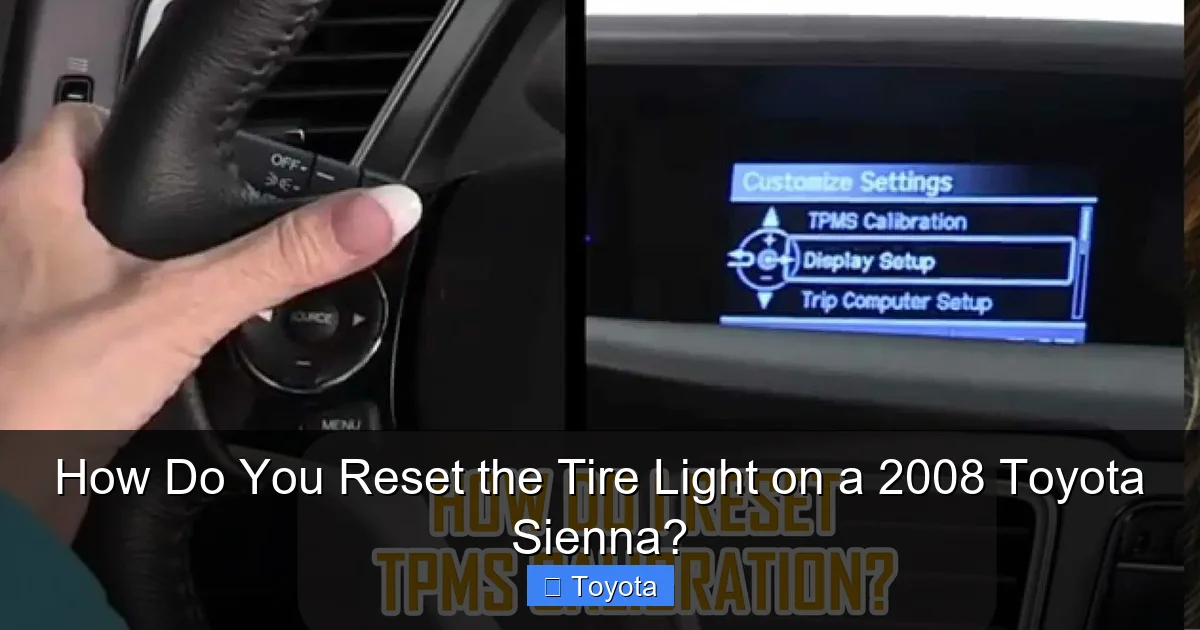
Visual guide about How Do You Reset the Tire Light on a 2008 Toyota Sienna?
Image source: e7yp5tq4unz.exactdn.com
Finding the Correct Pressure for Your Sienna
Do not use the number printed on the tire’s sidewall. That is the maximum pressure the tire can hold, not the vehicle manufacturer’s recommendation. The correct, cold inflation pressure for your specific 2008 Toyota Sienna is located on a sticker permanently affixed to the driver’s side door jamb (the pillar you see when you open the driver’s door). It will list pressures for the front and rear tires, which may differ, especially if your van is fully loaded. For a standard unloaded Sienna, it’s typically around 30-33 PSI for all four tires, but you must verify this on your own vehicle’s sticker.
How to Check and Inflate Tires Properly
Use a reliable, digital tire pressure gauge. “Pen-style” analog gauges are often inaccurate. Check the pressure when the tires are “cold”—meaning the car has been parked for at least three hours or driven less than a mile. Driving heats the tires and air inside, giving a falsely high reading. Remove the valve cap, press the gauge firmly onto the valve stem, and note the reading. Add or release air as needed at a gas station air pump or with your own compressor. Don’t forget the spare tire if it has a TPMS sensor (many full-size spares do). Once all tires are at the spec on the door jamb sticker, you’re ready to proceed with the reset procedure. For more general guidance on tire pressure maintenance, you can read our article on how to reset the tire pressure light on a Subaru Outback, which covers the universal importance of correct inflation.
The Reset Procedure: Step-by-Step for the Button Method
Your 2008 Toyota Sienna does not have a TPMS reset option buried in the menu on the instrument cluster. Instead, it uses a dedicated, physical button located on the steering wheel. This is a common point of confusion, so let’s find it and use it.
Locating the TPMS Reset Button
Sit in the driver’s seat and look at the right-side spoke of your steering wheel (the side with the cruise control buttons). You are looking for a small button with a symbol that looks like a cross-section of a tire with an exclamation point inside it. It is usually black or dark gray and might be labeled “SET” or have the TPMS icon. On some models, it’s integrated into a multi-function button cluster. If you’re having trouble, your owner’s manual will have a diagram. Pressing this button is the only way to tell the TPMS computer, “Hey, I’ve addressed the pressure issue; start looking for sensor signals again.”
Step-by-Step Button Reset Procedure
- Start with Correct Pressure: Ensure all tires are inflated to the spec on the door jamb sticker.
- Turn Ignition to “ON”: Press the “START/STOP” button once (or turn the key to the “ON” position) without cranking the engine. All dashboard lights, including the TPMS light, should illuminate.
- Press and Hold the TPMS Button: Locate the button on the steering wheel. Press and hold it down firmly. You should see the TPMS light on the dash begin to blink slowly. It will blink several times, then go out. This can take 3-8 seconds of continuous holding. The exact moment the light goes off is your cue.
- Release the Button: Once the light goes out, release the button. The light should remain off. If it comes back on solid immediately, you likely didn’t hold it long enough or there’s still a pressure issue.
- Drive to Recalibrate: Start the engine and drive the vehicle. You must drive at speeds consistently above 25 mph (40 km/h) for about 10-20 minutes. During this time, the TPMS module is actively communicating with each wheel sensor, confirming their IDs and pressure readings. You may see the light flash briefly during this drive, which is normal as it “handshakes” with the sensors.
- Confirmation: After the drive cycle, if the reset was successful and all pressures are correct, the light will stay off when you restart the car. Turn the ignition off and back on to confirm the light does not reappear.
This is the standard procedure. If your Sienna is equipped with a premium sound system or aftermarket steering wheel controls, the button location might vary slightly, but the process remains the same.
What If My Sienna Doesn’t Have a Steering Wheel Button?
This is a critical clarification for the 2008 model year. The vast majority of 2008 Toyota Sienna models do have the steering wheel-mounted TPMS button. However, some very early 2008 production models or specific trim levels might have a slightly different system. If you absolutely cannot find the button on the steering wheel, your next step is to consult the owner’s manual. There is a remote possibility that a reset requires a sequence using the odometer/trip meter button on the instrument cluster, but this is exceptionally rare for the Sienna and more common on some Toyota cars. The steering wheel button is the definitive standard for this van. If the manual is missing, a quick online search for “2008 Toyota Sienna TPMS button location” will yield numerous photos and videos confirming its position on the right steering wheel spoke. Do not attempt to reset via the odometer button unless your manual explicitly states to do so; you may inadvertently reset other systems like the maintenance required light. Speaking of which, if you’re dealing with other service lights, our guide on how to reset the maintenance light on a 2017 Toyota Highlander explains a similar but distinct process for service reminders.
After the Reset: Verification and Normal Operation
You’ve held the button, driven for 20 minutes, and the light is off. Great! But your job isn’t quite done. Proper verification ensures the reset was successful and the system is stable.
How to Verify the Reset Was Successful
The simplest verification is a cycle test. Turn your vehicle completely off (key out or “OFF” button pressed). Wait about 30 seconds. Then turn the ignition back to the “ON” position without starting the engine. Watch the dashboard. The TPMS light should illuminate briefly (along with all other warning lights) as a self-check, and then go out completely. If it stays on solid, the reset failed. If it flashes and then stays on, you have a system fault. A successful reset means the light performs its normal startup check and then disappears. Start the engine and drive normally. The light should remain off. It’s also a good idea to re-check your tire pressures with a gauge after a day of driving to ensure they haven’t mysteriously dropped again, which would indicate a slow leak.
What to Expect in the Following Days and Weeks
A properly reset TPMS system will now silently monitor your tires. The light should not come on again unless a tire loses significant pressure. Remember, the system is sensitive to temperature. A major cold snap can reduce tire pressure enough to trigger the light again. This is normal and not a sign of a faulty reset. In this case, simply re-check and top off the tires to the specified pressure (cold) and repeat the reset procedure if needed. This is a common occurrence, especially in seasonal transitions. The reset is not a “permanent fix”; it’s a re-initialization of the system after you’ve performed maintenance. It’s part of responsible vehicle ownership. If the light returns within a few days of a reset and proper inflation, you likely have a slow leak or a failing sensor that needs attention.
Troubleshooting: When the Light Won’t Stay Off
You followed all the steps perfectly. The light went off. But the next day, it’s back on. Or it’s flashing. Now what? This is where DIY meets the need for professional help. Let’s break down the common failure scenarios.
Scenario 1: The Light Comes Back On Solid After a Few Days
This almost always points to one of two issues. First, and most common, is a slow leak in a tire. You may have a nail or screw embedded in the tread. The tire loses pressure slowly enough that you didn’t notice it during your initial check, but the TPMS sensor detects the drop over time. The solution is to have the tire inspected for punctures and repaired or replaced. Second, it could be a faulty TPMS sensor. Sensors have batteries that wear out. On a 2008 vehicle, the original sensors are well past their expected 7-10 year lifespan. A dead sensor will stop transmitting, causing the system to flag a fault. This requires sensor replacement, which is typically done during a tire service.
Scenario 2: The Light Flashes Upon Startup and Stays On
As mentioned earlier, a flashing light is a system communication error. The most likely culprit is a dead sensor battery or a physically damaged sensor (from curb damage, improper tire mounting, or corrosion). It could also be a failure in the vehicle’s TPMS receiver module, though this is less common. This is not a DIY fix. You need to take your Sienna to a tire shop or dealership equipped with a TPMS scan tool. This tool can communicate with each sensor individually, reading its pressure, temperature, battery life, and unique ID. The technician can identify which wheel’s sensor is not responding and replace it. They will then perform a “relearn” procedure, which may be automated (driving) or manual (using a scan tool to program the new sensor’s ID into the vehicle’s computer), depending on the system. If you’re dealing with other complex warning lights, like an airbag system, the diagnostic process is similar and requires specialized tools, as detailed in our article on how to reset the airbag light on a Toyota Camry.
When to Seek Professional Help
Seek professional help immediately if: the light is flashing, the light returns quickly after a reset with confirmed proper inflation, you have a low or damaged tire that needs repair, or if your TPMS button does not seem to function (no light blink response). Working on TPMS sensors requires specific knowledge and tools to avoid damaging them or the wheel’s valve stem. A professional can also ensure a new sensor is properly programmed to your vehicle’s system, which is a critical step often missed in DIY replacements.
Pro Tips and Best Practices for TPMS Longevity
Resetting the light is reactive. Proactive care keeps the system happy and your family safe.
Check Pressures Monthly and Before Long Trips
Make it a habit. Tires naturally lose about 1 PSI per month. Temperature swings cause bigger fluctuations. Check them when cold. This prevents the light from ever coming on and extends tire life. A good digital gauge is a worthwhile $15 investment.
Be Gentle with Sensors During Tire Service
Always tell the tire technician your Sienna has TPMS. Sensors are fragile. Improper mounting/dismounting with improper tools can easily break the sensor or its valve stem. A reputable shop will know the correct procedure. If you do it yourself, use a TPMS-safe valve cap and tool.
Replace Sensor Batteries Proactively?
No. TPMS sensor batteries are sealed and not serviceable. You replace the entire sensor unit when the battery dies. There’s no way to test or “recharge” it. When a sensor fails, the light will inform you.
Don’t Ignore the Light, Even If the Ride Feels Fine
You might not feel a 25% pressure drop, especially in a heavy van. But your tires are overheating, wearing unevenly, and your fuel economy is suffering. The light is a cheap insurance policy against a potential blowout or accident. Treat it as urgent.
By understanding your Sienna’s TPMS, performing resets correctly, and following these practices, you’ll keep that light serving its intended purpose—as a helpful guardian for your tires and your family’s safety on the road.
Conclusion: A Simple Fix for a Critical System
Resetting the tire pressure light on your 2008 Toyota Sienna is a straightforward, five-minute task once you’ve done the essential groundwork of properly inflating all tires. The process hinges on finding and using the dedicated steering wheel button, followed by a brief drive cycle to allow the system to relearn. It’s a perfect example of a vehicle maintenance task that empowers owners. However, this empowerment comes with responsibility. The reset is not a magic “off” switch; it’s a confirmation that you’ve already fixed the problem. If the light persists or flashes, it’s your car’s way of saying the problem is beyond a simple air top-off and requires a professional’s expertise with TPMS diagnostic tools. By respecting the system’s purpose—safety, efficiency, and tire longevity—you’ll ensure your Sienna is always ready for the next family adventure, whether it’s a grocery run or a cross-country trip. Remember, a well-maintained tire is your first and most fundamental line of defense on the road.
Frequently Asked Questions
Why does my tire light keep coming back on after I reset it?
If the light returns quickly after a reset and you’ve confirmed the tires are properly inflated, it usually indicates a slow leak in one of the tires (from a nail or puncture) or a failing TPMS sensor with a dead battery. These issues require repair or part replacement, not just another reset.
Can I reset the tire light without starting the engine?
Yes, you must turn the ignition to the “ON” position (all dash lights on) to reset the light. However, after holding the TPMS button and releasing it, you must start the engine and drive the vehicle above 25 mph for 10-20 minutes to complete the relearn process.
What does it mean if the TPMS light flashes and then stays on?
A flashing TPMS light is a system fault code, not a low-pressure warning. It means one or more of the wheel sensors is not communicating with the vehicle’s computer, often due to a dead sensor battery or physical damage. This requires professional diagnosis with a TPMS scan tool.
Do I need to reset the TPMS after rotating my tires?
No, not for a 2008 Sienna. The system automatically identifies each sensor based on its unique radio frequency ID when you drive. Rotating tires does not require a manual reset unless you also replaced a sensor or the system gets confused, which is rare. The light should not come on after a routine rotation if all pressures are correct.
Can cold weather cause the tire light to come on?
Absolutely. For every 10°F (5.5°C) drop in temperature, tire pressure decreases by about 1-2 PSI. This can trigger the TPMS light on a cold morning. The light often goes off after driving for 15-20 minutes as the tires warm up and pressure increases. You should still check and adjust the cold pressures to the spec on your door jamb sticker.
Is it safe to drive with the tire pressure light on?
It depends. If the light is solid, it means one or more tires are significantly underinflated. Driving on underinflated tires is unsafe—it causes excessive heat buildup, premature tire failure, poor handling, and increased stopping distances. You should check and inflate the tires immediately. If the light is flashing, it indicates a system fault, and you should have the vehicle diagnosed promptly, as you may have a non-functional sensor.
