
How to Reset the Tire Pressure Light on a 2012 Toyota Camry

Resetting the tire pressure light on a 2012 Toyota Camry is a simple DIY task you can complete in under a minute after properly inflating your tires. First, ensure all tires, including the spare, are inflated to the manufacturer’s recommended PSI found on the driver’s door jamb sticker. Then, with the ignition in the “ON” position (engine off), locate and press the TPMS reset button until the tire pressure light blinks three times. The system will re-learn the new pressures, and the light should turn off after a short drive. If the light persists, it signals a potential sensor issue or low tire that needs professional attention.
Key Takeaways
- Safety First: Always check and adjust tire pressure before attempting a reset. Driving on significantly under-inflated tires is dangerous and damages wheels.
- Correct PSI is Crucial: Use the pressure specified on the driver’s door jamb sticker, NOT the number on the tire sidewall, for your 2012 Camry’s recommended cold inflation pressure.
- The Reset Button is Key: The reset button is typically located under the dashboard, to the left of the steering wheel, near the hood release. Consult your owner’s manual for the exact location.
- Process is Simple: Turn ignition to “ON”, press and hold the TPMS button until the light blinks three times (about 3 seconds), then release. Start the car and drive normally.
- Light May Reappear: If a tire loses pressure again, the light will return. A persistent light after a successful reset often indicates a faulty tire pressure sensor or a spare tire that’s low.
- Not All Issues Are DIY: A constantly illuminated TPMS light after proper inflation and reset usually means a sensor battery is dead or the sensor is damaged, requiring a tire shop.
- Seasonal Changes Matter: Temperature drops cause tire pressure to decrease. Check and reset your TPMS light more frequently during fall and winter months.
📑 Table of Contents
Introduction: That Annoying Little Light
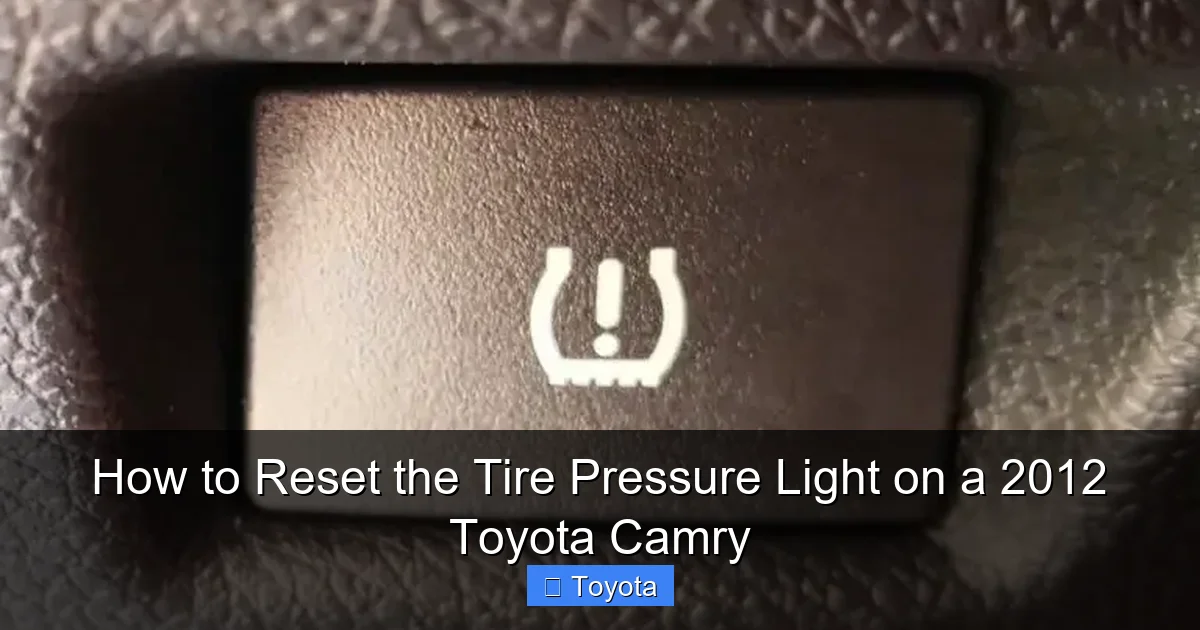
You’re driving your reliable 2012 Toyota Camry, and suddenly, a small icon of an exclamation point inside a tire shape glows on your dashboard. It’s the Tire Pressure Monitoring System (TPMS) warning light. While it’s a fantastic safety feature, it can be a real nuisance, especially if you’ve already checked your tires and they look fine. The good news? Resetting this light on your 2012 Camry is one of the most straightforward maintenance tasks you can do yourself. It takes less than a minute and requires no special tools. This guide will walk you through every single step, from understanding why the light came on in the first place to executing a perfect reset. We’ll also cover what to do when the simple fix doesn’t work, so you’re never left stranded with a confusing dashboard warning.
Understanding Your Camry’s TPMS
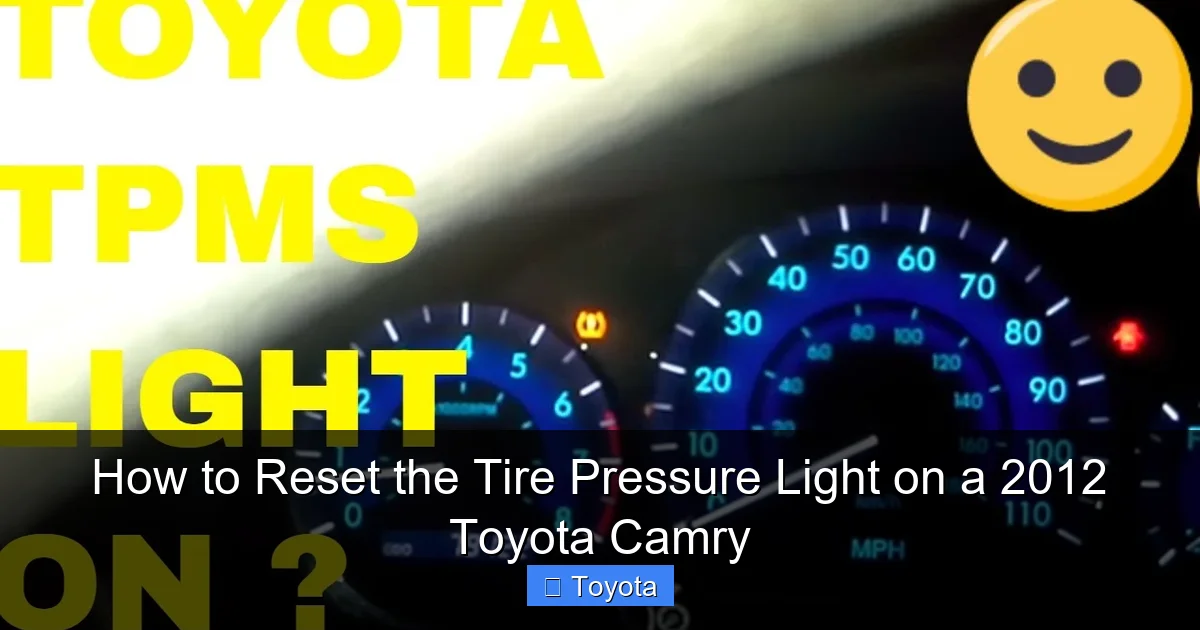
Before we start pressing buttons, it helps to know what you’re dealing with. The 2012 Toyota Camry uses a direct TPMS. This means each wheel has a small sensor mounted inside the valve stem that actively monitors the air pressure and temperature. These sensors have their own tiny batteries that last about 7-10 years. When pressure in any tire drops 25% or more below the recommended level, the sensor sends a signal to the car’s computer, which then illuminates the warning light on your dash.
Visual guide about How to Reset the Tire Pressure Light on a 2012 Toyota Camry
Image source: i.ytimg.com
Why the Light Comes On
It’s not always a slow leak. Here are the most common culprits:
- Temperature Change: This is the #1 reason. Cold air is denser, so when temperatures drop (like overnight in fall or winter), tire pressure can decrease by 1-3 PSI, triggering the light. The light often goes off after a few miles of driving as the tires warm up and pressure increases.
- Actual Leak: A nail, screw, or puncture in the tire tread or sidewall.
- Damaged or Leaking Valve Stem: The valve itself can be the source of a slow leak.
- Recent Tire Service: If you had tires rotated, patched, or replaced, the sensors may need to be re-learned by the system.
- Dead Sensor Battery: As sensors age (and your 2012 Camry is now over a decade old), their internal batteries can die, causing a constant light.
- Spare Tire Issue: If your full-size spare is mounted on the car and is low, it will trigger the light. The system monitors all four wheel positions.
Important: The Light Itself Doesn’t Tell You Which Tire
Unlike some European cars, the 2012 Camry’s TPMS is a “dumb” system—it tells you *that* pressure is low in one or more tires, but not *which one*. You must manually check all four tires and the spare. This is why the first, most critical step is always a physical tire pressure check.
Step 1: Preparation and Tire Pressure Check
Skipping this step guarantees your reset will fail. The TPMS light is a messenger; you must address the problem it’s reporting before you tell the car’s computer to stop sending the message.
Visual guide about How to Reset the Tire Pressure Light on a 2012 Toyota Camry
Image source: tiregrades.com
Gather Your Tools
You’ll need a reliable tire pressure gauge (digital is easiest) and an air compressor. You can use a home pump, a gas station pump (be aware these can be inaccurate), or a portable 12V compressor that plugs into your cigarette lighter.
Find the Correct PSI
Do NOT use the PSI number printed on the tire’s sidewall. That is the maximum pressure the tire can hold. Instead, open the driver’s side door and look for the yellow and white sticker on the door jamb. For a typical 2012 Camry, the recommended cold inflation pressure is usually 32 PSI for all four tires, but always use the number on your specific sticker. It might vary based on trim level (LE, SE, XLE) and original tire size.
Check and Inflate Tires
1. Remove the valve stem cap.
2. Press your gauge firmly onto the valve stem. Get a reading.
3. If the pressure is below the recommended number, add air in short bursts, re-checking frequently. It’s easy to over-inflate.
4. Inflate all four tires to the exact same, correct PSI.
5. Don’t forget the spare tire if it’s a full-size, mounted wheel. Check its pressure too (it often has a different, higher recommended PSI, like 60 PSI—check your door jamb sticker or owner’s manual).
6. Once all tires are to spec, replace all valve stem caps securely.
Step 2: The Manual Reset Procedure
Now that your tires are properly inflated, you can reset the system. The 2012 Camry has a dedicated TPMS reset button. This process tells the car’s computer to start listening to the sensors again with the new, correct pressure values.
Visual guide about How to Reset the Tire Pressure Light on a 2012 Toyota Camry
Image source: offroadingpro.com
Locating the TPMS Reset Button
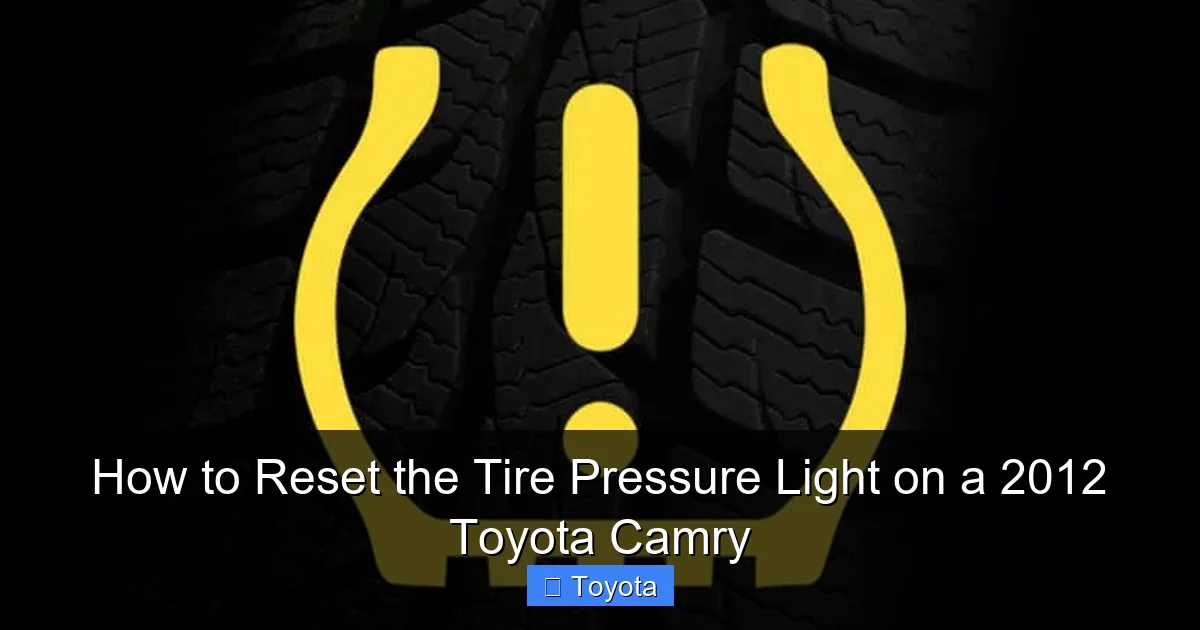
This is the most common point of confusion. The button is not on the dashboard or near the steering wheel column controls. It’s almost always located in the driver’s footwell area.
- Sit in the driver’s seat and look down to the far left, underneath the dashboard.
- You’re searching for a small, black, usually rectangular or oval button. It may have a TPMS symbol or the words “TPMS” on it.
- It’s often near the hood release lever or behind a small plastic cover.
- Pro Tip: If you can’t find it, your owner’s manual will have a diagram. Search the index for “Tire Pressure Warning Light” or “TPMS”.
The Reset Sequence
Follow these steps precisely:
- Turn the ignition to the “ON” position. Do not start the engine. Simply press the engine start/stop button once (if you have a keyless system) or turn the key to the “ON” or “RUN” position. All dashboard lights, including the TPMS light, should illuminate.
- Locate and press the TPMS reset button. Press and hold it down firmly.
- Watch the TPMS light on your dash. After holding the button for about 2-3 seconds, the tire pressure warning light will begin to blink slowly.
- Continue holding the button. After a few blinks (typically 3 slow blinks), the light will turn off. This is your confirmation that the reset signal has been sent.
- Release the button.
- Turn the ignition OFF. Wait a few seconds, then turn it back to “ON” to check. The light should remain off. If it comes back on immediately, you likely have a tire that is still low or the reset didn’t engage—try the process again.
Final Confirmation
Once the light is off after the reset, you must drive the car. The system needs to verify the pressures are stable. Drive normally for at least 30 minutes at varying speeds (city and highway). The TPMS light should stay off. If it comes back on after driving, re-check all tire pressures. If they are all correct, there is a deeper issue.
What If the Light Won’t Reset? Troubleshooting
If you’ve inflated the tires correctly and followed the reset procedure exactly, but the light remains illuminated or comes back on, it’s time to investigate further. This is where many DIYers hit a wall.
Common Reset Failures and Solutions
- The Reset Button Wasn’t Held Long Enough: You must hold it until you see the light blink three times and turn off. A quick press won’t work.
- One Tire is Still Slightly Low: Use your gauge. A difference of even 1-2 PSI between tires can sometimes trigger the system. Ensure all four are identical to the door jamb spec.
- The Spare Tire is the Culprit: If your full-size spare is on the car, it’s part of the system. Check its pressure. If it’s a temporary “donut” spare, the system may ignore it, but it’s still good to check.
- Faulty or Dead Sensor: This is the most likely persistent issue on a 2012 model. Sensor batteries die. A sensor can be physically damaged from curbs or during tire service. A tire shop will need to scan each wheel’s sensor ID to see which one is failing or has no signal. Replacing a sensor involves removing the tire and is best left to professionals.
- Extreme Temperature Fluctuation: If you inflated tires in a warm garage and then parked outside in extreme cold, pressure can drop enough to trigger the light again. Re-check pressures when tires are cold.
When to Call a Professional
If you’ve verified correct, equal pressure in all tires and the reset still fails, you need a professional diagnosis. They will use a TPMS scan tool to communicate with each sensor. They can identify a dead sensor, a sensor with a low battery warning, or a communication error. Sometimes, simply driving for a while after a reset allows the system to re-learn sensor positions, but this is rare. For other dashboard warnings, like an airbag light on a Toyota Camry, professional diagnostics are also essential, as those systems are more complex.
Frequently Asked Questions (FAQs)
Can I reset the tire pressure light without starting the car?
Yes, the reset process requires the ignition to be in the “ON” or “RUN” position (all dash lights on), but the engine must be off. You do not need to start the engine for the reset itself. However, you must drive the car afterward for the system to verify the pressures.
How long do I need to drive after resetting the TPMS light?
You should drive for at least 20-30 minutes at various speeds. The system needs to receive consistent pressure data from all sensors over time to confirm the issue is resolved. A short trip around the block may not be sufficient for the light to stay off permanently.
My tire pressure is perfect, but the light keeps coming back on. What’s wrong?
This strongly indicates a faulty tire pressure sensor, most likely due to a dead internal battery (common on 2012 models) or physical damage. Since the sensors are sealed units, they cannot be repaired and must be replaced. A tire shop can scan the system to pinpoint the bad sensor.
Do I need to reset the TPMS after rotating my tires?
On a 2012 Camry, a tire rotation typically does not require a manual TPMS reset. The system should automatically recognize the sensors in their new positions after a few minutes of driving. However, if the light comes on after a rotation, perform the manual reset procedure to be safe.
Is it safe to drive with the tire pressure light on?
It depends on why it’s on. If it came on due to a sudden temperature drop and your tires are actually properly inflated, a short drive is okay. However, if a tire is genuinely low, driving on it is dangerous—it can overheat, blow out, or cause poor handling and increased wear. Never ignore the light. Always check tire pressures immediately when it illuminates.
How much does it cost to fix a persistent TPMS light?
If the issue is just low air, it’s free (or the cost of air). If a sensor is faulty, replacement cost varies. A single sensor can cost $50-$150 for the part, plus $30-$80 for labor (since the tire must be dismounted and remounted). Some shops offer a kit that includes the sensor, valve stem, and installation. If you need help with other maintenance indicators, like the maintenance light on a Toyota Highlander, those are often simple resets you can do yourself.
Conclusion: A Simple Fix for Peace of Mind
Dealing with the tire pressure light on your 2012 Toyota Camry doesn’t have to be a frustrating mystery. By following this guide—starting with a meticulous tire pressure check, then performing the straightforward manual reset—you can solve the vast majority of TPMS warnings yourself in minutes. Remember, the system is there to protect you. A lit TPMS light is your cue to take a few moments for safety. Mastering this reset empowers you as a car owner and keeps your Camry running safely and efficiently. If the light proves stubborn despite your efforts, don’t hesitate to seek professional help. A properly functioning TPMS is a critical safety net, worth the investment to keep it in good working order. For more Toyota-specific maintenance tips, including how to reset the trip meter on a 2022 Toyota Camry or tackle other service lights, our library of guides has you covered.
Frequently Asked Questions
Can I reset the tire pressure light on a 2012 Toyota Camry without a scan tool?
Yes, absolutely. The 2012 Camry has a dedicated manual reset button located under the dashboard. You only need a tire pressure gauge to ensure tires are correctly inflated before performing the button-press sequence. A scan tool is only needed for diagnosing faulty sensors.
What if the TPMS reset button on my Camry is missing or broken?
If the button is physically missing, consult your owner’s manual for the exact location and part number. Sometimes it’s behind a small blanking panel. If it’s broken, you may need to source a replacement from a Toyota dealer or a reputable online parts vendor. In a pinch, some owners have used a small screwdriver to press the recessed button mechanism directly, but this is not recommended.
Will disconnecting the battery reset the tire pressure light?
No. Disconnecting the battery will reset many electronic modules and clear radio presets, but it will not reset the TPMS system on a 2012 Camry. The TPMS has its own memory and requires the specific reset procedure using the designated button to re-initialize.
My TPMS light flashes for about a minute then stays solid. What does that mean?
This is a specific code. On your 2012 Camry, a flashing TPMS light that then remains solid usually indicates a system malfunction or a sensor that has lost communication. It’s not just a low-pressure warning. You should have the system scanned with a TPMS diagnostic tool to identify the source of the fault.
Do I need to reset the TPMS after adding air to a low tire?
Yes, you must. The system only knows the tire was low when the light came on. Once you add air and the pressure is back to spec, the car’s computer still thinks the tire is low until you perform the reset procedure. The light will not turn off on its own after inflation.
Is the TPMS reset process the same for all 2012 Toyota Camry trims (LE, SE, XLE)?
Yes, for the 2012 model year, the location and procedure for the TPMS reset button are identical across all Camry trims. The process is the same whether you have the base model or the top-tier XLE. Always confirm with your specific owner’s manual, as there can be rare regional differences.
