
How Often Should I Change the Engine Air Filter on My Toyota Camry?

For most Toyota Camry owners, changing the engine air filter every 15,000 to 30,000 miles is the standard recommendation. However, harsh driving conditions like dusty roads, heavy stop-and-go traffic, or polluted areas can drastically shorten its life, requiring changes as often as every 12,000 miles. Fortunately, inspecting and replacing this simple part is one of the easiest DIY maintenance tasks you can do, taking under 30 minutes with basic tools to protect your engine and maintain performance.
Your Toyota Camry is famous for its reliability, smooth ride, and long-lasting performance. But even the most dependable engine needs clean air to breathe. That’s the job of your engine air filter—a simple, inexpensive part that plays a colossal role in your car’s health. Keeping it clean isn’t just about following a schedule; it’s about protecting a significant investment. So, how often should you change the engine air filter on your Toyota Camry? Let’s break it down in plain language, so you know exactly when to act and why it matters more than you might think.
Key Takeaways
- General Interval: Toyota recommends changing the engine air filter on a Camry every 15,000 to 30,000 miles under normal driving conditions, or about once a year.
- Severe Conditions Shorten Life: Frequent driving in dusty, sandy, or high-pollution areas, as well as heavy city traffic, can require filter changes every 12,000 miles or sooner.
- Easy Visual Inspection: You can check your air filter’s condition in minutes by locating the filter box under the hood—if it looks heavily coated with dirt and debris, it’s time for a replacement.
- Neglect Has Real Consequences: A clogged air filter reduces engine power, hurts fuel economy, increases emissions, and can allow abrasive dirt into the engine, causing premature wear.
- DIY is Simple and Cost-Effective: Replacing a Camry’s engine air filter is a beginner-friendly task that typically costs $15-$40 for the part and requires no tools or minimal effort.
- Don’t Confuse with Cabin Filter: The engine air filter cleans air entering the engine; the cabin air filter cleans air entering the passenger compartment. They are different parts with different replacement schedules.
- Your Manual is the Final Authority: Always consult your owner’s manual for model-year-specific recommendations, as intervals can vary slightly between generations of Camry.
📑 Table of Contents
- Understanding the Engine Air Filter’s Critical Role and the Cost of Ignoring It
- Toyota’s Official Guidelines and How They Apply to Your Camry
- How Your Driving Habits and Environment Dictate a Shorter Lifespan
- How to Check Your Engine Air Filter: A Simple, 5-Minute DIY Guide
- The Price of Procrastination: Real-World Consequences
- Professional Replacement vs. DIY: Weighing Your Options
- Making Air Filter Maintenance a Seamless Part of Your Camry’s Care Routine
Understanding the Engine Air Filter’s Critical Role and the Cost of Ignoring It
Think of your engine as a powerful air pump. It needs a massive amount of air to mix with fuel for combustion. The engine air filter is the gatekeeper, sitting in the air intake system, trapping dust, pollen, sand, insects, and other debris before it can enter the engine’s internal chambers. Without this barrier, tiny particles of grit would sandblast your pistons, cylinders, and valves, leading to rapid, expensive wear. A clean filter ensures optimal airflow, which is essential for the engine computer (ECU) to calculate the perfect fuel-air mixture for efficient, powerful, and clean combustion.
What Happens When the Filter Gets Clogged?
Over time, the filter media becomes saturated with trapped particles. This restricts airflow, strangling your engine. The ECU senses the reduced air volume and compensates by adding more fuel than necessary (a rich mixture). This leads to several noticeable and costly problems:
- Reduced Power and Acceleration: The engine can’t “breathe” properly, so it feels sluggish, especially when trying to pass on the highway or climb hills.
- Poor Fuel Economy: That rich fuel mixture burns less efficiently. You’ll see your miles per gallon drop, sometimes by 10% or more, costing you significantly at the pump over time.
- Rough Idle and Misfires: An improper air-fuel ratio can cause the engine to idle unevenly, shake, or even stumble, and it may trigger misfire codes.
- Increased Emissions: A clogged filter often leads to incomplete combustion, pumping more harmful hydrocarbons and carbon monoxide out of your tailpipe. This can cause a failed emissions test.
- Potential Engine Damage: In extreme cases, a severely restricted filter can create such a vacuum that it actually pulls the filter material inward, allowing unfiltered air (and dirt) to bypass it entirely. The ultimate cost is an engine rebuild.
Toyota’s Official Guidelines and How They Apply to Your Camry
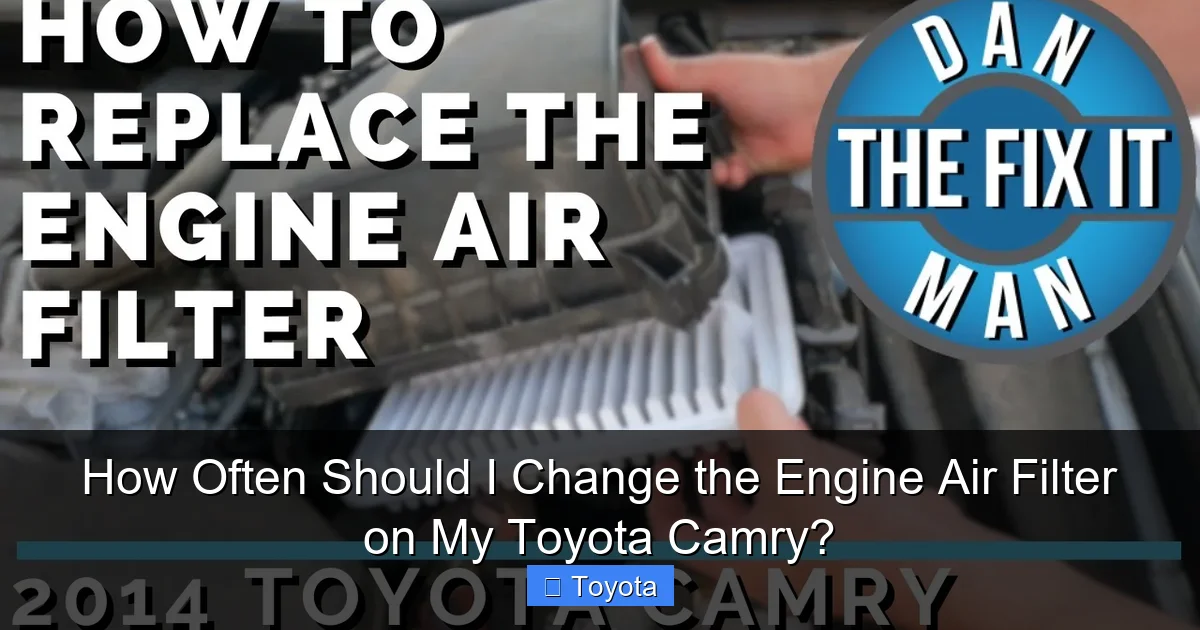
Toyota engineers the Camry to be durable and low-maintenance, and their factory recommendations reflect that. The first place to look is your owner’s manual. It contains the definitive interval for your specific model year and engine type (e.g., the 2.5L 4-cylinder vs. the 3.5L V6). While these can vary slightly, the general consensus for normal driving is clear.
Visual guide about How Often Should I Change the Engine Air Filter on My Toyota Camry?
Image source: i.ytimg.com
The Standard Mileage and Time Interval
For the vast majority of recent Toyota Camry models, the manufacturer recommends inspecting the engine air filter at every oil change and replacing it every 15,000 to 30,000 miles. Many manuals also specify a time component, such as “every 12 to 24 months,” because the filter material can degrade with age and humidity, even if the mileage is low. If you’re a low-mileage driver who puts only 5,000 miles a year on your Camry, plan on replacing the filter at least every two years as a precaution.
How Model Years and Engine Types Might Change the Rule
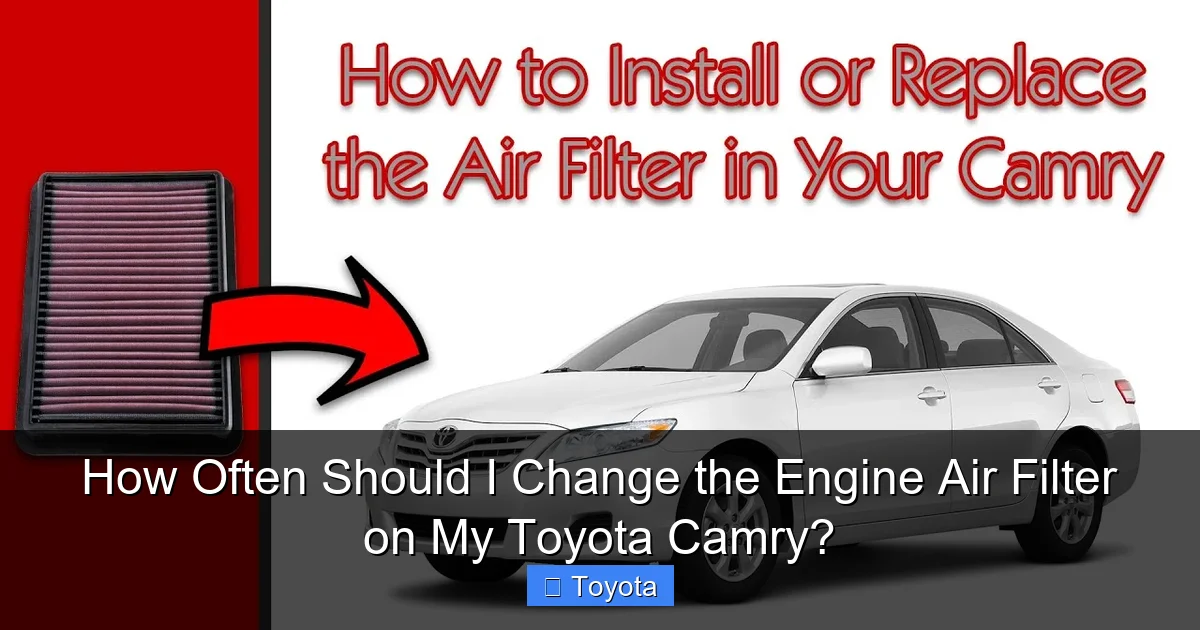
While the 15k-30k range is standard, it’s worth noting a few specifics. Older Camrys (pre-2012) sometimes had slightly longer intervals, while the latest generations with more sophisticated intake systems might lean toward the 30,000-mile mark under ideal conditions. The engine size doesn’t drastically change the interval, but the filter’s location and exact part number do. Always verify the correct replacement part (like a Toyota Genuine Part or a reputable brand like K&N, Wix, or Fram) using your VIN or a trusted parts catalog.
How Your Driving Habits and Environment Dictate a Shorter Lifespan
The “normal driving” assumption in the manual is key. Normal typically means mostly highway miles in relatively clean, temperate climates. If your driving reality is different, your filter will get dirty much faster. Here are the common “severe service” conditions that should prompt you to cut the recommended interval in half or even more.
Visual guide about How Often Should I Change the Engine Air Filter on My Toyota Camry?
Image source: i.ytimg.com
The Dusty Road Dilemma
This is the number one filter-killer. If you frequently drive on unpaved roads, in construction zones, in desert climates, or even on rural highways during windy, dusty conditions, your filter is working overtime. A single trip down a dirt road can load a filter with enough debris to warrant an immediate inspection and likely replacement. If you live in an area with regular dust storms or high pollen counts, treat your filter as a consumable item that needs frequent attention.
The City Traffic Grind
Constant stop-and-go traffic in urban areas isn’t just hard on your brakes and transmission; it’s tough on your air filter. Why? At low speeds, your Camry’s air intake is drawing in more exhaust fumes and particulate matter from the vehicles around you. The air is also hotter and less dense, which can accelerate the loading of the filter media. If your daily commute is 45 minutes of bumper-to-bumper traffic, consider checking your filter every 10,000-12,000 miles.
Seasonal and Environmental Factors
Winter can be surprisingly hard on air filters. Road salt and sand used for de-icing are kicked up into the air and can be highly abrasive. Spring brings massive pollen loads. If you have a dog that rides with you, loose hair and dander can also find its way into the intake. Being aware of these seasonal changes can help you time your inspections more effectively.
How to Check Your Engine Air Filter: A Simple, 5-Minute DIY Guide
You don’t need to be a mechanic to check this vital component. It’s arguably the easiest under-hood inspection you can perform. Think of it as a quick visual health check for your engine’s lungs. You should do this at least once between scheduled oil changes.
Visual guide about How Often Should I Change the Engine Air Filter on My Toyota Camry?
Image source: i.ytimg.com
Step 1: Locate the Air Filter Housing
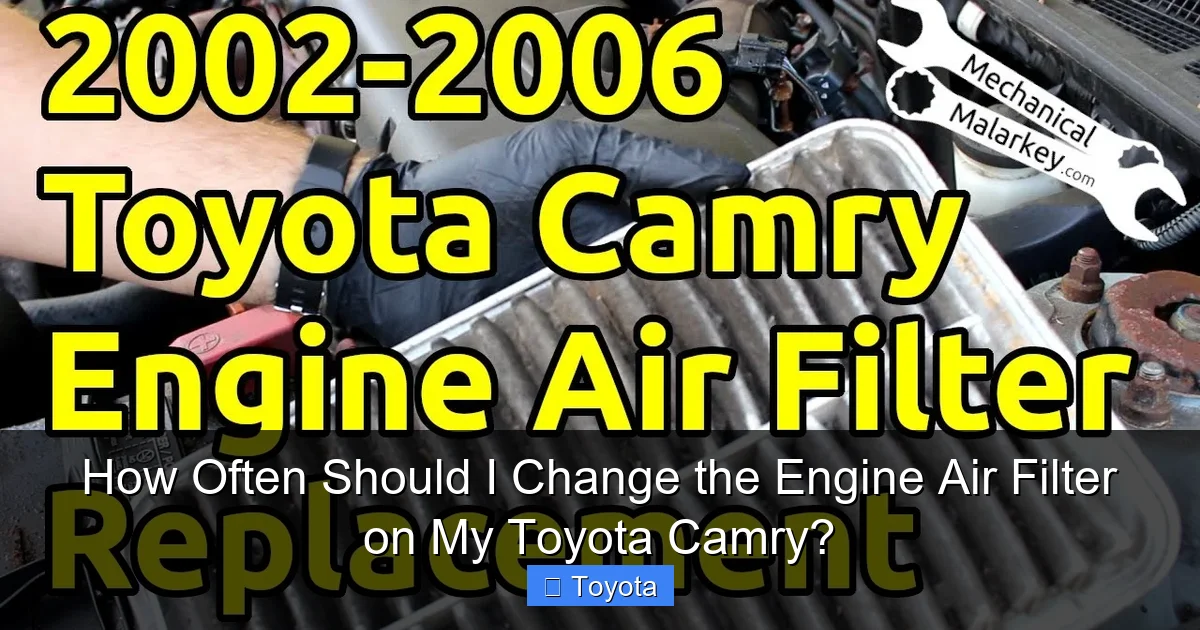
In your Toyota Camry, the engine air filter is housed in a large, usually black plastic box on the driver’s side of the engine bay (for most V6 and newer 4-cylinder models). It’s connected to a large, corrugated intake tube that runs from the throttle body back to the box. The box itself is held together by a few metal clips, screws, or a simple clamp. On some older models, it might be a round, spin-on type near the front of the engine.
Step 2: Open the Housing and Inspect
Release the clips or loosen the clamp. Carefully lift the top half of the box. You’ll see the rectangular or round filter element sitting inside. Gently remove it. Now, hold it up to the sunlight or a bright light.
- Good Condition: You can see light easily through the pleated paper or fabric media. It will look mostly white or light tan.
- Needs Replacement: The media is dark gray, black, or brown, and you cannot see light through it. It may feel coated with a fine layer of dust or, worse, a greasy, gritty film (from oil fumes or heavy pollution). Debris may be caked in the pleats.
- Damaged: Check for cracks, tears, or oil saturation. Any damage means immediate replacement.
Step 3: The “Tap Test” and Cleaning Caution
If the filter is lightly dusty but you can still see light, you can sometimes gently tap it over a trash can to dislodge loose debris. Do not use compressed air or water to clean a standard paper filter. This will damage the media and compromise its ability to trap fine particles. For reusable cotton gauze filters (like K&N), follow the manufacturer’s specific cleaning and re-oiling procedure. For standard disposable filters, when in doubt, throw it out. They are cheap insurance.
The Price of Procrastination: Real-World Consequences
We’ve touched on the technical symptoms, but let’s talk about what that means for your wallet and your daily driving experience. Neglecting this $20-$40 part is one of the most preventable ways to invite bigger problems.
Fuel Economy: The Silent Drain on Your Wallet
Let’s use some real math. Suppose your Camry normally gets 32 MPG highway. A clogged air filter might reduce that to 28 MPG. If you drive 12,000 miles a year, that’s the difference between using 375 gallons and 429 gallons. At $3.50 per gallon, that’s an extra $189 per year wasted—enough to buy several new air filters and then some. The penalty is often higher in city driving.
Performance Loss and Annoying Drivability Issues
That “lack of power” you feel when merging onto the highway isn’t just in your head. A restricted filter can reduce horsepower by a few percent. It might cause your Camry to hesitate when you press the accelerator, feel like it’s “lugging” in a higher gear, or have a rough, uneven idle that shakes the steering wheel. These issues degrade the smooth, refined driving experience you expect from a Camry.
Long-Term Engine Wear and Tear
The most serious risk is abrasive damage. Even microscopic particles of dust act like sandpaper inside the engine’s精密 machined surfaces. Over thousands of miles, this can increase cylinder bore wear, score piston rings, and damage valve seats. The result is lower compression, oil consumption, and eventually, a loss of performance that no simple tune-up can fix. Repairing this type of damage costs thousands, making the air filter one of the best value maintenance items you can buy.
Professional Replacement vs. DIY: Weighing Your Options
Should you pay a shop to do this, or tackle it yourself? For the engine air filter on a Camry, the case for DIY is overwhelmingly strong for most owners.
Cost Comparison: The Stark Difference
A quality OEM or OEM-equivalent engine air filter for a Camry typically costs between $15 and $40 at an auto parts store or online. At a dealership or quick-lube shop, you’ll pay a labor charge on top of the part. Expect a total bill of $70 to $120 for the same job. That’s a 300-400% markup for a task that takes less time than a coffee break.
Time, Tools, and Skill Required
This is the ultimate beginner DIY project. You usually need:
- Zero tools (most housings use clips). Some may need a screwdriver or socket for clamps.
- 5-15 minutes of your time.
- No special mechanical knowledge. Just follow the “open box, remove old filter, insert new filter, close box” sequence.
There is no fluid to drain, no calibration needed, and no risk of cross-threading or over-torquing. The new filter should fit snugly but easily into the housing. You cannot install it incorrectly in a way that damages the engine (unlike, say, an oil filter).
When to Consider a Professional
While DIY is ideal, there are a few scenarios where you might hand it off:
- You’re already having other work done: If your Camry is in the shop for a scheduled service, adding a filter change for the part cost plus a small labor fee is convenient.
- The housing is damaged or corroded: In very old or neglected cars, the plastic filter box can become brittle. A professional can assess if it needs replacement.
- You’re simply uncomfortable: If popping the hood gives you anxiety, paying for peace of mind is valid. But for 99% of owners, trying this once will build confidence for other simple tasks.
Making Air Filter Maintenance a Seamless Part of Your Camry’s Care Routine
The key to effortless car ownership is building habits. Don’t think of the air filter in isolation. Integrate it into a holistic maintenance mindset that keeps your Camry running like new for 200,000+ miles.
Sync It with Your Oil Changes
The easiest trigger is your oil change interval. Since you should be changing your oil every 5,000 to 10,000 miles (depending on your oil type and driving habits), make it a rule to inspect the air filter at every oil change. This creates a natural checkpoint. If it’s dirty, replace it then. If it’s still clean, put it back and check again next time. This habit alone ensures you never go too long without checking.
Leverage Your Toyota’s Maintenance Reminders
Your Camry’s onboard computer likely has a maintenance reminder system that alerts you for oil changes and other services. While it might not have a specific “air filter” warning light, the general “Maintenance Required” light often encompasses filter inspections. When that light comes on, it’s a perfect cue to check all your basic filters—engine and cabin. You can learn how to reset this light after completing your own work by following a guide like how to reset the oil light on Toyota, which covers the general process for many models.
Keep a Simple Maintenance Log
Use a notebook, a notes app on your phone, or a dedicated maintenance tracking app. Record the date and mileage every time you:
- Inspect the air filter (note condition).
- Replace the air filter.
- Replace the cabin air filter (a separate filter for the interior, typically changed every 15k-25k miles—you can find a guide for a similar Toyota like the RAV4 here).
- Perform other key services like oil changes, antifreeze changes (learn about antifreeze intervals here), and tire rotations.
This log becomes an invaluable history if you ever sell the car and proves your diligent care to potential buyers.
Pair it with Other Visual Checks
While you have the hood open for the air filter, do a quick walk-around. Check your engine oil level on the dipstick. Look at your coolant reservoir level. Inspect your serpentine belt for cracks. Peek at your battery terminals for corrosion. These 60-second checks, done every few months, can catch small issues before they become big, expensive problems.
Ultimately, the question “how often” has a flexible answer. The rule of thumb is every 15,000-30,000 miles or once a year. But your personal answer depends on where and how you drive. By making visual inspections a habit, you move from a rigid schedule to a smart, condition-based maintenance strategy. You’ll save money on fuel and repairs, enjoy better performance, and have the confidence that you’re actively preserving the legendary reliability of your Toyota Camry. A clean air filter is one of the smallest, yet most impactful, things you can do for your car. It’s a five-minute job that pays for itself over and over again.
Frequently Asked Questions
What are the most common signs that my Toyota Camry’s engine air filter needs changing?
The most common sign is noticeably reduced fuel economy. You may also experience a lack of power during acceleration, a rough or uneven idle, or a slight change in engine sound (it may sound “starved” for air). In severe cases, a dirty filter can trigger the check engine light, often with codes related to the mass airflow sensor or fuel trim. If you’re unsure, a quick visual check under the hood is the fastest way to know for sure.
Can I clean my engine air filter instead of replacing it?
It depends on the filter type. Standard disposable paper filters should never be cleaned with water or compressed air, as this damages the media and ruins its filtering ability. They must be replaced. Reusable cotton gauze filters (like those from K&N) are designed to be cleaned with a specific kit and re-oiled. However, for most Toyota Camry owners, sticking with inexpensive disposable filters and replacing them is the simplest, most reliable, and cost-effective method.
Is there a difference between the engine air filter and the cabin air filter?
Yes, absolutely. The engine air filter is located under the hood in a large plastic box. Its job is to filter the air entering your engine. The cabin air filter is usually located behind the glovebox or under the dashboard. Its job is to filter the air entering your car’s passenger compartment through the HVAC system. They are different parts with different replacement schedules and procedures. Neglecting the cabin filter affects your AC performance and air quality, while neglecting the engine filter affects engine performance and longevity.
How far can I drive past the recommended air filter interval?
There’s no strict “emergency” limit like with oil, but you should not intentionally exceed the interval. Driving with a severely clogged filter for extended periods will hurt your fuel economy and can lead to the performance issues and potential engine wear described above. If you’re in a remote area and the filter is dirty, it’s better to replace it at the earliest convenience rather than risk a drivability problem or, in extreme cases, a vacuum leak that allows dirt into the engine.
Does my Toyota Camry have a specific warning light for a dirty air filter?
No, the Camry does not have a dedicated “air filter” warning light. However, a severely clogged filter can cause conditions that might illuminate the check engine light. This could be due to the mass airflow sensor detecting insufficient air or the engine running too rich. If your check engine light comes on along with symptoms like poor fuel economy or rough running, a clogged air filter is one of the simpler things to check. You can learn more about common causes of that light here.
What happens if I accidentally install the new air filter incorrectly?
Installation is very straightforward, but the key is to ensure the filter sits correctly in the housing and that the housing lid is sealed tightly. The filter should fit snugly without forcing it. Most have rubber or foam seals that should face upward. The main risk of improper installation is that unfiltered air can bypass the filter through gaps, defeating its purpose. Double-check that all clips or clamps are securely fastened and that the lid sits flush. There is no risk of engine damage from an incorrectly installed filter in the same way as, say, an incorrectly torqued oil drain plug.
