
How Do You Reset the Tire Pressure Light on a Toyota Sequoia?

If your Toyota Sequoia’s tire pressure warning light is on, it’s crucial to address it promptly for safety. This guide covers both automatic and manual reset methods after ensuring proper tire inflation. Persistent issues may indicate a faulty sensor requiring professional diagnosis.
Hey there, fellow Sequoia owner! That little tire pressure warning light glowing on your dashboard can be more than just a nuisance—it’s your vehicle’s way of telling you something important about your tires and your safety. Whether you’ve just topped off your air or had a tire serviced, knowing how to reset the tire pressure light on a Toyota Sequoia is a valuable skill. It saves you a trip to the dealer and gives you peace of mind. In this complete guide, we’ll walk through everything from why that light comes on to the exact steps for resetting it on your specific model year. We’ll keep it simple, straightforward, and packed with practical tips you can use today. Let’s get that light off your dash and get you back on the road with confidence.
Key Takeaways
- Safety First: Always check and adjust tire pressure to the manufacturer’s specification before attempting any reset.
- Automatic Reset: Most Sequoia models will reset the light automatically after driving 10-15 minutes at speeds above 50 mph once tires are properly inflated.
- Manual Button: Sequoias equipped with a dedicated TPMS button can reset the system via the multi-information display; not all model years have this feature.
- Scan Tool Requirement: Some later-model Sequoias with direct TPMS require a professional scan tool to relearn sensor IDs after tire service or sensor replacement.
- Persistent Light: If the light remains on after correct inflation and reset attempts, a faulty TPMS sensor, dead sensor battery, or system malfunction is likely.
- Regular Checks: Monthly tire pressure checks with a reliable gauge prevent false alerts and maintain optimal safety, fuel economy, and tire wear.
- Temperature Impact: Cold weather can cause a temporary light activation; always recheck pressures when seasons change.
📑 Table of Contents
- Understanding Your Sequoia’s Tire Pressure Monitoring System (TPMS)
- Essential Preparation Before Resetting the Light
- How to Reset the Tire Pressure Light on a Toyota Sequoia
- Why Won’t the Tire Pressure Light Reset? Troubleshooting Common Issues
- Proactive Maintenance to Avoid Future TPMS Alerts
- Conclusion: Keep Your Sequoia Rolling Safely
Understanding Your Sequoia’s Tire Pressure Monitoring System (TPMS)
Before we dive into resetting the light, it helps to understand what’s watching your tires. Your Toyota Sequoia is equipped with a Tire Pressure Monitoring System, or TPMS. This is a safety feature mandated by law that monitors the air pressure inside your tires and alerts you when it falls significantly below the recommended level. The system is designed to warn you of underinflation, which can lead to poor handling, increased tire wear, reduced fuel economy, and even dangerous blowouts.
Direct vs. Indirect TPMS: Which Does Your Sequoia Have?
There are two main types of TPMS. Indirect systems use the existing ABS wheel speed sensors to detect differences in tire rotation speeds. A significantly underinflated tire rolls at a slightly different speed than the others, triggering the light. These systems don’t have physical sensors in the wheels but require a reset or recalibration after tire rotations or pressure adjustments. Direct systems, which most Sequoias use, have small electronic sensors mounted inside each wheel valve stem. These sensors actively measure tire pressure and temperature and transmit that data to your vehicle’s computer. They have their own batteries, typically lasting 7-10 years. If a sensor fails or its battery dies, the light will come on and often require a professional scan tool to reset and program a new sensor. For specific issues with sensor replacement or reprogramming, resources like how to reset a tire pressure sensor can offer deeper insights into sensor-specific troubleshooting.
What the Light Actually Means
The tire pressure warning light on your Sequoia’s dash is usually an amber or yellow symbol that looks like a cross-section of a tire with an exclamation point in the center. When it illuminates steadily, it means one or more tires is underinflated by 25% or more. If it’s flashing for about a minute and then stays on, it often indicates a system malfunction, such as a failed sensor or a communication issue with the receiver. Understanding this distinction is key to proper troubleshooting.
Essential Preparation Before Resetting the Light
Resetting the light is the final step, not the first. Jumping straight to a reset without fixing the underlying issue is like turning off a smoke alarm without putting out the fire—it’s ineffective and dangerous. Here’s your pre-reset checklist.
Visual guide about How Do You Reset the Tire Pressure Light on a Toyota Sequoia?
Image source: img.toyotask.com
Safety First: The Golden Rule of TPMS
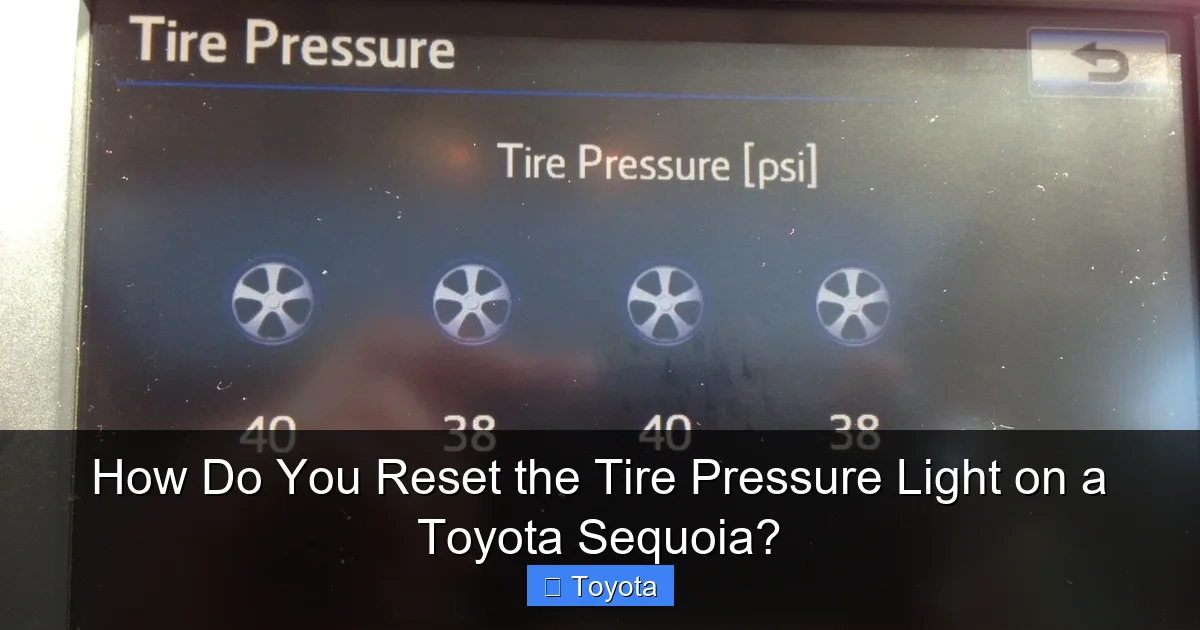
Your primary goal is to ensure all four tires (and the spare, if equipped with a sensor) are inflated to the correct pressure. The correct pressure for your specific Sequoia is found on a sticker located on the driver’s side door jamb, the fuel filler flap, or in your owner’s manual. Never use the pressure listed on the tire’s sidewall—that’s the maximum pressure the tire can hold, not the vehicle manufacturer’s recommendation for your Sequoia. Underinflated tires are a serious safety hazard, leading to overheating, tread separation, and loss of control. Overinflated tires reduce traction and cause uneven wear. Use a reliable, high-quality digital tire pressure gauge for accuracy; those old pencil-style gauges can be off by several PSI.
Tools You’ll Need
For most reset methods, you don’t need any special tools beyond an air compressor or a visit to a gas station air pump and your trusty tire gauge. However, if your Sequoia requires a manual button reset, you’ll simply need your ignition key or fob. For models that require a scan tool, you’ll need access to an OBD-II scanner with TPMS capabilities, which is typically a job for a tire shop or dealership. It’s also helpful to have your owner’s manual handy to confirm your Sequoia’s specific TPMS type and reset procedure.
How to Reset the Tire Pressure Light on a Toyota Sequoia
Now for the main event. Depending on your Sequoia’s model year and trim level, you’ll use one of these methods. We’ll start with the simplest and most common.
Visual guide about How Do You Reset the Tire Pressure Light on a Toyota Sequoia?
Image source: i.ytimg.com
Method 1: The Drive-and-Reset Approach (Automatic Reset)
This is the default method for the vast majority of Toyota Sequoias, especially those from the late 2000s onward with direct TPMS. Once you have properly inflated all tires to the spec on your door jamb sticker, follow these steps:
- Ensure the ignition is turned to the “ON” position (all dash lights on, engine off).
- Start the engine and drive your Sequoia normally.
- Maintain a steady speed above 50 mph (80 km/h) for approximately 10-15 minutes. The system needs to verify that the sensor readings are stable and within the correct range for a sustained period.
- After this drive cycle, the tire pressure warning light should extinguish on its own.
Pro Tip: During this drive, avoid hard cornering or sudden maneuvers. Just cruise calmly. If the light does not go off after 20 minutes of driving, re-check all tire pressures with your gauge. A tire may have a slow leak or the gauge reading at the air pump may have been inaccurate. This method is covered in broader guides like how do you reset the tire pressure light, which explains the universal principle behind the automatic drive cycle.
Method 2: Manual Reset Using the TPMS Button (If Equipped)
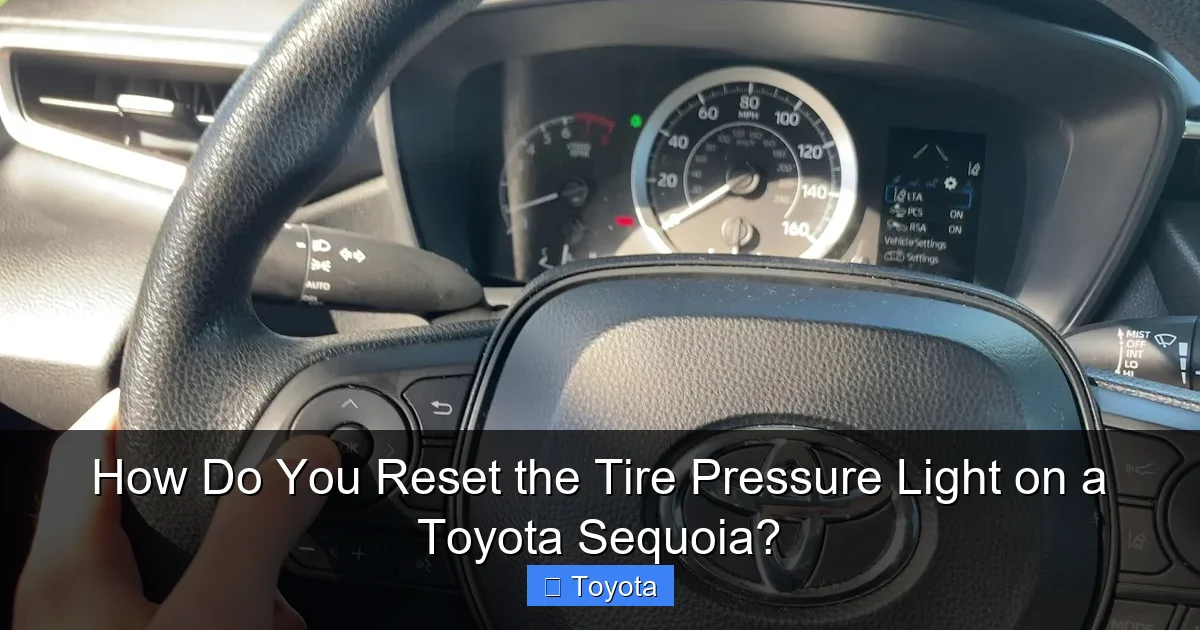
Some Sequoia model years and trims feature a dedicated TPMS reset button, usually located under the dashboard, near the steering column, or sometimes in the glove compartment. If your vehicle has this button, here’s the procedure:
- Turn the ignition to the “ON” position (do not start the engine).
- Press and hold the TPMS reset button (you may need a pen or small tool to reach it).
- Watch the tire pressure warning light on the dash. It will blink slowly at first, then rapidly (three times).
- Release the button after the rapid blinking stops.
- Start the engine and drive as described in Method 1. The system will begin re-learning the sensor IDs and should reset after the drive cycle.
Important Note: This button is primarily used to re-initialize the system after rotating tires or replacing a sensor. If you simply inflated the tires, the automatic drive cycle (Method 1) is usually sufficient. Not all Sequoias have this physical button; many newer models integrate the reset into the multi-information display menu. Consult your owner’s manual. The process is very similar on other Toyota SUVs; for example, the steps for how to reset tire pressure light on Toyota Sienna are nearly identical due to shared platform technology.
Method 3: When All Else Fails – Using a Scan Tool
If you’ve correctly inflated your tires, driven for 20 minutes, and the light is still on, your Sequoia likely has a direct TPMS that has stored a fault code. This is common after:
- Replacing a tire or TPMS sensor.
- Rotating tires (on some models, the system must learn the new sensor positions).
- A sensor battery dying (sensors are not serviceable; the entire sensor must be replaced).
- Physical damage to a sensor from a curb or pothole.
In these cases, a basic OBD-II code reader won’t cut it. You need a TPMS-specific scan tool that can communicate with the sensors, read their IDs, and perform a “relearn” procedure. This involves putting the Sequoia into a learn mode and activating each sensor (usually by letting air out of it or using a magnet/trigger tool) so the vehicle’s computer can associate each unique sensor ID with its correct wheel position. This is a job best left to professional tire shops or dealerships. They also have the tools to safely break the bead on the wheel to replace a sensor if needed.
Why Won’t the Tire Pressure Light Reset? Troubleshooting Common Issues
You did everything right, but that light just won’t quit. Don’t panic. Let’s diagnose the most common culprits.
Visual guide about How Do You Reset the Tire Pressure Light on a Toyota Sequoia?
Image source: dublintoyota.com
Faulty or Dead TPMS Sensor
As mentioned, direct TPMS sensors have non-replaceable lithium-ion batteries that last 7-10 years. When they die, the sensor stops transmitting, and the light comes on. The sensor itself must be replaced. A scan tool will show a “sensor not detected” or “low battery” code. Sometimes, a sensor can be physically damaged. If you recently had a tire changed or hit a pothole hard, inspect the sensor stem for bends or cracks.
Spare Tire with a Sensor
Many full-size spares in Sequoias are equipped with a TPMS sensor. If your spare is installed and its pressure is low, the light will activate. Check the spare’s pressure! If you’re using a temporary “donut” spare, it typically does not have a sensor, but the system may still trigger a warning due to the change in overall tire circumference (this relates more to indirect systems, but can cause confusion).
Recent Tire Service Without Relearning
If you rotated your tires or replaced a sensor and didn’t perform the relearn procedure, the system thinks a sensor is missing or in the wrong location. The light will stay on until the IDs are relearned. This is the #1 reason for a persistent light after DIY tire work.
Extreme Temperature Fluctuations
Air pressure changes with temperature. For every 10°F (5.5°C) drop in temperature, tire pressure decreases by about 1-2 PSI. A cold snap can trigger the light even if your tires were fine the week before. The solution is to add air. The light should turn off once the tires warm up from driving or after you add the needed air. If it doesn’t, you may have a slow leak. Use a soapy water solution on the tread and sidewalls to check for punctures or a faulty valve stem.
Faulty TPMS Control Module or Antenna
Less common, but possible. The Sequoia has a receiver module that picks up the sensor signals. If this module or its antenna fails, the system can’t “see” the sensors. This will usually trigger a flashing light and require dealer-level diagnostics.
Proactive Maintenance to Avoid Future TPMS Alerts
An ounce of prevention is worth a pound of cure. Here’s how to keep your TPMS happy and your light off.
Monthly Tire Pressure Checks: Your First Defense
Don’t rely solely on the TPMS. It’s a warning system, not a maintenance system. Check all tires, including the spare, with a digital gauge at least once a month and before long trips. Adjust pressures when tires are cold (driven less than 1 mile) for the most accurate reading. This simple habit catches slow leaks early and maintains optimal performance.
Understanding and Using Your Specified Pressure
That door jamb sticker is your bible. It lists pressures for different loads. For example, your Sequoia might call for 30 PSI for normal load (up to 3 passengers) and 35 PSI for maximum load (all seats filled, cargo). Inflate to the pressure that matches your current situation. Overloading without adjusting pressure is a surefire way to trigger the light and damage tires.
Seasonal Considerations: Winter vs. Summer
Be proactive with the seasons. As fall turns to winter, check and adjust pressures downward as temperatures drop (air contracts). In spring, do the opposite as temperatures rise. Neglecting this is the most common cause of seasonal TPMS alerts.
When to Replace TPMS Sensors
If you have a sensor failure, you must replace it. When buying new tires, it’s often recommended to replace the sensors (especially if they’re over 7 years old) since they’re removed from the wheel during mounting. The cost of a new sensor plus installation is usually less than the cost of a tow and emergency tire repair due to a blowout from underinflation. Some guides on related models, like maintenance light reset on a Toyota Highlander, also touch on the importance of addressing all vehicle warning lights promptly.
Conclusion: Keep Your Sequoia Rolling Safely
Resetting the tire pressure light on your Toyota Sequoia is usually a straightforward process of correcting the air pressure and then either driving for a cycle or using a manual reset button. The key is to always treat the light as a serious alert. Start by verifying correct inflation with your own gauge. If the automatic drive cycle doesn’t work, investigate further for a faulty sensor, a need for a relearn procedure after tire service, or a spare tire issue. Remember, your TPMS is a critical safety system. Keeping your tires properly inflated isn’t just about turning off a light; it’s about ensuring your family’s safety, maximizing your fuel economy, and prolonging the life of your expensive tires. If you’ve exhausted the DIY steps and the light persists, don’t hesitate to consult a professional. A quick scan and sensor check can save you from a dangerous situation down the road. Now you’re equipped with the knowledge to handle that TPMS light like a pro. Safe travels!
Frequently Asked Questions
Why does my tire pressure light stay on after I’ve inflated all tires to the correct PSI?
First, re-check pressures with your own gauge, as station gauges can be inaccurate. If pressures are correct, you likely need to complete a drive cycle (10-15 minutes above 50 mph) for the system to verify the readings. If it still stays on, a TPMS sensor may be faulty or the system may need a manual relearn procedure after recent tire work.
Can I reset the tire pressure light without starting the car?
For most Sequoias, no. The automatic reset requires the vehicle to be driven so the system can monitor live sensor data. However, if your model has a manual TPMS reset button, you can initiate the reset sequence with the ignition in the “ON” position (engine off), but the final reset usually still requires a short drive afterward for the system to confirm stable pressures.
How long do TPMS sensors last in a Toyota Sequoia?
TPMS sensors are powered by internal, non-serviceable batteries that typically last 7-10 years. When the battery dies, the sensor must be replaced. Factors like extreme temperatures and road salt can shorten their lifespan. If your Sequoia is over 7 years old and you’re experiencing recurring TPMS alerts, failing sensors are a strong possibility.
Will rotating my tires trigger the TPMS light?
On vehicles with a direct TPMS (which most Sequoias have), rotating tires does not automatically trigger the light because the sensors stay with the wheels. However, if the tire positions are changed, the vehicle’s computer must learn the new sensor locations. If this “relearn” isn’t performed after rotation, the light may illuminate because the system thinks a sensor is missing. Always inquire if a relearn is needed when having tires rotated.
What’s the correct tire pressure for a Toyota Sequoia?
The correct pressure is specific to your vehicle’s load and model year. Never use the number on the tire sidewall. Always check the manufacturer’s recommendation, which is found on a yellow and white sticker on the driver’s side door jamb or inside the fuel filler door. Typical pressures range from 30 to 35 PSI for normal loads but can be higher for full cargo or passenger loads.
Is it safe to drive with the tire pressure light on?
It depends on why it’s on. If it came on due to a slow leak or significant underinflation, driving is unsafe and can cause tire damage or a blowout. If it’s a false alert from extreme temperature changes and you’ve verified pressures are correct, short-distance driving is generally okay until you can diagnose the issue. However, you should never ignore the light. Address it promptly by checking pressures and investigating the cause.
