
Do Jeep Soft Tops Leak?

Jeep soft tops can leak, but they are not inherently faulty. Leaks are typically caused by wear and tear, improper installation, damaged seals, or environmental damage, not a fundamental design flaw. With consistent, correct maintenance—including gentle cleaning, regular seal inspection, and proper storage—most Jeep owners can enjoy a watertight soft top for years. Understanding your specific top’s material and addressing small issues immediately are key to preventing major leaks.
You’re cruising down a muddy trail in your Jeep Wrangler with the windows down and the wind in your hair. The sun is shining, the scenery is perfect, and then—without warning—a summer thunderstorm rolls in. You scramble to zip up the windows and fasten the header, only to feel a suspicious drip on your shoulder a few minutes later. The thought hits you: Do Jeep soft tops leak? It’s a common worry for every Jeep owner who loves the freedom of a open-air ride but fears getting caught in the rain.
The short answer is: yes, they can. But the more important, and honest, answer is: they shouldn’t, if they are properly cared for. A factory-installed, well-maintained Jeep soft top is engineered to be completely watertight. The perception that all soft tops leak is a myth born from years of neglect, improper aftermarket installations, and a lack of understanding about what these tops actually need to perform their job. This guide will dive deep into the realities of Jeep soft top leaks. We’ll explore exactly why they happen, where they happen, and most importantly, what you can do to prevent them. Whether you have a new JL/JT Wrangler or a classic TJ/YJ, the principles of keeping your top sealed are the same.
Key Takeaways
- Leaks are preventable, not inevitable: A well-maintained Jeep soft top should not leak under normal conditions. Leaks are a symptom of neglect or damage, not a standard characteristic.
- Material matters: Different soft top materials (vinyl, cloth, premium sailcloth) have unique care requirements and vulnerabilities. Using the wrong cleaners or conditioners can degrade seals and fabric, leading to leaks.
- Seals and zippers are the weak points: The vast majority of leaks originate from deteriorated door, window, and header seals, or from zippers that are dirty, damaged, or not fully closed.
- Installation is critical: A poorly installed or misaligned aftermarket top is a primary source of leaks. Factory tops installed incorrectly or after repeated removal can also develop gaps.
- Environmental damage is real: Prolonged UV exposure, extreme cold, tree sap, bird droppings, and abrasive car washes can break down materials and seals, compromising waterproofing.
- Proactive care saves money: Simple, regular maintenance—like cleaning with proper products, conditioning seals, and checking for debris in zippers—is far cheaper than replacing a top or paying for water damage repairs inside the cabin.
- Diagnosis is the first step: Finding the exact source of a leak requires a systematic approach (like the hose test) before attempting any repair, as treating the wrong area is ineffective.
📑 Table of Contents
- Understanding Your Jeep Soft Top: Materials and Construction
- The Most Common Causes of Jeep Soft Top Leaks
- How to Diagnose a Leak: Finding the Source
- Prevention Strategies: Keeping Your Top Watertight
- Troubleshooting and Fixing Common Leaks
- Debunking Myths: The Truth About Soft Top Reliability
- Conclusion: Confidence in the Open Air
Understanding Your Jeep Soft Top: Materials and Construction
Before we can talk about leaks, we need to understand what we’re dealing with. Not all Jeep soft tops are created equal, and the material plays a huge role in both its susceptibility to damage and its care routine.
The Three Main Types of Jeep Soft Top Fabric
Jeep offers several soft top options, but they generally fall into three material categories:
- Vinyl (Sun Rider, Standard Tops): This is the most common and affordable material. It’s essentially a thick, flexible plastic-coated fabric. It’s highly water-resistant right out of the box and easy to wipe clean. However, it is susceptible to UV damage over time, which can cause it to dry out, crack, and become brittle. The plasticizers that keep it flexible can leach out, leading to cracks around stress points like seams and zipper areas.
- Cloth/Fabric (Twilight, Premium Tops): These tops use a woven acrylic or polyester fabric with a waterproof coating or membrane laminated to the back. They are quieter (less “popping” sound in the wind) and often have a more premium feel. The coating is what makes them waterproof. Harsh cleaners, abrasion, or aging can wear away this coating, compromising its ability to shed water.
- Premium Sailcloth (Freedom Top, Limited trims): This is a high-end, tightly woven polyester fabric that is inherently water-resistant without a heavy coating. It’s very durable and resistant to UV fading. However, its weave can trap dirt and contaminants that, if not cleaned properly, can work their way into the fibers and potentially affect the DWR (Durable Water Repellent) finish.
The Anatomy of a Seal: Where Water Finds a Way In
Your soft top is more than just the fabric roof. It’s a system of components that must work together perfectly:
- The Main Fabric: The primary barrier. Leaks here are usually due to punctures, tears, or degraded coatings.
- Seals and Gaskets: This is the #1 culprit for leaks. Thick, rubber-like seals run along the windshield header, the top of the doors, and the rear window. Over time, these seals dry out, crack, shrink, or become misshapen, creating tiny gaps.
- Zippers: The zippers that secure the side windows and rear window are critical. If a zipper is not fully closed, misaligned, or clogged with dirt and grime, it will not pull the seals together tightly, creating a direct path for water.
- Attachment Points: The straps, buckles, and snaps that secure the top to the roll bars and body must be tight and undamaged. A loose strap can allow the top to flap in the wind, stressing seams and seals.
- Windows: The plastic (usually vinyl) rear and side windows can become brittle, scratched, or develop stress cracks. The zippers that attach them to the top are also failure points.
Understanding that the seals and zippers are the most common failure points is the single most important piece of knowledge for diagnosing and preventing leaks.
The Most Common Causes of Jeep Soft Top Leaks
So, what actually makes a Jeep soft top leak? It’s rarely a factory defect. It’s almost always one of these following issues, often in combination.
Visual guide about Do Jeep Soft Tops Leak?
Image source: cdn.shopify.com
1. Age and Normal Wear and Tear
Everything degrades. The rubber seals harden and lose elasticity. The fabric’s waterproof coating wears thin. Zipper teeth get slightly bent. For a vehicle that’s often stored outside and exposed to all weather, this degradation is accelerated. A 10-year-old top, even with minimal use, will have seals that are far less effective than a new one.
2. Improper or Harsh Cleaning
This is a massive, and often overlooked, cause of leaks. Many owners use harsh detergents, all-purpose cleaners, abrasive brushes, or high-pressure washers on their tops. These things strip away protective coatings, drive dirt into the fabric weave, and can damage seals. Using a dedicated soft top cleaner and conditioner is not a luxury; it’s essential maintenance. You wouldn’t use dish soap on your leather seats, so don’t use it on your $2,000 soft top. For specific product recommendations, our guide to the Top 10 Jeep Soft Top Window Cleaners breaks down safe and effective options.
3. Environmental Assault: UV, Cold, and Contaminants
The sun’s UV rays are the silent killer of vinyl and plastics, breaking down polymers and causing dry rot. Extreme cold can make seals and vinyl stiff and brittle, so a top that’s fine in summer might leak in winter. Tree sap, bird droppings, and road salt are highly corrosive and abrasive. If left on the top for days, they will eat away at coatings and seals. Prompt, gentle cleaning after exposure is crucial.
4. Poor Installation or Aftermarket Top Issues
If your soft top was not installed correctly—whether at the factory (rare) or by a previous owner/dealer—it will not seal properly. Panels may be misaligned, seals may not be seated correctly, or hardware may be missing. Aftermarket tops vary wildly in quality. A cheap, poorly-made aftermarket top may have ill-fitting components or substandard seals from day one.
5. Physical Damage
This is obvious but worth stating. A puncture from a falling branch, a tear from loading gear carelessly, or a deep scratch can all create a direct leak path. Damage to the windshield header seal from slamming the tailgate or an impact can also be a source.
6. The Car Wash Myth
Many Jeep owners swear their top leaked after visiting an automatic car wash. This is often true. High-pressure jets can force water behind seals, especially if they are already worn. The brushes can abrade the fabric and pull on seals. The chemical detergents used are rarely formulated for soft tops. While not all car washes will cause a leak, they are a significant risk factor. We explore this specific danger in detail in our article on Can A Soft Top Jeep Go Through A Car Wash?. The safest practice is to never use an automatic brush car wash on a soft-top Jeep.
How to Diagnose a Leak: Finding the Source
Finding a leak can be frustrating because water travels. A drip in the passenger footwell might originate from a leak near the rear window or even the windshield header. A systematic approach is necessary.
Visual guide about Do Jeep Soft Tops Leak?
Image source: cdn.shopify.com
The Hose Test: The Gold Standard
This is the most reliable method. You’ll need a helper and a garden hose with a gentle spray nozzle (not a jet).
- Prepare the Interior: Remove all floor mats and any sensitive electronics from the floor. Have plenty of towels ready.
- Seal the Interior: Close all doors and windows tightly. Ensure the ignition is off.
- Start Low: Have your helper sit inside with a flashlight. You will start spraying water on one section of the top at a time. Begin at the lowest point (the rear window) and work forward. Use a steady, moderate stream of water, not a blast.
- Communicate: Your helper should look for any signs of water appearing—drops, streaks, or dampness—on the sills, dash, or floor. The moment they see it, they yell “STOP!”
- Isolate: Once a general area is identified (e.g., “the rear window”), you can get more precise. Spray directly on the zipper, then the seal, then the fabric. This will pinpoint the exact failure point.
Visual and Tactile Inspection
With the top up and dry, do a thorough inspection:
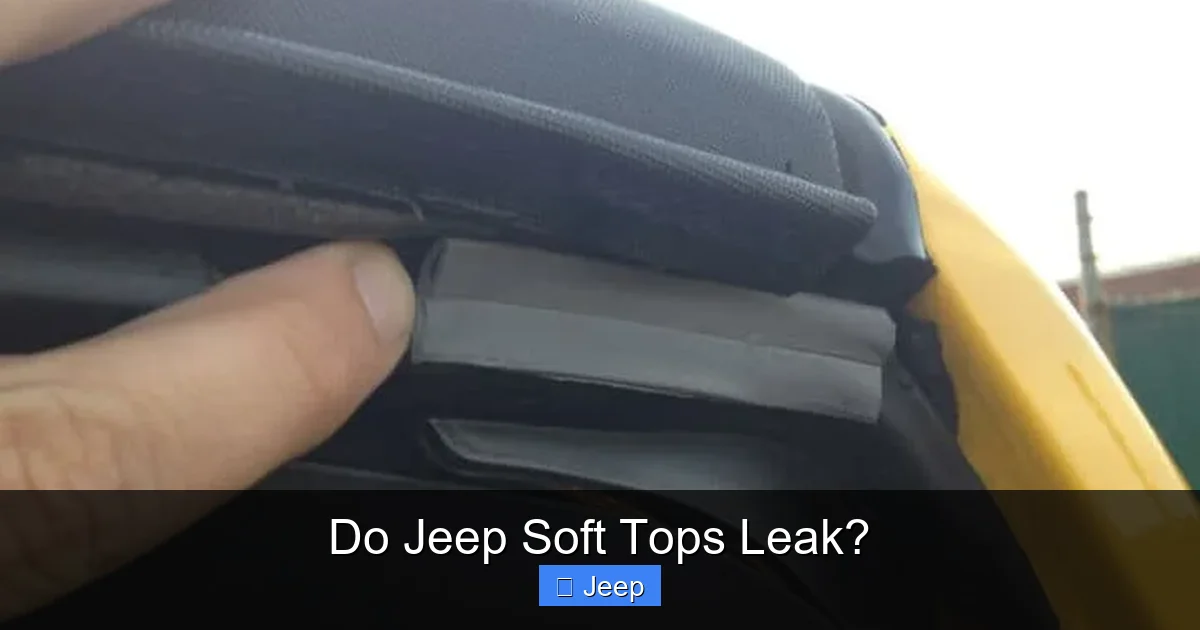
- Check Seals: Run your fingers along every seal. Look for cracks, areas that are flattened and hard, or sections that have lost their rubbery feel. Pay special attention to corners.
- Examine Zippers: Zip and unzip every window slowly. Does it catch or feel gritty? That means dirt is in the teeth. Look for bent or missing teeth. Ensure the zipper pull is fully seated at the end.
- Look for Debris: Check the channels where seals sit. Any grit, leaves, or pine needles will prevent a proper seal. Clean these channels out carefully with a soft brush and vacuum.
- Inspect Fabric: Look for any small punctures, especially around grommets or where straps attach. Check for areas where the coating looks worn or chalky.
Prevention Strategies: Keeping Your Top Watertight
An ounce of prevention is worth a pound of cure (and a $2,000 top replacement). Here is your actionable maintenance plan.
Visual guide about Do Jeep Soft Tops Leak?
Image source: offroadhandbook.com
Establish a Regular Cleaning Routine
Dirt and contaminants are abrasive and degrade materials. A clean top is a healthy top.
- Frequency: Clean your top at least every 1-2 months, or immediately after exposure to bird droppings, tree sap, or road salt.
- Products: Use only cleaners and conditioners specifically designed for Jeep soft tops or marine vinyl/fabric. Avoid household cleaners, dish soap, and bleach. A good cleaner will lift dirt without stripping coatings. A dedicated seal conditioner (often a silicone-based spray) keeps rubber seals supple and pliable.
- Technique: Use a soft microfiber mitt or brush. Work in the shade on a cool surface. Rinse thoroughly with a gentle hose, not a pressure washer. For cleaning the plastic rear and side windows, use a dedicated plastic cleaner to avoid scratches and hazing. Our reviews of the best Jeep soft top window cleaners can help you choose the right product for crystal-clear visibility without damage.
Proper Operation and Zipper Care
How you use your top daily has a huge impact.
- Always fully zip windows and the header. A partially zipped window is a guaranteed leak path.
- Never force a zipper. If it sticks, stop. Check for debris in the teeth. Use a zipper lubricant safe for plastics (like a silicone-based spray) to keep them moving smoothly.
- When removing or installing the top: Work slowly and deliberately. Do not stretch or force fabric. Ensure all straps and fasteners are engaged correctly and evenly. A misaligned top will never seal right.
Smart Storage and Usage Habits
- Parking: Whenever possible, park in a garage or under a shade structure. If parking under trees, be prepared to clean sap and leaves promptly.
- Winter Storage: If you store your Jeep for the season with the soft top on, ensure it is clean and dry. Consider applying a protective cover over the entire vehicle to shield it from snow and ice buildup, which can stress seams.
- Loading Gear: Be mindful when loading items into the cargo area. Sharp objects, toolboxes, or even dog claws can puncture or tear the rear window or the top fabric itself.
Troubleshooting and Fixing Common Leaks
You’ve found the leak. Now what? Not all fixes require a professional or a full top replacement.
For Dirty or Sticky Zippers
This is the easiest fix. Thoroughly clean the zipper teeth with a soft brush and a mild cleaner. Apply a small amount of zipper lubricant. Work the zipper back and forth vigorously to distribute it. Often, this alone resolves a leak at a window.
For Cracked or Shrunk Seals
Seals can sometimes be revived. Clean the seal channel meticulously. Apply a silicone-based seal conditioner or even a very light coat of dielectric grease to the seal itself. Work it in with your fingers. This can temporarily restore pliability. For a more permanent fix, you can often purchase replacement seal sections (like the door header seal or rear window seal) from Mopar or aftermarket suppliers and replace them yourself with basic tools.
For Small Punctures or Tears in Fabric
For a tiny pinhole or a small tear (less than 1 inch), a dedicated vinyl/fabric repair kit can work. These usually involve a cement and a patch. Clean the area meticulously, apply the patch, and allow proper curing time. For larger damage or damage in high-stress areas, professional repair or panel replacement is the only safe bet.
When to Call a Professional
Seek professional help if:
- The leak source is unclear after a hose test.
- There is widespread seal failure (multiple cracks).
- The fabric itself is severely degraded, chalky, or has large tears.
- You suspect an installation issue with an aftermarket top.
- Water is getting into electrical components (switches, speakers) or the interior electronics. This is a serious safety and corrosion risk.
A professional auto upholstery shop or a Jeep specialty shop has the experience, proper adhesives, and sometimes access to OEM replacement panels to do the job correctly.
Debunking Myths: The Truth About Soft Top Reliability
“All Soft Tops Leak Eventually”
This is the biggest myth. A properly maintained factory soft top on a Jeep that is not a daily driver in a harsh climate can easily last 7-10 years without a single leak. We see many well-cared-for Jeeps with original tops that are 15+ years old and still waterproof. The key is “well-cared-for.” Neglect guarantees failure.
“Hard Tops Are Always Better for Waterproofing”
While a factory hardtop is a sealed steel shell and will not leak through the roof, it is not magically immune to water intrusion. The door seals on a hardtop are the same as on a soft top! A hardtop can still leak around the doors or windshield if the seals are bad. Furthermore, a hardtop is permanent. You lose the iconic open-air freedom that defines a Jeep. A leaky soft top can be fixed; a permanently mounted hardtop cannot be removed for a sunny day without tools and effort.
“Aftermarket Tops Are Lower Quality”
Not always. Some aftermarket manufacturers produce tops that are equal to or even superior to OEM in materials and fit. However, the market is flooded with cheap imports. The rule of thumb: you get what you pay for. A $300 soft top from an unknown brand will likely have inferior seals and fabric compared to a genuine Mopar or a premium brand like Bestop or Smittybilt. Research and reviews are paramount.
Conclusion: Confidence in the Open Air
So, do Jeep soft tops leak? The definitive answer is that they are capable of leaking, but they are not destined to. The leak is a symptom, not a sentence. The freedom of a Jeep—the wind, the sun, the connection to the outdoors—is the entire point of the vehicle. That freedom should not be overshadowed by the fear of a drip.
That fear is managed through knowledge and care. By understanding that your top is a system of seals, zippers, and fabric, you can target your maintenance effectively. By committing to gentle, proper cleaning with the right products, you protect the materials. By inspecting seals and zippers regularly, you catch small problems before they become big, expensive leaks. And by avoiding harsh treatments like automatic car washes, you eliminate a major risk factor.
Your Jeep soft top is a durable, well-engineered component. Treat it with the respect it deserves, and it will keep you dry when you need to be, and open to the elements when you want to be. That’s the Jeep promise. Now, go enjoy the trail, and maybe keep a towel on the seat just in case—we’re not *complete* magic.
Frequently Asked Questions
Will my Jeep soft top leak in a heavy rainstorm?
A properly maintained and fully secured Jeep soft top should handle even heavy rain without leaking. The key is ensuring all zippers are fully closed and the header latch is secure. If it leaks during a storm, it indicates an existing issue with seals or zippers that needs addressing.
Why does my Jeep soft top leak only in the winter?
Cold weather makes rubber seals stiff and less flexible, reducing their ability to form a perfect seal. This is a common sign of aging seals. Conditioning the seals with a silicone-based product in the fall can help maintain their pliability for the cold months.
Can I use a silicone spray on my soft top fabric to waterproof it?
No. Silicone sprays are for seals and zippers, not fabric. They can leave a greasy residue that attracts dirt and may degrade certain fabric coatings over time. Always use a cleaner/conditioner specifically designed for your top’s material (vinyl, cloth, etc.).
Do aftermarket soft tops leak more than factory tops?
It varies. A high-quality aftermarket top from a reputable brand (like Bestop) can fit and seal as well as, or better than, an OEM top. However, many inexpensive aftermarket tops use inferior seals and materials that are prone to premature failure and leaks. Research is critical.
How often should I condition the seals on my soft top?
At minimum, apply a silicone-based seal conditioner twice a year—once in the spring before summer use and once in the fall before winter storage. If you live in an extremely hot, dry, or sunny climate, conditioning every 3-4 months is a good proactive practice.
My soft top leaks near the rear window. Is it the zipper or the seal?
It’s very often both, or the seal channel is dirty. First, clean the zipper teeth thoroughly and lubricate it. Then, check the rubber seal that the rear window presses against. If it’s cracked, hardened, or the channel it sits in has debris, water will get past. A hose test with someone inside will pinpoint the exact path of entry.
