
Is the Honda Civic Type R Automatic?

No, the Honda Civic Type R is not available with an automatic transmission. For its entire production history, the Type R has been exclusively offered with a precise 6-speed manual gearbox. This commitment to the driver’s manual is a core part of its identity, prioritizing engagement and control over automated convenience, setting it apart from many modern performance rivals that offer dual-clutch or traditional automatics.
So, you’re eyeing the legendary Honda Civic Type R. You’ve seen the aggressive body kit, heard the symphony of its turbocharged four-cylinder, and read about its prowess on track and back road. But there’s one burning question on your mind, a practical checkpoint for modern performance car shopping: Is the Honda Civic Type R automatic?
This isn’t just small talk. The transmission choice defines the ownership experience. In a world where even high-end supercars and family sedans have largely abandoned the stick shift for lightning-fast dual-clutch (DCT) or smooth conventional automatics, where does Honda’s ultimate Civic stand? The answer is both refreshingly simple and profoundly significant: The Honda Civic Type R is a manual-only car. Always has been. Always will be—at least for now.
This unwavering commitment to the driver’s manual gearbox isn’t a cost-cutting move or an oversight. It’s a deliberate, philosophical cornerstone of the Type R identity. It’s what makes the Civic Type R not just a fast front-wheel-drive car, but a genuine driver’s car. In this deep dive, we’ll explore why Honda has drawn this line in the sand, what it means for you as a driver, how the Type R’s manual compares to automatics in rival cars, and what the future might hold. Whether you’re a seasoned enthusiast mourning the loss of the manual or a newcomer curious about the hype, understanding this core tenet is key to understanding the Type R itself.
Key Takeaways
- The Honda Civic Type R has never been available with an automatic transmission. Every single production model, from the first FD2 to the current FL5, is a strict manual-only affair.
- Honda’s philosophy prioritizes driver engagement and purity. The manual gearbox is seen as integral to the Type R experience, connecting the driver directly to the car’s mechanics.
- Its closest rivals (VW Golf R, Subaru WRX, Hyundai Elantra N) all offer sophisticated automatic options. The Type R’s manual-only stance makes it a unique, purist choice in a segment shifting towards automatics.
- The 6-speed manual in the Type R is a high-performance, short-throw unit. It’s engineered for quick, precise shifts and features a rev-matching system for perfect downshifts, blending old-school feel with modern tech.
- Choosing a Type R means accepting the commitment of a manual. It’s not just a transmission choice; it’s a statement about driving involvement, especially in daily traffic or long trips.
- Performance specs (320 hp in FL5) are identical regardless of transmission. Since there’s no automatic option, all power and torque figures are delivered solely through the manual gearbox.
- Future generations may face pressure to add an automatic. While currently steadfast, market trends towards automatics could challenge Honda’s manual-only policy for the Type R badge.
📑 Table of Contents
The Unbroken Chain: A History of Manual-Only Type Rs
To understand the present, we must look to the past. The “Type R” badge is Honda’s sacred seal of performance, and its rules have been consistent since the beginning. The first car to wear the iconic red “H” badge was the 1992 NSX-R, a stripped-down, track-focused version of Honda’s mid-engine supercar. It was manual-only. The first Honda to carry the “Type R” name in the United States was the 1997 Integra Type R (DC2). You guessed it: a 5-speed manual.
This lineage continued seamlessly with the Civic. The first U.S.-spec Civic Type R was the 2017 FK8 generation. Before that, Japan and Europe had their own high-performance Civic Type Rs (FD2, FN2), all exclusively with manual transmissions. There was never a “Type R” with an automatic. The automatic transmission was reserved for lesser sport trims (like the Civic Si in some markets) or non-R models. The fundamental definition of what a Honda Civic is includes efficient, reliable transportation, but the Type R sub-brand is a separate entity built on a different ethos: ultimate driving purity.
When Honda unleashed the current FL5 generation Type R in 2023, the speculation ran wild. “Surely, with 320 horsepower and a 0-60 time dipping into the mid-four-second range, they’ll finally give us an automatic?” The answer, echoing through every review and press release, was a firm no. The FL5 arrived with only one gearbox: a upgraded, short-throw 6-speed manual. This consistency is a promise. Buying a Civic Type R means buying into a specific, uncompromised experience that has been delivered the same way for over three decades. It’s a direct link to the brand’s racing heritage.
The Engineering of Engagement: What Makes the Type R’s Manual Special
It’s not just any old manual transmission stuffed into a hot hatch. Honda has meticulously engineered the Type R’s 6-speed gearbox to be a highlight, not a compromise. This is crucial because the argument against manuals often centers on them being “slower” or “more work.” In the Type R, the manual is designed to be faster and more rewarding.
- Short, Positive Throws: The shift lever travels a minimal distance between gears with a satisfying, mechanical click. This allows for incredibly quick shifts, rivaling the shift times of many automated manuals in real-world driving where timing and feel matter more than pure robotic speed.
- Rev-Matching System: This is the killer feature for daily usability. When you downshift, the car’s computer blips the throttle automatically to match engine revs to the lower gear. The result? Perfectly smooth, heel-and-toe-free downshifts that preserve momentum and prevent drivetrain shock. It’s a technological assist that enhances, rather than replaces, the driver’s skill. You can turn it off if you want to master the heel-toe technique yourself.
- Limited-Slip Differential (LSD): While not part of the gearbox itself, the standard mechanical front LSD is the perfect partner for a manual. It manages the massive torque steer the powerful front-wheel-drive layout produces, ensuring power gets to the ground during aggressive acceleration out of corners—precisely when you’re working the clutch and shifter. This synergy is critical. The high horsepower output demands this level of chassis and drivetrain control.
- Clutch and Flywheel: The clutch is a lightweight, performance-oriented unit with a short pedal travel and firm, engaging feel. It’s designed for quick, deliberate launches and rapid gear changes, not for creeping in stop-and-go traffic (though it’s manageable). The reduced-mass flywheel helps the engine rev more freely, adding to the responsive, lively character.
This hardware, combined with the engine’s glorious VTEC kick and the car’s sharp steering, creates a sensory experience that an automatic simply cannot replicate. You’re not just selecting a gear; you’re actively participating in the car’s propulsion. The sound, the feel, the necessity of coordinating clutch, throttle, and shifter—it’s an analog ritual in a digital world.
The Market Reality: Why Rivals Went Automatic
To appreciate the Type R’s stance, you must look at the competitive landscape. The hot hatch and compact performance sedan segment is brutally competitive. Let’s look at the key rivals:
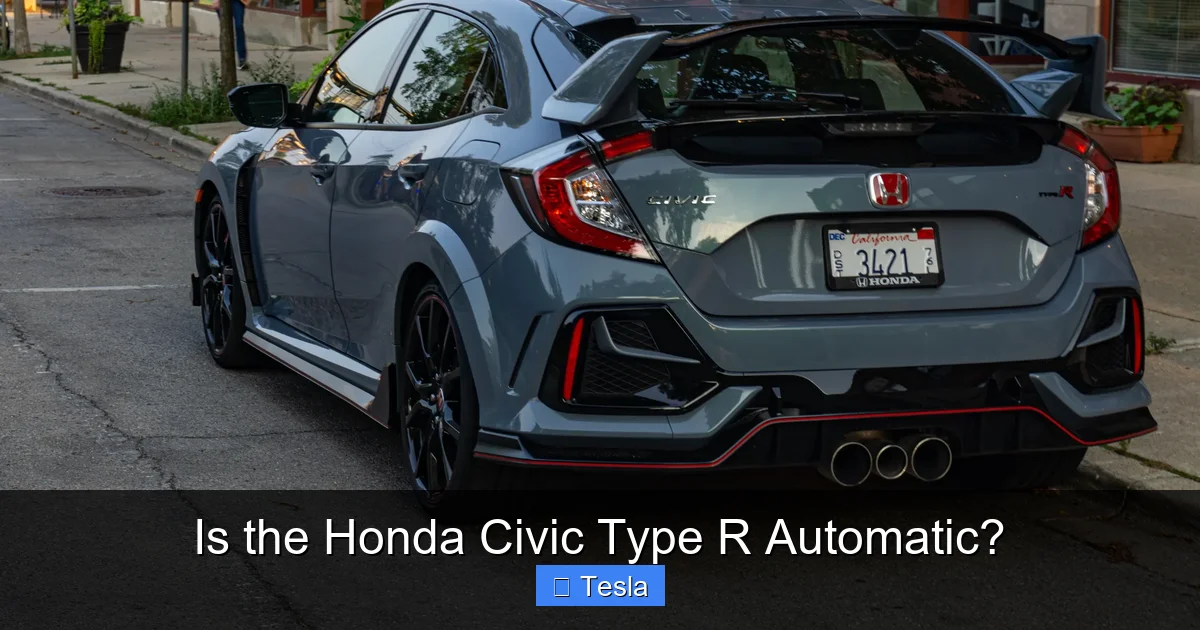
Visual guide about Is the Honda Civic Type R Automatic?
Image source: motorbiscuit.com
- Volkswagen Golf R: Offers a 7-speed DSG dual-clutch automatic. This gearbox is phenomenally fast, allowing for near-instantaneous shifts and launch control. It’s arguably quicker in a straight line and more consistent on track for less experienced drivers.
- Subaru WRX (TR/GT): The current generation finally ditched the old sloppy CVT for a excellent 8-speed traditional automatic (a modified version of the one in the Outback). It’s smooth, responsive, and features a sporty torque converter lock-up strategy.
- Hyundai Elantra N: Offers both a slick 6-speed manual and an 8-speed wet-clutch DCT (N DCT). The DCT is tuned for aggressive, race-like shifts and is a fantastic piece of hardware.
- Ford Focus ST (previous gen): Offered only a 7-speed automatic (a torque converter unit, not a DCT), moving away from the previous manual-only hot hatch ethos.
The reason for this industry shift is multifaceted. First, sales data is clear: the vast majority of buyers, even in performance segments, choose automatic. Second, automatics (especially modern DCTs) can be quicker in acceleration tests and on track for lap time consistency—they don’t miss shifts. Third, they are more convenient in traffic and are seen as more “premium.”
Honda, however, sees the Type R differently. It’s not about selling the highest volume or setting the fastest Nürburgring lap time by a microscopic margin with an automated box. It’s about creating a specific, visceral driving experience. The manual is the heart of that experience. As Honda’s engineers have stated, adding an automatic would require a fundamental re-engineering of the entire car’s character and weight distribution. It’s not a simple “add transmission option.” It would change the soul of the car. This is why, even when you consider the Civic Type R’s cost, you’re paying for a philosophy as much as performance.
The Daily Driver Dilemma: Living with a Manual Performance Car
Let’s be real. The “no automatic” rule has practical consequences. This isn’t a weekend-only toy for most owners. The Type R is a daily-driven car. So what’s it like?
In Traffic: The short-throw clutch and firm pedal are noticeable in stop-and-go. It’s not back-breaking, but it’s more work than an automatic. The rev-matching system is a godsense here, making downshifts smooth and taking the stress out of slowing in a jam. You’ll develop a new appreciation for hills and traffic patterns.
On Long Commutes: The FL5’s improved sound insulation and comfort over the FK8 help, but constant shifting on highway on-ramps and winding roads is part of the deal. For some, this is the joy; for others, it can be tiring. The excellent seating and great visibility offset some of this fatigue.
Resale Value & Niche Appeal: The manual-only status creates a fascinating market dynamic. As the world goes automatic, well-maintained manual cars, especially engaging performance models like the Type R, are becoming increasingly rare and desirable to a dedicated subset of buyers. This can support strong residual values. However, it also limits the potential buyer pool if you ever decide to sell. You’re targeting enthusiasts who specifically want a manual.
The Skill Ceiling: Driving a powerful FWD car with a manual is a skill. Torque steer, managing revs, and perfect launches require practice. The Type R rewards skill immensely. It’s a car you can grow into. An automatic flattens that learning curve but also flattens the reward. If you want to become a better driver, the manual Type R is a fantastic teacher. If you want the quickest point-A-to-point-B time with minimal fuss, an automatic Golf R might be the more rational choice.
The Future: Will Honda Ever Cave In?
This is the million-dollar question. With stricter emissions and efficiency standards, and consumer demand for automatics at an all-time high, will the next-generation Civic Type R (if there is one) finally get an automatic option?
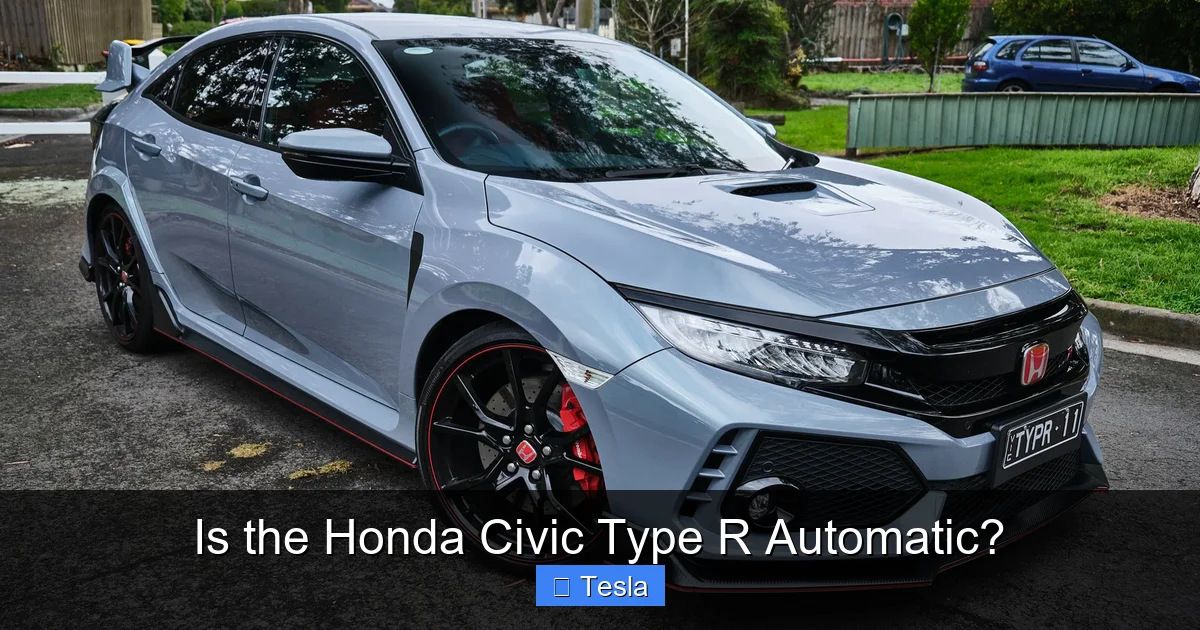
Visual guide about Is the Honda Civic Type R Automatic?
Image source: carscoops.com
Honda’s public stance has been consistent. Toshihiro Mibe, the head of Honda’s R&D, has been quoted saying the manual is “essential” for the Type R identity. The current FL5’s development team fought to keep it manual-only. However, the automotive industry is in flux. Electrification looms large. A future Type R could be a hybrid or even a full EV, which by nature would use a single-speed or multi-speed automatic gearbox.
The most likely scenario for a “survival” of the manual Type R is if Honda can prove there’s a viable business case. If sales of the FL5 remain strong and the enthusiast community’s passion (and purchasing power) remains loud, Honda may see the manual as a valuable differentiator, not a liability. It’s a badge of honor. But if sales dwindle and the cost of developing a bespoke manual transmission for a low-volume model becomes prohibitive, pressure will mount. For now, the company is celebrating the manual. They’ve even added a “+R” mode that makes the throttle more aggressive and sharpens the rev-matching, doubling down on the driver-focused experience.
So, what can you do? If you want a new, high-performance Civic with an automatic, your choice is the Civic Si. It’s a fantastic car, but it’s not a Type R. It has less power, less aggressive cooling, no LSD, and a more subdued suspension. The gap is significant. The Type R’s exclusivity is its manual gearbox. To get an automatic Honda, you’d have to look at the larger, more expensive Acura lineup, like the TLX Type S, which is a different animal entirely.
Conclusion: The Manual as a Manifesto
So, is the Honda Civic Type R automatic? The definitive, unwavering answer is no. This is not a gap in the lineup; it is the lineup’s defining feature. In an era of relentless automation, the Civic Type R stands as a beacon for the purist. It’s a car that asks for involvement, that rewards concentration, and that delivers an unfiltered connection between driver and machine that is becoming exponentially rarer.
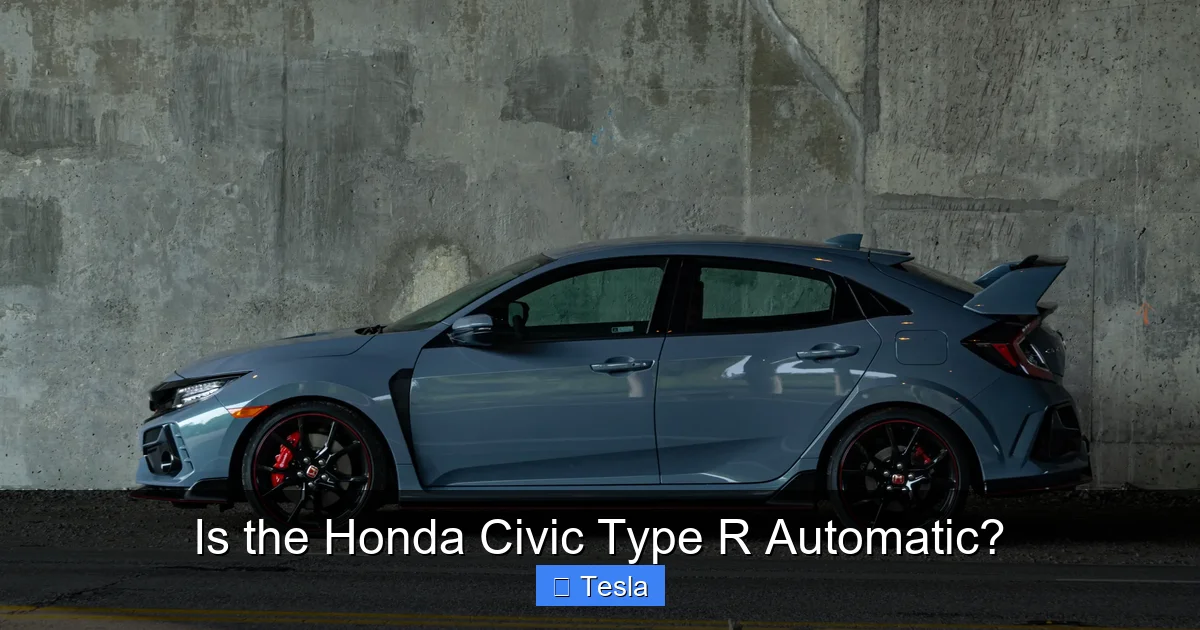
Visual guide about Is the Honda Civic Type R Automatic?
Image source: motorbiscuit.com
Choosing a Type R means signing a contract. You’re agreeing to a more engaging, more physical, and sometimes more demanding drive. You’re trading the ultimate convenience of an automatic for the ultimate satisfaction of a perfectly executed heel-toe downshift, of feeling the engine’s power pulse through the shifter, of knowing that every gear change is your decision, your timing, your skill. You’re buying a piece of Honda’s racing soul, and that soul speaks the language of a stick shift.
If that proposition excites you, the Civic Type R is a masterpiece. If the thought of a manual in traffic makes you sigh, then all the performance in the world won’t change the fact that this simply isn’t the car for you. And that’s okay. Honda has made that decision for you. They’ve drawn a line in the asphalt, and the Type R sits proudly on one side—the side of the driver.
Frequently Asked Questions
Is there any plan for a Honda Civic Type R with an automatic transmission?
As of the current FL5 generation, Honda has no plans to offer an automatic. The company consistently states the manual transmission is essential to the Type R’s identity and driving experience. Future generations could change due to market pressures or electrification, but for now, the manual is non-negotiable.
Is the Civic Type R’s manual transmission hard to drive in traffic?
The short-throw clutch and firm pedal are noticeable in stop-and-go traffic and require more work than an automatic. However, the standard rev-matching system makes downshifts smooth and effortless, significantly reducing the strain of frequent slow-speed driving. It’s manageable but not as relaxed as an automatic.
Does the manual transmission make the Civic Type R slower than automatic rivals?
In a straight-line 0-60 mph sprint, a dual-clutch automatic (like in the Golf R) can often be slightly quicker due to near-instant shifts. However, on a twisty road or racetrack, a skilled driver in the Type R can exploit the manual’s direct control and pre-emptive shifting to be just as fast, if not faster, while enjoying far more engagement.
Can I get a Honda Civic Type R with an automatic if I buy a used model?
No. Since the Type R badge was applied to the Civic, every single model year and market variant has been sold exclusively with a 6-speed manual transmission. There are no automatic Civic Type Rs, new or used. Any automatic Honda Civic is a different model, like the Si or Sport.
Why is Honda so insistent on keeping the manual for the Type R?
Honda views the manual transmission as the purest expression of driver engagement and control, which is the core philosophy of the Type R badge. They believe adding an automatic would fundamentally alter the car’s character, weight balance, and driving feel, turning it into a different, less focused product. It’s a stand for driving passion over market trends.
What are the benefits of the Type R’s manual over an automatic?
The primary benefits are total driver control, direct mechanical connection, and immense satisfaction. You control the shift points, rev matching (even with the auto-blip assist), and launch technique. It creates a more involving, skill-based driving experience, makes you a better driver, and provides a unique analog feel that modern automatics, no matter how fast, cannot replicate.
