
Why Is My Jeep Wrangler Fan So Loud?

A loud cooling fan on your Jeep Wrangler is rarely normal and signals a problem in the cooling system. Common causes include a failing radiator fan clutch, blocked airflow from debris, electrical faults like a bad relay, or even low coolant forcing the fan to work overtime. Ignoring the noise can lead to overheating and expensive engine damage. Diagnosing involves listening for specific sounds, checking temperatures, and inspecting components. While some fixes are simple DIY tasks, others require a professional mechanic to ensure safety and prevent costly repairs.
Key Takeaways
- A loud fan is a warning sign: Your Wrangler’s fan should be relatively quiet during normal operation. Excessive noise indicates it’s working harder than it should, often due to an underlying issue.
- The fan clutch is a prime suspect: The thermal fan clutch, especially on older models, can fail and lock the fan clutch fully on, making it roar like a jet engine even when the engine is cool.
- Airflow blockage is a common and easy fix: Bugs, leaves, mud, and debris packed into the radiator and A/C condenser drastically reduce cooling efficiency, forcing the fan to run constantly and loudly.
- Electrical problems are frequent: Faulty fan relays, bad sensors (like the coolant temperature sensor), or wiring issues can cause the fan to run continuously at high speed.
- Don’t ignore it—overheating is the real danger: A loud fan is often a symptom. The ultimate risk is the engine overheating, which can cause catastrophic failure like a blown head gasket.
- Diagnosis starts with simple checks: You can often identify the issue by listening when the fan comes on, checking coolant levels, and visually inspecting for debris or damaged components.
- Prevention is key: Regular cooling system maintenance, including coolant flushes and radiator cleaning, is the best way to avoid loud fan problems and keep your Wrangler reliable.
📑 Table of Contents
- The Heartbeat of Your Wrangler: Understanding the Cooling System
- Why So Loud? The Most Common Culprits
- Diagnosing the Roar: A Step-by-Step Guide
- DIY Checks Every Wrangler Owner Can Do
- When to Wave the White Flag: Calling in a Professional
- Keeping the Peace: Prevention and Long-Term Care
- Conclusion: Silence is Golden (and Safe)
The Heartbeat of Your Wrangler: Understanding the Cooling System
You love your Jeep Wrangler for its capability, its sound, and its unmistakable presence on and off the road. But that unmistakable presence sometimes comes with an unwelcome soundtrack: a cooling fan that sounds like it’s trying to lift your Jeep into the air. If you’re asking, “Why is my Jeep Wrangler fan so loud?” you’re not alone. It’s one of the most common concerns we hear from Wrangler owners, and it’s almost always a sign that something in your cooling system needs attention.
First, let’s demystify what that fan is supposed to do. Your Wrangler’s engine generates immense heat. The cooling system’s job is to manage that heat. A key player is the radiator, which dissipates heat using airflow. At low speeds or when stopped, there’s no natural airflow, so an electric or engine-driven fan kicks in to pull air through the radiator. This fan should engage when needed and be reasonably quiet. When it’s roaring constantly or at strange times, it’s screaming for help. Think of it like your home’s HVAC system—if the fan is blasting non-stop, your filter is probably clogged or the thermostat is broken. Your Jeep is no different.
Understanding this system is the first step to solving the noise. The noise itself is just a symptom. The cause could be something simple you can fix in 20 minutes, or it could signal a deeper, more expensive problem. Our goal here is to walk you through every possibility, from the quick fix to the serious repair, so you can diagnose with confidence and get back to enjoying your Wrangler without the jet-engine soundtrack.
Why So Loud? The Most Common Culprits
Let’s break down the usual suspects behind a noisy Wrangler fan. We’ll start with the most frequent and easiest to address and move toward the more complex.
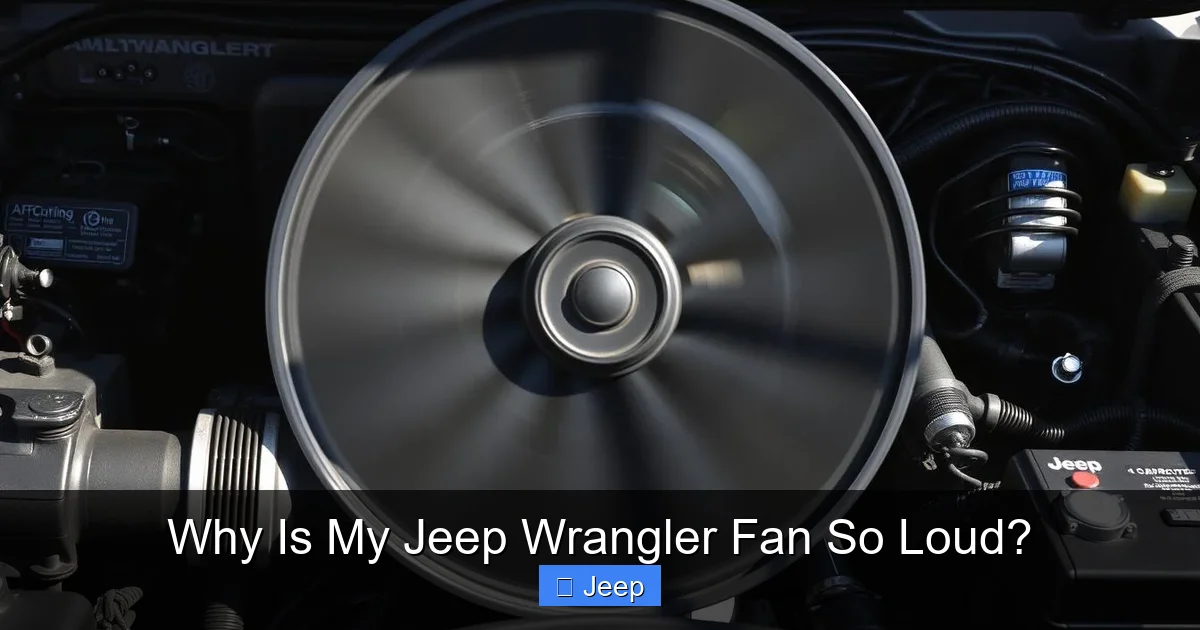
Visual guide about Why Is My Jeep Wrangler Fan So Loud?
Image source: automotivesimple.com
1. The Overlooked Enemy: Radiator and Condenser Blockage
This is the number one cause, especially for Wranglers that see dirt, bugs, and trail debris. Your radiator and the A/C condenser in front of it are like your engine’s lungs. They need clean, unrestricted airflow. When bugs, leaves, grass seeds, mud, or even pollen packs into the fine fins of the radiator, it acts like a blanket, trapping heat. The engine runs hotter. The coolant temperature rises. The fan’s job becomes impossibly hard, so it runs longer, harder, and louder. You might not even notice the gradual clogging until one hot day, the fan never shuts off and sounds like a propeller.
Practical Example: A JK/JLU owner who does a lot of highway driving in the summer will have a radiator packed with dried bug carcasses. A JL owner who frequently goes on muddy trails might have mud dried into the radiator core. Both scenarios lead to the same result: poor heat rejection and a fan that never gets a break.
2. The Mechanical Marvel (and Menace): The Fan Clutch
If you have a Jeep Wrangler with a V8 engine (like the 5.7L Hemi in some JK/JL models) or certain earlier models, you likely have an engine-driven cooling fan with a thermal fan clutch. This is a viscous coupling that allows the fan to spin at about 1/2 to 2/3 of engine speed when cool, saving power and reducing noise. When the engine gets hot, the clutch “locks up” and makes the fan spin at near engine speed for maximum cooling.
A failing fan clutch is a classic Wrangler problem. The internal fluid can leak, or the bi-metallic spring can weaken. When it fails, it often fails in the “locked” position. This means your fan is mechanically tied to the engine and spinning at thousands of RPM all the time—even when you start the engine cold. The noise is distinct: a deep, roaring, almost propeller-plane sound that changes with engine speed. It’s impossible to ignore. This is different from the whir of an electric fan; it’s a solid, mechanical roar.
3. Electrical Gremlins: Relays, Sensors, and Wiring
Most modern Wranglers (and all with the 2.0L turbo or 4xe hybrid) use electric cooling fans controlled by the engine computer (PCM). The PCM tells the fan when to turn on based on data from the coolant temperature sensor and A/C pressure sensors. A fault anywhere in this chain can cause the fan to run constantly at high speed.
- Faulty Coolant Temperature Sensor (CTS): If the CTS sends a false “engine is overheating” signal, the PCM will command the fan to run full blast. The engine might not actually be hot.
- Failed Fan Relay(s): The relay is the switch that powers the fan. A relay that is stuck “on” will keep the fan running even when it shouldn’t. You might hear it come on right when you start the Jeep and never shut off.
- Wiring Issues: Shorts, grounds, or damaged wires can send constant power to the fan.
- PCM/Software Issues: Less common, but possible. A software glitch might keep the fan logic active.
Diagnosing electrical issues requires checking for diagnostic trouble codes (DTCs) and testing circuits, which often points to a professional diagnosis.
4. Low Coolant or Air in the System
Your cooling system is a sealed loop. If the coolant level is low, there’s less fluid to absorb and carry heat away from the engine. The engine runs hotter faster. The coolant temperature sensor sees this and calls for the fan. The fan works overtime because the core problem (low coolant) isn’t being addressed. Low coolant is usually caused by a leak—a hose, water pump, thermostat housing, or even a cracked radiator. Air pockets from improper bleeding after a coolant service can also cause hot spots and erratic fan behavior.
5. Failing Water Pump or Thermostat
The water pump circulates coolant. If it’s failing, circulation is poor. Hot coolant doesn’t reach the radiator effectively, so the engine temperature spikes, and the fan screams. A thermostat stuck closed prevents coolant from reaching the radiator at all—this is a dire scenario where the fan will run but the engine will rapidly overheat. These are internal engine cooling failures that a loud fan often heralds.
6. Aftermarket Accessories and Modifications
Did you add a larger aftermarket radiator? A different fan shroud? An auxiliary fan? Improperly installed or incompatible modifications can disrupt factory airflow, change fan load, or cause electrical feedback. A cheap aftermarket electric fan might also simply be louder than the original equipment unit.
Diagnosing the Roar: A Step-by-Step Guide
Before you panic or spend money, you can do some basic detective work. Safety first: never open a hot radiator cap. Let the engine cool completely.
Visual guide about Why Is My Jeep Wrangler Fan So Loud?
Image source: automotivesimple.com
Step 1: The “When” and “What” Test
Pay close attention. When does the loud noise happen?
- Does it come on immediately when you start the engine, even when cold? This strongly points to a locked-up fan clutch (mechanical) or a stuck relay/failed sensor (electrical). A healthy system should not need fan assistance when cold.
- Does it only come on when the engine gets hot (after 10-15 minutes of driving) or when the A/C is on? This is normal behavior, but the noise level might still be excessive due to blockage or a failing component working too hard.
- Is the noise a deep, mechanical roar that changes pitch with engine RPM? Classic locked fan clutch.
- Is it a high-pitched electric whir or buzz? That’s an electric fan. If it’s loud, it’s likely running at full speed due to an electrical command or fault.
Step 2: Visual and Physical Inspection
With the engine completely cold:
- Check Coolant Level: Open the coolant reservoir (the white plastic overflow tank). The fluid should be between the “MIN” and “MAX” lines. If it’s low, you have a leak. Top it up with the correct 50/50 mix of coolant and distilled water, but remember this is a temporary fix—you must find the leak.
- Inspect the Radiator: Look through the grille and behind it. Can you see daylight through the radiator fins? Or is it caked with bugs and debris? If it’s dirty, cleaning it is your first step. A garden hose with a gentle spray from the engine side out can blow out debris. For severe cases, a professional radiator flush or even replacement may be needed.
- Check for Leaks: Look under the Jeep for puddles or stains. Look at the radiator, hoses, water pump, and thermostat housing for signs of wetness or crusty coolant residue.
- Fan Clutch Check (V8 Models): With the engine cold, try to spin the fan blade by hand (be careful, it’s large!). It should spin relatively freely with some slight resistance. If it’s locked solid or has extreme resistance, the clutch is shot. Note: On electric fan models, you won’t be able to spin the fan easily by hand when off.
Step 3: Scan for Codes
If you have an OBD2 scanner (or a local auto parts store may do this for free), plug it in. Look for any codes related to coolant temperature, fan control, or A/C pressure. A code like P1288 (Engine Coolant Temperature Circuit) or P0480 (Fan Relay Circuit) gives you a direct starting point.
Step 4: Temperature Check
Drive the Jeep and watch the temperature gauge (not the “hot” light). Where does it stabilize? If it’s consistently running in the 3/4 to “H” zone, even with a working fan, you have a blockage or circulation problem. If it’s normal but the fan is still screaming, the fan or its control is the primary issue.
DIY Checks Every Wrangler Owner Can Do
Armed with your diagnosis, here are the fixes you can safely tackle at home with basic tools.
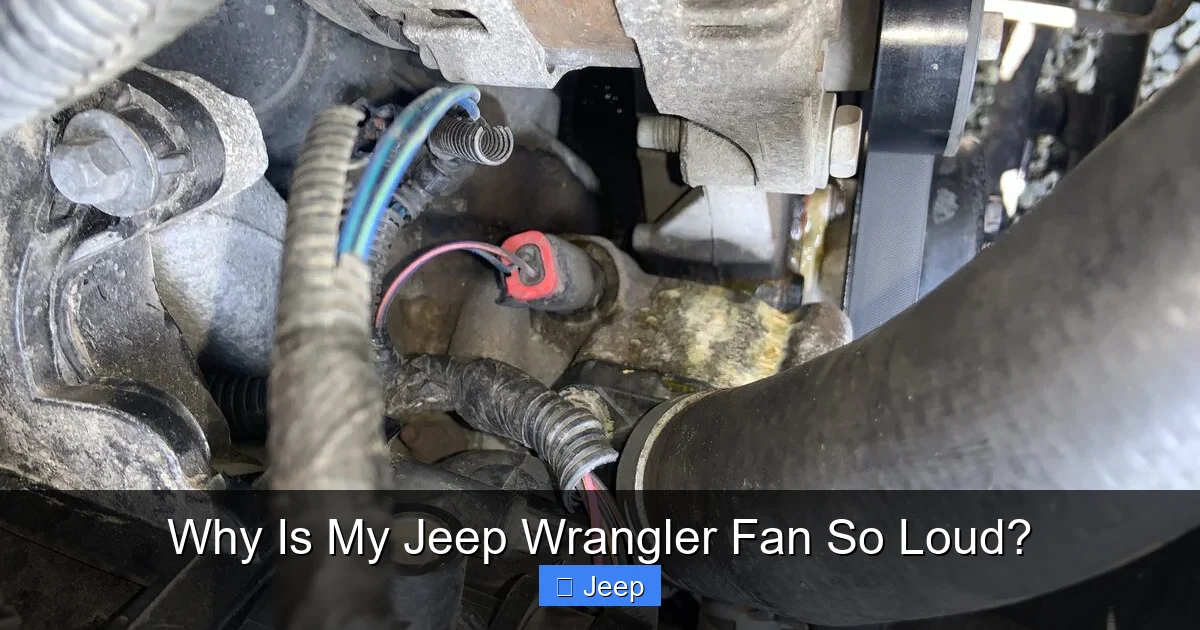
Visual guide about Why Is My Jeep Wrangler Fan So Loud?
Image source: wranglerjkforum.net
The Radiator Flush and Clean
If blockage is your issue, this is the fix. For a mild clog, a thorough reverse-flush with a garden hose can work. For severe cases, use a chemical radiator flush product following the instructions, then flush thoroughly. This involves disconnecting hoses, so be prepared to catch and dispose of old coolant properly. Always use the correct coolant type for your Wrangler (usually OAT coolant like Mopar HOAT).
Coolant Top-Off and Bleeding
If the level was low, top it off. But you must also “burp” the system of air pockets. This often involves running the engine with the heater on high and the coolant reservoir cap off, then squeezing upper radiator hoses to help air escape. Consult your owner’s manual for the exact procedure for your model year, as it varies.
Relay Swap Test (Electric Fans)
Fan relays often look identical. If your Wrangler has multiple relays (e.g., one for low speed, one for high speed), you can try swapping the suspect fan relay with another, like the horn relay. If the noise moves to the horn (i.e., the horn now comes on with the fan), you’ve found a bad relay. They are usually inexpensive and easy to replace.
Inspecting and Replacing the Fan Clutch (V8)
This is a more involved mechanical job but doable with sockets and a pulley holder. You’ll need to remove the fan shroud and the fan itself. The clutch bolts to the water pump pulley. Inspect it for fluid leaks (oil spots). Replacement requires a new clutch unit. Important: The fan blades on a Wrangler are large and can cause serious injury if they spin unexpectedly. Disconnect the battery and ensure the fan cannot turn before starting.
When to Wave the White Flag: Calling in a Professional
Some problems are beyond the safe scope of DIY. Here’s when to call a mechanic, especially one familiar with Jeeps.
Internal Engine Cooling Failures
If your diagnosis points to a failing water pump, a stuck thermostat, or a potential head gasket issue (indicated by milky oil, white exhaust smoke, or persistent overheating despite a good fan), stop driving. These require professional tools and expertise. Continuing to drive will cause catastrophic engine damage.
Complex Electrical Diagnostics
If there are no obvious relay failures and the sensors check out, the problem could be in the wiring harness or the PCM itself. Tracing electrical gremlins requires schematics, multimeters, and experience. A misdiagnosis can lead to replacing good parts.
System-Wide Flushes and Repairs
If the radiator is internally corroded or clogged beyond cleaning, it needs replacement. A proper cooling system flush and refill with the correct fluid and air-bleeding procedure is best left to a shop with the right equipment.
When in Doubt, Get a Second Opinion
Jeep forums are great, but they can also lead you down a rabbit hole of guesses. If you’ve done the basic checks and the noise persists, a diagnostic fee at a reputable shop is money well spent to avoid a $5,000 engine replacement.
Keeping the Peace: Prevention and Long-Term Care
The best way to deal with a loud fan is to never have one. Prevention is straightforward.
Make Radiator Cleaning a Routine
At least once a year, especially before summer, get a garden hose and carefully spray through the grille and behind the radiator to blow out bugs and debris. Be gentle—high pressure can bend the delicate fins. For heavy off-roaders, consider a protective bug screen or radiator protector that’s easy to remove and clean.
Stick to a Coolant Service Schedule
Don’t ignore your coolant. It degrades over time, losing its anti-corrosion and anti-boil properties. Follow the severe service schedule in your owner’s manual (often every 3 years or 30,000 miles). A proper flush prevents internal gunk buildup that clogs the tiny coolant passages in the radiator and engine.
Address Small Leaks Immediately
That tiny drip under your Jeep is a future low-coolant situation. Fix hose clamps, replace a seeping water pump, or repair a small radiator leak before it leads to overheating and fan overwork.
Be Mindful of Aftermarket Mods
If you add a larger bumper, winch, or rock sliders, ensure they aren’t blocking airflow to the radiator. Some aftermarket electric fans are louder by design; research before you buy.
Listen to Your Jeep
Get to know the normal sound of your cooling fan. The moment it changes—becomes louder, comes on earlier, or sounds different—investigate. Catching a problem early, like a slightly clogged radiator or a fan clutch starting to slip, saves money and prevents breakdowns.
Conclusion: Silence is Golden (and Safe)
Your Jeep Wrangler’s loud cooling fan isn’t just an annoyance; it’s your vehicle’s way of communicating stress. The cause ranges from the simple satisfaction of washing bug guts off your radiator to the serious urgency of an internal engine cooling failure. By understanding the system, performing systematic checks, and knowing when to seek help, you can transform that roar back into the quiet hum of a well-maintained machine. Remember, the cost of ignoring a loud fan is measured in tow bills and engine rebuilds. The cost of addressing it is often just time, a hose, and maybe a new part. Keep your Wrangler cool, quiet, and ready for the next adventure by giving its cooling system the respect it deserves. After all, the most capable Jeep is a reliable one, and that starts with an engine that runs at the right temperature.
Frequently Asked Questions
Can I drive my Jeep Wrangler with a loud cooling fan?
You should avoid driving if the fan is extremely loud and the temperature gauge is reading high. Short distances to a repair shop may be okay if the engine isn’t overheating, but prolonged driving risks severe engine damage from overheating.
Is a loud fan always related to overheating?
Not always. A locked fan clutch will roar even with a cold engine. However, a loud fan is frequently a symptom of a cooling system struggling to keep up, which will eventually lead to overheating if the root cause isn’t fixed.
How much does it cost to fix a loud Jeep Wrangler fan?
Costs vary wildly. A simple radiator cleaning might cost $0 if you DIY. A fan clutch replacement part is $100-$300 plus labor. An electric fan relay is $20-$50. A new radiator can be $300-$800+. Diagnosing the exact cause is key to an accurate estimate.
Why does my Jeep fan sound like a jet engine?
That deep, roaring sound that changes with engine RPM is the classic sign of a failed thermal fan clutch on V8 models. The clutch has locked, mechanically tying the fan to the engine, forcing it to spin at full speed all the time.
My electric fan is loud but the engine isn’t hot. What’s wrong?
This points to an electrical control issue. The most common culprits are a faulty coolant temperature sensor sending a bad signal, a stuck fan relay, or a wiring short that’s providing constant power to the fan.
Will a coolant flush fix a loud fan?
It can, if the primary cause is a clogged radiator from internal corrosion or debris. A flush restores proper flow and cooling efficiency. However, if the fan itself is faulty (clutch, relay, motor), a flush won’t fix the noise, though it’s still good maintenance.
