
How to Open the Gas Tank on a Jeep Cherokee

Opening the gas tank on a Jeep Cherokee is typically done via an interior lever or an exterior push button, depending on the model year and trim. If the primary mechanism fails, a manual release located in the trunk provides a reliable backup. This guide covers every method, common issues, and essential safety steps for all Cherokee generations.
So, you pull up to the gas station in your trusty Jeep Cherokee, ready to fill up. You hop out, grab the nozzle, and then… nothing. You press where the fuel door should be, pull on it, and it just won’t budge. That moment of confusion is all too common. Don’t worry; you’re not alone. The method to open the gas tank on a Jeep Cherokee isn’t always intuitive, and it has changed over the years. Whether you drive a classic 2014 model or a brand-new 2023, this definitive guide will walk you through every single method, from the standard procedure to the secret manual override. We’ll cover troubleshooting, safety must-knows, and model-specific quirks. By the end, you’ll be a pro at accessing your Cherokee’s fuel filler, eliminating that frustrating pause at the pump forever.
Key Takeaways
- Primary Release Methods: Most Jeep Cherokees use either an interior floor-mounted lever (pre-2017) or an exterior push-button on the fuel door itself (post-2017).
- Manual Override Exists: A hidden manual release cable inside the trunk cargo area allows you to open the fuel door if the electronic or lever system fails.
- Model Year is Crucial: The exact method changes significantly between the KL (2014-2023) and earlier models, so identifying your specific year and trim is the first step.
- Safety is Paramount: Always turn off the engine, avoid static electricity, and never smoke or use open flames near the fuel filler area during refueling.
- Regular Maintenance Helps: Lubricating the fuel door hinge and latch mechanism periodically prevents sticking and ensures smooth operation for years.
- Key Fob is Not Directly Involved: Unlike some vehicles, the Jeep Cherokee’s fuel door is not typically unlocked by the key fob; it requires the interior control or button.
- Troubleshooting Starts Simple: Before accessing the manual release, check for a blown fuse, a dead battery (for button models), or a simple obstruction jamming the door closed.
📑 Table of Contents
- The Jeep Cherokee Fuel Door Design: An Overview
- Step-by-Step: Opening the Gas Tank on Your Jeep Cherokee
- What to Do When the Standard Method Fails: The Manual Release
- Safety Precautions You Must Follow When Refueling
- Model Year Differences: 2014-2023 Cherokee Variations
- Maintenance and Care for a Smooth-Operating Fuel Door
- Conclusion
The Jeep Cherokee Fuel Door Design: An Overview
Understanding the “why” behind the design helps you remember the “how.” Jeep engineers the Cherokee’s fuel system for a clean, aerodynamic exterior. That means no ugly, exposed fuel door handle. Instead, they integrate the opening mechanism into the vehicle’s interior or make the door itself the button. This creates the sleek, modern look Cherokee owners love. However, it does mean the process isn’t as obvious as a traditional twist cap. The design philosophy prioritizes security and aesthetics over brute-force simplicity. For decades, the primary method involved an interior release, a common feature in many SUVs of its era. As technology advanced, Jeep transitioned to a more modern, button-activated system. Knowing which system your Cherokee has is 90% of the battle. We’ll break down the two primary eras clearly.
Interior Lever System (Primarily Pre-2017 Models)
If you own a Jeep Cherokee from the 2014 model year up through approximately the 2016 or early 2017 model year (depending on exact trim), your vehicle most likely uses the classic interior lever. This is a simple, reliable, mechanical system. You’ll find the lever on the driver’s side floorboard, to the left of the driver’s seat. It’s usually a small, black, plastic handle with a fuel pump icon on it. To operate it, you simply pull up on this lever. You should hear a distinct “pop” or “click” as the fuel door latch releases. The door on the exterior of the vehicle will then swing open freely. This method requires no battery power and is virtually fail-safe unless the lever’s connecting cable breaks or becomes severely corroded, which is rare. It’s a direct mechanical link—you pull, it opens. This design is similar to many other vehicles of its time, including some trims of the Dodge Charger, which also utilized an interior release for certain years.
Exterior Push-Button System (Primarily 2017+ Models)
Starting with the refreshed 2017 model year and continuing through the current generation, Jeep Cherokee models predominantly switched to an exterior push-button release. This system is electronically controlled. The button is integrated directly into the fuel door itself. It’s a small, rectangular, usually black or body-colored button located on the front edge of the fuel door. To open it, you simply press this button firmly. An internal solenoid releases the latch, and the door springs open. This method is quick and convenient, but it has one critical dependency: your vehicle’s battery must have sufficient charge. A completely dead battery will render this button inoperative. Furthermore, the button can sometimes become stuck due to dirt, grime, or ice buildup. If you press it and hear a faint click but the door doesn’t open, that’s a sign the solenoid is working but the latch mechanism might be jammed. This button design is now industry-standard for many modern crossovers, much like the system found on the Toyota RAV4.
Step-by-Step: Opening the Gas Tank on Your Jeep Cherokee
Now, let’s get practical. Follow these exact steps based on your vehicle’s likely system. If you’re unsure, try the interior lever first—it’s a harmless check. If that does nothing, look for the button on the fuel door itself.
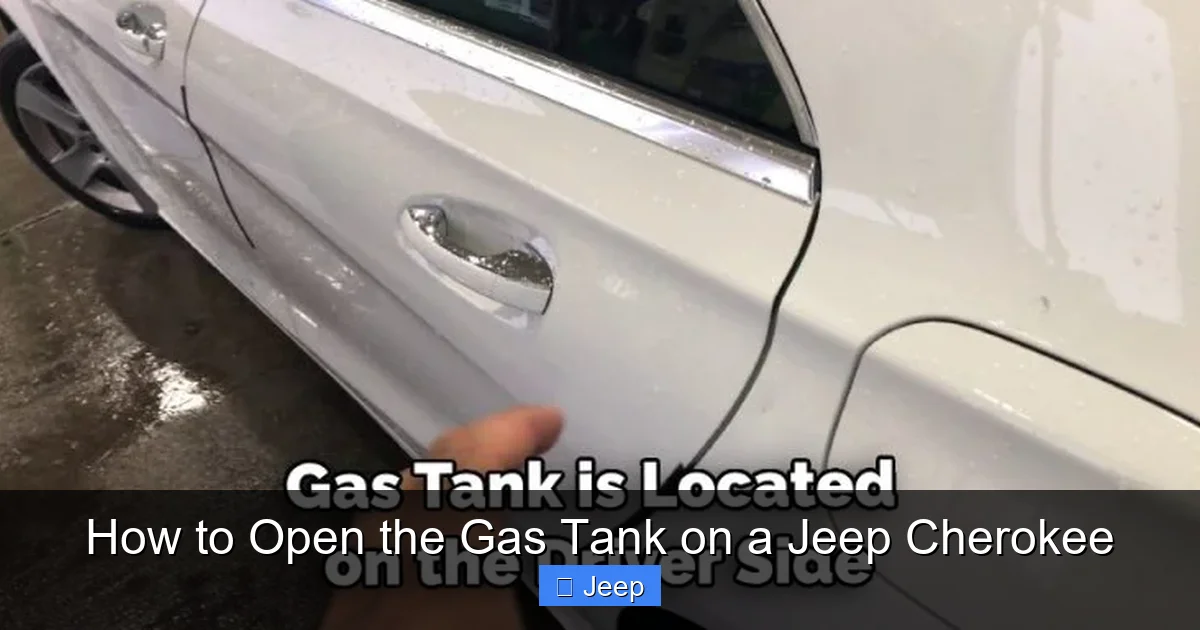
Visual guide about How to Open the Gas Tank on a Jeep Cherokee
Image source: jeepfixes.com
For Models with the Interior Lever (Pre-2017)
1. Locate the Lever: Sit in the driver’s seat and look down at the floorboard on your left side, near where your left foot would rest. The lever is typically protruding upward.
2. Identify the Icon: The lever should have a small yellow or white sticker, or be molded plastic, showing a fuel pump symbol. This confirms it’s the correct control.
3. Pull Firmly Upward: Grasp the lever handle and pull it straight up with a steady, firm motion. Do not yank or jerk it. You should feel resistance and then a release.
4. Listen and Look: You will hear a distinct “clunk” or “pop” from the rear driver’s side quarter panel. Immediately exit the vehicle and check the fuel door. It should now be slightly ajar and you can pull it fully open.
Pro Tip: If pulling the lever feels stiff or doesn’t release the door after a firm pull, do not force it. Exit the vehicle and try pressing directly on the fuel door itself. Sometimes the latch mechanism seizes, and a bit of pressure on the door while pulling the lever can help. Also, ensure your Cherokee is not in gear (Park is fine) and the parking brake is set, as some safety interlock systems can prevent release while moving.
For Models with the Exterior Push-Button (2017+)
1. Approach the Fuel Door: Walk to the rear driver’s side of your Cherokee where the fuel door is located.
2. Locate the Button: Examine the front vertical edge of the fuel door (the edge closest to the front of the car). You’ll see a small, rectangular button, often with a subtle fuel pump icon.
3. Press Firmly: Using your thumb, press the button straight in. You should press it with about the same force as a doorbell button. A soft press often won’t activate the solenoid.
4. Wait for the “Click”: You will hear a clear, audible “click” from within the door. This is the solenoid releasing the latch. The door should then spring open automatically thanks to a small hinge spring.
5. If It Doesn’t Open: After hearing the click, gently try to pry the edge of the door open with your fingers. Sometimes the spring is weak, or ice/dirt is holding it. Do not use excessive force. If it still won’t budge after a click, you likely have a mechanical jam and need to proceed to the manual release section below.
What to Do When the Standard Method Fails: The Manual Release
This is the most critical section of this guide. Even if your Cherokee’s primary system is working, knowing this backup procedure is essential knowledge for every owner. It will save you from being stranded at a gas station with a full nozzle and no way to fill up. The manual release is a physical cable that directly pulls the fuel door latch, bypassing all electronic and mechanical linkages. It’s cleverly hidden but always accessible from inside the cargo area.
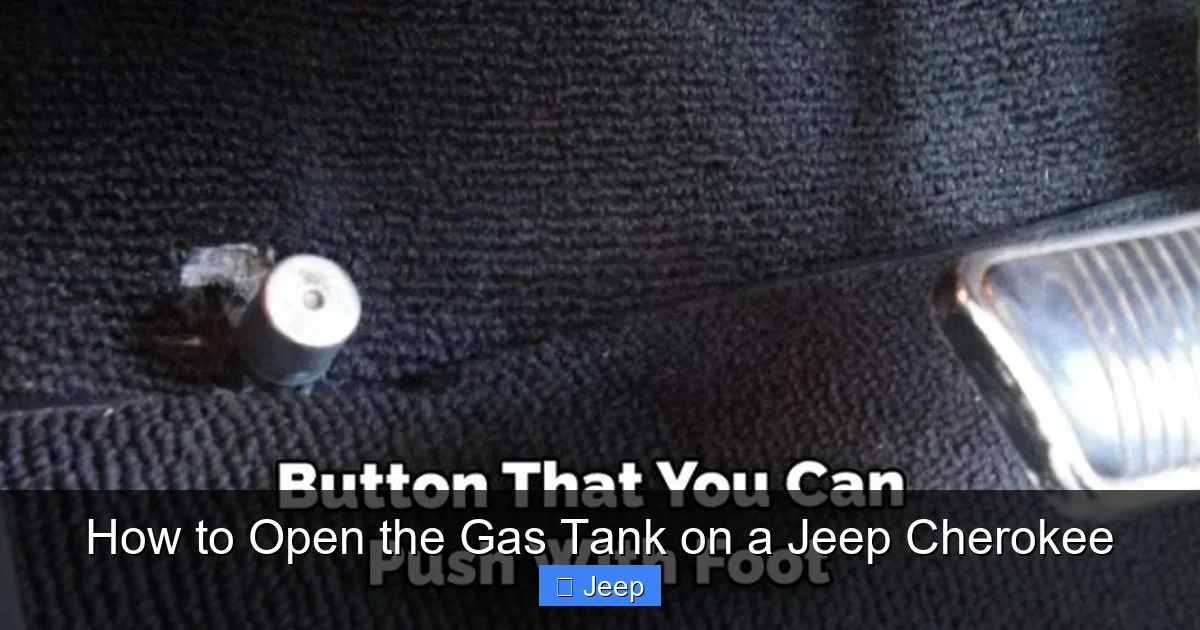
Visual guide about How to Open the Gas Tank on a Jeep Cherokee
Image source: jeepfixes.com
Accessing the Manual Release in the Trunk
1. Open the Rear Tailgate: Use your key fob or the interior button to open the Cherokee’s rear tailgate. You need full access to the cargo area.
2. Locate the Access Panel: On the driver’s side (left side) of the cargo area, look at the interior trim panel. There is usually a small, rectangular, felt-lined or plastic access door. It’s about the size of a deck of cards. It may have a small seam or a finger-grab notch. This panel covers the manual fuel door release cable.
3. Open the Panel: Gently pry open this access panel. It is typically held by plastic clips. Use a flat-head screwdriver wrapped in a cloth or your fingernails to avoid damaging the trim. Once open, you’ll see a metal cable with a plastic handle or loop on the end.
4. Pull the Cable: Firmly pull on this cable handle. You should feel it engage and then see (or hear) the fuel door on the outside of the vehicle pop open. You may need to pull it with a steady force for several inches.
Important Note: The location of this access panel can vary slightly. In some model years, it’s higher up on the side wall, near the top of the cargo area. In others, it’s lower down, near the floor. If you can’t find it immediately, consult your owner’s manual’s index for “fuel door manual release.” This is a universal feature on all Jeep Cherokee KL models (2014-2023).
When to Use the Manual Release
You should resort to the manual release only after the standard method fails. Common scenarios include: a dead battery (for button models), a blown fuse for the fuel door solenoid, a broken or disconnected interior lever cable, or a physically jammed fuel door due to an accident, ice, or severe corrosion. Using the manual release is not harmful to the vehicle; it’s designed for exactly this purpose. After you’ve opened the door manually, you should diagnose and fix the underlying issue. For example, if the interior lever was loose, the cable might need replacement. If the button did nothing, check fuses and battery voltage. Once the primary issue is resolved, the manual release cable will automatically reset and be ready for future emergencies.
Safety Precautions You Must Follow When Refueling
Now that you’ve gotten the door open, the job is only half done. Refueling is one of the most routine interactions we have with our vehicles, but it carries inherent risks if proper precautions are ignored. Fuel is a highly flammable liquid, and vapors are explosive. Treat every fill-up with respect.
Visual guide about How to Open the Gas Tank on a Jeep Cherokee
Image source: jeepfixes.com
The Static Electricity Hazard
This is the most overlooked danger. As you slide into the driver’s seat or get out of the car, your body can build up static electricity. When you then touch the metal fuel nozzle, a spark can occur. That spark is more than enough to ignite fuel vapors. To prevent this:
- Always Touch Metal Before Handling the Nozzle: Before you pick up the fuel nozzle, use your bare hand to touch an unpainted metal part of your car, like the door jamb or the fuel door frame itself. This discharges any static you’ve built up.
- Do Not Re-enter the Vehicle During Fill-Up: Getting back into the car while fueling can rebuild static charge on your body. If you must re-enter (e.g., to get a wallet), touch the metal part again before grabbing the nozzle.
- Place the Nozzle Gently: Do not jam the nozzle into the filler neck. Insert it smoothly and ensure it’s seated properly to avoid spills and vapor leaks.
No Flames, No Sparks, No Smoking
This seems obvious, but it’s worth stating explicitly. Never smoke, light a cigarette, or use a cell phone (which can have tiny sparks) near the fuel pump area. Turn off your engine completely. Do not leave the vehicle running while fueling. These are non-negotiable rules at every gas station for a reason. Also, avoid overfilling. Stop when the nozzle automatically clicks off. Trying to “top off” the tank can force liquid fuel into the vapor recovery system, which is designed only for vapors, and can cause spills or system damage.
Model Year Differences: 2014-2023 Cherokee Variations
The Jeep Cherokee has been in production from the 2014 model year (KL platform) through the present. While the core fuel door opening mechanism is consistent within two main eras, there are minor differences based on trim level and specific model year refreshes.
Pre-Facelift vs. Post-Facelift (2014-2016 vs. 2017-2023)
The biggest shift happened for the 2017 model year during a significant refresh. 2014-2016 (and early 2017) models almost universally have the interior floor lever. It’s a physical, cable-operated system. The fuel door itself is a simple hinged panel with no buttons. 2017 and newer models (including the 2019 refresh and 2023 models) have the push-button on the fuel door. The button is part of the door panel. A very small subset of early 2017 models might have been built with the old lever if they were early production, but this is exceedingly rare. If your Cherokee is a 2017 or newer, assume you have the button until proven otherwise by checking the fuel door.
Trim Level Considerations (Sport, Latitude, Limited, Trailhawk)
Good news: the fuel door opening mechanism is not a trim-level feature. Whether you have a base Sport, a luxurious Limited, or an off-road-ready Trailhawk, the method to open the fuel door is identical to all other Cherokees of the same model year. The Trailhawk does not get a different, “more rugged” release. All trims share the same basic platform and body panels. However, the Trailhawk may have a slightly different fuel door design (e.g., a more pronounced hinge or a different badge), but the button or lever location remains standard. You can confidently follow the steps for your model year regardless of your trim.
Maintenance and Care for a Smooth-Operating Fuel Door
A sticking or noisy fuel door is a common annoyance. With a little preventative care, you can keep your Cherokee’s fuel access system working perfectly for the life of the vehicle.
Lubricating the Latch and Hinge
At least once a year, especially in climates with road salt or harsh winters, inspect and lubricate the fuel door mechanism. Open the fuel door manually (using the standard method or the manual release). You’ll see a small metal latch on the car’s body that the door locks onto. Also, observe the hinge where the door pivots. Spray a light, silicone-based lubricant (like WD-40 Specialist Silicone Lubricant) onto these pivot points and the latch mechanism. Work the door open and closed several times to work the lubricant in. Avoid using heavy grease, which can attract dirt and dust. This simple step prevents the latch from freezing in winter and stops annoying squeaks.
Checking for Damage and Obstructions
Periodically look at the area around the fuel door. Make sure there are no bent panels from a minor bump that could be preventing the door from opening fully. Check the rubber sealing around the door for tears or debris. A small stone or buildup of mud and ice can physically jam the door closed. In winter, ice can form in the latch cavity. Use a plastic ice scraper or de-icer spray to clear it—never force a frozen door. If your interior lever feels loose or has excessive play, the cable may be stretching or nearing failure. Address this at your earliest convenience by having it inspected by a mechanic.
Conclusion
Mastering how to open the gas tank on your Jeep Cherokee removes a small but significant point of frustration from your daily life. Remember the golden rule: first, identify your model year to choose the correct method (interior lever vs. exterior button). If the primary method fails, your secret weapon is always the manual release cable located behind the access panel in the cargo area. This knowledge empowers you. It transforms you from a confused driver at the pump to a confident vehicle owner who understands their machine. Combine this know-how with the essential safety practices—discharging static, no flames, and no overfilling—and every refueling stop becomes a safe, efficient, and hassle-free experience. Your Cherokee is a capable vehicle; now you’re a capable owner who knows exactly how to access its vital systems. Keep this guide bookmarked, and never let a stuck fuel door ruin your day again.
Frequently Asked Questions
Where is the gas tank release on a 2020 Jeep Cherokee?
For a 2020 Jeep Cherokee, the release is a push-button located on the front edge of the fuel door itself. Simply press that button firmly to pop the door open. There is no interior lever on 2020 models.
What do I do if my Jeep Cherokee’s fuel door button does nothing?
First, ensure the vehicle’s battery has charge, as the button is electronic. If the battery is good, check the fuel door fuse in the under-hood fuse box. If the fuse is blown, replace it. If it clicks but won’t open, the latch is likely jammed, and you’ll need to use the manual trunk release.
Is there a manual way to open the gas door if the button breaks?
Yes, absolutely. Every Jeep Cherokee has a manual emergency release. Open the rear tailgate and look for a small access panel on the driver’s side wall of the cargo area. Behind it is a cable you pull to mechanically open the fuel door.
Why won’t my fuel door open even after pulling the interior lever?
This usually indicates a broken or disconnected cable between the lever and the latch, or a severely seized latch mechanism. The most reliable solution is to access the manual release cable in the trunk to open it and then have the faulty cable or latch inspected and repaired by a professional.
Does the key fob open the Jeep Cherokee gas door?
No, the Jeep Cherokee’s fuel door is not unlocked by the key fob. It must be opened via the interior lever (on older models), the exterior push-button (on newer models), or the manual trunk release. The key fob only locks/unlocks the doors and tailgate.
How is the Cherokee’s gas door different from other Jeeps like the Wrangler?
The Cherokee uses a hinged, pop-open fuel door, similar to most modern crossovers. The Jeep Wrangler, on the other hand, typically has a simple flip-top cap on the driver’s side that you unscrew by hand, with no electronic or mechanical door. The Cherokee’s design is for a more refined, aerodynamic appearance.
