
Can a Tesla Powerwall Be Installed Outside?

Yes, a Tesla Powerwall can be installed outside, but it requires careful planning and professional execution. The unit is engineered with a robust, weatherproof enclosure (IP55 rating) to withstand rain, dust, and temperature extremes. However, outdoor placement introduces unique considerations for mounting, ventilation, local building codes, and long-term maintenance. Always hire a certified Tesla installer to ensure safety, warranty validity, and optimal performance in your specific climate.
Key Takeaways
- Weatherproof Design: The Tesla Powerwall has an IP55 rating, meaning it’s protected against dust and low-pressure water jets from any direction, making it suitable for outdoor installation when properly mounted.
- Temperature Tolerance: It operates efficiently in a wide range, from -4°F to 122°F (-20°C to 50°C), but extreme heat or cold can slightly reduce its charging/discharging efficiency and lifespan.
- Professional Installation is Non-Negotiable: Outdoor setups require expertise in electrical work, structural mounting, and local code compliance. DIY installation voids the warranty and poses serious safety risks.
- Ventilation & Clearance are Critical: The Powerwall generates heat during operation. It must be installed with specific clearances from walls, other units, and vegetation to ensure adequate airflow and prevent overheating.
- Local Permits and Codes Vary: Your municipality will have specific rules for outdoor electrical equipment, setbacks from property lines, and seismic anchoring. A certified installer will navigate this for you.
- Maintenance Needs Increase: Outdoor units require periodic visual inspections for debris, snow/ice buildup, and physical damage. The surrounding area must be kept clear for airflow and service access.
- Security and Aesthetics Matter: Consider theft risk and visual impact. Many homeowners place units behind landscaping, on the side of the house, or within a decorative enclosure to blend with the surroundings.
📑 Table of Contents
- So, Can You Actually Put a Tesla Powerwall Outside?
- The Powerwall’s Armor: Understanding Its Weatherproofing
- Installation Requirements: It’s Not Just “Hang It Up”
- Weighing the Pros and Cons of Outdoor Placement
- Navigating the Paperwork: Permits, Codes, and Inspections
- Long-Term Care: Maintaining an Outdoor Powerwall
- The Bottom Line: Partner with the Right Experts
So, Can You Actually Put a Tesla Powerwall Outside?
This is a fantastic and very common question for anyone looking to add home energy storage. The short answer is a confident yes. Tesla designed the Powerwall with outdoor installation in mind, recognizing that not everyone has a spacious, climate-controlled garage or basement. Many homes, especially in warmer climates, have their electrical panels and utility areas on the outside of the house. Placing the Powerwall outdoors can save valuable indoor square footage and simplify the wiring run from your solar inverters or main panel.
But before you start picturing it on a patio post, there’s a lot more to it than just rolling the unit outside. “Suitable for outdoor use” comes with a major asterisk: it must be installed correctly. We’re talking about a sophisticated piece of lithium-ion battery chemistry and high-power electronics living in the elements. Let’s break down everything you need to know, from the engineering behind its durability to the nitty-gritty details of mounting, codes, and keeping it happy for 10+ years.
The Powerwall’s Armor: Understanding Its Weatherproofing
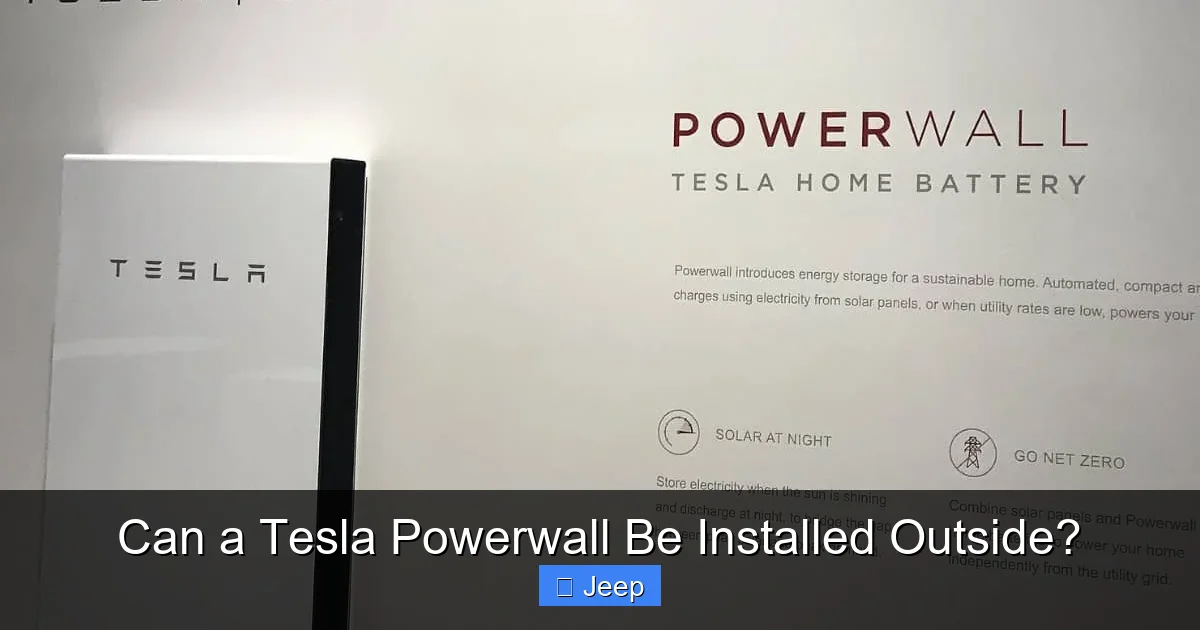
You can’t talk about outdoor installation without first talking about the enclosure itself. Tesla didn’t just slap a cover on a battery; they engineered the Powerwall from the ground up to be a weather-resilient unit.
Visual guide about Can a Tesla Powerwall Be Installed Outside?
Image source: surgeaccelerator.com
Decoding the IP55 Rating
The Powerwall carries an IP55 ingress protection rating. Let’s translate that from tech-speak to real-world meaning:
- The first digit, 5, means it’s “dust protected.” Dust won’t get inside in quantities that interfere with operation. It’s not completely dust-tight (that would be IP6X), but it’s more than enough for typical outdoor environments.
- The second digit, 5, means it’s “protected against water jets.” A low-pressure water jet from any direction—think heavy rain, a sprinkler system, or a hose—won’t cause harm. It is not submersible (that would be IPX7 or IPX8).
This rating is certified by independent labs and is a key reason outdoor installation is possible. The seals around the electrical conduits and the front panel are designed to keep moisture out, even during a downpour. However, this rating assumes the unit is mounted as intended—upright on a wall with the conduits entering from the bottom. Mounting it upside down or on a sloped surface could compromise water drainage and seal effectiveness.
Built for Temperature Extremes
The Powerwall’s operating temperature range is -4°F to 122°F (-20°C to 50°C). That covers almost every climate on Earth. Its thermal management system—a combination of passive cooling fins and an internal fan (on the Powerwall 2) or a more advanced liquid cooling loop (on the Powerwall+)—works to keep the battery cells in their optimal temperature window.
Here’s the practical reality: While it will *function* in that entire range, its performance and longevity are best when kept cooler. In a scorching Arizona summer where ambient temps hit 115°F, the Powerwall will work harder to cool itself, which can slightly reduce its instantaneous power output and, over many years, accelerate battery degradation. The same goes for prolonged sub-zero temperatures; it will still operate, but its usable capacity might dip temporarily until it warms up during use. This is why placement matters—avoid direct, all-day sun exposure if possible, and never install it in a spot where snow and ice can pile up and block vents.
Installation Requirements: It’s Not Just “Hang It Up”
Okay, so the box is tough. Now you need to get it on the wall. Outdoor installation has a specific checklist that differs from indoor setups.
Visual guide about Can a Tesla Powerwall Be Installed Outside?
Image source: crimdom.net
Mounting: Strength and Location
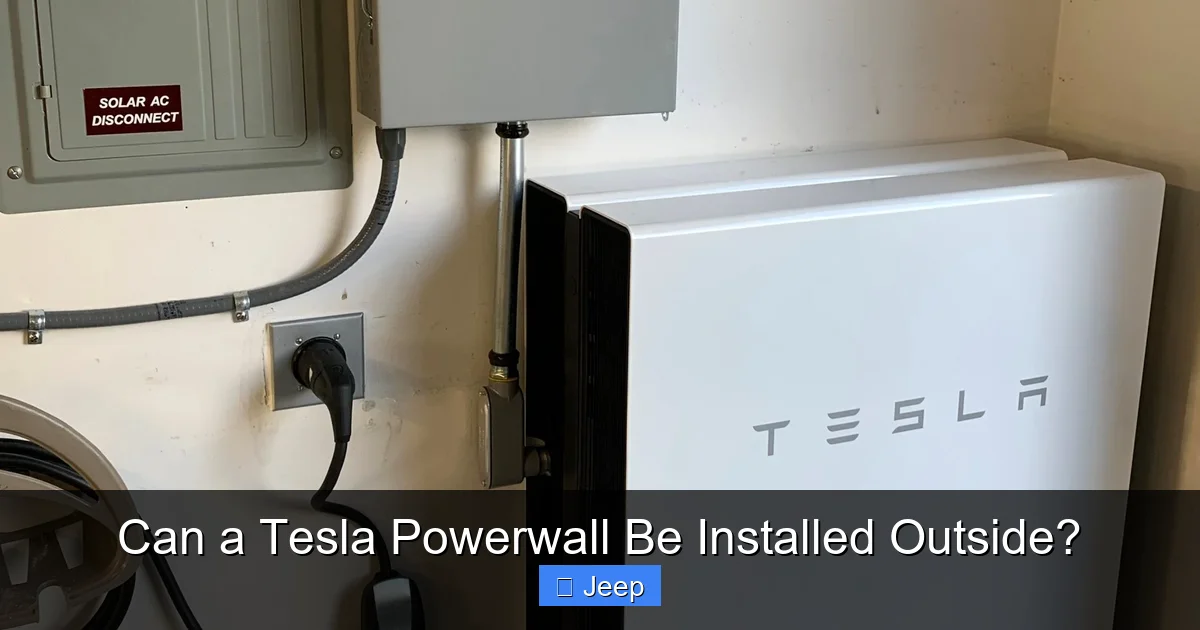
The Powerwall is heavy. A single Powerwall 2 weighs about 270 lbs (122 kg). The Powerwall+ is even heavier at ~340 lbs (154 kg). You cannot mount it on drywall, vinyl siding, or a weak fence post. It requires a permanent, structural mounting surface—typically a solid wood stud, a concrete block wall, or a steel mounting backer.
The official Tesla mounting bracket is designed for vertical installation on a flat wall. The wall must be able to support the weight plus some dynamic load (like wind). For seismic zones (hello, California), additional anchoring hardware is required. Your installer will assess your wall’s construction. Common outdoor locations include:
- The side of the house, near the main electrical panel.
- On a sturdy garage wall (if the garage is attached and the wall is structural).
- On a dedicated concrete pad or pillar, especially for ground-mount configurations in areas with high flood risk or specific setback rules.
Critical Clearance Rules: Tesla mandates specific clearances for safety and cooling. You must leave at least 18 inches (450 mm) of clearance above the unit and 12 inches (300 mm) on each side. The front needs space for service access. This means you can’t tuck it into a tight corner between the AC condenser and the house wall. Plan for breathing room. Vegetation, fences, and other structures must be kept clear of these zones.
Electrical and Conduit: Keeping Water Out
This is where professional expertise is paramount. All electrical conduits entering the Powerwall must use the provided sealed gland fittings. The entire electrical run—from your solar inverter or main panel to the Powerwall—must be in outdoor-rated conduit (like PVC or metal) with proper fittings to maintain the IP55 seal at the entry point. A single poorly sealed conduit is a direct path for water to enter the unit, leading to a costly failure not covered by warranty. The DC and AC connections inside are high-voltage and must be torqued to exact specifications.
Weighing the Pros and Cons of Outdoor Placement
Let’s get practical. Is going outside the right move for you? Here’s a balanced look.
Visual guide about Can a Tesla Powerwall Be Installed Outside?
Image source: peninsula-solar.com
The Advantages: Space, Simplicity, and Heat
Space Saver: This is the biggest one. Most people don’t have a dedicated, code-compliant mechanical room. The garage might be packed with cars and tools. The basement might be finished. Outdoor installation frees up that precious indoor space for other uses.
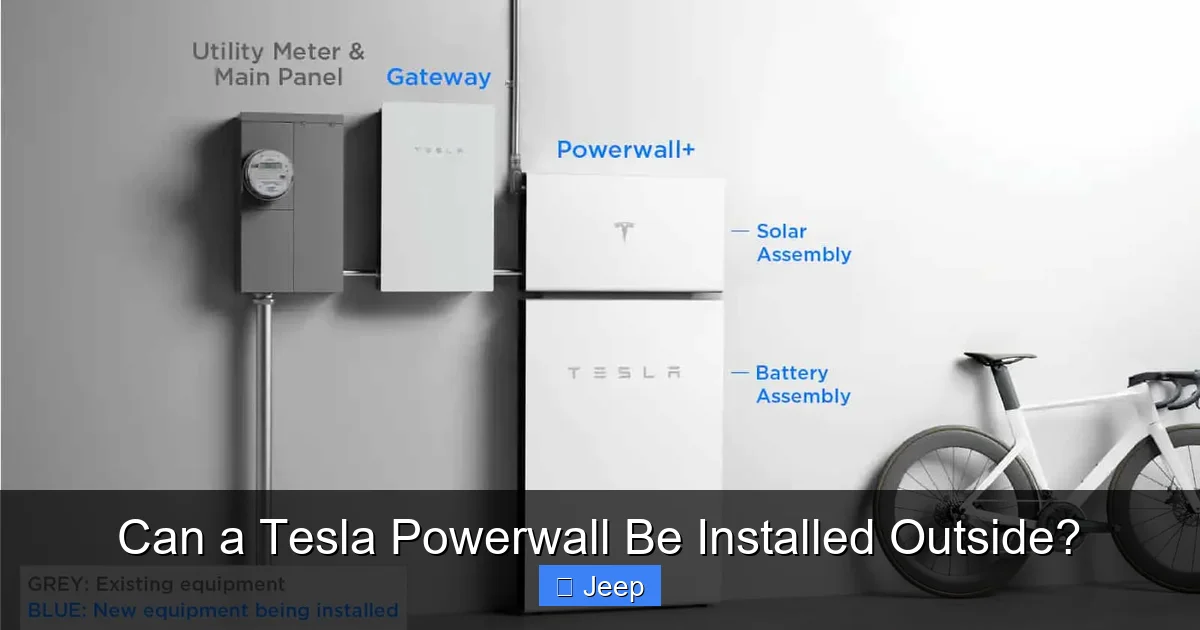
Shorter, Cheaper Runs: If your solar inverters are on the roof or outside, or your main panel is on an exterior wall, running the cables to an outside-mounted Powerwall is often shorter and less invasive than drilling through multiple interior walls and floors.
Natural Cooling: In temperate climates, an outdoor location with good airflow can actually help with thermal management compared to a stuffy, enclosed indoor closet. The ambient air can carry away heat more effectively.
The Disadvantages: Weather, Security, and Aesthetics
Direct Sun & Element Exposure: Even with its IP55 rating, relentless, beating sun will heat the enclosure more than a shaded spot. While designed for it, reducing solar gain is always better for long-term health. Similarly, in areas with heavy pollen, dust storms, or salty sea air, the exterior will get dirtier faster, requiring occasional gentle cleaning with a soft cloth and mild soap (never a pressure washer).
Security Concerns: A Powerwall on the side of your house is visible and accessible. While it’s bolted down and has no external ports to plug into, the unit itself is valuable. We’ve heard of cases where copper wiring was stripped from outdoor units. Strategic placement—behind a low fence, screened by bushes (with clearance maintained), or on a less visible side of the property—is wise.
Neighborly Aesthetics: Not all HOAs or neighbors are thrilled by the sight of a large, white box on your house. Check your HOA rules (if applicable) beforehand. Some homeowners incorporate the Powerwall into their landscaping plan, building a small, ventilated screen or trellis around it. Just never block the clearances!
This is a non-negotiable part of the process and a major reason you hire a pro. A Tesla Powerwall installation is a permanent electrical system addition, not an appliance plug-in.
The Permit Process
Your certified installer will pull the necessary electrical and possibly building permits from your city or county. The permitting authority will want to see:
- Site plans showing the exact location, setbacks from property lines, and clearances.
- Single-line electrical diagrams.
- Proof of the installer’s licensing and insurance.
Inspections will occur at least twice: once after the rough-in (conduit, wiring, mounting) and once after the final connection and commissioning. The inspector will verify that the installation meets the National Electrical Code (NEC) and any local amendments. They’ll check mounting strength, conduit seals, grounding, and disconnect locations.
Key Code Considerations for Outdoor Units
Several NEC articles directly apply:
- Article 690 (Solar Photovoltaic Systems): Since Powerwalls are most often paired with solar, the entire system must comply with PV code requirements, including rapid shutdown functionality and proper labeling.
- Article 705 (Interconnected Power Sources): Governs how the Powerwall connects to your home’s electrical system, whether at the main panel or a subpanel.
- Article 110.3(B): Requires equipment to be installed according to its listing and labeling. Tesla’s installation manual is essentially an extension of its UL listing. Deviating from it is a code violation and voids the warranty.
- Working Space & Dedicated Disconnects: The NEC requires a certain amount of clear working space in front of electrical equipment. The Powerwall’s clearances help satisfy this. A labeled AC disconnect within sight of the unit is also typically required.
Pro Tip: Before you even sign a contract, have your installer check with your local AHJ (Authority Having Jurisdiction). Some municipalities have additional rules about outdoor battery storage, especially in wildfire-prone areas or historic districts. It’s better to know upfront.
Long-Term Care: Maintaining an Outdoor Powerwall
An outdoor unit is out in the world, so it needs a little more TLC than one tucked in a basement.
Visual Inspections: Your Quarterly Check
Every few months, do a walk-around. Look for:
- Debris: Leaves, grass clippings, or nests blocking the ventilation grilles (usually on the sides and top). Gently clear them away with a soft brush.
- Physical Damage: Any dents, gouges, or signs of impact on the casing.
- Conduit & Connections: Ensure the conduit seals are intact and there’s no cracking or pulling at the entry points.
- Corrosion: Check for any white crust or rust on the terminals or mounting hardware, especially in coastal areas.
Never use a power washer or direct a hose at the unit. Wipe the exterior with a damp cloth if it gets dusty or dirty.
Winter Specifics: Snow and Ice
In snowy climates, you need to be mindful after a storm. While the Powerwall can generate enough heat to melt light snow accumulation, a heavy, wet snowpack can insulate it and potentially block vents. Gently brush snow off the top and sides. Never use a shovel, ice pick, or de-icing salts near the unit, as you can damage the seals or casing. Ice dams forming above the unit can cause dripping water to enter conduit entries—ensure your mounting location has good drainage from above.
The Bottom Line: Partner with the Right Experts
So, can a Tesla Powerwall be installed outside? Absolutely. Its design and rating make it a viable and often practical choice. But the “how” is everything. The success of an outdoor installation hinges on:
- Correct Location: Meeting clearances, avoiding direct sun/water spray when possible, and considering security.
- Expert Installation: Using a Tesla Certified Installer who understands the specific requirements for outdoor mounting, sealing, and code compliance. This isn’t a job for a general handyman.
- Local Knowledge: Navigating your city’s permit process and unique environmental concerns (like high winds or wildfire zones).
When done right, your outdoor Powerwall will be a silent, reliable workhorse for a decade or more, keeping your lights on during outages and maximizing your solar savings. It’s a powerful piece of technology that rewards careful planning with decades of energy independence.
Frequently Asked Questions
Will rain damage my outdoor Tesla Powerwall?
No. The Powerwall’s IP55 rating means it is specifically designed to withstand rain from any direction. The key is proper installation with all conduit seals and mounting brackets correctly used to maintain the weatherproof seal.
How do I protect it from extreme heat in the summer?
The best protection is strategic placement. Install it on a north or east-facing wall to avoid intense afternoon sun. Ensure the mandatory clearance space around the unit is free of obstructions to promote airflow. While it has a cooling system, reducing solar heat gain helps its long-term health.
Do I need a special permit for an outdoor installation?
Yes, always. An electrical permit is required for any permanent Powerwall installation, whether indoor or outdoor. Your certified installer will handle the permit application and coordinate the required inspections with your local building department to ensure it meets all codes.
Can I install the Powerwall on my own to save money?
Absolutely not. DIY installation is extremely dangerous due to high-voltage DC and AC connections. It will immediately void your Tesla warranty and product certifications, and it will not pass inspection. Always use a Tesla Certified Installer for safety and warranty protection.
What about lightning? Is it safe to have outside during a storm?
The Powerwall system includes proper grounding and surge protection as part of the installation. While no system is 100% immune to a direct lightning strike, the installation follows electrical codes to safely direct any surge energy away from the unit and your home’s wiring. Its outdoor metal enclosure also acts as a Faraday cage.
How often does the software update for an outdoor unit?
The same as an indoor unit. Updates are delivered over Wi-Fi or Ethernet automatically. As long as your Powerwall has a stable internet connection (via your home router), it will receive the same safety and feature updates, regardless of its physical location.
