
Will Jeep Wrangler Wheels Fit a Grand Cherokee?

No, Jeep Wrangler wheels will not directly bolt onto a Grand Cherokee without adapters or significant modifications. The two models use different bolt patterns (5×5″ vs. 5×4.5″) and center bore sizes, creating a fundamental mechanical mismatch. While wheel spacers or adapter rings can sometimes make them fit, this introduces safety and legal concerns. Always verify your specific model year and prioritize safety over aesthetics when considering wheel swaps.
So, you’ve got a set of shiny Jeep Wrangler wheels and a Grand Cherokee, or maybe you’re eyeing a great deal on a used Wrangler wheel set for your SUV. The question seems simple: will Jeep Wrangler wheels fit a Grand Cherokee? It’s a common thought in the Jeep community—after all, they’re both Jeeps, right? Shouldn’t the parts interchange? Well, let’s pop the hood on this question and get our hands dirty with the technical details. The short, and very important, answer is: almost always no, not without adapters or major modifications. But the “why” is a fascinating dive into automotive engineering that every Jeep enthusiast should understand. We’re going to break down bolt patterns, center bores, offsets, and the very real safety implications of getting it wrong.
Key Takeaways
- Bolt Pattern is the Primary Blocker: Wranglers (JK/JL) typically use a 5×5″ pattern, while most Grand Cherokees (WK2) use 5×4.5″. This difference means the lug holes will not align.
- Center Bore Mismatch Exists: Wrangler wheels have a ~62.9mm center bore, while Grand Cherokees use a ~71.5mm bore. The wheel will not center properly on the hub.
- Offset and Backspacing Differ: Wrangler wheels are designed for different suspension geometry and tire clearance. Using them on a Grand Cherokee can cause rubbing against brakes, suspension, or fenders.
- Adapters Are a Compromise: Wheel spacers with built-in adapter bolts or hub-centric rings can physically make wheels fit, but they change suspension geometry and stress components, requiring professional installation and torque checks.
- TPMS and Lug Nuts Must Be Addressed: You must use the correct lug nuts for the Wrangler wheel’s seat type (often conical) and ensure your Grand Cherokee’s TPMS sensors are compatible or transfer them.
- Model Year is Critical: Always confirm your specific vehicle’s specifications. Some older Grand Cherokee models (like the WJ, 1999-2004) actually share the 5×5″ pattern with Wranglers, creating an exception.
- Safety Trumps Savings: The cost of proper adapters, alignment, and potential component wear often outweighs the savings of used Wrangler wheels. A mismatched wheel is a serious safety hazard.
📑 Table of Contents
The Fundamental Flaw: Bolt Pattern Breakdown
This is the absolute first and most critical check. The bolt pattern, also called the pitch circle diameter (PCD), defines the circle that the wheel’s lug holes form. It’s expressed as the number of lugs (always 5 for these Jeeps) and the diameter of that circle in inches or millimeters. If this pattern doesn’t match perfectly, the wheel simply cannot bolt on. The lug bolts will not line up with the holes.
What Pattern Does a Jeep Wrangler Have?
For the modern, popular models you’re likely dealing with, the patterns are consistent but different. The Jeep Wrangler JK (2007-2018) and JL (2018-Present) both use a 5×5″ bolt pattern. That means five lugs on a 5-inch diameter circle. This is a heavy-duty pattern shared with many full-size trucks. Some very early TJ Wranglers (pre-1997) and special editions might differ, but 5×5″ is the standard for two decades.
What Pattern Does a Grand Cherokee Have?
Here’s where it gets tricky because it depends heavily on the generation. The vast majority of Grand Cherokee owners are driving a WK2 (2011-2022) or a WL (2022-Present). These models almost universally use a 5×4.5″ bolt pattern. Yes, that’s a full half-inch difference in diameter. However, there’s a famous exception: the previous generation, the WJ (1999-2004), actually used the same 5×5″ pattern as the contemporary TJ Wrangler. This means WJ Grand Cherokee wheels will fit a TJ Wrangler and vice-versa, but that’s a 20+ year old platform. For any modern Grand Cherokee (WK2/WL), the pattern is 5×4.5″.
The Mismatch in Plain Sight
Imagine trying to fit a square peg in a round hole. A 5×5″ wheel on a 5×4.5″ hub means the wheel’s holes are positioned farther from the center. You cannot physically make the wheel’s holes align with the Grand Cherokee’s studs. The studs would either be inside the wheel’s holes (if you could force it) or, more likely, the wheel would simply not sit on the hub at all. This isn’t a “close enough” situation; it’s an impossible mechanical fit. You would need a wheel adapter or spacer with a different bolt pattern on each side (5×5″ on one face, 5×4.5″ on the other) to bridge this gap. This immediately introduces complexity, cost, and safety considerations we’ll discuss later.
Understanding this fundamental difference explains why a simple swap isn’t possible. But even if you solved the bolt pattern, you’d run into the next major issue.
Center Bore: The Hub-Centric Puzzle
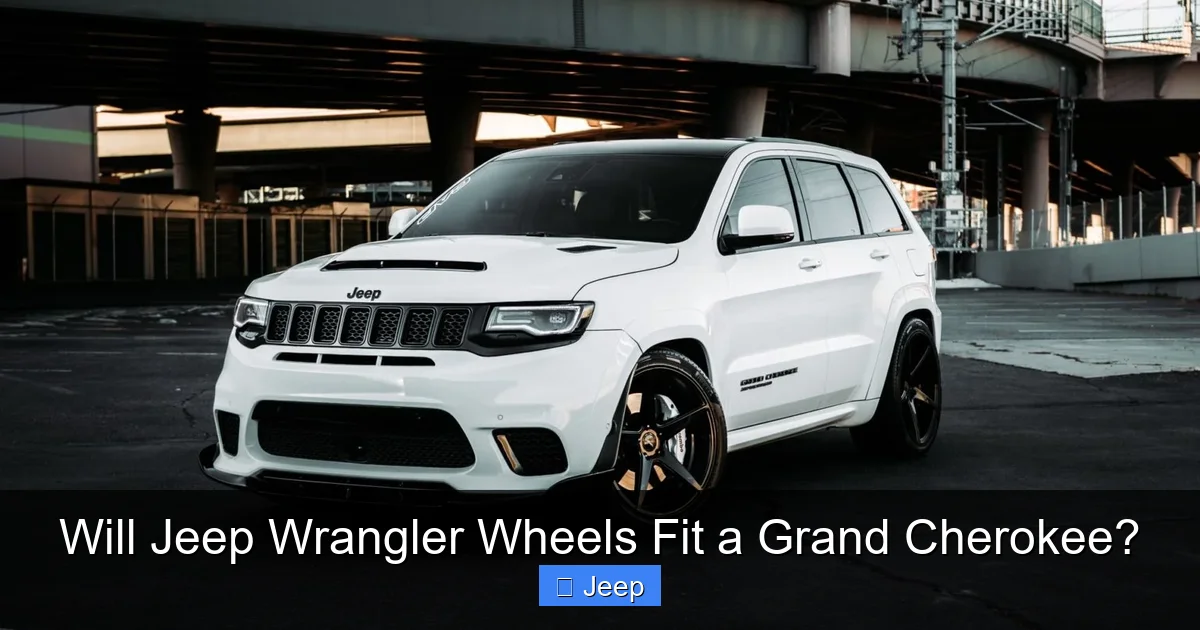
Even if you magically aligned the bolt holes, the wheel would still be unusable. The center bore is the machined hole in the center of the wheel that slides over the vehicle’s axle hub. This hole must match the hub’s diameter closely. The wheel is designed to be centered by this bore, not just the lug nuts. A mismatch here causes severe vibration.
Visual guide about Will Jeep Wrangler Wheels Fit a Grand Cherokee?
Image source: survivaltechshop.com
Wrangler Center Bore Size
Modern Jeep Wrangler JK and JL wheels have a center bore of approximately 62.9 mm. This is designed to fit over the Wrangler’s smaller hub.
Grand Cherokee Center Bore Size
The Grand Cherokee WK2 and WL have a significantly larger hub. Their center bore requirement is approximately 71.5 mm. That’s a difference of nearly a centimeter!
Why a Hub-Centric Fit Matters
If you tried to mount a Wrangler wheel (62.9mm bore) on a Grand Cherokee hub (71.5mm), the wheel would be floating on the studs. It would not be centered on the rotating hub. This causes a terrible, dangerous vibration at any speed, often called “wheel wobble” or “death wobble.” It unevenly stresses the lug nuts, can damage wheel bearings, and makes the vehicle unsafe to drive. To fix this, you would need a hub-centric ring—a plastic or aluminum spacer that fills the gap between the 71.5mm hub and the 62.9mm wheel bore. But again, this is an additional part for a wheel that already won’t bolt on due to the pattern mismatch. You’d need both an adapter for the pattern and a ring for the bore.
Offset, Backspacing, and Clearance Nightmares
Let’s assume you’ve somehow solved the bolt pattern and center bore with a complex set of adapters. Now the wheel is physically on the hub. But will it clear everything? Probably not. This is where offset and backspacing come into play.
Visual guide about Will Jeep Wrangler Wheels Fit a Grand Cherokee?
Image source: m.media-amazon.com
What Are Offset and Backspacing?
Offset is the distance (in millimeters) from the wheel’s centerline to its mounting surface (the pad that touches the hub). It can be positive, negative, or zero. Backspacing is the distance from the back edge of the wheel to the mounting surface. They are related (Backspacing = (Wheel Width / 2) + Offset). Essentially, they determine how far the wheel “sticks out” or “tucks in” relative to the fender and suspension components.
Wrangler vs. Grand Cherokee Geometry
Jeep designs wheels for the specific suspension and brake package of each model. A Wrangler’s offset is generally set for its solid front axle, larger brakes in some trims, and to provide optimal tire clearance for off-road articulation. A Grand Cherokee, with its independent front suspension and different brake caliper design, has a different optimal offset range. A Wrangler wheel’s offset is often more positive (tucking the wheel in) than what a Grand Cherokee might use, but this varies wildly by specific wheel model.
The Rubbing Reality
Installing a wheel with the wrong offset can cause immediate and catastrophic rubbing. You must check for clearance against:
- Brake Calipers & Rotors: The wheel’s spokes must clear the large Grand Cherokee brake calipers, especially on higher trims with Brembo brakes.
- Suspension Components: Control arms, sway bar endlinks, and steering knuckles are all potential contact points.
- Fenders and Liners: Especially during full steering lock or suspension compression (going over a bump).
A Wrangler wheel not designed for the Grand Cherokee’s geometry is highly likely to rub, causing damage to tires, wheels, and suspension parts. You would need to measure meticulously or consult a wheel fitment specialist with your exact Grand Cherokee’s specs and the exact Wrangler wheel model’s offset.
TPMS, Lug Nuts, and The Little Details
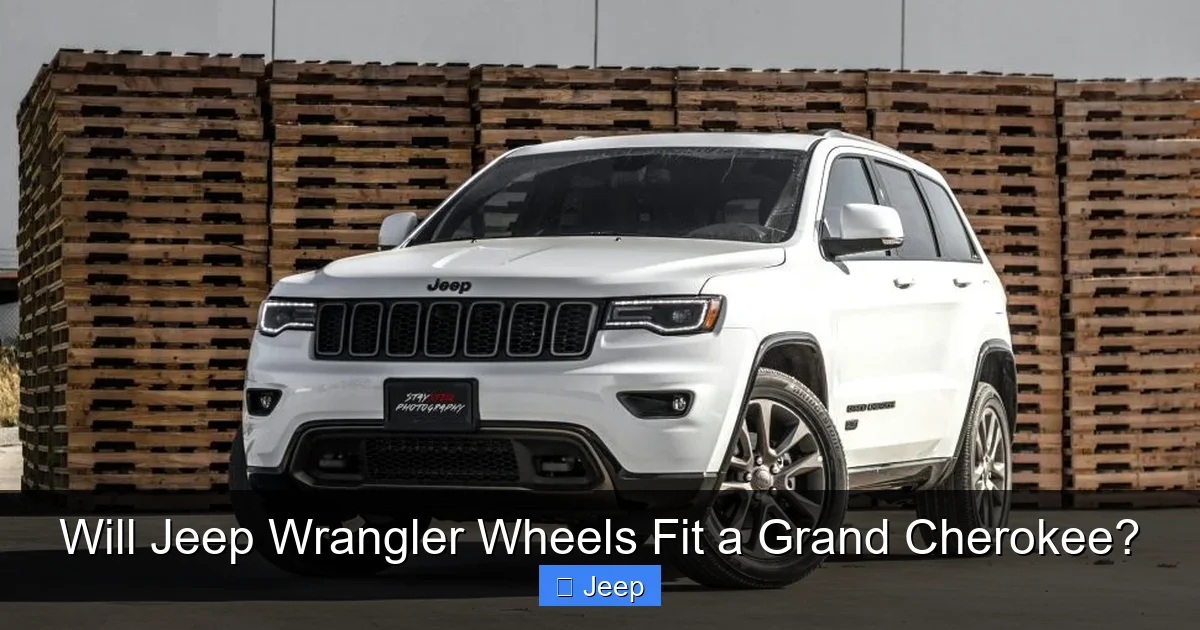
Even if you clear the major hurdles, the devil is in the details. These smaller parts are non-negotiable for a safe, legal, and functional setup.
Visual guide about Will Jeep Wrangler Wheels Fit a Grand Cherokee?
Image source: cartireinflator.com
Lug Nut Seat Type
Wrangler wheels typically use a conical (or tapered) seat lug nut. The nut’s seat is cone-shaped to center the wheel. Some Grand Cherokee wheels (especially older models or certain trims) may use a ball (radius) seat or a mag shank (long, straight). You must use the correct lug nut for the wheel’s seat type. Using the wrong nut (e.g., a ball-seat nut on a conical wheel) means the wheel will not clamp down properly and can loosen catastrophically. You would need to purchase a full set of new, correct lug nuts for the Wrangler wheels.
Tire Pressure Monitoring System (TPMS)
Your Grand Cherokee’s TPMS sensors are mounted inside the valve stem hole of the original wheels. If you move wheels, you must either:
- Transfer the original Grand Cherokee TPMS sensors to the new Wrangler wheels (requires careful disassembly and often new valve stems).
- Use Wrangler-compatible TPMS sensors if the valve stem hole size and style match.
- Have a shop program new sensors to your vehicle’s computer.
A TPMS warning light will illuminate constantly if sensors are missing or incompatible. In some states, this can cause a failed vehicle inspection.
The Adapter/Spacer Solution: A Path of Compromise
Given all these mismatches, the only way to physically mount Wrangler wheels on a modern Grand Cherokee is through the use of wheel spacers with built-in adapter bolts or a two-piece wheel adapter system.
How Wheel Adapters Work
These are essentially thick plates (usually 1.5″ to 2″ thick) that bolt to your Grand Cherokee’s hub with one bolt pattern (5×4.5″) and present a new, different bolt pattern on their outer face (5×5″). You then bolt the Wrangler wheel to this adapter. They often also include the necessary larger center bore, effectively solving the bore mismatch as part of the assembly.
The Major Downsides and Dangers
This is not a recommended modification for most drivers. The downsides are significant:
- Increased Stress: They lengthen the lever arm between the wheel and the hub, putting extreme shear stress on the wheel studs and the adapter itself. This can lead to stud failure.
- Geometry Change: They push the wheel further out, negatively affecting scrub radius, handling, and putting additional load on wheel bearings.
- Quality is Paramount: You must use only the highest-quality, forged aluminum adapters from reputable brands (like Trail Tech, Pacer, etc.). Cheap, cast “dice” spacers are prone to cracking and are deadly.
- Extended Lug Nuts: You will need longer lug nuts to safely thread through the adapter and into the vehicle’s original studs. Using the wrong length is dangerous.
- Legal and Insurance Issues: Some jurisdictions consider wheel spacers/adapter illegal if they cause the wheel to protrude beyond the fender. Insurance may deny a claim if an accident is linked to improper wheel modification.
If you go this route, you must have the entire assembly (adapter, wheel, lug nuts) professionally installed with a calibrated torque wrench. You must also re-torque the lug nuts after a short drive (50-100 miles) and regularly thereafter. This is a commitment to maintenance and heightened awareness.
Practical Examples and Your Best Path Forward
Let’s make this concrete with some real-world scenarios and actionable advice.
Scenario 1: You Have a 2015 Jeep Wrangler Sport S Wheels & a 2020 Jeep Grand Cherokee L
This is a classic mismatch. The Wrangler wheels are 5×5″ with a ~62.9mm bore. The Grand Cherokee is 5×4.5″ with a ~71.5mm bore. Direct fit: Impossible. Your only mechanical solution is a 5×4.5″ to 5×5″ wheel adapter/spacer. You must then address lug nut length, TPMS, and meticulously check for rubbing. Given the Grand Cherokee L’s larger brakes and complex front suspension, rubbing is a very high probability. The cost and risk of the adapter setup will likely exceed the value of the used Wrangler wheels.
Scenario 2: You Have a 2002 Jeep Grand Cherokee WJ & Want Wrangler TJ Wheels
Here’s the golden exception! The WJ Grand Cherokee (1999-2004) and the TJ Wrangler (1997-2006) both share the same 5×5″ bolt pattern. Their center bores are also very close (~62.9mm for Wrangler, ~63.4mm for WJ Grand Cherokee—a tiny, often negligible difference). These wheels will likely bolt on directly. You still must check the offset for rubbing and ensure lug nut seat type matches, but mechanically, it’s a straightforward swap. This is a popular and safe modification within that specific generation pairing.
The Smart Recommendation: Measure Twice, Buy Once
Before spending a dime on wheels, here is your step-by-step plan:
- Identify Your Exact Grand Cherokee: Year, trim, and drivetrain (e.g., 2021 Grand Cherokee Trailhawk).
- Find Its Exact Specifications: Look up its factory bolt pattern, center bore, stock wheel offset, and lug nut size/seat type. Your owner’s manual or a site like Wheel-Size.com is invaluable.
- Identify the Exact Wrangler Wheel: Find the make, model, size (e.g., 17×7.5), offset (e.g., +13mm), and bolt pattern of the specific Wrangler wheel you want.
- Compare Side-by-Side: If the bolt pattern or center bore differs, direct fit is off the table. You are now in adapter territory.
- Consult a Professional: Take your Grand Cherokee and the Wrangler wheel to a reputable, Jeep-specialty wheel and tire shop. They can physically mock it up, check for clearance, and advise on the feasibility and safety of using adapters. This consultation is worth every penny.
Remember, wheels are a critical safety component. A failed wheel at highway speed is a total loss event. It’s almost always smarter and safer to find wheels designed for your Grand Cherokee’s specifications. You can find countless aftermarket and OEM wheels in the correct 5×4.5″ pattern that will give you the look you want without the engineering nightmare.
Conclusion: The Verdict is Clear
So, will Jeep Wrangler wheels fit a Grand Cherokee? For the overwhelming majority of modern Grand Cherokee owners (2011-Present), the answer is a firm no. The incompatible 5×5″ vs. 5×4.5″ bolt pattern is a hard stop. Even if you bridge that gap with adapters, you then face the center bore mismatch, likely offset-related rubbing, and the serious safety compromises that come with wheel spacers. The one notable, safe exception is the cross-generation pairing of a WJ Grand Cherokee (1999-2004) with a TJ Wrangler (1997-2006), which share the same 5×5″ pattern.
The allure of using Wrangler wheels is understandable—they’re abundant and often affordable. But in the world of wheel fitment, “almost fits” is the same as “doesn’t fit.” Your Grand Cherokee’s safety, handling, and legality depend on proper wheel fitment. Your best path is to source wheels with the correct 5×4.5″ bolt pattern and a compatible offset for your specific model year. Invest in a proper fitment from the start. Your tires, your suspension, and most importantly, your safety, will thank you for it. When in doubt, always consult with a trusted Jeep wheel specialist who can give you a definitive, safe answer for your specific vehicle.
Frequently Asked Questions
Will any Jeep Wrangler wheels fit any Jeep Grand Cherokee?
No. Only the specific pairing of a WJ Grand Cherokee (1999-2004) with TJ Wrangler (1997-2006) wheels allows a direct fit, as they share the 5×5″ bolt pattern. All other modern Grand Cherokee (WK2/WL) and Wrangler (JK/JL) combinations have incompatible 5×4.5″ vs. 5×5″ bolt patterns.
Can I use wheel spacers to make Wrangler wheels fit my Grand Cherokee?
Technically yes, using a 5×4.5″ to 5×5″ wheel adapter/spacer. However, this is a significant safety compromise that increases stress on studs, alters handling, and often causes rubbing. It requires high-quality parts, professional installation, and vigilant maintenance. It is not recommended for daily driving.
What is the biggest risk of forcing a mismatched wheel on my Grand Cherokee?
The biggest risk is a catastrophic wheel failure. Using incorrect bolt patterns or low-quality adapters can cause wheel studs to shear or the wheel to separate from the hub, especially under cornering or braking forces, leading to a total loss of vehicle control.
Do I need to worry about the TPMS system if I change wheels?
Absolutely. Your Grand Cherokee’s TPMS sensors must be transferred to the new wheels or replaced with compatible sensors. Without functioning sensors, your TPMS light will stay on, and you may fail vehicle inspection. The valve stem hole size must also match the sensor.
How can I find out my Grand Cherokee’s exact wheel specifications?
Check your vehicle’s owner’s manual or the sticker on the driver’s side door jamb. You can also use reputable online databases like Wheel-Size.com by entering your exact year, make, model, and trim. For absolute certainty, measure the bolt pattern and center bore yourself with the proper tools.
Is it cheaper to buy Wrangler wheels and use adapters or just get correct Grand Cherokee wheels?
When you factor in the cost of high-quality wheel adapters ($200-$400+ for a set), new lug nuts, potential TPMS sensor work, and an alignment check, the total cost often equals or exceeds the price of finding a good used set of correctly patterned Grand Cherokee wheels. The adapter route also carries long-term maintenance and safety costs.
