
How to Start a Jeep Cherokee with a Screwdriver

This guide explains the controversial “screwdriver start” method for older Jeep Cherokee models with traditional ignitions. It is a last-resort technique for genuine emergencies only, carrying significant risks of vehicle damage, legal trouble, and personal harm. Modern Cherokees with push-button start cannot be started this way. Always prioritize legal alternatives like calling a locksmith or using your spare key.
Let’s be absolutely clear from the start: what you’re about to read is not a recommended practice. It’s a description of a destructive, risky, and often illegal maneuver that some people in desperate situations have attempted on older vehicles. The phrase “how to start a Jeep Cherokee with a screwdriver” is a search query born from panic—the moment you realize your keys are locked inside, lost, or the key fob is dead, and you’re stranded. This article exists as an informational warning and a deep dive into the mechanical reality of older Jeep Cherokee ignition systems. Our goal is to arm you with knowledge so you understand exactly why this is a terrible idea and what you should do instead.
The Jeep Cherokee, particularly the iconic KL (2014-2023) and earlier models like the XJ (1984-2001) and KJ (2002-2007), has evolved from a simple, rugged machine to a complex, computer-connected SUV. This evolution is critical. The screwdriver method, if it works at all, belongs to an era of basic mechanical linkages and rudimentary security—think 1990s and early 2000s models. If you own a Cherokee with a traditional, round key that you insert and turn, you might have a mechanical ignition lock cylinder that is, in theory, vulnerable. If your Cherokee has a key fob and a push-button start, stop reading. You cannot start it with a screwdriver. The electronic immobilizer system will physically prevent the engine from cranking, no matter what you do to the ignition button. This article is for a dwindling subset of vehicles on the road today.
Key Takeaways
- Method is for specific older models only: This technique only works on Jeep Cherokee models (typically pre-2014) with a physical key cylinder ignition, not on modern push-button start systems.
- It is a destructive and last-resort tactic: The process involves breaking or manipulating the ignition lock, which will cause permanent damage requiring expensive repairs.
- Legal and insurance consequences are severe: Tampering with a vehicle’s ignition is illegal in most jurisdictions and will void any insurance coverage for theft or damage.
- Safety risks are high: Improper execution can damage the steering column, airbag system, or electrical components, leading to dangerous vehicle failure.
- Legal alternatives always exist: Contacting a professional locksmith, using a spare key, or calling for road-side assistance are the only recommended courses of action.
- Prevention is the best strategy: Always keep a spare key in a secure, known location and consider a key finder tag to avoid lockout situations entirely.
- Modern vehicles are immune: Jeep Cherokee models equipped with keyless entry and push-button start have immobilizer systems that make this mechanical bypass impossible.
📑 Table of Contents
Understanding the Jeep Cherokee Ignition System
To comprehend the “screwdriver start,” you must first understand what you’re trying to bypass. In older Jeep Cherokee models, the ignition lock cylinder is a relatively simple mechanical device. When you insert the correct key, a series of spring-loaded pins and tumblers align, allowing the cylinder to rotate. This rotation is mechanically linked—either directly or through a steering column shaft—to the ignition switch. The switch then sends power to the starter solenoid and ignition system. The security comes from the unique key pattern; without it, the pins block the cylinder’s rotation.
The Mechanical Vulnerability
The vulnerability arises from the fact that the lock cylinder’s primary job is to *prevent* rotation without the key, not to be an unbreakable vault. With enough force applied to the correct point, the cylinder’s housing or the internal components can fracture, break, or be manipulated. The screwdriver method exploits this by attempting to either break the cylinder’s shear pins or apply rotational force directly to the ignition switch linkage *past* the broken lock. It’s a brute-force attack on a low-tech mechanism. This is fundamentally different from the electronic security in modern vehicles, where the key fob’s encrypted signal must be validated by the car’s computer (Powertrain Control Module) before the starter circuit is enabled. No signal, no start—full stop.
Why Modern Cherokees Are Different
Starting with the 2014 KL model refresh, Jeep integrated advanced theft deterrents. The keyless entry and push-button start system (Keyless Enter ‘n Go™) includes an immobilizer. The key fob contains a transponder chip. When you press the start button, the car’s antenna rings the fob, verifying the chip’s code. If the code isn’t present, the engine control module (ECM) refuses to activate the fuel pump and ignition coils. Even if you could jam a screwdriver into the start button recess and mimic the button’s physical press, the ECM would simply ignore the command. The car thinks you’re trying to start it without a valid key, and it will not comply. This electronic handshake is the ultimate barrier.
The Step-by-Step (Theoretical) Process and Its Flaws
What follows is a theoretical breakdown of the steps described in various forums and videos. We present it with heavy caveats: your specific vehicle’s design, the tools used, and sheer luck will determine if this even *temporarily* works. More likely, you will cause thousands of dollars in damage for zero result.
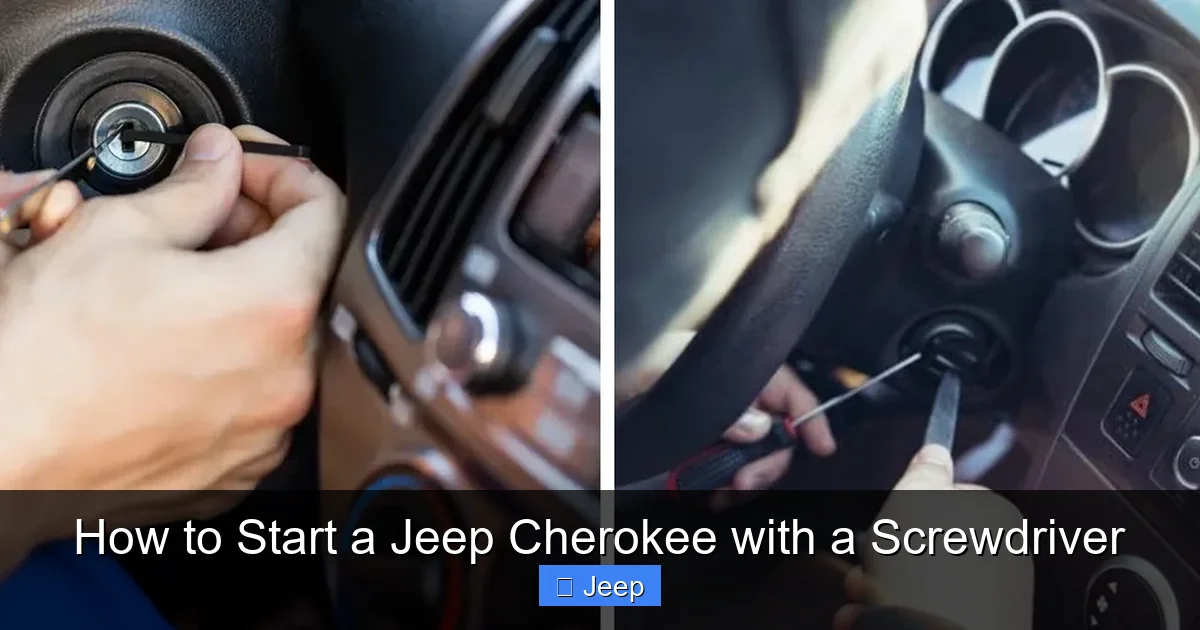
Visual guide about How to Start a Jeep Cherokee with a Screwdriver
Image source: jeepfixes.com
Step 1: Access the Ignition Cylinder
You must first expose the ignition lock cylinder. This usually means removing the plastic steering column covers. This requires screwdrivers anyway—typically Phillips-head—to pop off the clips. Once the covers are off, you’ll see the metal ignition lock cylinder protruding from the column. In some models, there might be a hidden release tab or a shear pin that must be drilled or broken to remove the cylinder entirely. This first step already causes cosmetic and potentially functional damage to your column trim.
Step 2: The “Screwdriver Insertion”
The classic image is jamming a flat-blade screwdriver into the keyhole. The theory is that the screwdriver blade can physically mimic the key’s bitting (the cuts) and apply rotational force. In reality, the screwdriver is a crude, oversized tool. It will likely not align the internal pins correctly. Instead of turning the cylinder, you’ll probably just mash the pins further into the locked position or snap the blade off inside the lock. The force required to shear the internal pins or break the cylinder’s casting is immense and unpredictable.
Step 3: Forcing Rotation
If the screwdriver is inserted and you apply strong, steady torque (with pliers for grip, often), one of two things might happen: the screwdriver breaks, the cylinder housing cracks, or—in a best-case nightmare scenario—the cylinder rotates. But here’s the critical flaw: even if the cylinder turns, it may not be properly connected to the ignition switch mechanism. The linkage could be broken or misaligned from the forced entry. The cylinder might spin freely without engaging the switch. You’d hear a grinding or clicking sound, but the starter won’t engage. You’ve now destroyed your ignition for no gain.
Step 4: The Steering Wheel Lock
This is the final, often overlooked, barrier. Jeep Cherokees have a steering wheel lock that engages when the key is removed. This is a separate mechanical pawl that jams into a slot on the steering column. If you somehow start the engine without the key in the “run” position, this lock is almost certainly still engaged. You will not be able to turn the steering wheel. The car might crank and even start, but it will be utterly immobile, locked straight ahead. Disengaging this lock usually requires the key to be in the ignition and turned to the “accessory” or “on” position to retract the pawl. Your screwdriver maneuver likely hasn’t addressed this at all.
Significant Risks and Consequences
The list of things that can go wrong is long, and the consequences are severe. This isn’t just about a scratched column.
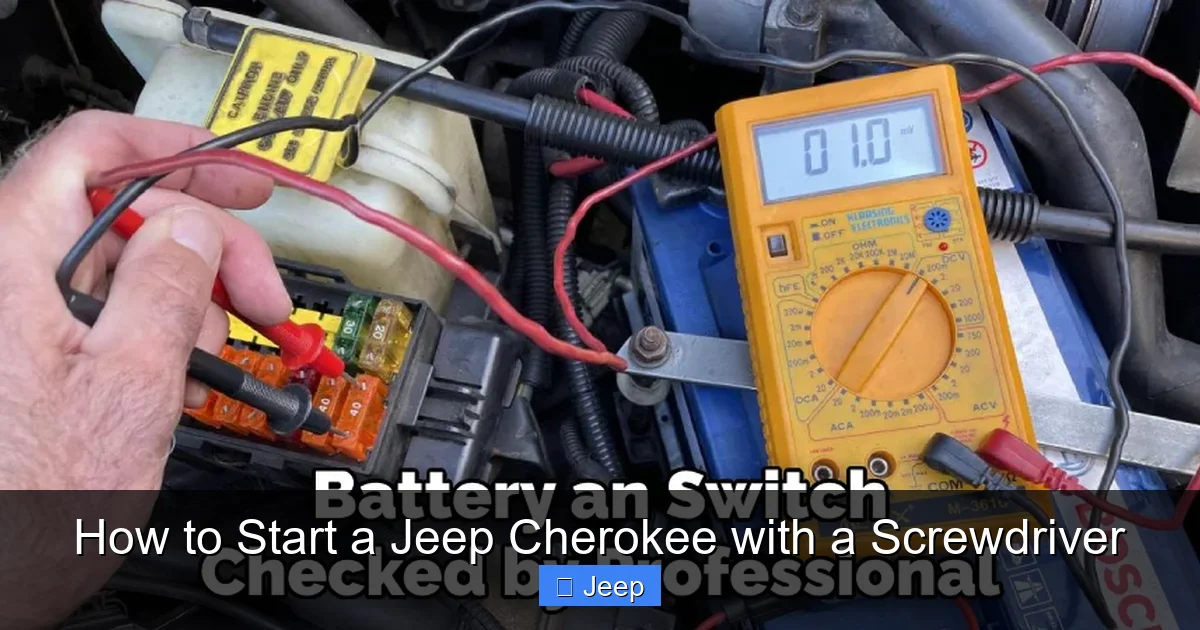
Visual guide about How to Start a Jeep Cherokee with a Screwdriver
Image source: jeepfixes.com
Costly and Extensive Damage
The most common outcome is a completely destroyed ignition lock cylinder. The housing is cracked, the tumblers are shattered, and the assembly is jammed. Replacing this isn’t a simple part swap. On many vehicles, the ignition cylinder is part of a larger steering column assembly or is secured with unique, theft-deterrent bolts that require special tools. You may need to replace the entire steering column, which can cost $1,000+ in parts alone, plus many hours of labor. You’ve also likely damaged the plastic shrouds and possibly the wiring harness for the airbag (if equipped) or steering wheel controls. A $50 locksmith call becomes a $2,000 repair bill.
Legal and Insurance Nightmares
Let’s state the legal reality: you are intentionally damaging property to operate a motor vehicle. If a police officer sees you doing this, you will be detained. You will need to prove ownership of the vehicle on the spot. Even if you own the car, you are committing acts that could be interpreted as attempted theft (if seen out of context) or malicious mischief. If the vehicle is stolen later, your insurance company will investigate the cause of the pre-existing damage. They will almost certainly deny any claim, citing that you deliberately compromised the vehicle’s security system, thereby voiding your coverage for theft. You could be held financially responsible for the total loss of your own vehicle.
Safety System Compromise
Modern steering columns house critical safety components: the airbag clock spring (a coiled electrical connector that allows the steering wheel to turn while the airbag remains connected), steering angle sensors, and wiring for horn and cruise control. A violent screwdriver attack can sever these components. A damaged clock spring will trigger the airbag warning light and, in a collision, the airbag may not deploy. A damaged steering angle sensor can disable electronic stability control (ESC), making the vehicle unpredictable in emergency maneuvers. You are literally sawing through the heart of your car’s safety systems.
Legal and Practical Alternatives: What You Should Actually Do
Panic is the enemy. Step back, take a breath, and choose a path that doesn’t destroy your asset or land you in jail. The solutions are readily available.

Visual guide about How to Start a Jeep Cherokee with a Screwdriver
Image source: jeepfixes.com
Call a Professional Locksmith
This is the gold-standard solution. A licensed automotive locksmith has tools and knowledge that don’t involve destruction. They can often pick the lock cylinder (if it’s a simple warded or pin-tumbler lock) to gain entry and then either create a new key on the spot or use a specialized tool to turn the ignition without the original key. Some locksmiths use “key codes” stamped on the lock cylinder to cut a new key. This service might cost $100-$250, but your car is left intact and operational. For a Jeep Cherokee, a locksmith familiar with Chrysler/Jeep systems is your best bet. You might also find guides on how to start a Dodge Journey with a manual key helpful, as the principles for accessing and using a manual key slot in an emergency are similar across Stellantis brands.
Use Your Spare Key
This is why you have a spare. It should be in a known, secure location—not in the glovebox of the car you just locked. Common smart places include with a trusted neighbor, in a secure lockbox at home, or in your wallet/purse. If your spare is a simple metal key, you’re done. If your spare is a key fob, ensure its battery is good. If the spare fob is also dead, most key fobs have a hidden physical key inside. You’ll need to use that to unlock the door, and then you may find a hidden emergency key slot in the ignition or a port to place the fob for starting. How to start a car with the key fob when the battery is low often involves this hidden procedure—check your owner’s manual for the exact method for your Cherokee’s year.
Roadside Assistance and Dealer Services
If you have AAA, an insurance-sponsored roadside plan, or a manufacturer’s roadside assistance plan (like Jeep’s), call them. They can often send someone to unlock your door. For the ignition, they may have a preferred locksmith or, in some cases, a dealer can dispatch a technician with a key programmer. While waiting, ensure you’re in a safe, legal parking spot. If you’re truly stranded in an unsafe area, your priority is getting to safety, not saving the car. Call a tow truck to a secure location first.
The “Dead Key Fob” Procedure
If your issue is a dead key fob battery in a modern Cherokee with push-button start, the solution is not a screwdriver. Your owner’s manual will detail a backup start procedure. This typically involves holding the key fob against the start button or a designated spot on the center console (often marked with a key symbol). The car’s antenna can read the fob’s chip at very close range, even with a dead battery, to authenticate and start. This is a designed-in, non-destructive failsafe. Familiarize yourself with this procedure now. For other brands, you might look at guides like how to start a keyless car with a key to understand the general principle of emergency fob placement.
Prevention: Avoiding the Lockout Nightmare
The best way to “start a Jeep Cherokee with a screwdriver” is to never be in a situation where you’d consider it. Prevention is cheap and easy.
Spare Key Strategy
Have at least two spare keys. One should be with a family member or trusted neighbor who is home during the day. The second can be in a secure, magnetized lockbox attached to your vehicle’s underside (in a location you know is safe from corrosion and theft) or in a secure location at your workplace. Never hide a key on the car itself in an obvious spot. For key fobs, consider a spare that is a simple metal key only, which you keep in your wallet. This allows you to at least unlock the door to retrieve the spare fob from inside.
Key Finder Technology
Attach a Bluetooth tracker like a Tile or Apple AirTag to your key fob. These devices allow you to locate your keys via a smartphone app if they are lost somewhere in your home or immediate vicinity. You can also set up alerts if you move away from your keys. This won’t help if they’re locked in the car, but it solves the “I can’t find my keys anywhere” problem that leads to frantic searches and potential lockouts.
Battery Maintenance
A dead key fob battery is a common cause of lockouts. These batteries (usually CR2032) last 1-2 years. Set a calendar reminder to replace them proactively. You can often find the battery type in your owner’s manual. Keep spare batteries in your glovebox. If your Cherokee has a physical key slot, ensure that key is in good condition and not worn down, as a worn key won’t turn the lock.
Develop a Routine
Create a habit. When you exit the vehicle, consciously check for your keys before closing the door. Make it a physical pat-down: pocket, purse, bag. When you get home, have a designated bowl or hook for your keys. Consistency prevents the mental slip that leads to locking them in.
Conclusion: Knowledge is Power, Not Permission
You now understand the intricate mechanics behind the myth of starting a Jeep Cherokee with a screwdriver. You know it’s a destructive act targeting outdated lock cylinders, irrelevant to modern models, and fraught with peril. The potential for causing thousands in damage, facing legal repercussions, and compromising your safety systems makes this a path to avoid at all costs. The information here is not an endorsement; it’s a deterrent. True preparedness means having a spare key, knowing your vehicle’s emergency procedures, and having the number of a reputable locksmith saved in your phone. Invest $10 in a spare key cut now to save yourself from a $2,000 mistake and a day of sheer panic. When in doubt, never force anything. Call a professional. Your Jeep Cherokee—and your wallet—will thank you.
Frequently Asked Questions
Is it actually possible to start a Jeep Cherokee with just a screwdriver?
It is theoretically possible only on very old Jeep Cherokee models (typically pre-2010) with a simple mechanical key cylinder ignition. It involves breaking the lock to force rotation, causing permanent damage. It will not work on any Cherokee with a key fob and push-button start due to electronic immobilizers.
Will this method damage my Jeep Cherokee?
Yes, absolutely and permanently. The process will destroy the ignition lock cylinder, likely damage the steering column covers and wiring, and can compromise the steering wheel lock and airbag systems. Repairs can easily exceed $1,000.
Is it legal to start my own car with a screwdriver if I lost the keys?
While you own the car, intentionally damaging its ignition system to operate it can still be interpreted as a crime (like malicious mischief or tampering) if observed by law enforcement. It also violates your insurance policy’s terms, as you deliberately compromised the vehicle’s security, which can lead to a denial of any future theft or damage claim.
What should I do if I lock my keys in my Jeep Cherokee?
Your first call should be to a professional automotive locksmith. They can often unlock the door and create a new key without damage. As a second option, use your pre-arranged spare key. If you have roadside assistance (AAA, insurance plan), call them for lockout service. Never attempt destructive entry.
My Jeep Cherokee has a keyless push-button start. Can I still use the screwdriver method?
No. The screwdriver method is a mechanical bypass for a mechanical lock. Your Cherokee’s push-button start system is controlled by an electronic immobilizer that requires a validated encrypted signal from the key fob. Even if you could break the ignition button, the car’s computer will not allow the engine to start without that signal.
What is the safest, most reliable emergency method for a keyless Jeep Cherokee?
Consult your owner’s manual for the “Dead Key Fob” start procedure. This usually involves holding the key fob directly against the start button or a designated spot on the center console. The fob’s internal chip can be read at very close range even with a dead battery. Always carry a spare, functional key fob as your primary backup.
