
Does the Jeep Wrangler 2.0 Turbo Require Premium Gas

No, the Jeep Wrangler 2.0 Turbo does not strictly require premium gas for normal driving, but it is highly recommended by the manufacturer for optimal performance and efficiency. The engine’s turbocharger and high compression ratio are designed to run on 91 octane or higher. Using regular 87 octane fuel can cause engine knock, reduce power and fuel economy, and potentially cause long-term damage. For daily commuting, you *might* get away with mid-grade, but for towing, high altitudes, or hot climates, premium is essential. Always consult your owner’s manual.
So, you’ve got the keys to a new (or new-to-you) Jeep Wrangler with the 2.0-liter turbocharged engine. It’s a fantastic little powerhouse, offering a huge jump in power and efficiency over the old 3.6L V6. But then you pull up to the pump and face the eternal question: “Do I really have to put the expensive premium stuff in here?” It’s a common point of confusion and a major factor in the true cost of ownership. Let’s settle this debate once and for all with a clear, no-nonsense breakdown of what your Wrangler’s turbo engine truly needs.
The short answer, which we’ll unpack in detail, is that while your Wrangler 2.0 Turbo can physically run on regular 87 octane fuel, it absolutely should not if you care about performance, longevity, and even your wallet in the long run. Jeep’s engineers designed this engine with specific parameters in mind, and premium fuel is a critical part of that equation. Ignoring that recommendation isn’t just a minor optimization—it’s a compromise that triggers a chain reaction of negative effects. Think of it like putting budget oil in a high-performance watch; it might run for a while, but it’s not built for that environment.
Key Takeaways
- Manufacturer Recommendation is Premium: Jeep officially recommends 91 octane or higher for the 2.0L Turbo Wrangler to achieve the advertised horsepower and torque figures.
- Engine Design Demands Higher Octane: The turbocharger forces more air into the cylinders, increasing pressure and temperature, which makes the fuel more prone to premature ignition (knock) if low-octane fuel is used.
- Using Regular 87 Octane Risks “Knock”: The engine’s computer will detect knock and pull timing to protect itself, resulting in noticeable power loss, worse fuel economy, and a “sluggish” feeling.
- Long-Term Damage is Possible: Consistent operation on low-octane fuel, especially under load (towing, hills), can lead to piston and cylinder head damage over time due to persistent, uncontrolled knock.
- Mid-Grade (89 Octane) is a Compromise: It may be acceptable for light-duty, sea-level driving but offers no performance benefit and still risks knock under stress. It’s not an official recommendation.
- Fuel Economy May Suffer with Regular: The power loss often leads drivers to press the throttle more, negating any cost savings from cheaper regular gas. Premium often delivers the stated MPG.
- Warranty Concerns: While using regular gas won’t void your entire warranty, damage directly attributable to using fuel below the recommended octane rating could be denied coverage.
📑 Table of Contents
- Understanding the Beast: The Jeep Wrangler 2.0L Turbo Engine
- What Happens Inside Your Engine When You Use Regular Gas
- Premium vs. Regular: A Closer Look at Octane and “Top Tier”
- Cost-Benefit Analysis: Is Premium Gas Worth It?
- Real-World Scenarios: When Premium is Non-Negotiable
- Debunking Myths and Addressing Concerns
- The Verdict and Our Clear Recommendation
Understanding the Beast: The Jeep Wrangler 2.0L Turbo Engine
To understand why fuel type matters so much, we need to look under the hood. The 2.0-liter turbocharged four-cylinder (often called the “Turbo” or “2.0T”) is a marvel of modern engineering. It uses a turbocharger—a turbine powered by exhaust gases—to force significantly more air into the engine’s cylinders than a naturally aspirated engine could draw in on its own.
The Magic and Stress of Turbocharging
More air means you can inject more fuel and burn more efficiently, creating a huge burst of power (270 horsepower and 295 lb-ft of torque in most applications) from a small, lightweight package. However, this process creates immense pressure and heat inside the combustion chamber. The air gets so hot from compression that it can actually ignite the fuel mixture before the spark plug fires. This is called “pre-ignition” or “detonation,” commonly known as “engine knock.”
Knock is the enemy. It creates a metallic pinging sound and causes violent, uncontrolled pressure spikes that can literally hammer pistons, rods, and bearings into submission. This is where octane rating comes in. Octane is a measure of a fuel’s ability to resist this spontaneous ignition under pressure. Higher octane fuel (91+) is more resistant to knock. The 2.0T’s high compression ratio combined with boost pressure from the turbo creates a perfect storm that demands this knock-resistant fuel.
What the Official Manual Says
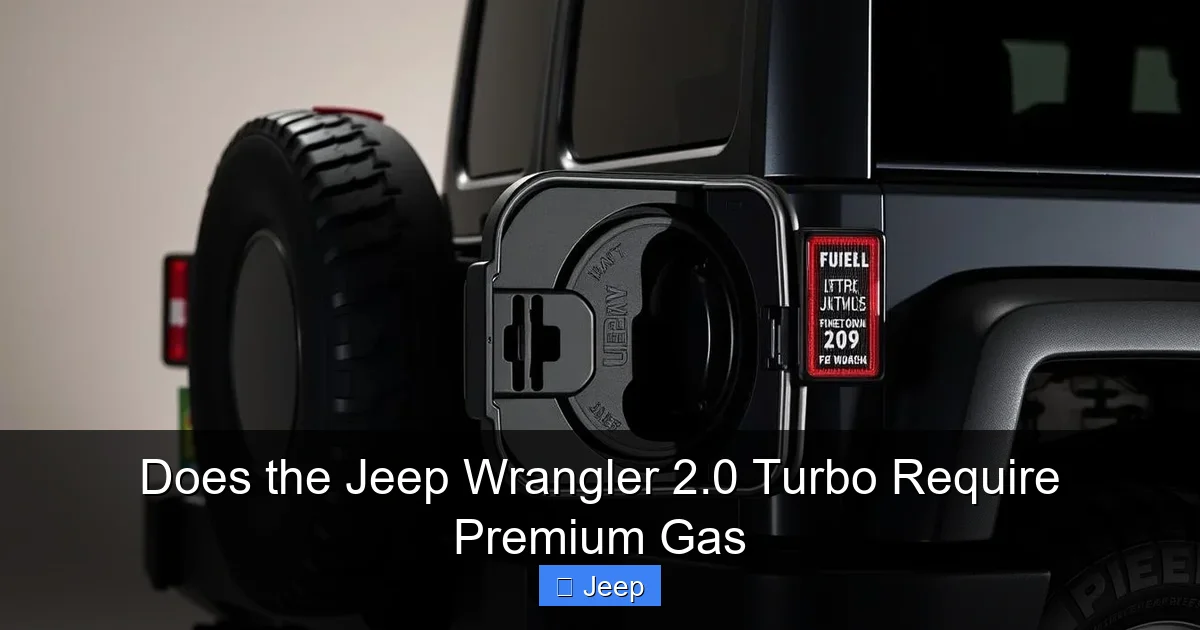
This isn’t speculation. Open your Jeep Wrangler owner’s manual to the “Fuel Requirements” section. It will state clearly: “Use premium unleaded fuel with an octane rating of 91 (R+M)/2 or higher for best performance and economy.” Notice the language: “for best performance and economy.” It doesn’t say “required to run,” but it explicitly states that to get the power, torque, and miles per gallon that Jeep advertised and that the engine management system is calibrated for, you must use premium. Using lower octane fuel forces the engine’s computer to make a series of compromises to protect itself, which we’ll explore next.
What Happens Inside Your Engine When You Use Regular Gas
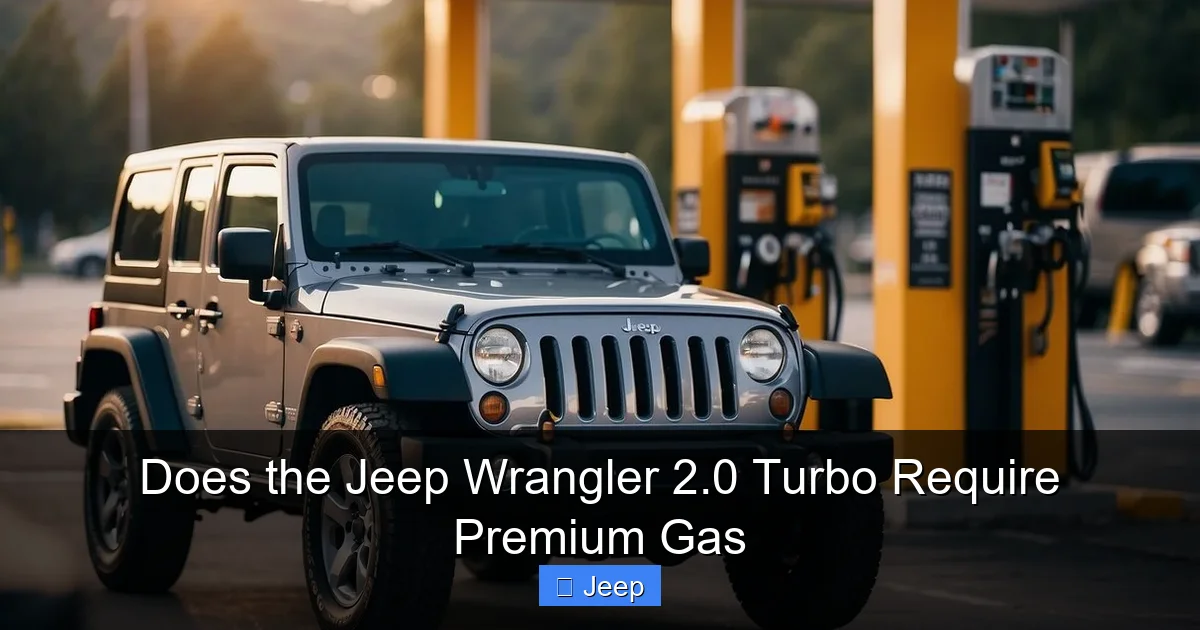
So, you ignore the sticker on the fuel door and the manual’s advice. You put in 87 octane. What actually happens? Your Wrangler’s engine control unit (ECU) is constantly listening for knock via sensors in the engine block. The moment it detects the telltale vibrations of detonation (which will happen under acceleration, load, or high ambient temperatures), it goes into protective mode.
Visual guide about Does the Jeep Wrangler 2.0 Turbo Require Premium Gas
Image source: koala.sh
The ECU’s Defense: Retarding Ignition Timing
The primary weapon is “retarding ignition timing.” Instead of sparking the plug at the optimal moment for maximum power, the ECU delays the spark. This gives the piston more time to compress the air-fuel mixture before ignition, reducing peak cylinder pressure and temperature, thereby preventing knock. The side effect? A massive drop in power and efficiency. You’ll feel it as a lack of response, a “flat” acceleration, and the need to floor the throttle to keep up with traffic. Your 270-horsepower engine suddenly feels like it has 220. The turbo’s spool feels lazy.
Furthermore, to combat knock, the ECU may also lean out the fuel mixture slightly or reduce turbo boost pressure (a setting often called “wastegate duty cycle”). All these adjustments directly contradict the engine’s high-performance tuning. You are no longer driving the vehicle Jeep designed; you’re driving a detuned, economy-focused version of it that still has to haul around the weight of a powerful turbo engine.
The Real-World Symptoms You’ll Notice
- Pinging/Knocking Sound: A metallic rattle under acceleration or load, especially on hot days or when climbing hills. This is the sound of your engine damaging itself. If you hear this consistently, switch to premium immediately.
- Reduced Power and Turbo Lag: The vehicle feels sluggish. The turbocharger doesn’t spool as quickly or as strongly because boost is being limited.
- Worse Than Expected Fuel Economy: Counterintuitively, you might see lower MPG. To compensate for the power loss, you press the accelerator pedal further and more often, consuming more fuel. The engine also runs less efficiently in its detuned state. You’re paying for regular gas but getting worse mileage than the premium-fuel EPA estimates, often making the cost-per-mile higher.
- Check Engine Light: Persistent knock can trigger a diagnostic trouble code (like P0300 – Random/Multiple Cylinder Misfire Detected), illuminating your check engine light.
Premium vs. Regular: A Closer Look at Octane and “Top Tier”
Not all premium gas is created equal, and octane is just one piece of the puzzle.
Visual guide about Does the Jeep Wrangler 2.0 Turbo Require Premium Gas
Image source: vehiclebright.com
Octane Rating: 87 vs. 89 vs. 91+
Octane rating measures a fuel’s knock resistance. Regular is typically 87, mid-grade 89, and premium 91 or 94 (depending on region and brand). For the 2.0T, 91 is the target. Some “premium” fuels are only 89 octane—check the pump. The difference between 87 and 91 is significant for your turbo engine. The difference between 91 and 94 is minimal for this application, though some high-end brands (like Shell V-Power, Chevron Techron) use additional detergent packages.
The “Top Tier” Detergent Difference
Beyond octane, look for the “Top Tier” designation on the pump. This is a standard created by automakers (including Fiat Chrysler, now Stellantis) because the federal government’s minimum detergent requirements are too low for modern, direct-injection engines like the 2.0T. Top Tier fuels contain a significantly higher level of cleaning additives that help prevent carbon buildup on intake valves and fuel injectors. Carbon buildup is a major cause of poor performance, rough idle, and increased emissions in turbocharged GDI engines. Using Top Tier premium gas is a simple, effective way to keep your engine clean. For more on how fuel quality impacts engine health across brands, you can see discussions around other turbocharged vehicles, like the analysis on whether a Subaru turbo needs premium gas, which highlights similar principles of detergents and knock resistance.
Cost-Benefit Analysis: Is Premium Gas Worth It?
Let’s talk numbers. As of recent averages, premium might cost 50-80 cents more per gallon than regular. Is that extra cost justified? Let’s do the math.
Visual guide about Does the Jeep Wrangler 2.0 Turbo Require Premium Gas
Image source: darcarschryslerjeepdodgeofmarlowheights.com
The Performance and Protection Argument
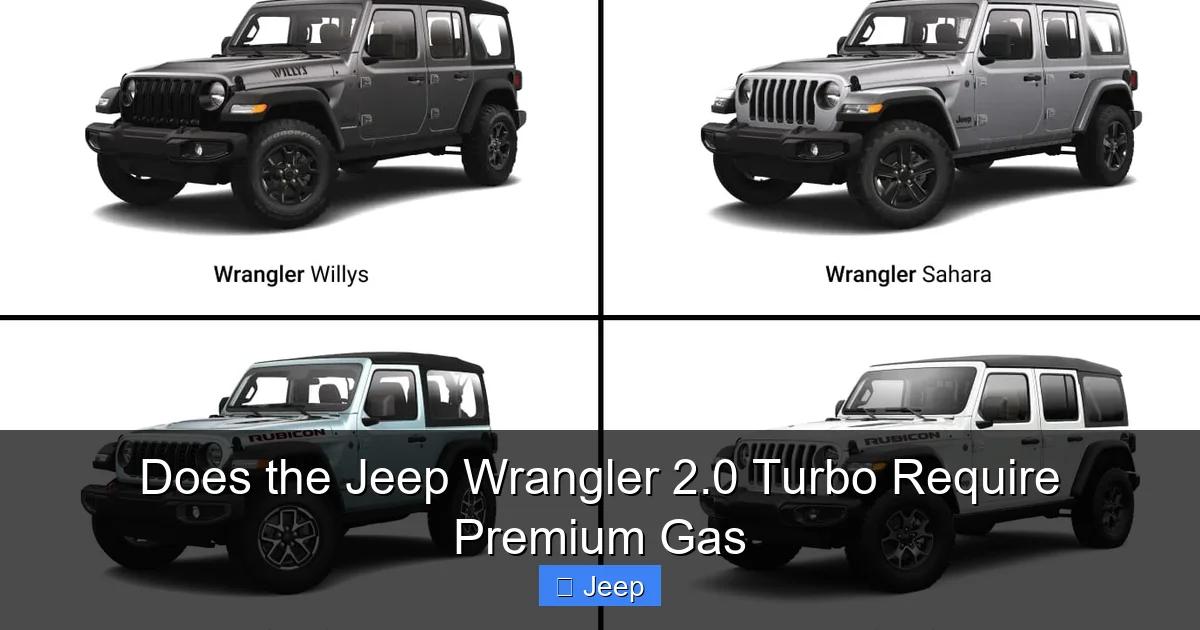
First, you are buying the performance you paid for. The 2.0T’s impressive power and torque curve is calibrated for premium. With premium, you get the quick, responsive driving experience, the strong passing power, and the towing capacity (up to 3,500 lbs) that was advertised. With regular, you lose a tangible amount of that capability. You’re effectively paying for a sports car engine and neutering it.
Second, and more importantly, you’re protecting a very expensive asset. A replacement engine or major internal repair for a turbocharged four-cylinder can easily cost $5,000-$8,000+. The potential for long-term damage from consistent knock is not a risk worth taking to save a few dollars per fill-up. You are investing in the longevity and reliability of your $30,000+ vehicle.
The Fuel Economy Calculation
Let’s use hypothetical but realistic numbers. Suppose:
- Premium costs $4.00/gallon, Regular costs $3.30/gallon (a $0.70 difference).
- With premium, you achieve the EPA-estimated 22 MPG (combined).
- With regular, due to power loss and inefficient tuning, you achieve only 20 MPG.
Drive 1,000 miles:
- Premium: 1,000 / 22 = 45.45 gallons. Cost: 45.45 * $4.00 = $181.80.
- Regular: 1,000 / 20 = 50 gallons. Cost: 50 * $3.30 = $165.00.
On paper, regular saves $16.80 per 1,000 miles. But you’ve sacrificed performance and risked engine wear. Now, what if the MPG drop is less severe, say 21 MPG? Then regular costs 47.62 * $3.30 = $157.15, a savings of just $24.65. Is that savings worth the risk and the loss of driving enjoyment? For most Wrangler owners, the answer is no. The Jeep with the best gas mileage is often the 4xe hybrid, but for turbo models, premium is key to hitting those efficient targets.
Real-World Scenarios: When Premium is Non-Negotiable
There are specific driving conditions where using anything less than 91 octane is asking for trouble, regardless of what you might get away with on a flat highway at sea level.
Towing and Hauling
If you’re using your Wrangler to tow a trailer, jet ski, or haul a heavy load in the cargo area, you are placing the engine under significant load. This increases cylinder pressures and temperatures dramatically. The risk of knock with 87 octane under these conditions is extremely high. You will absolutely feel the power loss, and you are courting serious engine damage. Premium is mandatory for towing.
High Altitudes and Hot Climates
Air density decreases with altitude. To compensate, the turbo has to work harder (higher boost pressure) to force in the same amount of air, increasing heat and pressure. Similarly, in very hot weather, intake air temperatures are higher, which also increases the likelihood of knock. In places like Denver or Phoenix in summer, premium becomes even more critical. The engine’s knock sensors are working overtime.
Aggressive Driving and Performance
If you enjoy the Wrangler’s surprising performance—hard acceleration, passing on two-lane roads—you are creating the exact conditions that demand premium fuel. The moment you ask for full throttle, the turbo spools, cylinder pressures soar, and 87 octane will likely cause the ECU to pull timing aggressively. You’ll feel a sudden, frustrating loss of power right when you need it most.
Debunking Myths and Addressing Concerns
Let’s clear up some common misinformation.
“My Friend Uses Regular and It’s Fine!”
This is the most common anecdote. Yes, an engine can *survive* on regular for a long time. The knock control system is robust. But “fine” is subjective. Your engine is consistently running in a protected, low-power state. You are accepting reduced performance, potentially worse fuel economy, and the cumulative stress of operating outside its optimal design parameters. It’s like running a marathon every day in shoes that are a size too small—you might not break an ankle today, but you’re causing long-term damage and discomfort.
“Will It Void My Warranty?”
Stellantis (Jeep’s parent company) states that using fuel below the recommended octane rating is not a warranty violation in itself. However, if an engine failure occurs and the service technician determines the root cause was damage from sustained engine knock due to using fuel below 91 octane, that specific repair could be denied. The burden of proof would be on them, but it’s a risk. Keeping your receipts (showing premium purchases) can be a simple way to demonstrate proper maintenance if a major dispute arises.
“What About ‘Flex Fuel’ or Other Ethanol Blends?”
The 2.0T is not a flex-fuel vehicle. It is designed for standard gasoline. E-85 (85% ethanol) has a higher octane rating (~105) but also has about 30% less energy content by volume. Your ECU is not calibrated for the different fuel flow rates of E-85. Using it can cause lean conditions, poor performance, and check engine lights. Stick to 91+ octane gasoline.
The Verdict and Our Clear Recommendation
After this deep dive, the path is clear. For your Jeep Wrangler 2.0 Turbo:
- For Daily Driving in Mild Conditions: You can use 89 octane (mid-grade) and likely avoid immediate, catastrophic knock. You will still experience some power loss and reduced efficiency compared to premium. It’s a compromise, not a recommendation.
- For All Other Conditions (and for True Performance): Use 91 octane (or higher) Top Tier premium gasoline. This is what the engine is engineered for. It delivers the power, the torque, the fuel economy, and the engine cleanliness that justify the turbo’s existence and protect your investment.
Think of premium fuel as an insurance policy and a performance enhancer rolled into one. The slight extra cost per gallon is the price of admission to the full, intended Wrangler 2.0 Turbo experience. Skimping on fuel is one of the few false economies in the automotive world—the savings are minimal, and the potential costs (in performance, economy, and repairs) are enormous. Fill up with confidence, knowing you’re treating your turbocharged Wrangler exactly as its makers intended.
Frequently Asked Questions
Can I put regular 87 octane gas in my Jeep Wrangler 2.0 Turbo?
You can, but you shouldn’t. The engine will run, but its computer will detect knock and drastically reduce performance and fuel economy to prevent damage. You will lose the power and efficiency the turbo engine is known for.
What happens if I accidentally use regular gas once?
A single tank of 87 octane isn’t likely to cause immediate harm. The knock control system will compensate. However, you will notice a significant drop in power and possibly worse MPG. Refill with premium as soon as possible. Don’t make a habit of it.
Is mid-grade (89 octane) a safe middle ground?
It’s safer than regular and may be acceptable for light-duty, sea-level driving. However, it is not the manufacturer’s recommendation. Under load (towing, hills, heat), you may still experience knock and power reduction. It offers no performance benefit over premium.
Will using regular gas damage my turbocharger?
Indirectly, yes. Persistent engine knock from low-octane fuel creates shockwaves that can damage pistons, rings, and cylinder walls. A failing piston or ring can send debris through the turbo, destroying it. The turbo itself is also stressed by the higher exhaust gas temperatures that can result from inefficient combustion.
Does using premium gas improve gas mileage in the Wrangler 2.0 Turbo?
Yes, often significantly. Because the engine operates at its optimal, efficient calibration with premium, you’ll typically achieve or exceed the EPA MPG ratings. With regular, the power loss leads to heavier throttle use, and the retarded timing reduces efficiency, often resulting in MPG worse than the premium-fuel estimate.
My Wrangler has a “Check Engine Light” after using regular gas. Is it serious?
It could be. The light may be triggered by a knock-related code (like P0300) or a fuel trim sensor issue. First, fill the tank with premium gas and drive it. If the light goes off after a few drive cycles, it was likely a temporary adaptation. If it persists, have a dealer or mechanic read the codes. Continued operation with the light on could indicate a problem needing attention.
