
How to Adjust the Side Mirror on a 2008 Jeep Wrangler

Properly adjusting the side mirrors on your 2008 Jeep Wrangler is essential for eliminating blind spots and ensuring safe driving. This guide covers both manual and power mirror adjustments, the correct positioning technique, and troubleshooting common issues. Follow these detailed steps to optimize your visibility and drive with confidence on and off the road.
Key Takeaways
- Manual vs. Power: Most 2008 Wranglers have manual mirrors, but some models feature power adjustment; identify your type first.
- Correct Positioning: Side mirrors should be adjusted to reduce blind spots, often using the “V” method where the horizon is near the center.
- Blind Spot Elimination: Proper adjustment can minimize side blind spots, but always check over your shoulder before lane changes.
- Regular Maintenance: Clean mirrors regularly and inspect mounts for looseness, especially after off-road driving.
- Safety First: Adjust mirrors only when the vehicle is parked and stationary to avoid accidents.
- Troubleshooting: Loose mirrors may need tightened bolts; damaged glass requires replacement, similar to procedures for other vehicles like the Dodge Ram 1500.
- Optimal Setup: Adjust mirrors while seated in your normal driving position for the most accurate coverage.
📑 Table of Contents
- Why Proper Side Mirror Adjustment Matters for Your Wrangler
- Understanding Your 2008 Jeep Wrangler’s Side Mirror System
- Step-by-Step Guide to Manual Mirror Adjustment
- Power Mirror Adjustment (If Equipped)
- The Science of Mirror Positioning: Eliminating Blind Spots
- Troubleshooting Common Mirror Issues
- Maintenance and Care for Long-Lasting Mirrors
- Conclusion: Your Clear View Awaits
Why Proper Side Mirror Adjustment Matters for Your Wrangler
Let’s be real: driving a 2008 Jeep Wrangler is an absolute blast. That open-air feel, the commanding view of the road, and the go-anywhere attitude are what make these rigs special. But that same open design, especially with the doors off, can create some serious blind spots. That’s where your side mirrors come in. They’re not just there for show—they’re critical safety tools. Properly adjusted mirrors dramatically reduce the chance of a side collision when changing lanes or merging. For a Wrangler, which often sees both highway cruising and rocky trails, getting those mirrors right is non-negotiable. Whether you have the classic manual adjustment or a power mirror switch, the goal is the same: maximize your field of vision without having to twist your body awkwardly. In this guide, we’ll walk through everything you need to know to adjust the side mirror on a 2008 Jeep Wrangler, step by step.
Understanding Your 2008 Jeep Wrangler’s Side Mirror System
Before we start twisting knobs, it helps to know exactly what you’re working with. The 2008 Wrangler came in several trims—Sport, Sahara, and Rubicon—and the mirror setup could vary. Most base Sport models were equipped with manual mirrors, while higher trims often had power-adjustable mirrors. Some even had optional heated mirrors for those cold mornings. Let’s break down the components so you can identify your system.
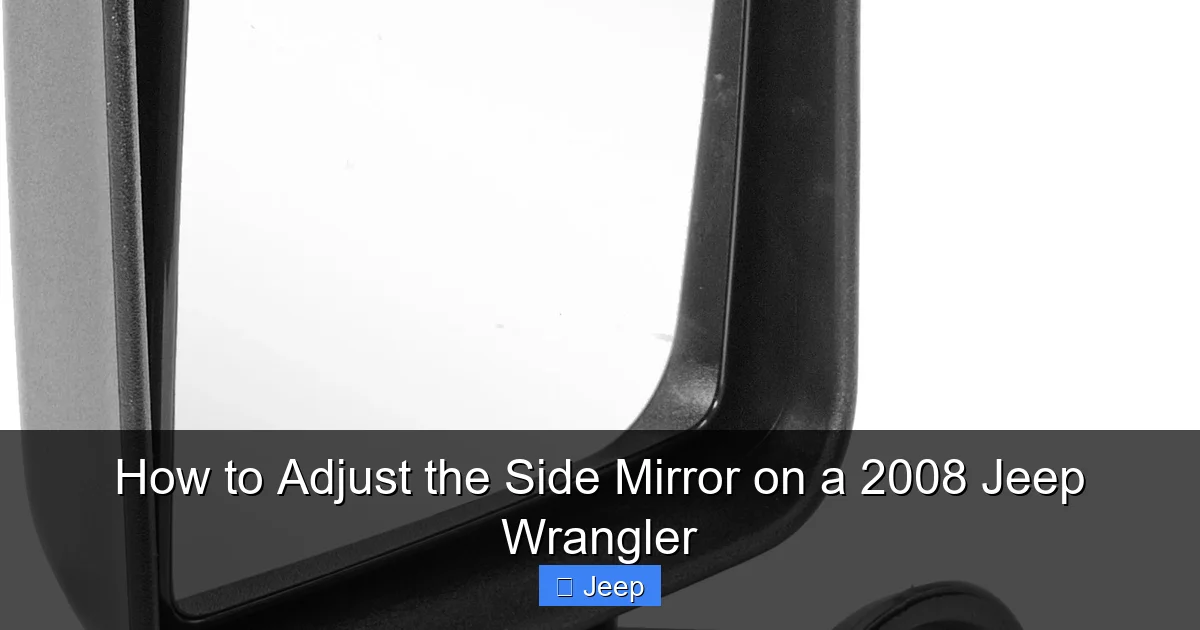
Visual guide about How to Adjust the Side Mirror on a 2008 Jeep Wrangler
Image source: quadratec.com
Manual vs. Power Mirrors: What You Have
Take a look at your driver’s door or the mirror housing itself. If you see a small joystick or a switch panel on the door armrest with directional arrows, you have power mirrors. If you instead see a rigid arm with a small lever or a dial right on the back of the mirror housing, that’s a manual system. The vast majority of 2008 Wranglers on the road are manual, but it’s worth confirming. Your owner’s manual will also spell this out clearly.
Components of the Mirror Assembly
Regardless of adjustment type, the core parts are similar. The mirror head is the part that houses the glass. This attaches to a pivot mechanism that allows it to tilt and swivel. That mechanism is connected to the adjustment control—either the manual lever or the electric motor. The entire assembly is bolted to the door with a sturdy mounting bracket. Over time, these bolts can loosen, especially if you take your Wrangler off-road, so it’s good to be familiar with how it all fits together.
Controls and Adjustment Mechanisms
On manual mirrors, the control is usually a plastic lever that you push in the direction you want the mirror to move. It’s directly connected to the pivot. On power mirrors, the switch sends a signal to a small motor inside the mirror housing. You’ll often have a selector switch to choose left or right mirror, then use the arrow pad to move it. Some power mirrors also have a “fold” function to tuck them in tight in narrow spaces.
Step-by-Step Guide to Manual Mirror Adjustment
If your Wrangler has manual mirrors, don’t worry—they’re simple, reliable, and give you full control. The key is to adjust them correctly from the start. Here’s the foolproof method.
Visual guide about How to Adjust the Side Mirror on a 2008 Jeep Wrangler
Image source: cartireinflator.com
Preparing for Adjustment: Seat and Posture
This is the most important step people skip. Always adjust your mirrors while sitting in your normal driving position. That means back against the seat, hands at the 9-and-3 o’clock positions on the wheel (or wherever you comfortably rest them), and head in a neutral, upright position. If you adjust the mirrors while leaning forward or sideways, you’ll end up with a view that’s useless when you’re actually driving. Take a moment to settle into your seat properly.
Locating the Adjustment Lever or Knob
Reach up and feel the back or bottom of the mirror housing. You should find a sturdy plastic lever, about the size of your thumb. It might be labeled with arrows or simply be a nub you push. On some models, it’s a small dial you turn. Get a feel for how it moves. You’ll need to apply gentle but firm pressure to pivot the mirror head.
The Adjustment Process: Left and Right Mirrors
We’ll do one mirror at a time. Start with the driver’s side (left). Without moving your head, look at the mirror. You should see a sliver of your own Wrangler’s side—the A-pillar or front fender—in the inner edge of the mirror. If you see too much of your car, you’re wasting mirror real estate on what you already see. If you see none of your car, you might have a large blind spot right beside you. The goal is to have about one-third of the mirror’s width showing your vehicle and two-thirds showing the lane next to you. To achieve this, you may need to lean your head against the driver’s window and adjust the mirror outward until you just lose sight of your car’s side. Then sit back normally and fine-tune.
Now for the passenger side (right). This one is trickier because you’re farther from it. A common trick: sit in the driver’s seat and lean your head over to the center of the car (just above the center console). Now look at the passenger mirror and adjust it so you can just see the right side of your own Wrangler. When you sit back up, that mirror should now show a much wider view of the right lane, with only a minimal sliver of your car visible.
Fine-Tuning for the “V” Technique
Modern driving experts recommend a different method called the “V” technique. Imagine your two side mirrors and the rearview mirror forming a wide “V” across the back window. You want the horizon line to appear roughly in the middle of each mirror. This angles the mirrors much further outward than the traditional method, significantly shrinking your side blind spots. To set this, while seated normally, adjust each mirror so the road behind you stretches to the outer edge, and your car’s side is at the very inner edge. You’ll likely see very little of your own vehicle—that’s the point. Test it: when a car passes you in the next lane, you should see it transition from your rearview mirror to your side mirror without it disappearing entirely.
Power Mirror Adjustment (If Equipped)
If your Wrangler has the power mirror option, the process is even easier, but the principles of correct positioning are identical.
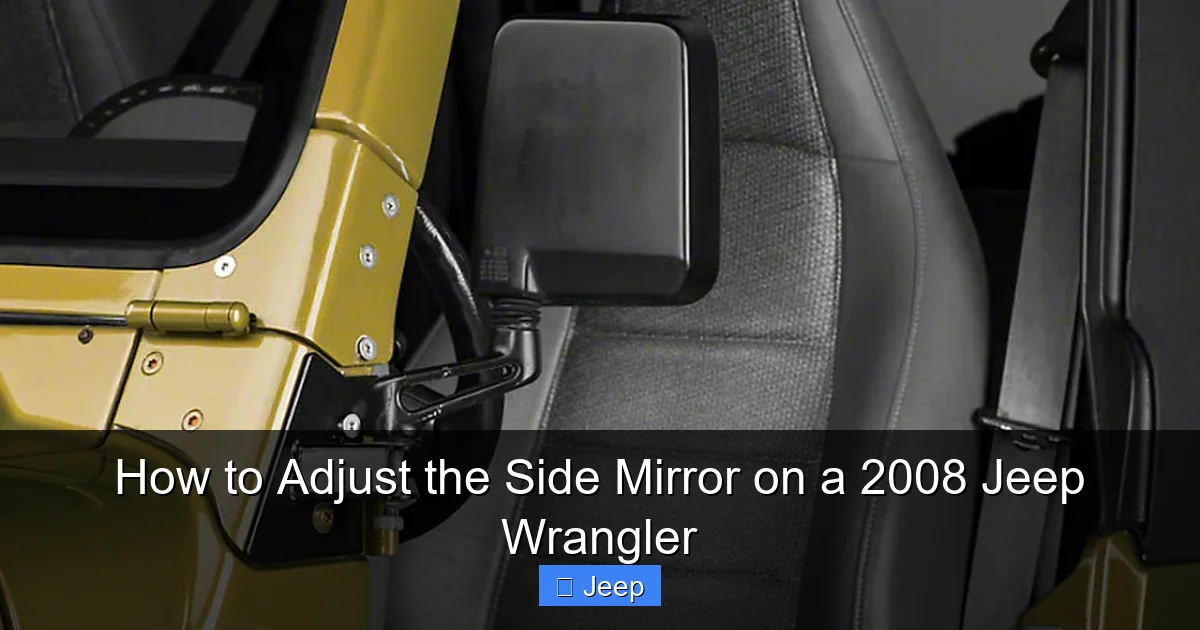
Visual guide about How to Adjust the Side Mirror on a 2008 Jeep Wrangler
Image source: lib.extremeterrain.com
Identifying the Power Mirror Controls
The control switch is typically located on the driver’s door panel, either on the armrest or the door itself. It’s usually a circular pad with four arrows (up, down, left, right) and a center button. There’s also a selector switch to choose which mirror you’re adjusting—often a small rotary dial or a separate button labeled “L” and “R.” Make sure the selector is on the mirror you want to move before you use the arrows.
Adjusting Using the Switch
With the ignition on (or in accessory mode), select the driver’s side mirror. Use the arrow pad to move it. Small, incremental presses work best. Get it into the general position using the “V” method described above, then fine-tune. Repeat for the passenger side. The power mirrors often have a more limited range of motion than manual ones, so you might need to compromise slightly.
Memory Settings and Programming (if applicable)
Some 2008 Wrangler Rubicon models offered memory seats and mirrors. If yours has it, there are buttons labeled “1” and “2” on the door. After adjusting the mirrors to your perfect position, press and hold “1” until you hear a chime. This saves the setting. If another driver uses the car, they can adjust and save to “2,” then recall with a single press. Consult your owner’s manual for exact steps, as the system can vary.
The Science of Mirror Positioning: Eliminating Blind Spots
Why all this fuss about the “V” method? Because your Wrangler’s design gives you a naturally wide rear window, but the side pillars and the fact that you’re sitting closer to the rear axle than in a sedan create significant blind zones. The old way of adjusting mirrors to see the sides of your own car leaves huge blind spots. The modern, outward-angled method trades a tiny bit of direct rear visibility for a massive gain in lateral coverage.
How to Test Your Mirror Coverage
The best test is real-world. Find a quiet parking lot or empty street. Have a friend or family member walk behind your Wrangler in the lane next to you, starting about 10 car lengths back. As they walk, watch them in your mirrors. You should be able to see them in your peripheral vision as they move from the rearview mirror into the left side mirror, and then again as they pass the side mirror and into your direct sight. If they disappear completely between mirrors, your adjustment is off. You can also use traffic cones or parked cars to simulate other vehicles.
Adjusting for Different Driving Scenarios
Your perfect highway setting might not be perfect for crawling Moab’s slickrock. For high-speed driving, the extreme “V” angle is ideal. For slow-speed off-roading, you might want to angle the mirrors down a bit more to see the tires and rocks directly beside you. Many Wrangler owners manually fold their mirrors in on extreme trails to prevent damage, then readjust when back on the road. If you’re towing a trailer, you’ll likely need to adjust the passenger mirror further outward to see the trailer’s side and wheels.
Troubleshooting Common Mirror Issues
Sometimes the problem isn’t adjustment—it’s the mirror itself. Here’s how to handle common hiccups.
Mirror Vibration or Shaking While Driving
This is super common, especially on Wranglers with larger tires or after off-road use. The most likely culprit is a loose mounting bolt. Open your door and check the three bolts that secure the mirror base to the door skin. Tighten them with a socket wrench, but don’t over-tighten and crack the plastic. If the bolts are tight but the mirror still shakes, the internal bushings might be worn out. Aftermarket mirrors often come with better vibration-damping materials.
Loose or Wobbly Mirrors
If the mirror head itself feels loose when you try to adjust it, the pivot mechanism inside the housing is stripped. This usually means the mirror needs to be replaced. You can sometimes get a replacement pivot from the dealer or an aftermarket supplier. For a quick fix, a tiny drop of thread-locking compound on the pivot screw (if accessible) might help, but it’s not a permanent solution.
Fogging or Condensation Inside the Mirror
If your mirror fogs up from the inside, it means the seal around the glass is compromised. This is common in older vehicles. You can try to dry it out with a hairdryer on low, but the fix is usually to replace the entire mirror head. Some premium aftermarket mirrors have better seals. If your mirror is heated (check for a heating element symbol on the glass), make sure the fuse is good; a non-working heater can lead to condensation in cold weather.
When to Consider Replacement
Cracked glass, a broken housing, or a motor that’s completely dead in a power mirror all point to replacement. The good news is that replacing a side mirror on a Wrangler is a straightforward DIY job for most people. You’ll need to remove the door panel to access the mounting bolts, which is a simple process involving plastic clips and a few screws. The procedure is similar across many vehicles; for example, replacing side mirror glass on a Dodge Ram 1500 follows a very similar pattern of removing the door panel and unbolting the assembly. You can often buy just the mirror head (glass and housing) and reuse your existing mounting base and wiring, which saves money.
Maintenance and Care for Long-Lasting Mirrors
Your Wrangler’s mirrors take abuse—road debris, tree branches, and sun exposure. A little care goes a long way.
Regular Cleaning Procedures
Use a standard automotive glass cleaner and a soft microfiber cloth. Spray the cleaner on the cloth, not directly on the mirror, to avoid liquid seeping into the housing and damaging internal components. For stubborn bug splatter, let the cleaner soak for a minute. Avoid abrasive pads or household cleaners like Windex, which can damage coatings.
Protecting Mirrors from Off-Road Damage
If you’re hitting the trails, consider folding your mirrors in tight. The 2008 Wrangler’s mirrors fold manually at the base. Some aftermarket companies make mirror “tucks” or protective covers that shield the glass from branches and rocks. It’s a cheap investment compared to replacing a broken mirror.
Seasonal Considerations
In winter, ice can coat the mirror overnight. Never use hot water—it can crack the glass. Use a de-icer spray or a plastic ice scraper. In summer, prolonged sun exposure can fade black plastic housings. Parking in the shade or using a reflective sun shade on the windshield (which also covers the mirrors) helps.
Inspecting Mounts and Hardware
Every few months, especially after a hard off-road session, grab each mirror and give it a firm wiggle. If there’s any play, tighten the mounting bolts immediately. Also check the adjustment mechanism for smoothness. If it feels gritty or stiff, a tiny bit of silicone-based lubricant on the pivot points can help—just don’t get it on the glass.
Conclusion: Your Clear View Awaits
Adjusting the side mirror on a 2008 Jeep Wrangler might seem like a tiny detail, but it’s one of the most impactful safety adjustments you can make. It takes two minutes, requires no tools for basic adjustment, and pays off every time you change lanes on the highway or navigate a tight forest trail. Remember the key principles: sit in your normal driving position, aim for the “V” configuration with minimal sight of your own car, and always test your blind spots. If your mirrors are damaged or malfunctioning, don’t hesitate to replace them—it’s a simple fix. And while you’re maintaining your Wrangler, don’t forget other routine tasks like changing the air filter on a Honda Civic (or your Wrangler’s own air filter) to keep the engine breathing right. A well-maintained vehicle, from mirrors to filters, is a reliable and safe vehicle. Now go enjoy that Wrangler view with confidence!
Frequently Asked Questions
How often should I check my side mirror adjustment?
It’s a good habit to check your mirror alignment every few months or anytime someone else has driven your Wrangler. A good jolt from a rock or trail bump can shift them. A quick visual check from the driver’s seat takes just seconds.
What if my manual mirror adjustment feels stiff or stuck?
First, ensure you’re moving the correct lever. Sometimes debris or dirt gets into the pivot mechanism. Try working it back and forth gently to loosen it. If it remains stiff, a small amount of silicone spray lubricant applied to the pivot (not the glass) can help. If it’s broken internally, the mirror head will need replacing.
Can I adjust my side mirrors while driving?
Absolutely not. Adjusting mirrors requires taking your eyes off the road and hands off the wheel. Always make adjustments only when the vehicle is safely parked and the engine is off. Even a momentary distraction can lead to an accident.
How do I know if my mirrors are properly adjusted?
The best test is the “V” method: your two side mirrors and rearview mirror should form a wide “V” with the horizon in the middle of each side mirror. You should see a very slim sliver of your own car on the inner edge. Then, have someone walk behind you in an adjacent lane; they should be visible in your side mirror before they disappear from the rearview mirror.
Do I need special tools to adjust the mirrors?
For basic adjustment, no—just your hands. If you need to remove the mirror for repair or replacement, you’ll need basic hand tools like socket wrenches and screwdrivers to remove the door panel. But the actual adjustment mechanism is designed for tool-free use.
What should I do if my power mirror switch isn’t working?
First, check the fuse for the power mirror circuit in your fuse box (see owner’s manual). If the fuse is good, the switch itself might be faulty, or the motor inside the mirror could be burned out. You can test for power at the mirror connector with a multimeter. If there’s power but no movement, the mirror motor needs replacement. Sometimes the issue is simply a loose electrical connection at the door hinge—check that the wiring harness isn’t pinched.
