
When Will the Tesla Tiny House Be Available?

Despite persistent rumors and viral images, Tesla has never officially announced a “Tesla Tiny House” for sale. The confusion stems from Tesla Energy’s solar and Powerwall products being showcased in custom tiny home builds. While you cannot buy a Tesla-branded tiny house directly, Tesla’s ecosystem of solar panels, Powerwalls, and EV charging provides the perfect off-grid power solution for third-party tiny homes. Availability of an official product remains speculative, with no concrete timeline.
You’ve seen the stunning photos online. A sleek, minimalist white tiny house, often parked in a beautiful natural setting, with a Tesla vehicle sitting beside it. The caption reads: “The Tesla Tiny House is here!” or “Order your Tesla Tiny House today!” It’s an incredibly appealing vision—a complete, sustainable, off-grid lifestyle package from the company that revolutionized electric cars and solar energy. But if you’ve started searching for where to actually place your order, you’ve likely hit a frustrating wall of ambiguity. So, let’s cut through the noise and answer the burning question: When will the Tesla Tiny House be available?
The short, and most important, answer is: There is no official Tesla Tiny House scheduled for release. As of today, you cannot go to Tesla’s website and add a tiny house to your cart alongside a Model Y or a Powerwall. The entire concept is a powerful piece of marketing folklore born from a mix of clever custom builds, misinterpreted announcements, and our collective desire for a simple, sustainable life. This article will dive deep into the origins of this myth, explain what Tesla *actually* sells that powers the tiny home dream, analyze why Tesla hasn’t (and may never) build a tiny house, and explore your very real options for creating a Tesla-powered tiny home lifestyle right now.
Key Takeaways
- No Official Product: There is no “Tesla Tiny House” listed on Tesla’s website or in its official product lineup. All images are from custom builds using Tesla equipment.
- Ecosystem, Not a House: Tesla’s role is providing sustainable energy components (Solar Roof, panels, Powerwall) that can power a tiny home, not manufacturing the dwelling itself.
- Market Demand is Real: The tiny home movement aligns with Tesla’s mission of sustainable energy, fueling speculation, but Tesla’s focus remains on core automotive and energy products.
- DIY is the Current Path: Enthusiasts must purchase a tiny house shell from a manufacturer and separately integrate Tesla’s solar and battery systems.
- Future Speculation Only: Any announcement would be a major strategic shift. Watch for official Tesla press releases, not social media rumors, for confirmation.
📑 Table of Contents
- The Origin of the “Tesla Tiny House” Myth
- What Tesla *Actually* Sells: The Sustainable Energy Ecosystem
- Why Tesla Hasn’t (And Probably Won’t) Build a Tiny House
- How to Build Your *Own* Tesla-Powered Tiny House Today
- The Broader Context: Why This Idea Resonates
- Future Outlook: Could Tesla Ever Actually Do This?
- Conclusion: The Dream is Alive, But You Have to Build It
The Origin of the “Tesla Tiny House” Myth
The idea didn’t come from thin air. It has a specific genesis that helps us understand why so many people believe it’s real. The story begins in 2019 with a very real, very physical object: the Tesla Tiny House on Wheels.
The 2019 “Tesla Tiny House on Wheels” Tour
In mid-2019, Tesla built a single, custom-designed tiny house on a trailer. This wasn’t a product for sale. It was a mobile marketing exhibit. Its sole purpose was to tour Australia (and later other markets) to demonstrate the capabilities of Tesla’s energy products in a tangible, relatable way. The tiny house was fitted with a Tesla Solar Roof (or solar panels, depending on the stop), a Powerwall battery system, and a Tesla Wall Connector for charging an electric vehicle. Tesla staff would give presentations inside, showing visitors how the system worked, how much energy it generated, and how it could power a home.
This mobile showroom was a brilliant piece of marketing. It made the abstract idea of “home energy storage” concrete. People could walk through a beautiful, functional tiny home and see Tesla’s tech in action. Photos and videos of this specific, branded trailer went massively viral. The caption “Tesla Tiny House” was born. Unfortunately, the crucial context—that it was a one-off exhibit, not a product—got lost in the shares and reposts. The internet consolidated it into a single, simple idea: Tesla is making a tiny house.
The Power of Social Media and Misinterpretation
Once the seed was planted, it grew wildly. Every stunning tiny home photo that featured a Tesla car, a Tesla Powerwall visible in the window, or even just a minimalist aesthetic reminiscent of Tesla’s design language, got tagged with #TeslaTinyHouse. Third-party tiny home builders began advertising their products as “Tesla-ready” or “compatible with Tesla Powerwall,” which further blurred the lines. A video of someone charging their EV from a Powerwall in their off-grid cabin wasn’t about the cabin; it was about the Tesla energy system. But in the algorithm-driven feed, the cabin became the star.
This myth persists because it makes perfect sense. Tesla’s mission is “to accelerate the world’s transition to sustainable energy.” A tiny house is the ultimate symbol of minimal, efficient, sustainable living. Combining the two seems like a logical, almost inevitable, product extension. The desire for it to be true is so strong that it overpowers the factual reality that Tesla’s business model is built on scalable, high-volume products (cars, batteries, solar tiles), not the highly customized, low-volume world of tiny homes.
What Tesla *Actually* Sells: The Sustainable Energy Ecosystem
To understand why a Tesla Tiny House doesn’t exist, you need to look at what Tesla *does* sell. The company operates two primary, deeply interconnected businesses: Automotive (electric vehicles) and Energy Generation and Storage. The tiny home dream sits perfectly at the intersection of these two.
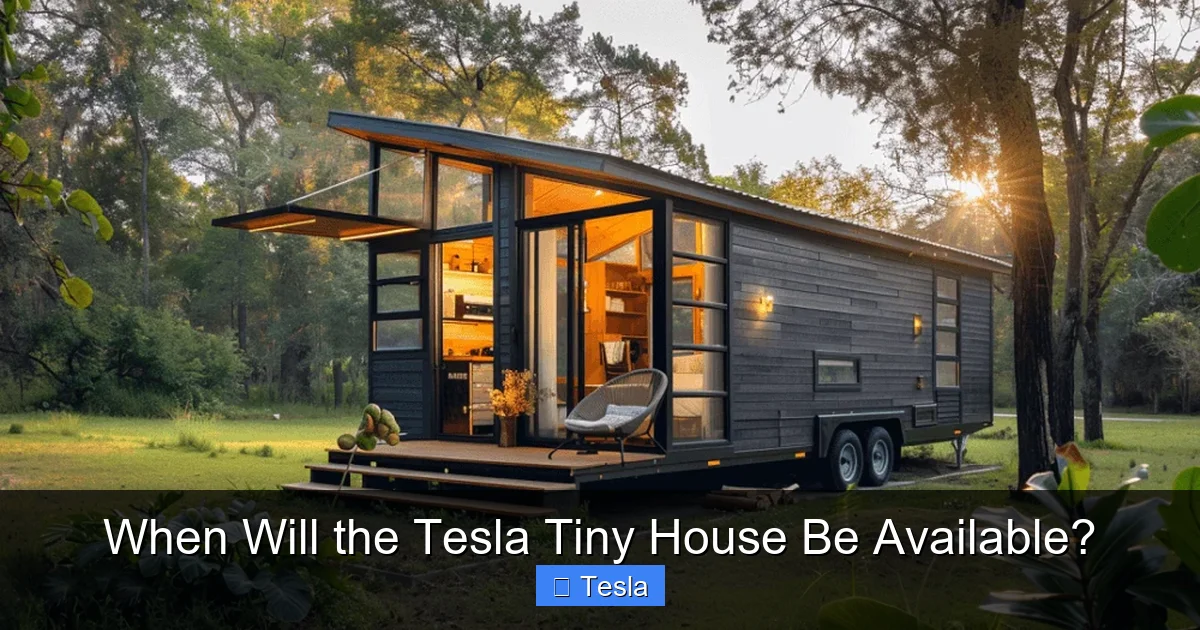
Visual guide about When Will the Tesla Tiny House Be Available?
Image source: tinyhomedigest.com
The Tesla Energy Product Suite
The heart of any “Tesla-powered” tiny home is the energy system. This consists of three main components:
- Solar: You have two paths here. The Solar Roof replaces your entire roof with integrated solar tiles. It’s a premium, seamless solution but has a high upfront cost and a complex installation process not suited for a mobile tiny house on wheels. The other option is Solar Panels mounted on a rack. This is the more common and practical choice for a tiny house, as it can be installed on a roof or a separate ground mount. Tesla sells both, but the panel system is typically more flexible for auxiliary structures.
- Powerwall: This is the critical piece—the rechargeable lithium-ion battery. A Powerwall stores the energy your solar panels generate during the day so you can use it at night or during cloudy periods. For a tiny home, one Powerwall (13.5 kWh capacity) might suffice for basic needs, but many off-grid enthusiasts stack two or more for greater resilience and longer autonomy. It’s sleek, wall-mounted, and integrates seamlessly with the Tesla app.
- Wall Connector: While not for the house itself, this is the EV charger. For the full “Tesla ecosystem” tiny home, you’d use the Wall Connector to charge your Tesla vehicle using excess solar power stored in the Powerwall, or directly from the solar array during the day.
These products are sold separately, through Tesla’s website and certified installers. They are designed for permanent residential installations, but their portability (the Powerwall is on wheels) makes them adaptable.
The Missing Link: The Dwelling Itself
What’s conspicuously absent from Tesla’s online store is the fourth component: the habitable structure. Tesla is not in the business of manufacturing mobile, habitable trailers or park model homes. This is a fundamentally different industry with different regulations (DOT, RVIA, local building codes), supply chains, materials, and customer expectations. Building a tiny house requires carpentry, plumbing, HVAC, insulation expertise—skills far removed from battery chemistry and semiconductor design. For Tesla to enter this market, it would mean starting an entirely new division from scratch, which doesn’t align with its current hyper-focused strategy on energy and transport.
Why Tesla Hasn’t (And Probably Won’t) Build a Tiny House
Given the perfect synergy, why hasn’t Tesla done it? The reasons are strategic, logistical, and philosophical.
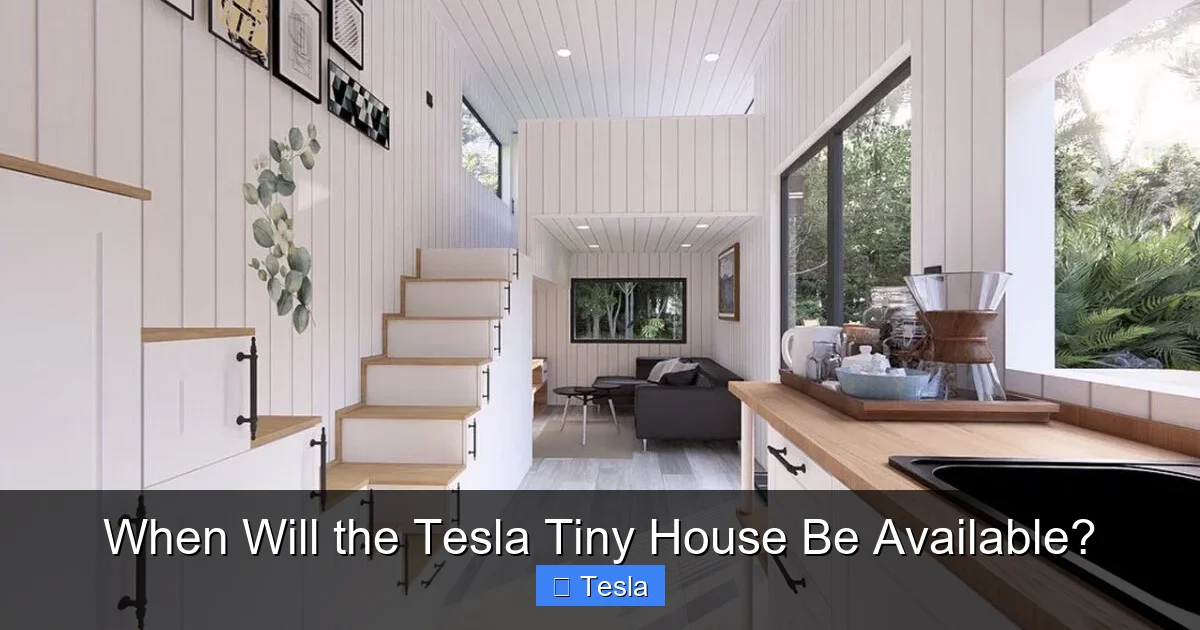
Visual guide about When Will the Tesla Tiny House Be Available?
Image source: cdn.homecrux.com
Strategic Focus and Core Competencies
Elon Musk has stated time and again that Tesla’s focus is on its core missions: compelling electric vehicles and scalable sustainable energy products. The company is constantly capacity-constrained on its battery cells and芯片 (chips). Diverting engineering, manufacturing, and supply chain resources to design and build a tiny house—a product with a tiny addressable market compared to cars or Powerwalls—would be a massive distraction. Tesla’s strategy is to sell the engines (batteries, motors, software) for the future, not every vehicle or building that uses them. They want to be the Intel or ARM of sustainable living, not the Dell or HP.
The Complexity of the “House” Business
Building a car is immensely complex. Building a house, especially one that is mobile and must withstand highway travel, is complex in completely different ways. It involves a vast network of dealers, dealers, and service centers for warranty and repairs—a network Tesla is still building for its cars. The tiny home industry is fragmented, with hundreds of small builders. Creating a Tesla-branded, high-quality, code-compliant tiny house that could be sold nationwide (or globally) would require navigating a labyrinth of local zoning laws, RV certification (RVIA), and building codes. The liability and customer service burden would be enormous.
Market Size and Business Model
The tiny home market, while growing, is still a niche within a niche. Tesla sells hundreds of thousands of cars and tens of thousands of Powerwalls annually. The potential annual sales volume for a $80,000-$150,000+ tiny house would be a rounding error in Tesla’s financials. The return on investment simply wouldn’t justify the massive upfront cost of developing, certifying, marketing, and supporting a whole new product line. Tesla’s business model thrives on volume and scale; tiny homes are the antithesis of that.
How to Build Your *Own* Tesla-Powered Tiny House Today
So, the official product is a fantasy. But the lifestyle is 100% achievable. You become the integrator. Here is the practical, step-by-step guide to creating your own Tesla-powered tiny home.
Step 1: Acquire the Tiny House Shell
This is the biggest decision. You have three main paths:
- Hire a Builder: This is the most common route. Find a reputable tiny home builder (local or national). They will design and construct the shell to your specifications. Be very clear about your intent to install a Tesla Powerwall and solar system so they can design the electrical panel, conduit runs, and structural support (for roof-mounted panels) accordingly. Get multiple quotes and check references meticulously.
- Buy a DIY Kit or Shell: Some companies sell pre-fabricated shells or kits that you finish yourself. This saves money but requires significant skill and time. Again, communicate your energy system plans.
- Convert a Trailer or RV: For the adventurous, buying a used travel trailer or fifth-wheel and renovating it is a popular option. This gives you a pre-built, road-worthy chassis.
Critical Tip: Ensure the structure is certified for road travel if you plan to move it (look for RVIA certification or similar). Also, consider weight. Tesla Powerwalls are heavy (about 285 lbs each), and solar panels add weight. Your trailer’s GVWR (Gross Vehicle Weight Rating) must accommodate the finished home’s weight.
Step 2: Design and Install the Tesla Energy System
This is where you bring in the Tesla pros. Do not attempt to install a Powerwall or solar system yourself unless you are a licensed electrician.
- Consultation: Start by contacting Tesla Energy. Explain you have a tiny home and want a solar + Powerwall system. They will likely connect you with a certified installer in your area. Be prepared for them to be hesitant at first—many residential installers are used to stick-built homes. You may need to shop around to find an installer experienced with mobile or custom structures.
- Sizing: Work with the installer to calculate your energy needs. How many appliances will you have? (Induction cooktop, mini-split HVAC, refrigerator, lights, electronics). How much sun do you get in your location? A typical off-grid tiny home might need 5kW+ of solar panels and 2-3 Powerwalls for comfort and resilience. The installer will create a layout for panel placement on your roof or a ground mount.
- Installation: The installer will handle all permitting (this can be tricky for a non-standard structure), equipment procurement, and installation. They will integrate the Powerwall(s) with your main electrical panel, set up the Tesla app for monitoring, and configure the system to prioritize solar, then battery, then grid (if you have a grid-tie option).
Pro Example: A popular configuration is a 6.2 kW solar array (on roof and/or ground) paired with two Powerwalls. This can typically cover the daily energy needs of a well-insulated tiny home with efficient appliances, even in a moderately sunny climate.
Step 3: Integrate Your Tesla Vehicle
The final piece is the “T” in the logo. Install a Tesla Wall Connector near your parking spot. The beauty of the Tesla ecosystem is that your Powerwall, solar, and car all talk to each other in the Tesla app. You can set “Backup” or “Self-Powered” modes. In “Self-Powered,” your home will use solar first, then battery, minimizing grid draw. You can also set “Vehicle Charging” to use only solar surplus or to charge from the battery during off-peak times if you have a time-of-use electricity plan.
The Broader Context: Why This Idea Resonates
The Tesla Tiny House myth is more than just misinformation; it’s a cultural symbol. It hits on several powerful trends.
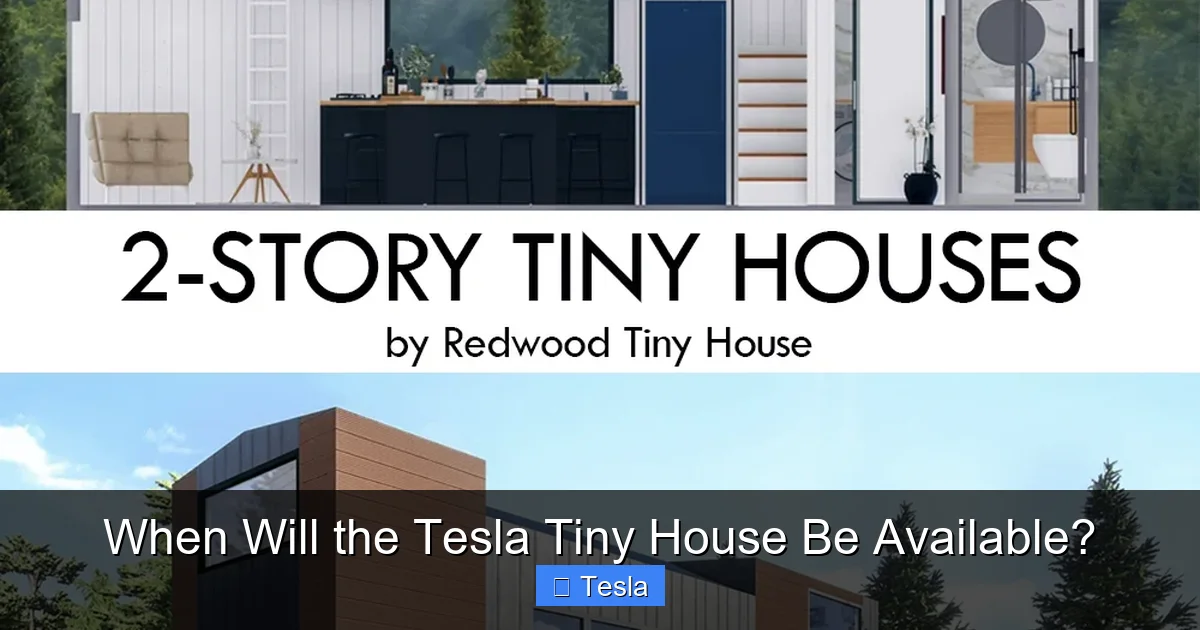
Visual guide about When Will the Tesla Tiny House Be Available?
Image source: craft-mart.com
The Convergence of Minimalism and Sustainability
The tiny house movement is fundamentally about intentional living—rejecting consumerism, reducing environmental impact, and gaining financial freedom. Tesla’s entire brand is built on luxury sustainable technology. Combining them creates a potent image of a high-tech, low-impact, ultra-efficient life. It’s the antidote to the gas-guzzling, McMansion stereotype. This resonance is why the idea spreads like wildfire, even without a product to back it up.
The “Tesla Ecosystem” as a Lifestyle Brand
Apple didn’t just sell computers; it sold a design-forward, integrated ecosystem. Tesla is doing the same for energy and transport. A Powerwall, solar, and a Model 3 create a personal energy loop. The tiny house is the ultimate physical manifestation of that loop—a mobile, self-sufficient node in the Tesla ecosystem. People don’t just want the products; they want the story the products tell. The “Tesla Tiny House” is the ultimate story.
Affordability vs. The Tesla Tax
Here’s a crucial reality check. Building a Tesla-powered tiny home is not cheap. A quality, custom tiny house shell can cost $60,000 – $100,000+. A full Tesla solar + 2x Powerwall system, after federal tax credits, might still cost $25,000 – $40,000+. Add in a Tesla Wall Connector and a Tesla vehicle ($40,000+), and you’re looking at a total investment well north of $150,000. This is not the affordable, DIY tiny home many imagine. It’s a premium, high-tech solution. For those researching when is the best time to buy a car as part of this plan, integrating the vehicle purchase with the home build can have financial planning implications, which is why exploring financing options early is wise.
Future Outlook: Could Tesla Ever Actually Do This?
Never say never in the world of Elon Musk, but the odds are extremely low. Here’s what a hypothetical future would require.
The Precedent: Tesla’s Expansion Logic
Tesla’s expansions have been logical extensions: electric cars → electric trucks (Cybertruck) → electric semi → energy storage (Powerwall) → solar generation (Solar Roof) → insurance and services. They move from transport to the energy that powers it, and from utility-scale to residential. A tiny house doesn’t fit this pattern. It’s not a vehicle, it’s not utility-scale storage, and it’s not a core energy generator. It’s a consumer product in a saturated, low-margin industry.
The “Tesla Home” Scenario
A more likely scenario than a “Tiny House” would be a “Tesla Home” package. Imagine Tesla partnering with a major manufacturer (like a Clayton Homes or a luxury RV maker) to create a certified, Tesla-energy-integrated small home or park model. Tesla would supply the energy brain (Powerwall, solar, software) and branding, while the partner builds the structure. This shares risk and leverages existing manufacturing expertise. Even this is a long shot, but it’s more plausible than Tesla hiring thousands of carpenters and plumbers.
What to Watch For
If Tesla were ever serious, you’d see signs:
- Job postings for “residential construction” or “tiny home” specialists.
- Acquisition of a tiny home or RV manufacturer.
- A dedicated page on Tesla’s website, even if just a teaser.
- Elon Musk responding seriously to questions about it on X (formerly Twitter), not just with a cryptic or joking tweet.
Until then, treat all rumors and “leaks” with extreme skepticism. The most reliable source is always the official Tesla website and its quarterly earnings calls, where product roadmaps are discussed.
Conclusion: The Dream is Alive, But You Have to Build It
The question “When will the Tesla Tiny House be available?” is born from a beautiful, understandable dream. It’s a dream of a simple, beautiful, self-sufficient life powered by cutting-edge, clean technology. But in the cold light of business reality, that specific product—a Tesla-branded tiny house—does not exist and has no announced release date. The 2019 tour trailer was a marketing stunt, not a prototype.
However, the substance of the dream is more accessible than ever. You can absolutely build a stunning, efficient tiny home and power it entirely with Tesla’s best-in-class solar and battery technology. You just have to be the project manager. You source the shell, hire a Tesla-certified energy installer, and integrate the systems yourself. It’s a more involved process, but it gives you complete control over design, layout, and budget.
The myth of the Tesla Tiny House persists because it represents the perfect fusion of two powerful ideals: minimalist living and technological progress. While Tesla may never stamp its logo on a tiny house trailer, its products are the beating heart of the sustainable, off-grid tiny home movement. The availability you’re looking for isn’t a future product launch; it’s a present-day possibility, waiting for you to assemble it piece by piece. Focus not on a phantom release date, but on the very real, very achievable steps to power your own tiny home dream with the Tesla ecosystem.
Frequently Asked Questions
Is the Tesla Tiny House real?
No, it is not a real product for sale. It was a one-off marketing trailer used in 2019 to showcase Tesla’s solar and Powerwall products. All images online are either of that trailer or of custom-built tiny homes using Tesla energy equipment.
Can I buy a Tesla Tiny House from Tesla?
No. Tesla does not sell tiny houses, RVs, or habitable trailers. Their online store sells vehicles, Solar Roof/solar panels, Powerwall batteries, and related accessories and parts.
What does the “Tesla Tiny House” actually refer to?
The term is a misnomer. It typically refers to any tiny home that is powered by a Tesla energy system (solar + Powerwall) and often includes a Tesla vehicle for transportation. The tiny house itself is built by a third-party manufacturer.
How much would a Tesla-powered tiny home cost to build?
It varies widely. A custom tiny house shell can cost $60,000-$120,000+. A full Tesla solar and 2x Powerwall system, after incentives, can add $25,000-$45,000+. Total investment, including a Tesla vehicle, often exceeds $150,000.
Where can I get a Tesla energy system for my tiny home?
You must work with a Tesla-certified installer. Contact Tesla Energy through their website, explain you have a tiny home project, and they will connect you with a local installer who can assess your site and design a compliant system.
Will Tesla ever officially release a tiny house?
It is highly unlikely. Tesla’s business model focuses on scalable core products like cars and batteries, not the low-volume, highly customized, and regulation-heavy tiny home industry. Any official announcement would come only from Tesla’s main channels. For now, building your own with their components is the only way.
