
Will Dodge 1500 Rims Fit a Chevy 1500?

Wondering if Dodge 1500 rims will fit your Chevy 1500? While both trucks are full-size pickups, their wheel specifications differ in critical ways—especially bolt pattern and center bore. Direct fitment is rare, but with adapters or careful selection, it’s sometimes possible—read on to find out how.
Key Takeaways
- Bolt Pattern Mismatch: Dodge 1500s use a 5×5.5″ (5×139.7mm) bolt pattern, while most Chevy 1500s use 6×5.5″ (6×139.7mm), making direct fitment impossible without adapters.
- Center Bore Differences: Dodge wheels often have a larger center bore (77.8mm) than Chevy hubs (78.1mm), which can cause vibration or improper seating unless hub-centric rings are used.
- Wheel Offset and Backspacing Matter: Even if you adapt the bolt pattern, incorrect offset can lead to rubbing, poor handling, or suspension damage.
- Adapters Can Bridge the Gap: 5×5.5″ to 6×5.5″ wheel adapters allow Dodge rims to mount on Chevy trucks, but quality and proper installation are critical for safety.
- Not All Chevy 1500s Are the Same: Older models (pre-1999) may have 5-lug setups, increasing compatibility with Dodge wheels—always verify your truck’s specs first.
- Tire Size and Clearance Are Key: Larger Dodge wheels may not clear Chevy brake calipers or fenders without modifications or lift kits.
- Consult a Professional: Always have a certified mechanic or wheel specialist inspect any custom wheel setup before driving.
📑 Table of Contents
- Will Dodge 1500 Rims Fit a Chevy 1500? A Complete Compatibility Guide
- Understanding Wheel Compatibility: The Basics
- Dodge vs. Chevy: A Side-by-Side Comparison
- Can You Make It Work? Adapter Solutions
- Potential Risks and Safety Concerns
- Real-World Examples and Case Studies
- Alternatives to Adapters
- Final Verdict: Should You Do It?
Will Dodge 1500 Rims Fit a Chevy 1500? A Complete Compatibility Guide
So, you’ve got a Chevy 1500—maybe a Silverado, a Tahoe, or an older C/K model—and you’re eyeing those sleek Dodge 1500 rims you saw on a Ram at the truck meet. They look tough, aggressive, and just right for your ride. But before you slap them on and hit the road, there’s one big question: Will Dodge 1500 rims actually fit your Chevy 1500?
The short answer? Not directly—at least not without some serious considerations. While both Dodge and Chevy make full-size pickup trucks, their wheel mounting systems are built to different standards. That means bolt patterns, center bores, offsets, and even hub designs can vary enough to cause problems if you’re not careful. But don’t worry—this doesn’t mean it’s impossible. With the right knowledge, tools, and possibly a few modifications, you might just be able to pull off that cross-brand wheel swap.
In this guide, we’ll break down everything you need to know about fitting Dodge 1500 rims on a Chevy 1500. We’ll cover the technical specs, explore adapter options, discuss potential risks, and help you decide whether this upgrade is worth the effort. Whether you’re a weekend wrench-turner or just curious about wheel compatibility, this article will give you the clarity you need to make an informed decision.
Understanding Wheel Compatibility: The Basics
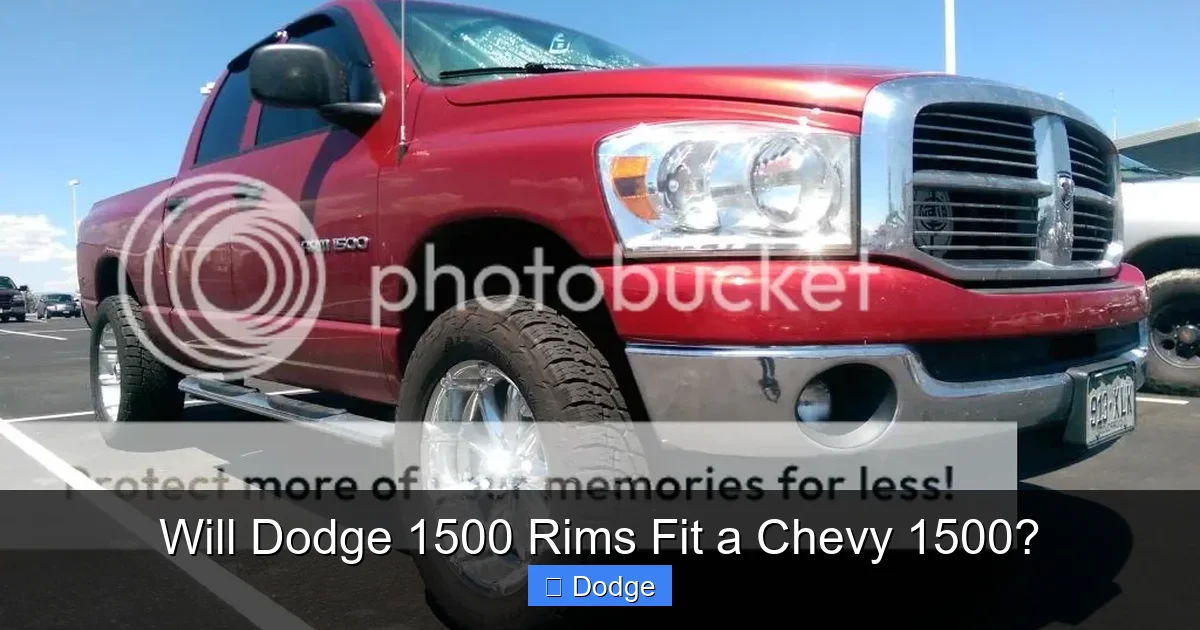
Visual guide about Will Dodge 1500 Rims Fit a Chevy 1500?
Image source: i1324.photobucket.com
Before we dive into the specifics of Dodge and Chevy wheels, let’s make sure we’re all on the same page about what makes a wheel “fit” a truck. It’s not just about looking cool—proper fitment is critical for safety, performance, and longevity.
At the core of wheel compatibility are four key factors: bolt pattern, center bore, offset, and backspacing. Let’s break each one down.
Bolt Pattern: The Most Critical Factor
The bolt pattern—also known as the lug pattern—is the number of lug nuts and the diameter of the circle they form. It’s usually expressed as two numbers: the number of lugs (or bolts) and the diameter in inches or millimeters. For example, a 5×5.5″ pattern means five lug nuts spaced evenly around a 5.5-inch diameter circle.
Here’s where the problem starts: Dodge 1500 trucks (like the Ram 1500) typically use a 5×5.5″ (5×139.7mm) bolt pattern. Meanwhile, most modern Chevy 1500s (like the Silverado 1500) use a 6×5.5″ (6×139.7mm) pattern. That extra lug nut makes a huge difference—you can’t just bolt a 5-lug wheel onto a 6-lug hub without an adapter.
There are exceptions, though. Older Chevy 1500 models—particularly those made before 1999—often came with 5-lug setups. If you’re driving a classic C/K series truck from the 80s or early 90s, there’s a chance your bolt pattern matches Dodge’s. But if you’ve got a newer Silverado (2007 or later), you’re almost certainly dealing with six lugs.
Center Bore: Hub-Centric Fitment
The center bore is the large hole in the middle of the wheel that fits over the hub of your truck. For a wheel to sit properly and rotate smoothly, this bore must match the hub diameter. If it’s too small, the wheel won’t fit at all. If it’s too large, the wheel may wobble or vibrate—even if the lug nuts are tight.
Dodge 1500 wheels usually have a center bore of 77.8mm, while Chevy 1500 hubs are typically 78.1mm. That 0.3mm difference might seem tiny, but it’s enough to cause issues. When the wheel isn’t perfectly centered on the hub, it can lead to steering shake, uneven tire wear, and even premature bearing failure.
To fix this, you can use hub-centric rings—plastic or metal spacers that fill the gap between the wheel and hub. These rings ensure the wheel is centered properly, reducing vibration and improving safety. But they only work if the center bore difference is within a reasonable range (usually under 2mm).
Offset and Backspacing: Clearance and Handling
Offset refers to how far the wheel’s mounting surface is from the centerline of the wheel. It’s measured in millimeters and can be positive (mounting surface toward the outside), negative (toward the inside), or zero (exactly in the middle).
Backspacing is the distance from the mounting surface to the inner edge of the wheel. It affects how much room the wheel has inside the wheel well.
Dodge and Chevy trucks often have different suspension setups, fender designs, and brake components. So even if you solve the bolt pattern and center bore issues, a Dodge wheel with the wrong offset might rub against the suspension, fender, or brake caliper on your Chevy. This can cause damage, reduce performance, and even be dangerous at high speeds.
For example, a Dodge wheel with a very negative offset might stick out too far, causing tire rub on the fender during turns or over bumps. On the flip side, a wheel with too much positive offset might not clear the brake caliper, especially on newer Chevy models with larger brakes.
Dodge vs. Chevy: A Side-by-Side Comparison

Visual guide about Will Dodge 1500 Rims Fit a Chevy 1500?
Image source: originalwheels.com
To really understand whether Dodge 1500 rims will fit your Chevy 1500, let’s compare the key specs side by side. This will help you see where the differences lie and what challenges you might face.
Bolt Pattern Comparison
| Truck Model | Bolt Pattern |
|————-|————–|
| Dodge Ram 1500 (1994–present) | 5×5.5″ (5×139.7mm) |
| Chevy Silverado 1500 (1999–2006) | 6×5.5″ (6×139.7mm) |
| Chevy Silverado 1500 (2007–present) | 6×5.5″ (6×139.7mm) |
| Chevy C/K 1500 (1988–1998) | 5×5.5″ (5×139.7mm) |
As you can see, the bolt pattern mismatch is the biggest hurdle. Only older Chevy 1500s (pre-1999) share the same 5×5.5″ pattern as Dodge trucks. If you’re driving one of those classics, you’re in luck—direct fitment is possible, though you’ll still need to check center bore and offset.
But if you’ve got a newer Silverado, you’ll need an adapter to convert the 6-lug hub to accept a 5-lug wheel.
Center Bore and Hub Diameter
| Truck Model | Hub Diameter | Common Wheel Center Bore |
|————-|————–|————————–|
| Dodge Ram 1500 | 77.8mm | 77.8mm |
| Chevy Silverado 1500 | 78.1mm | 78.1mm |
The 0.3mm difference means Dodge wheels won’t seat perfectly on Chevy hubs. Without hub-centric rings, you risk vibration and poor handling. These rings are inexpensive and widely available, but they’re not a cure-all—they only work if the wheel is otherwise compatible.
Typical Offset Ranges
Dodge Ram 1500 wheels often have offsets ranging from +15mm to +25mm, depending on the model and year. Chevy Silverado wheels typically range from +20mm to +30mm. While there’s some overlap, it’s not guaranteed that a Dodge wheel will have the right offset for your Chevy.
For example, a Dodge wheel with a +15mm offset might sit too far inward on a Chevy, causing clearance issues with the suspension. Conversely, a +25mm Dodge wheel might work fine—but you’d need to measure and test fit to be sure.
Tire and Wheel Size Considerations
Dodge and Chevy trucks often use similar tire sizes, but wheel diameters and widths can vary. A Dodge 1500 might come with 17-inch, 18-inch, or even 20-inch wheels, and widths can range from 7.5 to 9.5 inches.
If you’re swapping to larger Dodge wheels, you’ll need to ensure they don’t interfere with your Chevy’s fenders, suspension, or steering components. This is especially important if your Chevy has a stock suspension or low ride height. A wheel that fits a lifted Ram might not fit your unmodified Silverado.
Can You Make It Work? Adapter Solutions

Visual guide about Will Dodge 1500 Rims Fit a Chevy 1500?
Image source: originalwheels.com
So, the bolt pattern doesn’t match. The center bore is off by a fraction of a millimeter. Does that mean you’re out of luck? Not necessarily. With the right tools and precautions, you can make Dodge 1500 rims fit your Chevy 1500—but it’s not a simple bolt-on job.
Using Wheel Adapters
The most common solution is a wheel adapter—a metal spacer that bolts onto your Chevy’s hub and provides a new mounting surface with the correct bolt pattern for your Dodge wheels.
In this case, you’d need a 6×5.5″ to 5×5.5″ adapter. These adapters have six bolt holes that match your Chevy’s hub and five holes on the other side to accept the Dodge wheel.
Adapters come in different thicknesses—usually 1 inch, 1.5 inches, or 2 inches. The thickness affects how far the wheel sticks out from the hub. A thicker adapter gives you more clearance for larger tires or wheels with negative offset, but it also increases stress on the wheel bearings and suspension.
Pros and Cons of Wheel Adapters
Pros:
– Allow you to use wheels with different bolt patterns.
– Can improve wheel stance and give a more aggressive look.
– Relatively affordable compared to buying new wheels.
Cons:
– Add weight and complexity to the wheel assembly.
– Increase stress on wheel bearings and suspension components.
– Require precise installation to avoid vibration or failure.
– May not be street-legal in some states or regions.
Choosing the Right Adapter
Not all adapters are created equal. Cheap, low-quality adapters can warp, crack, or fail under stress—leading to dangerous situations like wheel separation.
When shopping for adapters, look for:
– High-strength steel or aluminum construction (avoid cast iron or pot metal).
– Precision-machined surfaces for a tight, wobble-free fit.
– Hub-centric design to maintain proper centering.
– Proper torque specifications and included lug nuts or studs.
Brands like Spidertrax, Wheel Adapter USA, and H&R are known for quality adapters. Avoid no-name brands from online marketplaces unless they have strong reviews and certifications.
Installation Tips
Installing wheel adapters isn’t just about bolting them on. Here’s how to do it right:
1. Clean the hub and adapter surfaces to remove dirt, rust, or old grease.
2. Torque the adapter to the hub using a torque wrench and the manufacturer’s specs (usually 90–120 ft-lbs).
3. Use the correct lug nuts—don’t reuse old ones. Most adapters come with new lug nuts or studs.
4. Mount the wheel and torque it properly—again, follow the specs.
5. Recheck torque after 50–100 miles of driving, as bolts can settle.
Never use impact wrenches for final tightening—always use a torque wrench to avoid over-tightening or under-tightening.
Potential Risks and Safety Concerns
While adapters can make Dodge rims fit your Chevy, they’re not without risks. Modifying your wheel setup changes how your truck handles, brakes, and wears over time. Ignoring these risks can lead to serious problems.
Increased Stress on Components
Every time you add an adapter, you’re increasing the distance between the wheel and the hub. This creates a longer lever arm, which increases stress on:
– Wheel bearings
– Ball joints
– Control arms
– Steering components
Over time, this extra stress can lead to premature wear, reduced component life, and even failure. If you’re using thick adapters (1.5 inches or more), consider upgrading to heavy-duty suspension parts.
Vibration and Steering Issues
If the adapter isn’t perfectly flat or the wheel isn’t balanced correctly, you may experience steering shake—especially at highway speeds. This is often caused by:
– Poorly machined adapters
– Incorrect hub-centric fitment
– Unbalanced wheels
To minimize vibration:
– Use hub-centric adapters and rings.
– Have your wheels professionally balanced after installation.
– Check for runout (wobble) using a dial indicator.
Legal and Warranty Implications
In some states, using wheel adapters may violate vehicle safety regulations—especially if they change the track width or affect handling. Always check local laws before installing adapters.
Additionally, modifying your wheel setup can void your vehicle’s warranty, especially if a failure is linked to the modification. If you’re still under warranty, consult your dealer before making changes.
Real-World Examples and Case Studies
Let’s look at a few real-world scenarios to see how this plays out.
Case 1: 2005 Chevy Silverado with Dodge 1500 Rims
A 2005 Silverado 1500 owner wanted the aggressive look of 2008 Dodge Ram 1500 rims. The Chevy has a 6×5.5″ bolt pattern, so he installed 1.5-inch 6×5.5″ to 5×5.5″ adapters. He also used 77.8mm to 78.1mm hub-centric rings.
After installation, he noticed slight vibration at 65 mph. A wheel balance fixed most of it, but he still feels a faint shake. He’s happy with the look but plans to upgrade his suspension soon to handle the added stress.
Case 2: 1995 Chevy C/K 1500 with Dodge Rims
This older Chevy has a 5×5.5″ bolt pattern—same as Dodge. The owner swapped in 1997 Dodge Ram 1500 rims with no adapters. He used hub-centric rings to account for the 0.3mm center bore difference.
The wheels fit perfectly, with no rubbing or vibration. He’s been driving with them for two years with no issues. This case shows that when specs align, cross-brand swaps can work flawlessly.
Case 3: 2018 Chevy Silverado with Lift Kit
A lifted 2018 Silverado owner used 2-inch adapters to fit 2015 Dodge Ram 1500 rims. The extra clearance allowed for larger tires and a more aggressive stance. However, after 6 months, he noticed increased steering play and front-end noise.
A mechanic found worn ball joints and loose wheel bearings—likely due to the added stress from the adapters. He’s now considering removing the adapters or upgrading to a full suspension overhaul.
Alternatives to Adapters
If adapters seem too risky or complicated, consider these alternatives:
Buy Wheels Designed for Chevy
Many aftermarket wheel brands offer styles similar to Dodge rims but made specifically for Chevy bolt patterns. Companies like Fuel Off-Road, Method Race Wheels, and American Racing have aggressive, truck-focused designs that mimic the Dodge look.
This is often the safest and most reliable option—no adapters, no stress, no legal gray areas.
Re-lace or Custom Build Wheels
If you love the look of a specific Dodge wheel, some shops can re-lace the spokes onto a Chevy-compatible barrel. This is expensive but allows you to keep the exact style you want.
Use a Wheel Spacer Instead
If the only issue is offset, you might not need a full adapter—just a wheel spacer. Spacers move the wheel outward without changing the bolt pattern. But they still add stress and should be used cautiously.
Final Verdict: Should You Do It?
So, will Dodge 1500 rims fit a Chevy 1500? The answer is: sometimes, with modifications.
If you have an older Chevy 1500 (pre-1999) with a 5×5.5″ bolt pattern, you’re in the best position for a direct swap. Just check center bore and offset, and use hub-centric rings if needed.
If you have a newer Chevy, you’ll need 6×5.5″ to 5×5.5″ adapters. This can work, but it comes with risks—increased stress, potential vibration, and legal concerns. Only proceed if you’re willing to invest in quality parts, proper installation, and possibly upgraded suspension components.
And remember: style shouldn’t come at the cost of safety. If you’re unsure, consult a professional mechanic or wheel specialist. They can help you determine the best path forward—whether that’s adapters, new wheels, or sticking with your current setup.
In the end, the goal is a truck that looks great, drives smoothly, and keeps you safe on the road. With the right knowledge and care, you can achieve that—even if it means saying no to those tempting Dodge rims.
Frequently Asked Questions
Can I put Dodge 1500 rims on my Chevy 1500 without adapters?
Only if your Chevy 1500 has a 5×5.5″ bolt pattern, which is common on models made before 1999. Most newer Chevy 1500s use a 6×5.5″ pattern, so adapters are required for Dodge wheels to fit.
What size hub-centric rings do I need for Dodge rims on a Chevy?
You’ll need 77.8mm to 78.1mm hub-centric rings. These fill the small gap between the Dodge wheel’s center bore and the Chevy hub, ensuring proper centering and reducing vibration.
Are wheel adapters safe for daily driving?
High-quality adapters installed correctly can be safe for daily use, but they increase stress on suspension and wheel bearings. Regular inspections and proper torque are essential for safety.
Will Dodge rims rub on my Chevy 1500?
It depends on the wheel’s offset and your truck’s suspension. Wheels with very negative offset may rub on fenders or suspension components, especially during turns or over bumps.
Can I use 5-lug Chevy wheels on a Dodge 1500?
Yes, if the bolt pattern matches (5×5.5″) and the center bore is compatible. Many older Chevy wheels can fit Dodge trucks with hub-centric rings.
Do I need a lift kit to fit Dodge rims on my Chevy?
Not necessarily, but larger Dodge wheels or those with negative offset may require a lift or leveling kit to prevent rubbing and ensure proper clearance.
