
How to Reset Abs and Slip Light on Nissan Titan

Resetting the ABS and slip light on your Nissan Titan can be done manually or with a scan tool, depending on the issue. This guide walks you through common causes, safe procedures, and when to seek professional help.
Key Takeaways
- Understand the warning lights: The ABS and slip lights indicate potential issues with your braking and traction control systems—don’t ignore them.
- Check for simple fixes first: Loose gas caps, low brake fluid, or dirty sensors can trigger these lights.
- Use the manual reset method: For minor glitches, turning the ignition on and off in a specific sequence may clear the lights.
- Invest in an OBD2 scanner: A quality scanner helps diagnose error codes and reset the system accurately.
- Inspect wheel speed sensors: Damaged or dirty sensors are a common cause of ABS and slip light activation.
- Know when to visit a mechanic: Persistent lights or warning chimes mean deeper mechanical issues may be present.
- Regular maintenance prevents issues: Keep your braking system clean and inspected to avoid future light resets.
📑 Table of Contents
- Understanding the ABS and Slip Light on Your Nissan Titan
- Common Causes of ABS and Slip Light Activation
- How to Reset ABS and Slip Light Manually (Without a Scanner)
- Using an OBD2 Scanner to Diagnose and Reset the Lights
- DIY Fixes for Common ABS and Slip Light Problems
- When to Seek Professional Help
- Preventing Future ABS and Slip Light Issues
- Conclusion
Understanding the ABS and Slip Light on Your Nissan Titan
If you’ve ever been driving your Nissan Titan and noticed the ABS or slip light suddenly flash on your dashboard, you’re not alone. These warning lights are designed to alert you to potential issues with your vehicle’s anti-lock braking system (ABS) and electronic stability control (ESC), also known as the traction or slip control system. While they might seem alarming at first, understanding what they mean—and how to respond—can save you time, money, and stress.
The ABS system prevents your wheels from locking up during hard braking, helping you maintain steering control. The slip light, often labeled “SLIP” or “VDC OFF,” relates to the Vehicle Dynamic Control system, which helps keep your truck stable during sharp turns or slippery conditions. When either light stays on, it means the system has detected a fault and may be disabled or operating in a limited capacity.
It’s important to note that these systems work together. A problem with one can affect the other. For example, a faulty wheel speed sensor might trigger both the ABS and slip lights. That’s why diagnosing the root cause is essential before attempting a reset.
Many Titan owners assume these lights require a trip to the dealership or a costly repair. While some issues do need professional attention, others can be resolved with simple troubleshooting steps you can do at home. Whether you’re dealing with a temporary glitch or a sensor that needs cleaning, knowing how to reset the ABS and slip light on your Nissan Titan empowers you to take control of your vehicle’s health.
Common Causes of ABS and Slip Light Activation
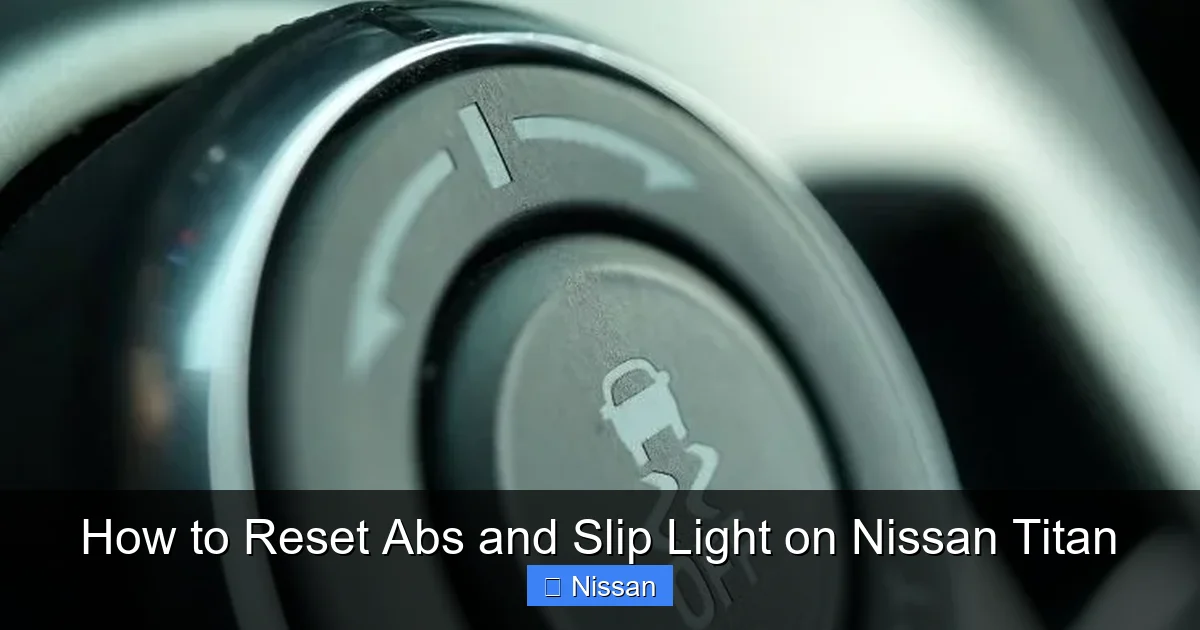
Visual guide about How to Reset Abs and Slip Light on Nissan Titan
Image source: nissannationpodcast.com
Before jumping into a reset, it’s crucial to understand why these lights might come on in the first place. Ignoring the underlying issue and simply resetting the lights without fixing the problem can lead to repeated warnings or even unsafe driving conditions. Here are the most common reasons your Nissan Titan’s ABS and slip lights may illuminate.
Faulty or Dirty Wheel Speed Sensors
Each wheel on your Titan is equipped with a speed sensor that monitors rotation and sends data to the ABS and VDC modules. Over time, these sensors can become clogged with dirt, mud, or metal shavings from the brakes. Even a small amount of debris can interfere with the sensor’s ability to read wheel speed accurately, triggering the warning lights.
For example, if you frequently drive on gravel roads or in muddy conditions, your sensors are more prone to buildup. A visual inspection can often reveal dirt or corrosion around the sensor housing. Cleaning the sensor with brake cleaner and a soft brush may resolve the issue.
Low Brake Fluid Level
Your brake fluid reservoir is located under the hood, usually near the firewall on the driver’s side. If the fluid level drops below the “MIN” line, the ABS module may detect a pressure imbalance and activate the warning lights. Low fluid can result from normal wear, a leak in the brake line, or worn brake pads.
Always check the fluid level when the engine is cold. If it’s low, top it off with the correct DOT 3 or DOT 4 fluid specified in your owner’s manual. However, if the level keeps dropping, have your brake system inspected for leaks.
Loose or Corroded Electrical Connections
The ABS and VDC systems rely on electrical signals from various sensors and modules. Loose, corroded, or damaged wiring can interrupt these signals, causing the system to malfunction. This is especially common in older Titans or vehicles exposed to harsh weather.
Check the connectors at the wheel speed sensors and the ABS control module (usually located near the brake master cylinder). Look for signs of rust, frayed wires, or loose plugs. Reconnecting or cleaning these connections can sometimes restore normal function.
Blown Fuse or Faulty ABS Module
Like any electrical system, the ABS has fuses that protect it from power surges. A blown fuse can disable the entire system, triggering the warning lights. The fuse box is typically located under the dashboard or in the engine bay—refer to your owner’s manual for the exact location and fuse diagram.
If the fuse looks intact, the issue might be with the ABS control module itself. This is a more serious problem that often requires professional diagnosis and replacement.
Recent Battery Disconnection or Jump Start
Disconnecting the battery or jump-starting your Titan can sometimes cause the ABS and slip lights to come on temporarily. This happens because the system loses its stored calibration data and needs to relearn wheel speeds.
In many cases, these lights will turn off after a few minutes of driving. If they persist, a manual reset or scan tool may be needed.
Tire Size or Pressure Mismatch
The ABS system assumes all four wheels are rotating at similar speeds under normal conditions. If your tires are significantly different in size (due to mismatched replacements) or if one tire is severely underinflated, the system may detect an anomaly and activate the warning lights.
Always ensure your tires are the same size, type, and inflation level. Rotate them regularly and check pressure monthly.
How to Reset ABS and Slip Light Manually (Without a Scanner)
Visual guide about How to Reset Abs and Slip Light on Nissan Titan
Image source: nissannationpodcast.com
If your ABS and slip lights are on due to a minor glitch—like a recent battery disconnect or temporary sensor interference—you may be able to reset them using a simple manual procedure. This method works on most Nissan Titan models from 2004 to 2024 and doesn’t require any special tools.
Step-by-Step Manual Reset Procedure
Follow these steps carefully to perform a manual reset:
1. **Turn the ignition to the “ON” position** (do not start the engine). You should see all dashboard lights illuminate, including the ABS and slip lights.
2. **Wait 10–15 seconds**. Allow the system to complete its self-check.
3. **Turn the ignition back to “OFF”**.
4. **Wait another 10–15 seconds**.
5. **Turn the ignition back to “ON”** (again, do not start the engine).
6. **Press and hold the brake pedal firmly** for about 5 seconds. You may hear a slight clicking noise from the ABS pump—this is normal.
7. **Release the brake pedal**.
8. **Turn the ignition to “OFF”** and wait 30 seconds.
9. **Start the engine** and drive the vehicle at a slow speed (under 10 mph) for about 30 seconds. This allows the system to relearn wheel speeds.
After completing these steps, check your dashboard. If the ABS and slip lights are off, the reset was successful. If they return, there may be an underlying issue that requires further diagnosis.
Tips for Success
– Perform the reset on a flat, safe surface with the parking brake engaged.
– Make sure the battery is fully charged—low voltage can interfere with the reset.
– If the lights come back on immediately after driving, the problem is likely not resolved.
This method is ideal for temporary glitches but won’t fix mechanical or electrical faults. For persistent issues, move on to using a scan tool.
Using an OBD2 Scanner to Diagnose and Reset the Lights
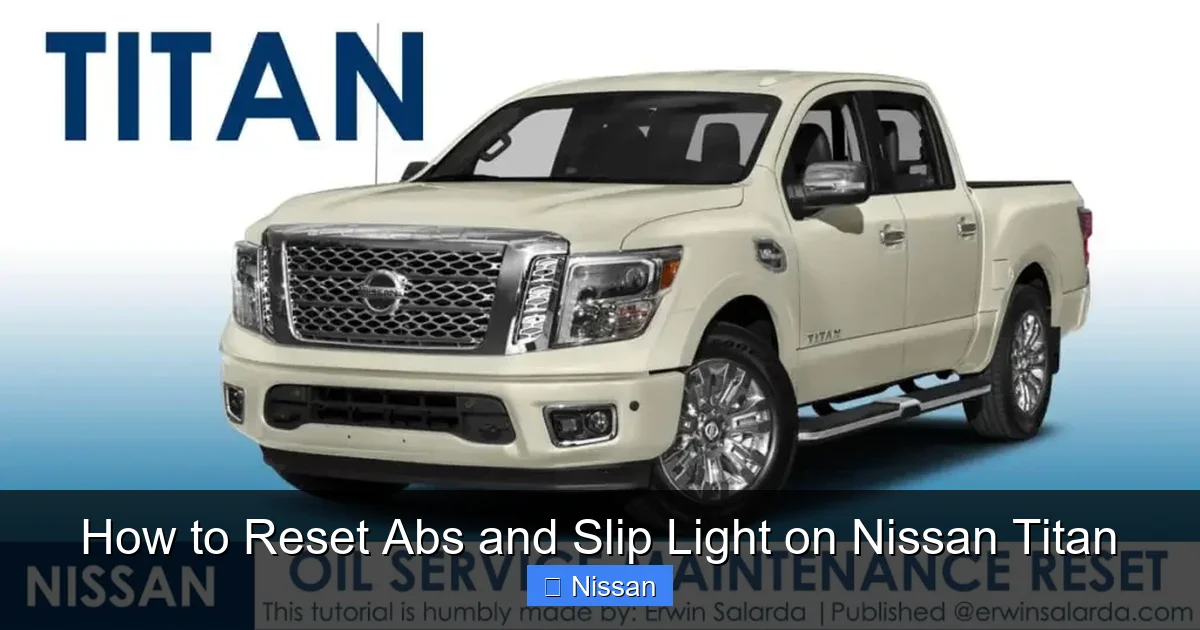
Visual guide about How to Reset Abs and Slip Light on Nissan Titan
Image source: i0.wp.com
When the manual reset doesn’t work, an OBD2 (On-Board Diagnostics) scanner becomes your best friend. These devices plug into your Titan’s diagnostic port (usually under the dashboard near the steering column) and read error codes stored in the vehicle’s computer. They can tell you exactly what’s causing the ABS and slip lights to stay on.
Choosing the Right Scanner
Not all OBD2 scanners are created equal. Basic code readers can only pull generic engine codes, but to diagnose ABS and VDC issues, you’ll need a **bi-directional scanner** that supports **ABS and chassis systems**. Look for models like:
– **Autel MaxiCOM MK808**
– **Foxwell NT510 Elite**
– **BlueDriver Bluetooth Scanner** (with ABS capability)
These scanners can access manufacturer-specific codes and allow you to clear them after repairs.
How to Use the Scanner
1. **Turn off the engine** and locate the OBD2 port (usually under the dash on the driver’s side).
2. **Plug in the scanner** and turn the ignition to “ON” (do not start the engine).
3. **Follow the scanner’s prompts** to select your vehicle (Nissan Titan) and access the ABS/VDC module.
4. **Read the trouble codes**. The scanner will display codes like C1101 (wheel speed sensor) or C1145 (brake switch circuit).
5. **Write down the codes** and research their meanings using the scanner’s database or online resources.
6. **Address the underlying issue**—clean sensors, replace fuses, or repair wiring.
7. **Clear the codes** using the scanner’s “Erase” or “Reset” function.
8. **Turn off the ignition**, wait 10 seconds, then restart the engine.
If the lights stay off, the problem is resolved. If they return, the issue may be more complex and require professional help.
Example: Clearing a C1101 Code
Suppose your scanner shows code C1101—“Right Front Wheel Speed Sensor Circuit Malfunction.” This indicates a problem with the sensor on the passenger front wheel. You can:
– Inspect the sensor for damage or dirt.
– Clean it with brake cleaner.
– Check the wiring harness for breaks.
– Reconnect any loose plugs.
After repairs, use the scanner to clear the code and reset the system. Drive the vehicle to see if the lights stay off.
DIY Fixes for Common ABS and Slip Light Problems
Once you’ve identified the cause of your ABS and slip light issue, you may be able to fix it yourself with basic tools and a little patience. Here are practical solutions for the most common problems.
Cleaning Wheel Speed Sensors
Over time, wheel speed sensors can become coated in grime, reducing their effectiveness. Cleaning them is a simple fix that often resolves warning lights.
**What you’ll need:**
– Jack and jack stands (or ramps)
– Lug wrench
– Brake cleaner
– Soft brush or toothbrush
– Clean rag
**Steps:**
1. Safely lift the vehicle and remove the wheel.
2. Locate the wheel speed sensor—it’s usually mounted near the brake rotor.
3. Disconnect the electrical connector.
4. Remove the sensor (may require a small wrench or Allen key).
5. Clean the sensor tip and mounting area with brake cleaner and a brush.
6. Reinstall the sensor and reconnect the wiring.
7. Replace the wheel and lower the vehicle.
After cleaning all four sensors, reset the system using the manual method or scanner.
Replacing a Blown Fuse
A blown fuse can disable the ABS system entirely. Check the fuse box for a blown 10A or 15A fuse labeled “ABS” or “VDC.”
**Steps:**
1. Locate the fuse box (under the dash or in the engine bay).
2. Use the diagram on the fuse box lid to find the correct fuse.
3. Pull out the fuse and inspect it—look for a broken filament.
4. Replace it with a fuse of the same amperage.
5. Turn on the ignition and check if the lights are off.
If the new fuse blows immediately, there’s likely a short circuit—seek professional help.
Topping Off Brake Fluid
Low brake fluid can trigger the ABS light. Always use the correct type (DOT 3 or DOT 4) and never overfill.
**Steps:**
1. Open the hood and locate the brake fluid reservoir.
2. Wipe the cap clean to prevent contamination.
3. Remove the cap and check the fluid level.
4. Add fluid slowly until it reaches the “MAX” line.
5. Replace the cap and start the engine.
If the light stays on, there may be a leak or air in the system.
Checking Tire Pressure and Size
Mismatched tires can confuse the ABS system. Use a tire pressure gauge to ensure all four tires are inflated to the recommended PSI (found on the driver’s door jamb).
Also, verify that all tires are the same size and type. Even a slight difference in diameter can cause speed discrepancies.
When to Seek Professional Help
While many ABS and slip light issues can be resolved at home, some problems require the expertise of a certified mechanic. Here’s when it’s time to visit a professional:
– The warning lights come back on immediately after a reset.
– You hear unusual noises (grinding, clicking) from the brakes.
– The brake pedal feels spongy or sinks to the floor.
– You detect a fluid leak under the vehicle.
– The scanner shows multiple or complex error codes.
– The ABS module itself is suspected to be faulty.
Modern ABS systems are highly sophisticated and often require specialized tools and software to diagnose and repair. Attempting to fix these issues without proper knowledge can lead to further damage or safety risks.
Additionally, if your Titan is still under warranty, having unauthorized repairs could void coverage. Always consult your dealer or a trusted Nissan specialist for complex issues.
Preventing Future ABS and Slip Light Issues
The best way to avoid dealing with ABS and slip light resets is to maintain your vehicle proactively. Regular care can prevent many of the common causes of these warnings.
Schedule Regular Brake Inspections
Have your brakes inspected every 12,000 miles or once a year. A technician can check pad thickness, rotor condition, fluid level, and sensor integrity.
Keep Sensors Clean
After driving in muddy or snowy conditions, wash your wheels and undercarriage to remove debris that could clog sensors.
Check Tire Pressure Monthly
Use a reliable gauge to ensure all tires are properly inflated. This helps maintain consistent wheel speeds and prevents false ABS alerts.
Use Quality Brake Fluid
Brake fluid absorbs moisture over time, which can corrode internal components. Flush and replace it every 2–3 years as recommended.
Address Warning Lights Promptly
Don’t ignore dashboard warnings. Early diagnosis can prevent minor issues from becoming major repairs.
By staying on top of maintenance, you’ll keep your Nissan Titan’s braking and stability systems in top shape—and avoid unnecessary trips to the shop.
Conclusion
Resetting the ABS and slip light on your Nissan Titan doesn’t have to be a daunting task. With the right knowledge and tools, you can often resolve these warnings yourself—whether through a simple manual reset, cleaning a sensor, or using an OBD2 scanner to clear error codes. Understanding the common causes, from dirty sensors to low brake fluid, empowers you to take quick and effective action.
However, it’s equally important to recognize when a problem is beyond DIY repair. Persistent lights or unusual brake behavior should always be evaluated by a professional to ensure your safety on the road.
By combining regular maintenance with smart troubleshooting, you can keep your Titan running smoothly and confidently handle any ABS or slip light issues that arise. Remember: these systems are there to protect you—so treat them with care.
Frequently Asked Questions
Why do the ABS and slip lights come on at the same time?
The ABS and slip lights often illuminate together because they share components like wheel speed sensors and the control module. A fault in one system can affect the other, triggering both warnings.
Can I drive my Nissan Titan with the ABS light on?
Yes, you can drive, but the ABS and traction control systems may be disabled. This means longer stopping distances and reduced stability in slippery conditions—drive cautiously and fix the issue soon.
How much does it cost to fix an ABS sensor on a Titan?
A wheel speed sensor typically costs $50–$150 per unit, plus labor. If you replace it yourself, the cost is just the part. Professional installation may add $100–$200.
Will disconnecting the battery reset the ABS light?
Sometimes. Disconnecting the battery can clear temporary glitches, but it won’t fix mechanical or electrical faults. The light may return if the underlying issue isn’t resolved.
How often should I check my brake fluid?
Check your brake fluid level every time you get an oil change (about every 3,000–5,000 miles). Also inspect it if you notice a soft brake pedal or warning lights.
Can a bad alternator cause ABS and slip lights to come on?
Yes, a failing alternator can cause voltage fluctuations that disrupt the ABS module. If your lights flicker or come on with other electrical issues, have your charging system tested.