
What Does “when Parked Apply Parking Brake” Mean on a Nissan Rogue?

If you’ve seen the message “when parked apply parking brake” on your Nissan Rogue, don’t ignore it. This alert reminds you to engage the parking brake for safety and vehicle protection. It’s especially common in newer models with electronic parking brakes and advanced driver-assist systems.
Key Takeaways
- It’s a safety reminder: The message prompts you to manually apply the parking brake when the vehicle is parked, even if the automatic system usually does it.
- Common in electronic parking brake (EPB) models: Most modern Nissan Rogues use an electronic parking brake, which may not always auto-engage under certain conditions.
- Prevents rollback on hills: Applying the parking brake reduces strain on the transmission and prevents the vehicle from rolling, especially on inclines.
- May appear due to system glitches: Software bugs, low battery voltage, or sensor issues can trigger the warning even when the brake is already applied.
- Ignoring it can cause damage: Relying solely on the transmission’s park pawl without the parking brake can lead to long-term drivetrain wear.
- Easy to resolve: In most cases, reapplying the parking brake or restarting the vehicle clears the message.
- Regular use is recommended: Experts advise using the parking brake every time you park, regardless of terrain, to maintain system health.
📑 Table of Contents
- Understanding the “When Parked Apply Parking Brake” Message on Your Nissan Rogue
- What Is the Parking Brake and How Does It Work in the Nissan Rogue?
- Why Does the “When Parked Apply Parking Brake” Message Appear?
- Is It Safe to Ignore the “When Parked Apply Parking Brake” Message?
- How to Respond When You See the Message
- Tips to Prevent the Message from Appearing
- Conclusion
Understanding the “When Parked Apply Parking Brake” Message on Your Nissan Rogue
Have you ever parked your Nissan Rogue, turned off the engine, and suddenly seen a message pop up on the dashboard that says, “when parked apply parking brake”? If so, you’re not alone. This warning has become increasingly common among Nissan Rogue owners, especially those driving models from 2014 onward. At first glance, it might seem like a minor annoyance—or worse, a sign that something is seriously wrong with your vehicle. But in reality, this message is usually a helpful reminder designed to protect your SUV and improve your safety.
The Nissan Rogue is one of the most popular compact SUVs on the road today, known for its reliability, fuel efficiency, and advanced safety features. Part of what makes the Rogue so appealing is its suite of driver-assist technologies, including an electronic parking brake (EPB) system. Unlike older vehicles that use a traditional handbrake or foot pedal, the Rogue’s parking brake is activated with the push of a button. This system is convenient, space-saving, and integrates seamlessly with other safety features like hill start assist and automatic emergency braking.
However, with greater sophistication comes greater complexity. The “when parked apply parking brake” message is a direct result of this advanced technology. It’s not necessarily a malfunction—it’s a prompt from the vehicle’s onboard computer reminding you to ensure the parking brake is engaged. This is especially important because the automatic engagement feature doesn’t always activate under certain conditions, such as when the vehicle is turned off abruptly, the battery is low, or the system detects an inconsistency.
In this article, we’ll dive deep into what this message really means, why it appears, how to respond to it, and how to prevent it from becoming a recurring issue. Whether you’re a new Rogue owner or have been driving one for years, understanding this warning can help you take better care of your vehicle and avoid potential problems down the road.
What Is the Parking Brake and How Does It Work in the Nissan Rogue?
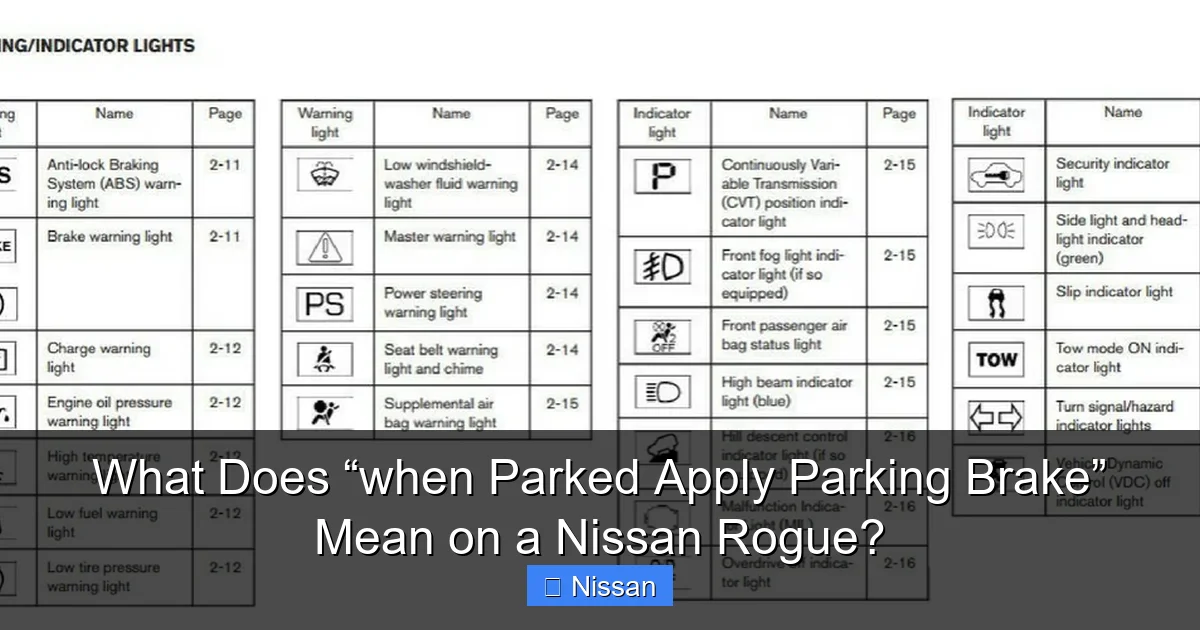
Visual guide about What Does “when Parked Apply Parking Brake” Mean on a Nissan Rogue?
Image source: i2.wp.com
Before we can fully understand the “when parked apply parking brake” message, it’s important to know what the parking brake actually does and how it functions in the Nissan Rogue. The parking brake—also known as the emergency brake or handbrake—is a secondary braking system designed to keep your vehicle stationary when it’s parked. While the primary braking system (the foot brake) is used while driving, the parking brake is meant for long-term immobilization.
In older vehicles, the parking brake was typically a mechanical system operated by a lever between the front seats or a pedal on the far left side of the driver’s footwell. Pulling the lever or pressing the pedal would engage cables that applied brake shoes or pads to the rear wheels. This simple, reliable system worked well for decades.
But in modern vehicles like the Nissan Rogue, things have evolved. Most Rogues produced from 2014 onward are equipped with an electronic parking brake (EPB). Instead of cables and levers, the EPB uses electric motors to apply and release the brake pads on the rear wheels. This system is controlled by a button usually located near the gear shifter or center console. When you press the “P” button (for “Park”) on the gear selector and then press the parking brake button, the system sends a signal to the motors to clamp down on the rear brakes.
One of the key advantages of the EPB is its integration with other vehicle systems. For example, many Rogues are equipped with an auto-hold feature that keeps the brakes applied when you come to a stop in traffic, so you don’t have to keep your foot on the pedal. Additionally, the EPB can automatically engage when the vehicle is shifted into Park, depending on the driving mode and settings.
However, this automation isn’t always perfect. The system relies on sensors, software, and electrical power to function correctly. If any of these components are compromised—such as a weak battery, a software glitch, or a sensor misreading—the automatic engagement may fail. That’s when the “when parked apply parking brake” message appears. It’s the vehicle’s way of saying, “Hey, I tried to apply the brake automatically, but I’m not sure it worked. Please double-check.”
Why Does the “When Parked Apply Parking Brake” Message Appear?
Visual guide about What Does “when Parked Apply Parking Brake” Mean on a Nissan Rogue?
Image source: cdn.nissanpros.com
Now that we understand how the parking brake works in the Nissan Rogue, let’s explore the most common reasons why the “when parked apply parking brake” message might appear on your dashboard. While it can be alarming the first time you see it, this warning is usually not a sign of a serious mechanical failure. Instead, it’s often triggered by one of several predictable factors.
1. Automatic Engagement Failure
The most common reason for the message is that the electronic parking brake failed to engage automatically when you shifted into Park. This can happen for a variety of reasons. For instance, if you turn off the engine before shifting into Park, the system may not have enough time to process the command. Similarly, if you shift into Park while the vehicle is still moving slightly (even at idle speed), the sensors might not register the correct state.
Another scenario is when the vehicle is parked on a steep incline. In some cases, the system may delay automatic engagement to prevent strain on the brake components. Instead, it waits for the driver to manually apply the brake, hence the reminder message.
2. Low Battery Voltage
The electronic parking brake relies on electrical power to function. If your vehicle’s battery is weak or the voltage drops below a certain threshold—especially during cold weather or after extended periods of inactivity—the EPB system may not operate correctly. This can prevent the automatic engagement feature from working, prompting the warning message.
You might notice other electrical issues alongside the parking brake warning, such as dim headlights, slow power window operation, or infotainment system glitches. If you suspect a battery issue, it’s a good idea to have it tested at a service center.
3. Software or Sensor Glitches
Like any computer-controlled system, the EPB is susceptible to software bugs or sensor errors. Over time, the vehicle’s onboard computer may misinterpret data from wheel speed sensors, brake position sensors, or the gear selector. This can lead to false warnings or failure to engage the brake.
In some cases, a simple software reset can resolve the issue. This might involve turning the ignition on and off, disconnecting the battery for a few minutes, or using a diagnostic tool to clear error codes. Nissan has released several technical service bulletins (TSBs) related to EPB software updates, so checking with your dealer for any available updates is a smart move.
4. Manual Override or User Error
Sometimes, the message appears simply because the driver didn’t engage the parking brake manually. While many drivers assume the system will always auto-engage, this isn’t always the case—especially if the vehicle is in a specific driving mode or if the auto-engage feature has been disabled.
For example, some Rogues allow you to turn off the automatic parking brake engagement through the vehicle settings menu. If this feature is disabled, the system will rely entirely on the driver to apply the brake, and the warning message will appear as a reminder.
Additionally, if you press the parking brake button too quickly after shifting into Park, the system may not register the command. It’s best to wait a second or two after shifting into Park before pressing the brake button.
5. Environmental Factors
Extreme temperatures can also affect the performance of the electronic parking brake. In very cold weather, the brake components may contract slightly, reducing their effectiveness. In hot climates, prolonged exposure to heat can cause electronic components to overheat or malfunction.
Parking on uneven or sloped surfaces can also contribute to the issue. If the vehicle is tilted at an angle, the sensors may detect instability and delay brake engagement as a safety precaution.
Is It Safe to Ignore the “When Parked Apply Parking Brake” Message?
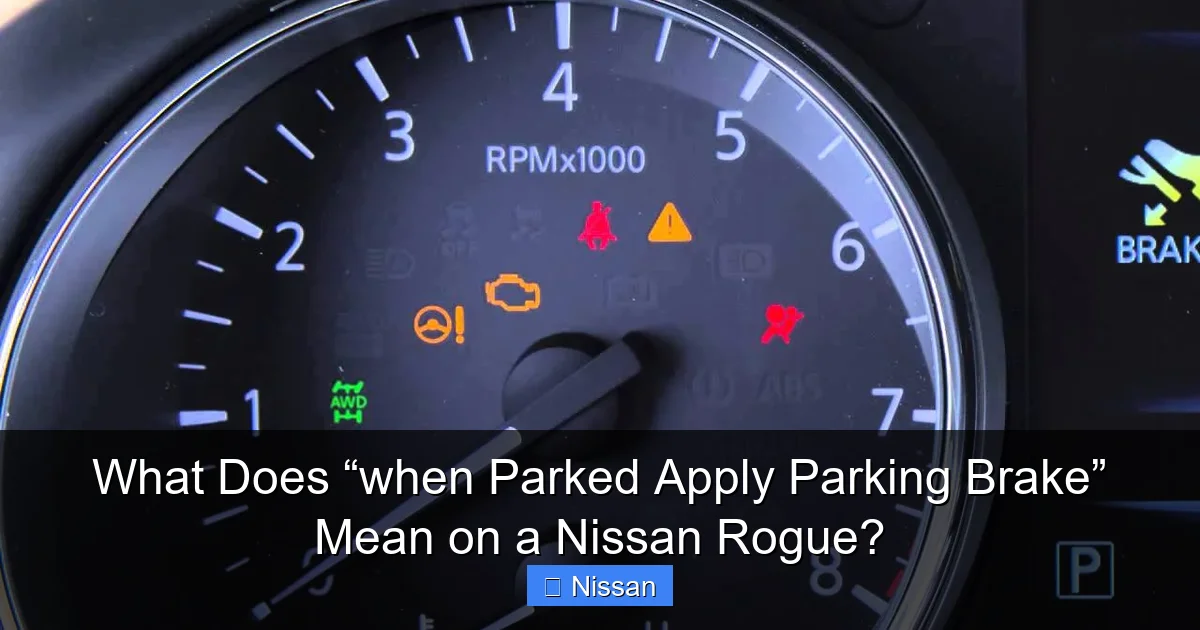
Visual guide about What Does “when Parked Apply Parking Brake” Mean on a Nissan Rogue?
Image source: i.ytimg.com
This is a critical question that many Nissan Rogue owners ask. After all, if the vehicle is already in Park, isn’t that enough to keep it from moving? The short answer is: not necessarily. While the transmission’s park pawl (a small metal tooth that locks the output shaft) is designed to hold the vehicle in place, it’s not meant to bear the full load—especially on hills or over long periods.
The Risks of Relying Solely on the Transmission
When you shift into Park, the park pawl engages with the transmission’s output shaft to prevent the wheels from turning. However, this small component is not designed to handle significant stress. If the vehicle is parked on an incline and the parking brake isn’t applied, the entire weight of the vehicle rests on the park pawl. Over time, this can cause the pawl to wear down, crack, or even break.
A broken park pawl can lead to catastrophic transmission damage. In the worst-case scenario, the vehicle could roll away, causing injury or property damage. Even on flat ground, temperature changes and vibrations can cause the vehicle to shift slightly, putting pressure on the park pawl.
How the Parking Brake Adds an Extra Layer of Safety
The parking brake provides a mechanical backup that takes the load off the transmission. By applying the brake to the rear wheels, it prevents the vehicle from rolling, even if the park pawl fails. This is especially important in areas with steep driveways, hilly terrain, or frequent parking on slopes.
Additionally, using the parking brake regularly helps maintain the health of the brake system itself. The electronic motors and brake pads need periodic use to prevent seizing or corrosion. If the parking brake is never engaged, the components may degrade over time, leading to reduced effectiveness or complete failure when you need it most.
Real-World Example: A Cautionary Tale
Consider this scenario: A Nissan Rogue owner parks on a steep hill in San Francisco. They shift into Park, turn off the engine, and walk away—without applying the parking brake. Overnight, the park pawl begins to wear due to the constant strain. The next morning, the owner returns to find the vehicle has rolled a few feet, damaging the bumper against a curb. The repair bill includes transmission inspection and potential pawl replacement—costing hundreds of dollars.
Had the parking brake been applied, the vehicle would have remained stationary, and no damage would have occurred. This example illustrates why the “when parked apply parking brake” message should never be ignored.
How to Respond When You See the Message
If you see the “when parked apply parking brake” message on your Nissan Rogue, don’t panic. In most cases, it’s a simple issue that can be resolved quickly. Here’s a step-by-step guide on what to do:
Step 1: Check if the Parking Brake Is Already Applied
Before doing anything else, look at the dashboard indicator. If the parking brake light is already illuminated (usually a red “P” or exclamation mark), the brake may already be engaged, and the message could be a false alert. Try releasing and reapplying the brake to reset the system.
Step 2: Manually Apply the Parking Brake
If the brake isn’t engaged, press the parking brake button firmly. You should hear a clicking sound as the electric motors activate. The dashboard light should turn on, and the message should disappear. If the message persists, try turning the ignition off and on again.
Step 3: Restart the Vehicle
Sometimes, a simple restart can clear the warning. Turn the key to the “off” position, wait 10–15 seconds, then restart the engine. Shift into Park and apply the parking brake. The message should no longer appear.
Step 4: Check the Battery and Electrical System
If the warning keeps returning, have your battery and charging system tested. A weak battery can cause intermittent electrical issues, including EPB malfunctions. Most auto parts stores offer free battery testing.
Step 5: Visit a Nissan Service Center
If the problem continues, it’s time to consult a professional. A certified Nissan technician can run a diagnostic scan to check for error codes, update the software, or inspect the brake components for wear or damage.
Tips to Prevent the Message from Appearing
While the “when parked apply parking brake” message is usually harmless, it’s best to prevent it from happening in the first place. Here are some practical tips to keep your Nissan Rogue’s parking brake system running smoothly:
- Always apply the parking brake manually: Even if you think the system will do it automatically, take the extra second to press the button. This ensures the brake is engaged and reduces strain on the transmission.
- Shift into Park before turning off the engine: This gives the system time to process the command and engage the brake automatically.
- Use the parking brake on every stop: Whether you’re parked on a hill or flat ground, make it a habit to apply the brake. This keeps the system active and prevents component corrosion.
- Keep your battery in good condition: Replace an aging battery before it fails. A strong electrical system is essential for the EPB to function properly.
- Check for software updates: Visit your Nissan dealer periodically to see if there are any available updates for your vehicle’s software, including the parking brake system.
- Avoid abrupt shifts: Don’t shift into Park while the vehicle is still moving, even slightly. Come to a complete stop first.
Conclusion
The “when parked apply parking brake” message on your Nissan Rogue is more than just a nagging reminder—it’s a vital safety feature designed to protect your vehicle and your peace of mind. While it can be triggered by minor glitches or user habits, it serves an important purpose: ensuring that your SUV remains securely parked, especially on inclines or during long-term storage.
By understanding how the electronic parking brake works, why the message appears, and how to respond, you can take control of the situation and avoid potential damage. Remember, the parking brake is not optional—it’s a critical part of your vehicle’s safety system. Make it a habit to apply it every time you park, and your Rogue will thank you with years of reliable service.
Whether you’re navigating city streets or mountain roads, a little attention to this warning can go a long way in keeping you and your vehicle safe. So the next time you see that message, don’t ignore it. Take a moment, press the button, and drive with confidence.
Frequently Asked Questions
Why does my Nissan Rogue say “when parked apply parking brake” even when the brake is on?
This can happen due to a sensor glitch or software error. The system may not recognize that the brake is engaged. Try releasing and reapplying the brake, or restart the vehicle to reset the system.
Can I drive my Rogue if the parking brake warning stays on?
Yes, you can drive the vehicle, but you should not rely on the parking brake until the issue is resolved. Have it checked by a technician to ensure the brake is functioning properly.
Does the parking brake wear out over time?
Yes, like all brake components, the parking brake pads and motors can wear out. Regular use helps maintain their condition, but they may need replacement after many years of service.
Can cold weather cause the parking brake message to appear?
Yes, extreme cold can affect the electronic components and reduce battery performance, leading to EPB malfunctions. Keep your battery charged and consider using a block heater in very cold climates.
Is it bad to always use the parking brake on flat ground?
No, it’s actually recommended. Using the parking brake regularly prevents the components from seizing and reduces strain on the transmission’s park pawl.
How do I turn off the automatic parking brake engagement on my Rogue?
You can usually disable auto-engage through the vehicle settings menu on the infotainment screen. Look for “Parking Brake” or “Auto Hold” settings. Refer to your owner’s manual for specific instructions.