
How to Adjust a Subaru Headrest

Adjusting a Subaru headrest is simple but essential for safety and comfort. Whether you’re driving solo or carrying passengers, proper headrest positioning can reduce injury risk and improve posture. This guide walks you through every step, model variation, and pro tip to get it right every time.
Key Takeaways
- Headrests are safety devices: They protect your neck and spine during rear-end collisions by limiting head movement.
- Adjust before driving: Always set your headrest to the correct height and angle before starting your trip.
- Height matters most: The top of the headrest should align with the top of your head or at least the top of your ears.
- Forward tilt improves protection: Slightly tilting the headrest forward reduces the gap between your head and the rest.
- Rear seats also need adjustment: Don’t forget to check and adjust rear headrests for passenger safety.
- Use the release button or lever: Most Subaru models use a push-button or pull-lever system to raise, lower, or remove headrests.
- Refer to your owner’s manual: Model-specific instructions ensure you’re using the correct method for your Subaru.
📑 Table of Contents
- Why Proper Headrest Adjustment Matters in Your Subaru
- Understanding Subaru Headrest Design and Function
- Step-by-Step Guide: How to Adjust a Subaru Headrest
- Common Mistakes to Avoid When Adjusting Your Subaru Headrest
- Model-Specific Tips for Subaru Headrest Adjustment
- Maintenance and Care for Your Subaru Headrest
- Conclusion: Make Headrest Adjustment a Habit
Why Proper Headrest Adjustment Matters in Your Subaru
When you slide into the driver’s seat of your Subaru, your first instinct might be to adjust the seat, mirrors, and steering wheel. But there’s one often-overlooked feature that plays a critical role in your safety: the headrest. While it may seem like just a cushion for your neck during long drives, the headrest is actually a vital part of your vehicle’s passive safety system. In the event of a rear-end collision, a properly adjusted headrest can significantly reduce the risk of whiplash and spinal injury.
Subaru has long been known for its commitment to safety, earning top ratings from organizations like the IIHS (Insurance Institute for Highway Safety) and NHTSA (National Highway Traffic Safety Administration). A big part of that reputation comes from thoughtful design elements—like ergonomic, adjustable headrests—that protect drivers and passengers alike. Whether you drive a rugged Outback, a sporty WRX, or a family-friendly Ascent, your Subaru’s headrests are engineered to support your head and neck in the most effective way possible.
But here’s the catch: all that engineering is wasted if the headrest isn’t positioned correctly. Many drivers leave their headrests too low, too far back, or even removed entirely—thinking it’s just about comfort. In reality, a poorly adjusted headrest can turn a minor fender bender into a serious injury. That’s why learning how to adjust a Subaru headrest isn’t just a convenience—it’s a safety essential.
Understanding Subaru Headrest Design and Function

Visual guide about How to Adjust a Subaru Headrest
Image source: cdn-illustrations.revolutionparts.io
Before we dive into the how-to, let’s take a moment to understand what makes Subaru headrests unique. Unlike older vehicles with fixed or minimally adjustable headrests, modern Subarus feature advanced designs that balance comfort, visibility, and crash protection.
Most Subaru models—including the Impreza, Crosstrek, Forester, Outback, Legacy, and Ascent—come equipped with active or reactive headrest systems. These aren’t motorized, but they are engineered to move slightly during impact to absorb energy and reduce neck strain. The headrests are typically mounted on two sturdy metal rods that slide into the seatback, allowing for vertical adjustment. Many also feature a tilt mechanism, especially in front seats, so you can angle the cushion forward or backward.
One key feature across the lineup is the ergonomic contouring. Subaru headrests are shaped to cradle the natural curve of your neck and support the base of your skull. This design helps maintain proper spinal alignment, especially on long drives. Some higher-trim models even include memory settings that sync with your seat position, so your headrest adjusts automatically when you select your saved driving profile.
It’s also worth noting that Subaru pays attention to rear-seat safety. Rear headrests are now standard on all models and are designed to fold down when not in use—but they should always be raised and locked in place when passengers are seated. This ensures that everyone in the vehicle is protected, not just the driver.
Step-by-Step Guide: How to Adjust a Subaru Headrest
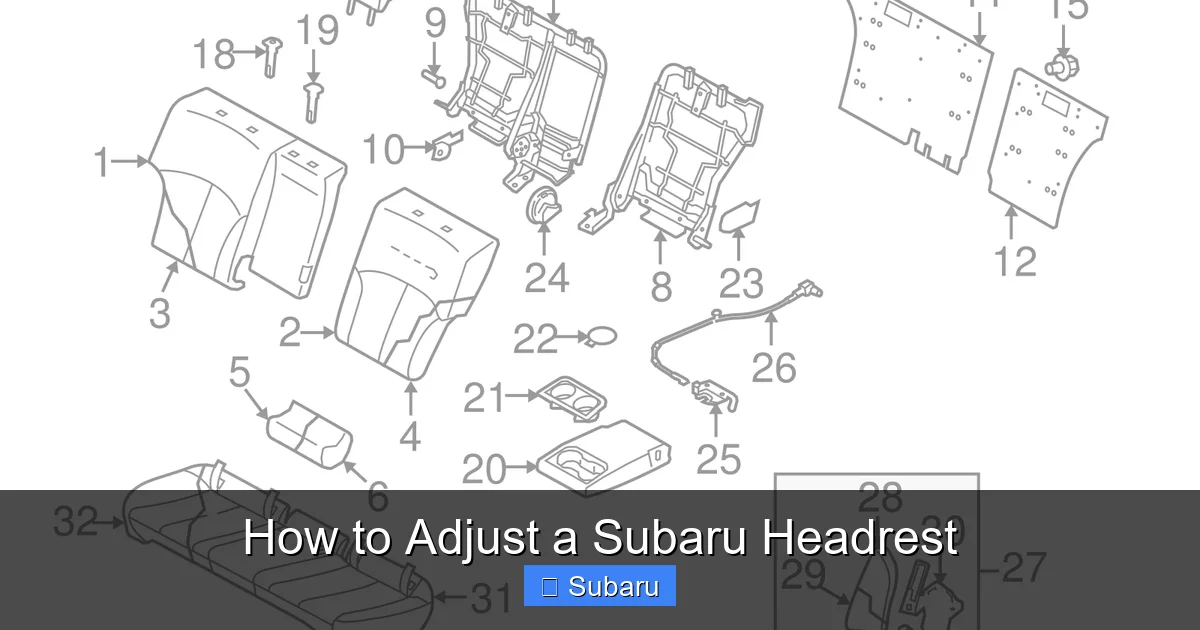
Visual guide about How to Adjust a Subaru Headrest
Image source: cdn-illustrations.revolutionparts.io
Now that you understand why headrest adjustment matters, let’s walk through the actual process. The steps are similar across most Subaru models, but there are slight variations depending on whether you’re adjusting a front or rear seat headrest, and whether your vehicle has a tilt function.
Adjusting Front Seat Headrests
Start with the driver’s seat—this is the most important one to get right. Here’s how to adjust your front headrest properly:
1. **Sit in the seat and get comfortable.** Adjust your seat position first so your back is supported and your feet reach the pedals easily. Your posture affects how the headrest should be positioned.
2. **Locate the adjustment mechanism.** Most Subaru front headrests have a release button or lever on the side or back of the headrest stem. On some models, like the Outback and Forester, it’s a small black button on the left side. On the WRX or BRZ, it might be a pull-up lever.
3. **Raise or lower the headrest.** Press the button (or pull the lever) and gently push the headrest up or down. You’ll feel it click into place at various heights. The goal is to position the top of the headrest level with the top of your head. If that’s not possible, aim for at least the top of your ears. Never leave the headrest below ear level—this drastically reduces its effectiveness.
4. **Tilt the headrest forward (if available).** Many Subaru front headrests can tilt forward. This is a game-changer for safety. A slight forward tilt reduces the distance between your head and the headrest, minimizing whiplash risk. To adjust, grip the sides of the headrest and gently push the top forward. You should feel it lock into a new position. The ideal angle is one where the headrest touches the back of your head when you’re sitting upright—no gap.
5. **Test the fit.** Lean your head back slightly. The headrest should make contact with the base of your skull, not the middle of your neck. If it’s pressing into your neck, it’s too low. If there’s a gap between your head and the rest, it’s too far back.
Adjusting Rear Seat Headrests
Rear headrests are just as important, especially if you regularly carry passengers. Here’s how to adjust them:
1. **Check if the headrest is folded down.** Many Subaru rear headrests fold flat to improve rear visibility when the seat is empty. If it’s down, lift it until it clicks into the upright position.
2. **Use the release button.** Like the front seats, rear headrests usually have a release button on the side. Press it and raise the headrest to the desired height. The same rule applies: the top should align with the top of the passenger’s head or at least their ears.
3. **Ensure it’s locked in place.** Give the headrest a gentle tug to make sure it’s secure. A loose headrest won’t provide protection in a crash.
4. **Fold down when not in use (optional).** If the rear seat is empty and you need better visibility, you can fold the headrest down. But remember to raise it again before passengers sit down.
Removing a Headrest (When Necessary)
There are rare cases where you might need to remove a headrest—like when installing a child seat or cleaning the seat upholstery. Here’s how:
1. **Raise the headrest to its highest position.** This gives you more leverage.
2. **Press the release button and pull upward.** On most Subarus, you’ll need to press the button and pull the headrest straight up. It may require a bit of force, but don’t worry—it’s designed to come out.
3. **Store the headrest safely.** Keep it in a clean, dry place so you can reinstall it later.
4. **Reinstall carefully.** Align the metal rods with the seatback guides and push down until you hear a click. Test it by pulling up gently to ensure it’s locked.
Common Mistakes to Avoid When Adjusting Your Subaru Headrest
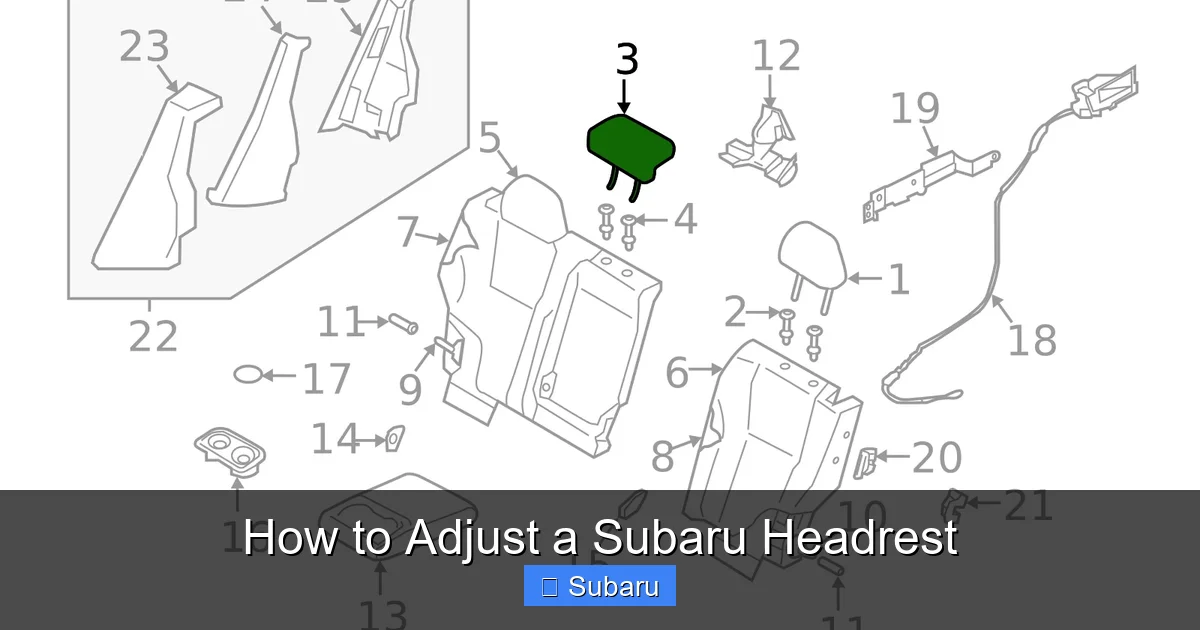
Visual guide about How to Adjust a Subaru Headrest
Image source: cdn-illustrations.revolutionparts.io
Even with the best intentions, it’s easy to make mistakes when adjusting your headrest. Here are some common pitfalls and how to avoid them:
Leaving the Headrest Too Low
This is the #1 mistake drivers make. A headrest that sits below ear level won’t stop your head from snapping backward in a collision. Always aim for the top of your head or at least the top of your ears. If you’re shorter than average, consider using a seat cushion to raise your seating position—this helps achieve the correct headrest alignment.
Ignoring the Tilt Function
Many drivers adjust the height but forget about the tilt. A forward-tilted headrest is far more effective at preventing whiplash. Don’t skip this step—even a small angle makes a big difference.
Removing Headrests for “Comfort”
Some people remove headrests because they find them uncomfortable or obstructive. This is extremely dangerous. Instead, try adjusting the height and tilt, or use a padded cover to improve comfort. Never drive without a properly installed headrest.
Forgetting Rear Passengers
It’s easy to focus only on the driver’s seat, but rear passengers are just as vulnerable. Make it a habit to check and adjust rear headrests whenever someone gets in the back seat.
Not Testing the Fit
Adjusting the headrest isn’t a “set it and forget it” task. After making changes, lean back and test the fit. Your head should rest comfortably against the cushion with no gaps.
Model-Specific Tips for Subaru Headrest Adjustment
While the basic principles are the same across the Subaru lineup, there are some model-specific details to keep in mind.
Subaru Outback and Legacy
These midsize sedans and wagons feature highly adjustable front headrests with both height and tilt controls. The release button is usually on the left side. The headrests are also designed to work with Subaru’s EyeSight driver-assist system, so avoid covering them with accessories that could interfere with sensors.
Subaru Forester and Crosstrek
Compact SUVs like the Forester and Crosstrek have slightly more upright seating positions, which can affect headrest alignment. You may need to tilt the headrest more aggressively forward to close the gap. The rear headrests on these models fold flat and lock with a audible click—listen for it to ensure they’re secure.
Subaru WRX and BRZ
Performance models like the WRX and BRZ have sportier seats with deeper bolsters. The headrests are integrated into the seatback and may have a pull-lever instead of a button. The tilt adjustment is more limited, so focus on getting the height right.
Subaru Ascent
As a three-row SUV, the Ascent has headrests in all seven seats. The second and third-row headrests are smaller but still adjustable. Make sure all are raised and locked when passengers are present, especially in the third row where visibility is already limited.
Maintenance and Care for Your Subaru Headrest
To keep your headrests functioning properly and looking good, regular maintenance is key.
Cleaning the Headrest
Over time, headrests can accumulate sweat, oils, and dirt. Use a mild upholstery cleaner and a soft cloth to wipe them down. For leather-trimmed models, use a leather conditioner to prevent cracking. Avoid harsh chemicals that could damage the fabric or padding.
Checking for Wear and Tear
Inspect the headrest mechanism periodically. If the headrest wobbles, won’t stay in place, or the release button feels loose, it may need servicing. Don’t ignore these signs—a faulty headrest won’t protect you in a crash.
Lubricating the Mechanism (If Needed)
If the headrest is hard to adjust, a small amount of silicone-based lubricant on the metal rods can help. Avoid oil-based products, as they can attract dirt and gum up the mechanism.
Conclusion: Make Headrest Adjustment a Habit
Adjusting your Subaru headrest might seem like a small task, but it’s one of the simplest and most effective ways to protect yourself and your passengers. With just a few seconds of effort, you can significantly reduce your risk of injury in a collision. Remember: the goal isn’t just comfort—it’s safety.
Make it a habit to check your headrest every time you get in the car. Adjust the height, tilt it forward, and ensure it’s locked in place. Don’t forget the rear seats, especially if you have kids or frequent passengers. And if you’re ever unsure, consult your owner’s manual—Subaru provides detailed instructions for every model.
Your Subaru is designed to keep you safe, and the headrest is a key part of that promise. By taking the time to adjust it correctly, you’re not just following a recommendation—you’re taking control of your safety on the road.
Frequently Asked Questions
How high should my Subaru headrest be?
The top of the headrest should align with the top of your head or at least the top of your ears. This ensures maximum protection in a rear-end collision.
Can I remove my Subaru headrest?
Yes, but only temporarily—for cleaning or child seat installation. Never drive without a properly installed headrest, as it’s a critical safety feature.
Why does my Subaru headrest tilt forward?
The forward tilt reduces the gap between your head and the headrest, minimizing whiplash risk. It’s a safety feature, not a defect.
Do rear seat headrests need to be adjusted?
Yes. Rear passengers are just as vulnerable in a crash. Always raise and lock rear headrests when someone is seated.
What if my headrest won’t stay in place?
This could indicate a worn mechanism. Check for loose parts or consult a Subaru service center for inspection and repair.
Are Subaru headrests compatible with seat covers?
Most are, but avoid bulky covers that interfere with the adjustment mechanism or block airbag deployment. Choose slim, breathable materials.
