
Do Subaru Headlights Turn Off Automatically?

Yes, many Subaru vehicles are equipped with automatic headlights that turn on and off based on ambient light conditions. This feature enhances safety and convenience, especially during dawn, dusk, or sudden weather changes. However, functionality varies by model and trim level, so it’s important to understand your specific vehicle’s capabilities.
Key Takeaways
- Automatic headlights are standard on most modern Subaru models: Starting from the 2015 model year, many Subarus come with auto-on/off headlights as a standard or available feature.
- The system uses a light sensor to detect darkness: A photoelectric sensor, usually located near the windshield or rearview mirror, triggers the headlights when light levels drop below a certain threshold.
- Not all trims include the feature: Base trims on older models may require manual operation, so always check your owner’s manual or vehicle specifications.
- Auto headlights improve safety and reduce driver distraction: By automatically adjusting to lighting conditions, drivers can focus more on the road.
- Battery drain is minimal with auto-off functionality: Most Subaru models include a timer or engine-off auto-shutoff to prevent battery depletion.
- You can override the automatic system manually: Drivers can switch to full manual control if preferred, using the headlight stalk or dashboard controls.
- Regular maintenance ensures reliable performance: Cleaning the light sensor and checking bulb function helps maintain consistent operation.
📑 Table of Contents
- Do Subaru Headlights Turn Off Automatically? A Complete Guide
- How Subaru’s Automatic Headlight System Works
- Which Subaru Models Have Automatic Headlights?
- How to Use and Control Automatic Headlights in Your Subaru
- Benefits of Automatic Headlights in Subaru Vehicles
- Troubleshooting Common Issues with Subaru Automatic Headlights
- Maintenance Tips for Reliable Performance
- Conclusion
Do Subaru Headlights Turn Off Automatically? A Complete Guide
If you’ve ever driven a Subaru at dusk or through a tunnel and noticed the headlights flick on without you touching a switch, you’ve experienced the convenience of automatic headlights. But do Subaru headlights turn off automatically too? The short answer is yes—most modern Subaru vehicles are designed to turn both on and off based on surrounding light conditions. This feature, often referred to as “auto headlights” or “automatic headlight control,” is a smart safety and convenience technology that has become increasingly common across Subaru’s lineup.
Subaru has long prioritized safety, and automatic headlights are just one example of how the brand integrates intelligent systems to support drivers. Whether you’re navigating a foggy mountain road at sunrise or pulling into a dimly lit garage at night, these lights help ensure you’re always visible—without requiring constant attention. But like any automotive feature, it’s not one-size-fits-all. The exact behavior depends on your Subaru model, year, trim level, and even regional specifications.
In this comprehensive guide, we’ll explore how Subaru’s automatic headlight system works, which models include it, how to use and maintain it, and what to do if it’s not functioning as expected. Whether you’re a new Subaru owner or considering an upgrade, understanding this feature can enhance your driving experience and keep you safer on the road.
How Subaru’s Automatic Headlight System Works
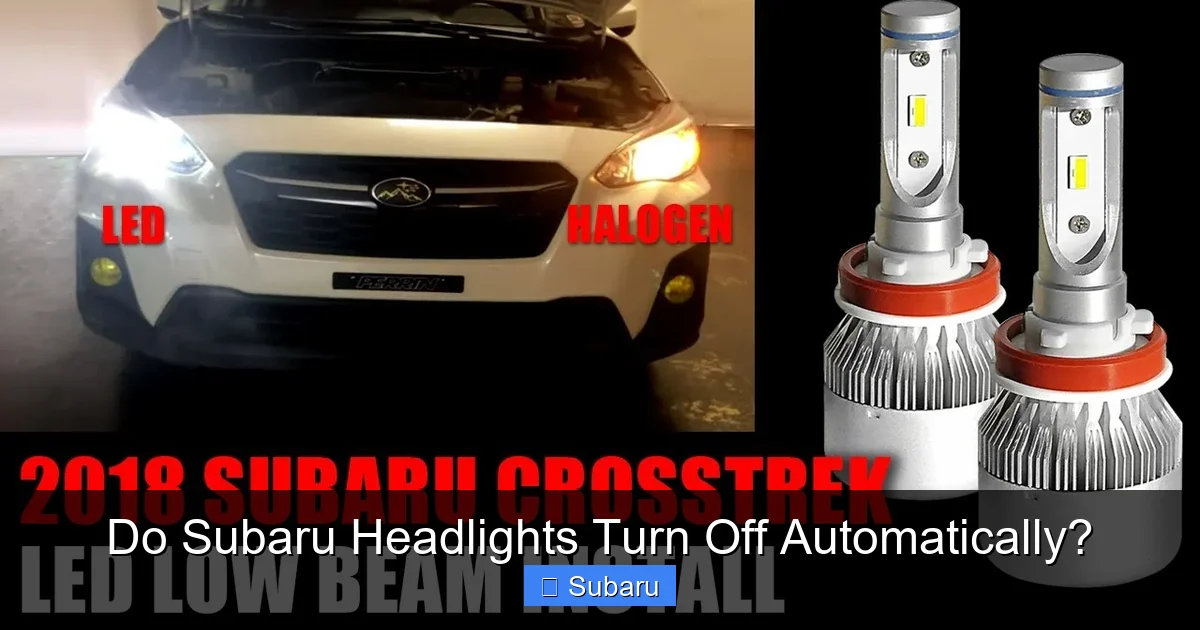
Visual guide about Do Subaru Headlights Turn Off Automatically?
Image source: i.ytimg.com
At the heart of Subaru’s automatic headlight system is a simple yet effective piece of technology: a light sensor. This sensor, typically mounted on the dashboard near the base of the windshield or integrated into the rearview mirror housing, continuously monitors the amount of ambient light outside the vehicle. When the sensor detects that light levels have dropped—such as during sunset, in a tunnel, or under heavy cloud cover—it sends a signal to the vehicle’s electrical system to turn on the headlights.
The system is designed to respond quickly and smoothly. For example, if you drive into a tunnel during the day, the headlights will activate within seconds, improving visibility and helping other drivers see your vehicle. Similarly, when you exit the tunnel or the sun rises, the sensor detects the increased light and automatically turns the headlights off. This seamless transition reduces the need for manual intervention, allowing you to focus on driving.
Most Subaru models with this feature use a photoelectric sensor that measures visible light, not infrared or ultraviolet. This means it reacts to what the human eye would perceive as “darkness,” making it highly intuitive. The sensitivity of the sensor can sometimes be adjusted, depending on the model, allowing drivers to fine-tune when the lights activate. For instance, some systems let you choose between “normal” and “sensitive” modes, where the latter turns lights on earlier in low-light conditions.
It’s important to note that the automatic system only controls the low-beam headlights. High beams, fog lights, and daytime running lights (DRLs) operate separately and are not typically managed by the same sensor. DRLs, for example, may stay on during the day regardless of the auto headlight setting, depending on regional regulations and vehicle configuration.
Sensor Location and Function
The light sensor in most Subaru vehicles is strategically placed to get an accurate reading of outside light conditions. In models like the Outback, Forester, and Crosstrek, it’s commonly found just above the instrument cluster or embedded in the rearview mirror mount. This positioning ensures it’s not obstructed by the hood or dashboard and has a clear view of the sky ahead.
Because the sensor relies on visibility, it’s crucial to keep this area clean. Dirt, snow, ice, or even a parked windshield sunshade can block the sensor and cause the system to malfunction. For example, if you leave a sunshade up during the day, the sensor may think it’s dark outside and turn the headlights on unnecessarily. Similarly, a layer of grime can delay the activation of lights at dusk, creating a potential safety hazard.
Regular cleaning with a soft cloth and mild cleaner can help maintain sensor performance. Avoid using harsh chemicals or abrasive materials, as these could damage the sensor lens. If you notice inconsistent behavior—like headlights turning on during bright daylight or failing to activate at night—checking and cleaning the sensor should be your first troubleshooting step.
Activation and Deactivation Timing
One of the most common questions Subaru owners have is: “How quickly do the headlights turn on and off?” The answer varies slightly by model and environmental conditions, but most systems are designed to activate within 2 to 5 seconds of detecting low light. This delay is intentional, preventing the lights from flickering on and off during brief shadows, such as when driving under trees or past buildings.
When it comes to turning off, the system typically waits a bit longer—usually 10 to 30 seconds after light levels return to normal. This buffer helps avoid rapid cycling, which could be distracting or wear out the electrical components prematurely. For example, if you drive out of a tunnel into sunlight, the headlights won’t shut off instantly. Instead, they’ll remain on for a short period to ensure you’re fully in clear conditions.
Some higher-end Subaru trims, especially those with advanced driver-assistance systems (ADAS), may include adaptive lighting features. These go beyond simple on/off control and can adjust beam patterns based on speed, steering angle, or weather. While not directly related to the auto on/off function, these systems often work in tandem with the automatic headlights to provide optimal visibility.
Which Subaru Models Have Automatic Headlights?
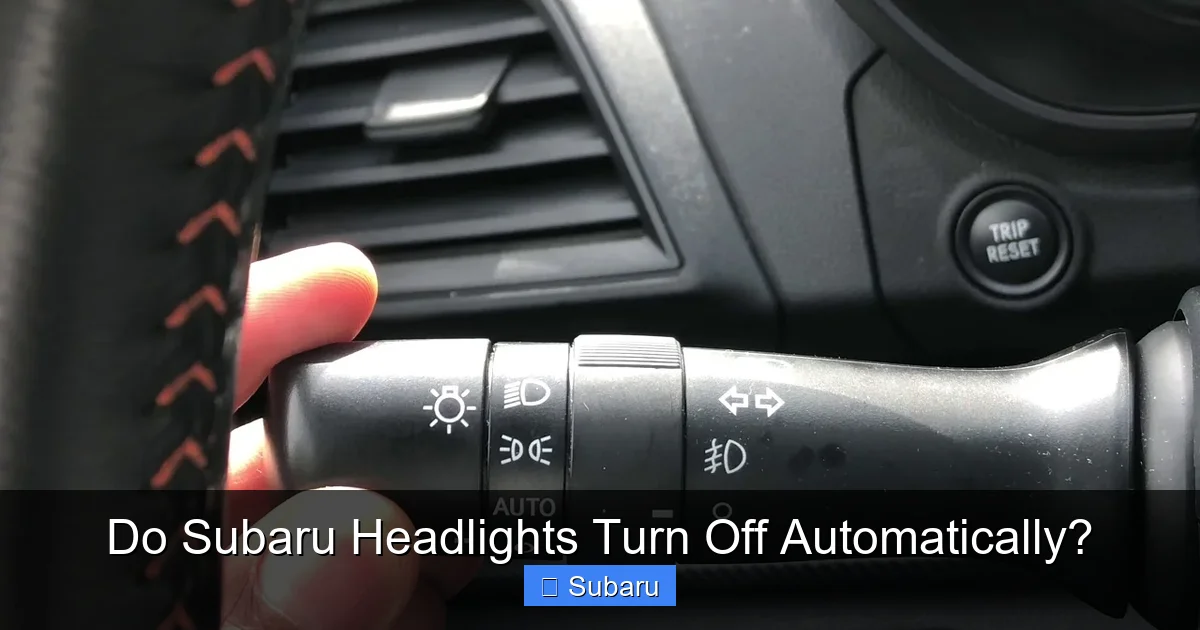
Visual guide about Do Subaru Headlights Turn Off Automatically?
Image source: i.ytimg.com
Subaru has made automatic headlights a standard or widely available feature across most of its current lineup. However, availability depends on the model year, trim level, and region. Let’s break down which Subaru vehicles typically include this feature and what to expect.
Starting around the 2015 model year, Subaru began equipping many of its vehicles with automatic headlights as standard equipment, especially in North America. Models like the Outback, Legacy, Forester, Crosstrek, and Ascent now commonly include the feature, even on base trims. However, older models or entry-level trims from earlier years may require manual operation.
For example, a 2023 Subaru Outback in the base trim (Premium) includes automatic headlights as standard. The same goes for the 2023 Forester and Crosstrek. In contrast, a 2012 Subaru Impreza might only have automatic headlights on higher trims like Limited or Sport, if at all. Always consult your owner’s manual or check the vehicle’s window sticker (Monroney label) to confirm.
Model-Specific Details
Let’s take a closer look at how automatic headlights are implemented across popular Subaru models:
– **Subaru Outback:** Since the 2015 redesign, the Outback has featured automatic headlights on all trims. The system is integrated with the vehicle’s STARLINK safety suite and works seamlessly with other driver aids like adaptive cruise control and lane departure warning.
– **Subaru Forester:** The Forester adopted automatic headlights as standard across all trims starting with the 2019 model year. Earlier models may have the feature only on higher trims. The sensor is typically located near the rearview mirror.
– **Subaru Crosstrek:** Similar to the Forester, the Crosstrek includes automatic headlights on most trims from 2018 onward. The system is user-friendly and requires no setup beyond ensuring the headlight switch is in the “AUTO” position.
– **Subaru Ascent:** As Subaru’s three-row SUV, the Ascent comes well-equipped, and automatic headlights are standard on all trims since its 2019 debut. The system also works in conjunction with available LED steering-responsive headlights.
– **Subaru Legacy:** The Legacy has had automatic headlights as a standard feature since the 2015 model year. Higher trims may include additional lighting technologies like automatic high beams.
– **Subaru WRX and BRZ:** These performance-oriented models are a bit different. The WRX typically includes automatic headlights on higher trims (Limited, GT), while the base model may not. The BRZ, being a sport coupe, often lacks the feature entirely, especially in earlier years, due to its focus on simplicity and driver engagement.
Trim Level and Package Considerations
Even within the same model, trim levels can affect whether automatic headlights are included. For instance, a 2022 Subaru Outback Base trim includes the feature, but a 2010 Outback might only have it on the Limited trim. Additionally, some optional packages—like the Technology Package or EyeSight Driver Assist Technology—may bundle automatic headlights with other features.
It’s also worth noting that in some regions outside North America, Subaru may offer different standard equipment. For example, European or Australian models might have slightly different lighting regulations or sensor configurations. Always verify your vehicle’s specifications based on your location and model year.
How to Use and Control Automatic Headlights in Your Subaru
Visual guide about Do Subaru Headlights Turn Off Automatically?
Image source: i.ytimg.com
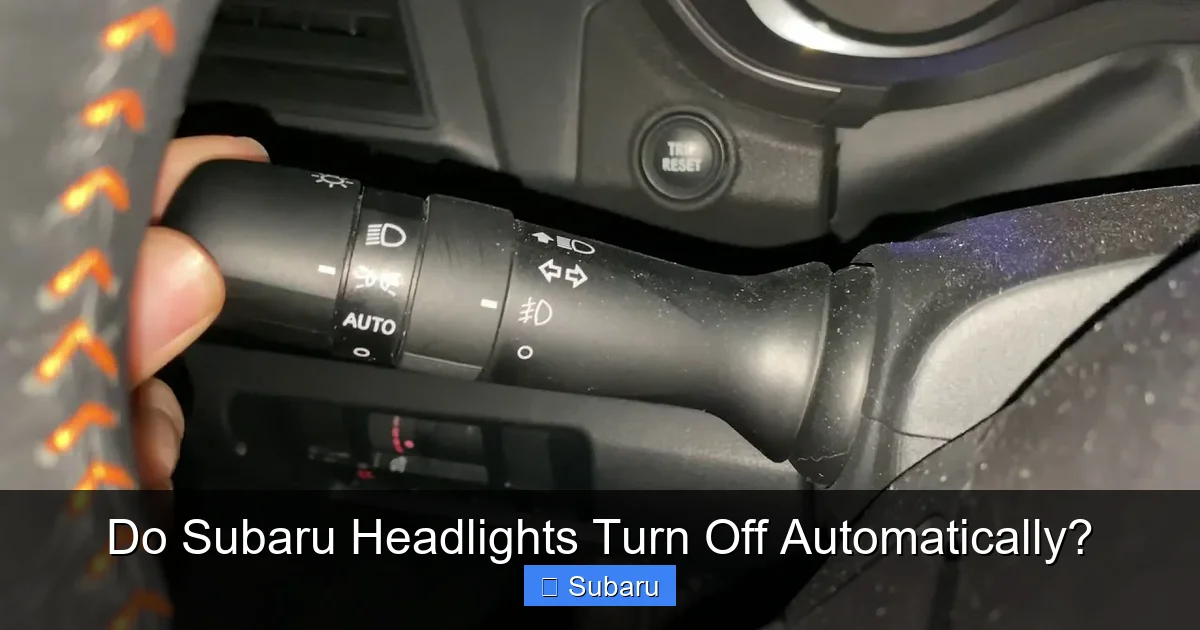
Using automatic headlights in a Subaru is straightforward, but it helps to understand the controls and settings to get the most out of the system. Most Subaru vehicles have a rotary headlight switch on the left side of the steering column. This switch typically has several positions: OFF, parking lights, AUTO, and full headlights (low and high beam).
To activate automatic mode, simply turn the switch to the “AUTO” position. You’ll usually see a green icon on the dashboard—often labeled “AUTO” or showing a headlight symbol—to confirm the system is active. Once enabled, the headlights will turn on and off based on the sensor’s readings.
Manual Override Options
Even with automatic headlights enabled, you retain full manual control. If you prefer to turn the lights on or off yourself, you can switch the stalk to the “ON” position. This will keep the headlights illuminated regardless of light conditions. Similarly, turning the switch to “OFF” will disable both automatic and manual operation, though this is not recommended for safety reasons.
Some drivers prefer manual control in certain situations—for example, when driving through a well-lit urban area at night or when using fog lights in poor weather. The ability to override the system ensures flexibility without sacrificing safety.
Adjusting Sensitivity (If Available)
On select Subaru models, particularly those with advanced infotainment systems, you may be able to adjust the sensitivity of the automatic headlight sensor. This is typically done through the vehicle settings menu on the multi-information display (MID) or touchscreen.
For example, in a 2023 Subaru Outback, you can go to:
– Settings > Vehicle > Lighting > Auto Light Sensitivity
Then choose between “Normal” and “High.” The “High” setting causes the headlights to activate earlier in low-light conditions, which can be useful in areas with frequent overcast skies or early sunsets.
Not all models offer this adjustment, so check your owner’s manual or settings menu to see if it’s available. If not, the system uses a factory-set sensitivity that balances responsiveness and reliability.
Daytime Running Lights and Auto Headlights
It’s important to distinguish between automatic headlights and daytime running lights (DRLs). DRLs are low-intensity lights that stay on during the day to increase vehicle visibility. In many Subaru models, DRLs operate independently of the automatic headlight system.
For example, your DRLs may be on during the day even if the automatic headlights are off. At night, the DRLs typically turn off, and the full headlights take over. This dual-system approach enhances safety by ensuring you’re visible in all conditions.
Benefits of Automatic Headlights in Subaru Vehicles
Automatic headlights offer several advantages that go beyond convenience. Let’s explore the key benefits that make this feature a valuable addition to your Subaru.
Enhanced Safety
One of the biggest benefits is improved safety. According to the National Highway Traffic Safety Administration (NHTSA), vehicles with automatic headlights are involved in fewer nighttime accidents. This is because the lights ensure you’re always visible to other drivers, even if you forget to turn them on.
Imagine driving into a tunnel during twilight. Without automatic headlights, you might not realize your lights are off until it’s too late. With the system active, your headlights turn on instantly, reducing the risk of a collision. The same applies to sudden weather changes, like a rainstorm or fog bank, where visibility drops rapidly.
Reduced Driver Distraction
Manual headlight operation requires attention and can be easy to forget, especially during long drives or in familiar areas. Automatic headlights eliminate this concern, allowing you to focus entirely on the road. This is particularly helpful for new drivers or those who frequently drive at dawn or dusk.
Battery Protection
A common concern with automatic systems is battery drain. However, Subaru’s design includes safeguards to prevent this. Most models with automatic headlights also feature an auto-off function when the engine is turned off. This means the lights won’t stay on indefinitely if you leave the vehicle in “AUTO” mode.
Additionally, many Subarus include a timer that shuts off the headlights after a set period—usually 30 to 60 seconds—after the engine is switched off. This prevents accidental battery drain if you forget to turn the lights off manually.
Improved Resale Value
Vehicles with advanced safety and convenience features like automatic headlights tend to have higher resale values. Buyers often look for these technologies when shopping for used cars, knowing they enhance safety and reduce maintenance hassles.
Troubleshooting Common Issues with Subaru Automatic Headlights
While automatic headlights are generally reliable, they can occasionally malfunction. Here are some common issues and how to address them.
Headlights Not Turning On Automatically
If your headlights aren’t activating in low light, first check that the switch is in the “AUTO” position. Next, inspect the light sensor for dirt, snow, or obstructions. Clean the area gently with a soft cloth.
If the sensor is clean and the switch is correct, the issue could be a faulty sensor, blown fuse, or wiring problem. Consult your owner’s manual for fuse locations and consider visiting a Subaru service center for diagnosis.
Headlights Staying On During the Day
If your headlights remain on in bright daylight, the sensor may be blocked or malfunctioning. Check for sunshades, stickers, or debris on the windshield near the sensor. Also, ensure the vehicle isn’t parked in a garage with dim lighting, which could trick the sensor.
In rare cases, a software glitch or calibration issue may require a dealership reset.
Battery Drain Concerns
If you suspect the automatic headlights are draining your battery, test the system by turning off the engine and monitoring the lights. They should shut off within a minute or two. If they stay on, there may be a wiring fault or defective relay.
Maintenance Tips for Reliable Performance
To keep your Subaru’s automatic headlights working smoothly, follow these simple maintenance tips:
– Clean the light sensor regularly, especially in winter or dusty conditions.
– Check headlight bulbs periodically and replace them if dim or flickering.
– Ensure the headlight switch is functioning properly and not stuck in one position.
– Have the system inspected during routine service appointments.
Conclusion
So, do Subaru headlights turn off automatically? Yes—most modern Subaru vehicles are equipped with intelligent automatic headlight systems that turn on and off based on ambient light. This feature enhances safety, reduces driver distraction, and protects your battery. While availability varies by model and trim, it’s now standard on many popular Subarus like the Outback, Forester, and Crosstrek.
By understanding how the system works, how to use it, and how to maintain it, you can enjoy a safer, more convenient driving experience. Whether you’re navigating a foggy mountain pass or pulling into your driveway at dusk, your Subaru’s automatic headlights are there to help—quietly, efficiently, and reliably.
Frequently Asked Questions
Do all Subaru models have automatic headlights?
No, not all Subaru models or trims include automatic headlights. While most modern Subarus (2015 and newer) have the feature, base trims on older models may require manual operation. Always check your owner’s manual or vehicle specifications.
Can I turn off the automatic headlight feature?
Yes, you can disable automatic mode by switching the headlight stalk to “OFF” or “ON.” This gives you full manual control over when the headlights are active.
Will automatic headlights drain my battery?
No, Subaru’s system includes safeguards like auto-off timers to prevent battery drain. The lights typically shut off within a minute after the engine is turned off.
Why won’t my Subaru’s headlights turn on automatically?
This could be due to a dirty sensor, incorrect switch position, or a malfunction. Clean the sensor near the windshield and ensure the switch is set to “AUTO.” If the problem persists, consult a technician.
Do automatic headlights work in fog or rain?
Yes, the system activates based on light levels, not weather. However, fog lights and high beams are controlled separately and may need to be turned on manually for optimal visibility.
Can I adjust when the headlights turn on?
On some Subaru models, yes. Check your vehicle settings menu for “Auto Light Sensitivity” options, which let you choose between “Normal” and “High” activation thresholds.
