
Who Makes Toyota Batteries?

Toyota batteries are not manufactured by Toyota itself but through strategic partnerships with leading global battery producers like Panasonic, CATL, and Prime Planet Energy Solutions. These collaborations ensure high-quality, reliable, and innovative battery technology for both conventional and hybrid Toyota vehicles.
Key Takeaways
- Toyota does not manufacture batteries in-house: Instead, it relies on trusted third-party suppliers to produce batteries for its vehicles.
- Panasonic is a key battery partner: Known for its advanced lithium-ion technology, Panasonic supplies batteries for many Toyota hybrids and EVs.
- CATL powers Toyota’s electric vehicles in China: Contemporary Amperex Technology Co. Limited (CATL) provides lithium iron phosphate (LFP) batteries for Toyota’s bZ series in the Chinese market.
- Prime Planet Energy & Solutions is a joint venture: Created by Toyota and Panasonic, this company focuses on next-generation battery development.
- Toyota uses different battery types: From traditional lead-acid to nickel-metal hydride (NiMH) and lithium-ion, depending on the vehicle model and power needs.
- Battery quality is rigorously tested: All Toyota-approved batteries undergo strict performance and safety standards before installation.
- Future focus is on solid-state batteries: Toyota is investing heavily in solid-state technology for longer range, faster charging, and improved safety.
📑 Table of Contents
- Who Makes Toyota Batteries? A Deep Dive into Toyota’s Battery Supply Chain
- The Role of Panasonic in Toyota’s Battery Ecosystem
- CATL: Powering Toyota’s Electric Future in China
- Prime Planet Energy & Solutions: The Toyota-Panasonic Joint Venture
- Types of Batteries Used in Toyota Vehicles
- How Toyota Ensures Battery Quality and Reliability
- The Future of Toyota Batteries: Innovation and Expansion
- Conclusion
Who Makes Toyota Batteries? A Deep Dive into Toyota’s Battery Supply Chain
When you think of Toyota, you probably picture reliable sedans like the Camry, rugged SUVs like the RAV4, or the iconic Prius hybrid. But have you ever wondered who actually makes the batteries that keep these vehicles running? It’s a great question—and the answer might surprise you. Toyota doesn’t manufacture its own batteries. Instead, it partners with some of the world’s most advanced battery manufacturers to ensure its vehicles are powered by top-tier technology.
This approach allows Toyota to focus on vehicle design, engineering, and integration while leveraging the specialized expertise of global battery leaders. Whether it’s a traditional 12-volt lead-acid battery under the hood or a high-voltage lithium-ion pack in a hybrid or electric vehicle, Toyota’s batteries come from carefully selected suppliers who meet strict quality and performance standards. These partnerships are not just about cost efficiency—they’re about innovation, sustainability, and long-term reliability.
In this article, we’ll explore the key companies behind Toyota’s batteries, how these partnerships work, and what the future holds for Toyota’s energy storage technology. From Panasonic’s cutting-edge lithium-ion cells to CATL’s dominance in the Chinese EV market, and the joint venture that’s shaping the next generation of batteries, we’ll cover it all. Whether you’re a Toyota owner, a car enthusiast, or just curious about how modern vehicles are powered, this guide will give you a clear picture of who makes Toyota batteries—and why it matters.
The Role of Panasonic in Toyota’s Battery Ecosystem
Visual guide about Who Makes Toyota Batteries?
Image source: batterytools.net
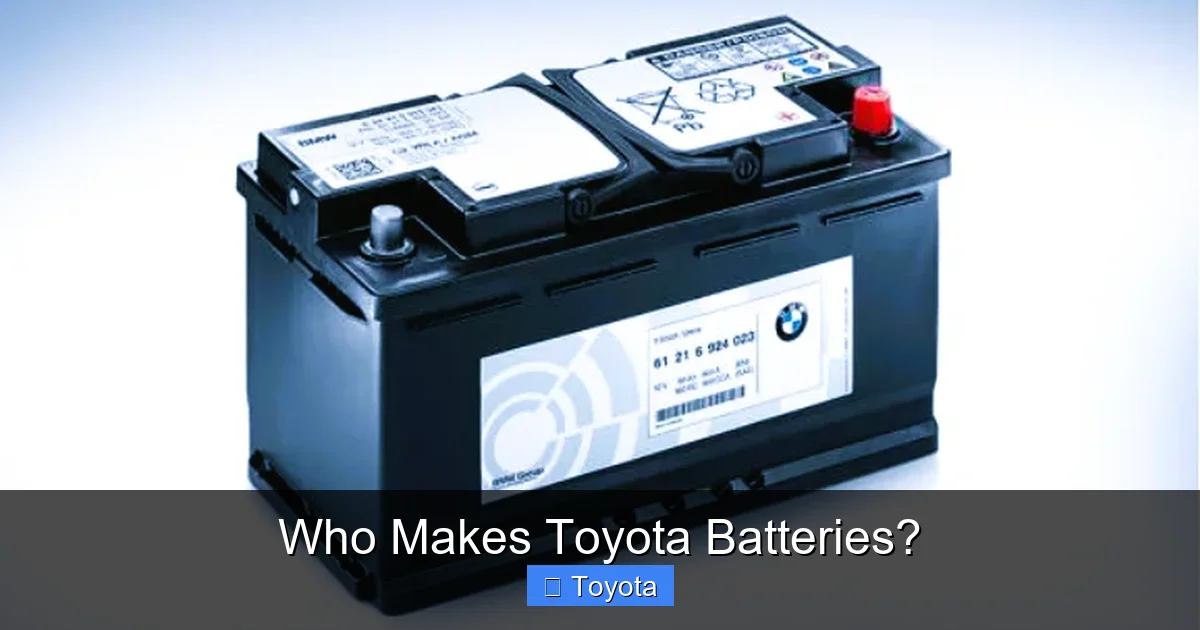
One of the most significant players in Toyota’s battery supply chain is Panasonic. This Japanese electronics giant has been a long-standing partner of Toyota, especially in the realm of hybrid and electric vehicle (EV) batteries. Panasonic is best known for its collaboration with Tesla, but its relationship with Toyota is equally important—and growing.
A Legacy of Innovation in Battery Technology
Panasonic has been developing rechargeable batteries for decades, with a strong focus on lithium-ion technology. Their expertise in energy density, thermal management, and battery longevity makes them a natural fit for Toyota’s hybrid and electric vehicles. In fact, Panasonic has been supplying nickel-metal hydride (NiMH) batteries for Toyota’s hybrid models, including the Prius, for many years. These batteries are known for their durability and ability to handle frequent charge-discharge cycles—perfect for the stop-and-go nature of hybrid driving.
But as Toyota expands its electric vehicle lineup, Panasonic has stepped up to supply advanced lithium-ion batteries. These newer batteries offer higher energy density, meaning they can store more power in a smaller, lighter package. This is crucial for EVs, where every kilogram counts when it comes to range and efficiency.
Joint Development and Manufacturing
Toyota and Panasonic don’t just have a supplier relationship—they’ve co-developed battery technology through joint research and shared facilities. For example, the two companies have worked together on improving battery safety, reducing charging times, and increasing overall lifespan. This close collaboration ensures that the batteries are optimized specifically for Toyota’s vehicle platforms.
One notable outcome of this partnership is the development of high-capacity prismatic lithium-ion cells. Unlike the cylindrical cells used in some EVs, prismatic cells are flat and rectangular, allowing for better space utilization within the vehicle’s chassis. This design is particularly beneficial for Toyota’s bZ (Beyond Zero) electric vehicle series, where maximizing interior space and range is a top priority.
Panasonic’s Global Manufacturing Footprint
Panasonic operates battery production facilities in Japan, the United States, and China. In the U.S., their factory in Nevada—originally built to supply Tesla—has expanded to include Toyota as a key customer. This geographic diversification helps Toyota ensure a stable supply of batteries, even in the face of global disruptions like supply chain delays or trade restrictions.
Moreover, Panasonic’s commitment to sustainability aligns with Toyota’s environmental goals. The company is investing in recycling programs and cleaner manufacturing processes to reduce the carbon footprint of battery production. This shared focus on sustainability strengthens the partnership and supports Toyota’s vision of a carbon-neutral future.
CATL: Powering Toyota’s Electric Future in China
Visual guide about Who Makes Toyota Batteries?
Image source: wonderfulengineering.com
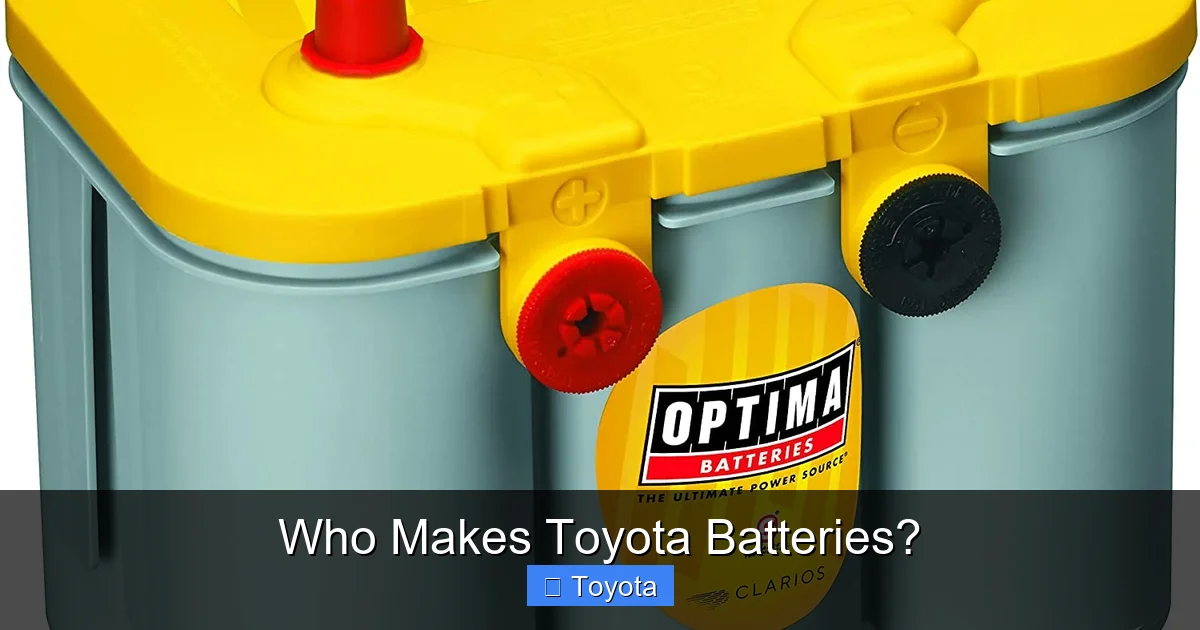
While Panasonic is a major player globally, another company dominates Toyota’s battery supply in one of the world’s largest automotive markets: China. That company is Contemporary Amperex Technology Co. Limited, better known as CATL.
CATL’s Rise to Global Prominence
Founded in 2011, CATL has quickly become the world’s largest manufacturer of lithium-ion batteries for electric vehicles. The company supplies batteries to major automakers like Tesla, BMW, and Volkswagen—and now, Toyota. In 2020, Toyota announced a strategic partnership with CATL to accelerate its electrification efforts in China, where government regulations and consumer demand are driving rapid EV adoption.
Lithium Iron Phosphate (LFP) Batteries for Toyota’s bZ Series
One of the key technologies CATL brings to the table is lithium iron phosphate (LFP) battery chemistry. Unlike traditional lithium-ion batteries that use nickel and cobalt, LFP batteries are cobalt-free and use iron and phosphate as cathode materials. This makes them safer, more stable, and less expensive to produce.
For Toyota’s bZ4X and other electric models sold in China, CATL supplies LFP batteries that offer a good balance of range, safety, and cost. These batteries are particularly well-suited for urban driving and shorter commutes, where extreme range isn’t always necessary. They also have a longer cycle life, meaning they can be charged and discharged more times before degrading—ideal for fleet vehicles and ride-sharing services.
Localized Production for Faster Delivery
A major advantage of partnering with CATL is localized production. CATL operates several gigafactories across China, allowing Toyota to source batteries quickly and reduce shipping costs. This proximity also enables faster response times for recalls, upgrades, or custom battery configurations.
Additionally, CATL’s research and development capabilities are impressive. The company is investing heavily in next-generation technologies, including sodium-ion batteries and cell-to-pack (CTP) designs that eliminate the need for traditional battery modules. These innovations could eventually make their way into Toyota vehicles worldwide, further enhancing performance and affordability.
Prime Planet Energy & Solutions: The Toyota-Panasonic Joint Venture
Visual guide about Who Makes Toyota Batteries?
Image source: wonderfulengineering.com
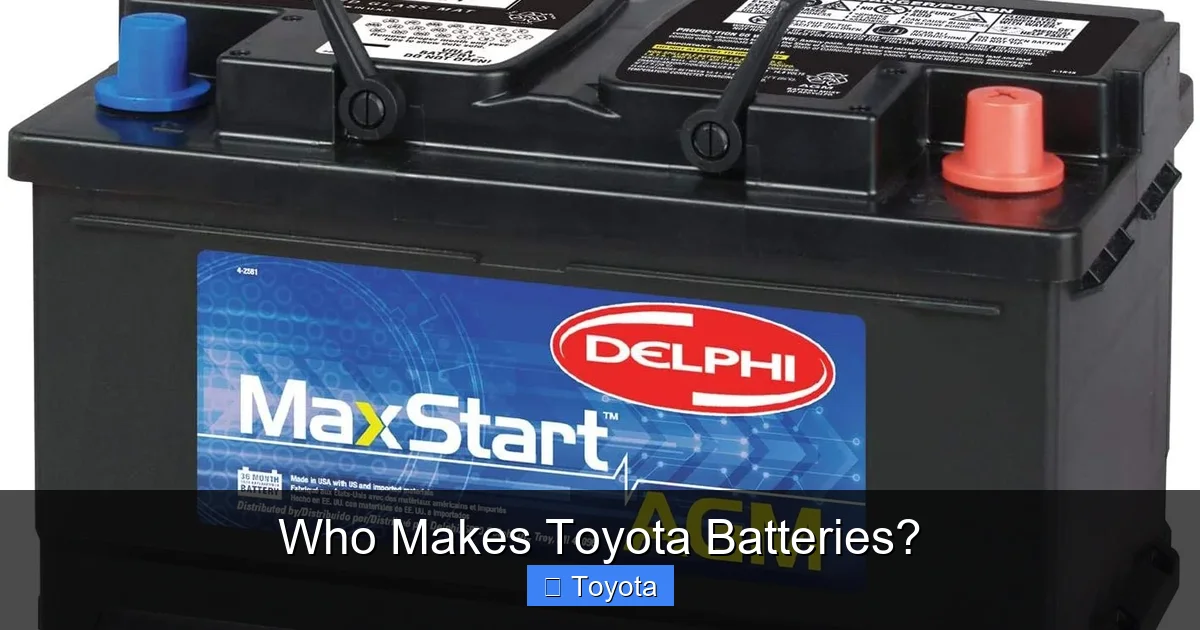
In 2020, Toyota and Panasonic took their partnership to the next level by forming a joint venture called Prime Planet Energy & Solutions (PPES). This new company was created to accelerate the development and production of advanced batteries for hybrid and electric vehicles.
A Dedicated Battery Innovation Hub
PPES operates as a standalone entity with its own research labs, manufacturing facilities, and engineering teams. Its mission is to combine Toyota’s automotive expertise with Panasonic’s battery know-how to create next-generation energy storage solutions. The company focuses on improving battery performance, reducing costs, and increasing production efficiency.
One of PPES’s key achievements is the development of high-nickel cathode materials for lithium-ion batteries. These materials allow for higher energy density, which translates to longer driving ranges for electric vehicles. They’re also working on solid-state battery technology—a game-changer that could revolutionize the EV industry.
Manufacturing in Japan and Beyond
PPES currently operates manufacturing plants in Japan, including a state-of-the-art facility in Shizuoka Prefecture. This plant produces prismatic lithium-ion batteries for Toyota’s hybrid and electric models. The company has also announced plans to expand production capacity to meet growing demand, particularly as Toyota ramps up its EV sales globally.
The joint venture also emphasizes sustainability. PPES is committed to using recycled materials in battery production and developing closed-loop recycling systems. This means old batteries can be broken down and their materials reused, reducing waste and conserving natural resources.
Supporting Toyota’s Electrification Strategy
PPES plays a central role in Toyota’s broader electrification strategy. As the company aims to sell 3.5 million electric vehicles annually by 2030, it needs a reliable and scalable battery supply. PPES helps ensure that Toyota can meet this goal without compromising on quality or innovation.
Moreover, the joint venture allows Toyota to maintain greater control over its battery supply chain. By co-owning the production facilities, Toyota can influence design decisions, prioritize safety, and respond quickly to market changes. This level of integration is rare in the automotive industry and gives Toyota a competitive edge.
Types of Batteries Used in Toyota Vehicles
Not all Toyota batteries are created equal. Depending on the vehicle type and power requirements, Toyota uses different battery chemistries and designs. Understanding these differences can help you make informed decisions about maintenance, replacement, and upgrades.
Lead-Acid Batteries: The Traditional Workhorse
Every Toyota vehicle, whether it’s a gasoline-powered sedan or a hybrid SUV, comes with a standard 12-volt lead-acid battery. This battery powers the starter motor, lights, infotainment system, and other electrical components when the engine is off. It’s a proven, reliable technology that’s been used in cars for over a century.
Toyota typically uses maintenance-free lead-acid batteries, which don’t require regular water top-ups. These batteries are designed to last 3 to 5 years under normal driving conditions. However, extreme temperatures, frequent short trips, and electrical drains (like leaving lights on) can shorten their lifespan.
Nickel-Metal Hydride (NiMH) Batteries: The Hybrid Standard
For hybrid vehicles like the Prius, Camry Hybrid, and RAV4 Hybrid, Toyota relies on nickel-metal hydride (NiMH) batteries. These high-voltage battery packs store energy recovered during braking and supply it to the electric motor when needed.
NiMH batteries are known for their durability and ability to handle thousands of charge-discharge cycles. They’re also safer than lithium-ion batteries in terms of thermal runaway risk. However, they’re heavier and less energy-dense, which limits their use in fully electric vehicles.
Lithium-Ion Batteries: The Future of Toyota EVs
As Toyota transitions to electric vehicles, lithium-ion batteries are becoming the standard. These batteries offer higher energy density, lighter weight, and faster charging times compared to NiMH. They’re used in models like the bZ4X, the upcoming bZ3, and future electric SUVs and sedans.
Toyota uses different lithium-ion chemistries depending on the application. For example, high-nickel batteries are used in performance-oriented models for maximum range, while LFP batteries are used in entry-level EVs for cost and safety benefits.
Emerging Technologies: Solid-State and Beyond
Looking ahead, Toyota is investing heavily in solid-state battery technology. Unlike traditional lithium-ion batteries that use liquid electrolytes, solid-state batteries use solid materials to conduct ions. This design offers several advantages: higher energy density, faster charging, improved safety, and longer lifespan.
Toyota has announced plans to launch vehicles with solid-state batteries by the mid-2020s. These batteries could enable ranges of over 500 miles and charging times of just 10 to 15 minutes. While still in development, solid-state technology represents the next frontier in automotive energy storage.
How Toyota Ensures Battery Quality and Reliability
With so many suppliers involved, you might wonder how Toyota maintains consistent quality across its battery lineup. The answer lies in rigorous testing, strict standards, and close collaboration with its partners.
Stringent Testing and Certification
Every battery used in a Toyota vehicle—whether from Panasonic, CATL, or PPES—must pass a series of performance and safety tests. These include thermal shock testing, vibration resistance, overcharge protection, and cycle life evaluation. Only batteries that meet or exceed Toyota’s standards are approved for use.
Toyota also conducts real-world simulations to ensure batteries can withstand extreme conditions, from desert heat to Arctic cold. This testing helps prevent failures and ensures long-term reliability.
Warranty and Support
Toyota offers comprehensive warranties on its batteries. For example, hybrid battery packs are typically covered for 8 years or 100,000 miles, while EV batteries may have even longer coverage. This gives owners peace of mind and reflects Toyota’s confidence in its battery suppliers.
Additionally, Toyota provides battery health monitoring through onboard diagnostics. Drivers can check battery status via the vehicle’s display or mobile app, helping them identify potential issues early.
Sustainability and Recycling
Toyota is committed to responsible battery lifecycle management. The company has established recycling programs to recover valuable materials like lithium, nickel, and cobalt from old batteries. These materials are then reused in new batteries, reducing the need for mining and lowering environmental impact.
Toyota also works with suppliers to improve the sustainability of battery production. This includes using renewable energy in manufacturing facilities and reducing water and chemical usage.
The Future of Toyota Batteries: Innovation and Expansion
As the automotive industry shifts toward electrification, Toyota is positioning itself as a leader in battery innovation. The company’s partnerships with Panasonic, CATL, and PPES are just the beginning.
Expanding Global Production
Toyota plans to build new battery factories in the U.S., Japan, and Europe to support its growing EV lineup. These facilities will produce lithium-ion and, eventually, solid-state batteries. By localizing production, Toyota aims to reduce costs, improve supply chain resilience, and meet regional demand more effectively.
Advancing Solid-State Technology
Solid-state batteries are a top priority for Toyota. The company has invested billions in research and development and is on track to launch its first solid-state EV by 2027. These batteries could transform the driving experience with ultra-fast charging, longer range, and enhanced safety.
Collaboration with Other Automakers
Toyota is also exploring partnerships with other automakers to share battery technology and reduce costs. For example, the company has collaborated with Subaru, Mazda, and Suzuki on EV development. These alliances could lead to shared battery platforms and faster innovation.
Focus on Affordability and Accessibility
Ultimately, Toyota’s goal is to make electric vehicles accessible to everyone. By optimizing battery design, scaling production, and leveraging partnerships, the company aims to offer affordable EVs without compromising on quality or performance.
Conclusion
So, who makes Toyota batteries? The answer is a network of world-class suppliers and joint ventures, including Panasonic, CATL, and Prime Planet Energy & Solutions. These partnerships allow Toyota to deliver reliable, high-performance batteries for its diverse vehicle lineup—from hybrids to fully electric models.
While Toyota doesn’t manufacture batteries in-house, its strategic collaborations ensure access to the latest technology, rigorous quality control, and a sustainable supply chain. As the company continues to invest in solid-state batteries and expand global production, the future of Toyota’s energy storage looks brighter than ever.
Whether you’re driving a Prius or waiting for the next bZ model, you can trust that the battery under the hood—or in the floor—is built to last. And with innovation happening at every level, Toyota is well-positioned to lead the charge into a cleaner, electrified future.
Frequently Asked Questions
Does Toyota make its own batteries?
No, Toyota does not manufacture batteries in-house. Instead, it partners with leading battery producers like Panasonic, CATL, and Prime Planet Energy & Solutions to supply batteries for its vehicles.
What type of battery does a Toyota Prius use?
The Toyota Prius uses a nickel-metal hydride (NiMH) battery pack to store energy for its hybrid system. This battery is known for its durability and long cycle life.
Who supplies batteries for Toyota’s electric vehicles?
Toyota’s electric vehicles use lithium-ion batteries supplied by Panasonic and CATL. Panasonic provides high-nickel batteries globally, while CATL supplies LFP batteries for models sold in China.
What is Prime Planet Energy & Solutions?
Prime Planet Energy & Solutions is a joint venture between Toyota and Panasonic, created to develop and produce advanced batteries for hybrid and electric vehicles.
Are Toyota batteries covered by warranty?
Yes, Toyota offers warranties on its batteries. Hybrid battery packs are typically covered for 8 years or 100,000 miles, while EV batteries may have longer coverage depending on the model.
Will Toyota use solid-state batteries in the future?
Yes, Toyota is actively developing solid-state battery technology and plans to launch vehicles with these batteries by the mid-2020s. They promise faster charging, longer range, and improved safety.
