
What Does the Snow Button Do on a Toyota Highlander?

The snow button on a Toyota Highlander adjusts throttle response and transmission shifting to improve traction and control in slippery conditions like snow, ice, or mud. It’s not a magic fix but a smart tool that helps prevent wheel spin and enhances stability—especially useful during cold-weather starts or light off-roading.
[FEATURED_IMAGE_PLACEHolder]
Key Takeaways
- Improves low-speed traction: The snow mode softens throttle input to reduce wheel spin when accelerating from a stop on snowy or icy roads.
- Delays upshifting: The transmission holds lower gears longer, providing smoother power delivery and better control in slippery conditions.
- Not just for snow: Useful in rain, mud, sand, or any low-traction surface where gentle acceleration is key.
- Doesn’t replace winter tires: The snow button helps, but proper tires and cautious driving are still essential for safety.
- Easy to activate: Located near the gear shifter or climate controls, it’s a one-touch feature that can be turned on or off as needed.
- Works with AWD models: On Highlanders with all-wheel drive, snow mode complements the system for even better grip.
- Use it wisely: Only activate snow mode in low-traction situations—using it on dry pavement can reduce fuel efficiency.
📑 Table of Contents
- What Is the Snow Button on a Toyota Highlander?
- How Does the Snow Button Work?
- When Should You Use the Snow Button?
- Does the Snow Button Work on All Toyota Highlander Models?
- Real-World Examples: How the Snow Button Helps
- Tips for Using the Snow Button Effectively
- Myths and Misconceptions About the Snow Button
- Conclusion
What Is the Snow Button on a Toyota Highlander?
If you’ve ever driven a Toyota Highlander in winter—or even just seen the little “SNOW” button near the gear shifter—you might have wondered: What does it actually do? Is it just a gimmick, or does it really help? The short answer is yes, it’s useful—but not in the way you might think.
The snow button, often labeled as “SNOW” or “SNOW/MUD” depending on your Highlander’s model year and trim, is a traction-enhancing driving mode designed to help you maintain control in slippery conditions. It doesn’t magically melt snow or give your tires super-grip. Instead, it adjusts how your vehicle responds to your inputs—especially when you press the gas pedal.
Think of it like this: When you’re driving on a dry road, you can stomp on the accelerator and the engine responds instantly. But on snow or ice, that same quick response can cause your wheels to spin, lose traction, and potentially lead to a skid. The snow button tames that response, making your Highlander behave more gently and predictably when the road is slick.
It’s a simple but smart feature that’s been around for years, and it’s especially helpful for drivers in cold climates or those who occasionally drive on unpaved or muddy roads. Whether you’re navigating a snowy driveway, climbing a muddy hill, or just trying to get moving on a frosty morning, the snow button can give you a little extra confidence behind the wheel.
Where Is the Snow Button Located?
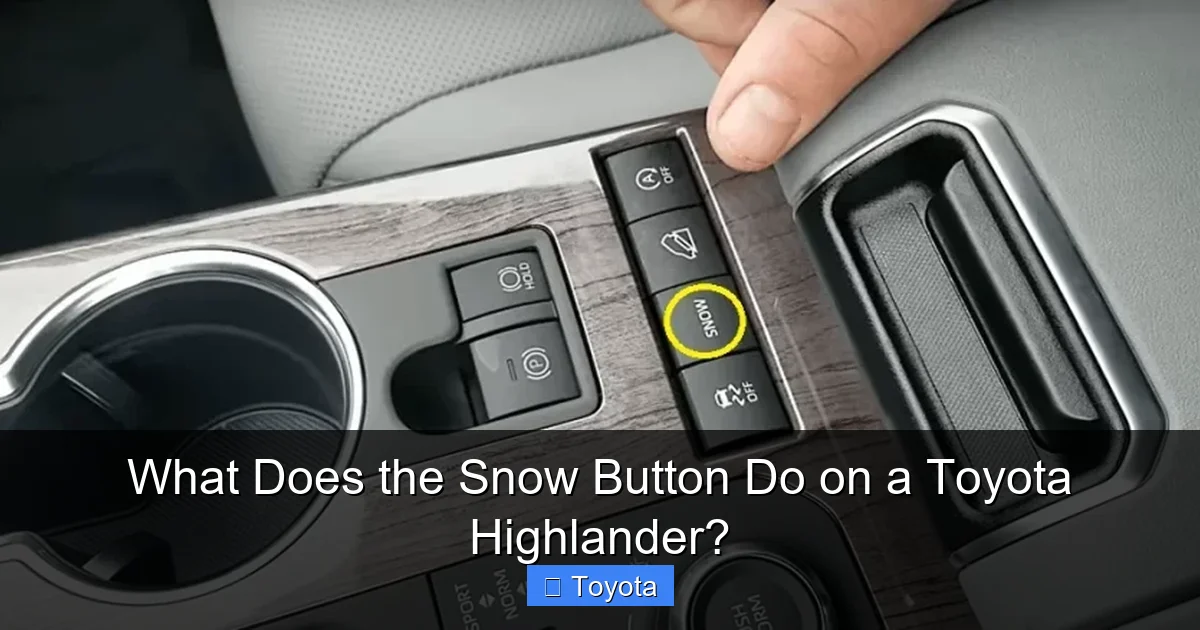
The exact location of the snow button can vary slightly depending on your Highlander’s model year and trim level. On most recent models (2017 and newer), you’ll find it near the gear shifter—either on the center console or integrated into the climate control panel. Some trims, like the Limited or Platinum, may have it on the dashboard or within the touchscreen menu under “Drive Mode.”
Look for a button with the word “SNOW” or an icon that looks like a snowflake. On some AWD models, it might be labeled “SNOW/MUD” to indicate it works in multiple low-traction environments. If you’re having trouble finding it, check your owner’s manual—Toyota usually includes a diagram of the center console with labeled controls.
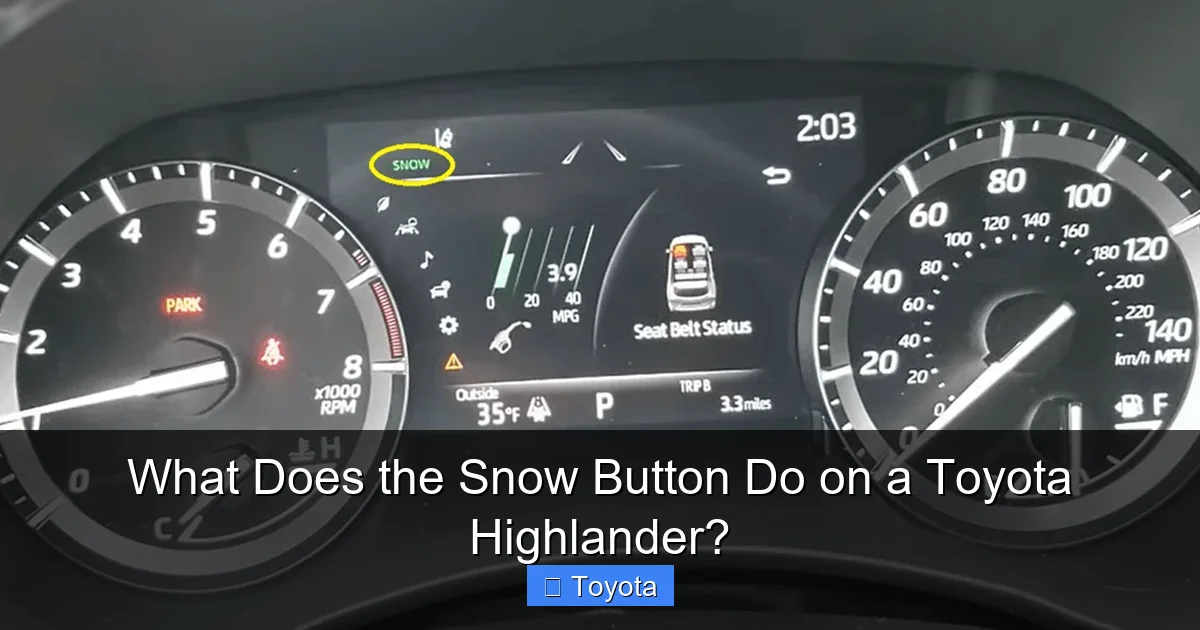
Once you press it, a light or icon will typically appear on your instrument cluster, confirming that snow mode is active. To turn it off, just press the button again. It’s that simple.
How Does the Snow Button Work?
Visual guide about What Does the Snow Button Do on a Toyota Highlander?
Image source: gearfixup.com
Now that you know where to find it, let’s dive into how the snow button actually works. At its core, the snow mode modifies two key systems in your Highlander: the throttle response and the transmission behavior.
When you activate snow mode, the vehicle’s engine control unit (ECU) reduces the sensitivity of the gas pedal. That means when you press the accelerator, the engine doesn’t rev as quickly or aggressively as it normally would. This softer response helps prevent the wheels from spinning when you’re trying to accelerate from a stop on snow, ice, or wet pavement.
At the same time, the transmission shifts into a higher gear earlier and holds lower gears longer. For example, instead of shifting from first to second gear at 15 mph, it might wait until 18 or 20 mph. This keeps the engine in a lower RPM range, delivering power more gradually and reducing the chance of wheel slip.
Throttle Response Adjustment
The throttle response adjustment is one of the most noticeable effects of snow mode. On a normal day, your Highlander responds quickly to even light pressure on the gas pedal. But in snow mode, that same pressure results in a much gentler acceleration.
Imagine you’re trying to pull out of a snow-covered driveway. Without snow mode, your front wheels might spin as you try to gain traction. But with snow mode on, the engine delivers power more slowly, giving the tires time to grip the surface. It’s like easing onto the gas instead of stomping on it.
This is especially helpful in stop-and-go traffic during winter storms, when roads are patchy with snow and ice. You don’t need full power—you need control. And that’s exactly what snow mode provides.
Transmission Behavior Changes
The transmission plays a big role in how your Highlander handles slippery conditions. In normal driving mode, the transmission is optimized for fuel efficiency and smooth shifting. It upshifts early to keep the engine quiet and reduce fuel consumption.
But in snow mode, the transmission prioritizes traction over efficiency. It delays upshifts and may even downshift more readily when you slow down. This keeps the engine in a power band where it can deliver torque smoothly without overwhelming the tires.
For example, if you’re driving up a snowy hill, the transmission might stay in second gear longer to maintain momentum. Or if you’re slowing down on an icy road, it might downshift to help with engine braking, reducing the need to rely solely on the brakes—which can lock up and cause skidding.
These changes work together to give you a more predictable and stable driving experience when traction is low.
When Should You Use the Snow Button?
Visual guide about What Does the Snow Button Do on a Toyota Highlander?
Image source: gearfixup.com
Knowing when to use the snow button is just as important as understanding how it works. It’s not something you should leave on all the time—only activate it when you actually need it.
The best times to use snow mode include:
– **Starting from a stop on snow or ice:** This is the most common use case. Whether you’re pulling out of your driveway or merging onto a snowy highway, snow mode helps prevent wheel spin.
– **Driving in light snow or slush:** If the roads are covered in a few inches of snow or wet slush, snow mode can improve traction and reduce the risk of sliding.
– **Navigating muddy or unpaved roads:** Even if it’s not snowing, snow mode can help on dirt roads, gravel paths, or muddy trails where traction is limited.
– **Driving in heavy rain:** Wet roads can be just as slippery as snow, especially if there’s standing water. Snow mode can help maintain control during sudden accelerations.
– **Towing or carrying heavy loads in winter:** If you’re hauling a trailer or have a full cargo load, snow mode can help manage the extra weight and prevent loss of control.
When NOT to Use the Snow Button
While snow mode is helpful in low-traction situations, it’s not meant for everyday use—especially on dry pavement. Here’s when you should turn it off:
– **On dry roads:** Snow mode reduces throttle response and delays shifting, which can make your Highlander feel sluggish and less responsive. It also increases fuel consumption because the engine runs at higher RPMs for longer.
– **At highway speeds:** Once you’re cruising steadily on a clear highway, snow mode offers no benefit and may actually reduce efficiency.
– **During spirited driving:** If you’re driving on a winding road or want a more engaging experience, snow mode will dull the throttle and make the vehicle feel less lively.
In short: Use snow mode when you need extra control. Turn it off when you don’t.
Does the Snow Button Work on All Toyota Highlander Models?
Visual guide about What Does the Snow Button Do on a Toyota Highlander?
Image source: carstale.com
Yes—but with a few caveats. The snow button is available on most Toyota Highlander models from the past decade, but its exact functionality can vary depending on the drivetrain and trim level.
Front-Wheel Drive (FWD) vs. All-Wheel Drive (AWD)
On FWD Highlanders, the snow button primarily affects throttle response and transmission behavior. Since power is sent to the front wheels, the system focuses on preventing those wheels from spinning during acceleration.
On AWD models, the snow button works in tandem with the all-wheel-drive system. The AWD system already helps distribute power to the wheels with the most traction, and snow mode enhances this by smoothing out power delivery. Together, they provide better grip and stability in slippery conditions.
If you have an AWD Highlander, you’ll likely notice a bigger difference when using snow mode—especially in deep snow or on uneven terrain.
Hybrid Models
Toyota Highlander Hybrid models also include snow mode, and it works similarly to the gas-only versions. However, because hybrids have electric motors that assist with low-speed torque, the effect of snow mode might feel slightly different.
In hybrid models, snow mode may reduce the electric motor’s contribution during acceleration, relying more on the gasoline engine in a controlled way. This helps prevent sudden bursts of power that could cause wheel slip.
Older Models (Pre-2017)
On older Highlanders (2001–2016), the snow button may be labeled differently or located in a different spot. Some models use a “2ND” or “L” mode for low-traction driving, which serves a similar purpose. Always refer to your owner’s manual for model-specific details.
Real-World Examples: How the Snow Button Helps
Let’s look at a few real-world scenarios where the snow button can make a real difference.
Example 1: Starting on a Snowy Driveway
It’s a cold January morning, and your driveway is covered in 3 inches of fresh snow. You’re running late for work and want to get moving quickly. Without snow mode, you press the gas and the front wheels spin, digging a rut in the snow. You’re stuck.
Now, try it with snow mode on. You press the accelerator gently, and the engine responds slowly. The wheels grip the snow, and you inch forward steadily. Within a few seconds, you’re on the road and on your way.
Example 2: Merging onto a Snowy Highway
You’re approaching a highway on-ramp that’s slick with packed snow. Traffic is moving, and you need to accelerate quickly to merge safely. Without snow mode, your Highlander might hesitate or spin its wheels as you try to gain speed.
With snow mode active, the transmission holds a lower gear, and the throttle response is smoother. You accelerate steadily, matching the speed of traffic without losing control.
Example 3: Driving Through a Muddy Trail
You’re taking your Highlander on a weekend trip to a rural area with dirt roads. After a rainstorm, the path is muddy and slippery. Snow mode helps prevent wheel spin as you navigate ruts and soft ground, giving you better control without getting stuck.
These examples show that the snow button isn’t just for snow—it’s a versatile tool for any low-traction situation.
Tips for Using the Snow Button Effectively
To get the most out of your Highlander’s snow mode, follow these practical tips:
– **Activate it before you need it:** Don’t wait until you’re already slipping. Turn on snow mode as soon as you encounter snow, ice, or mud.
– **Use gentle inputs:** Even with snow mode, avoid sudden acceleration, hard braking, or sharp turns. Smooth driving is still the key to safety.
– **Pair it with winter tires:** The snow button helps, but it can’t overcome poor traction. Winter or all-season tires with good tread are essential.
– **Turn it off when conditions improve:** Once you’re back on dry pavement, deactivate snow mode to restore normal performance and fuel efficiency.
– **Practice in a safe area:** If you’re new to snow mode, try it in an empty parking lot during winter to get a feel for how your Highlander responds.
Myths and Misconceptions About the Snow Button
There are a few common myths about the snow button that are worth clearing up.
Myth 1: “It melts snow or warms the tires.”
No—the snow button doesn’t generate heat or affect the tires directly. It only changes how the engine and transmission respond to your inputs.
Myth 2: “It makes my Highlander invincible in snow.”
Not even close. The snow button improves control, but it can’t defy physics. You still need to drive carefully, maintain distance, and avoid risky maneuvers.
Myth 3: “I should leave it on all winter.”
That’s a mistake. Using snow mode on dry roads reduces performance and fuel economy. Only use it when needed.
Myth 4: “It replaces the need for AWD.”
No. AWD helps distribute power to all four wheels, while snow mode manages how that power is delivered. They work best together, but neither replaces the other.
Conclusion
The snow button on a Toyota Highlander is a smart, practical feature designed to help you maintain control in slippery conditions. By softening throttle response and adjusting transmission behavior, it reduces wheel spin and improves traction when you need it most.
It’s not a miracle worker—but it’s a valuable tool in your winter driving toolkit. Whether you’re navigating snowy streets, muddy trails, or rainy highways, snow mode can give you the extra confidence and stability to drive safely.
Just remember: Use it wisely, pair it with good tires, and always drive according to conditions. With the snow button and a little caution, your Highlander can handle whatever winter throws your way.
Frequently Asked Questions
What does the snow button do on a Toyota Highlander?
The snow button adjusts throttle response and transmission shifting to reduce wheel spin and improve traction in slippery conditions like snow, ice, or mud. It helps you accelerate more smoothly and maintain control.
Can I use the snow button on dry roads?
No, it’s not recommended. Using snow mode on dry pavement makes the vehicle feel sluggish and reduces fuel efficiency. Only activate it in low-traction conditions.
Does the snow button work on all Highlander models?
Yes, most Highlander models from the past decade include snow mode. It works on both FWD and AWD versions, with enhanced benefits on AWD models.
Is the snow button the same as 4WD or AWD?
No. AWD sends power to all four wheels, while the snow button manages how that power is delivered. They complement each other but serve different purposes.
Should I use snow mode with winter tires?
Yes—winter tires provide better grip, and snow mode helps manage power delivery. Together, they offer the best winter performance.
Can the snow button get my Highlander unstuck from snow?
It can help prevent getting stuck in the first place by reducing wheel spin. But if you’re already stuck, you may need to rock the vehicle or use traction aids like sand or mats.
